Source
Axios

Axios (website)
Axios is an American news website based in Arlington, Virginia. It was founded in 2016 and launched the following year by former Politico journalists Jim VandeHei, Mike Allen, and Roy Schwartz. The site's name is based on the Ancient Greek ἄξιος.
From Wikipedia ↗, text under CC BY-SA 4.0; logo from Wikimedia Commons
- Type
- News outlet
- Lean
- Left-leaning
- Left-Center−2.8 of ±10
- High0.9 of 10 (lower is better)
- High
- Website
- axios.com ↗
- Feed
- RSS ↗
- Articles stored
- 1,077
- Tracked since
- Aug 15, 2026
Down: MBFC factual reporting score, 0 most factual to 10 least.
Bias and credibility ratings by Media Bias/Fact Check.
Axios on MBFC ↗Publishing rhythm
How many articles Axios published over the last 14 days, by publication time, and at which hours of the day.
Top keywords
All keyword charts for Axios →The people, places, organizations and topics Axios covered most that day, by the share of its stories that mention them. Article counts are shown for context.
No keywords that day yet.
Latest articles
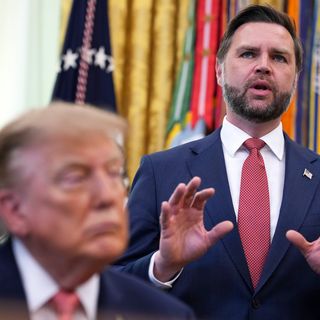
Vice President Vance has spent the past two weeks personally involved in indirect talks with Iran aimed at reaching a new ceasefire and resuming nuclear negotiations, according to two sources with knowledge of the matter. Why it matters: Vance's heavy involvement shows he's taking it upon himself to extract the U.S. from a conflict he blamed for the GOP's staggering losses in this week's election. It also elevates the latest round of indirect talks to the highest levels of the administration. The big picture: U.S. officials and regional sources say that for now Trump is willing to let diplomatic efforts play out and wants to see if any kind of deal is possible. "We're talking to them," Trump told reporters on Friday, when asked what his message to Iran was. But if he changes his mind and orders renewed strikes, the U.S. military is ready to launch strikes on a relatively short timetable. Behind the scenes: Vance has been speaking almost daily to Qatari Prime Minister Sheikh Mohammed bin Abdulrahman Al-Thani, Pakistani Chief of Army Staff Field Marshal Asim Munir and other mediators about the negotiations with Iran, sources with direct knowledge said. White House envoy Steve Witkoff and President Trump's adviser and son-in-law Jared Kushner are also involved. Vance and Qatari and Pakistani mediators have been discussing the possibility of a working-level technical meeting between the U.S. and Iran in the coming days, but it hasn't materialized yet, the sources said. The vice president's office declined to comment. Catch up quick: Vance was the most skeptical voice in Trump's inner circle about the war before it began at the end of February, advocating instead for a diplomatic solution. He led the U.S. negotiating team to an April summit on Iran in Islamabad, and he was personally involved in talks that led to the U.S.-Iran memorandum of understanding (MOU) in June. Vance then led the U.S. delegation to a round of direct talks with Iran in Switzerland, which ended with an Iranian commitment to invite UN inspectors to visit its nuclear facilities. But shortly after, Iran's Islamic Revolutionary Guard Corps resumed attacks on ships, leading to the collapse of the MOU. Driving the news: Two weeks ago, Vance sent a letter to the secretary of the Supreme National Security Council in Iran, Mohsen Rezaei, proposing to resume direct negotiations. Rezaei is one of the closest confidants of Iranian Supreme Leader Mojtaba Khamenei. Iranian officials said Vance's letter created positive momentum toward restarting negotiations. On Wednesday, Vance said the war was the main reason Republicans were repudiated in the election. State of play: Sources involved in the mediation efforts say there has been progress, but it's been very slow. On Friday morning, Trump spoke to Emir of Qatar Sheikh Tamim al-Thani about Qatar's efforts to bridge the gaps between the U.S. and Iran on a deal. Sheikh Tamim stressed the need to "continue dialogue and pursuing diplomatic means to resolve differences, spare the region further escalation, and ensure freedom of maritime navigation and the security of energy supplies," per a statement from his office.
Barak Ravid ·
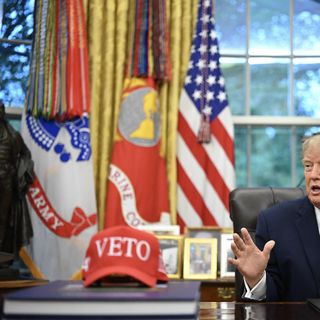
Congressional Democrats see a target-rich environment next year. But they're also worried that if they investigate everything , they may appear to investigate nothing. Why it matters: Democrats want to move beyond the one-off hearings, fist-pounding document demands and subpoena threats that defined much of their oversight during President Trump's first term. The goal, according to senior Democrats, is to build a sustained narrative around the administration's "cost, chaos and corruption" — while showing voters they have legislative solutions to the problems they uncover. "We're trying to get to the answers that point to solutions," a senior Democratic aide said. Zoom in: Senate Democrats are actively coordinating investigations across committees and with their House counterparts, looking to turn Day One oversight of the Trump administration into a sustained case for their own legislative agenda. Think more Jan. 6 committee investigation, with slick videos and compelling witness testimony, than impeachment 1.0. The coordination, underway for months, is increasingly happening at the senator level, with lawmakers working to divide investigative responsibilities and avoid overlapping efforts. "We want to deconflict these with some of the other committees, right? We don't want to be duplicative with other committees," Sen. Chris Van Hollen told Axios. The other side: Rep. Robert Garcia, the likely chair of the House Oversight Committee, has a four-pronged plan to investigate the Trump administration. But he has a two-word taunt: "LAWYER UP." Between the lines: Nearly every House committee has the power to subpoena without getting sign-off from the minority party. In the Senate, only the Homeland Security and Governmental Affairs Committee and its Permanent Subcommittee on Investigations (PSI) can issue subpoenas unilaterally. Trump's war in Iran will likely be the Senate's first focus, with the Senate Armed Services Committee preparing for hearings — and planning to call Hegseth to testify — in January. There will also be an immediate vote on a war powers resolution. "I've been very clear that we need to use every tool at our disposal to end the illegal [incentives] war in Iran, and that's beginning day one," Van Hollen said. What's next: As the scope of their victory comes into focus, Democrats across committees are eager to get to work. "I'm looking at you — Big Tech CEOs, Wall Street executives, and giant corporations. If you break the law, there will be consequences," Sen. Elizabeth Warren thundered on X .
Hans Nichols ·

Between the GOP's thrashing at the polls, another one of President Trump 's planned D.C. construction makeovers being halted and an uphill battle to overturn his conviction on 34 felony counts, this week has netted a string of setbacks for the president. Why it matters: Trump's administration is entering its lame-duck era, facing criticism and potential investigations as its power to reshape the federal government dwindles . But Trump is showing little inclination to change course. Driving the news: Trump has remained defiant about the midterms, blaming the Iran war and the GOP's candidates for the losses while spending a lot of time discussing planned D.C. construction projects . On Friday, Trump announced he would replace White House chief of staff Susie Wiles with Stephen Miller , a champion of his most hard-line policies. The move could signal that the president plans to push even harder on some of his unpopular policies, Axios' Marc Caputo and Andrew Pantazi write. Zoom in: Voters told Trump loud and clear they're dissatisfied with his policies, particularly on the Iran war, cost of living and economy. Roughly two-thirds of voters said Trump's agenda had fueled inflation, per the AP's Voter Poll. Trump admitted the unpopular war helped Republicans lose their majorities. With Democrats poised to control Congress and potentially restrict war funding, he has few good options for a decisive win. As one of his former advisers told Axios' Barak Ravid: "It's one thing to lose the midterms. But Trump doesn't want to look like a loser twice." What they're saying: "I don't think conciliatory is in [Trump's] vocabulary or ethos," Republican strategist Barrett Marson told Axios, calling Miller's appointment evidence that Trump won't "go away quietly." "He's taken the architect of many of the worst policies and elevating him. I'm not really sure how that is sort of acknowledging voters' discontent," Marson said. Marson said Trump's inability to run for president again could make him even less concerned about political consequences. He also noted that Trump has a massive war chest that he could wield to control GOP politicians as the 2028 election cycle begins. Republican strategist John Feehery , who spoke to Axios before Friday's chief of staff shake-up, said Trump could still cut deals with Democrats to cement his legacy, but acknowledged his influence over congressional Republicans could wane. "I don't think he's going to control the Republicans to the extent that he did, I think Republicans are going to try to figure out their own brand," Feehery said. Zoom out: The president's headaches also extend to his legal battles and ambitious construction projects. A New York appeals court heard arguments Thursday in Trump's bid to overturn his conviction on 34 felony counts of falsifying business records. His lawyers argued the conviction was tainted by legal errors and inadmissible evidence, but the court has yet to rule. In the wee hours of Friday, U.S. District Judge Tanya Chutkan issued a temporary restraining order barring construction on Trump's planned 250-foot Triumphal Arch for 14 days, just hours after the National Capital Planning Commission approved the project. The order was in response to a lawsuit brought by D.C. and Virginia and blocked construction, excavation, and road closures related to the arch. The project would tower over a road leading to Arlington National Cemetery and has drawn opposition from preservation groups, military veterans and families of people buried at the cemetery. The other side: "As the President has said, he's willing to work with anyone to continue delivering victories for hardworking Americans," White House spokesperson Lauren Bis told Axios in an emailed statement. "If Democrats choose to pursue sham investigations and radical left policies, they are choosing to work against the American people." On the arch, White House spokesperson Davis Ingle blasted the judge's ruling, saying the administration was confident it would be "fully vindicated as this litigation proceeds." The bottom line: Trump is the political comeback king — and no one should expect him to roll over during his lame-duck season. Go deeper: Trump, under pressure, embraces Builder-in-Chief role
Josephine Walker ·
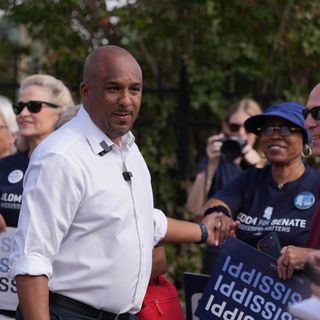
Americans on both sides of the political aisle are watching the nail-bitingly close Mississippi Senate race , where a controversial voter-roll cleanup has come under scrutiny after some voters reported problems casting their ballots. Why it matters: The cliffhanger has exposed concerns about relying on third-party data to determine where voters live and how states maintain voter rolls. Republican Sen. Cindy Hyde-Smith and Democrat Scott Colom are locked in a razor-thin race to be the state's junior senator. As of 2 p.m. ET Friday, Colom led by a little over 2000 votes, according to Associated Press data. The big picture: More than 230,000 Mississippians were listed as inactive ahead of the midterms, according to an analysis by Mississippi Today. That's up from roughly 166,000 in the 2024 election, according to federal data . Those voters weren't removed from the rolls, but they were required to cast affidavit ballots in Tuesday's election. Election workers review those ballots after Election Day, checking voter information against registration records. In some cases, voters must verify their identity with their county circuit clerk's office, slowing vote counting and — in this case — determining the winner. The intrigue: The inactive voter total shot up after the state's March primaries, months after Secretary of State Michael Watson's office inked a $50,000 deal with credit reporting company Experian to help verify voter addresses. "The increase in inactive registrations across the state of Mississippi raised some concerns because it seemed unusually high compared to other cycles and in such a small amount of time," Thessalia Merivaki, an elections research expert and former professor at Mississippi State University, tells Axios. She says there were concerns about "how reliable" these data brokers are, and whether relying on them had "resulted in erroneously placing eligible voters on an inactive status." How it works: Experian's data was intended to flag voters who might have moved, not automatically establish an address change. Local election officials were supposed to compare those records with other information, such as death records, Social Security records and the National Change of Address database to maintain voter lists, but counties have discretion over how to proceed. Merivaki says officials in Oktibbeha County knew some records were inaccurate because they recognized the voters. An election official in Oktibbeha County confirmed that information to Axios on Friday. Case in point: Jarvis Dortch, executive director of the ACLU of Mississippi, told Axios that a longtime Chickasaw County voter was told he lived in a different county, despite never having moved. Dortch suspects a car loan the man co-signed for his sister in Lee County likely caused the mix-up. He said the state ultimately let him vote. Dortch also said some voters were turned away instead of offered affidavit ballots. Yes, but: It's unclear how many of the newly inactive registrations are due to Experian data. An Experian spokesperson told Axios that the company "has not provided services to the State of Mississippi since early 2025. The solution provided at that time consisted of supplemental address information and was not designed or intended to validate voter records." "Decisions regarding voter registration policies, procedures and record updates are made solely by election officials in accordance with applicable local, state and federal laws." Watson's office later told WAPT-TV it no longer uses Experian data, switching to IDI Data and U.S. Postal Service records. His office did not respond to Axios' questions about when it stopped using the data or other detailed questions about the contract and its terms. What they're saying: Watson defended the state's system Tuesday, saying , "The extra few minutes it may take to vote via affidavit ballot are well worth the election integrity added by having cleaner voter rolls!" Go deeper: Magic in Mississippi: Democrat locked in Deep South Senate stunner
Josephine Walker ·
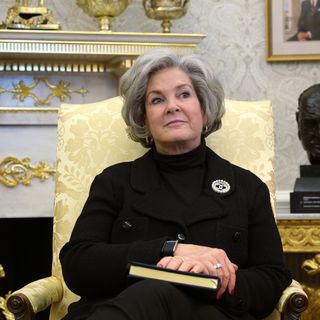
Angered over his midterm losses, President Trump announced Friday he was replacing Susie Wiles as White House chief of staff with longtime adviser Stephen Miller. Why it matters: Trump is trading one of his few moderating forces with one of the most maximalist champions of his agenda, a striking signal that the president may double down on the hardline policies that helped Republicans lose control of Congress on Tuesday. Driving the news: Wiles submitted her resignation on Thursday night. Sources told Axios her departure was a mutual decision, but driven by Tuesday's election results, for which Trump blamed her. Sources said Trump began expressing discomfort with the scale of the midterm losses and the money his political team spent on Wednesday. Wiles offered to quit for two days before she resigned. Trump accepted her decision on Friday. Trump did not ask for her resignation, said one informed source who spoke with Wiles, "but he couldn't get it out of his head that she was to blame, not him." "Susie could've stuck around, but what's the point?" that person said. "Whether it's right or wrong, Susie knows that serving the president means it's at his pleasure. And if she couldn't change the way he felt, there was no reason to stay." What they're saying: "I am pleased to announce that Mr. Stephen Miller, the current Deputy Chief of Staff of the Trump Administration, and one of my most trusted advisors, will become the Chief of Staff starting Monday, November 9, 2026," Trump wrote on Truth Social, adding that Wiles will move to the Trump Political Operation. Wiles said in a statement posted to X that "[s]erving President Trump in the White House has been the honor of a lifetime. I'm so proud to have been a part of what we've accomplished together." Zoom in: Miller, who served in Trump's first administration, was already a co-equal of Wiles's in some respects. No one in Trump's government knows the levers of power, the operation of the White House and the bold use of the executive branch better than him. An architect of Trump's explosive first hundred days exerting executive authority, Miller has been working on plans to keep operating a muscular White House even in the face of big Democratic majorities. "Trump needs to prepare for war with the Democrats in Congress with all their investigations they're going to launch, and Stephen is a wartime adviser," a Trump adviser explained. Zoom out: Wiles is widely viewed as the most powerful person in the White House outside the president himself, and she achieved something few in his orbit could: earning his trust, influencing his decisions and bringing discipline to an administration defined by historic infighting and upheaval. She was Trump's longest-serving chief of staff, and commanded an extraordinary level of trust from Trump, often serving as the last person he consulted before making major decisions. Her exit also ends the tenure of the first woman ever to hold the powerful position. Her influence stemmed from a relationship with Trump that stretched back to his 2016 campaign when she led his efforts in Florida, and again when she agreed to manage his political comeback following the Jan. 6 riot. Between the lines: Wiles' strength was understanding how to navigate Trump rather than trying to control him. She avoided public confrontations, offered disagreements privately and sought to carry out Trump's priorities rather than restrain them. But her influence had limits. She was a critical voice against the war in Iran and repeatedly questioned the hardline immigration tactics championed by Miller. Friction point: In a grand irony, the very Trump decisions she opposed —the Iran war and the brutality of immigration enforcement — drove Tuesday night's midterm shellacking that led the president to lose confidence in her. Catch up quick: As recently as Oct. 16, Trump emphatically denied reports he was considering replacing Wiles. Trump noted at the time that Wiles would stay as long as she wanted, and he praised her toughness in surviving cancer while serving as his staff chief. Context: Wiles spent decades mastering the art of influencing powerful men while staying out of the spotlight. The daughter of famed NFL broadcaster Pat Summerall, Wiles has credited growing up with an alcoholic father with teaching her how to handle larger-than-life personalities. In Florida, she became a powerful behind-the-scenes operator for two moderate Republican mayors in Jacksonville, helped elect Rick Scott as governor in 2010, and rescued Ron DeSantis' struggling gubernatorial campaign in 2018. Editor's note: This is a breaking news story and will be updated.
Andrew Pantazi, Marc Caputo, Josephine Walker ·

Navajo Nation voters made history this week by choosing their first woman president, handing Crystalyne Curley a groundbreaking victory — and a political fight before she even takes office. Why it matters: Curley's victory breaks a barrier in the Navajo Nation, where women hold deep cultural influence, but men have long dominated the presidency. Driving the news: Curley, 40, and running mate Chris Deschene defeated Justin Jones and Emily Ellison in the Nov. 3 election, according to unofficial Navajo Election Administration results . Curley won 50.88% to Jones' 49.12% — a margin of just 1,115 votes across the Nation's 110 chapters. She will succeed President Buu Nygren, whose turbulent bid for a second term ended with a third-place finish in July's primary. Her running mate, former Arizona legislator and energy attorney Chris Deschene, returns to tribal leadership politics 12 years after a Navajo-language qualification dispute derailed his presidential campaign. The Navajo Nation, the country's largest Native American reservation, spans more than 27,000 square miles across Arizona, New Mexico and Utah and has nearly 430,000 enrolled members , according to June 2026 tribal figures. Yes, but: Jones refuses to concede and has threatened a legal challenge, alleging irregularities in the vote count. The Navajo Times reported he initially offered no specific discrepancies. Tribal election law prevents certification until at least 10 days after the election, leaving time for challenges, according to the site . Zoom in: Curley now faces a tougher challenge: tackling poverty, delivering basic services and healing a government fractured by years of infighting. About 35.2% of residents of the Navajo Nation Reservation live below the poverty line, compared with 12.5% nationally, according to 2024 American Community Survey five-year estimates . Between 30% and 40% of Navajo families lack running water at home, according to an April 2026 statement from the outgoing administration. An estimated 10,000 families still lack electrical service, according to the American Public Power Association . What they're saying: "This could not have been possible without the Navajo People. This is your victory. We worked hard because we said we wanted a positive direction," Curley said in a statement. "Thank you for believing in this team. This is a new direction for our people." What's next: Curley faces a high-stakes battle over drilling near sacred sites in the Southwest. The Trump administration is reviewing whether to reverse federal protections covering roughly 336,400 acres around Chaco Culture National Historical Park in New Mexico, potentially reopening federal lands to new oil and gas leasing. Curley joined Nygren in 2023 in criticizing the 10-mile drilling buffer created by then-Interior Secretary Deb Haaland. (Haaland was herself elected governor of New Mexico this week.) Navajo leaders raised concerns over sovereignty and the economic interests of individual Navajo landowners, while other Indigenous advocates backed stronger protections. The federal restrictions do not directly prohibit drilling on Navajo allotted lands.
Russell Contreras ·
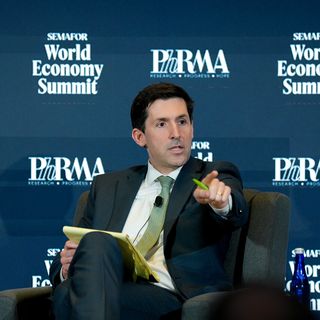
Calley Means , a former adviser to Health Secretary Robert F. Kennedy Jr. , said he resigned from the Trump administration over alleged internal corruption from a "concentrated group of people." Why it matters: Means left the Trump administration two weeks before the midterm elections that saw the GOP engulfed by a blue wave. He is one of the first former administration members to speak out about his time in the executive branch. What they're saying: "The simple reality in why I left is that there is a very concentrated group of people in the Trump administration that are antagonistic to what people voted for and are, frankly, — I think it's very clear — doing things for other reasons," Means said on Friday's episode of "The Joe Rogan Experience." "Particularly in many cases to enrich their families," he added. Editor's note: This is a breaking news story and will be updated with more information.
Julianna Bragg ·
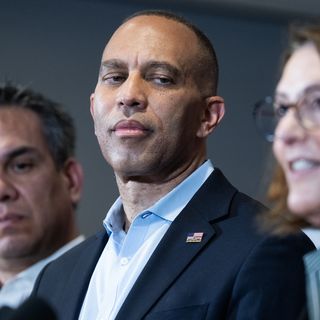
Democratic House members and members-elect are being bombarded with phone calls and emails urging them not to elect Minority Leader Hakeem Jeffries (D-N.Y.) as speaker, more than a dozen lawmakers and aides tell Axios. Why it matters: The calls point to a fundamental disconnect between House Democrats — most of whom are likely to vote for Jeffries — and at least a portion of their grassroots base. An incoming House Democrat told Axios they are "getting inundated" and have received "about 150" calls since the election urging them not to vote for Jeffries. A senior House Democrat said they received "over 500" calls in the last two days, telling Axios they also got asked about it in-person at a Chamber of Commerce meeting in their district. "I think our numbers are higher" than 500, said another House Democrat. "It's our No. 1 issue, and it's not close." State of play: Jeffries is in pole position to become speaker of the House after Democrats' landslide victory Tuesday, which is set to give them a massive majority of more than 250 seats. He has enjoyed the unanimous support of his caucus since becoming Democratic leader in 2022 and has never had a single House Democrat defect from him in a speaker vote. But the last speaker ballot was in January 2025, right before Democrats' grassroots base began railing against party leadership for what they perceived as insufficient resistance to the Trump administration. "Democrats in both chambers can't go back to business-as-usual politics. People want leadership that's ready to join the rest of us in this new era of politics," Ezra Levin, co-executive director of the progressive group Indivisible, said in a statement to Axios on Friday. A Democratic chief of staff who said their office got "about 300" calls told Axios: "Lots of people are saying make Jamie Raskin speaker." Raskin (D-Md.) has often been floated as a more progressive alternative to Jeffries, whose associations with pro-Israel groups and corporate PACs have long been a sore spot for the left. The top Democrat on the House Judiciary Committee, Raskin became a superstar among the party's grassroots after serving on the Jan. 6 committee. Raskin has expressed no interest in mounting a bid. A spokesperson for his office declined to comment. The intrigue: A third House Democrat, who said they've "gotten between 300-400" calls, told Axios that actor Mark Ruffalo's post on X calling for "a new speaker" has been driving much of the outreach. The post links to a Change.org petition that says Jeffries "is simply not the right choice." The petition had nearly 900,000 signatures as of Friday. The webpage includes a disclosure that the person who started the petition "receives compensation" as part of the " Change Ambassadors " program, which has raised eyebrows on Capitol Hill. Reality check: Jeffries remains the overwhelming favorite to become speaker, House Democrats say. Nobody has offered even a hint of a whisper that they would be willing to run against him. A fourth House Democrat, who said their office has gotten around 50 calls urging them not to vote for Jeffries, told Axios the odds of anyone else becoming speaker are "none." A fifth — a senior progressive who said they, too, have gotten a lot of calls — told Axios there is a "0.0%" chance of Jeffries not securing the gavel. Democrats' leadership elections are scheduled for Nov. 18-19, and a floor vote for speaker will occur when the new Congress convenes on Jan. 3. Between the lines: The volume of calls also varies, some members said, with progressives tending to receive more than moderates. "That's ridiculous. I haven't gotten one," Rep. Jim Himes (D-Conn.) told Axios, adding, "Jeffries absolutely will be speaker." Said Rep. Sam Liccardo (D-Calif.): "I'll be supporting Hakeem Jeffries, and anybody talking about a challenger is just selling tickets to a circus with no tent." Yes, but: Jeffries faces persistent skepticism and hesitance from incoming members — and not just from the progressive "Bloc." Axios interviewed nearly a half-dozen incoming House Democrats in deeply red seats Thursday who declined to state a firm position one way or another on voting for him. Don Leonard, an Ohio Democrat who won a seat President Trump carried by 10 percentage points, told a local outlet that he will be "shopping for a new leader" if Jeffries doesn't commit to changing his pro-Israel position. The bottom line: There was an expectation that the roughly dozen members of the "Bloc" would use a small majority to extract concessions from Jeffries. With a massive majority of dozens of seats, however, he has significantly more room to maneuver. His allies are confident they'll get enough Democrats to a "yes" to get him across the finish line — even if he doesn't get the unanimous vote he has enjoyed in the past.
Andrew Solender ·

Refrigerator hacks. $6.3 billion crypto heists . 14-country espionage campaigns carried out in just 11 days. All in the span of a week. Why it matters: State-backed hackers are finding new ways to launch cyberattacks at remarkable speed and scale, with AI and automation threatening to widen the gap between attackers and defenders. Driving the news: Hackers tampered with refrigeration system s at dozens of European grocery stores in one night earlier this week — raising temperatures and spoiling food in a sweeping attack some linked to Russia. "It's hard to imagine this is not the work of a nation state pretending to be a criminal actor," Cynthia Kaiser, former deputy director of the FBI's cyber division, told Axios. "Given the concentration around Europe, Russia is a reasonable first suspect." French blood banks were also affected in the attacks on European refrigeration systems, authorities said Wednesday. SentinelOne researchers reported Tuesday that Russian-aligned hackers have previously claimed attacks on European refrigeration systems. Meanwhile, the Pentagon has also been investigating a series of suspected hacks of refrigeration systems on its military bases over the summer. Nextgov reported that investigators suspect Iran was behind those attacks. Others have suggested potential Iran ties in Europe as well. The big picture: No clear evidence has yet linked the attack on food supply through smart refrigeration to AI or automation, but nation-state hackers have used those tools in other breaches to speed up their operations. Google researchers said Friday that multiple hacking groups have used automated security testing tools in recent attacks. One China-linked group gained deep access to a victim's network in as little as 15 minutes. North Korean hackers behind last week's record-setting Binance heist also likely used automation to move stolen cryptocurrency and cover their tracks, according to Chainalysis. Case in point: China-linked hackers used an AI-powered tool called Artex to target more than 200 organizations across 14 countries in just 11 days last month, CrowdStrike found . The group, known as Vapor Panda, targeted government agencies across Latin America, the Middle East and Europe, along with U.S. organizations and telecommunications providers in several countries. The hackers paired Artex with DeepSeek and a commercial AI model to run agents that automated much of the operation. Between the lines: Artex is one of several AI-powered tools automating tasks once handled by skilled human hackers. Adam Meyers, CrowdStrike's senior vice president of counter adversary operations, told Axios he tested Artex himself and found it could probe websites for weaknesses far faster than a human. "It was doing the stuff that you, as a pen tester, would do," Meyers said. "But it does it really at a scale and a speed that I think a human would not be able to do." Other AI-powered security testing tools, including Cairn and Strix, could be repurposed for similar attacks, Meyers said. Reality check: The refrigeration attacks also raise questions about overlooked security gaps that hackers can exploit without sophisticated AI tools. "I see these attacks the same way I saw the attacks on U.S. water systems this summer: Nobody looked until it made the news," Mike Searight, a former public-sector CIO and executive advisor to Elisity, told Axios. AI-powered hacking tools still need weaknesses to exploit. "It's not magic," Meyers said. What to watch: The UK's National Cyber Security Centre warned Tuesday that AI could accelerate existing hacking tactics, leaving organizations with weaker defenses and outdated technology especially vulnerable. Go deeper : AI is supercharging hacks of everyday utilities
Sam Sabin ·

Voters were unambiguous on Tuesday: Don't B.S. us. Don't say you'll lower prices and end wars and corruption, then do the opposite. It's really that simple. This isn't so different from when Americans told Democrats not to B.S. them about Joe Biden's health, or about the words they should use, or social behaviors they should adopt. Why it matters: Most Americans agree broadly on most things, most of the time. They want competent politicians to focus on issues that meaningfully impact their lives. Like clockwork, every two years, Americans feel the party in power fails to deliver this — so they punish the incumbents at the polls. Politicians and some journalists tend to treat the American people as dopes and dupes who don't get what's happening in front of their faces. Tuesday's midterms, which will live in history as a Watergate-level reset for democracy, show that voters were paying attention and hit a boiling point. They didn't hide it. Polls consistently showed that all they really care about is rising inflation, job insecurity, ending the war, and stopping the rampant corruption. This was a repudiation of overreach, incompetence and corruption. People will tolerate it in small doses, but eventually reject it. In an age when people trust institutions less all the time , our institutions held. Courts restrained executive-branch excess. The press kept doing its job. Voters did theirs. But for all the hand-wringing that America is crumbling, that democracy is fading, or elections are eroding, the system worked. Remember: most Americans are normal and resilient. We should celebrate that. Despite it all, America works. For years, we've been reminding you about the power of Normal America : The vast majority of people — including our siblings, who are scattered from Oshkosh to Oregon — don't marinate in cable news, obsess about X or wake up thinking about Washington. They volunteer, they give to good causes, they'll help you in a pinch. They're good, they're fair ... and they're smart. Between the lines: That's Normal America. Sometimes when we're making a tough call about journalism or business, we ask ourselves: "What would the person at the bar think?" It's a useful, clarifying proxy for: What would seem on the level through the lens of common sense and plain fairness? The person at the bar, and the voter in the booth, didn't want their soccer coach deported, didn't want their business to crumble because of a war of choice that's dragging on and on, didn't want the president's family and friends to enrich themselves while Normal America was wheezing. What we're watching: Democrats will be tempted and pressured to overreach. If they overinterpret their mandate the way Republicans did, they'll be punished, like clockwork. Here's what Republicans and Democrats will do if they're smart: Watch Texas. A seemingly impenetrable red state turned all blue, from the U.S. Senate to the governor's office to the state legislature. If Democrats can keep Texas, Republicans have no path to the presidency. Look at what happened in those southern border counties in Texas. These were the people who demanded tighter borders and punished Democrats when they wouldn't listen. But they're the same people who are saying stop with the thuggery and targeting of nonviolent people. Republicans were obliterated in those areas for not listening. Then look to the Texas suburbs, where you have many more traditional Republicans and moderate Democrats. They looked at Ken Paxton and said he's simply not on the level, even if they might agree with him on a lot of ideas. Corruption is never a good look. Enabling it and elevating it is even worse. The bottom line: This remains a 50-50 nation — a simple fact that every party and power instantly, constantly ignores. Once again, Normal Americans spoke: Ignore or B.S. them at your peril.
Jim VandeHei, Mike Allen ·

Talk of subpoenas and warnings to "lawyer up" hint at the extent of the health care investigations and oversight hearings that Democrats are expected to launch once they take control of Congress. Why it matters: Democrats have been building a paper trail for months to probe instances of political interference in vaccine policies, whether Health Secretary Robert F. Kennedy Jr. benefited financially from vaccine litigation and more. But the early efforts will more likely be directed at making a case for changes to federal Medicaid cuts, showcasing health affordability problems and examining whether federal health agencies are sufficiently funded and staffed. "You don't just do oversight to raise hell," said Tim Stretton, director of the Congressional Oversight Initiative at the Project On Government Oversight. "Trying to create some systematic change is arguably more important." What we're hearing: The House Oversight, Energy and Commerce and Ways and Means committees will be focal points of early activity, along with the Senate health and Finance committees. Some law firms already are advising their corporate clients to cooperate with committee staffs and minimize their exposure to possible negative headlines from hearings. One prominent player will be the likely new House Oversight chair, Robert Garcia (D-Calif.) — the one who publicly warned Republicans to "lawyer up" on Tuesday after Democrats flipped control of the House. The former Long Beach mayor lost his mother, a frontline health worker, and stepfather to COVID and has publicly assailed Kennedy for undermining public health and preventing or delaying needed cures. Bernie Sanders' expected return to chair the Senate health committee will give the Vermont independent another chance to harness public outrage on drug prices and spar with Kennedy over his tenure as health secretary. Zoom in: The power shift in Congress gives Democrats the ability to subpoena witnesses, demand records and hold officials and individuals in contempt if they don't comply. Hearings and investigations into problems with Affordable Care Act markets, drug pricing or hospital billing will likely be bipartisan in nature and feature ordinary citizens, to put a face on the problem. But Democrats will surely blame Trump administration policies and the conduct of officials for making Americans worse off. Garcia has said corruption within the administration is responsible for affordability woes. Along similar lines, likely Senate Finance Chair Ron Wyden (D-Ore.) has suggested that President Trump's drug pricing agreements amount to "sweetheart deals" with the pharmaceutical industry that won't help the vast majority of Americans. What we're watching: Kennedy's tenure as secretary may constitute its own category of oversight and consume committees in both houses. Sanders is expected to bring up internal communications that the health committee's Democrats obtained from former Centers for Disease Control and Prevention chief medical officer Debra Houry. Democrats say they show Kennedy changed vaccine recommendations without expert review and directed a federal vaccine advisory panel's actions to undermine access to vaccines. Some of the activity took place around the time former CDC director Susan Monarez was ousted over vaccine recommendations and could shed light on whether officials misrepresented the rationale for revising recommendations. Another group of senators, including Wyden and Elizabeth Warren (D-Mass.), has questioned whether Kennedy personally benefited from a $50 million settlement around Merck's Gardasil human papillomavirus vaccine. Kennedy, a prominent vaccine critic, said during his confirmation process that he divested a contingency-fee interest in certain Gardasil lawsuits, but the senators want to know whether his ethics agreement correctly described the arrangement or whether there were conflicts of interest. On the House side, Energy and Commerce Committee Democrats have focused on activities like the Food and Drug Administration blocking the publication of studies showing COVID and shingles vaccines were safe and what they contend is a trend of suppressing data that doesn't sync with his views. The other side: "Secretary Kennedy has delivered the most sweeping public health reforms in modern history. Oversight hearings will not distract him from serving the American people. He will continue to put prevention at the center of health care to end the chronic disease epidemic and Make America Healthy Again," said Department of Health and Human Services spokesperson Emily Hilliard. David Mansdoerfer, a senior health official in the first Trump administration, said he expects DOGE cuts to be a key focus of Democrats' oversight, followed by decision-making around vaccines, research grants and health agency budgets. "Outside of some minor procedural issues, I don't see a ton of substantive areas that are anything more than just an oversight hearing YouTube highlight clip," Mansdoerfer wrote on X. The bottom line: For all the confrontational rhetoric, the administration and Democrats will pick and choose their battles, per a client alert from law firm Morrison Foerster. It notes the White House has added legal staff to prepare for oversight, and that the administration may assert executive privilege over certain presidential communications with private parties.
Adriel Bettelheim ·

President Trump has told advisers that he plans to keep raising money for his political operation — a move aimed at salvaging his clout after the GOP's midterm debacle. Why it matters: Maintaining a political organization — either his existing MAGA Inc. super PAC or one to be created — would give Trump a vehicle to try to influence elections in 2028 and beyond, including the next presidential contest. It also would give Trump a way to pressure GOP lawmakers who consider breaking with him as the unpopular president enters his lame-duck era and Democrats prepare congressional investigations into his administration. Trump's MAGA Inc. enforced party discipline during the 2026 primary campaigns when it helped defeat Kentucky Rep. Thomas Massie (R), an outspoken Trump critic. Zoom in: MAGA Inc. has been the centerpiece of Trump's political operation during his second term, raising nearly $450 million since the beginning of 2025. The group received massive checks from cryptocurrency and AI industry donors, along with Republican megadonors such as Elon Musk and Miriam Adelson. Trump has hosted high-dollar fundraising dinners at Mar-a-Lago and his golf club in Sterling, Va., drawing business leaders eager to curry favor with the president. Some donors subsequently benefited from administration decisions. The New York Times reported that a medical products company whose executives and affiliates gave $5 million to MAGA Inc. benefited from an administration decision to delay Medicare reimbursement restrictions, for example. By the numbers: MAGA Inc. spent more than $400 million on the midterms, making it one of the election's biggest spending forces, according to a source familiar with the totals. The massive investment failed to prevent Republicans from losing control of Congress amid voter anger over Trump's war on Iran, high prices and corruption concerns. As of Oct. 14, MAGA Inc. had more than $164 million in the bank, though it spent tens of millions more on TV and digital advertising in the campaign's final weeks so it's unclear how much remains. The group invested aggressively in traditionally safe GOP seats that had become competitive, helping some Republicans survive, according to party operatives. Yes, but: Raising money could become much harder with Democrats controlling Congress and major donors beginning to look turning their attention toward 2028. Republicans say Trump's diminished political clout will make it harder to attract the enormous checks that have flowed into MAGA Inc. The prospect of congressional investigations into alleged pay-for-play arrangements involving donors to Trump's political operation could further discourage contributions. Technology executives who contributed heavily to the group may increasingly turn to Democrats, while major Republican donors shift their attention to prospective 2028 presidential candidates. What they're saying: A MAGA Inc. spokesperson declined to comment. White House spokespeople didn't respond to a request for comment.
Alex Isenstadt ·

Democrats have made climate change a centerpiece of their campaigns for years — but this year they barely mentioned it. Why it matters: The midterms showed just how far the topic has fallen down the political priority list, even within the party most committed to addressing it — and suggest affordability will shape how Democrats govern next year. Driving the news: Democrats up and down the ballot campaigned overwhelmingly on affordability, including fuel prices surging amid President Trump's Iran war and rising electricity bills, accentuated by the AI boom. The big picture: The relative absence of climate change is striking considering that Democrats of all political stripes won big. Zoom in: Even some of the party's most prominent climate advocates emphasized affordability over climate change — or reconsidered ambitious climate policies in response to rising costs. New York Gov. Kathy Hochul, who previously championed the state's ambitious climate agenda, pushed to weaken parts of its landmark climate law this year, citing affordability concerns. Sen. Ed Markey (D-Mass.), who co-authored the Green New Deal, played down the proposal during his reelection campaign, emphasizing affordability and other priorities instead. Texas Sen.-elect James Talarico, who has previously warned about fossil fuels' impact on the planet, campaigned on protecting oil and gas jobs alongside expanding renewable energy and lowering electricity bills. Flashback: The political shift has been underway since the 2024 presidential election, when even climate-focused groups began de-emphasizing climate change in their political advertising, a trend that persisted through the midterms. State of play: On a call with reporters the day after the election, leading environmental groups celebrated Democrats' victories as a rejection of Trump's energy policies, arguing that his attacks on clean energy contributed to higher electricity bills. "Trump's energy agenda was an economic disaster for families and a political disaster for Republicans, and voters sent a very loud message," said Lori Lodes, president of Climate Power, an advocacy group that spent heavily on the election. Yes, but: While the Green New Deal-era approach of campaigning explicitly on climate change is mostly gone, Democrats are repositioning clean energy as one part of a broader focus on affordability and the economy. "There's no question that climate change is going to be a more vocal part of the agenda under Democrat leadership," said Jason Grumet, head of the American Clean Power Association, this week. "And I think that people recognize that the solution flows more from an abundance premise than a restrictive premise." Zoom out: The affordability-first approach reflects a broader reckoning within the climate movement. "We have to find the limited spaces for progress in a world where climate is even more deprioritized than it was a couple years ago," Armond Cohen, executive director of Clean Air Task Force, told Axios in an interview before the election. Cohen's organization recently unveiled a revised strategy focused on climate solutions that governments can more realistically afford and that can attract support across political lines. What we're watching: The election of Democrats in traditionally Republican, fossil-fuel-producing states like Texas could reinforce the party's emphasis on affordable energy and economic development rather than an explicit transition away from fossil fuels. Reality check: Even though climate change has faded as a top political priority, its physical impacts — and mounting economic costs — aren't going away. The intrigue: As Axios' Ben Geman pointed out earlier this week, Democrats are unlikely to revive the House Select Committee on the Climate Crisis , though no decision has been announced. A current-day version could instead focus on energy affordability, building on efforts like the existing Gas and Utilities Affordability Working Group . What's next: Next week will offer a split-screen reality. The Senate is poised to begin debate on a wonky but important bill aimed at expediting energy projects of all kinds, whose impact on climate change could be significant — or not. Meanwhile, some Democratic lawmakers plan to attend the annual United Nations climate conference beginning Monday in Antalya, Turkey.
Amy Harder ·

Religious "nones" outnumbered white evangelicals by a stunning ten percentage points in the 2026 midterms electorate, up from just one point in 2024. Why it matters: The era of conservative white evangelicals dominating America's religious-political narrative faces a mathematical collapse. By the numbers: White evangelical or born-again Christians accounted for 17% of voters Tuesday, down from 23% in 2024 and 24% in 2022 , according to preliminary 2026 voter polling and earlier exit polls. Their Republican loyalty barely budged: 82% backed GOP House candidates, compared with 84% in 2024 and 83% in 2022. Religiously unaffiliated voters, known as "nones," accounted for 27% of the electorate Tuesday, compared with 24% in 2024. Their Democratic support climbed from 70% to 78%. What they're saying: "In most of those midwestern states, the white evangelicals are outnumbered in the population by the white mainline Protestants," Robert P. Jones, president and founder of the nonpartisan Public Religion Research Institute (PRRI), told Axios. Jones said their decline over roughly two decades extends beyond election results, with evangelical denominations losing millions of members. The big picture: White evangelical Protestants account for just 13% of American adults, down from 23% in 2006, according to PRRI's 2025 Census of American Religion . Yet they accounted for 17% of voters Tuesday, a larger share than their population footprint, though the surveys define the group differently. Religious "nones" now account for 28% of adults, up from 16% in 2006. Zoom in: Even Trump's most loyal religious supporters have cooled on his second term. His approval among white evangelical Protestants fell from 78% in early 2025 to 58% before the midterms, according to Pew Research Center . They remain the only major religious group Pew analyzed in which a majority approves of his performance. Between the lines: So far, the religious right's shrinking demographic footprint hasn't weakened its influence in Washington. Trump established a White House Faith Office and created a Justice Department task force to investigate anti-Christian bias.
Russell Contreras ·

A federal judge temporarily blocked construction of President Trump's much-contested triumphal arch near Arlington National Cemetery, hours after the project received final planning approval. Why it matters: The 14-day order halts the Trump administration's plans to begin work immediately on the 250-foot arch as the court considers lawsuits challenging the project's legality. Driving the news: U.S. District Judge Tanya Chutkan issued a temporary restraining order early Friday barring construction of the arch for 14 days in response to a lawsuit brought by D.C. and Virginia. The order prohibits construction, excavation, land disturbance, utility installation and road closures related to the arch. The administration must certify its compliance to the court by Monday, Nov. 9. The backdrop: The ruling came hours after the National Capital Planning Commission — stacked with Trump loyalists — gave the project final approval Thursday during a packed virtual hearing that saw over 100 people testify and stretched over nine hours. Opposing speakers included the D.C. Preservation League's executive director, military veterans and some of the family members of those buried at Arlington Cemetery. Zoom in: The judge is considering separate legal challenges to the arch: One from D.C. and Virginia , and another from veterans. The lawsuits argue that the administration lacks the necessary congressional authorization and has failed to comply with federal requirements. The same judge earlier this week ordered that the government must notify the court within 30 minutes of beginning any activity related to arch construction. The government has said that Maryland-based Grunley Construction Company might already be preparing to start construction in anticipation of sign-off. The big picture: The proposed 250-foot arch has also been the source of fierce public objection and protests . Critics have accused the administration of sidestepping necessary federal historic-preservation reviews and congressional sign-off, among other concerns. Meanwhile, some Democratic lawmakers have suggested they'll make it harder for Trump to push his D.C. projects through once they assume Congressional control come January. Between the lines: Critics of the project say it would overshadow and dishonor nearby Arlington Cemetery, snarl traffic during construction, hurt the local environment and create airspace safety issues at DCA, among other issues. Building the project would take two to three years, with crews working 20 hours a day, per the administration. What they're saying: The Trump administration has argued that the arch would improve the Arlington Cemetery visitor experience, as well as improve national security by containing drones and snipers, although final plans submitted to the NCPC didn't show these elements. Trump earlier this week called the project "one of the great things we've ever done." Representatives for the White House did not immediately respond to Axios' request for comment early Friday. Editor's note: This story has been updated to reflect U.S. District Judge Tanya Chutkan's ruling.
Mimi Montgomery ·

Tuesday's blue tsunami is poised to sweep an unusually large cohort of House Democrats into office who are virtually unknown outside of their districts. Why it matters: Obscure though these incoming lawmakers may be on Capitol Hill, they are poised to play a major role in determining the direction of the Democratic Party. House Democrats' progressive and centrist wings are both looking to recruit as many of these so-called "wave babies" as possible to grow their strength for the ideological fights ahead, Axios reported on Wednesday . Rep. Pramila Jayapal (D-Wash.), a co-chair of the Congressional Progressive Caucus' PAC, told Axios some of these candidates applied for her group's endorsement but didn't get it because "honestly.... the districts looked so tough." "We will definitely be reaching out to them," she said. What we're hearing: Several Democratic operatives told Axios they had to Google many of the candidates who won upset victories in North Carolina, Tennessee and elsewhere on Election Day. "Never heard of them," a senior House Democrat, who was involved in battleground House races, told Axios. Said another House Democrat: "I don't think they were on my radar, and they were not on any of the DCCC's targeted lists from what I am aware." Tennessee 4th: Victoria Broderick Photo courtesy of the Victoria Broderick campaign Perhaps the most stunning result of the night was Broderick's upset over longtime Rep. Scott DesJarlais in a seat President Trump carried by 24 percentage points in 2024. Broderick leads DesJarlais by just 280 votes but told Axios in an interview she is "100% confident" of victory and is "ready to be a representative." "There's a little shock, and there's almost a beauty in that. It's beautiful, it's poetic, for the district," said Broderick, a local activist and tech support worker. DesJarlais had regularly won in landslides since he was first elected in 2010, despite a history of scandals . GOP state legislators drew Republican voters out of his Trump+43 district this year and replaced them with Democrats to make neighboring seats more favorable. That opened the door for Broderick, who previously lost to DesJarlais by more than 40 points when she challenged him in 2024. Broderick had spent just $90,000 to DesJarlais' $500,000 as of Oct. 14, according to Federal Election Commission filings. Neither national party spent on the race. "I'm a progressive," Broderick told Axios. "I ran the most progressive race they've ever had in that district. ... I ran on safety, affordability, freedom and equity." Broderick said she supports universal health care and that "every working person deserves affordable living." Asked if she would vote for House Minority Leader Hakeem Jeffries (D-N.Y.) as speaker, she said: "We are still waiting to get our feet wet and understand where we're going with everything, so I am not going to say 'yes' or 'no' to that question." North Carolina 5th: Chuck Hubbard Photo: Al Drago/Bloomberg via Getty Images Like several others , Hubbard benefited from a combination of a Republican "dummy-mander" and strong coattails from Democratic Senate candidate Roy Cooper. The retired local newspaper journalist and publisher has declared victory over Rep. Virginia Foxx, the chair of the powerful House Rules Committee. Hubbard leads by 100 votes in a district Trump carried by 17 points in 2024. (AP has not called this race, and there are provisional ballots still to be counted.) The seat was made less Republican-leaning in 2024 when GOP legislators redrew North Carolina's maps to turn their evenly split U.S. House delegation into a 10-4 Republican one. Now it's likely to be 10-4 Democratic. Like Broderick, Hubbard previously challenged Foxx in 2024 but lost by 19 percentage points. Foxx had a more than 2-to-1 spending advantage this year, with $1.6 million in disbursements as of Oct. 14 to Hubbard's $700,000, per FEC filings. The only national party ad spending was $175,000 from the Democratic group American Bridge, according to AdImpact. Cook Political Report rated the race as "likely Republican." "I know it wasn't on anybody's radar, but that's not required to win the race," Hubbard said in an interview. "The person who has to believe in winning the race is me." Hubbard described himself as "probably center-left," saying he "might rate conservative, even, financially" but that "when it comes to social issues, I probably skew to the left." On health care: "I'm in favor of public choice in health care. You can call it universal health care, you can call it Medicare-for-All." On Israel aid: "We're going to have to find a way to exert some control on Netanyahu." On voting for Jeffries as speaker: "I have nothing against Hakeem Jeffries at all, but I think it's unwise to say ... before talking to him." North Carolina 6th: Cyril Jefferson Photo courtesy of the Cyril Jefferson campaign Another beneficiary of Cooper's performance and 2024 redistricting, Jefferson unseated freshman Rep. Addison McDowell in a district Trump carried by 16 points. Jefferson, the mayor of High Point, N.C., spent just $225,000 to McDowell's $1.3 million, per FEC filings. Neither national party invested in this race. The only ads were from McDowell, who launched a $230,000 campaign ad buy and spent another $40,000 on franked ads , according to AdImpact. "What they kept saying was, 'Your seat's just nowhere on our radar, we don't think it's going to get on our radar until something happens,'" Jefferson said of his meetings with national groups to solicit their support. Jefferson said they consistently laid out three criteria that he needed to meet to be taken seriously: Strong fundraising, competitive polling, and grassroots enthusiasm on the ground. "I'll tell you, the fundraising part is really tough," he said, telling Axios his de facto campaign manager used to be one of his students when he was a high school teacher. "There are examples where me and progressives may not be on the same side of things, and there are times where you say, hey, progressives and Cyril do seem to be aligned on something," Jefferson said. On health care: Jefferson said the public option that Pete Buttigieg floated during his 2020 presidential run is "where I stand." On Israel aid: "I believe they have the right to be a democratic Jewish state ... [but] aid in any case, going anywhere, for any issue has to be conditional." On voting for Jeffries as speaker: "I need to sit down with him, I need to ask him some questions. I do think there are people who have legitimate concerns out there about the meeting he took with Jared Kushner. ... That said, though, I can't think of anyone else who would be better for the job." North Carolina 13th: Paul Barringer Photo courtesy of the Paul Barringer campaign Barringer defeated freshman Rep. Brad Knott by 3 points in a district Trump won by 17 points two years earlier. Unlike the other wave babies, Barringer — a lawyer, health care consultant and tree farmer — actually had competitive fundraising. He raised $800,000 to Knott's $1.1 million, per FEC filings. He ran an ad in which he held up a picture of Knott and said: "Ever seen this guy? ... This is Brad Knott, our congressman." Neither national party got involved in the race. "I'm a former Republican , I'm out there saying I believe in collaboration and common sense, I support business, I'm for low taxes," Barringer told Axios in an interview. He said "fiscal responsibility" and reducing deficits are a "huge priority," saying he also supports "individual liberty" and "free enterprise." On voting for Jeffries for speaker: "At this point I would just say I envision there will be conversations and discussion and after consideration of our options we'll be able to make the right decision." North Carolina 14th: LaKesha Womack Photo courtesy of the LaKesha Womack campaign A political neophyte , Womack defeated Rep. Tim Moore, a former state House speaker who was one of the architects of the very gerrymander that led to his political demise. Moore spent nearly $1 million on ads, per AdImpact, including attack ads seizing on the fact that a felony warrant was served to Womack during the campaign related to charges she failed to return a rental car in 2019 worth around $20,000. Overall, Womack spent just $55,000 on her campaign while Moore spent $1.9 million. She ran no ads. Womack called the criminal charge against her a "political move" that ultimately "made my voters even more excited to get out and vote for me." She told Axios: "If it was really that serious, would they have waited six years to bring it to my attention?" Womack has acknowledged she did not return the rental car on time, and said in a video posted in October: "I do owe them people some money." "I just have a real common sense approach to solving problems for working class families," Womack said of her ideology. On health care: "I definitely support Medicare-for-All." On Israel aid: "I think any aid that we provide domestically or internationally should have conditions. ... Whether we're looking at SNAP benefits or USAID." On voting for Jeffries as speaker: "I definitely want to see who the options are and whoever is going to put forth the most progressive platform. And I don't think this is a time for us to be moderate. ... I'm looking forward to seeing which leader is going to push us in that direction."
Andrew Solender ·

President Trump said Thursday night that voters had themselves to blame for the stock market's historic sell-off . Why it matters: Two days after Republicans lost the midterm elections in historic fashion, the president is lashing out at the voters who rejected his candidates and message. Driving the news: Stocks plunged Thursday, with the tech-heavy Nasdaq sinking more than 5% as AI-linked stocks sold off. Investors are skittish about the future for AI development — and the data centers that power the technology — after Tuesday's blue wave ushered in candidates who campaigned on restricting AI. What he's saying: " The Stock Market crashed today because the Dumocrats had a big Tuesday — So sad to see, you only have yourselves to blame!" Trump posted to Truth Social. The intrigue: Thursday's plunge was an unusually delayed reaction — the market actually had a massive rally Wednesday as the initial election results became apparent. Trump was quick to claim credit at the time for the conditions that led to those market highs. What to watch: Stock futures were down again in pre-market trading late Thursday, and Asian markets were broadly lower as well, pointing to the potential for another rough day Friday.
Ben Berkowitz ·
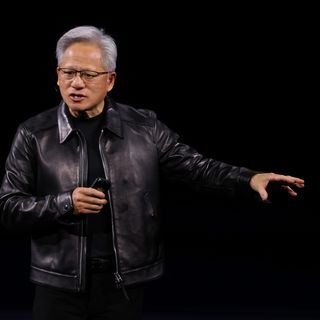
Nvidia CEO Jensen Huang has been asked by three House Republican committee chairs to brief Congress behind closed doors about his reported ties to a woman accused of spying for China. Why it matters: The request escalates the scrutiny of the Nvidia CEO over his alleged relationship with Alice Huang, a businesswoman accused of spying for China. Catch up quick: Jensen Huang and Alice Huang purportedly had a "close" relationship, per reporting from The New York Times . The Times also reported that President Trump was briefed by intelligence officials about their relationship and the allegations that Alice Huang was a spy, but chose not to act. The Wall Street Journal subsequently reported that officials in at least three countries had concerns that Alice Huang was passing information to the Chinese government, potentially including sensitive details on Nvidia chips. Nvidia has denied the allegations, saying Jensen Huang and Alice Huang's contacts were just routine business interactions. The Chinese government previously called the allegations it was spying on Nvidia "groundless speculation." Zoom out: Reps. Brian J. Mast (R-Fla.), John Moolenaar (R-Mich.) and Rick Crawford (R-Ark.) sent a letter to Jensen Huang Thursday, requesting he sit for a joint briefing with the respective House committees that they chair: Foreign Affairs, the Select Committee on the Chinese Communist Party and the Select Committee on Intelligence. They are seeking answers on Nvidia's protocols to protect itself from foreign adversaries and his interactions with Alice Huang, according to the letter. "Recent reports raise significant national security concerns regarding the [People's Republic of China] access to sensitive U.S. technology and information," the letter reads. "The issue of PRC infiltration and access to cutting-edge U.S. technology is core to the investigative work of our three committees this Congress. It is vital that Congress determines the extent to which U.S. national security has been placed at risk," the letter continues. The other side: Spokespeople for Nvidia were not immediately available to comment on the House request. They provided a statement to CNBC earlier Thursday again reiterating that Jensen Huang has routine business contacts with executives all the time, and that he does not provide them national security information.
Donica Phifer ·
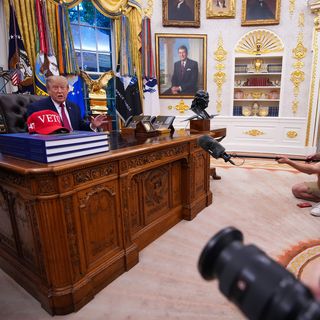
President Trump said after meeting with his national security advisers Thursday that he'll soon decide whether to resume all-out war in Iran now that the midterms are over. Why it matters: The election was seen as an inflection point for Trump on whether to unleash a new wave of bombing to try to bring the war to an end. The president, at least for now, is considering three options: launch new strikes, continue to strangle Iran's regime economically or cut a deal that includes significant concessions to the Iranians. On Thursday, Trump and his top national security advisers met on Iran for the first time since the election, as part of his weekly intelligence briefing, two U.S. officials said. What he's saying: "Now we will make a decision," Trump told reporters in the Oval Office. "Do we want to go further" with strikes to ensure Iran's nuclear program is dead and that "it will never happen again?" he added. "I would rather not destroy the rest of the country if possible, but maybe I will have to. You'll know soon enough." State of play: As Trump weighs his next move, there was a flurry of diplomatic activity on Thursday, including multiple phone calls between Iran's Foreign Minister Abbas Araghchi and regional mediators from Qatar, Saudi Arabia, Turkey, the UAE, Oman and Egypt. The Qatari mediators continued discussions with the Iranians and the White House about a draft proposal calling for the two sides to take a series of steps over two days to build mutual confidence toward a broader deal. On the first day, the U.S. would lift its naval blockade and release some Iran's frozen funds. In return, Iran would issue an official invitation to the International Atomic Energy Agency to send inspectors to bombed nuclear sites, based on an agreement reached in Cairo a year ago, regional sources say. On the second day, the Strait of Hormuz would reopen, after which nuclear talks would resume, focusing on Iran's stockpile of highly enriched uranium. The big picture: The secretary of Iran's Supreme National Security Council, Mohsen Rezaei — a key player in indirect negotiations with the U.S. — met with Russian President Vladimir Putin at the Kremlin on Thursday. The meeting took place several days after a call between Putin and Rezaei and proposals by the Russian president to mediate between the U.S. and Iran. Rezaei said he delivered a message to Putin from Iran's Supreme Leader Mojtaba Khamenei. He added that Putin stressed he is ready to try to help end the war. "We told Mr. Putin that we announced seven conditions to the Americans regarding diplomacy, and that until the Americans fulfill our seven conditions, neither the Strait of Hormuz will be opened nor will there be any negotiations," Rezaei said after the meeting. What to watch: U.S. Central Command (CENTCOM) is finalizing preparations to potentially resume major combat operations in Iran, though it hasn't received a new directive from Washington, a U.S. official said. One signal that the U.S. plans renewed strikes could be the arrival of a third U.S. Navy aircraft carrier strike group in the Middle East. A U.S. official said the USS Theodore Roosevelt and its strike group will spend a few days in Singapore starting Friday for a port call. It won't reach CENTCOM's area of responsibility before mid-November.
Barak Ravid ·

Democratic socialist Nithya Raman toppled embattled Los Angeles Mayor Karen Bass in a stunning upset, putting South Asian immigrants on course to lead America's two largest cities. Why it matters: With New York's Zohran Mamdani already in office, Raman's win puts democratic socialists on track to run two of America's most powerful city halls — testing whether their promises on affordable housing and better government can survive the pressures of governing. The big picture: Raman's victory marks a historic shift in urban American politics as voters embrace a new generation of immigrant leaders challenging the Democratic establishment. Raman, 45, immigrated from India as a child. Mamdani, New York's mayor, also has South Asian roots and immigrated to the U.S. Both built their political careers around affordability and inequality, giving democratic socialism a powerful foothold in America's largest cities. State of play: The Associated Press called the race for Raman Thursday, making Bass the first Los Angeles mayor in two decades to lose reelection. Raman led Bass 52.1% to 47.9% in unofficial results released Thursday. Ballot counting continues. Bass, who won in 2022, conceded and pledged a smooth transition. Raman takes office Dec. 14. Raman defeated a political heavyweight backed by California Gov. Gavin Newsom, former Vice President Kamala Harris, former House Speaker Nancy Pelosi and much of the City Council. Zoom in: Raman capitalized on growing frustration over homelessness, housing costs and Bass' handling of the deadly 2025 Palisades Fire. A September Berkeley IGS/L.A. Times poll showed Raman leading Bass 66%-4% among likely voters under 30 and 45%-21% among Latino likely voters. Bass narrowed the gap. The final Berkeley poll showed the candidates tied at 40%, with 19% undecided. Among Latino likely voters, Raman's lead shrank to 43%-40%. Raman launched her challenge in February after previously endorsing Bass, turning former allies into political rivals. Zoom out: Democratic socialism's reach now extends beyond New York and Los Angeles. Washington, D.C., voters also elected democratic socialist Janeese Lewis George Tuesday, delivering another major victory for the movement. The wins raise questions about the Democratic Party's future as younger progressives challenge established leaders. Yes, but: Raman has carved out an independent path that sometimes puts her at odds with fellow socialists. She has repeatedly clashed with the Democratic Socialists of America over Israel, policing and housing. National DSA leaders voted 14-13 Monday against withdrawing her endorsement after a dispute over how the Los Angeles chapter vetted her stance on the Boycott, Divestment and Sanctions movement targeting Israel. The group's Los Angeles chapter previously censured Raman for accepting an endorsement from Democrats for Israel-Los Angeles. She has stressed her political independence. Between the lines: Raman's winning pitch focused less on socialist ideology and more on making City Hall work. She told Axios and Noticias Telemundo at Visionarios that her approach amounts to "sewer socialism" or "pothole politics." "I just want government to work for the people," Raman said. That message could offer progressive candidates a model for building coalitions beyond traditional socialist activists. The bottom line: Winning City Hall may prove easier than running it. Raman faces a homelessness crisis, a housing shortage and the 2028 Olympics — with the nation watching whether democratic socialism can deliver on its promises.
Russell Contreras ·