Source
Axios

Axios (website)
Axios is an American news website based in Arlington, Virginia. It was founded in 2016 and launched the following year by former Politico journalists Jim VandeHei, Mike Allen, and Roy Schwartz. The site's name is based on the Ancient Greek ἄξιος.
From Wikipedia ↗, text under CC BY-SA 4.0; logo from Wikimedia Commons
- Type
- News outlet
- Lean
- Left-leaning
- Left-Center−2.8 of ±10
- High0.9 of 10 (lower is better)
- High
- Website
- axios.com ↗
- Feed
- RSS ↗
- Articles stored
- 1,048
- Tracked since
- Aug 15, 2026
Down: MBFC factual reporting score, 0 most factual to 10 least.
Bias and credibility ratings by Media Bias/Fact Check.
Axios on MBFC ↗Publishing rhythm
How many articles Axios published over the last 14 days, by publication time, and at which hours of the day.
Top keywords
All keyword charts for Axios →The people, places, organizations and topics Axios covered most that day, by the share of its stories that mention them. Article counts are shown for context.
No keywords that day yet.
Latest articles

Vice President Vance stepped out of President Trump's shadow Wednesday, seizing on the GOP's midterm catastrophe to begin the explosive task of claiming MAGA as his own. "The reason we lost is the war," Vance wrote in an extraordinary 600-word postmortem on X , blaming Trump's Iran campaign for Republicans' historic collapse. Why it matters: Vance's presidential ambitions are entangled in the wreckage of a war he privately opposed but publicly defended. His path to 2028 demands a delicate political calculation. Vance must convince MAGA's disillusioned voters that he understands their sense of betrayal, even as he remains a central figure in the administration responsible for the Iran war. His maneuvering will take place under the gaze of a president who doesn't seem particularly eager to leave the stage — and who isn't shy about reining in those on his team who overstep. "Today, JD Vance became president — or acted like he wanted to become one," a source close to the administration told Axios. Zoom in: Vance argued that defections from Trump's 2024 coalition — not lack of turnout — drove the GOP's collapse in Tuesday's midterms. Citing polling of disaffected Trump voters, he identified four demands: "End the war." "Focus on cost of living/inflation." "Put America First." "Change our relationship to Israel." Those happen to be the four hottest topics among top MAGA podcasters and activists. So Vance is aligning with those leaders on topics where MAGA anger with Trump is raging. What they're saying: "If you'd like to argue [the war] was worth it, that losing the Senate for the next 6 years was worth it, then do so," Vance wrote. "Argue it was a worthwhile cost to pay. Agree or disagree, that's at least honest." Trump accepted that challenge Wednesday, acknowledging that the war had hurt Republicans but insisting it was worth the cost. "If I had to do it again, I'd have to do it again," he told reporters. "As far as that war is concerned, I would have done nothing different." As for Vance's post, Trump said: "I know how he feels about it. I think it was fine. I thought it was good." Behind the scenes: Vance's commentary caught some in the White House by surprise. But insiders said the vice president worked with senior administration officials on the post. "These were his words and thoughts," one insider said. "He's leading." Said another: "It pains me to say this, but Tuesday showed the emperor had no clothes, and Vance knew he should just state the obvious. There are going to be a lot of other Republicans putting a lot more distance between them and the president." One Republican consultant representing a potential rival in the 2028 presidential race offered a blunter assessment: "The VP had to show he's not a dead man walking out there." Zoom out: Trump's second term has been riven by a bitter ideological feud between MAGA's anti-interventionist wing and the pro-Israel hawks who championed the Iran war. Vance privately questioned the war's objectives and duration, then publicly defended the campaign and led peace negotiations with Iran. His postmortem now puts him squarely in the anti-interventionists' camp. That could help him fend off potential 2028 challengers who also are skeptical of foreign intervention. It also gives Vance an opening against more hawkish Republicans, particularly Texas Sen. Ted Cruz. If Cruz runs in 2028, as many expect, and argues that it's time for the party to move on from Trump administration figures, Vance could try to argue that Cruz was on the wrong side of the issue that helped cost Republicans the midterms. The midterm results have unleashed a fresh wave of recriminations, with MAGA influencers blaming Laura Loomer, Ben Shapiro, Mark Levin and other hawks for betraying Trump's America First promises. Those influencers, in turn, have generally accused their critics of antisemitism or disloyalty to Trump. By the numbers: A GOP political group that surveyed 12 key congressional races in January found that a plurality of voters blamed Democrats for inflation. By October, the numbers flipped and Trump and Republicans bore the blame. "What changed? The war in Iran. The cost of gas. It's that simple," a Republican consultant who provided the polling to Axios said. The intrigue: Donald Trump Jr., an influential voice in MAGA's grassroots movement, threw his weight behind Vance's postmortem, writing on X : "Every word of this is 💯 💯 💯." Between the lines: For all his professed straight talk, Vance's postmortem is strikingly selective. He blames the Iran war and acknowledges voters' anger over inflation, but makes no mention of Trump's tariffs, corruption controversies or fixation on White House construction projects as Republicans' political fortunes collapsed. The omissions are revealing: Vance offers a diagnosis of the defeat that validates MAGA's "America First" wing, while shielding Trump from a broader reckoning with his presidency. What to watch: Trump has yet to anoint Vance as his successor, and the Republican collapse is already exposing the contours of a potential succession fight. Asked Wednesday whether he had discussed a presidential run with Vance, Trump said the two talk about "a lot of things," before adding: "Maybe he won't run. I don't know who's going to run." Florida Gov. Ron DeSantis (R), a Trump primary rival in 2024, seized on his state's narrow Republican victories — a rare GOP bright spot amid Tuesday's rout — to offer his own diagnosis of the party's failures. "This is close to an extinction-level event for Republicans," DeSantis said at a news conference. "In January, when everyone in office leaves, who were either term-limited or got voted out of the 10 largest states in this union, only one state will have Republican control of their state — the state of Florida."
Zachary Basu, Marc Caputo, Alex Isenstadt ·

Americans made it very clear on Tuesday that health care is too expensive. The challenge for Democrats is to agree on the quickest way to deliver some relief. Why it matters: Voters can't wait until 2029 for life to get cheaper — but any short-term action to meaningfully lower health costs will require Democrats to make deals with President Trump. The big picture: There's already speculation about what a Democratic unity health care agenda would look like, and what progressives' midterms success means for Medicare for All. But that's largely geared toward the 2028 presidential race or a possible Democratic administration. The short-term reality is that any ambitious policies that significantly expand the government's role in health care are almost certain to collide with Trump's veto pen. Strategists say the Democrats' most realistic option is to find piecemeal affordability fixes next year and play the long game when it comes to reshaping the health system. "If you read history, people make the biggest mistakes when they win. That's when they take their eye off the ball and they don't do the right thing," said Zeke Emanuel, an adviser in the Obama White House and a professor of medical ethics and health policy at the University of Pennsylvania. "This is an affordability election. We need to do affordability, but I do agree with the idea that this is a two-step process," he added. "There's going to have to be longer-term reforms." "For those debating whether the new Congress should consider big and bold reforms or pass practical help for people right away, the answer is yes. Voters can and should expect action on multiple fronts," Families USA executive director Anthony Wright said in a statement. Between the lines: Democrats' top priorities for the next Congress are restoring enhanced Affordable Care Act subsidies and reversing the Medicaid funding cuts in last year's GOP reconciliation law. Their unexpectedly large majorities in each chamber will give them leverage, but no guarantee of a victory, if there's a standoff with Trump. Even if they prevail, it won't help the 157 million Americans with workplace coverage who are feeling the strain of higher premiums, deductibles and other out-of-pocket costs. "Congress thinks of Medicare, Medicaid, and to some extent the exchanges. But they have to remember half the American population and a lot of people complaining about affordability are in the private sector," Emanuel said. What they're saying: Senate Democratic Leader Chuck Schumer told MS NOW yesterday that health costs will be a top focus for Democrats. Incoming Senate Finance Committee Chair Ron Wyden (D-Ore.) said his committee "will create a new foundation for America's health care system that guarantees health care for all, gives Americans cheaper and better health care, and ends the corporate chokehold on our nation's health care system." And House Energy and Commerce Committee senior Democrat Frank Pallone of New Jersey called for "an agenda that puts working people first and focuses on resolving the outrageous price increases." The intrigue: Drug pricing could be one area ripe for a deal, considering the Trump administration's efforts to get the Republican Congress to write into law the "most favored nation" deals it struck with major manufacturers. "It's very hard for the public to hear both Democrats and the president say they care about this issue and fail to find a way to ... provide greater cost relief for their medications," said Democratic health care consultant Chris Jennings. Emanuel said Democrats should also push for site-neutral hospital payment policies, caps on hospital costs and an end to copays and deductibles for generic drugs in Medicare and ACA markets. The question is whether many Democrats are willing to scale back their ambitions for the sake of striking a deal with a weakened president. Many of those policy options would generate budgetary savings that could instead be used to help pay for sweeping coverage expansions. The bottom line: Voters couldn't have been clearer about how they're being squeezed by the health affordability crisis. Democrats have to figure out how to respond to pressure to act now.
Caitlin Owens ·

The AI industry is scrambling to repackage a $10 trillion infrastructure buildout to appease a hostile electorate that overwhelmingly voted to restrict data center construction in ballot measures across the country. It's not just changing the name of data centers to "compute campuses," but offering communities real money, including dividends, benefits for schools or cities, environmental concessions and labor protections. Why it matters: Tuesday's election proved voters won't tolerate unchecked growth, although the market and many analysts see the blue wave slowing — but not stopping — data center construction around the U.S. To prevent an existential threat, the world's biggest companies are working on a rebrand. How well they execute on their promises will determine the pace of the global AI race. What they're saying : Chris Lehane, OpenAI's chief global affairs officer, compared the turnaround AI must make to the 1996 election, which came shortly after Republicans routed Democrats in a historic midterm election. "A lot happens in two years," he told Axios in an interview. "Smart, talented folks take messages from voters and react and respond to them." Getting community buy-in for data centers will require "really making clear that these can be long-term, durable, economically transformative projects for communities," he said. Driving the news : There's no question about how voters feel about data centers after Election Day, with restrictive measures across 10 states going 43-1 at the ballot box. The margins weren't close, with an average of 75% of people favoring restrictions. In Texas, a new Democratic governor has promised to keep a moratorium in place until the legislature passes comprehensive reforms. Candidates who won in other emerging data center states also favor similar restrictions. Analysts say about 60% of planned 2028 capacity across the U.S. faces a risk of delay. Between the lines : Incoming Democrats aren't going to kill data centers. Virginia, run entirely by Democrats, is the biggest data center hub in the U.S. Unions are also among the buildout's biggest supporters. But many of the new crop of winning candidates have similar demands. Tech companies must pay for infrastructure and bring their own power, ensuring that new strains on the grid from the boom won't hit ratepayers. Tax breaks are dead and face repeal, and the companies will have to show that they will ensure environmental and labor protections. Voters also won't tolerate any more nondisclosure agreements or what look like secret deals. What we're watching: Amazon, Google, Microsoft, OpenAI and other major data center developers began laying out a new vision for winning public approval before Tuesday's "AI earthquake." Many of their proposals already include efforts to meet these demands, including commitments to ensure data center developers cover their infrastructure and power costs. These concessions may make data centers more costly, but a slower pace could also make it easier to absorb higher costs. Zoom in : Jobs won't be enough, since they are temporary. Look for more payments akin to the $50,000 teacher bonuses that followed the construction of a massive Meta data center in Louisiana. Amazon allocated $1 billion for investing in data center communities over five years, and Microsoft also has its "Datacenter Community Pledge." OpenAI on Thursday unveiled a "Compute Campus Policy Blueprint" and outlined tens of millions of dollars of commitments for free school lunches, parks, first responders and other priorities. Lehane added that renaming data centers to compute campuses—viewed as a gimmick by some policymakers and consumer advocates—was an intentional effort to "provoke that conversation." Yes, but : It's far from clear whether Democrats who are poised to take control of powerful congressional committees in Washington will buy the talking points, and some new state leaders campaigned on the importance of binding agreements. A report last month from Sen. Elizabeth Warren (D-Mass.) found that major tech companies aren't covering the full infrastructure costs of their data centers, and companies continue seeking billions in tax breaks as well as using nondisclosure agreements. The bottom line : Data center construction is set to slow, but it won't stop. The race is on to see whether Democrats can translate election momentum into binding restrictions or if the industry tries to head off tougher rules.
Maria Curi ·

It's a de facto motto in the Trump White House: "Somebody's gotta take the fall." Lately, that person looks like Secretary of Defense Pete Hegseth. Why it matters: From the unpopular war in Iran to his bad bipartisan relations with members of Congress, Hegseth's record has made him the most vulnerable member of Trump's Cabinet after Tuesday night's midterm shellacking. "Hegseth is definitely on thin ice," a Trump adviser told Axios. "It doesn't mean the president forces him out. But there are complications." Driving the news: As early as next week, the House could impeach Hegseth for allegedly defying Congress and illegally continuing the U.S. war in Iran. The measure is sponsored by Rep. Thomas Massie (R-Ky.), a vociferous critic of Israel and foreign wars. Zoom in: Iran is at the center of both Hegseth's possible impeachment and Republicans' midterm collapse. Many voters oppose the war and its byproduct: higher gas prices that spiked after Iran closed the Strait of Hormuz. Before Trump attacked Iran on Feb. 28, Hegseth was the most gung-ho about the conflict, and he gave the rosiest projections about how quickly and easily it would be resolved, according to sources familiar with the discussions. By August, a senior administration official said, U.S. Central Command was reportedly soliciting new approaches to pressure Iran, suggesting that military leaders were still reassessing how to achieve strategic results. CentCom was also asking: "At what point did Hegseth recognize that our original strategy wasn't going to produce the outcome he expected and pitched?" Trump stood by Hegseth on Wednesday, telling reporters that the secretary is "doing a very good job." Between the lines: Trump has been known to praise an embattled Cabinet secretary, only to seek their ouster shortly thereafter. With Hegseth, four factors are weighing on Trump: 1. The impeachment threat. Democrats already have tried to impeach Hegseth, and with their new House majority in January, those efforts could intensify. The last thing Trump wants is a series of distracting impeachment hearings focused on Hegseth's rocky tenure — and, inevitably, Trump's decision to attack Iran. "Tonight would have looked very different without the Iran war," one administration official told Axios late Tuesday. "I believe you'll ultimately see POTUS hold Pete Hegseth accountable, and that will play out in the lame duck," a reference to the period between the midterms and the new Congress' first day, Jan. 3. 2. Trump needs a scalp. Presidents have a long history of shaking up their administrations after disastrous midterms. George W. Bush notably ousted Defense Secretary Donald Rumsfeld after the 2006 elections. It wouldn't be surprising to see Trump make a high-profile personnel change after a defeat of this magnitude. Hegseth, whose tenure has been marked by controversy, is one potential target. "Somebody's gotta take the fall, and Pete is moving to the top of the list," a U.S. official said. 3. The lame-duck window. If Trump is going to replace Hegseth, there's a compelling reason to do it before January. Confirmations in a Democrat-controlled Senate will be impossible. That gives Trump a narrow window to push through a new defense secretary while Republicans still hold the majority. "No one's getting confirmed" in the new Congress, a senior White House official said. "We're operating under that premise." 4. A potential soft landing. There also is a conceivable exit ramp for Hegseth: Tennessee Sen. Marsha Blackburn is about to become that state'e governor, and she will have the power to appoint a replacement to her Senate seat. Hegseth owns a home in Tennessee, giving him a connection there. Trump expressed approval for the idea Wednesday: "I actually think he'd be very popular if he did that. But I haven't heard that at all." What they're saying: Asked about a possible impeachment vote and efforts to remove Hegseth, a spokesperson said the secretary will "not back down or be deterred by politicians seeking to score partisan points or launch phony investigations where no wrongdoing exists." "The Department of War has followed the law and our secretary will continue to stand and fight every single day to support and defend the Constitution, lead our troops, and protect America." The intrigue: Trump allies in Congress have asked the administration to get rid of Hegseth, but they acknowledge that even if Democrats captured 55 Senate seats, an effort to remove the secretary probably would fail because it would take 12 more votes in the 100-member chamber. "There are some Republican chairs in the Senate who just hate Pete, but that isn't enough," an administration official said. Behind the scenes: Hegseth critics leaked to Politico that the secretary's new financial disclosure report showed his wife worked for a consulting firm with Defense Department ties. One Hegseth ally called the campaign against the secretary "an op." In a statement, Hegseth's department said he's in "full compliance with all ethics laws and regulations ... Any insinuations or claims otherwise are ridiculous slander."
Marc Caputo, Alex Isenstadt ·
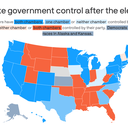
Data: Axios research; Map: Andrew Pantazi/Axios Democrats are on track to take control of a majority of legislative chambers, ending 16 years of Republican dominance over America's statehouses. If current leads hold, 75% of Americans will live in a state with a Democratic governor, and 53% will live in Democratic trifectas. Why it matters: Statehouses are the front line of American federalism, and Tuesday's gains dramatically expand Democrats' power to increase minimum wages, protect abortion access, and set voting rules ahead of 2028 for most Americans. Driving the news: The party is set to flip 12 legislative chambers, dismantle five Republican state trifectas, shatter 11 GOP supermajorities and build 12 of its own, according to AP returns as of 6pm ET on Wednesday. If leads hold, Democrats will control the governor's office and both chambers in five of the seven 2024 presidential battlegrounds: Arizona, Michigan, Nevada, Pennsylvania and Wisconsin. They have also broken Republican one-party rule in the sixth (Georgia) and flipped the House in the seventh (North Carolina). Democrats flipped five GOP-held governorships (Georgia, Iowa, Nevada, Ohio and Texas) and lead in Alaska. Republicans haven't flipped any, despite targeting Arizona, Michigan, Oregon and Wisconsin. Kansas, where Democrat Cindy Holscher was leading by about half a point Wednesday evening, is uncalled. The big picture: Ever since the 2010 Tea Party wave, Republicans have used their grip on statehouses to reshape American life: banning abortion, loosening gun laws, restricting collective bargaining and expanding private-school vouchers. They drew maps that kept them in power even in years Democrats won more votes statewide. Tuesday's Democratic gains broke that firewall. By the numbers: Republicans entered Election Day with 23 trifectas (control of the governor's office and both chambers) to Democrats' 16. If leads hold, Democrats will have 22 and Republicans 18. 24% of Americans will live under a GOP trifecta, down from 42%. Democrats will control 51 of 99 chambers, up from 39. Republicans will control 46, down from 57. (Minnesota's House was tied, and Alaska's Senate and House have been controlled by a bipartisan coalition.) A combined 5,000-vote swing across six states would have given Democrats control of six more legislative chambers. Data: Axios research; Table: Andrew Pantazi/Axios Zoom in: Democrats won veto-proof majorities against Republican governors in both Vermont chambers and the New Hampshire House, and sit one seat short in the New Hampshire Senate. Republicans lost two-thirds majorities in eight chambers, including the Iowa and Kansas Houses, where Democratic governors' vetoes would now stick. In Kansas, that depends on Holscher winning. Democrats built supermajorities in nine more chambers, including Arizona's Senate and in states they already govern. Policies Democrats could reshape Paychecks: Pennsylvania and Wisconsin still use the $7.25 federal minimum wage. Pennsylvania's House has passed increases before, and the GOP Senate didn't take them up. Wisconsin Democrats can repeal what's left of Act 10, the 2011 law that stripped most public workers of collective bargaining. A judge struck down most of it in 2024, and that ruling is on appeal. Nevada Democrats can revive a paid leave bill the Republican governor vetoed. Abortion: New Democratic attorneys general in Georgia and Texas will decide how hard to defend their states' abortion bans in court and whether Texas keeps pursuing doctors who mail pills from shield-law states. In Iowa and Ohio, and in Kansas if Holscher wins, Democratic governors can veto new restrictions. Schools: Arizona Democrats can cap the state's universal voucher program , which Gov. Katie Hobbs has tried and failed to rein in. Texas' new $1 billion voucher program might survive because the GOP held the state Senate, but now Democrats will have a say in how it's funded. Elections: Pennsylvania and Wisconsin bar officials from processing mail ballots before Election Day. That rule is a big reason both states' counts can drag on for days. Democratic trifectas in both states can change it before 2028. New Democratic secretaries of state in Georgia, Ohio and Indiana will run those states' presidential elections. Yes, but: In Texas, Georgia, Ohio, Iowa and Kansas, divided government means more vetoes than new laws. Several new majorities are razor-thin. Pennsylvania's Senate is 26-24 and Wisconsin's is 18-15. New Democratic governors also inherit the Medicaid and SNAP cuts in last year's GOP megabill, and backfilling them would come out of state budgets. The bottom line: Republicans spent 16 years building a statehouse majority. Democrats erased it in one night, and now have two years to show voters what they'll do with it.
Andrew Pantazi ·

Democrats of all political stripes won so big on Tuesday that the party didn't settle its long-running civil war between moderates and progressives. Instead, the party's historic victories gave each faction some reasons to claim that its brand of Democrats can defeat the GOP in 2028. Driving the news: Democratic operatives are sure of one thing, though: Tuesday's blowout wins mean that more party leaders will be willing to run for the White House than if the midterms hadn't gone so well. Barack Obama's 2012 campaign manager, Jim Messina, told Bloomberg TV this week that he's already met with 29 potential candidates. Zoom in: On Tuesday, moderate Democrats won. Progressives won. Even one-time socialists won. In Michigan, for example, unapologetic progressive Senate nominee Abdul El-Sayed won by 7 points after running on Medicare for All. In the same state , William Lawrence, a member of the Democratic Socialists of America before he let his membership lapse recently, flipped a key swing district. Those results were good news for New York Rep. Alexandria Ocasio-Cortez, the democratic socialist with a national profile who went all-in on electing El-Sayed — and is considering a run for president in two years. More moderate Senate candidates who frequently talked about their faith on the campaign trail — such as Texas' James Talarico and Kansas' Adam Hamilton — pulled off huge upsets in deep-red states, and in the process created a model for some Democrats to follow. Their mild-mannered, religion-infused campaigns mirrored former Transportation Secretary Pete Buttigieg's 2020 presidential run. For the past year, AOC, Buttigieg and other Democrats eyeing the White House have been laying the groundwork to turn the 2026 elections into a springboard for their potential presidential campaigns. Some put their chips on specific candidates — and virtually all of them succeeded. Pennsylvania Gov. Josh Shapiro, a centrist technocrat who campaigned on "getting sh*t done," won reelection by 22 points. His long coattails helped Democrats win four new House seats and a trifecta in his state's government. Former Vice President Kamala Harris , who urged voters to push back against the Supreme Court's ruling threatening Black representation in Congress, saw her efforts to help boost Black turnout across the South pay off. Harris also campaigned with Black gubernatorial candidates in Nevada and Wisconsin who won — and a third Black Senate contender who's on the cusp of flipping a Senate seat in Mississippi in what would be a historic win. Also good for Harris: Georgia's Keisha Lance Bottoms made history as the first Black woman in the country to win a governor's race. In Georgia, Sen. Jon Ossoff won a second term by 18 points. Because Bottoms as governor would be able to appoint a replacement to a vacated Senate seat, Ossoff — or Georgia Sen. Raphael Warnock, another potential White House contender in 2028 — wouldn't have to worry about a Republican temporarily filling his position if he were to win the presidency. What they're saying: What happens next for the party is "a big question mark," said Lauren Hitt, a Democratic strategist who advises moderates and progressives. "We're going to spend a year fighting out who actually has the mandate — left/center/populist — and then in 2028 we'll have our answer." Some Democratic operatives believe that the through-line of their wins was simply change — and that the next presidential nominee should represent a new direction more than any policy, identity or ideology. The other side: Some Democrats hope that Tuesday's results signal that the factional warfare that has defined their party for much of the past decade might be coming to an end — or at least entering a new phase. "We've just come to this place as a Democratic Party where it's not one wing — it's all of the wings," said Jane Kleeb, president of the Association of State Democratic Committees. In 2028, "it will be interesting to see which candidates can communicate to the primary voter that they are not only from one wing of the party," she added. "That's going to be the big test."
Holly Otterbein, Alex Thompson ·
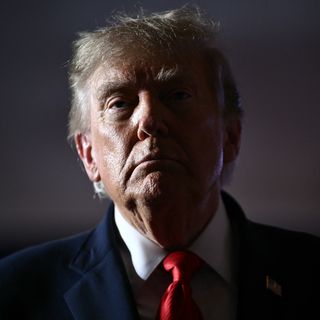
President Trump has conceded that the Iran war cost Republicans dearly in the midterms . Now he must decide whether to cut his losses and reach a deal — or double down and go back to bombing. Why it matters: All of Trump's options are problematic: The first is to strike. But going back to war would be highly unpopular — keeping gas prices high and probably not yielding a better military result. Another is to negotiate. But if Iranian officals refuse to make concessions — or, sensing weakness after the president's political loss, up their demands — Trump will have a hard time reaching a deal. The third is to "strangle," as aides put it. This would mean sticking with the status quo — the naval blockade coupled with crippling economic sanctions that leave the Iranian regime to "rot" — while continuing to test its appetite for a deal. This path, however, could take months to show progress. The big picture: The president has said for weeks he would end the war one way or another after the election. One of his former advisers told Axios: "It's one thing to lose the midterms. But Trump doesn't want to look like a loser twice." That's left even his closest aides unsure what he's going to do next. The intrigue: Vice President Vance, in an extraordinary statement Wednesday morning, bluntly blamed the war for the GOP's midterm drubbing. It added a new political calculation to Trump's decision. "The reason we lost is the war," Vance wrote on X . "The president himself said so last night. If you'd like to argue it was worth it, that losing the Senate for the next 6 years was worth it, then do so. ... But everyone knows why we lost. And any honest conversation about where we go from here must start there." Vance also cited the U.S. relationship with Israel as a serious liability for Republicans. Trump told reporters on Wednesday that Vance's analysis was "largely true" because the war drove gas prices up. But Trump said he'd do it again if he had to: "We had no choice. You can't let Iran have a nuclear weapon." Asked when he's going to end the war, Trump responded: "Whenever I wanted to. But it's got to be done right, because they can't have a nuclear weapon." Behind the scenes: In recent months, Vance has led a faction within Trump's inner circle advising him to reach a deal with Iran to end the war. He privately accused Israeli Prime Minister Benjamin Netanyahu of "being wrong on everything" regarding Iran, sources said. Vance warned that the war was highly unpopular and could cost Republicans the election, the sources said. Most senior officials around Trump have shared Vance's views. But Trump still leaned toward resuming the war. At one point, he considered launching strikes before the midterms, as Netanyahu was pressing him to do. Trump decided to wait. But against the advice of his top advisers, he still endorsed Netanyahu in Israel's election last week. State of play: The U.S. military is finishing preparations for a possible resumption of major combat operations in Iran, including sending more assets to the region, American officials say. At the same time, Qatari mediators are working to secure U.S. and Iranian support for a draft agreement to head off a return to battle and possibly resume direct talks in the coming days, regional sources say. The mediators asked White House officials before the election what Trump would do if he lost. The president's advisers couldn't vouch either way, a source with knowledge said. "We told everybody that we want to see first how the elections turn out for us," a U.S. official said. The other side: Iranian officials celebrated Trump's electoral defeat, saying it showed they're winning the war. "The Iranian nation handed Trump a strategic defeat on the battlefield and in the Hormuz — and a POLITICAL DEFEAT in Washington," Iran's Supreme National Security Council Secretary Mohsen Rezaei wrote on X. "Meanwhile, Americans got stuck with the bill for his war. Anyone who takes on Iran will pay the price — from the battlefield to their own doorstep." Diplomats involved in the mediation efforts, Trump advisers and Middle East experts said Iran's gloating could make the president more likely to return to war. "Tehran's temptation is likely to mistake Trump's political weakness for military weakness and overplay its hand, when the smarter move is to bank a deal while Washington still wants one," Ali Vaez , deputy program director for the Middle East and North Africa at the International Crisis Group, told Axios. Yes, but: Trump could opt to maintain the "no war, no deal" status quo. CIA Director John Ratcliffe, Treasury Secretary Scott Bessent and other advisers want Trump to let the naval blockade and economic pressure campaign play out longer, tightening the screws on Iran. The bottom line: There's no tidy way for Trump to "finish the job" in Iran.
Barak Ravid ·
House Democrats channeled anti-Trump fury into a landslide victory over Republicans. Now comes the hard part: Figuring out what to do with their huge majority . Why it matters: That question is already igniting a power struggle between Democrats' ideological factions as they lay out contradictory visions for what the next two years of governing looks like. This story is based on interviews with more than a dozen sitting and incoming House Democrats from across the political spectrum. "Last night was a rebuke of the status quo," progressive Rep. Delia Ramirez (D-Ill.) told Axios, adding that "for the left it was an affirmation and a validation that we are on the right track." There is "absolutely no excuse," Ramirez said, for House Democrats not to do "the most over the next two years, and as quickly as possible." Rep. Josh Gottheimer (D-N.J.), a centrist, said Tuesday was a "gigantic night for the middle ground," and that the mandate is far more modest: "We need to crush high costs and corruption." State of play: House Democrats are on track to win more than 250 seats, which would give them a comfortable majority of dozens of votes. That blows up the plans of a cohort of incoming progressives known as the "Bloc" to demand concessions from leadership in exchange for voting with the party. The potential concessions included changes to House rules, plum committee assignments and votes to enact Medicare-for-All , defund ICE and cut off U.S. aid to Israel. What we're hearing: The left's new tactic is to try to convince the Congressional Progressive Caucus to, as one sitting House Democrat put it, "assert its authority in a way it has never done before." "That should definitely be part of the game plan," an incoming Bloc member told Axios, "we've got so many members of the CPC and I think we're adding 25 more." Said Rep. Pramila Jayapal (D-Wash.), a former CPC chair: "We have certainly used our power many times ... and we will do that again." The CPC is currently around 100 members, though not all are pugnacious ideological brawlers. The new strategy also involves aggressively recruiting incoming House Democrats from battleground districts, a group that hasn't traditionally been at the core of the CPC's membership. The left is hopefully eyeing the "Bernie Dogs": Populist candidates from working class backgrounds who won red districts with support from both progressives and centrists. They are also taking a close look at the "wave babies": Candidates who won upset victories in districts that weren't even on the party's radar and whose politics are largely unknown on Capitol Hill. What they're saying: CPC chair Greg Casar (D-Texas) argued in an interview that it may not be such a fight to pass a progressive agenda, noting that House Minority Leader Hakeem Jeffries (D-N.Y.) has called for "dramatic change." "Americans delivered a demand for bold change, and progressives are excited to deliver it," Casar said, adding that Medicare-for-All is "overwhelmingly popular" and that Democrats "should move that kind of legislation forward." Jayapal told Axios: "We will be driving an agenda that truly is big and bold and looking for [Jeffries'] leadership to make sure that is what we deliver." The former CPC chair said she is "100% down" for the items on Jeffries' 100-days agenda but "I just don't think there's any way we can stop there. ... We have to pass a living wage bill, we have to pass universal childcare." The other side: Rep. Adam Gray (D-Calif.), a leader of the centrist Blue Dog Coalition, told Axios, "The most extreme elements ... want to do messaging bills and yell and scream and point the finger." "There's time for that, let's just not make it the majority time," he continued, "and I think you're going to find a lot of people ... agree with me on this." Rep. Marc Veasey (D-Texas), an ally of Jeffries, said the results were a "victory for common sense, not any extremist ideology" and that Jeffries "understands what last night was all about and he will lead accordingly." Jeffries is being characteristically taciturn about how he will govern. "We're going to have a conversation as a caucus upon our return about what the agenda looks like," he told reporters at a press conference on Wednesday. Asked about marking up Medicare-for-All, Jeffries said House Democrats will have a "family conversation" about what health care measures to pass beyond renewing expired Affordable Care Act tax credits and reversing the GOP's cuts to Medicaid. The bottom line: "Medicare-for-All is not going to happen in the next two years and everybody knows that," said progressive Rep. Jared Huffman (D-Calif.), a co-sponsor of Medicare-for-All. "I hear all of this jockeying, and frankly I find it tedious," he told Axios. "We're going to have a huge majority to navigate these issues and it's all going to be fine. ... We're mostly on the same team here." Said another House progressive: "With this big of a majority, honestly, the Bloc has way less influence, but the good news is so do the members who buy Depends by the carton." "On balance, this is a center-left caucus," a third House Democrat said.
Andrew Solender ·

Democrats' midterm tsunami obscured a major polling miss: Surveys correctly anticipated a blue wave, but failed to capture its full force. Why it matters: Pollsters appear to have underestimated Democrats by a wider margin than they underestimated Republicans in 2016 or 2024 — even if they got the headline outcome right this time. By the numbers: Democrats are on track to win the national House popular vote by roughly 13 points, compared with a final Silver Bulletin polling average of 8.9 points, according to an initial analysis by The Argument's Lakshya Jain . That roughly 4-point gap is similar to the 2020 polling miss that underestimated Republicans and larger than the average partisan errors in 2016 and 2024, though comparisons to presidential years are imperfect. The big picture: Pollsters entered the 2026 midterms having underrated Trump's support in three consecutive presidential elections. Their central challenge was accounting for Republican voters who might be missing from their surveys. Many polling organizations have sought to compensate by weighting results based on party affiliation or how respondents voted in previous elections. A Pew analysis found that nearly 70% of national polls used such political weighting in 2024. In an October analysis , The Washington Post warned that a collapse in turnout among Trump voters could cause polls calibrated to the 2024 electorate to underestimate Democrats. Tuesday's results raise questions about whether the industry's efforts to correct past polling misses contributed to a new one. Reality check: Some of the pollsters that projected the largest Democratic margins appear to have come closest to the final result. AtlasIntel placed itself first in a ranking of final national House polls based on its projection of the popular-vote margin. It's the second straight election where the pollster stood out for its accuracy. AtlasIntel's final poll showed Democrats leading by 14.1 points, just 0.3 points from the firm's projected final margin of 13.8. Tufts University, New York Times/Siena, Change Research and RMG Research rounded out the top five in AtlasIntel's rankings.
Neal Rothschild ·

Efforts to keep the LIV Golf league alive have collapsed. Why it matters: LIV filed for Chapter 11 bankruptcy protection in September after its Saudi investors confirmed plans to withdraw funding after the 2026 season. Driving the news: BC Partners — which had tentatively agreed to invest in a "LIV 2.0" league — is walking away, a source familiar with the matter confirmed Wednesday. The investment was always predicated on an unspecified number of players signing on — and at least 30 ultimately indicated interest in doing so, the person said. But economic terms remained a sticking point with some of their representatives. But the league was unable to secure enough support in time to meet the deadlines set in the bankruptcy case. LIV had also lost several stars in recent weeks, including Jon Rahm and Sergio Garcia, compromising its commercial appeal. What's next: People involved in the case expect LIV to pivot to a liquidation. Spokespeople for LIV and BC Partners were not immediately available for comment. Catch up quick: The Public Investment Fund — Saudi Arabia's sovereign wealth fund — confirmed in April that it was withdrawing support for the league after the 2026 season. PIF — which ultimately plunged more than $5 billion into LIV, according to Money in Sport — decided to ditch LIV after President Trump's war in Iran scrambled geopolitics in the Middle East and jolted energy prices. The fund said in a statement that the "substantial investment required by LIV Golf over a longer term is no longer consistent with the current phase of PIF's investment strategy." Friction point: Critics of LIV and the players who joined it said the league amounted to " sportswashing " as the Saudis sought to redirect attention from allegations of human rights abuses. Defenders — including LIV member and former PGA superstar Phil Mickelson — said the league would help grow the game on a global scale. What to watch: What the league's biggest star, Bryson DeChambeau, does next.
Dan Primack, Nathan Bomey ·
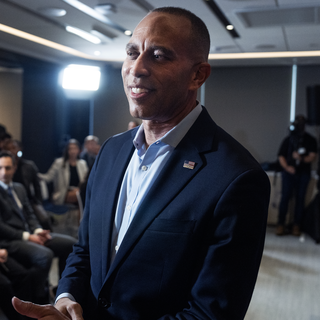
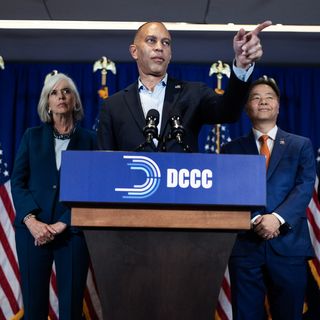
House Minority Leader Hakeem Jeffries (D-N.Y.) formally launched his bid for speaker of the House on Wednesday in a letter to colleagues obtained by Axios. Why it matters: Jeffries is widely expected to secure the speaker's gavel after House Democrats' landslide midterm win. He would make history as the first African American to serve in the role. Jeffries, who was first elected to Congress in 2012, has led the House Democratic caucus since former Speaker Nancy Pelosi (D-Calif.) stepped down in 2022. What he's saying: "I write to humbly request your support in connection with my candidacy to serve as the next Speaker of the House of Representatives," Jeffries wrote. "We must now deliver the dramatic change the American people are demanding in the majority," he continued. Jeffries wrote that "every single member of our majority will play a meaningful role" and that his goal is to empower House Democrats to "act decisively in three key areas: (1) Affordability (2) Accountability and (3) American Values." Between the lines: While some incoming progressive and red-district Democrats have declined to commit to supporting Jeffries for speaker, he is not expected to face any serious opposition for the role. The big majority House Democrats won on Tuesday will further help to insulate him from any would-be rebels in his caucus. Zoom out: Jeffries' senior leadership team is similarly expected to run uncontested: Minority Whip Katherine Clark (D-Mass.) for majority leader. Democratic Caucus chair Pete Aguilar (D-Calif.) for majority whip. Democratic Caucus vice chair Ted Lieu (D-Calif.) for Democratic caucus chair. Assistant Leader Joe Neguse (D-Colo.) for assistant speaker. Read the letter in full, via DocumentCloud : Editor's note: This story has been updated with additional details throughout.
Andrew Solender ·

Republicans barely had time to absorb their sweeping midterm losses before President Trump returned to a familiar comfort zone: D.C. construction projects. Why it matters: Voters just delivered an overwhelming rebuke of the administration, demanding that politicians focus on the cost of living, yet the president remains fixed on remaking the nation's capital in his image. Driving the news: Trump hosted reporters at the White House on Wednesday for a previously unscheduled event to update them on the East Wing ballroom's construction, marking his first remarks to the White House press pool since the election. He spent the majority of his remarks discussing planned architectural changes around D.C., including a proposed Triumphal Arch, the National Garden of American Heroes and a planned expansion of a publicly owned golf course that would likely eliminate popular running and biking paths. His remarks came after a pre-election appearance Monday, during which he praised the new pipes installed at the Reflecting Pool and a proposed promenade from the Lincoln Memorial to the Potomac River. What they're saying: Trump addressed criticism he sometimes receives for working on his construction projects, saying he was "doing it because the White House is the ultimate symbol of America, and it's got to be pristine." "It's got to be perfect. And if you take a look at it, that's what it is right now. You have no idea how much work we had to do." He also noted that he spends "very little time" working on the White House, but said he does it because "it's relaxing …I love construction." Catch up quick: Democrats outperformed expectations in Tuesday's midterms, flipping the Senate before the night was over and then the House a few hours later, according to the AP. Democrats have gained complete control of at least five previously divided state governments while ending Republican trifectas in several other states. In ruby-red Texas, the white whale of potential pickups, Democrats flipped the governor's mansion, a Senate seat and now control the state House. Zoom in: "President Trump's commitment to restoring our Nation's treasured landmarks should be celebrated and does not distract from his work to lower costs, strengthen our economy, and improve the lives of American families," a White House spokesperson told Axios in an emailed statement. "While making our Nation's capital safe and beautiful again as he promised to do, President Trump remains focused on lowering costs, driving down inflation, creating good-paying jobs, reshoring our manufacturing industry, unleashing American energy dominance, securing new investment, securing our borders, deporting dangerous illegal criminals from our communities, and enforcing tough-on-crime policies." Zoom out: Trump also briefly discussed his immigration policies and efforts to lower crime around D.C. during his Wednesday speech. He later took questions from reporters, during which he reiterated that Republicans would have won had he been on the ballot. Go deeper: Blue tsunami breaks MAGA: 5 takeaways from a blowout midterm election
Josephine Walker ·
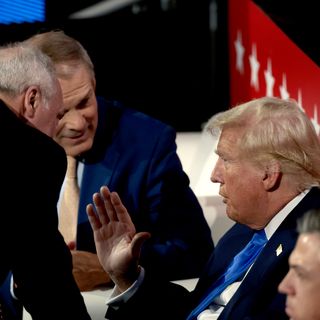
Republicans woke up "in shock" Wednesday morning after they got hit with the biggest midterms wave in 50 years. Within hours, that shock was turning into rage. Why it matters: The battle for control of what's left of the Republican conference — headlined by Majority Leader Steve Scalise (R-La.) and Judiciary Chair Jim Jordan (R-Oho) — is the first salvo in a quest to bring GOP lawmakers back from the political wilderness. Johnson set the tone Wednesday morning, when he took himself out of the running for leader, citing the toll the job has taken on his family. A key outstanding question is the extent to which Republican finger-pointing leads to a wholesale shake-up of the party's leadership ranks, versus a slight readjustment. Driving the news: The intra-party blame game quickly hit a fever pitch. "Dear Republican Senate and House "Leadership," No, the polls were not wrong. You were. Even with record amounts of money at your disposal, you managed to get absolutely annihilated," Rep. Greg Steube (R-Fla.) wrote on X Wednesday morning. "Please do us all a favor and step aside so new leadership can take a truly conservative direction," Steube added. "When you have the worst defeat in modern history, you need a new playbook," another GOP lawmaker told Axios. State of play: The fallout is rippling across the entire House GOP leadership team, with every top position facing a contested race. Minority leader: Scalise and Jordan are squaring off in a rematch of their bitter 2023 battle for the speakership. Minority whip: Tom Emmer faces a challenge from Rep. August Pfluger (R-Texas). NRCC Chair: Rudy Yakym and Brian Jack will face off for the post. Current NRCC Chairman Richard Hudson (R-N.C.) is on track to lose his own reelection bid. Zoom in: Behind the leadership infighting, Republicans are reckoning with what went so disastrously wrong on Election Day, with some blaming the Trump administration's policies for their losses. "Iran, Iran, Iran ... we should have never done the war before the midterms," one GOP lawmaker told Axios. Another pointed to "Iran, ICE, inflation, fuel prices, lack of focus on pocketbook issues" as factors in the defeat. "Iran and the vanity of putting your name on things like the Kennedy Center," another GOP lawmaker said. What's next: House Republicans are scheduled to elect their next leadership team this coming Tuesday. The winner needs a majority of House Republicans in a secret-ballot vote.
Kate Santaliz ·

Data: The Downballot , Ballotpedia , AP ; Chart: Erin Davis/Axios Republican mapmakers thought they were drawing at least a dozen comfortably red districts to protect their House majority. Why it matters: They weren't red enough . In the seven states where Republicans redrew congressional boundaries, the GOP is on track to lose as many as eight seats — rather than gain the 15 it had hoped to pick up. With two exceptions — TX-32 and TN-09 — the pickups Republicans penciled in never materialized. Then there was a bloodbath in North Carolina. Zoom in: At the heart of the GOP's miscalculation was a bet that the 2026 electorate would look like 2024's. Instead, voters behaved more like they had in 2020 — or even 2018. TX-34: Republicans made an already Trump-leaning district significantly redder, shifting it from Trump +4 to Trump +10. Democratic Rep. Vicente Gonzalez still won by nearly 16 percentage points. TX-23: Republicans made an already red district slightly less Republican, shifting it from Trump +16 to Trump +15. Democrat Katy Padilla Stout won by eight points. TX-15: Rep. Monica De La Cruz's district remained essentially unchanged at Trump +18. She lost by 25 points. Between the lines: The GOP's heaviest losses came in Ohio and North Carolina districts that Republican mapmakers barely touched. Rather than shore up districts Trump had won by double digits, Republicans concentrated on making two Democratic-held seats in Ohio and one in North Carolina redder, betting they would flip in a normal election year. But 2026 was anything but normal. The bottom line: Perhaps the clearest example of a dummymander — when mapmakers spread their own voters too thin in pursuit of additional seats — came in Tennessee's 4th District . Republicans redrew TN-04 from Trump +44 to Trump +24, sacrificing much of its enormous GOP cushion. Democrat Victoria Broderick appears to have won by just 280 votes.
Hans Nichols ·

Data: Financial Modeling Prep ; Chart: Ben Geman/Axios Oil prices fell sharply Wednesday as traders weigh signs — including a widely circulated post by Vice President JD Vance — that the midterm election will add pressure on the White House to find an offramp from the Iran conflict. Why it matters: Elections have consequences. Wednesday's price drop — around $8 per barrel — deepened after Vance posted on X that "everyone knows" the war is why Republicans got pummeled and "any honest conversation about where we go from here must start there." Sen. Chuck Schumer (D), the likely Senate majority leader in the next Congress, vowed that Democrats will push to end the war. "This crude price drop is entirely about the U.S. election and the belief that Trump will de-escalate rather than escalate on Iran. JD Vance's statement amplified that sentiment," Ben Cahill, a nonresident senior fellow with the Atlantic Council, told Axios via email. What they're saying: Pavel Molchanov, an analyst with Raymond James, said in remarks circulated to reporters that Vance's post was a "key catalyst" for today's oil price plunge. "The market is saying that Congress and members of his own administration are likely to start acting as a constraint on President Trump's war in Iran," Seb Barker, a strategist with the hedge fund, Marshall Wace, tells the Financial Times. Catch up quick: Oil prices were already falling to start the week on signs of new U.S.-Iran diplomacy. What we're watching: "[I]t remains unclear whether Vance's comments signal a more dovish stance toward Iran," Molchanov said. "For oil prices to sustainably move lower, a durable off-ramp is needed," he added.
Ben Geman ·

Tuesday's election was great for Democrats. It was bad for Defense Secretary Pete Hegseth and some of the White House's most ambitious national security projects. Why it matters: Surprise wins across the map for Democrats — including in the Deep South — complicate a lot for the Trump administration. Republicans have relied on a simple-majority funding mechanism known as reconciliation to pay for marquee projects like Golden Dome . That option is now a long shot over the next few months, and impossible after that. Outrage over the Iran war, well beyond the half-year mark, is sure to turbocharge a long list of congressional inquiries. And lawmakers on both sides of the aisle, including Reps. Pat Ryan (D-N.Y.) and Thomas Massie (R-Ky.), have suggested impeaching Hegseth. Follow the money: Defense analysts agree prospects for the administration's full $1.5 trillion defense budget look grim. A Wednesday note from TD Cowen's Washington Research Group warned "Trump 'branded' projects are dead." Golden Dome, Golden Fleet and "other signature efforts," it added, "will be curbed." Meanwhile, Todd Harrison, an American Enterprise Institute defense budget expert, said it's unlikely the lame-duck congressional session will pass reconciliation and instead will keep the defense budget operating under a continuing resolution into next year. "They're all at risk," Harrison said of reconciliation-backed programs. "My base expectation is nothing happens on the defense budget." The other side: The Pentagon did not respond to a request for comment. Between the lines: Some of the most powerful Republican lawmakers on defense matters were defeated or are on pace to lose. Sen. Susan Collins, the appropriations chairwoman, lost to Troy Jackson in Maine . Sen. Darline Graham, also on appropriations, lost to Annie Andrews in South Carolina . Rep. Jen Kiggans, a member of the armed services and veterans affairs committees , lost to Elaine Luria in Virginia . And as of Wednesday afternoon, Reps. Rob Wittman of Virginia, Mike Turner of Ohio, Scott DesJarlais of Tennessee and Jeff Crank of Colorado all trailed their Democratic challengers. What they're saying: Hegseth himself may be on the hot seat. "Secretary Hegseth's chaotic and incompetent leadership has made America weaker and less safe, and now he will be forced to answer for it," Sen. Kirsten Gillibrand (D-N.Y.), a member of the appropriations, armed services and intelligence committees, told Axios. "We owe it to our service members, our military families and the American people to make sure that" Hegseth and the broader Trump administration "are held fully accountable," she added. Yes, but: President Trump told reporters he's not considering replacing Hegseth. "No, I think he's doing a very good job," he said. The bottom line: "People do expect there will be investigations and there will be oversight and all that, and certainly that will have an impact," VJ Sahi, a partner at strategic advisory firm Clark Street Associates, told Axios. But the "degree of the impact," he added, remains "TBD." Go deeper: When defense and marketing departments meet
Colin Demarest, Thomas Novelly ·

Democrats' sweeping statehouse gains Tuesday have opened a path to effectively replacing the Electoral College with a national popular vote in time for the 2028 presidential election — without needing to amend the Constitution. Why it matters: The results could give Democrats the legislative power to fundamentally change how America picks its president, potentially ending the possibility of winning the White House while losing the national popular vote. Driving the news: Democrats have won control of the governorship and both legislative chambers in Pennsylvania, Michigan, Arizona, Wisconsin and Nevada, enough to push an agreement called the National Popular Vote Interstate Compact beyond the 270-vote threshold required to take effect. The compact has been enacted by 18 states and Washington, D.C. since launching in 2006, representing 222 electoral votes so far. The agreement only kicks in when participating states collectively control at least 270 electoral votes. The five new Democratic trifectas could bring the total to 283. How it works: Americans don't directly elect the president. Instead, they actually cast ballots to choose electors, whose votes determine the winner every four years. Nearly every state awards all its electoral votes to the statewide winner. Maine and Nebraska also award electors based on congressional district results. But the Constitution explicitly gives states power to appoint electors "in such Manner as the Legislature thereof may direct." Under the compact, participating states would instead award their electoral votes to the national popular-vote winner once the agreement reaches 270 electoral votes. Yes, but: The five states would still need to enact the compact, and it's not clear if it will be a priority for the new Democratic states. The Electoral College would formally remain in place, and the compact could face constitutional challenges, including over whether congressional approval is required. Michigan failed to enact it during its previous Democratic trifecta from 2023 to 2024, and Nevada's then-Democratic governor vetoed the compact in 2019, warning it could diminish his state's influence over presidential elections. Notre Dame law professor Derek Muller has argued that the compact would be unconstitutional without congressional approval, which he contends is required under the Constitution's Compact Clause. What to watch: Whether and how legislators in the new trifecta states move forward. Lawmakers in all five states have previously introduced legislation to join the compact.
Andrew Pantazi ·

Women candidates won enough races Tuesday to set a new record for Democratic women's representation in the U.S. House — among other historic firsts in Congress and governor's races nationwide. The big picture: The spike for Democratic Women's Caucus members in the House alone marks an increase of more than 60% since 2016. At least 100 Democratic women and 16 Republican women have won House seats as of Wednesday morning, according to the Center for American Women and Politics at Rutgers University. The total is expected to climb for candidates across both parties, with dozens of races still uncalled. What they're saying: "Despite Republican attempts to silence us and take away our rights, we have built a coalition in Congress that is bigger and more powerful than ever," DWC Chairwoman Teresa Leger Fernández (D-N.M.) said in a statement. "We smashed through a glass ceiling," she added. "Because of the hard work of so many, Congress will look more like America." The intrigue: Women veterans are poised to make gains in Congress after 38 ran in Tuesday's general election — up from 21 in 2024, per civic organization With Honor Action . Several Democratic women veterans are leading in competitive House races that could flip Republican-held seats. In South Carolina , retired Navy Vice Adm. Nancy Lacore, who was removed as chief of the Navy Reserve under Defense Secretary Pete Hegseth, leads Republican Jenny Costa Honeycutt in the race for former Rep. Nancy Mace's seat. In Arizona, Marine veteran JoAnna Mendoza leads Republican Rep. Juan Ciscomani. In Ohio, Air Force veteran Kristina Knickerbocker leads Republican Rep. Mike Turner. The AP had not called any of the three races as of Wednesday morning State of play: Democratic women could gain powerful committee chair positions as control of Congress shifts. Currently, just one woman chairs a standing House committee: Rep. Virginia Foxx (R-N.C.), who leads the powerful Rules Committee. She's locked in a razor-thin reelection race against Democrat Chuck Hubbard. Among those already likely positioned for gavels: Rep. Rosa DeLauro (D-Conn.) and Sen. Patty Murray (D-Wash.) on their chambers' Appropriations committees, which oversee federal spending. Rep. Katherine Clark (D-Mass.), currently Democrats' minority whip, could become the first woman to serve as majority leader, two decades after Rep. Nancy Pelosi (D-Calif.) become the first woman speaker of the House. Zoom out: Women are also taking over governor's mansions across the nation. Progressive, pro-women EMILYs List said Wednesday that a record-high number of Democratic women governors are poised to serve in 2027. That includes Keisha Lance Bottoms , who boxed Republicans out in Georgia and will become the first Black woman governor in U.S. history. Deb Haaland , who won New Mexico's gubernatorial election, has become the first Indigenous woman elected governor of a U.S. state, per AP . There were also historic firsts for Republican women: Republican Julia Letlow is Louisiana's first Republican woman elected to the Senate. Sen. Marsha Blackburn (R-Tenn.) will be Tennessee's first woman governor. What we're watching: There's still plenty of dust still to settle in the wake of a massive midterms shakeup . But one thing is clear: A historic coalition of women is headed to Capitol Hill. Go deeper: Hakeem Jeffries gets the majority of his dreams
Avery Lotz ·
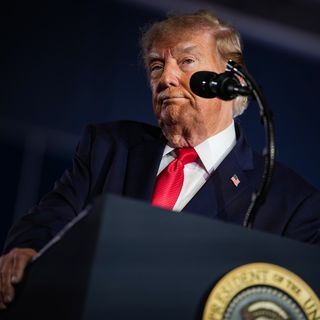
Democrats wasted no time gloating and warning the Trump administration about a pending flood of subpoenas and investigations once the 2026 midterm blue wave became clear. Why it matters: Democrats are eager to exercise their oversight powers over the president and his allies, but they must navigate that while addressing Americans' No. 1 election concern — the high cost of living. Driving the news: Before the AP even called the House for Democrats, expected House Oversight Chair Robert Garcia (D-Calif.) said in a statement that the president's allies should "[l]awyer up." He seconded the sentiment in a Wednesday post to X. Sen. Ron Wyden posted on X Tuesday night, "[s]ubpoenas." In response to a post from former Homeland Security Secretary Kristi Noem, who said the Trump administration was "too successful" during its first year, Sen. Maggie Hassan (D-N.H.) responded, "[w]ant to say that under oath?" The big picture: Voters aren't necessarily asking Democrats to choose between the cost of living and accountability. They want action on both. About half of voters said the high cost of living and government corruption were "crucial" to their votes for Congress, per the AP's Voter Poll. Roughly four in 10 voters said the economy was the top issue facing the country, compared with three in 10 who said it was democracy. Seven in 10 said Congress isn't doing enough to check presidential power. What they're saying: When asked about Wyden and Garcia's comments in an interview Wednesday morning, House Minority Leader Hakeem Jeffries (D-N.Y.) — the overwhelming favorite to become House Speaker — told TODAY that the "American people clearly don't want us to try and get even." "They want us to get things done to make their life more affordable. At the same period of time, what we have seen is unprecedented corruption unleashed on America, the likes of which we have never seen before." "And when you have people in high office who are so focused on enriching themselves, their family members, their friends, and their donors, it's clear to the American people that that means you have a Congress or White House or Supreme Court not focused on actually addressing the needs of working class folks." The White House didn't immediately respond to Axios' request for comment. Zoom in: Democrats have already laid out some of their main priorities for investigation. Garcia vowed Tuesday that House Dems would focus on probing Trump's family businesses, alleged corporate corruption and government contracts. He also said he'll investigate DHS and ICE misconduct allegations, as well as the Jeffrey Epstein files and the administration's handling of them. Other reporting has suggested Democrats might also probe the DOGE effort, or its de facto former leader, tech billionaire Elon Musk. President Trump said on Monday he's open to pardoning his allies and staff if Democrats target them. Reality check: Some legislative priorities Democrats want could also be easily blocked by the president's veto power. Democrats are not currently projected to win the 2/3 majority needed to override such a move on their own. A presidential pardon only erases liability in a federal case; it does not shield a recipient from civil or state-level charges or investigations. What we're watching: Whether Democrats truly pursue an effective oversight agenda and whether Democratic leadership can walk the tightrope of bringing costs down while doing so. Go deeper: Trump vows to protect Musk, floats pre-emptive staff pardons
Josephine Walker ·
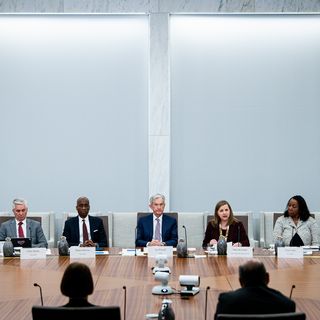
A recurring subplot of President Trump's term has been a desire to replace Biden appointees to the powerful Federal Reserve Board of Governors — even ahead of their terms ending — with allies. That effort now looks dead in the water. Why it matters: Even if Trump succeeds in his efforts to fire governor Lisa Cook , or to oust any of the other three Biden-era holdovers on the seven-member board, a Democratic Senate will likely block any replacements it views as insufficiently independent from the administration. State of play: The president seeks to fire Cook — whose term runs through 2038 — for alleged mortgage fraud, an effort that has been blocked so far by the courts. The White House plans a hearing over the allegations next month. Former chair Jerome Powell has remained on the board as a governor, a term that ends in January 2028. Michael Barr, whom Biden appointed as top financial regulator, has remained in place as a governor in a term that extends to 2032. Philip Jefferson's term as vice chair ends this coming September, though his term as a governor extends to 2036. Between the lines: It would break with current precedent for those officials to stick around to the end of their terms. In recent decades, Fed governor spots have turned over much more regularly, particularly after their time as chair or vice chair ends. Powell, Barr and Jefferson may feel greater comfort relinquishing their roles as governors before the end of their terms if they are confident the Senate will block any replacements who don't respect the tradition of central bank independence. Of note: Sen. Elizabeth Warren is set to chair the Senate Banking Committee that must advance Fed governor nominees, and she has assailed chairman Kevin Warsh for being a "sock puppet" of the administration. Only one Senate Democrat, John Fetterman, voted to confirm Warsh.
Neil Irwin ·