Source
Axios

Axios (website)
Axios is an American news website based in Arlington, Virginia. It was founded in 2016 and launched the following year by former Politico journalists Jim VandeHei, Mike Allen, and Roy Schwartz. The site's name is based on the Ancient Greek ἄξιος.
From Wikipedia ↗, text under CC BY-SA 4.0; logo from Wikimedia Commons
- Type
- News outlet
- Lean
- Left-leaning
- Left-Center−2.8 of ±10
- High0.9 of 10 (lower is better)
- High
- Website
- axios.com ↗
- Feed
- RSS ↗
- Articles stored
- 1,037
- Tracked since
- Aug 15, 2026
Down: MBFC factual reporting score, 0 most factual to 10 least.
Bias and credibility ratings by Media Bias/Fact Check.
Axios on MBFC ↗Publishing rhythm
How many articles Axios published over the last 14 days, by publication time, and at which hours of the day.
Top keywords
All keyword charts for Axios →The people, places, organizations and topics Axios covered most that day, by the share of its stories that mention them. Article counts are shown for context.
No keywords that day yet.
Latest articles
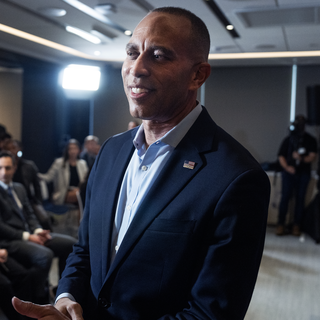
House Minority Leader Hakeem Jeffries (D-N.Y.) formally launched his bid for speaker of the House on Wednesday in a letter to colleagues obtained by Axios. Why it matters: Jeffries is widely expected to secure the speaker's gavel after House Democrats' landslide midterm win. He would make history as the first African American to serve in the role. Jeffries, who was first elected to Congress in 2012, has led the House Democratic caucus since former Speaker Nancy Pelosi (D-Calif.) stepped down in 2022. What he's saying: "I write to humbly request your support in connection with my candidacy to serve as the next Speaker of the House of Representatives," Jeffries wrote. "We must now deliver the dramatic change the American people are demanding in the majority," he continued. Jeffries wrote that "every single member of our majority will play a meaningful role" and that his goal is to empower House Democrats to "act decisively in three key areas: (1) Affordability (2) Accountability and (3) American Values." Between the lines: While some incoming progressive and red-district Democrats have declined to commit to supporting Jeffries for speaker, he is not expected to face any serious opposition for the role. The big majority House Democrats won on Tuesday will further help to insulate him from any would-be rebels in his caucus. Zoom out: Jeffries' senior leadership team is similarly expected to run uncontested: Minority Whip Katherine Clark (D-Mass.) for majority leader. Democratic Caucus chair Pete Aguilar (D-Calif.) for majority whip. Democratic Caucus vice chair Ted Lieu (D-Calif.) for Democratic caucus chair. Assistant Leader Joe Neguse (D-Colo.) for assistant speaker. Read the letter in full, via DocumentCloud : Editor's note: This story has been updated with additional details throughout.
Andrew Solender ·

Republicans barely had time to absorb their sweeping midterm losses before President Trump returned to a familiar comfort zone: D.C. construction projects. Why it matters: Voters just delivered an overwhelming rebuke of the administration, demanding that politicians focus on the cost of living, yet the president remains fixed on remaking the nation's capital in his image. Driving the news: Trump hosted reporters at the White House on Wednesday for a previously unscheduled event to update them on the East Wing ballroom's construction, marking his first remarks to the White House press pool since the election. He spent the majority of his remarks discussing planned architectural changes around D.C., including a proposed Triumphal Arch, the National Garden of American Heroes and a planned expansion of a publicly owned golf course that would likely eliminate popular running and biking paths. His remarks came after a pre-election appearance Monday, during which he praised the new pipes installed at the Reflecting Pool and a proposed promenade from the Lincoln Memorial to the Potomac River. What they're saying: Trump addressed criticism he sometimes receives for working on his construction projects, saying he was "doing it because the White House is the ultimate symbol of America, and it's got to be pristine." "It's got to be perfect. And if you take a look at it, that's what it is right now. You have no idea how much work we had to do." He also noted that he spends "very little time" working on the White House, but said he does it because "it's relaxing …I love construction." Catch up quick: Democrats outperformed expectations in Tuesday's midterms, flipping the Senate before the night was over and then the House a few hours later, according to the AP. Democrats have gained complete control of at least five previously divided state governments while ending Republican trifectas in several other states. In ruby-red Texas, the white whale of potential pickups, Democrats flipped the governor's mansion, a Senate seat and now control the state House. Zoom in: "President Trump's commitment to restoring our Nation's treasured landmarks should be celebrated and does not distract from his work to lower costs, strengthen our economy, and improve the lives of American families," a White House spokesperson told Axios in an emailed statement. "While making our Nation's capital safe and beautiful again as he promised to do, President Trump remains focused on lowering costs, driving down inflation, creating good-paying jobs, reshoring our manufacturing industry, unleashing American energy dominance, securing new investment, securing our borders, deporting dangerous illegal criminals from our communities, and enforcing tough-on-crime policies." Zoom out: Trump also briefly discussed his immigration policies and efforts to lower crime around D.C. during his Wednesday speech. He later took questions from reporters, during which he reiterated that Republicans would have won had he been on the ballot. Go deeper: Blue tsunami breaks MAGA: 5 takeaways from a blowout midterm election
Josephine Walker ·

Data: The Downballot , Ballotpedia , AP ; Chart: Erin Davis/Axios Republican mapmakers thought they were drawing at least a dozen comfortably red districts to protect their House majority. Why it matters: They weren't red enough . In the seven states where Republicans redrew congressional boundaries, the GOP is on track to lose as many as eight seats — rather than gain the 15 it had hoped to pick up. With two exceptions — TX-32 and TN-09 — the pickups Republicans penciled in never materialized. Then there was a bloodbath in North Carolina. Zoom in: At the heart of the GOP's miscalculation was a bet that the 2026 electorate would look like 2024's. Instead, voters behaved more like they had in 2020 — or even 2018. TX-34: Republicans made an already Trump-leaning district significantly redder, shifting it from Trump +4 to Trump +10. Democratic Rep. Vicente Gonzalez still won by nearly 16 percentage points. TX-23: Republicans made an already red district slightly less Republican, shifting it from Trump +16 to Trump +15. Democrat Katy Padilla Stout won by eight points. TX-15: Rep. Monica De La Cruz's district remained essentially unchanged at Trump +18. She lost by 25 points. Between the lines: The GOP's heaviest losses came in Ohio and North Carolina districts that Republican mapmakers barely touched. Rather than shore up districts Trump had won by double digits, Republicans concentrated on making two Democratic-held seats in Ohio and one in North Carolina redder, betting they would flip in a normal election year. But 2026 was anything but normal. The bottom line: Perhaps the clearest example of a dummymander — when mapmakers spread their own voters too thin in pursuit of additional seats — came in Tennessee's 4th District . Republicans redrew TN-04 from Trump +44 to Trump +24, sacrificing much of its enormous GOP cushion. Democrat Victoria Broderick appears to have won by just 280 votes.
Hans Nichols ·

Data: Financial Modeling Prep ; Chart: Ben Geman/Axios Oil prices fell sharply Wednesday as traders weigh signs — including a widely circulated post by Vice President JD Vance — that the midterm election will add pressure on the White House to find an offramp from the Iran conflict. Why it matters: Elections have consequences. Wednesday's price drop — around $8 per barrel — deepened after Vance posted on X that "everyone knows" the war is why Republicans got pummeled and "any honest conversation about where we go from here must start there." Sen. Chuck Schumer (D), the likely Senate majority leader in the next Congress, vowed that Democrats will push to end the war. "This crude price drop is entirely about the U.S. election and the belief that Trump will de-escalate rather than escalate on Iran. JD Vance's statement amplified that sentiment," Ben Cahill, a nonresident senior fellow with the Atlantic Council, told Axios via email. What they're saying: Pavel Molchanov, an analyst with Raymond James, said in remarks circulated to reporters that Vance's post was a "key catalyst" for today's oil price plunge. "The market is saying that Congress and members of his own administration are likely to start acting as a constraint on President Trump's war in Iran," Seb Barker, a strategist with the hedge fund, Marshall Wace, tells the Financial Times. Catch up quick: Oil prices were already falling to start the week on signs of new U.S.-Iran diplomacy. What we're watching: "[I]t remains unclear whether Vance's comments signal a more dovish stance toward Iran," Molchanov said. "For oil prices to sustainably move lower, a durable off-ramp is needed," he added.
Ben Geman ·

Tuesday's election was great for Democrats. It was bad for Defense Secretary Pete Hegseth and some of the White House's most ambitious national security projects. Why it matters: Surprise wins across the map for Democrats — including in the Deep South — complicate a lot for the Trump administration. Republicans have relied on a simple-majority funding mechanism known as reconciliation to pay for marquee projects like Golden Dome . That option is now a long shot over the next few months, and impossible after that. Outrage over the Iran war, well beyond the half-year mark, is sure to turbocharge a long list of congressional inquiries. And lawmakers on both sides of the aisle, including Reps. Pat Ryan (D-N.Y.) and Thomas Massie (R-Ky.), have suggested impeaching Hegseth. Follow the money: Defense analysts agree prospects for the administration's full $1.5 trillion defense budget look grim. A Wednesday note from TD Cowen's Washington Research Group warned "Trump 'branded' projects are dead." Golden Dome, Golden Fleet and "other signature efforts," it added, "will be curbed." Meanwhile, Todd Harrison, an American Enterprise Institute defense budget expert, said it's unlikely the lame-duck congressional session will pass reconciliation and instead will keep the defense budget operating under a continuing resolution into next year. "They're all at risk," Harrison said of reconciliation-backed programs. "My base expectation is nothing happens on the defense budget." The other side: The Pentagon did not respond to a request for comment. Between the lines: Some of the most powerful Republican lawmakers on defense matters were defeated or are on pace to lose. Sen. Susan Collins, the appropriations chairwoman, lost to Troy Jackson in Maine . Sen. Darline Graham, also on appropriations, lost to Annie Andrews in South Carolina . Rep. Jen Kiggans, a member of the armed services and veterans affairs committees , lost to Elaine Luria in Virginia . And as of Wednesday afternoon, Reps. Rob Wittman of Virginia, Mike Turner of Ohio, Scott DesJarlais of Tennessee and Jeff Crank of Colorado all trailed their Democratic challengers. What they're saying: Hegseth himself may be on the hot seat. "Secretary Hegseth's chaotic and incompetent leadership has made America weaker and less safe, and now he will be forced to answer for it," Sen. Kirsten Gillibrand (D-N.Y.), a member of the appropriations, armed services and intelligence committees, told Axios. "We owe it to our service members, our military families and the American people to make sure that" Hegseth and the broader Trump administration "are held fully accountable," she added. Yes, but: President Trump told reporters he's not considering replacing Hegseth. "No, I think he's doing a very good job," he said. The bottom line: "People do expect there will be investigations and there will be oversight and all that, and certainly that will have an impact," VJ Sahi, a partner at strategic advisory firm Clark Street Associates, told Axios. But the "degree of the impact," he added, remains "TBD." Go deeper: When defense and marketing departments meet
Colin Demarest, Thomas Novelly ·

Democrats' sweeping statehouse gains Tuesday have opened a path to effectively replacing the Electoral College with a national popular vote in time for the 2028 presidential election — without needing to amend the Constitution. Why it matters: The results could give Democrats the legislative power to fundamentally change how America picks its president, potentially ending the possibility of winning the White House while losing the national popular vote. Driving the news: Democrats have won control of the governorship and both legislative chambers in Pennsylvania, Michigan, Arizona, Wisconsin and Nevada, enough to push an agreement called the National Popular Vote Interstate Compact beyond the 270-vote threshold required to take effect. The compact has been enacted by 18 states and Washington, D.C. since launching in 2006, representing 222 electoral votes so far. The agreement only kicks in when participating states collectively control at least 270 electoral votes. The five new Democratic trifectas could bring the total to 283. How it works: Americans don't directly elect the president. Instead, they actually cast ballots to choose electors, whose votes determine the winner every four years. Nearly every state awards all its electoral votes to the statewide winner. Maine and Nebraska also award electors based on congressional district results. But the Constitution explicitly gives states power to appoint electors "in such Manner as the Legislature thereof may direct." Under the compact, participating states would instead award their electoral votes to the national popular-vote winner once the agreement reaches 270 electoral votes. Yes, but: The five states would still need to enact the compact, and it's not clear if it will be a priority for the new Democratic states. The Electoral College would formally remain in place, and the compact could face constitutional challenges, including over whether congressional approval is required. Michigan failed to enact it during its previous Democratic trifecta from 2023 to 2024, and Nevada's then-Democratic governor vetoed the compact in 2019, warning it could diminish his state's influence over presidential elections. Notre Dame law professor Derek Muller has argued that the compact would be unconstitutional without congressional approval, which he contends is required under the Constitution's Compact Clause. What to watch: Whether and how legislators in the new trifecta states move forward. Lawmakers in all five states have previously introduced legislation to join the compact.
Andrew Pantazi ·

Women candidates won enough races Tuesday to set a new record for Democratic women's representation in the U.S. House — among other historic firsts in Congress and governor's races nationwide. The big picture: The spike for Democratic Women's Caucus members in the House alone marks an increase of more than 60% since 2016. At least 100 Democratic women and 16 Republican women have won House seats as of Wednesday morning, according to the Center for American Women and Politics at Rutgers University. The total is expected to climb for candidates across both parties, with dozens of races still uncalled. What they're saying: "Despite Republican attempts to silence us and take away our rights, we have built a coalition in Congress that is bigger and more powerful than ever," DWC Chairwoman Teresa Leger Fernández (D-N.M.) said in a statement. "We smashed through a glass ceiling," she added. "Because of the hard work of so many, Congress will look more like America." The intrigue: Women veterans are poised to make gains in Congress after 38 ran in Tuesday's general election — up from 21 in 2024, per civic organization With Honor Action . Several Democratic women veterans are leading in competitive House races that could flip Republican-held seats. In South Carolina , retired Navy Vice Adm. Nancy Lacore, who was removed as chief of the Navy Reserve under Defense Secretary Pete Hegseth, leads Republican Jenny Costa Honeycutt in the race for former Rep. Nancy Mace's seat. In Arizona, Marine veteran JoAnna Mendoza leads Republican Rep. Juan Ciscomani. In Ohio, Air Force veteran Kristina Knickerbocker leads Republican Rep. Mike Turner. The AP had not called any of the three races as of Wednesday morning State of play: Democratic women could gain powerful committee chair positions as control of Congress shifts. Currently, just one woman chairs a standing House committee: Rep. Virginia Foxx (R-N.C.), who leads the powerful Rules Committee. She's locked in a razor-thin reelection race against Democrat Chuck Hubbard. Among those already likely positioned for gavels: Rep. Rosa DeLauro (D-Conn.) and Sen. Patty Murray (D-Wash.) on their chambers' Appropriations committees, which oversee federal spending. Rep. Katherine Clark (D-Mass.), currently Democrats' minority whip, could become the first woman to serve as majority leader, two decades after Rep. Nancy Pelosi (D-Calif.) become the first woman speaker of the House. Zoom out: Women are also taking over governor's mansions across the nation. Progressive, pro-women EMILYs List said Wednesday that a record-high number of Democratic women governors are poised to serve in 2027. That includes Keisha Lance Bottoms , who boxed Republicans out in Georgia and will become the first Black woman governor in U.S. history. Deb Haaland , who won New Mexico's gubernatorial election, has become the first Indigenous woman elected governor of a U.S. state, per AP . There were also historic firsts for Republican women: Republican Julia Letlow is Louisiana's first Republican woman elected to the Senate. Sen. Marsha Blackburn (R-Tenn.) will be Tennessee's first woman governor. What we're watching: There's still plenty of dust still to settle in the wake of a massive midterms shakeup . But one thing is clear: A historic coalition of women is headed to Capitol Hill. Go deeper: Hakeem Jeffries gets the majority of his dreams
Avery Lotz ·

Democrats wasted no time gloating and warning the Trump administration about a pending flood of subpoenas and investigations once the 2026 midterm blue wave became clear. Why it matters: Democrats are eager to exercise their oversight powers over the president and his allies, but they must navigate that while addressing Americans' No. 1 election concern — the high cost of living. Driving the news: Before the AP even called the House for Democrats, expected House Oversight Chair Robert Garcia (D-Calif.) said in a statement that the president's allies should "[l]awyer up." He seconded the sentiment in a Wednesday post to X. Sen. Ron Wyden posted on X Tuesday night, "[s]ubpoenas." In response to a post from former Homeland Security Secretary Kristi Noem, who said the Trump administration was "too successful" during its first year, Sen. Maggie Hassan (D-N.H.) responded, "[w]ant to say that under oath?" The big picture: Voters aren't necessarily asking Democrats to choose between the cost of living and accountability. They want action on both. About half of voters said the high cost of living and government corruption were "crucial" to their votes for Congress, per the AP's Voter Poll. Roughly four in 10 voters said the economy was the top issue facing the country, compared with three in 10 who said it was democracy. Seven in 10 said Congress isn't doing enough to check presidential power. What they're saying: When asked about Wyden and Garcia's comments in an interview Wednesday morning, House Minority Leader Hakeem Jeffries (D-N.Y.) — the overwhelming favorite to become House Speaker — told TODAY that the "American people clearly don't want us to try and get even." "They want us to get things done to make their life more affordable. At the same period of time, what we have seen is unprecedented corruption unleashed on America, the likes of which we have never seen before." "And when you have people in high office who are so focused on enriching themselves, their family members, their friends, and their donors, it's clear to the American people that that means you have a Congress or White House or Supreme Court not focused on actually addressing the needs of working class folks." The White House didn't immediately respond to Axios' request for comment. Zoom in: Democrats have already laid out some of their main priorities for investigation. Garcia vowed Tuesday that House Dems would focus on probing Trump's family businesses, alleged corporate corruption and government contracts. He also said he'll investigate DHS and ICE misconduct allegations, as well as the Jeffrey Epstein files and the administration's handling of them. Other reporting has suggested Democrats might also probe the DOGE effort, or its de facto former leader, tech billionaire Elon Musk. President Trump said on Monday he's open to pardoning his allies and staff if Democrats target them. Reality check: Some legislative priorities Democrats want could also be easily blocked by the president's veto power. Democrats are not currently projected to win the 2/3 majority needed to override such a move on their own. A presidential pardon only erases liability in a federal case; it does not shield a recipient from civil or state-level charges or investigations. What we're watching: Whether Democrats truly pursue an effective oversight agenda and whether Democratic leadership can walk the tightrope of bringing costs down while doing so. Go deeper: Trump vows to protect Musk, floats pre-emptive staff pardons
Josephine Walker ·

A recurring subplot of President Trump's term has been a desire to replace Biden appointees to the powerful Federal Reserve Board of Governors — even ahead of their terms ending — with allies. That effort now looks dead in the water. Why it matters: Even if Trump succeeds in his efforts to fire governor Lisa Cook , or to oust any of the other three Biden-era holdovers on the seven-member board, a Democratic Senate will likely block any replacements it views as insufficiently independent from the administration. State of play: The president seeks to fire Cook — whose term runs through 2038 — for alleged mortgage fraud, an effort that has been blocked so far by the courts. The White House plans a hearing over the allegations next month. Former chair Jerome Powell has remained on the board as a governor, a term that ends in January 2028. Michael Barr, whom Biden appointed as top financial regulator, has remained in place as a governor in a term that extends to 2032. Philip Jefferson's term as vice chair ends this coming September, though his term as a governor extends to 2036. Between the lines: It would break with current precedent for those officials to stick around to the end of their terms. In recent decades, Fed governor spots have turned over much more regularly, particularly after their time as chair or vice chair ends. Powell, Barr and Jefferson may feel greater comfort relinquishing their roles as governors before the end of their terms if they are confident the Senate will block any replacements who don't respect the tradition of central bank independence. Of note: Sen. Elizabeth Warren is set to chair the Senate Banking Committee that must advance Fed governor nominees, and she has assailed chairman Kevin Warsh for being a "sock puppet" of the administration. Only one Senate Democrat, John Fetterman, voted to confirm Warsh.
Neil Irwin ·
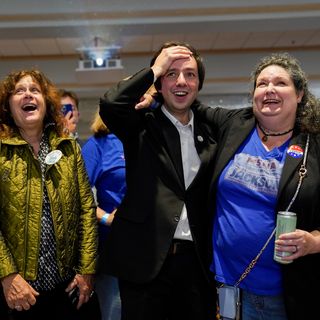
World leaders are reacting to Democrats' comprehensive midterm wins, which saw them retake the Senate and flip the House on Tuesday night. Why it matters: The results could reshape President Trump's final two years in office, with major implications for U.S. relations with allies and adversaries alike. Zoom in: As Trump faces competing calls over whether to resume military action in Iran, Iranian officials supported the Democratic victories as a sign of opposition to the war. Iran's Parliament Speaker Mohammad Bagher Ghalibaf wrote on X , "Conscience or the cost of living, Americans said NO TO WAR, and we endorse this message." Prior to the election, regional mediators led by Qatar were trying to reach a diplomatic deal to restart negotiations between the U.S. and Iran to avoid reentering the war, three U.S., Israeli and regional sources said, but renewed fighting remains on the table. But while Israeli Prime Minister Benjamin Netanyahu wants to resume fighting in Iran, his political future remains uncertain, with neither bloc securing the 61-seat majority needed to form a government in Israel's recent election. Zoom out: Trump's second-term decisions have significantly strained relationships with U.S. allies and partners, leading countries to increasingly view Washington as unreliable, self-interested and less committed to global cooperation , according to Pew Research Center data. But Tuesday's election results appear to have infused renewed hope about relations from international leaders. Spanish Prime Minister Pedro Sánchez applauded Americans for voting "against policies that only make people poorer," and against "hate," "sexism," "climate denial" and "elite privilege," in a post on X ." South African President Cyril Ramaphosa told reporters he believes Democratic control of Congress will "introduce a new era in world relations," adding that he hopes for improved collaboration on geopolitics, trade and investment, Bloomberg reported. Trump, who has repeatedly criticized Ramaphosa, and prioritized South Africans for refugee admissions in fiscal year 2026, citing debunked " white genocide " claims — which falsely allege that white Afrikaners face racial violence by the country's majority Black population. The other side: Moscow signaled little optimism about the change in power, warning that Democratic control could further strain U.S.-Russia relations, particularly with tensions in Ukraine. Deputy Foreign Minister Sergei Ryabkov told RIA Novosti news network that Democrats' "approach to relations with Russia is extremely negative." Chinese Foreign Ministry Spokesperson Mao Ning struck a measured tone, saying China hopes to "build a constructive relationship," and continue working with the U.S. Still, the U.S. Army Pacific is closely watching for a potential Chinese invasion of Taiwan in 2027 and beyond, which could quickly devolve into a bloodbath. Yes, but: Some leaders are also questioning how much progress Washington can make amid such deep political splits. Theo Francken, Belgium's Minister of Defense and Foreign Trade, said on X that governing in the U.S. will be "quasi impossible in the coming years with so much internal division and polarized power bastions." European Parliament Vice President Christel Schaldemose said she's "cautiously optimistic on Europe's behalf" and how it could benefit Ukraine and global relations. Go deeper: Blue tsunami breaks MAGA: 5 takeaways from a blowout midterm election
Rebecca Falconer, Julianna Bragg ·
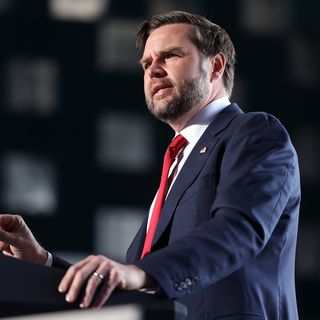
The Iran war was the reason for the Democrats' blue tsunami that stunned Washington, Vice President Vance said in an X post Wednesday morning. Why it matters: The VP offered a surprisingly blunt assessment of why the GOP got crushed Tuesday night — and started to put at least a little daylight between himself and President Trump as the 2028 cycle begins. Vance's comments come hours after Trump admitted the Iran war partly played a role in pushing Democrats over the edge. Driving the news: "The reason we lost is the war. The president himself said so last night," Vance wrote on X . "If you'd like to argue it was worth it, that losing the Senate for the next 6 years was worth it, then do so. Argue it was a worthwhile cost to pay. Agree or disagree, that's at least honest." Vance's comments align with Trump, who told the Wall Street Journal: "Iran was a piece of it," though he did not say he regrets the war. What they're saying: Vance wrote on X that the "Democrat blowout" came despite optimism from within the White House about turnout and people "showing up." But, Vance said, "many people who voted for Trump/Vance in 2024 voted for Democrats in 2026" instead. The White House and vice president's office did not immediately respond to requests for comments Wednesday morning. Zoom in: Vance said Trump 2024 voters were angry with the administration and chose to embrace Dems. The GOP has to do four things to bring them back, he said: End the Iran war, focus on inflation, "put America First," and "change our relationship to Israel." "To the people who are just pissed at the results, you should be. Let's take that anger and get back to the work of saving our country," Vance wrote. Yes, but: Voters had other grievances in the election Tuesday night. Cost of living and government corruption were the two top issues in this year's election, per exit polls from AP . Gas prices and grocery costs have skyrocketed amid the Iran war and the president's tariff policies. Trump was also labeled "corrupt" and "dangerous" by majorities of registered voters in a poll prior to the election. The bottom line: Vance's candid response comes ahead of a potential 2028 presidential run. The vice president is already being watched by the pre-Trump Republican faction that never embraced Trump's takeover of the party, which might require him to distance himself from the president's policies. Editor's note: This story has been updated with new detail throughout.
Herb Scribner ·

Majority Leader Steve Scalise (R-La.) will announce his bid to lead House Republicans on Wednesday, a person familiar with his plans told Axios, as his party begins to regroup from stunning midterm losses that cost them their congressional majorities. Why it matters: Scalise's announcement sets up a potentially bruising battle for the minority leader post, with Judiciary Committee Chair Jim Jordan (R-Ohio) also being floated as a potential contender. It's Scalise's second attempt at the top House Republican job. Speaker Mike Johnson (R-La.) told staff that he will not run for minority leader on a Wednesday morning call, a person familiar with his plans said. Driving the news: Scalise pitched himself as a leader positioned to bring Republicans back into the majority "He is a proven and tested leader who is ready on day one. He's spent his career unifying Republicans and he is prepared for the big legislative and oversight battles ahead. The conference knows him, how he fights, and that he's a trusted leader," the person familiar with his plans said in statement. Catch up quick: Scalise defeated Jordan in the Republican conference's secret-ballot vote to nominate a speaker in October 2023, but withdrew a day later after failing to secure enough support on the House floor. Johnson ultimately emerged as speaker after weeks of Republican infighting. State of play: A Scalise-Jordan race would pit two of the House GOP's most prominent figures against each other. Scalise enters the contest with more than a decade of experience in leadership, while Jordan could draw support from the party's conservative wing. But the scale of the loss on Tuesday night has prompted calls for an entirely new leadership slate — a potential stumbling block for Scalise. Three House Republicans previously told Axios that a major midterm defeat could fuel calls for an entirely new leadership team The intrigue: Majority Whip Tom Emmer, meanwhile is making calls to lock down support from him to stay on as whip in the minority, a person familiar with his plans told Axios. Emmer (R-Minn.) told Axios in September that he intends to remain in his current role rather than seek a higher leadership position. That could leave the losing candidate in a Scalise-Jordan matchup without an obvious fallback spot in the top leadership ranks. What's next: House Republicans are scheduled to elect their next leadership team on Nov. 10, with candidates facing a Friday deadline to declare their intentions. The winner needs a majority of House Republicans in a secret-ballot vote. Trump could play a pivotal role in determining the next top House Republican, and GOP lawmakers are watching closely to see whether he throws his support behind a candidate.
Kate Santaliz ·

Speaker Mike Johnson (R-La.) plans to step down as the House's top Republican after his party's epic midterm election losses wiped out their majority, according to a person familiar with his plans. Why it matters: Johnson's exit touches off a potentially contentious scramble to replace him with Republicans days away from choosing their next leaders. Johnson told staff that he will not run for minority leader on a Wednesday morning call, the person familiar with his plans said. Driving the news : House Majority Leader Steve Scalise (R-La.) and Judiciary Committee Chair Jim Jordan (R-Ohio) have been floated as potential successors, setting the stage for a bruising leadership battle. Johnson's political future remains uncertain, with questions swirling over whether he will remain in Congress or leave the House altogether after three years as speaker. The Louisiana Republican had spent months traveling across the country and raising millions of dollars in a last-ditch effort to preserve the GOP's majority. Flashback Johnson ascended to the speakership in October 2023 as a little-known lawmaker after weeks of GOP turmoil following Kevin McCarthy's historic ousting . Johnson spent much of his speakership navigating razor-thin Republican majorities, managing persistent GOP infighting and repeated conservative rebellions that brought legislative business to a standstill. But he also emerged as a prolific fundraiser and close Trump ally, helping shepherd the president's legislative agenda through a fractious Republican conference. Yes, but: Johnson had publicly insisted he intended to remain in Republican leadership even if the GOP lost control of the House. After suggesting to Fox News , that he could return to Shreveport and start a lawn care business if Republicans lost the majority, Johnson told CBS News in October that he planned to remain the top House Republican regardless of the election's outcome. His political future had become the subject of private speculation among Republicans, with many lawmakers skeptical he would run for minority leader after a GOP loss. What's next: House Republicans are scheduled to hold leadership elections Nov. 10, with candidates facing a Friday deadline to declare their intentions. The race will be decided by a secret ballot of Republican members, requiring only a majority of the conference to win. Trump could play a pivotal role in determining Johnson's successor, and Republicans are watching closely to see whether he throws his support behind a candidate.
Kate Santaliz ·

Democrats' big night gives them a chance to turn voter anger over high energy prices into legislative action and congressional oversight, but divisions within the party could complicate their plans. Why it matters: This was an energy election . High gasoline prices, record diesel costs, and rising power bills fueled discontent with President Trump and his party. Voters' rebukes of data centers could slow the buildout of power-hungry AI infrastructure. The latest: Stunning Senate wins in red states and House wins nationwide propelled Democrats to control of both chambers, and flipped several governor's mansions. Energy costs were prominent in key races, such as Democrats hitting GOP rivals over farmers' bills in Iowa, Kansas and Ohio. Texas Governor-elect Gina Hinojosa (D) bashed Greg Abbott (R) over his prior embrace of data centers in the state where developers are planning big projects. The data center backlash also featured in Ohio and Pennsylvania, where Sherrod Brown defeated Sen. Jon Husted (R) and Paige Cognetti unseated Rep. Rob Bresnahan (R). Both Republicans faced criticism over their support for data centers. State of play: A detailed Democratic energy agenda hasn't emerged, but there are early clues. Democratic Leader Chuck Schumer tied Republicans to electricity costs in his first comments after returns came in. Likely Speaker-in-waiting Hakeem Jeffries has vowed to quickly push an affordability agenda, with energy as a key pillar. He tasked Reps. Nikki Budzinski (D-Ill.) and Mike Levin (D-Calif.) with leading a "Gas and Utilities Affordability Working Group" that crafted ideas, though they remain under wraps. Another potential source of ideas: Hundreds of proposals backed this year by the 100-plus member House Sustainable Energy and Environment Coalition. Some could gain bipartisan backing, like support for advanced nuclear power. But other areas would be largely symbolic, like restoring some IRA tax credits. Catch up quick: In the Senate, Schumer has offered broad areas of focus around grid development, affordability and consumer protections, and clean energy. He has vowed to restore clean energy tax credits, while pledging "systematic protection for consumers from rising prices." Other ideas include more support for energy efficiency and greater transparency in utility bills. The intrigue: Democrats did not make climate change a midterm messaging focus. Watch whether progressives push to revive an explicitly climate-focused agenda. My thought bubble: Don't expect Democrats to bring back their select committee on climate change, which Republicans disbanded after winning House control in 2022. There has not been a decision announced. But the party's shift away from messaging focused on climate is reason to be doubtful, even as global warming marches on. What's next: The most immediate thing to watch is how the results may affect the politics of the bipartisan permitting deal in the lame duck. Some House progressives have argued that Dems could get a permitting deal more to their liking next year. But backers of the current bill see almost no chance of a political opening to craft a more liberal bill that Trump would sign or could even clear the Senate. The permitting fight has also opened rifts within the Democratic coalition, with multiple unions and the clean energy industry backing the bill, while many environmentalists are undecided or flatly opposed. The debate also highlights broader divisions between the "abundance movement" and progressives who want a harder line against fossil fuels Those divisions could extend well beyond the lame duck permitting fight, influencing future legislative priorities and the policy agendas of presidential hopefuls as 2028 jockeying begins in earnest. The bottom line: One thing already clear is that Democrats are lining up energy-focused oversight of Trump's diesel agreement with Moscow, offshore wind policies and much more. Sign up here for Axios' Future of Energy newsletter.
Ben Geman ·

Democrats will be able to take plenty of messaging votes on health care after their blowout wins Tuesday — but they'll face too many limits and internal disagreements to force all of the big policy changes they want. Why it matters: They'll have a tough time repealing Medicaid cuts or restoring enhanced Affordable Care Act subsidies while President Trump is still in office, and their own divisions will hold them back on other issues. And Medicare for All ? Last night gave the idea a big boost, but don't hold your breath. Friction point: With control of both the Senate and House, Democrats will have powerful new leverage — but that leverage will also expose fault lines. Until now, progressives backing Medicare for All and centrists favoring more incremental changes were united in opposing Trump administration policies and blaming the president and the Republican Congress for the health affordability crisis. They'll try to use their power in the next Congress to promote sweeping changes with an eye toward the 2028 elections while also advancing more piecemeal policies, hoping to force some deals with Republicans. But they'll still face divisions over how to expand the federal government's role in the health system, or how to bend the steep health cost curve. Driving the news: House Democrats have already signaled their opening moves with a 100-hour/100-day agenda agenda that prominently features health policies like reinstating the enhanced ACA tax credits that expired at the end of 2025. There will also be votes to roll back the steep cuts to federal Medicaid spending that Republicans included in their "One Big Beautiful Bill," per an 84-page memo from a health care working group to Democratic Leader Hakeem Jeffries (D-N.Y.). Other near-term agenda items include expanding Medicare drug price negotiations to private insurance, restoring withheld National Institutes of Health research funding and ending the use of AI in authorizing certain services in traditional Medicare. Within the first year, the blueprint also envisions votes on Medicare for All, a government-run public insurance option and plans to let many Americans under 65 buy into Medicare. There will also be a heavy dose of oversight, with multiple committees intent on using their subpoena power to examine details of Trump's drug pricing deals and Health Secretary Robert F. Kennedy Jr.'s vaccine policies. Reality check: Little of this would reverse the rising cost of care. And Democrats could spend a lot of energy next year playing whack-a-mole trying to target various expenses, like hospital spending, insurance premiums and the cost of insulin. Some policies, like site-neutral hospital payments , could generate billions in new savings to pay for coverage expansions, and even generate some bipartisan support at a time when more lawmakers are fed up with hospital consolidation and prices. There's also growing interest in how surprise billing disputes are driving up costs. But Democrats won't be the only ones looking for fixes. An aggressive Centers for Medicare and Medicaid Services under administrator Mehmet Oz is sure to continue pursing fraud and waste in federal health programs and cutting federal spending on subsidies. Between the lines: The biggest winner Tuesday may be the progressive wing of Sen. Bernie Sanders (I-Vt.) and Rep. Alexandria Ocasio-Cortez (D-N.Y.). Strengthened by the Senate victory of left-wing Democrat Abdul El-Sayed in the critical swing state of Michigan, the progressives can make a national case for Medicare for All — though the definition may be squishy. Expect many lawmakers to offer assurances that Americans can keep their health care if they want it, with a consensus likely forming around compromises like a Medicare buy-in. Actual dealmaking will largely be driven by big legislative vehicles, like bills to keep the government funded and address the debt ceiling, that could be magnets for health policy changes. There also are certain must-do's, like a "doc fix" to shield physicians from scheduled Medicare reimbursement cuts and a reauthorization of Food and Drug Administration user fees to fund new product reviews. The latter could also be a way for Democrats and Republicans to respond to growing concerns about China challenging U.S. dominance in drug development. What we're watching: Whether a "govern from the center, message from the left" strategy binds a caucus that isn't truly aligned on health care, or whether it quickly exposes rifts between establishment Democrats and the ascendant populist wing.
Adriel Bettelheim ·

Make no mistake: Democrats won by epic, sometimes historic margins across red and blue states, up and down ballots, obliterating almost everything President Trump, and a Republican Party remade wholly in his image, built over the past decade in American politics. Why it matters: Trump and Republicans are left with a mostly white, mostly old House and Senate minority, confronting a younger, more diverse ascendant Democratic Party with power and margins it hasn't held in 18 years, since the dawn of the Obama era. The results speak louder than any words we can write: Democrats won Senate races in Texas, Kansas, South Carolina, Ohio, and perhaps Mississippi en route to what could be a 55-seat majority. Democrats won swing districts all across red America, with national average margins of victory of roughly 13 points, according to a New York Times estimate . Texas is now a Democratic state, top to bottom — unthinkable mere months ago. James Talarico crushed Ken Paxton ( 55% to 43% ) like it was Connecticut. State Representative Gina Hinojosa will become the first Democratic governor of Texas in 32 years . Pastor Adam Hamilton is the first Democrat to win a Senate seat in Kansas in 94 years. North Carolina looks like a true-blue state after Democrats flipped the Senate seat and likely ousted Rep. Richard Hudson (R-N.C.), chair of the National Republican Congressional Committee (NRCC) — meaning he led the GOP drive to keep the House. North Carolina's congressional delegation could swing from 10R-4D to 5R-9D. Georgia was even worse for Republicans, where they lost all power at the state and U.S. Senate levels. Florida Gov. Ron DeSantis (R) predicted on X that the losses were so widespread, so deep, so severe that Republicans might not "have a shot at Senate control until 2032." How to think about last night more broadly: This is a 50-50 nation with fast, whiplash shifts in power at the federal level due to persistent discontent with the party in power. So, on one hand, this isn't terribly surprising. On the other, Republican losses were so deep, so wide, so everywhere that it would be foolish to see this as anything but a massive repudiation of Trump, his agenda, his style, his rhetoric and his presidency. If anything, what's left of the Republican Party is more pro-Trump and less likely to challenge him. His critics, even the timid ones, were ousted long before the general election. So Republicans are left with two more years of riding a very unpopular leader managing a very unpopular war. A trapped, embarrassed Trump is even more unpredictable. Democrats have the numbers to investigate Trump, his family and supporters, and the power to set the agenda in the House and Senate. The bottom line: Voters nationally said government corruption was a "crucial issue" in their vote for Congress. Democrats will spend months trying to rehab a party that, despite its victory, remains deeply unpopular as a brand. Expect a vigorous fight between Mamdani-like socialists and Schumer-like center-leftists. Top takeaways from Axios' Zachary Basu.
Jim VandeHei, Mike Allen ·

Voters showed deep distrust of the AI race Tuesday, approving dozens of data center moratoriums and electing a raft of candidates who favor slowing a $10 trillion buildout, including in Texas — the epicenter of the boom. Why it matters : In an election that hinged on an affordability crisis for many Americans, voters made it clear they view Silicon Valley's AI ambitions not as a technological miracle, but as a resource-draining threat to their wallets and communities. The results were a warning shot to some of the nation's wealthiest and most powerful executives, many of whom are already working on ways to build a more palatable version of the revolution they are dead-set on winning. "What we just witnessed was an AI earthquake," Brad Carson, co-founder of Americans for Responsible Innovation, told Axios. "Voters just sent a clear message that they want rules for AI and data centers." Driving the news: Democratic challenger Gina Hinojosa's surprise victory in the Texas governor's race fundamentally scrambles the math for the AI buildout. Hinojosa campaigned on keeping a moratorium on data center construction in place until the state passes legislation tackling impacts on water, electricity, air and property rights in the legislative session that ends in mid-2027. While most 2027 U.S. data centers expected are already under construction, a hold for more than six months would bring extended delays to Texas, which accounts for 41% of new U.S. capacity in 2028, according to the research firm SemiAnalysis. Democrats won all three of the states that follow Texas for new data center capacity, including Ohio, Georgia and Arizona. The winners in Ohio and Georgia favor restrictive policies, although it's not yet clear how those will take shape. Between the lines: All told, nearly two-thirds of 2028 data center capacity could face delays, although most political analysts don't see Democrats permanently blocking construction. What they're saying: A host of candidates and politicos called out AI as one of the most important issues in the blue wave, an important signpost ahead of a momentous 2028 presidential race. Sen. Jon Ossoff (D-Ga.), a 2028 contender who won reelection by a wide margin, called out "the titans of Silicon Valley" in a victory speech, saying they "dig bunkers for themselves" even as they warn "that the artificial intelligence they're creating risks human extinction." AI had its "official debut" as the biggest issue in American politics, former New York Assemblymember and RAISE Act author Alex Bores told Axios. "AI is reaching into every part of our society and economy and it's now crystal clear it's impacting every part of our politics, too." By the numbers : The anti-tech sentiment extended far beyond those states. Out of 41 data center measures on the ballot across 10 states, about two dozen proposals designed to restrict or block development appeared to have passed based on initial returns , according to Ballotpedia. Ohio hosted the largest share of those ballot fights, and some votes are still forthcoming, including in Arkansas and North Dakota. Yes, but: In California, a measure that would've enacted a 5% wealth tax on individuals and trusts with more than $1 billion in assets appeared headed for defeat early Wednesday morning. Proposition 40 faced a well-funded opposition from the state's tech luminaries, as well as prominent Democrats like Gov. Gavin Newsom and Xavier Becerra. The intrigue: Leaning into AI skepticism proved to be a winning strategy for Democrats in swing districts. Democratic challengers successfully weaponized AI policy , ousting Republicans in Ohio, Wisconsin, Arizona and Pennsylvania. Democratic groups had poured ads into these districts attacking GOP incumbents for a 2025 vote that would've neutered state AI legislation. AI safety advocates won or were poised to win races on Tuesday that will expand their coalition in the new Congress, including Colorado's Manny Rutinel and Minnesota's Matt Little. The bottom line : For years, tech execs have dictated the terms of a seemingly limitless expansion, but this election proves that the ballot box still reigns supreme.
Maria Curi ·

House Minority Leader Hakeem Jeffries (D-N.Y.) is set to preside over a commanding Democratic majority after his party swept districts President Trump carried by double digits. Why it matters: Democrats' landslide win will make it much, much easier for the likely next speaker to secure the gavel without a sweat and ignore the demands of his progressive wing. Rep. Greg Stanton (D-Ariz.), a leader of the center-left New Democrat Coalition, told Axios in an interview Tuesday night that Jeffries "now has the space to utilize his full talents as speaker." The size of Democrats' victory, Stanton said, "allows him to govern without worrying about being leveraged by anyone." Driving the news: Jeffries is on track to enjoy a majority of dozens of votes, with the New York Times projecting Democrats to win as many as 256 seats to Republicans' 178. Democrats flipped districts where the national parties didn't even spend money, likely unseating Republicans such as Reps. Lauren Boebert and Richard Hudson who were considered safe just months ago. It's a major partisan win for Democrats as a whole, but the party's centrist wing is also hailing the result as a much-needed strategic victory over the left. Zoom in: Progressives — particularly "The Bloc," a group made up of hard-charging leftists like Darializa Avila Chevalier and Adam Hamawy — had hoped to use a small majority to extract concessions from Jeffries. Many of them have declined to commit to supporting Jeffries as speaker and signaled they would use their votes as leverage force votes on progressive legislation such as Medicare-for-All, defunding ICE and cutting aid to Israel. But the left's strategy is "going to look different from what it would have been with a smaller margin," one incoming House progressive told Axios, noting that "leaders have more flexibility when they have big majorities." Progressives "can't really extract much now [with this] colossal majority," a progressive strategist acknowledged, adding that "we don't have to do this high stakes Jeffries fight." Between the lines: Stanton noted that most of the incoming Democrats who won in purple and red districts were endorsed by the New Dems. The center-left group is one of Jeffries' most reliable power bases in the caucus. "Every single New Dem incumbent, every single candidate that got our endorsement that's winning tonight — and there's a lot of them — I have full confidence they're going to vote for Hakeem Jeffries as speaker," Stanton said. Yes, but: Several progressives who spoke to Axios noted that many of the Democrats who won upset victories in deep-red districts on Tuesday ran more as rural and rust belt populists than traditional pro-Israel, pro-business centrists. As Axios reported in October , many Democrats who ran in Trump double-digit seats did so with a message that savaged their own party's leadership as much as the GOP's. An incoming member of the progressive "Bloc," asked if Democrats big margin would make it harder for the left to get their demands met, replied, "Yes, but only if leadership takes the wrong lessons from tonight." "Progressive, populist politics won overwhelmingly and came ridiculously close in places no one expected to see. This kind of margin comes with an expectation that we deliver bold changes," they added. The bottom line: Progressives are warning Jeffries that he will regret looking at Democrats' massive victory as a green light to govern in increments. "I think there's a clear mandate from voters on what sort of progressive economic agenda they want to see," said Usamah Andrabi, a spokesperson for the left-wing Justice Democrats.
Andrew Solender ·

President Trump's Republican Party suffered an electoral humiliation Tuesday night that stretched across the battleground map and into some of the deepest-red territory in America. Why it matters: The 2026 midterms will go down as one of the most sweeping repudiations of a sitting president in modern American history, on a scale reminiscent of the post-Watergate reckoning of 1974. The big picture: Two years after Trump's comeback appeared to herald a historic political realignment , voters delivered a devastating verdict on his second presidency. Democrats seized control of both chambers of Congress, on course to gain as many as 40 House seats and at least seven Senate seats — eclipsing their wildest pre-election expectations. The wave swept deep into Republican territory, from Texas and Georgia to both Carolinas, flipping hundreds of legislative seats and delivering Democratic trifectas in the unlikeliest of states. 5 takeaways 1. Texas turns blue: After decades of dashed hopes, Democrats finally conquered the nation's most coveted Republican stronghold — in a landslide so sweeping that even three-term Gov. Greg Abbott was driven from office. Gina Hinojosa became the state's first Latina governor, while James Talarico defeated Trump-backed Ken Paxton to become the first Texas Democrat elected to the Senate since 1988. The Democratic onslaught extended across statewide offices and possibly Texas' House of Representatives, suggesting that the state's political future could be up for grabs after 32 years of GOP dominance. 2. Democrats storm Senate: What once looked like an impossibly difficult map for Democrats gave way to a historic rout, as Republicans watched their 53-seat majority crumble in states Trump carried by double digits. Democrats broke a 94-year losing streak in Kansas, ousted Republicans in Ohio , Iowa and North Carolina , and captured South Carolina for the first time since 1998. In Maine, Democrats finally toppled five-term Sen. Susan Collins after many failed attempts, putting them on course for a 54-seat majority — with Alaska and even Mississippi offering a chance to make it 55 or 56. 3. MAGA coalition collapses: The multiracial, working-class coalition that powered Trump's 2024 comeback fractured spectacularly Tuesday, raising serious questions about the long-term durability of his MAGA movement. AP's nationwide voter survey found roughly 70% of voters under 30 and 60% of Hispanic voters backed Democratic House candidates, amid widespread anger over the economy and the Iran war. In heavily Hispanic Starr County, Texas, which Trump famously flipped in 2024, Talarico led by nearly 60 points — a staggering 75-point reversal from two years prior. 4. GOP House firewall crumbles: Democrats are on course for their largest House majority since 2009, potentially winning as many as 255 seats. Casualties spanned the entire GOP conference, from MAGA firebrands to battle-tested moderates . Even seats redrawn to shield Republicans from a blue wave fell to Democrats, turning Trump's redistricting offensive into a spectacular miscalculation. With control of the House secured, Democrats wasted little time signaling what comes next. Incoming Oversight chair Robert Garcia distilled the party's appetite for investigations into two words : "Lawyer up." 5. 2028's winners and losers: Tuesday's landslide elevated a new generation of Democratic contenders and cast a shadow over Vice President Vance's presidential ambitions. Georgia Sen. Jon Ossoff , whose race was called 15 minutes after polls closed, immediately vaulted into the top tier of Democratic prospects. Keisha Lance Bottoms' historic victory for governor removed a key obstacle for both Ossoff and Sen. Raphael Warnock: She could appoint a Democrat to fill their seat if either became president. Vance, Trump's presumed political heir, now faces the fallout from a deeply unpopular Iran war and the collapse of a once-in-a-generation coalition he hoped would carry him to the White House. The bottom line: For a decade, Trump has been the gravitational center of American politics. Tuesday's results suggest that era may finally be drawing to a close.
Zachary Basu ·

It was a drubbing on a scale that neither side saw coming: Democrats pummeled Republicans across the battleground map and into some of the most MAGA-friendly terrain in the country. Why it matters: The results were an emphatic rejection of Donald Trump's second term in office — and set the stage for two years of corruption investigations and legislative frustration for the lame-duck president. Here's a rundown of what you need to know about last night's historic GOP beatdown. The size of the Dem majorities It was clear early in the night that Democrats would flip the Senate. Few predicted how big their majority would end up. Democrats will have at least 54 Senate seats, and another two — in Alaska and Mississippi — were too close to call early Wednesday. The New York Times projects Democrats will win 257 seats vs. 178 for Republicans — a 79-seat majority. Those numbers could change as more races are called, but in any scenario it will be an astounding majority. The big surprises 1. Texas turns blue: After decades of dashed hopes, Democrats conquered the nation's most coveted Republican stronghold — in a landslide so sweeping that even three-term Gov. Greg Abbott was driven from office. Gina Hinojosa will be the state's first Latina governor, while James Talarico defeated Trump-backed Ken Paxton to become the first Texas Democrat elected to the Senate since 1988. The Democratic onslaught extended across statewide offices and into the legislature, suggesting that the entire state's political future could be up for grabs after 32 years of GOP dominance. 2. More red-state romps: Democrats broke a 94-year losing streak in Kansas, ousted Republicans in Ohio , Iowa and North Carolina , and captured South Carolina for the first time since 1998. 3. House district reversals. Tennessee's 4th Congressional District race hadn't been called as of the wee hours Wednesday. But the returns were stunning regardless of the outcome. Trump carried the district two years ago by 24 points, and the Democratic candidate, Victoria Broderick, spent just $90,000 on her entire campaign as of Oct. 14. There was no record of her airing a single paid ad. Yet Broderick was leading Rep. Scott DesJarlais by roughly 200 votes. Two years ago, Broderick received just 26.8% of the vote to DesJarlais' 70%. Other House race results were littered with similar red-to-blue 180s from two years ago. How the pollsters performed Democrats fretted that polls showing a blue wave were overestimating the party's strength. It turned out polls underestimated the size of the Democratic romp — in some cases by a lot. The midterm polling was "worse than you think," Lakshya Jain, a data and polling expert, wrote last night. "The polls actually missed low on Democrats more than they whiffed on Republicans in 2016. In fact, the national environment is D+13, which is four points more Democratic than the national polling average." How did the GOP redistricting play work out? Republicans tried to save their House majority with a bold wave of mid-cycle redistricting. It failed in spectacular fashion on Tuesday. Republicans not only fell short of winning seats in several districts they redrew to favor their candidates, they put some GOP incumbents in danger of losing by spreading their support thin. In Florida, Republicans are set to go 0-for-4 in redistricted seats, and in Texas they're set to narrowly win just one of the five districts they heavily redrew in their favor. The GOP also failed to dislodge Democrats in Ohio and Alabama who they drew into Republican-friendly districts. MAGA coalition collapse The multiracial , working-class coalition that powered Trump's 2024 comeback fractured spectacularly Tuesday, raising serious questions about the long-term durability of his MAGA movement. AP's nationwide voter survey found roughly 70% of voters under 30 backed Democratic House candidates, amid widespread anger over the economy and the Iran war. Hispanic voters swing back Republicans bet Trump's Latino breakthrough two years ago would create a lasting GOP realignment in Texas and beyond. Tuesday's results exposed how quickly those gains could unravel — and raised new questions about Republicans' coalition heading into 2028. The clearest examples of the Latino shift away from Trump came in Texas counties that Republicans had celebrated as evidence of their growing strength. In heavily Hispanic Starr County, Texas, which Trump famously flipped in 2024, Talarico led by nearly 60 points — a staggering 75-point reversal from two years prior. Democrats are poised to control three congressional seats in Texas' Rio Grande Valley that Trump carried in 2024 — and the margins weren't even close. The verdict on AI Voters sent a clear message on Tuesday about AI and data centers: less construction, more regulation. Hinojosa's surprise victory in the Texas governor's race fundamentally scrambles the math for the AI buildout, given the state was expected to host nearly half of new 2028 data center capacity. Democrats won all three of the states that follow Texas for new data center capacity, including Ohio, Georgia and Arizona. The winners in Ohio and Georgia favor restrictive policies, although it's not yet clear how those will take shape. 2028's winners and losers Tuesday's landslide elevated a new generation of Democratic contenders and cast a shadow over Vice President JD Vance's presidential ambitions. Georgia Sen. Jon Ossoff , whose race was called 15 minutes after polls closed, immediately vaulted into the top tier of Democratic prospects. Keisha Lance Bottoms' historic victory for governor removed a key obstacle for both Ossoff and Sen. Raphael Warnock: She could appoint a Democrat to fill their seat if either became president. Vance, Trump's presumed political heir, now faces the fallout from a deeply unpopular Iran war and the collapse of a once-in-a-generation coalition. Maria Curi, Hans Nichols, Zachary Basu, Russell Contreras, Andrew Solender and Mike Zapler contributed.
Axios ·