Source
Axios

Axios (website)
Axios is an American news website based in Arlington, Virginia. It was founded in 2016 and launched the following year by former Politico journalists Jim VandeHei, Mike Allen, and Roy Schwartz. The site's name is based on the Ancient Greek ἄξιος.
From Wikipedia ↗, text under CC BY-SA 4.0; logo from Wikimedia Commons
- Type
- News outlet
- Lean
- Left-leaning
- Left-Center−2.8 of ±10
- High0.9 of 10 (lower is better)
- High
- Website
- axios.com ↗
- Feed
- RSS ↗
- Articles stored
- 1,023
- Tracked since
- Aug 15, 2026
Down: MBFC factual reporting score, 0 most factual to 10 least.
Bias and credibility ratings by Media Bias/Fact Check.
Axios on MBFC ↗Publishing rhythm
How many articles Axios published over the last 14 days, by publication time, and at which hours of the day.
Top keywords
All keyword charts for Axios →The people, places, organizations and topics Axios covered most that day, by the share of its stories that mention them. Article counts are shown for context.
No keywords that day yet.
Latest articles

Democrats will be able to take plenty of messaging votes on health care after their blowout wins Tuesday — but they'll face too many limits and internal disagreements to force all of the big policy changes they want. Why it matters: They'll have a tough time repealing Medicaid cuts or restoring enhanced Affordable Care Act subsidies while President Trump is still in office, and their own divisions will hold them back on other issues. And Medicare for All ? Last night gave the idea a big boost, but don't hold your breath. Friction point: With control of both the Senate and House, Democrats will have powerful new leverage — but that leverage will also expose fault lines. Until now, progressives backing Medicare for All and centrists favoring more incremental changes were united in opposing Trump administration policies and blaming the president and the Republican Congress for the health affordability crisis. They'll try to use their power in the next Congress to promote sweeping changes with an eye toward the 2028 elections while also advancing more piecemeal policies, hoping to force some deals with Republicans. But they'll still face divisions over how to expand the federal government's role in the health system, or how to bend the steep health cost curve. Driving the news: House Democrats have already signaled their opening moves with a 100-hour/100-day agenda agenda that prominently features health policies like reinstating the enhanced ACA tax credits that expired at the end of 2025. There will also be votes to roll back the steep cuts to federal Medicaid spending that Republicans included in their "One Big Beautiful Bill," per an 84-page memo from a health care working group to Democratic Leader Hakeem Jeffries (D-N.Y.). Other near-term agenda items include expanding Medicare drug price negotiations to private insurance, restoring withheld National Institutes of Health research funding and ending the use of AI in authorizing certain services in traditional Medicare. Within the first year, the blueprint also envisions votes on Medicare for All, a government-run public insurance option and plans to let many Americans under 65 buy into Medicare. There will also be a heavy dose of oversight, with multiple committees intent on using their subpoena power to examine details of Trump's drug pricing deals and Health Secretary Robert F. Kennedy Jr.'s vaccine policies. Reality check: Little of this would reverse the rising cost of care. And Democrats could spend a lot of energy next year playing whack-a-mole trying to target various expenses, like hospital spending, insurance premiums and the cost of insulin. Some policies, like site-neutral hospital payments , could generate billions in new savings to pay for coverage expansions, and even generate some bipartisan support at a time when more lawmakers are fed up with hospital consolidation and prices. There's also growing interest in how surprise billing disputes are driving up costs. But Democrats won't be the only ones looking for fixes. An aggressive Centers for Medicare and Medicaid Services under administrator Mehmet Oz is sure to continue pursing fraud and waste in federal health programs and cutting federal spending on subsidies. Between the lines: The biggest winner Tuesday may be the progressive wing of Sen. Bernie Sanders (I-Vt.) and Rep. Alexandria Ocasio-Cortez (D-N.Y.). Strengthened by the Senate victory of left-wing Democrat Abdul El-Sayed in the critical swing state of Michigan, the progressives can make a national case for Medicare for All — though the definition may be squishy. Expect many lawmakers to offer assurances that Americans can keep their health care if they want it, with a consensus likely forming around compromises like a Medicare buy-in. Actual dealmaking will largely be driven by big legislative vehicles, like bills to keep the government funded and address the debt ceiling, that could be magnets for health policy changes. There also are certain must-do's, like a "doc fix" to shield physicians from scheduled Medicare reimbursement cuts and a reauthorization of Food and Drug Administration user fees to fund new product reviews. The latter could also be a way for Democrats and Republicans to respond to growing concerns about China challenging U.S. dominance in drug development. What we're watching: Whether a "govern from the center, message from the left" strategy binds a caucus that isn't truly aligned on health care, or whether it quickly exposes rifts between establishment Democrats and the ascendant populist wing.
Adriel Bettelheim ·

Make no mistake: Democrats won by epic, sometimes historic margins across red and blue states, up and down ballots, obliterating almost everything President Trump, and a Republican Party remade wholly in his image, built over the past decade in American politics. Why it matters: Trump and Republicans are left with a mostly white, mostly old House and Senate minority, confronting a younger, more diverse ascendant Democratic Party with power and margins it hasn't held in 18 years, since the dawn of the Obama era. The results speak louder than any words we can write: Democrats won Senate races in Texas, Kansas, South Carolina, Ohio, and perhaps Mississippi en route to what could be a 55-seat majority. Democrats won swing districts all across red America, with national average margins of victory of roughly 13 points, according to a New York Times estimate . Texas is now a Democratic state, top to bottom — unthinkable mere months ago. James Talarico crushed Ken Paxton ( 55% to 43% ) like it was Connecticut. State Representative Gina Hinojosa will become the first Democratic governor of Texas in 32 years . Pastor Adam Hamilton is the first Democrat to win a Senate seat in Kansas in 94 years. North Carolina looks like a true-blue state after Democrats flipped the Senate seat and likely ousted Rep. Richard Hudson (R-N.C.), chair of the National Republican Congressional Committee (NRCC) — meaning he led the GOP drive to keep the House. North Carolina's congressional delegation could swing from 10R-4D to 5R-9D. Georgia was even worse for Republicans, where they lost all power at the state and U.S. Senate levels. Florida Gov. Ron DeSantis (R) predicted on X that the losses were so widespread, so deep, so severe that Republicans might not "have a shot at Senate control until 2032." How to think about last night more broadly: This is a 50-50 nation with fast, whiplash shifts in power at the federal level due to persistent discontent with the party in power. So, on one hand, this isn't terribly surprising. On the other, Republican losses were so deep, so wide, so everywhere that it would be foolish to see this as anything but a massive repudiation of Trump, his agenda, his style, his rhetoric and his presidency. If anything, what's left of the Republican Party is more pro-Trump and less likely to challenge him. His critics, even the timid ones, were ousted long before the general election. So Republicans are left with two more years of riding a very unpopular leader managing a very unpopular war. A trapped, embarrassed Trump is even more unpredictable. Democrats have the numbers to investigate Trump, his family and supporters, and the power to set the agenda in the House and Senate. The bottom line: Voters nationally said government corruption was a "crucial issue" in their vote for Congress. Democrats will spend months trying to rehab a party that, despite its victory, remains deeply unpopular as a brand. Expect a vigorous fight between Mamdani-like socialists and Schumer-like center-leftists. Top takeaways from Axios' Zachary Basu.
Jim VandeHei, Mike Allen ·

Voters showed deep distrust of the AI race Tuesday, approving dozens of data center moratoriums and electing a raft of candidates who favor slowing a $10 trillion buildout, including in Texas — the epicenter of the boom. Why it matters : In an election that hinged on an affordability crisis for many Americans, voters made it clear they view Silicon Valley's AI ambitions not as a technological miracle, but as a resource-draining threat to their wallets and communities. The results were a warning shot to some of the nation's wealthiest and most powerful executives, many of whom are already working on ways to build a more palatable version of the revolution they are dead-set on winning. "What we just witnessed was an AI earthquake," Brad Carson, co-founder of Americans for Responsible Innovation, told Axios. "Voters just sent a clear message that they want rules for AI and data centers." Driving the news: Democratic challenger Gina Hinojosa's surprise victory in the Texas governor's race fundamentally scrambles the math for the AI buildout. Hinojosa campaigned on keeping a moratorium on data center construction in place until the state passes legislation tackling impacts on water, electricity, air and property rights in the legislative session that ends in mid-2027. While most 2027 U.S. data centers expected are already under construction, a hold for more than six months would bring extended delays to Texas, which accounts for 41% of new U.S. capacity in 2028, according to the research firm SemiAnalysis. Democrats won all three of the states that follow Texas for new data center capacity, including Ohio, Georgia and Arizona. The winners in Ohio and Georgia favor restrictive policies, although it's not yet clear how those will take shape. Between the lines: All told, nearly two-thirds of 2028 data center capacity could face delays, although most political analysts don't see Democrats permanently blocking construction. What they're saying: A host of candidates and politicos called out AI as one of the most important issues in the blue wave, an important signpost ahead of a momentous 2028 presidential race. Sen. Jon Ossoff (D-Ga.), a 2028 contender who won reelection by a wide margin, called out "the titans of Silicon Valley" in a victory speech, saying they "dig bunkers for themselves" even as they warn "that the artificial intelligence they're creating risks human extinction." AI had its "official debut" as the biggest issue in American politics, former New York Assemblymember and RAISE Act author Alex Bores told Axios. "AI is reaching into every part of our society and economy and it's now crystal clear it's impacting every part of our politics, too." By the numbers : The anti-tech sentiment extended far beyond those states. Out of 41 data center measures on the ballot across 10 states, about two dozen proposals designed to restrict or block development appeared to have passed based on initial returns , according to Ballotpedia. Ohio hosted the largest share of those ballot fights, and some votes are still forthcoming, including in Arkansas and North Dakota. Yes, but: In California, a measure that would've enacted a 5% wealth tax on individuals and trusts with more than $1 billion in assets appeared headed for defeat early Wednesday morning. Proposition 40 faced a well-funded opposition from the state's tech luminaries, as well as prominent Democrats like Gov. Gavin Newsom and Xavier Becerra. The intrigue: Leaning into AI skepticism proved to be a winning strategy for Democrats in swing districts. Democratic challengers successfully weaponized AI policy , ousting Republicans in Ohio, Wisconsin, Arizona and Pennsylvania. Democratic groups had poured ads into these districts attacking GOP incumbents for a 2025 vote that would've neutered state AI legislation. AI safety advocates won or were poised to win races on Tuesday that will expand their coalition in the new Congress, including Colorado's Manny Rutinel and Minnesota's Matt Little. The bottom line : For years, tech execs have dictated the terms of a seemingly limitless expansion, but this election proves that the ballot box still reigns supreme.
Maria Curi ·

House Minority Leader Hakeem Jeffries (D-N.Y.) is set to preside over a commanding Democratic majority after his party swept districts President Trump carried by double digits. Why it matters: Democrats' landslide win will make it much, much easier for the likely next speaker to secure the gavel without a sweat and ignore the demands of his progressive wing. Rep. Greg Stanton (D-Ariz.), a leader of the center-left New Democrat Coalition, told Axios in an interview Tuesday night that Jeffries "now has the space to utilize his full talents as speaker." The size of Democrats' victory, Stanton said, "allows him to govern without worrying about being leveraged by anyone." Driving the news: Jeffries is on track to enjoy a majority of dozens of votes, with the New York Times projecting Democrats to win as many as 256 seats to Republicans' 178. Democrats flipped districts where the national parties didn't even spend money, likely unseating Republicans such as Reps. Lauren Boebert and Richard Hudson who were considered safe just months ago. It's a major partisan win for Democrats as a whole, but the party's centrist wing is also hailing the result as a much-needed strategic victory over the left. Zoom in: Progressives — particularly "The Bloc," a group made up of hard-charging leftists like Darializa Avila Chevalier and Adam Hamawy — had hoped to use a small majority to extract concessions from Jeffries. Many of them have declined to commit to supporting Jeffries as speaker and signaled they would use their votes as leverage force votes on progressive legislation such as Medicare-for-All, defunding ICE and cutting aid to Israel. But the left's strategy is "going to look different from what it would have been with a smaller margin," one incoming House progressive told Axios, noting that "leaders have more flexibility when they have big majorities." Progressives "can't really extract much now [with this] colossal majority," a progressive strategist acknowledged, adding that "we don't have to do this high stakes Jeffries fight." Between the lines: Stanton noted that most of the incoming Democrats who won in purple and red districts were endorsed by the New Dems. The center-left group is one of Jeffries' most reliable power bases in the caucus. "Every single New Dem incumbent, every single candidate that got our endorsement that's winning tonight — and there's a lot of them — I have full confidence they're going to vote for Hakeem Jeffries as speaker," Stanton said. Yes, but: Several progressives who spoke to Axios noted that many of the Democrats who won upset victories in deep-red districts on Tuesday ran more as rural and rust belt populists than traditional pro-Israel, pro-business centrists. As Axios reported in October , many Democrats who ran in Trump double-digit seats did so with a message that savaged their own party's leadership as much as the GOP's. An incoming member of the progressive "Bloc," asked if Democrats big margin would make it harder for the left to get their demands met, replied, "Yes, but only if leadership takes the wrong lessons from tonight." "Progressive, populist politics won overwhelmingly and came ridiculously close in places no one expected to see. This kind of margin comes with an expectation that we deliver bold changes," they added. The bottom line: Progressives are warning Jeffries that he will regret looking at Democrats' massive victory as a green light to govern in increments. "I think there's a clear mandate from voters on what sort of progressive economic agenda they want to see," said Usamah Andrabi, a spokesperson for the left-wing Justice Democrats.
Andrew Solender ·

President Trump's Republican Party suffered an electoral humiliation Tuesday night that stretched across the battleground map and into some of the deepest-red territory in America. Why it matters: The 2026 midterms will go down as one of the most sweeping repudiations of a sitting president in modern American history, on a scale reminiscent of the post-Watergate reckoning of 1974. The big picture: Two years after Trump's comeback appeared to herald a historic political realignment , voters delivered a devastating verdict on his second presidency. Democrats seized control of both chambers of Congress, on course to gain as many as 40 House seats and at least seven Senate seats — eclipsing their wildest pre-election expectations. The wave swept deep into Republican territory, from Texas and Georgia to both Carolinas, flipping hundreds of legislative seats and delivering Democratic trifectas in the unlikeliest of states. 5 takeaways 1. Texas turns blue: After decades of dashed hopes, Democrats finally conquered the nation's most coveted Republican stronghold — in a landslide so sweeping that even three-term Gov. Greg Abbott was driven from office. Gina Hinojosa became the state's first Latina governor, while James Talarico defeated Trump-backed Ken Paxton to become the first Texas Democrat elected to the Senate since 1988. The Democratic onslaught extended across statewide offices and possibly Texas' House of Representatives, suggesting that the state's political future could be up for grabs after 32 years of GOP dominance. 2. Democrats storm Senate: What once looked like an impossibly difficult map for Democrats gave way to a historic rout, as Republicans watched their 53-seat majority crumble in states Trump carried by double digits. Democrats broke a 94-year losing streak in Kansas, ousted Republicans in Ohio , Iowa and North Carolina , and captured South Carolina for the first time since 1998. In Maine, Democrats finally toppled five-term Sen. Susan Collins after many failed attempts, putting them on course for a 54-seat majority — with Alaska and even Mississippi offering a chance to make it 55 or 56. 3. MAGA coalition collapses: The multiracial, working-class coalition that powered Trump's 2024 comeback fractured spectacularly Tuesday, raising serious questions about the long-term durability of his MAGA movement. AP's nationwide voter survey found roughly 70% of voters under 30 and 60% of Hispanic voters backed Democratic House candidates, amid widespread anger over the economy and the Iran war. In heavily Hispanic Starr County, Texas, which Trump famously flipped in 2024, Talarico led by nearly 60 points — a staggering 75-point reversal from two years prior. 4. GOP House firewall crumbles: Democrats are on course for their largest House majority since 2009, potentially winning as many as 255 seats. Casualties spanned the entire GOP conference, from MAGA firebrands to battle-tested moderates . Even seats redrawn to shield Republicans from a blue wave fell to Democrats, turning Trump's redistricting offensive into a spectacular miscalculation. With control of the House secured, Democrats wasted little time signaling what comes next. Incoming Oversight chair Robert Garcia distilled the party's appetite for investigations into two words : "Lawyer up." 5. 2028's winners and losers: Tuesday's landslide elevated a new generation of Democratic contenders and cast a shadow over Vice President Vance's presidential ambitions. Georgia Sen. Jon Ossoff , whose race was called 15 minutes after polls closed, immediately vaulted into the top tier of Democratic prospects. Keisha Lance Bottoms' historic victory for governor removed a key obstacle for both Ossoff and Sen. Raphael Warnock: She could appoint a Democrat to fill their seat if either became president. Vance, Trump's presumed political heir, now faces the fallout from a deeply unpopular Iran war and the collapse of a once-in-a-generation coalition he hoped would carry him to the White House. The bottom line: For a decade, Trump has been the gravitational center of American politics. Tuesday's results suggest that era may finally be drawing to a close.
Zachary Basu ·

It was a drubbing on a scale that neither side saw coming: Democrats pummeled Republicans across the battleground map and into some of the most MAGA-friendly terrain in the country. Why it matters: The results were an emphatic rejection of Donald Trump's second term in office — and set the stage for two years of corruption investigations and legislative frustration for the lame-duck president. Here's a rundown of what you need to know about last night's historic GOP beatdown. The size of the Dem majorities It was clear early in the night that Democrats would flip the Senate. Few predicted how big their majority would end up. Democrats will have at least 54 Senate seats, and another two — in Alaska and Mississippi — were too close to call early Wednesday. The New York Times projects Democrats will win 257 seats vs. 178 for Republicans — a 79-seat majority. Those numbers could change as more races are called, but in any scenario it will be an astounding majority. The big surprises 1. Texas turns blue: After decades of dashed hopes, Democrats conquered the nation's most coveted Republican stronghold — in a landslide so sweeping that even three-term Gov. Greg Abbott was driven from office. Gina Hinojosa will be the state's first Latina governor, while James Talarico defeated Trump-backed Ken Paxton to become the first Texas Democrat elected to the Senate since 1988. The Democratic onslaught extended across statewide offices and into the legislature, suggesting that the entire state's political future could be up for grabs after 32 years of GOP dominance. 2. More red-state romps: Democrats broke a 94-year losing streak in Kansas, ousted Republicans in Ohio , Iowa and North Carolina , and captured South Carolina for the first time since 1998. 3. House district reversals. Tennessee's 4th Congressional District race hadn't been called as of the wee hours Wednesday. But the returns were stunning regardless of the outcome. Trump carried the district two years ago by 24 points, and the Democratic candidate, Victoria Broderick, spent just $90,000 on her entire campaign as of Oct. 14. There was no record of her airing a single paid ad. Yet Broderick was leading Rep. Scott DesJarlais by roughly 200 votes. Two years ago, Broderick received just 26.8% of the vote to DesJarlais' 70%. Other House race results were littered with similar red-to-blue 180s from two years ago. How the pollsters performed Democrats fretted that polls showing a blue wave were overestimating the party's strength. It turned out polls underestimated the size of the Democratic romp — in some cases by a lot. The midterm polling was "worse than you think," Lakshya Jain, a data and polling expert, wrote last night. "The polls actually missed low on Democrats more than they whiffed on Republicans in 2016. In fact, the national environment is D+13, which is four points more Democratic than the national polling average." How did the GOP redistricting play work out? Republicans tried to save their House majority with a bold wave of mid-cycle redistricting. It failed in spectacular fashion on Tuesday. Republicans not only fell short of winning seats in several districts they redrew to favor their candidates, they put some GOP incumbents in danger of losing by spreading their support thin. In Florida, Republicans are set to go 0-for-4 in redistricted seats, and in Texas they're set to narrowly win just one of the five districts they heavily redrew in their favor. The GOP also failed to dislodge Democrats in Ohio and Alabama who they drew into Republican-friendly districts. MAGA coalition collapse The multiracial , working-class coalition that powered Trump's 2024 comeback fractured spectacularly Tuesday, raising serious questions about the long-term durability of his MAGA movement. AP's nationwide voter survey found roughly 70% of voters under 30 backed Democratic House candidates, amid widespread anger over the economy and the Iran war. Hispanic voters swing back Republicans bet Trump's Latino breakthrough two years ago would create a lasting GOP realignment in Texas and beyond. Tuesday's results exposed how quickly those gains could unravel — and raised new questions about Republicans' coalition heading into 2028. The clearest examples of the Latino shift away from Trump came in Texas counties that Republicans had celebrated as evidence of their growing strength. In heavily Hispanic Starr County, Texas, which Trump famously flipped in 2024, Talarico led by nearly 60 points — a staggering 75-point reversal from two years prior. Democrats are poised to control three congressional seats in Texas' Rio Grande Valley that Trump carried in 2024 — and the margins weren't even close. The verdict on AI Voters sent a clear message on Tuesday about AI and data centers: less construction, more regulation. Hinojosa's surprise victory in the Texas governor's race fundamentally scrambles the math for the AI buildout, given the state was expected to host nearly half of new 2028 data center capacity. Democrats won all three of the states that follow Texas for new data center capacity, including Ohio, Georgia and Arizona. The winners in Ohio and Georgia favor restrictive policies, although it's not yet clear how those will take shape. 2028's winners and losers Tuesday's landslide elevated a new generation of Democratic contenders and cast a shadow over Vice President JD Vance's presidential ambitions. Georgia Sen. Jon Ossoff , whose race was called 15 minutes after polls closed, immediately vaulted into the top tier of Democratic prospects. Keisha Lance Bottoms' historic victory for governor removed a key obstacle for both Ossoff and Sen. Raphael Warnock: She could appoint a Democrat to fill their seat if either became president. Vance, Trump's presumed political heir, now faces the fallout from a deeply unpopular Iran war and the collapse of a once-in-a-generation coalition. Maria Curi, Hans Nichols, Zachary Basu, Russell Contreras, Andrew Solender and Mike Zapler contributed.
Axios ·

Texas woke up red on Tuesday and went to bed blue. Why it matters: Just months ago, Democratic campaigns in the MAGA heartland appeared quixotic — obligatory more than realistic. Now those Democratic candidates have swept to power, led by two state representatives from liberal Austin — James Talarico , soon to be seated in the U.S. Senate, and Gina Hinojosa , who will take her place in the new year in the governor's mansion. Zoom in: The Democratic victories were comprehensive. State Rep. Vikki Goodwin (D-Austin) unseated three-term Republican Lt. Gov. Dan Patrick, per the Associated Press. Democrat Nathan Johnson, a state senator from Dallas, defeated Republican Mayes Middleton, state senator from Galveston, in the race for attorney general. What they're saying: "We shocked the world tonight. With a Texas chip on our shoulder, we showed the world that anything is possible tonight," Hinojosa said. "We just took back Texas," Talarico told his supporters. What happened: An unpopular president and high gas and grocery prices deep-sixed red-state GOP candidates across the country. But the Texas GOP was further hampered by an unpopular U.S. Senate candidate (even members of his own party impeached him) — Texas Attorney General Ken Paxton. And Greg Abbott, who had served as governor since 2015, was unwilling to debate his gubernatorial opponent. Meanwhile, the Democrats were disciplined, with Talarico and Hinojosa staying on message about affordability even as their Republican opponents tried to make the race about social issues. Follow the money: Republicans went down despite a rescue mission from Elon Musk, who gave north of $150 million in support of Paxton's campaign in a single quarter this year — and gave at least $5.5 million to Abbott's campaign this cycle. The big picture: The Democratic wins have huge implications for the 2028 presidential race. Democrats have proven, after years of flailing, that they could win statewide in Texas, potentially putting the Lone Star State and its 40 electoral votes in play. Political pundits will be wondering: Was this a one-off wave amid a terrible midterm climate for Texas Republicans — or a sign of foundational change? The bottom line: Fireworks were shooting off in Austin last night, and state agencies so long occupied by the GOP will now be run by Democrats, opening the way for wide policy changes in long-conservative Texas.
Asher Price ·

Republicans tried to save their House majority with a bold wave of mid-cycle redistricting. It failed in spectacular fashion on Tuesday. Why it matters: Republicans not only fell short of winning seats in several districts they redrew to favor their candidates, they put some GOP incumbents in danger of losing by spreading their support thin. Rep. Scott DesJarlais (R-Tenn.), who has mostly won landslide reelections since entering Congress in 2010, trailed his Democratic opponent by 200 votes, according to the Tennessee secretary of state's unofficial final results . Republican state legislators carved up his district in an effort to shore up neighboring Republicans, making his district nearly 20 percentage points less GOP-leaning. State of play: While Republicans succeeded in picking up a Democratic district in Tennessee to make up for that loss, they largely failed to pick up the seats they tried to make reliably Republican in other states. Florida: Republicans are set to go 0-for-4 in redistricted seats, failing to unseat Democratic Reps. Darren Soto, Kathy Castor and Jared Moskowitz, or capture a new seat that Democrat Pia Dandiya won. Texas: Republicans are set to narrowly win just one of the five districts they redrew heavily in their favor, with Democrats easily hanging onto several Rio Grande Valley and San Antonio-area seats. Ohio: Democratic Reps. Greg Landsman and Marcy Kaptur held on despite Republicans drawing them into more hostile territory. Alabama: Democratic Rep. Shomari Figures is also set for a comfortable win in a district Republicans had planned to fall into their hands. Louisiana: The district of retiring Democrat Rep. Cleo Fields, which Republicans made significantly more GOP-leaning will go to a December runoff between Democrat Patricia Moore and Republican Gabe Firment. One of the most stunning results of the night was Democrats' multiple apparent victories in North Carolina, where House candidates were boosted by Sen-elect Roy Cooper's strong performance at the top of the ballot. Democrats are on track to flip several seats that were rated as likely or even solidly Republican by Cook Political Report, likely unseating Republican Reps. Addison McDowell, Brad Knott and Tim Moore. They are also likely to unseat Rep. Richard Hudson, the chair of the National Republican Congressional Committee. Virginia Foxx, who chairs the House Rules Committee, is behind by about 100 votes. In all, the state's House delegation could go from a 10-4 Republican majority to a 9-5 Democratic one. Between the lines: The North Carolina result is the product of a brutal 2024 gerrymander in which GOP state legislators diluted most solidly Republican districts to draw out several House Democrats. They redistricted again last year, only to put Democratic Rep. Don Davis in more hostile territory. GOP Rep. Greg Murphy — whose district was packed with more Democratic voters to make Davis' seat redder — barely hung on Tuesday night. Former Democratic Rep. Kathy Manning, who was one of the Democrats drawn out in 2024, told Axios that Tuesday's result was "absolutely" a result of GOP redistricting backfiring. The bottom line: Republicans "tried to break the laws and go against these norms in your massive authoritarian power grab," DNC vice chair Shasti Conrad told Axios. "How did that turn out?"
Andrew Solender, Holly Otterbein, Hans Nichols ·

Democrat Abdul El-Sayed defeated Republican Mike Rogers in Michigan's closely watched U.S. Senate race, the Associated Press projected. He will become the nation's first Muslim senator. Why it matters: El-Sayed's win shows how an unapologetically progressive candidate can win in a battleground state President Trump carried just two years ago. The two candidates competed for the seat vacated by retiring Democratic Sen. Gary Peters, with Republicans hoping to flip a seat Democrats have held for decades. But the GOP failed in its endeavor — and already lost its Senate majority. The race took a stunning turn in its final days, when Democratic U.S. Rep. Haley Stevens, who narrowly lost the August primary to El-Sayed, endorsed Rogers . The move sparked furious backlash from Democrats and prompted several of Stevens' staffers, including her chief of staff, to resign. The big picture: El-Sayed, a former Detroit health director, ran on a progressive platform centered on Medicare for All, taxing billionaires and reducing corporate influence in politics. His victory comes after a contentious Democratic primary and a bitter general election campaign that featured personal attacks over his background, medical credentials and Muslim faith. Rogers, a former congressman and FBI agent who narrowly lost a 2024 Senate bid, sought to portray El-Sayed as too extreme for Michigan . El-Sayed cast Rogers as a Washington insider aligned with Trump. Trump himself escalated the attacks in the final stretch of the race, questioning El-Sayed's loyalty to the U.S. and making unsubstantiated allegations of extremist ties. El-Sayed rejected the accusations. Between the lines: El-Sayed's win offers progressives a powerful new argument in the Democratic Party's debate over how to win back voters. Zoom out: Both candidates put affordability at the center of their campaigns but offered sharply different solutions. El-Sayed called for universal health care, tackling medical debt and higher taxes on billionaire wealth. Rogers emphasized tax cuts, expanding domestic manufacturing and more transparent health care prices. He also campaigned on stronger border security and immigration enforcement. What's next: El-Sayed will arrive in Washington with an ambitious progressive agenda — but turning campaign promises into legislation will be a different challenge. His signature Medicare for All proposal faces steep political obstacles, even with Democrats winning control of the Senate. His victory also gives progressives a new national figure as Democrats begin looking toward the 2028 presidential election.
Joe Guillen ·

In red states and blue, Republicans suffered losses on a scale even Democrats would never have dared to dream about 24 hours ago. Why it matters: Democrats worried that polls showing a blue wave were overestimating the party's strength. It turned out polls underestimated the size of the Democratic romp — by a lot. The margins Democrats racked up in red states were stunning: Georgia: Sen. Jon Ossoff won reelection by nearly 18 percentage points. North Carolina: Former Gov. Roy Cooper won his Senate race by roughly 19 points. Texas: State Rep. James Talarico cruised to victory by approximately 12 points. These weren't nail-biters in competitive states. They were landslides in states President Trump carried just two years ago. 1. The Texas trifecta Democrats won the Texas House, Senate and governor's mansion, giving the party unified control of state government for the first time since 1995. The sweep came alongside Talarico's double-digit victory in the U.S. Senate race. Texas, long the GOP's biggest electoral stronghold, delivered Democrats victories up and down the ballot. 2. North Carolina was a bloodbath The man in charge of steering House Republicans to victory — Rep. Richard Hudson, chair of the National Republican Congressional Committee — lost his own seat. He'll join the ranks of other defeated party leaders — Speaker Tom Foley in 1994 and Democratic Congressional Campaign Committee Chair Sean Patrick Maloney in 2022 — who spent so much time trying to build a majority that they failed to protect themselves. The carnage extended across the state. North Carolina's congressional delegation could shift from 10 Republicans and four Democrats to five Republicans and nine Democrats. 3. The ridiculously cheap wins Democrats are leading in districts that received little or no outside spending from the DCCC or House Majority PAC, the party's main House super PAC, according to AdImpact. In North Carolina's 6th, 9th and 13th districts, Missouri's 2nd and Tennessee's 4th, Democratic candidates are on track to win despite receiving little financial support from national Democratic groups. North Carolina's 6th: Democrat Cyril Jefferson didn't spend a dime on advertising, according to AdImpact. Tennessee's 4th: Democrat Victoria Broderick spent just $90,000 on her entire campaign as of Oct. 14, according to her FEC filing. AdImpact has no record of any paid TV advertising. 4. Hispanic voters swung back in South Texas Democrats are poised to control three congressional seats in the Rio Grande Valley that President Trump carried in 2024 — and the margins weren't even close. Rep. Henry Cuellar (D-Texas) was leading Republican Tano Tijerina, 66% to 30%. Democrat Bobby Pulido was leading Republican Rep. Monica De La Cruz, 62% to 38%. Rep. Vicente Gonzalez (D-Texas) was leading Republican Eric Flores, 56% to 40%. The results were a dramatic reversal in a region where Republicans had made significant gains with Hispanic voters during the Trump era. 5. Democrats won deep in Trump country Democrats didn't just flip swing districts — they broke through in some of the reddest corners of the House map. In Tennessee's 4th Congressional District, which Trump carried by 24 points, Broderick was leading Rep. Scott DesJarlais by roughly 200 votes. Two years ago, Broderick received just 26.8% of the vote to DesJarlais' 70%. The bottom line: The wave didn't discriminate. It washed away good candidates and bad, senators, governors and seasoned Republicans alike.
Hans Nichols ·

Latino voters helped Democrats break Republicans' decades-long grip on Texas and reclaim both chambers of Congress on Tuesday, casting doubt on President Trump's historic 2024 gains with the fast-growing electorate. Why it matters: Republicans bet Trump's Latino breakthrough two years ago would create a lasting GOP realignment in Texas and beyond. Tuesday's results exposed how quickly those gains could unravel — and raised new questions about Republicans' coalition heading into 2028. Early results show Hispanic voters' shift aided Democrats in capturing a Senate seat and the governorship in Texas for the first time in a generation. Tuesday's results — particularly in South Texas border counties — reflected some of the anger among Hispanics over high prices and the Trump administration's immigration enforcement. "This is what happens when you mess with the Latino community. We are sending a clear message," said Hector Sanchez Barba, president and CEO of the voting group Mi Familia Vota. By the numbers: Early NBC News exit poll results showed Latino voters moving away from Republicans. Democrats' 16-point advantage in Latino party identification grew from 10 points in 2024, according to NBC's polling. Some 43% of Latino voters identified as Democrats, up from 39% in 2024. Republican identification slipped from 29% to 27%. In the early NBC exit poll, 75% of voters nationally described the economy as struggling, while 65% said Trump's policies had made economic conditions worse. State of play: Democrats reclaimed the House and Senate while ending Republicans' statewide winning streak in Texas dating to 1994. Democratic state Rep. James Talarico defeated Republican Attorney General Ken Paxton , winning a Senate seat Democrats last captured in 1988. Democratic state Rep. Gina Hinojosa ousted Republican Gov. Greg Abbott , becoming Texas' first elected Latina governor. Early returns also suggested Latino voters helped Democrats win crucial House contests in Colorado and Georgia. Comedian Cristela Alonzo attends an election night watch party for Texas Democratic gubernatorial candidate Gina Hinojosa at Assembly Hall in Austin, Texas. Photo: Joel Angel Juarez/Getty Images What they're saying: "You know how Tim Russert would always say 'Florida, Florida, Florida?' For the last two cycles, I kept saying Texas, Texas, Texas. That's how I feel right now," Voto Latino CEO Maria Teresa Kumar told Axios. Kumar said the Democrats' historic Texas wins changes 2028 and will transform how presidential candidates talk to Latino voters and see Texas as purple. "There was this notion that we're a sleeping giant. Now, we're jumping up and down and waving our fist above the head," Janet Murguía, president and CEO of the Latino civil rights group UnidosUS told Axios. Zoom in: The clearest tests of the Latino shift came in Texas counties that Republicans had celebrated as evidence of their growing strength. Cameron County, which includes Brownsville and South Padre Island: Talarico led by 38 points in early, unofficial returns. Trump won by 6 points there in 2024. Hidalgo County, another majority-Latino border county: Talarico led by 47 points. Trump won it two years ago by 3 points. Webb County, home to Laredo: Talarico led by 49 points; it was Trump +2 in 2024. Context: Trump's 2024 success shattered longstanding assumptions about Latino voters. A Pew Research Center analysis found Trump won 48% of Latino voters in 2024, compared with 36% in 2020. An August Axios-reported poll of 17 competitive House districts foreshadowed the reversal, showing Democrats leading 58%–35% among Latino registered voters. Supporters react during a midterm election night watch party for Texas Democratic Senate candidate James Talarico at the Long Center in Austin, Texas. Photo: Brandon Bell/Getty Image Reality check: A Democratic rebound doesn't mean Latino voters have returned to their old political loyalties. Democrats' 16-point advantage in Latino party identification remains far below their 33-point advantage in 2018, according to NBC. Republicans may have mistaken Trump's appeal for lasting GOP loyalty. Democrats risk confusing a backlash against Trump with renewed allegiance to their party. A September Axios analysis found 62% of Latino registered voters in 17 battleground districts trusted Democrats more to lower prices, compared with 36% who trusted Republicans. Economic frustration gave Democrats an opening without guaranteeing lasting support. The bottom line: Trump's Latino breakthrough reshaped politics in 2024. Two years later, those voters reminded both parties that winning their support once doesn't mean keeping it.
Russell Contreras ·

Elon Musk cracked jokes early Wednesday morning after the Republican candidates he spent record sums supporting got drubbed in a historic midterm election. Why it matters: No one has ever spent as much as Musk for so little payoff — especially in Texas , which ended up with a massive blue wave. He spent an estimated $445 million in this cycle, making him the largest individual donor in modern history. What they're saying: " Guess my election-interfering space lasers didn't work this time 🤷♂️," Musk posted to X just before 1:15am ET. The intrigue: Musk also nodded at the results in the Texas governor's race, where anti-data center Democrat Gina Hinojosa won a shock victory . "Data centers in space looking pretty appealing right now," he wrote . What to watch: It's not clear how the massive power shift in Texas will affect Musk's ambitions for his companies in the state — or how the loss will impact his appetite for more spending in 2028.
Ben Berkowitz ·

Senate Republicans' worst nightmare came true Tuesday night, as they watched red state after red state fall to a historic Democratic wave . Why it matters: It's hard to remember now, but Republicans started off the 2026 cycle thinking they could expand their majority. They ended the night with what one source called a "huge f**king thumping" — losing or trailing in every toss-up on the map. At the start of the cycle, top operatives saw a red wall of incumbents in Trump-friendly states, an invincible Republican Sen. Susan Collins in Maine and a vulnerable Democratic Sen. Jon Ossoff in Georgia, who provided a path to expanding a majority. By 9pm Tuesday night, top GOP sources were quietly accepting the reality of the return of Majority Leader Chuck Schumer (D-N.Y.). "Republicans are going to wake up in a different country tomorrow and we are going to have to start from square one to reinvent a party," one senior GOP Senate aide told Axios on Tuesday evening. Between the lines: For the first time since 1972, Republicans lost a Senate seat in the home state of the chair of the National Republican Senatorial Committee. The defeat of Sen. Darline Graham (R-S.C.) came despite Sen. Tim Scott (R-S.C.) leading the NRSC. Republicans also lost in the home state of the next expected NRSC chair, Bernie Moreno (R-Ohio). Zoom in: North Carolina and Georgia were expected to be the premiere races of the cycle not too long ago. Both were called for Democrats before 8:30pm EST. That was just the beginning of the nightmare. In Texas, Elon Musk's more than $150 million infusion wasn't enough to save Texas GOP Senate nominee Ken Paxton after Paxton defeated Sen. John Cornyn in a nasty primary. In Ohio, Sen. Jon Husted's (R-Ohio) campaign had a rocky start — and wasn't bailed out by President Trump's publicity campaign about his rear end. Alaska started looking shaky even before a second Dan Sullivan joined the ballot, and Iowa wasn't a given either. In Kansas, alarm bells started ringing over an unprepared Sen. Roger Marshall. In South Carolina, Sen. Lindsey Graham died, and before Republican leaders could blink, Trump crowned Graham's sister, Darline, who had no political experience. And in Maine, Republicans held out hope that Susan Collins could pull out another miracle. A hope that quickly faded as results began to roll in. What we're hearing: "Absolutely brutal night," another senior GOP aide told us. "But also predictable. Signs were there for months. Biggest fear is that the party lacks the introspection, takes away wrong lessons, and doubles down on the policies and behavior that got us into this mess in first place." "Sometimes there are environmental challenges that even the strongest, best-resourced candidate can't overcome. We're seeing those challenges play out in real time tonight," said a third senior GOP aide. Yet another top operative conspicuously shared charts of Trump's dismal approval ratings. The bottom line: Democrats won Senate seats on Tuesday night for the first time in Texas since 1988, in Kansas since 1932 and South Carolina since 1998.
Stef W. Kight ·
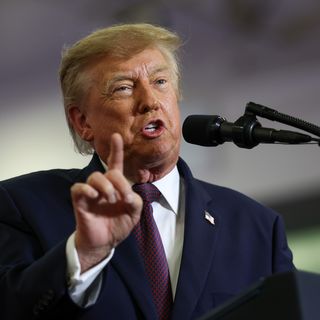
President Trump said Republicans would have won Tuesday's midterm elections had he been on the ballot. Why it matters: After raging on social media before major races were called, Trump reacted to the results for the first time Tuesday night as a blue wave began to take shape. What they're saying: "I wasn't on the Ballot and if I was, we would have won IN A LANDSLIDE! Thank you for your attention to this matter," he wrote in a post on Truth Social on Tuesday night. In a separate post, he said he was "going to become a Political Pundit, both good and bad, on the reasons these Candidates won and lost!" State of play: Democrats have flipped several Republican-held Senate seats, with wins by James Talarico in Texas, Annie Andrews in South Carolina, Sherrod Brown in Ohio and former Gov. Roy Cooper in North Carolina. The victories bring Democrats closer to reclaiming control of the chamber, provided they hold their existing seats. Democrats have also made major gains in the House, flipping six Republican-held seats in key battleground races and moving closer to a majority, per AP. Democrats have even flipped the governorships in Georgia , Texas and Iowa. What we're watching: Trump also told the New York Times he is "absolutely willing to accept" the results. "We'll work with the Democrats, and we'll, you know, look forward to working with them," he said. "We'll probably work something out." Trump also told Politico he spoke with Democratic leaders around 11pm ET and is eager to strike deals with them rather than spend his final two years in office vetoing legislation. About an hour later, Trump posted a hat with the word "veto" on it. Editor's note: This story has been updated with additional details throughout.
Josephine Walker ·

SHREVEPORT, La. — The GOP's election-night defeat has unleashed a wave of finger-pointing inside the House Republican conference, with members questioning whether Speaker Mike Johnson or any of the other top deputies can survive next week's leadership elections. Why it matters: Johnson spent months insisting Republicans would defy the odds and keep the House. But after losing the majority, he cast the defeat as all but inevitable, an explanation unlikely to satisfy Republicans ready for a new leadership slate. One House Republican told Axios that every member of GOP leadership will face a challenger because of the election results. Another said the losses have created a major opening for Republicans looking to challenge the current leadership team. A third said they no longer see a path for Johnson to remain atop the conference. Driving the news: At Johnson's election-night watch party in his hometown of Shreveport, the mood grew increasingly somber as it became clear Democrats would secure the House majority. Johnson remained offstage until just before 11pm Eastern time, even after networks projected Democrats would win control of the chamber. In a soundtrack to the GOP's election-night defeat, "White on the Ground" by the Kruse Brothers played over the speakers to a subdued crowd just before Johnson took the stage. "It's only happened twice in 90 years that a sitting president has picked up or held seats for his party in that first two-year cycle," Johnson told supporters Tuesday night. "It's very, very difficult to overcome, and it looks like history will be kept here tonight." Behind the scenes: House Republicans were already privately unloading on their leaders Tuesday night, with some arguing the scale of the party's losses demands a change at the top. "I think Iran, ICE, inflation, fuel prices, lack of focus on pocketbook issues all played a part of this," one member told Axios. Asked for a vibe check, one member simply texted Axios: "Brutal." The scale of the losses was underscored by the defeat of NRCC Chair Richard Hudson (R-N.C.) — the man tasked with preserving the Republican majority who couldn't hold onto his own seat. Zoom in: Johnson spent months crisscrossing the country in a last-ditch effort to save Republicans' fragile majority, traveling to more than 40 congressional districts across 22 states. Johnson publicly insisted in October that he intended to remain the top House Republican even if his party lost the majority, but he has yet to formally declare any plans to run for minority leader. Trump praised Johnson in an interview with Politico on Tuesday, but stopped short of endorsing him for the job. "He's going to have to make that decision," Trump said of Johnson. What we're watching: House Republicans are scheduled to hold leadership elections Nov. 10, with candidates required to declare by Nov. 6. Majority Leader Steve Scalise (R-La.) and Judiciary Committee Chair Jim Jordan (R-Ohio) are also being floated as potential contenders.
Kate Santaliz ·

Democratic state Rep. Josh Turek defeated Republican U.S. Rep. Ashley Hinson in a major upset Tuesday, becoming the first Democrat elected to the U.S. Senate from Iowa since 2008, the AP projected and sealing Democratic control of the chamber. Why it matters: Turek's victory delivers Democrats control of the Senate — and signals a political backlash against Republicans in a state Trump won comfortably just two years ago. The big picture: Turek's victory breaks the GOP's hold on both of Iowa's Senate seats for the first time since Democrat Tom Harkin left office in 2015, marking a major breakthrough for Democrats in a state that has shifted right. State of play: The Cook Political Report rated the race a toss-up after moving it left during the campaign as mounting frustration over rising costs, Trump's tariffs and the Iran war put Republicans on the defensive. Zoom in: Turek, a Council Bluffs state lawmaker and Paralympic medalist, built his campaign around affordability and appeals to working-class and independent voters. He criticized Trump's tariffs and other administration policies that he argued were hurting Iowa farmers and families. He also made government ethics and corruption a central theme, including support for a ban on congressional stock trading. Between the lines: Republicans had held both of Iowa's U.S. Senate seats since Harkin retired, while GOP candidates have increasingly dominated statewide races. The bottom line: Turek's win offers Democrats a potential roadmap for competing in increasingly Republican states — and raises questions about the GOP's political strength heading into 2028.
Jason Clayworth ·

Democrat James Talarico defeated Republican Ken Paxton in Texas' closely watched U.S. Senate race, delivering a historic breakthrough for Democrats in a state Republicans have dominated for decades. Why it matters: Talarico's victory ends the nation's longest Democratic drought in statewide elections and flips a critical Senate seat as Democrats fight for control of the chamber. The Austin-area state representative becomes the first Democrat elected to the U.S. Senate from Texas since Lloyd Bentsen in 1988. His win also marks the first Democratic victory in a Texas statewide election since 1994, a stunning reversal in a state President Trump carried by nearly 14 points in 2024. The big picture: The race became the nation's most expensive Senate battle after Texas Attorney General Paxton defeated longtime incumbent Sen. John Cornyn in the Republican primary, with massive spending from both parties . Republican leaders had warned that Paxton's nomination could jeopardize the seat, and the party poured enormous resources into defending it. On the campaign trail: Talarico, a former public school teacher and Presbyterian seminarian, built his campaign around affordability, public education and criticism of wealthy donors' influence over politics. Paxton, a three-term Texas attorney general and close ally of President Trump , emphasized immigration enforcement and conservative policies. Between the lines: Paxton's candidacy exposed divisions within the Texas GOP, with party leaders initially warning that nominating the attorney general could endanger a seat Republicans had held for decades. Paxton defeated Cornyn in the May Republican primary runoff after securing Trump's endorsement, setting up the costly general election battle. His campaign was also shadowed by years of legal and ethical controversies, including his 2023 impeachment by the Republican-controlled Texas House. The state Senate later acquitted him. The backdrop: Democrats have spent decades trying to turn Texas blue, with former Rep. Beto O'Rourke coming within roughly 220,000 votes of unseating Republican Sen. Ted Cruz in 2018. Talarico's win marks a breakthrough for a party that has repeatedly fallen short in statewide contests, even as Texas' population and political landscape have changed. What's next: Talarico will take office in January.
Nicole Cobler ·
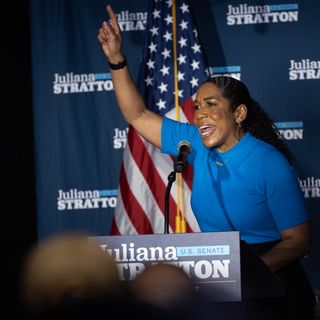
For the first time in history, three Black women will serve simultaneously in the U.S. Senate when Illinois Lt. Gov. Juliana Stratton takes office in January. Why it matters: It took over 235 years for two Black women to serve in the U.S. Senate at the same time. Two years later, that number will grow to three. Driving the news: Stratton won election to the U.S. Senate on Tuesday, defeating Republican Don Tracy, per AP. She'll join Sens. Lisa Blunt Rochester (D-Delaware) and Angela Alsobrooks (D-Maryland), who were both elected in 2024 and became the first two Black women to serve simultaneously in 2025. The Stratton campaign did not immediately respond to Axios' request for comment. By the numbers: Stratton will become the sixth Black woman to serve in the U.S. Senate and the second from Illinois, where Carol Moseley Braun became the first Black woman ever elected to the chamber in 1992. Former Vice President Kamala Harris became the second Black woman elected to the Senate in 2016. Former Sen. Laphonza Butler became the third to serve when California Gov. Gavin Newsom appointed her in 2023, but she was never elected. The bottom line : Stratton and Sen. Tammy Duckworth will make Illinois the first state represented by two women of color in the Senate simultaneously. Go deeper: Juliana Stratton wins Illinois U.S. Senate race, making history
Josephine Walker ·

President Trump lashed out at Fox News on Election Night, attacking the network's personalities, polling and coverage as voters awaited midterm election results. Why it matters: Trump, who has repeatedly dined with Fox News patriarch Rupert Murdoch and hired talent from the network, has come to expect favorable coverage. But Fox's editorial decisions this election cycle suggest it isn't always willing to oblige. Driving the news: Trump began the night by criticizing Jessica Tarlov, a Fox co-host and Democratic strategist, saying he'd "go somewhere else" until she was off the air. He went as far as to reportedly text her co-host, Greg Gutfeld, to complain. His ire then turned toward Fox's political polling , claiming that "[e]very question is a hit job, and every answer is 'BULLSHIT!'" Around half an hour later, he posted that Fox's ratings were down "because they're spending too much time covering the Trump Deranged Dumocrats!" Trump pointed to a "new CNN Poll" as an alternative, touting data demonstrating his strength among MAGA Republicans. But the two CNN polling segments he posted earlier in the night were both well over a month old. State of play : Trump's rocky relationship with Fox News has been a source of tension this election season and in previous elections. Fox's coverage of Michigan Democratic Senate nominee Abdul El-Sayed has fueled tensions for months, Axios' Alex Isenstadt recently reported . Republicans reportedly worried that Fox was undercutting efforts to brand El-Sayed as far outside the mainstream. In late October, Trump posted that Fox was "spending far too much time putting on the OPPONENTS of Republican Party Candidates, people that love our Country, and have Great Policies and Ideas." He added, "That's the only reason this Race is close, if it is indeed close." The White House and Fox did not immediately respond to Axios' request for comment. Meanwhile, Trump's former White House press secretary Karoline Leavitt, now a Fox pundit, appeared on the network's Election Night coverage and said she had just spoken with the president. Reality check: Murdoch, while he is a conservative, has always been passionate about the news business. Fox News did, after all, spark Trumpworld's ire by calling Arizona early for former President Biden in 2020. Zoom in: Fox News' business imperative means focusing on long-term credibility over short-term access and ratings — which took a downward turn last month in the lead-up to the election. The ratings decline could suggest some Republican viewers tuned out as pre-election polls pointed to possible Democratic gains . But for Trump, who has tried to make it a referendum on his popularity, it's personal. Go deeper: Key election night polls close as Trump rages
Avery Lotz, Sara Fischer ·

Democrat Roy Cooper has defeated President Trump's handpicked candidate, Michael Whatley, flipping one of North Carolina's two GOP-held U.S. Senate seats. Why it matters : Cooper, the popular two-term governor, delivered Democrats one of their best shots at flipping a Republican-held Senate seat. Even in a state that voted all three times for Trump, Cooper has never lost an election. The big picture: While the race was originally expected to be tight and expensive, Cooper consistently widened his polling lead throughout campaign season. His name recognition boosted his chances against Whatley, a lawyer who served as Republican National Committee chair but had never run for office himself. As enthusiasm lagged behind Whatley, GOP-aligned super PACs canceled their ads and redirected spending to more promising states, even as Trump still campaigned for Whatley in North Carolina. Catch up quick: Cooper will succeed Republican Sen. Thom Tillis, who decided not to seek reelection after clashing with Trump over the "big, beautiful bill" and its associated Medicaid cuts. Trump had threatened to back a primary challenger against Tillis. On the trail: Cooper focused his campaign on affordability, blaming Republicans for high gas prices and tying GOP policies to inflation. Meanwhile, Whatley centered his platform on helping execute the Trump agenda, despite the president's historically low approval rating. Whatley attempted to paint Cooper as the "soft-on-crime candidate" and continued to recite a debunked claim that Cooper is responsible for freeing Decarlos Brown Jr. , the man accused of stabbing and killing a 23-year-old Ukrainian refugee on Charlotte's light rail. Trump alleged North Carolina had become "one of the most violent" states under Democratic leadership while campaigning for Whatley. What's next: Cooper will take office in January. He will be the first Democrat to represent North Carolina in the Senate in over a decade.
Alexandria Sands ·