Source
Axios

Axios (website)
Axios is an American news website based in Arlington, Virginia. It was founded in 2016 and launched the following year by former Politico journalists Jim VandeHei, Mike Allen, and Roy Schwartz. The site's name is based on the Ancient Greek ἄξιος.
From Wikipedia ↗, text under CC BY-SA 4.0; logo from Wikimedia Commons
- Type
- News outlet
- Lean
- Left-leaning
- Left-Center−2.8 of ±10
- High0.9 of 10 (lower is better)
- High
- Website
- axios.com ↗
- Feed
- RSS ↗
- Articles stored
- 1,017
- Tracked since
- Aug 15, 2026
Down: MBFC factual reporting score, 0 most factual to 10 least.
Bias and credibility ratings by Media Bias/Fact Check.
Axios on MBFC ↗Publishing rhythm
How many articles Axios published over the last 14 days, by publication time, and at which hours of the day.
Top keywords
All keyword charts for Axios →The people, places, organizations and topics Axios covered most that day, by the share of its stories that mention them. Article counts are shown for context.
No keywords that day yet.
Latest articles
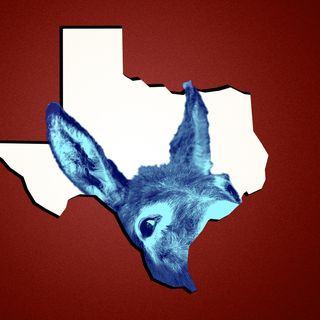
Texas woke up red on Tuesday and went to bed blue. Why it matters: Just months ago, Democratic campaigns in the MAGA heartland appeared quixotic — obligatory more than realistic. Now those Democratic candidates have swept to power, led by two state representatives from liberal Austin — James Talarico , soon to be seated in the U.S. Senate, and Gina Hinojosa , who will take her place in the new year in the governor's mansion. Zoom in: The Democratic victories were comprehensive. State Rep. Vikki Goodwin (D-Austin) unseated three-term Republican Lt. Gov. Dan Patrick, per the Associated Press. Democrat Nathan Johnson, a state senator from Dallas, defeated Republican Mayes Middleton, state senator from Galveston, in the race for attorney general. What they're saying: "We shocked the world tonight. With a Texas chip on our shoulder, we showed the world that anything is possible tonight," Hinojosa said. "We just took back Texas," Talarico told his supporters. What happened: An unpopular president and high gas and grocery prices deep-sixed red-state GOP candidates across the country. But the Texas GOP was further hampered by an unpopular U.S. Senate candidate (even members of his own party impeached him) — Texas Attorney General Ken Paxton. And Greg Abbott, who had served as governor since 2015, was unwilling to debate his gubernatorial opponent. Meanwhile, the Democrats were disciplined, with Talarico and Hinojosa staying on message about affordability even as their Republican opponents tried to make the race about social issues. Follow the money: Republicans went down despite a rescue mission from Elon Musk, who gave north of $150 million in support of Paxton's campaign in a single quarter this year — and gave at least $5.5 million to Abbott's campaign this cycle. The big picture: The Democratic wins have huge implications for the 2028 presidential race. Democrats have proven, after years of flailing, that they could win statewide in Texas, potentially putting the Lone Star State and its 40 electoral votes in play. Political pundits will be wondering: Was this a one-off wave amid a terrible midterm climate for Texas Republicans — or a sign of foundational change? The bottom line: Fireworks were shooting off in Austin last night, and state agencies so long occupied by the GOP will now be run by Democrats, opening the way for wide policy changes in long-conservative Texas.
Asher Price ·

Republicans tried to save their House majority with a bold wave of mid-cycle redistricting. It failed in spectacular fashion on Tuesday. Why it matters: Republicans not only fell short of winning seats in several districts they redrew to favor their candidates, they put some GOP incumbents in danger of losing by spreading their support thin. Rep. Scott DesJarlais (R-Tenn.), who has mostly won landslide reelections since entering Congress in 2010, trailed his Democratic opponent by 200 votes, according to the Tennessee secretary of state's unofficial final results . Republican state legislators carved up his district in an effort to shore up neighboring Republicans, making his district nearly 20 percentage points less GOP-leaning. State of play: While Republicans succeeded in picking up a Democratic district in Tennessee to make up for that loss, they largely failed to pick up the seats they tried to make reliably Republican in other states. Florida: Republicans are set to go 0-for-4 in redistricted seats, failing to unseat Democratic Reps. Darren Soto, Kathy Castor and Jared Moskowitz, or capture a new seat that Democrat Pia Dandiya won. Texas: Republicans are set to narrowly win just one of the five districts they redrew heavily in their favor, with Democrats easily hanging onto several Rio Grande Valley and San Antonio-area seats. Ohio: Democratic Reps. Greg Landsman and Marcy Kaptur held on despite Republicans drawing them into more hostile territory. Alabama: Democratic Rep. Shomari Figures is also set for a comfortable win in a district Republicans had planned to fall into their hands. Louisiana: The district of retiring Democrat Rep. Cleo Fields, which Republicans made significantly more GOP-leaning will go to a December runoff between Democrat Patricia Moore and Republican Gabe Firment. One of the most stunning results of the night was Democrats' multiple apparent victories in North Carolina, where House candidates were boosted by Sen-elect Roy Cooper's strong performance at the top of the ballot. Democrats are on track to flip several seats that were rated as likely or even solidly Republican by Cook Political Report, likely unseating Republican Reps. Addison McDowell, Brad Knott and Tim Moore. They are also likely to unseat Rep. Richard Hudson, the chair of the National Republican Congressional Committee. Virginia Foxx, who chairs the House Rules Committee, is behind by about 100 votes. In all, the state's House delegation could go from a 10-4 Republican majority to a 9-5 Democratic one. Between the lines: The North Carolina result is the product of a brutal 2024 gerrymander in which GOP state legislators diluted most solidly Republican districts to draw out several House Democrats. They redistricted again last year, only to put Democratic Rep. Don Davis in more hostile territory. GOP Rep. Greg Murphy — whose district was packed with more Democratic voters to make Davis' seat redder — barely hung on Tuesday night. Former Democratic Rep. Kathy Manning, who was one of the Democrats drawn out in 2024, told Axios that Tuesday's result was "absolutely" a result of GOP redistricting backfiring. The bottom line: Republicans "tried to break the laws and go against these norms in your massive authoritarian power grab," DNC vice chair Shasti Conrad told Axios. "How did that turn out?"
Andrew Solender, Holly Otterbein, Hans Nichols ·
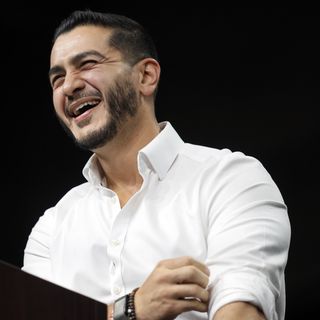
Democrat Abdul El-Sayed defeated Republican Mike Rogers in Michigan's closely watched U.S. Senate race, the Associated Press projected. He will become the nation's first Muslim senator. Why it matters: El-Sayed's win shows how an unapologetically progressive candidate can win in a battleground state President Trump carried just two years ago. The two candidates competed for the seat vacated by retiring Democratic Sen. Gary Peters, with Republicans hoping to flip a seat Democrats have held for decades. But the GOP failed in its endeavor — and already lost its Senate majority. The race took a stunning turn in its final days, when Democratic U.S. Rep. Haley Stevens, who narrowly lost the August primary to El-Sayed, endorsed Rogers . The move sparked furious backlash from Democrats and prompted several of Stevens' staffers, including her chief of staff, to resign. The big picture: El-Sayed, a former Detroit health director, ran on a progressive platform centered on Medicare for All, taxing billionaires and reducing corporate influence in politics. His victory comes after a contentious Democratic primary and a bitter general election campaign that featured personal attacks over his background, medical credentials and Muslim faith. Rogers, a former congressman and FBI agent who narrowly lost a 2024 Senate bid, sought to portray El-Sayed as too extreme for Michigan . El-Sayed cast Rogers as a Washington insider aligned with Trump. Trump himself escalated the attacks in the final stretch of the race, questioning El-Sayed's loyalty to the U.S. and making unsubstantiated allegations of extremist ties. El-Sayed rejected the accusations. Between the lines: El-Sayed's win offers progressives a powerful new argument in the Democratic Party's debate over how to win back voters. Zoom out: Both candidates put affordability at the center of their campaigns but offered sharply different solutions. El-Sayed called for universal health care, tackling medical debt and higher taxes on billionaire wealth. Rogers emphasized tax cuts, expanding domestic manufacturing and more transparent health care prices. He also campaigned on stronger border security and immigration enforcement. What's next: El-Sayed will arrive in Washington with an ambitious progressive agenda — but turning campaign promises into legislation will be a different challenge. His signature Medicare for All proposal faces steep political obstacles, even with Democrats winning control of the Senate. His victory also gives progressives a new national figure as Democrats begin looking toward the 2028 presidential election.
Joe Guillen ·

In red states and blue, Republicans suffered losses on a scale even Democrats would never have dared to dream about 24 hours ago. Why it matters: Democrats worried that polls showing a blue wave were overestimating the party's strength. It turned out polls underestimated the size of the Democratic romp — by a lot. The margins Democrats racked up in red states were stunning: Georgia: Sen. Jon Ossoff won reelection by nearly 18 percentage points. North Carolina: Former Gov. Roy Cooper won his Senate race by roughly 19 points. Texas: State Rep. James Talarico cruised to victory by approximately 12 points. These weren't nail-biters in competitive states. They were landslides in states President Trump carried just two years ago. 1. The Texas trifecta Democrats won the Texas House, Senate and governor's mansion, giving the party unified control of state government for the first time since 1995. The sweep came alongside Talarico's double-digit victory in the U.S. Senate race. Texas, long the GOP's biggest electoral stronghold, delivered Democrats victories up and down the ballot. 2. North Carolina was a bloodbath The man in charge of steering House Republicans to victory — Rep. Richard Hudson, chair of the National Republican Congressional Committee — lost his own seat. He'll join the ranks of other defeated party leaders — Speaker Tom Foley in 1994 and Democratic Congressional Campaign Committee Chair Sean Patrick Maloney in 2022 — who spent so much time trying to build a majority that they failed to protect themselves. The carnage extended across the state. North Carolina's congressional delegation could shift from 10 Republicans and four Democrats to five Republicans and nine Democrats. 3. The ridiculously cheap wins Democrats are leading in districts that received little or no outside spending from the DCCC or House Majority PAC, the party's main House super PAC, according to AdImpact. In North Carolina's 6th, 9th and 13th districts, Missouri's 2nd and Tennessee's 4th, Democratic candidates are on track to win despite receiving little financial support from national Democratic groups. North Carolina's 6th: Democrat Cyril Jefferson didn't spend a dime on advertising, according to AdImpact. Tennessee's 4th: Democrat Victoria Broderick spent just $90,000 on her entire campaign as of Oct. 14, according to her FEC filing. AdImpact has no record of any paid TV advertising. 4. Hispanic voters swung back in South Texas Democrats are poised to control three congressional seats in the Rio Grande Valley that President Trump carried in 2024 — and the margins weren't even close. Rep. Henry Cuellar (D-Texas) was leading Republican Tano Tijerina, 66% to 30%. Democrat Bobby Pulido was leading Republican Rep. Monica De La Cruz, 62% to 38%. Rep. Vicente Gonzalez (D-Texas) was leading Republican Eric Flores, 56% to 40%. The results were a dramatic reversal in a region where Republicans had made significant gains with Hispanic voters during the Trump era. 5. Democrats won deep in Trump country Democrats didn't just flip swing districts — they broke through in some of the reddest corners of the House map. In Tennessee's 4th Congressional District, which Trump carried by 24 points, Broderick was leading Rep. Scott DesJarlais by roughly 200 votes. Two years ago, Broderick received just 26.8% of the vote to DesJarlais' 70%. The bottom line: The wave didn't discriminate. It washed away good candidates and bad, senators, governors and seasoned Republicans alike.
Hans Nichols ·

Latino voters helped Democrats break Republicans' decades-long grip on Texas and reclaim both chambers of Congress on Tuesday, casting doubt on President Trump's historic 2024 gains with the fast-growing electorate. Why it matters: Republicans bet Trump's Latino breakthrough two years ago would create a lasting GOP realignment in Texas and beyond. Tuesday's results exposed how quickly those gains could unravel — and raised new questions about Republicans' coalition heading into 2028. Early results show Hispanic voters' shift aided Democrats in capturing a Senate seat and the governorship in Texas for the first time in a generation. Tuesday's results — particularly in South Texas border counties — reflected some of the anger among Hispanics over high prices and the Trump administration's immigration enforcement. "This is what happens when you mess with the Latino community. We are sending a clear message," said Hector Sanchez Barba, president and CEO of the voting group Mi Familia Vota. By the numbers: Early NBC News exit poll results showed Latino voters moving away from Republicans. Democrats' 16-point advantage in Latino party identification grew from 10 points in 2024, according to NBC's polling. Some 43% of Latino voters identified as Democrats, up from 39% in 2024. Republican identification slipped from 29% to 27%. In the early NBC exit poll, 75% of voters nationally described the economy as struggling, while 65% said Trump's policies had made economic conditions worse. State of play: Democrats reclaimed the House and Senate while ending Republicans' statewide winning streak in Texas dating to 1994. Democratic state Rep. James Talarico defeated Republican Attorney General Ken Paxton , winning a Senate seat Democrats last captured in 1988. Democratic state Rep. Gina Hinojosa ousted Republican Gov. Greg Abbott , becoming Texas' first elected Latina governor. Early returns also suggested Latino voters helped Democrats win crucial House contests in Colorado and Georgia. Comedian Cristela Alonzo attends an election night watch party for Texas Democratic gubernatorial candidate Gina Hinojosa at Assembly Hall in Austin, Texas. Photo: Joel Angel Juarez/Getty Images What they're saying: "You know how Tim Russert would always say 'Florida, Florida, Florida?' For the last two cycles, I kept saying Texas, Texas, Texas. That's how I feel right now," Voto Latino CEO Maria Teresa Kumar told Axios. Kumar said the Democrats' historic Texas wins changes 2028 and will transform how presidential candidates talk to Latino voters and see Texas as purple. "There was this notion that we're a sleeping giant. Now, we're jumping up and down and waving our fist above the head," Janet Murguía, president and CEO of the Latino civil rights group UnidosUS told Axios. Zoom in: The clearest tests of the Latino shift came in Texas counties that Republicans had celebrated as evidence of their growing strength. Cameron County, which includes Brownsville and South Padre Island: Talarico led by 38 points in early, unofficial returns. Trump won by 6 points there in 2024. Hidalgo County, another majority-Latino border county: Talarico led by 47 points. Trump won it two years ago by 3 points. Webb County, home to Laredo: Talarico led by 49 points; it was Trump +2 in 2024. Context: Trump's 2024 success shattered longstanding assumptions about Latino voters. A Pew Research Center analysis found Trump won 48% of Latino voters in 2024, compared with 36% in 2020. An August Axios-reported poll of 17 competitive House districts foreshadowed the reversal, showing Democrats leading 58%–35% among Latino registered voters. Supporters react during a midterm election night watch party for Texas Democratic Senate candidate James Talarico at the Long Center in Austin, Texas. Photo: Brandon Bell/Getty Image Reality check: A Democratic rebound doesn't mean Latino voters have returned to their old political loyalties. Democrats' 16-point advantage in Latino party identification remains far below their 33-point advantage in 2018, according to NBC. Republicans may have mistaken Trump's appeal for lasting GOP loyalty. Democrats risk confusing a backlash against Trump with renewed allegiance to their party. A September Axios analysis found 62% of Latino registered voters in 17 battleground districts trusted Democrats more to lower prices, compared with 36% who trusted Republicans. Economic frustration gave Democrats an opening without guaranteeing lasting support. The bottom line: Trump's Latino breakthrough reshaped politics in 2024. Two years later, those voters reminded both parties that winning their support once doesn't mean keeping it.
Russell Contreras ·

Elon Musk cracked jokes early Wednesday morning after the Republican candidates he spent record sums supporting got drubbed in a historic midterm election. Why it matters: No one has ever spent as much as Musk for so little payoff — especially in Texas , which ended up with a massive blue wave. He spent an estimated $445 million in this cycle, making him the largest individual donor in modern history. What they're saying: " Guess my election-interfering space lasers didn't work this time 🤷♂️," Musk posted to X just before 1:15am ET. The intrigue: Musk also nodded at the results in the Texas governor's race, where anti-data center Democrat Gina Hinojosa won a shock victory . "Data centers in space looking pretty appealing right now," he wrote . What to watch: It's not clear how the massive power shift in Texas will affect Musk's ambitions for his companies in the state — or how the loss will impact his appetite for more spending in 2028.
Ben Berkowitz ·

Senate Republicans' worst nightmare came true Tuesday night, as they watched red state after red state fall to a historic Democratic wave . Why it matters: It's hard to remember now, but Republicans started off the 2026 cycle thinking they could expand their majority. They ended the night with what one source called a "huge f**king thumping" — losing or trailing in every toss-up on the map. At the start of the cycle, top operatives saw a red wall of incumbents in Trump-friendly states, an invincible Republican Sen. Susan Collins in Maine and a vulnerable Democratic Sen. Jon Ossoff in Georgia, who provided a path to expanding a majority. By 9pm Tuesday night, top GOP sources were quietly accepting the reality of the return of Majority Leader Chuck Schumer (D-N.Y.). "Republicans are going to wake up in a different country tomorrow and we are going to have to start from square one to reinvent a party," one senior GOP Senate aide told Axios on Tuesday evening. Between the lines: For the first time since 1972, Republicans lost a Senate seat in the home state of the chair of the National Republican Senatorial Committee. The defeat of Sen. Darline Graham (R-S.C.) came despite Sen. Tim Scott (R-S.C.) leading the NRSC. Republicans also lost in the home state of the next expected NRSC chair, Bernie Moreno (R-Ohio). Zoom in: North Carolina and Georgia were expected to be the premiere races of the cycle not too long ago. Both were called for Democrats before 8:30pm EST. That was just the beginning of the nightmare. In Texas, Elon Musk's more than $150 million infusion wasn't enough to save Texas GOP Senate nominee Ken Paxton after Paxton defeated Sen. John Cornyn in a nasty primary. In Ohio, Sen. Jon Husted's (R-Ohio) campaign had a rocky start — and wasn't bailed out by President Trump's publicity campaign about his rear end. Alaska started looking shaky even before a second Dan Sullivan joined the ballot, and Iowa wasn't a given either. In Kansas, alarm bells started ringing over an unprepared Sen. Roger Marshall. In South Carolina, Sen. Lindsey Graham died, and before Republican leaders could blink, Trump crowned Graham's sister, Darline, who had no political experience. And in Maine, Republicans held out hope that Susan Collins could pull out another miracle. A hope that quickly faded as results began to roll in. What we're hearing: "Absolutely brutal night," another senior GOP aide told us. "But also predictable. Signs were there for months. Biggest fear is that the party lacks the introspection, takes away wrong lessons, and doubles down on the policies and behavior that got us into this mess in first place." "Sometimes there are environmental challenges that even the strongest, best-resourced candidate can't overcome. We're seeing those challenges play out in real time tonight," said a third senior GOP aide. Yet another top operative conspicuously shared charts of Trump's dismal approval ratings. The bottom line: Democrats won Senate seats on Tuesday night for the first time in Texas since 1988, in Kansas since 1932 and South Carolina since 1998.
Stef W. Kight ·
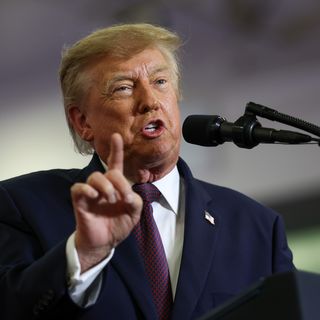
President Trump said Republicans would have won Tuesday's midterm elections had he been on the ballot. Why it matters: After raging on social media before major races were called, Trump reacted to the results for the first time Tuesday night as a blue wave began to take shape. What they're saying: "I wasn't on the Ballot and if I was, we would have won IN A LANDSLIDE! Thank you for your attention to this matter," he wrote in a post on Truth Social on Tuesday night. In a separate post, he said he was "going to become a Political Pundit, both good and bad, on the reasons these Candidates won and lost!" State of play: Democrats have flipped several Republican-held Senate seats, with wins by James Talarico in Texas, Annie Andrews in South Carolina, Sherrod Brown in Ohio and former Gov. Roy Cooper in North Carolina. The victories bring Democrats closer to reclaiming control of the chamber, provided they hold their existing seats. Democrats have also made major gains in the House, flipping six Republican-held seats in key battleground races and moving closer to a majority, per AP. Democrats have even flipped the governorships in Georgia , Texas and Iowa. What we're watching: Trump also told the New York Times he is "absolutely willing to accept" the results. "We'll work with the Democrats, and we'll, you know, look forward to working with them," he said. "We'll probably work something out." Trump also told Politico he spoke with Democratic leaders around 11pm ET and is eager to strike deals with them rather than spend his final two years in office vetoing legislation. About an hour later, Trump posted a hat with the word "veto" on it. Editor's note: This story has been updated with additional details throughout.
Josephine Walker ·

SHREVEPORT, La. — The GOP's election-night defeat has unleashed a wave of finger-pointing inside the House Republican conference, with members questioning whether Speaker Mike Johnson or any of the other top deputies can survive next week's leadership elections. Why it matters: Johnson spent months insisting Republicans would defy the odds and keep the House. But after losing the majority, he cast the defeat as all but inevitable, an explanation unlikely to satisfy Republicans ready for a new leadership slate. One House Republican told Axios that every member of GOP leadership will face a challenger because of the election results. Another said the losses have created a major opening for Republicans looking to challenge the current leadership team. A third said they no longer see a path for Johnson to remain atop the conference. Driving the news: At Johnson's election-night watch party in his hometown of Shreveport, the mood grew increasingly somber as it became clear Democrats would secure the House majority. Johnson remained offstage until just before 11pm Eastern time, even after networks projected Democrats would win control of the chamber. In a soundtrack to the GOP's election-night defeat, "White on the Ground" by the Kruse Brothers played over the speakers to a subdued crowd just before Johnson took the stage. "It's only happened twice in 90 years that a sitting president has picked up or held seats for his party in that first two-year cycle," Johnson told supporters Tuesday night. "It's very, very difficult to overcome, and it looks like history will be kept here tonight." Behind the scenes: House Republicans were already privately unloading on their leaders Tuesday night, with some arguing the scale of the party's losses demands a change at the top. "I think Iran, ICE, inflation, fuel prices, lack of focus on pocketbook issues all played a part of this," one member told Axios. Asked for a vibe check, one member simply texted Axios: "Brutal." The scale of the losses was underscored by the defeat of NRCC Chair Richard Hudson (R-N.C.) — the man tasked with preserving the Republican majority who couldn't hold onto his own seat. Zoom in: Johnson spent months crisscrossing the country in a last-ditch effort to save Republicans' fragile majority, traveling to more than 40 congressional districts across 22 states. Johnson publicly insisted in October that he intended to remain the top House Republican even if his party lost the majority, but he has yet to formally declare any plans to run for minority leader. Trump praised Johnson in an interview with Politico on Tuesday, but stopped short of endorsing him for the job. "He's going to have to make that decision," Trump said of Johnson. What we're watching: House Republicans are scheduled to hold leadership elections Nov. 10, with candidates required to declare by Nov. 6. Majority Leader Steve Scalise (R-La.) and Judiciary Committee Chair Jim Jordan (R-Ohio) are also being floated as potential contenders.
Kate Santaliz ·

Democratic state Rep. Josh Turek defeated Republican U.S. Rep. Ashley Hinson in a major upset Tuesday, becoming the first Democrat elected to the U.S. Senate from Iowa since 2008, the AP projected and sealing Democratic control of the chamber. Why it matters: Turek's victory delivers Democrats control of the Senate — and signals a political backlash against Republicans in a state Trump won comfortably just two years ago. The big picture: Turek's victory breaks the GOP's hold on both of Iowa's Senate seats for the first time since Democrat Tom Harkin left office in 2015, marking a major breakthrough for Democrats in a state that has shifted right. State of play: The Cook Political Report rated the race a toss-up after moving it left during the campaign as mounting frustration over rising costs, Trump's tariffs and the Iran war put Republicans on the defensive. Zoom in: Turek, a Council Bluffs state lawmaker and Paralympic medalist, built his campaign around affordability and appeals to working-class and independent voters. He criticized Trump's tariffs and other administration policies that he argued were hurting Iowa farmers and families. He also made government ethics and corruption a central theme, including support for a ban on congressional stock trading. Between the lines: Republicans had held both of Iowa's U.S. Senate seats since Harkin retired, while GOP candidates have increasingly dominated statewide races. The bottom line: Turek's win offers Democrats a potential roadmap for competing in increasingly Republican states — and raises questions about the GOP's political strength heading into 2028.
Jason Clayworth ·

Democrat James Talarico defeated Republican Ken Paxton in Texas' closely watched U.S. Senate race, delivering a historic breakthrough for Democrats in a state Republicans have dominated for decades. Why it matters: Talarico's victory ends the nation's longest Democratic drought in statewide elections and flips a critical Senate seat as Democrats fight for control of the chamber. The Austin-area state representative becomes the first Democrat elected to the U.S. Senate from Texas since Lloyd Bentsen in 1988. His win also marks the first Democratic victory in a Texas statewide election since 1994, a stunning reversal in a state President Trump carried by nearly 14 points in 2024. The big picture: The race became the nation's most expensive Senate battle after Texas Attorney General Paxton defeated longtime incumbent Sen. John Cornyn in the Republican primary, with massive spending from both parties . Republican leaders had warned that Paxton's nomination could jeopardize the seat, and the party poured enormous resources into defending it. On the campaign trail: Talarico, a former public school teacher and Presbyterian seminarian, built his campaign around affordability, public education and criticism of wealthy donors' influence over politics. Paxton, a three-term Texas attorney general and close ally of President Trump , emphasized immigration enforcement and conservative policies. Between the lines: Paxton's candidacy exposed divisions within the Texas GOP, with party leaders initially warning that nominating the attorney general could endanger a seat Republicans had held for decades. Paxton defeated Cornyn in the May Republican primary runoff after securing Trump's endorsement, setting up the costly general election battle. His campaign was also shadowed by years of legal and ethical controversies, including his 2023 impeachment by the Republican-controlled Texas House. The state Senate later acquitted him. The backdrop: Democrats have spent decades trying to turn Texas blue, with former Rep. Beto O'Rourke coming within roughly 220,000 votes of unseating Republican Sen. Ted Cruz in 2018. Talarico's win marks a breakthrough for a party that has repeatedly fallen short in statewide contests, even as Texas' population and political landscape have changed. What's next: Talarico will take office in January.
Nicole Cobler ·
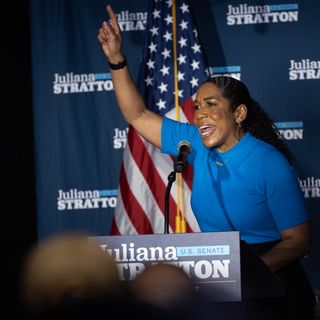
For the first time in history, three Black women will serve simultaneously in the U.S. Senate when Illinois Lt. Gov. Juliana Stratton takes office in January. Why it matters: It took over 235 years for two Black women to serve in the U.S. Senate at the same time. Two years later, that number will grow to three. Driving the news: Stratton won election to the U.S. Senate on Tuesday, defeating Republican Don Tracy, per AP. She'll join Sens. Lisa Blunt Rochester (D-Delaware) and Angela Alsobrooks (D-Maryland), who were both elected in 2024 and became the first two Black women to serve simultaneously in 2025. The Stratton campaign did not immediately respond to Axios' request for comment. By the numbers: Stratton will become the sixth Black woman to serve in the U.S. Senate and the second from Illinois, where Carol Moseley Braun became the first Black woman ever elected to the chamber in 1992. Former Vice President Kamala Harris became the second Black woman elected to the Senate in 2016. Former Sen. Laphonza Butler became the third to serve when California Gov. Gavin Newsom appointed her in 2023, but she was never elected. The bottom line : Stratton and Sen. Tammy Duckworth will make Illinois the first state represented by two women of color in the Senate simultaneously. Go deeper: Juliana Stratton wins Illinois U.S. Senate race, making history
Josephine Walker ·
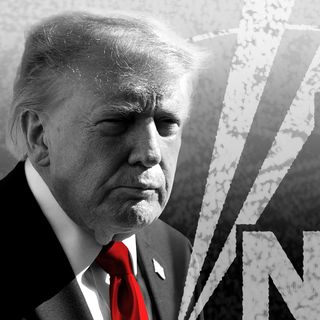
President Trump lashed out at Fox News on Election Night, attacking the network's personalities, polling and coverage as voters awaited midterm election results. Why it matters: Trump, who has repeatedly dined with Fox News patriarch Rupert Murdoch and hired talent from the network, has come to expect favorable coverage. But Fox's editorial decisions this election cycle suggest it isn't always willing to oblige. Driving the news: Trump began the night by criticizing Jessica Tarlov, a Fox co-host and Democratic strategist, saying he'd "go somewhere else" until she was off the air. He went as far as to reportedly text her co-host, Greg Gutfeld, to complain. His ire then turned toward Fox's political polling , claiming that "[e]very question is a hit job, and every answer is 'BULLSHIT!'" Around half an hour later, he posted that Fox's ratings were down "because they're spending too much time covering the Trump Deranged Dumocrats!" Trump pointed to a "new CNN Poll" as an alternative, touting data demonstrating his strength among MAGA Republicans. But the two CNN polling segments he posted earlier in the night were both well over a month old. State of play : Trump's rocky relationship with Fox News has been a source of tension this election season and in previous elections. Fox's coverage of Michigan Democratic Senate nominee Abdul El-Sayed has fueled tensions for months, Axios' Alex Isenstadt recently reported . Republicans reportedly worried that Fox was undercutting efforts to brand El-Sayed as far outside the mainstream. In late October, Trump posted that Fox was "spending far too much time putting on the OPPONENTS of Republican Party Candidates, people that love our Country, and have Great Policies and Ideas." He added, "That's the only reason this Race is close, if it is indeed close." The White House and Fox did not immediately respond to Axios' request for comment. Meanwhile, Trump's former White House press secretary Karoline Leavitt, now a Fox pundit, appeared on the network's Election Night coverage and said she had just spoken with the president. Reality check: Murdoch, while he is a conservative, has always been passionate about the news business. Fox News did, after all, spark Trumpworld's ire by calling Arizona early for former President Biden in 2020. Zoom in: Fox News' business imperative means focusing on long-term credibility over short-term access and ratings — which took a downward turn last month in the lead-up to the election. The ratings decline could suggest some Republican viewers tuned out as pre-election polls pointed to possible Democratic gains . But for Trump, who has tried to make it a referendum on his popularity, it's personal. Go deeper: Key election night polls close as Trump rages
Avery Lotz, Sara Fischer ·

Democrat Roy Cooper has defeated President Trump's handpicked candidate, Michael Whatley, flipping one of North Carolina's two GOP-held U.S. Senate seats. Why it matters : Cooper, the popular two-term governor, delivered Democrats one of their best shots at flipping a Republican-held Senate seat. Even in a state that voted all three times for Trump, Cooper has never lost an election. The big picture: While the race was originally expected to be tight and expensive, Cooper consistently widened his polling lead throughout campaign season. His name recognition boosted his chances against Whatley, a lawyer who served as Republican National Committee chair but had never run for office himself. As enthusiasm lagged behind Whatley, GOP-aligned super PACs canceled their ads and redirected spending to more promising states, even as Trump still campaigned for Whatley in North Carolina. Catch up quick: Cooper will succeed Republican Sen. Thom Tillis, who decided not to seek reelection after clashing with Trump over the "big, beautiful bill" and its associated Medicaid cuts. Trump had threatened to back a primary challenger against Tillis. On the trail: Cooper focused his campaign on affordability, blaming Republicans for high gas prices and tying GOP policies to inflation. Meanwhile, Whatley centered his platform on helping execute the Trump agenda, despite the president's historically low approval rating. Whatley attempted to paint Cooper as the "soft-on-crime candidate" and continued to recite a debunked claim that Cooper is responsible for freeing Decarlos Brown Jr. , the man accused of stabbing and killing a 23-year-old Ukrainian refugee on Charlotte's light rail. Trump alleged North Carolina had become "one of the most violent" states under Democratic leadership while campaigning for Whatley. What's next: Cooper will take office in January. He will be the first Democrat to represent North Carolina in the Senate in over a decade.
Alexandria Sands ·
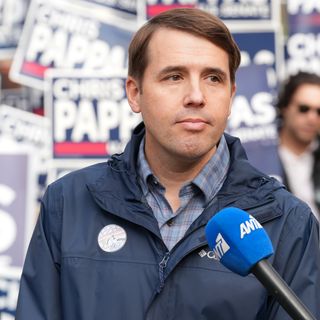
Democratic Rep. Chris Pappas defeated former GOP Sen. John Sununu in the New Hampshire Senate race, AP projects, becoming the first openly gay man elected to the U.S. Senate. Why it matters: Pappas' victory keeps the seat in Democratic hands and could boost the party's chances of taking control of the Senate. Driving the news: Pappas led Sununu 61% to 38% with 20% of the votes counted. He'll succeed retiring Sen. Jeanne Shaheen (D-N.H.) in January. Catch up quick: Republicans saw New Hampshire as a top pickup opportunity, with Senate Majority Leader John Thune campaigning for Sununu in the competitive race, despite polls showing Pappas ahead. Most polls compiled by the New York Times in the weeks before Election Day showed the Democratic Pappas leading Sununu by 5 to 8 percentage points. Zoom in: Although President Trump endorsed him, Sununu has shown daylight with the president, criticizing his trade war with Canada and his so-called anti-weaponization fund — and he backed Trump's primary opponents in 2016 and 2024. Still, prominent New Hampshire Republicans — including Don Bolduc , the Trump -endorsed 2022 Senate nominee — endorsed Pappas in mid-October, accusing Sununu of being too beholden to the president. Between the lines: Republicans welcomed Sununu's entry into the race because of his family's long ties to New Hampshire politics. Sununu served in the Senate from 2003 to 2009 before losing to Shaheen in 2008. His brother Chris served as governor for eight years. Senate GOP Whip John Barrasso (R-Wyo.) posted on X in October 2025 that Sununu's decision to run catapulted New Hampshire to "a top-tier U.S. Senate race." The bottom line: Pappas' win reflects a preference New Hampshire voters expressed in pre-election polling : They wanted a check on Trump's power. Go deeper: Trump's former Senate pick backs Democrat in New Hampshire Editor's note: This story has been updated with additional reporting.
Josephine Walker, Avery Lotz ·

Top party strategists may hate seeing one of their candidates gutted by a brutal ad. But they can still admire the hit. Why it matters: A record $11.6 billion has plastered political ads across screens of every size in the country during the 2026 midterms . Only a handful of those earned the grudging respect of operatives on both sides. 📺 Zoom in: Multiple Republican strategists singled out the "brutal" series of ads attacking Sen. Roger Marshall (R-Kans.) over lawsuits against patients with overdue medical bills — some of whom were later arrested . Against the advice of his own team, Marshall released a self-directed ad answering the attacks. In Nebraska , an ad highlighting a past vote by former Gov. Pete Ricketts to pardon a man convicted of rape was singled out by both parties as one of the cycle's most damaging. Ricketts is expected to win re-election to the Senate. In Maine, an upbeat jingle hit Democratic nominee Troy Jackson for having children with his second cousin. "If he'll f**k his own family, he'll f**k yours too," the radio ad said (among other things). Sen. Susan Collins (R-Maine) called for the ad to be taken down. And in Florida , Rep. María Salazar (R-Fla.) turned on her own party leader, criticizing President Trump over ICE's aggressive enforcement tactics, saying some immigration policies had "gone too far." The intrigue : Even hardened operatives are dealing with a new frontier: AI-generated attack ads that can make up scenarios and put words in an opponent's mouth. In Michigan , a Republican-aligned super PAC used AI-generated imagery to depict Democratic candidate Abdul El-Sayed in a fabricated family photo and playing a game with cards referencing "Death to America" and 9/11. In Texas, GOP Senate nominee Ken Paxton's team used AI to depict Democratic candidate James Talarico defacing a Bible with a crayon and saying: "In the beginning God was non-binary, and he wasn't a Christian. And God said, 'let there be six genders,' and there were." 🤺 Between the lines: An attack ad helped spark this weekend's blowup in the Michigan Senate race. Rep. Haley Stevens' (D-Mich.) shocking decision to withdraw support from El-Sayed grew out of their public dispute over an ad she called antisemitic. El-Sayed ultimately disavowed the ad but said Stevens wasn't welcome at his events, and she endorsed former Rep. Mike Rogers (R-Mich.) on Sunday. The other side: It's hard to imagine a bigger backfire than Vivek Ramaswamy's (R) ad featuring the estranged mother of his opponent for Ohio governor, Amy Acton (D). It could prove fatal for his gubernatorial bid, and Republicans worry it could hurt Sen. John Husted's (R) re-election chances too. The ad sparked immediate bipartisan backlash. Ramaswamy doubled down before pulling it off-air. One internal GOP poll had Acton's lead grow by 6 points after the ad ran.
Stef W. Kight ·

Voters in Minneapolis and Houston are among those leaving "I Voted" stickers at memorials for people killed by federal immigration agents. Why it matters: The tributes highlight how the Trump administration's unpopular immigration crackdown is motivating voters this election cycle. Zoom in: In Minneapolis , people are placing stickers on memorials for Alex Pretti , an ICU nurse, and Renee Good , a writer and mother, who were killed by federal agents in January. In Houston , voters have covered a memorial for Lorenzo Salgado Araujo , a construction worker and father who was fatally shot by ICE agents in July, with stickers and handwritten messages like "I voted for you" and "Por usted" — "for you" in Spanish. A voter places an "I Voted" sticker on a memorial for Lorenzo Salgado Araujo. Photo: Mark Felix/Bloomberg via Getty Images Ronaldo Salgado, Araujo's oldest son, placed his sticker on his father's memorial in the first week of early voting and hundreds followed him, the Houston Chronicle reports . "I am beyond touched that this community and that the entire city is voting with my dad in mind ... I didn't realize it would grow this big," he told the Washington Post. The big picture: These midterms are testing whether President Trump's 2024 gains with Latino voters have lasted. National polls in the lead-up to Election Day showed Latino voters swinging back toward Democrats , with immigration as a key area of disagreement with the administration. In an October NBC News/Telemundo poll , 67% of Latino voters said Trump's enforcement has gone too far, 31% said they or someone close now carries ID because of ICE concerns, and 27% know someone detained or deported. More from Axios: Voting machine chaos hits key House battleground Inside the White House's Election Day messaging strategy Democrats could learn wrong message from a blowout victory
Erica Pandey ·
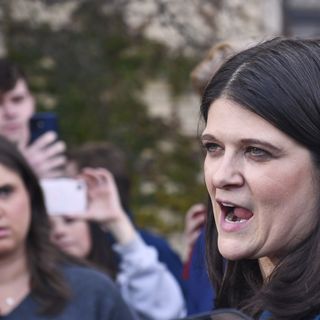
Michigan Rep. Haley Stevens has requested U.S. marshals' protection after the Democrat told authorities she had received death threats for endorsing Republican Mike Rogers in the swing state's hotly contested Senate race, two senior Trump administration officials tell Axios. Why it matters: Stevens' surprise decision Sunday to switch her endorsement to Rogers over Democratic Senate nominee Abdul El-Sayed was the biggest political story of the midterm campaign's final days. Stevens — who lost to El-Sayed in the Michigan Senate primary — was widely criticized by Democrats after siding with Rogers, and her top staff members resigned. "She has received death threats and reached out to the Marshals Service," one of the officials said. "There's a process to go through but she's a member of Congress and we expect her request will be fulfilled." Zoom in: Stevens' support for Israel and his criticism of the Jewish state was a major dividing line in their primary campaign. Stevens objected to El-Sayed's ties to controversial progressive streamer Hasan Piker and an ad by a PAC tied to Piker's uncle, Cenk Uygur, blaming Israel for rising grocery prices. El-Sayed disavowed the ad, but Stevens said she believed he hadn't done enough to address her concerns and didn't want her help on the campaign trail. The dispute came to a head when she was told she was no longer welcome at El-Sayed's campaign events. Stevens announced her endorsement of Rogers after appearing with him at a church service on Sunday. Stevens could not be reached for comment Tuesday. The big picture: The political environment in Michigan has been volatile this weekend. On Monday, the New York Post reported a former El-Sayed staffer was one of several anti-Zionist activists federally indicted for allegedly terrorizing members of Michigan's Jewish community. On Sunday, a conservative Jewish activist was attacked by a progressive activist at a University of Michigan event where organizers were criticizing Islam. On Friday, U.S. officials announced the arrest of a Michigan man for allegedly threatening FBI director Kash Patel. Stevens recently clashed with an anti-Zionist activist whom she accused of trying to intimidate her over her support for Israel.
Alex Isenstadt, Marc Caputo ·

Voting is underway across the country Tuesday in a midterm election that could decide whether President Trump gets two more years of unified Republican rule — or faces a potential Democratic check on his power. Why it matters: The results will be the clearest national test of Trump's second presidency , following war abroad, economic anxiety at home and sweeping changes in Washington. Trump, facing all these challenges, has made himself the face of the Republican campaign for control. State of play: As voters head to the polls, the Trump administration is zeroing-in on the Alaska Senate race. The Department of Justice has sent more than a dozen target letters as part of its investigation into the Dan J. Sullivan campaign, which has been the subject of Trump's ire for several days. It's an escalation into the Trump administration's push for answers in the race where Democrats reportedly conducted an organized effort to recruit another "Dan Sullivan" to join Sen. Dan Sullivan (R) on the ballot. The Justice Department's move comes as the White House is circulating Election Day talking points across the administration, touting Trump's accomplishments as the GOP braces for a tough evening that could see them lose both the House and the Senate, according to some forecasters. Trump has been a massive force on the campaign trail, rallying in several states for his Republican picks. The president has claimed to voters that he is on the ballot this year, making the election about his policies and actions — despite his dismal polling ratings, plagued by the Iran war and economic anxiety. Trump spent the morning of Election Day criticizing Michigan Democratic Senate nominee Abdul El-Sayed, Rep. Ted Lieu (D-Calif.) and the Daily Mail in various social media posts. Zoom in: Voting machine glitches and hiccups popped up in various spots of the country Tuesday, including in the high-profile New York House race between Rep. Mike Lawler (R) and Democratic nominee Cait Conley. Otherwise the temperature was rather low despite the power of Washington hanging in the balance. The big picture: Republicans have largely given Trump a free hand in Washington since his return to the White House. Democratic control of even one chamber of Congress would open the door to investigations, subpoenas and even more legislative gridlock. Voters are weighing the Iran war and rising energy costs , broader affordability concerns, and intensifying debate over AI's economic impact, among other issues. An unprecedented mobilization of election monitors and legal battles involving the Trump administration have raised concerns about potential disruptions and challenges to the results. Trump has said he'll respect the election results if "they're honest elections." What's at stake: Republicans enter Election Day defending narrow congressional majorities, with a number of battlegrounds and traditionally GOP districts and states shifting into toss-up territory during the campaigns' final weeks. The House: All 435 seats are on the ballot. Democrats need a net gain of three seats to reclaim the majority. Redistricting has reshaped the battlefield. The Senate: 35 seats are on the ballot. Republicans hold a 53-47 advantage, including two independents who caucus with Democrats. Democrats need a net gain of four seats. Some scenarios: Democrats flip the House: They gain greater investigative power, control of committees and leverage over spending — but Trump retains his veto and executive authority. Rep. Hakeem Jeffries (D-N.Y.) could become the first Black speaker of the House, or face an opponent from his left. Democrats take Congress: Democrats' oversight power expands, while Trump's agenda faces major obstacles. A third Trump impeachment could be on the table, although being convicted in a Senate trial would require a two-thirds vote. Republicans retain Congress: Trump and GOP leaders get another two years to advance his agenda, though narrow margins could complicate plans. Between the lines: Beyond control of Congress, the results will test whether Trump's gains among young, Black and Latino voters in 2024 have endured — or if those voters are moving back toward Democrats who are trying to rebuild a winning coalition for 2028. What we're watching: Whether close races, outstanding ballots and legal challenges delay a clear verdict.
Herb Scribner ·

North Korea appears to have used a fake job interview as part of its months-long preparations to steal $6.3 billion from Binance, the crypto exchange said Tuesday. Why it matters : The country's hackers are weaponizing both sides of the job market , posing as recruiters and job applicants to infiltrate companies and steal billions. Driving the news : Binance said one of its software engineers was contacted in September through a "legitimate job-hunting platform" by someone posing as a project director at a fictitious company. During the first-round interview, a fake HR representative conducted a live video call with the engineer and showed off a seemingly legitimate social media profile featuring personal photos and videos. The hackers waited until the second round — after building trust with the employee — to ask them to download an infected code repository as part of an interview assignment. Separately, another software engineer also downloaded a "tampered Homebrew installation" in June to install a popular AI coding tool onto their device. Binance's security team detected the installation and replaced the device, as well as rotated all credentials, but the engineer and colleagues were all exposed to the hacker. The intrigue: The fake interview was just one of several suspected North Korean attempts to compromise Binance employees. So far in 2026, Binance said it has detected and prevented 57 suspected North Korea-linked cyber incidents, including attempts involving fake job interviews and compromised software packages. Between the lines: North Korean hackers have spent years exploiting both sides of the hiring process. As job applicants, North Korean operatives pose as legitimate IT workers to land high-paying jobs at American companies. Those salaries are then funneled back to Pyongyang. Operatives are also increasingly posing as recruiters and prospective employees to lure in people who work at cryptocurrency firms in the hopes of tricking them into downloading malware. Data from Pindrop Security shows that IT worker fraud has been rampant in 2026: Last year, North Korean job applicants made up 1 in every 343 applications. This year, across Pindrop's customer base, those applicants now make up 1 in 47. The big picture: North Korea has found an opening in a difficult job market, where companies are eager to find qualified workers and job seekers are anxious for their next opportunity. Hiring managers have struggled to find qualified candidates , while job applicants have been anxious for years about their ability to find new roles in a tough market. Go deeper : How North Korea perfected the crypto heist
Sam Sabin ·