Source
Axios

Axios (website)
Axios is an American news website based in Arlington, Virginia. It was founded in 2016 and launched the following year by former Politico journalists Jim VandeHei, Mike Allen, and Roy Schwartz. The site's name is based on the Ancient Greek ἄξιος.
From Wikipedia ↗, text under CC BY-SA 4.0; logo from Wikimedia Commons
- Type
- News outlet
- Lean
- Left-leaning
- Left-Center−2.8 of ±10
- High0.9 of 10 (lower is better)
- High
- Website
- axios.com ↗
- Feed
- RSS ↗
- Articles stored
- 997
- Tracked since
- Aug 15, 2026
Down: MBFC factual reporting score, 0 most factual to 10 least.
Bias and credibility ratings by Media Bias/Fact Check.
Axios on MBFC ↗Publishing rhythm
How many articles Axios published over the last 14 days, by publication time, and at which hours of the day.
Top keywords
All keyword charts for Axios →The people, places, organizations and topics Axios covered most that day, by the share of its stories that mention them. Article counts are shown for context.
No keywords that day yet.
Latest articles
State officials have largely taken securing the 2026 midterm elections into their own hands after nearly two years of federal program and funding cuts during the second Trump administration. Why it matters: The reduction in federal support has come as AI tools threaten to make it easier for hackers to uncover software vulnerabilities, launch cyberattacks, and spread disinformation that undermines trust in election results. Reality check: Just because a security flaw exists doesn't mean hackers can exploit it to manipulate election results. Nearly all U.S. elections maintain paper records that can be used to verify electronic tallies. Threat level: Election officials are preparing for everything from cyberattacks and AI-generated disinformation to physical threats, logistical disruptions and legal challenges. The big picture: State election officials relied on homeland security agencies, fusion centers, police, National Guard units and private cybersecurity firms to prepare for the midterms, John Milhofer, a spokesperson for the National Association of Secretaries of State, told Axios. That group and the National Association of State Election Directors are helping states exchange threat intelligence and connect with federal agencies and private sector experts. Catch up quick: State resources have become more important after the Trump administration scaled back federal election security assistance. CISA cut election security personnel and services in 2025, while federal funding for the Elections Infrastructure Information Sharing and Analysis Center, a key information-sharing network for election officials, ended that year. Election officials are receiving fewer election-specific threat briefings and less direct technical assistance, even after CISA outlined plans to restore some services in September. Zoom in: Michael Moore, chief information security officer for the Arizona secretary of state's office, told Axios that the state has been without a dedicated CISA cybersecurity adviser since March 2025. The Arizona Department of Homeland Security has helped fill the gap, providing security tools and monitoring services to smaller counties. On Election Day, Arizona is bringing together its state cybersecurity team, National Guard, the FBI and a representative from CISA's Region 9 office to coordinate responses to potential threats, Moore said. Moore's team has spent years conducting tabletop exercises covering cyberattacks, AI-generated impersonations of election officials, suspicious packages and other disruptions. Between the lines: Arizona is also getting threat intelligence from former CISA personnel who work in the space, election security nonprofits and officials in other states. Moore said his relationship with New Jersey's election security officials is particularly useful because his East Coast counterparts can warn him about threats hours before they might emerge in Arizona. What they're saying: A CISA spokesperson said in a statement that the agency will provide state and local government officials, including election officials and election vendors, "no-cost voluntary services" like vulnerability scanning and technical expertise, when they request it. "We are committed to supporting state and local elections officials to protect election infrastructure and safeguard our democracy," the spokesperson added. Yes, but: Moore said he still wants CISA to return to its 2024 staffing levels — and then double them. "If we are literally experiencing a cyberattack from a nation-state, it shouldn't be Arizona versus that nation-state," Moore said. "We're the United States of America. It should be a unified response." David Becker, executive director and founder of the Center for Election Innovation and Research, told reporters during a briefing Thursday that states have hired vendors and built their own networks to compensate for the federal retreat. "They might not be able to replace everything," Becker said. "They're not going to get the same bird's-eye national-level view of potential disinformation or potential cyber events." The bottom line: Election officials said they're prepared for disruptions, even if they can't prevent every attack. "The goal is prevent as much as we can, detect and recover," Moore said. "We're going to have some amount of disruption.... We're going to recover."
Sam Sabin ·
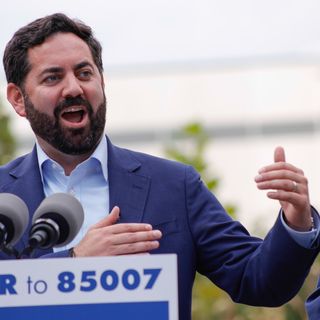
Voting machines across New York's Westchester County are rejecting paper ballots on Election Day, raising concerns about potential delays in one of the nation's most competitive House races. Why it matters: Results could be delayed for one of the country's most prominent House races, between Rep. Mike Lawler (R-N.Y.) and Democratic nominee Cait Conley, as officials address a problem with paper ballots. Driving the news: The Westchester County Board of Elections said Tuesday it was aware of a problem preventing voting machines from accepting paper ballots at polling locations throughout the county. The Board of Elections said it is speaking with New York State officials and the Westchester County government "to address this issue and ensure that voting continues with as little disruption as possible." The cause remains unclear. Election officials initially blamed the thickness of paper ballots but later removed that explanation from their statement, per reports. New York Attorney General Letitia James wrote on X that her office is monitoring the issue. What they're saying: Lawler said officials were working with vendors to resolve the problem, while Conley reassured voters that their ballots would count. Westchester County government wrote on its website: "Let us be absolutely clear: Every eligible vote will be counted." What we're hearing: Voters in the county told Fox 5 NY that they had to fill out paper ballots instead of using the machines. Voters said their ballots were placed in a security box. Other voters shared discontent with the ballots issue on social media . Katie Miller , wife of Trump adviser Stephen Miller, claimed on X: "This is how the Left steals elections. Mike Lawler's competitive district and they are turning away voters." Context: The county covers roughly 30% of New York's 17th District, which Lawler represents. The contest has emerged as a key battleground race in Democrats' push to gain control of the House. Zoom out: The ballot-scanning problems come as technology vulnerabilities have been a key issue heading into the midterms, with researchers saying some vulnerabilities remain in plain sight. What's next: Voters at affected polling locations were urged to remain in line and cast their ballots.
Herb Scribner ·

Prediction markets like Kalshi and Polymarket officially don't care which side of a bet wins. There is no "house." They get their cut either way. It's a business model that's attracted billions of VC dollars. Yes, but: Kalshi and Polymarket should be pulling hard for Democrats in today's midterm elections. Even if that feels counterintuitive. Catch up quick: Prediction markets burst into the public consciousness two years ago, when their users correctly "picked" Donald Trump to beat Kamala Harris. It bestowed credibility at a time when public trust in traditional polling had cratered. Fast forward: More recently, however, they had electoral misses in Brazil and Israel. Three would be a trend. Both platforms currently have markets on Democrats sweeping Congress, with "yes" at around 75%. If that's how today plays out, it would further cement prediction market legitimacy. A Republican win in either chamber, however, would dump them into the same pot as pollsters — even if 75% probability includes a sizable improbability. Zoom in: Democrats are often more hostile to prediction markets than are Republicans, but companies like Kalshi and Polymarket don't have too much to fear from a Democrat-controlled Congress. Yes, there would probably be an uncomfortable hearing or two. But neither chamber would have veto-proof majorities, and the Trump administration has been very sympathetic to the industry. The real constraints, if any, are more likely to come via the Supreme Court. The bottom line: Political predictions generate much less revenue for Kalshi and Polymarket than do sports predictions, but they have a much longer tail.
Dan Primack ·
There's a lot at stake for energy in the midterms, from the fate of the bipartisan permitting deal to the growing backlash against data centers and electricity prices. Why it matters: The results could spotlight which energy topics resonate with voters — and which have become political liabilities. Gasoline and diesel prices have been big on the campaign trail, offering a chance to see how much voter frustration over energy costs matters at the ballot box. Data center politics: There are sharp differences between the parties, even though data centers aren't especially popular with either party's slate of candidates. Why it matters: The pace of the AI buildout affects power demand and emissions. State of play: 32.4% of Democratic candidates support moratoriums at the federal, state, or local level, compared to just 3.4% of Republicans, per Data Center Watch, which tracked hundreds of races. Zoom in: Meanwhile, Ballotpedia is tracking dozens of ballot measures on data centers, many of which would impose new restrictions. Ohio is a hot spot. Control and permitting: The outcome will affect the politics of the lame-duck session — and that means the politics of the bipartisan permitting deal. What they're saying: If Democrats take both chambers, "leaders might opt to wait until they hold the gavels next year to renegotiate compromises," the research firm ClearView Energy Partners said in a note. Yes, but: A reminder that backers of the current bill think it's folly to expect political space to write a more liberal bill that President Trump would sign, or that could even pass the Senate. Threat level: What if the results are very close? ClearView notes that if Trump and allies contest the results, "weeks of post-election skirmishing could complicate passage of any bill." Political lessons: The results could offer clues about where energy and climate policy are headed. State of play: Exit polling is not famously precise, but it could provide a barometer of how much voters truly care — or not — about data centers. It's also worth watching how candidates who made high gas and diesel prices central to their campaigns fare tonight. My thought bubble: Keep an eye on the performance of progressive vs. centrist Democrats. If the latter overperform, it could be another sign that aggressive climate policies won't return to vogue with Dems. Zoom in: Let's say, for instance, Pennsylvania Gov. Josh Shapiro's (D) victory is even more of a blowout than expected. That could bolster more centrist, oil and gas-accepting candidates in the 2028 cycle (when he might run for president). The next Congress: Regardless of chamber control, don't look for many opportunities for big new energy laws if permitting goes kaput. Yes, but: There will be no shortage of messaging bills and positioning for the 2028 White House race. Senate Democratic leader Chuck Schumer (N.Y.) has pledged to bring back clean energy tax credits killed in the 2025 GOP budget law. What we're watching: Limited chances for common ground around nuclear power and geothermal. For instance, the wide-ranging Senate permitting bill contains several bipartisan geothermal bills that already cleared the House. Oversight power: If Democrats take control of either chamber, expect aggressive investigations of White House energy policies and investments, a topic we recently explored. State utility bosses: A number of states have elections for electricity regulators, who often exert powerful control over power prices and planning. Zoom in: One place to watch is Georgia, where two Democratic victories would flip party control of the state's Public Service Commission for the first time in decades. The Atlanta Journal-Constitution has more. Governors: The winners of governors' races will have a big say in everything from oil and gas development to electricity prices. Zoom out: S&P Global has a nice look at energy differences in several governors' races, though a number of the contests are not especially competitive. Friction point: One place to watch is Texas, where oil and gas interests favor incumbent Gov. Greg Abbott (R) in his surprisingly tight race against Gina Hinojosa. Sign up here for Axios' Future of Energy newsletter.
Ben Geman ·
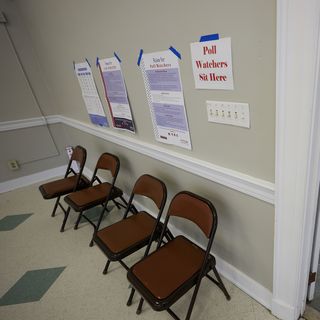
The Justice Department said Tuesday it will deploy about 1,000 election monitors to all 50 states for the first time ever to watch the polls. Why it matters: The unprecedented effort comes after courts repeatedly rejected the DOJ's efforts to force states to restrict voting for alleged noncitizens. It comes amid a long-running Trump administration push to fight voter fraud , which studies say isn't nearly as prevalent as the administration suggests. Driving the news : The department, in a statement early Tuesday, said one of its most important goals was to protect election integrity. "Today, the DOJ will further this mission by engaging in its largest monitoring effort in history—with approximately 1,000 election monitors and observers deployed, and, for the first time, in all 50 states," the department said. The department said observers would come from the DOJ, U.S. Attorney's offices, and staff from the Office of Personnel Management. What they're saying: "I am very proud we are deploying the largest monitoring effort in DOJ history, and pursuing transparency for elections in an assertive and nondiscriminatory manner," assistant attorney general Harmeet K. Dhillon said in the statement. The intrigue: Some local election officials have already expressed concerns that such a massive wave of observers could intimidate or otherwise interfere with voters. What to watch: The DOJ is still pursuing legal efforts in multiple states to have ballots segregated or otherwise impact counting.
Ben Berkowitz ·

Voters are about to decide whether public backlash against the health care industry translates into meaningful policy shifts. Why it matters: Health care has never been more expensive, and it's not going to get any cheaper without significant intervention. The big picture: It's hard to see Democrats not making health care affordability a top priority in the next Congress, regardless of whether they win only a narrow majority in the House or sweep both chambers in a blowout. But the party isn't aligned on an agenda, and a strong showing by progressives could drag things leftward. Reality check: Any Democratic victory — no matter the size — will be tempered by the realities of split government, with President Trump still in office for the next two years. Larger Democratic majorities may bring greater leverage in negotiations over spending packages or raising the debt limit. And the boldest changes will probably be reserved for the campaign trail, as 2028 presidential contenders begin to vie for the party's nomination. Here's what we're watching: Medicare for All vs. moderates: What happens in Michigan's Senate race — and Maine's, to some extent — will almost certainly shape how much sway progressives have in the next two years. Democrat Abdul El-Sayed has made Medicare for All central to his campaign, unabashedly supporting the idea in a race that could determine which party has control of the Senate next year. The same is true of Democrat Troy Jackson in Maine's Senate race, though Jackson has a lower national profile than El-Sayed. But Medicare for All supporters looking for a vote on the measure face an uphill battle : Despite the policy's growing popularity among the public, moderates unwilling to abolish private insurance will make up a sizable portion of any Democratic majority. The doctors-turned-politicians: Doctors are on the ballot in key races this year, and the question is how much public trust translates into votes. El-Sayed, an epidemiologist who went to medical school but isn't a practicing physician, is one example. There's also pediatrician Annie Andrews, who's mounted a strong challenge to Republican Sen. Darline Graham in South Carolina, and Ohio governor candidate Amy Acton, who has focused on pediatrics and preventive medicine. "We've seen in our research over the last six-plus years that [doctors are] among the most trusted potential candidates for office, hands down," said Erik Polyak, executive director of 314 Action. MAHA on the line: Health Secretary Robert F. Kennedy Jr.'s "Make America Healthy Again" movement has focused its attention largely on the Iowa governor's race in the final weeks of the election, going all in for Republican Zach Lahn, who's pledged to take on Big Agriculture interests and the use of farm chemicals. Calling it an "existential" vote, MAHA Action founder Tony Lyons told MAGA influencer Steve Bannon that the race will be "the test of what's possible in a state, of whether we can actually take the country back from these corrupt companies, from these corrupt politicians, and really protect people." California's tax plan: Golden State voters will decide the fate of a controversial one-time wealth tax on billionaires, with most of the proceeds to be used to fund health care services. The money is intended to partly make up for Republican cuts to federal Medicaid spending but the tax is opposed by Gov. Gavin Newsom, a likely 2028 Democratic presidential contender. The measure tests voter sentiment in one of the bluest states to tax the super rich in order to fund health benefits — a potential prelude to a national debate over expanding the federal government's role in health care and how to fund it. Abortion ballot measures: Voters in four states will determine what reproductive rights in their states look like, another round of post-Roe abortion policymaking via ballot initiatives. Nevada and Virginia will consider constitutional amendments protecting the right to abortion, while Missouri will weigh a measure backed by the state legislature to repeal a 2024 pro-abortion rights amendment. Idaho voters will determine the fate of a state law guaranteeing a right to abortion until fetal viability, generally considered to begin around 23 to 24 weeks into a pregnancy, or after that in the case of a medical emergency.
Caitlin Owens ·
Data: AdImpact; Chart: Erin Davis/Axios Republicans on the ballot this cycle have all but stopped mentioning President Trump in their campaign ads , according to an Axios analysis of broadcast advertising data from AdImpact. Why it matters: Trump has tried to make the 2026 midterms a referendum on his presidency. His party has run the other way. The big picture: Ads from both parties in Senate, House and gubernatorial races have shifted from a heavy focus on Trump during the primaries to a much greater emphasis on the economy in the general election. Both parties have also leaned much more heavily into health care, with a noticeable increase among House Republicans. By the numbers: The drop-off is steepest among Republicans, and especially in House races. Trump appeared in 66% of House Republicans' primary ads but shows up in just 3% of their general election ads. In Senate races, Republican ads mentioning him fell from 77% to 22%. Governor's races saw the same shift: Republican ads mentioning Trump fell 34 percentage points. Democrats have also pulled back from Trump, though less dramatically. Trump appeared in 45% of Democratic primary ads, but just 18% of their general election ads. Zoom in: Republican candidates are mentioning some of Trump's signature issues less than during the primaries. The share of Republican ads mentioning immigration has dropped 20 percentage points in Senate races and 14 points in House races. Ads referencing law enforcement fell from 11% of Republican Senate primary ads to 6% in the general election, even as their mentions of crime increased. Data: AdImpact; Chart: Erin Davis/Axios Between the lines: Candidates often lean on the country's most prominent political figure in primaries, then pivot to policy issues in the general election. But this year's drop-off stands out given how hard Trump has pushed to tie himself to the midterms. He has urged voters to pretend he's on the ballot and essentially demanded ads running during the Republican midterm convention in September feature him. Of note: In this analysis, primary ads are broadcast ads that aired before a race's primary. General election ads aired between the primary and Oct. 26. The trends may be even more pronounced in ads running through Election Day. The bottom line: Most Republicans have been too scared to tell Trump how unpopular he is, Axios reported . But their ad receipts don't lie.
Sara Fischer ·

The Pentagon's former top military planner is under federal investigation and may face a court-martial for allegedly leaking to reporters from the Wall Street Journal and New York Times, according to three sources familiar with the controversy. Why it matters: Former Army Lt. Gen. Brett Sylvia was fired by Defense Secretary Pete Hegseth last week after being accused of misconduct as part of the department's war on leaks. Sylvia failed four polygraphs and admitted to the incidents during two interviews on video that lasted more than a total of two hours, according to details from an internal Pentagon report shared with Axios. "The president has no tolerance for leakers, so Sylvia's termination is the first step in the accountability process, not the last," one of the sources said. Zoom in: Starting in the fall of 2025, the sources said, Sylvia gave information without authorization to reporters Michael Gordon of the Wall Street Journal and Greg Jaffe of the New York Times. Neither reporter is suspected or accused of doing anything illegal, improper or unprofessional in their reporting. Journalists often rely on confidential sources in reporting on issues that involve institutions where insiders aren't authorized to speak publicly. The report states Sylvia admitted to more extensive contacts with Gordon in 2025 and 2026, when the general allegedly shared classified information about Ukraine and Iran with the reporter. The Justice Department is investigating that. Only one discussion with Jaffe appears in the investigative report, concerning Hegseth's unexplained purging of military leaders. Sources said the unauthorized communication by Sylvia potentially violated the Uniform Code of Military Justice's prohibition of "conduct unbecoming of an officer." Behind the scenes: Sylvia allegedly admitted to first disclosing information to Gordon in the fall of 2025 when the two met in the Pentagon and discussed unspecified information about Ukraine, the sources said. After the Wall Street Journal and other outlets were barred from the Pentagon, Sylvia met Gordon at the Silver Diner in Arlington, Va., to give information about a book the reporter was planning to write, the report said. "Major General Sylvia relied on notes he took while reviewing a classified secret report to orally brief Gordon on assistance to Ukraine," said the report, which emphasized that Sylvia didn't receive clearance to discuss the sensitive information. A separate legal analysis of Sylvia's conduct alleged that the general also discussed "munitions stockpiles and high-level interagency discussions with Iran" that were classified, according to a source briefed on the document. Then, "sometime in June or July," Gordon sent Sylvia a message on the encrypted app Signal, the report said. "Sylvia is unable to recall exactly what was in that message" the report said. "But he believed it had something to do with Iran. He stated that he did not respond to the message and instead deleted it." While deleting the message, Sylvia allegedly told military investigators that "he believed he deleted the entire message thread with Michael Gordon. This erased Signal messages and Signal phone calls that would have been recorded in Signal on [Sylvia's] personal phone." Sylvia "indicated multiple times he was comfortable with what he told Gordon about Ukraine assistance," the report said without elaborating. The intrigue: Sylvia's case has led to some friction in the Pentagon after the Joint Staff initially issued a positive statement about the general immediately after he was terminated. The Joint Staff retracted its statement after senior Defense Department officials sent word that Sylvia had been fired for allegedly leaking. A source familiar with the investigation said the Joint Staff should have known better. "You don't get four polygraphs deep without the head of the Joint Staff being briefed at some point. Why wasn't he flagged, what red flags flared up?" the source said. "Their first statement, they gave him a farewell — you know, 'We wish you well in your future endeavors' — and had to retract that information after the truth came out," the source said. "So there's a level of culpability within the Joint Staff that I think is a critical part of this they need to answer for." What they're saying: The Joint Staff declined to comment and referred questions to the Justice Department. The New York Times and Wall Street Journal declined to comment. Sylvia could not be reached for comment. The Defense Department referred Axios to a statement by Assistant Defense Secretary Sean Parnell, who said last week that "classified information is not personal property. Leaking it for personal, political or professional gain is a betrayal of the trust placed in those responsible for keeping it."
Marc Caputo ·
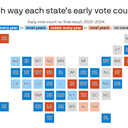
Data: AP via The New York Times and Axios research; Chart: Andrew Pantazi/Axios The first votes counted Tuesday night will almost certainly look redder than the final result, and control of the House and Senate could take days to settle. Why it matters: Early leads can create false impressions of who's winning and suspicion when those leads vanish. Election night is really election week. By the numbers: AP didn't call control of the House until seven or eight days after Election Day in each of the past three elections . The Senate was settled by 10:44pm on election night in 2018 and at 12:06am the next morning in 2024 . In 2022, it took four days , and in 2020, it wasn't called until Georgia's January runoffs , two months later. State of play: Republicans hold 53 Senate seats . Democrats need a net gain of four for a majority. The red head start: In every national election since 2018, the House and Senate votes counted by 9pm ET were 4 to 9 percentage points more Republican than the final result, an Axios analysis of AP and Edison Research vote counts found. It's mostly geography. Fast-counting Florida and other right-leaning states report first. At 9pm on election night 2022, Florida accounted for 40% of all Senate votes counted nationwide. By 11pm, more House races had been called for Republicans than Democrats in all four elections, including 2018 and 2020, when Democrats won the House. The tilt fades, slowly. At 6am Wednesday, the national House count was still 2 to 3 points more Republican than the final, largely because California, Washington and Oregon count for days. Data: Axios research; Chart: Andrew Pantazi/Axios Zoom in: Each state tilts its own way, depending on which ballots and which counties it counts first. States that count early and mail ballots first tend to start bluer than they finish. States that count Election Day votes first start redder. Ohio, Nebraska, Texas, Kansas and Iowa start blue. Sherrod Brown and Bernie Moreno were tied at 9pm in 2024 with half of Ohio's votes counted. Moreno won by 4. Independent Dan Osborn led Sen. Deb Fischer at 11pm in Nebraska with half the votes counted in 2024. Fischer won by 7. Beto O'Rourke led Ted Cruz at 9pm in 2018 with nearly half of Texas counted. Cruz won by 3. In 2020, Kansas Republican Roger Marshall was down by 8 points at 9pm, even though he'd eventually win by double-digits. Michigan swings both ways. Elissa Slotkin led Mike Rogers by 13 points at 9pm in 2024, trailed by 3 at midnight and won by less than half a point. Maine starts red and counts slowly. In 2020, Susan Collins led by 18 points at 11pm with 16% counted. She won by 9. Alaska is the slowest and starts out redder. In 2020, Sen. Dan Sullivan led by 28 points at 6am ET with 37% counted. He won by 13. Election-night results include Election Day ballots and some early and absentee ballots. The rest are counted in the following days. Rural mail often goes through Anchorage, and weather can slow it, with domestic ballots accepted up to 10 days after Election Day if postmarked on time. If no one wins a majority of first choices, Alaska will run its ranked-choice tally on Nov. 18. Data: AP and Edison Research via The New York Times; Chart: Andrew Pantazi/Axios Watch the clock (all times ET): 6pm — The first votes: Parts of Indiana and Kentucky close, giving us the first House returns. 7pm — The red head start: Polls close in the key Senate states of Georgia, South Carolina and most of Florida and New Hampshire. Fast-counting Florida gives Republicans an early boost in House races. 7:30pm — North Carolina and Ohio close: Watch for early Democratic leads in Ohio that could shrink as more votes come in. 8pm — Four more key races: Maine closes, along with most of Michigan, Texas and Kansas, the rest of New Hampshire and Florida's Panhandle. 9pm — Peak red mirage: Iowa, Minnesota and Nebraska close, along with the rest of Michigan, Texas and Kansas. Historically, the national House count looks most Republican between 9pm and 11pm. 11pm — The West Coast: California, Oregon and Washington begin reporting, bringing millions of votes and pivotal House races into the picture. The early Republican tilt should begin fading. About 1am Wednesday — Alaska: The last polls close, and initial results are expected. Election-night results include Election Day ballots and some early and absentee ballots, with others counted in subsequent days. The bottom line: Early leads aren't necessarily predictive. The closer the race, the longer voters may have to wait to learn who won.
Andrew Pantazi ·
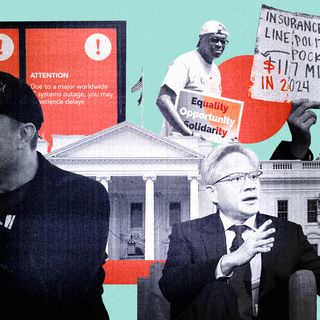
The 2026 midterms will offer the first test of voter sentiment on the AI race, offering a window into how a niche policy debate is transforming into a wedge issue ahead of a presidential campaign cycle. Why it matters: The results will reveal whether explicitly campaigning on AI regulation—or aligning with tech moguls like Elon Musk—is a winning political strategy or a liability for 2028. One thing is already clear: Candidates increasingly can't afford to have half-baked AI agendas. Here are three major questions about the future of AI politics and policy and the races we're watching on Election Day for answers. 1. Did AI break through? A different kind of AI political spending has emerged in the midterms. Instead of supporting or opposing candidates based on their AI positions, some groups want to make AI policy itself a campaign issue. Guardrails Alliance, a pro-regulation advocacy group, recently launched ads targeting Republicans and Democrats over their positions on AI in Arizona, Montana, North Carolina and California. The organization backed Michigan Senate candidate Abdul El-Sayed, who said AI was the most important issue heading into Election Day, tying it explicitly to jobs and affordability. Democratic group Tomorrow Together also launched ads against Republicans' AI track record in Michigan, Wisconsin, Arizona and Pennsylvania. Meanwhile, competing AI groups Public First and Leading the Future spent more than $50 million through affiliated super PACs in nearly 50 races, but their TV and digital ads largely avoided the very issue they're trying to influence: AI. These races could offer an early test of whether explicitly campaigning on AI is a viable political strategy heading into 2028. 2. Did Elon Musk help or hurt candidates? Elon Musk's political spending, involvement in DOGE and ties to the Trump administration have made him both a powerful political backer and a target for Democratic attacks. He was the biggest donor in the midterms by far, contributing more than $400 million. Races we're watching include: Texas' 10th District: Republican Chris Gober, who represented Musk in connection with DOGE, faces Democrat Caitlin Rourk. Kansas' 1st District: Democrat Lauren Reinhold has leaned into her experience with DOGE, criticizing Musk's influence over the federal government in her challenge against Republican Rep. Tracey Mann. Ohio Senate: Republican Jon Husted has benefited from spending by Musk's America PAC in his race against Democrat Sherrod Brown. Texas Senate: Musk-affiliated spending has made the contest between Democrat James Talarico and Republican Ken Paxton another test of the billionaire's political influence. These races could help answer whether Musk's money helped elect Republican allies or gave Democrats a useful target. 3. How loud will the AI safety movement be in the next Congress? A handful of candidates aligned with stronger AI safeguards could help determine whether the next Congress has a more vocal bloc pushing back against the industry's efforts to limit regulation. Races we're watching include: Michigan Senate: El-Sayed wants a new cabinet-level federal agency to regulate AI and a ban on super intelligence. He has used Musk's political involvement to attack Republican Mike Rogers, who has benefited from Musk-affiliated political spending. Colorado's 8th district: Democrat Manny Rutinel sponsored the nation's first comprehensive AI bill. California's 11th district: Democrat Scott Wiener's AI transparency legislation was at the center of a regulatory fight that divided the industry, offering a preview of battles in Washington. Minnesota's 2nd district: Democrat Matt Little would add another voice to the push to ban data center construction and non-disclosure agreements at the national level. These are some of the races that will help determine the size and influence of the AI safety movement's congressional coalition, an important indicator of where the fight over AI regulation is headed in 2027 and beyond. The bottom line: Many factors will shape the outcomes of races across the country. But competing AI factions will be quick to claim victories, explain away losses and draw lessons about what worked ahead of 2028.
Maria Curi ·
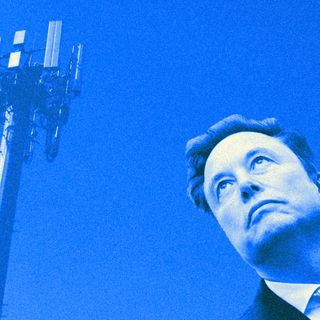
Elon Musk is looking to shake up America's wireless industry, potentially bringing the first major new competitive threat in years to a business dominated by three companies. Why it matters: The cellular industry has seen enormous technological change, but relatively little disruption to its competitive structure. Musk has the money, spectrum and satellite network to attempt something different — though he faces daunting obstacles. Driving the news: SpaceX is assembling the pieces to become a major U.S. wireless carrier, potentially building its own terrestrial network and buying available spectrum. The moves are meant either to build the capability to bypass existing carriers or to bring them to the table for a deal that would allow Musk to strike a deal for wholesale access to their networks. Musk may have reason to move quickly while the current administration and its regulatory appointees remain in place, a reason some analysts have cited in the context of proposals for a merger between Tesla and SpaceX . What they're saying: Blair Levin, a former FCC chief of staff who now heads policy at Optimal Advisory, says Musk's financial resources distinguish him from previous challengers. "For the first time, there is an entity capable of scaring investors in the traditional big three," Levin told Axios. Unlike Dish, which faced serious financing constraints, SpaceX can draw on capital markets that have rewarded Musk's ambitious plans. The latest : SpaceX has held talks with EchoStar about acquiring Boost Mobile or gaining access to its network arrangements, according to a Washington Post report Monday. That could provide a quick route to customers and infrastructure, although approval of such a deal is far from a foregone conclusion if Musk's businesses are drawn into a regulator quagmire after the midterm elections. The Post reported that Verizon, AT&T and T-Mobile have all rebuffed Musk's efforts to gain access to their networks. State of play: Musk also has a path to maneuver around them. SpaceX has agreed to multibillion-dollar spectrum deals , including a low-band variety useful for reaching customers indoors and supporting a traditional cellular network. The company could build its own network using towers and smaller rooftop antennas, though doing so would require substantial investment and time. The big picture: America's wireless industry has spent much of the past two decades consolidating. T-Mobile once played the scrappy challenger, shaking up the industry with aggressive pricing and the elimination of unpopular practices. But its 2020 acquisition of Sprint reduced the number of major nationwide carriers from four to three. Regulators tried to preserve a fourth competitor by requiring the sale of Boost Mobile to Dish Network, which planned to build a nationwide network. That effort never delivered the competitive alternative envisioned, leaving Verizon, AT&T and T-Mobile firmly entrenched. The intrigue: Musk would be moving from a business where SpaceX enjoys enormous technical and economic advantages to one where the established players have spent decades building infrastructure, acquiring customers and learning how to serve them. In terrestrial wireless, the big three carriers have spent decades investing in towers, spectrum, indoor coverage and the countless small improvements that make their networks reliable. Building such a network isn't simply a matter of spending billions on infrastructure, Craig Moffett of MoffettNathanson said in a recent podcast interview. It also means catching up on decades of work filling in coverage gaps in stadiums, airports and other difficult locations. The catch: Even if Musk can assemble the necessary infrastructure, it's far from clear that becoming a nationwide wireless carrier would be a particularly attractive business. Moffett questions why SpaceX would want to enter an industry where even the established carriers struggle to earn attractive returns on their investments. Between the lines: Success will depend on fundamentally lowering the cost of providing service or creating something for which consumers are willing to pay extra. SpaceX has floated the idea of using Starlink rooftop equipment as small cellular base stations, potentially reducing some of the costs of building a traditional network. The political backdrop: Musk's plans come as Washington faces a potentially significant shift following Tuesday's midterm elections. While SpaceX is likely to face significant political and regulatory risks due to Musk's ties with Republicans, analysts aren't sure that will translate into opposing a wireless deal that adds competition to the market. The bottom line: Musk has repeatedly succeeded in industries where established players doubted his ambitions. But this time he's the outsider, trying to overcome the advantages of companies that have spent decades building the networks he wants to challenge.
Ina Fried ·

Democrats are poised to romp in today's election — easily winning the House and, according to most forecasts, flipping the Senate too. Yet the party itself is less popular than the IRS . Even the GOP has a better brand. Why it matters: There's a difference between a blowout and a mandate. Confusing the two could tempt Democrats to overread the results and forget the serious credibility problem they still face heading into 2028. The big picture: Democrats have done a lot of things right to position themselves for a big night. They recruited candidates who've put red state Senate races that seemingly were beyond reach, within their grasp. Many of those candidates vastly outraised their Republican opponents. But polls across the board still show a lesser-of-two-evils election — or as one Republican tied to President Trump's political operation described it, a contest of which party voters hate more. Voters are more eager to disempower Trump than to empower Democrats. By the numbers: Just 29% of registered voters have a positive opinion of the Democratic Party vs. 38% who view the Republican Party positively, according to a pre-election NBC News poll . The same poll showed Democrats with a 7-point lead in the congressional generic ballot, 52 to 45. And nearly 6 in 10 voters who plan to back Democrats in the election said their vote is about stopping Trump and Republican policies — vs. 4 in 10 who said they were more motivated to help Democrats enact their policies, per an October CBS News/YouGov poll . Zoom in: Many Democrats say they're determined not to repeat the mistake they made after the last midterms in 2022. They defied predictions of a red wave and saw it as an endorsement of Joe Biden and their party — when voters actually were increasingly angry. The post-2022 takeaway ultimately laid the groundwork for Trump's return to the White House after the 2024 election. Democrats won the House in the 2018 midterms — and went on to impeach Trump the following year. This time, presumed House Speaker Hakeem Jeffries (D-N.Y.) isn't talking about another Trump impeachment — his 100-day agenda is focused on affordability. Zoom out: Other Democrats warn that it's been easier to run against Trump when he's actually in office. Making him the face of the election didn't work in 2024, and it might not in 2028, either. At the Third Way gathering in South Carolina earlier this year, Democratic strategist Jim Messina told a crowd of operatives and party leaders, "We have no economic message. And if we don't get one, we're not going to win" in 2028. Flashback: The 2006 midterms also featured a Democratic uprising against an unpopular war and an unpopular president. Democrats flipped the House and Senate in a major rebuke of President George W. Bush. But the party that year had a net-positive party image of 4 points in NBC polling. Today, it's 23 points underwater. Two years later in 2008 — with anti-Bush and anti-war backlash still running hot — Democrats harnessed Barack Obama's talents and calls for "change" to win back the White House. But a midterm blowout in 2026, if it materializes, will offer no guarantee the party will find an equally talented standard-bearer in 2028. What they're saying: "It's not great for the Democrats ... for 2028," Bill McInturff, one of the pollsters who conducted the NBC survey, said of the Democratic Party's lousy image. "But I don't see it as a barrier for how well they can do in 2026 when midterms are about Trump and these economic numbers." The bottom line: Ultimately, many top Democrats believe it will take a new presidential nominee — and likely one who wins in November 2028 — to fully repair the party's damaged brand. Axios' Alex Thompson and Holly Otterbein contributed to this story.
Mike Zapler ·

Republicans don't know if they'll lose big or small on Tuesday, but they're already bracing for an epic blame game. Why it matters: Privately, Republicans acknowledge it's not a complicated version of Clue. The leading suspect: Mr. President, in the Oval Office, with an assortment of weapons — and one war. Returning Republican senators are unlikely to blame President Trump publicly. There's a price for that. And don't expect Trump to shoulder the responsibility. But do expect departing GOP lawmakers to take shots at Trump or his team, and Trump to fire back at Senate Republicans, whom he's never been shy about torching. The irony of Trump's second midterm: With Republicans privately resigned to losing the House, Trump can still credibly claim victory if they hold the Senate. "It's Donald Trump's midterms. He gets all the credit if we win. He gets all the credit if we lose," one national GOP strategist told Axios. The Iran war: From Alaska to Maine, Trump's decision to go to war with Iran — and the resulting spike in gas and diesel prices — has become a major political liability for Republican Senate nominees. "It's not tariffs … it's the war, it's gas prices, it's diesel," Texas Attorney General Ken Paxton said at a closed-door fundraiser in September, Axios reported last month . Tariffs: Trump's trade policies have compounded Republicans' affordability problems, particularly in farm country, where producers have faced higher costs and uncertainty over export markets. "We need to end this tariff war now," former Rep. Mike Rogers (R-Mich.) , the GOP Senate nominee, said in an October campaign ad, breaking with Trump over his tariffs on Canada. Bad candidates: Trump's preferred nominees are also drawing blame, GOP strategists tell Axios. Paxton in Texas and Sen. Darline Graham in South Carolina have forced Republicans to spend heavily defending races that should have been easier — and where the party had other options. Complacent incumbents: Sens. Roger Marshall (R-Kan.) and Cindy Hyde-Smith (R-Miss.) are facing accusations of "arrogance" and "laziness" from Republicans frustrated that their once-safe seats have become late-breaking battlegrounds — exactly the complacency NRSC Chair Tim Scott warned against. Weak governors: Underperforming gubernatorial nominees in Iowa, Michigan and Ohio threaten to drag down Republican Senate candidates. Vivek Ramaswamy, for example, saw his polling crater in the final weeks . Recruitment failures: Republicans couldn't persuade Georgia Gov. Brian Kemp to run for Senate, and in New Hampshire settled for their second-choice Sununu — former Sen. John Sununu — instead of his brother, former Gov. Chris Sununu. Meanwhile, Senate Minority Leader Chuck Schumer (D-N.Y.) landed marquee candidates in Alaska, Ohio and Iowa — though Michigan and Maine proved more difficult. MAGA money: Trump's political operation amassed an enormous war chest, but some Republicans complain the money arrived too late to rescue vulnerable candidates. Distractions: Trump's focus on D.C. construction projects, the Kennedy Center, Sen. Jon Husted's (R-Ohio) backside and the SAVE Act has frustrated Republicans desperate for a closing message focused on the economy. "Reflecting Pool presser was an interesting choice for closing message," another national GOP strategist said of Trump's Monday news conference.
Stef W. Kight, Hans Nichols ·
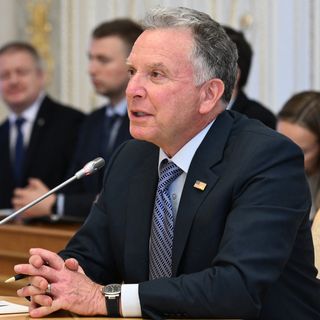
The U.S., Russia and Ukraine will hold peace talks in Abu Dhabi on Nov. 10-11 in an effort to reach a breakthrough on a deal for ending the war. Why it matters: U.S. officials say the meeting to restart a diplomatic effort suspended in February due to the war in Iran is a result of talks Presidnt Trump's envoys Steve Witkoff and Jared Kushner held with Ukrainian President Volodymyr Zelensky and Russian President Vladimir Putin in recent weeks. The White House hopes Putin will be more willing to compromise after Trump agreed to lift sanctions on Russian diesel sales and took other steps welcomed by Moscow. So far, Putin's only apparent concession is agreeing to resume talks. The parties remain far apart, particularly over territory. Russia's escalating attacks on Ukrainian cities and Putin's refusal to agree to a ceasefire casts doubt on prospects for progress. Zelensky said on Monday Ukraine has intelligence that Russia is preparing another massive attack against its energy and logistics facilities on Tuesday "when the world will be watching the American midterms". Driving the news: Kushner and Witkoff will lead to U.S. delegation for the talks in Abu Dhabi. "Discussions will focus on post-war security arrangements, de-escalation, humanitarian efforts, and next steps toward peace," Witkoff said in a statement. Witkoff added that lower-level U.S. officials will meet this week in Brussels with representatives from France, Germany, the United Kingdom, the EU, and NATO to discuss security guarantees for Ukraine, Europe's post-war security architecture, and economic opportunities to support Ukraine's reconstruction. "We look forward to building on the progress made in Kyiv, Oslo, and St. Petersburg toward a comprehensive, durable peace agreement that delivers lasting security for generations to come," Witkoff said.
Barak Ravid ·

The threat of a blue tsunami is bearing down on President Trump's Washington, with virtually every major indicator forecasting a Democratic rout in Tuesday's elections. Why it matters: Expectations for the midterms have soared so high that some Democrats fear disappointment is inevitable, particularly if the party falls short of winning the Senate — a prize that seemed beyond reach just months ago. By the numbers: Five key metrics help distill the extraordinary consensus taking shape on the eve of the midterms. 🔮 95% and 80%: The probability of Democrats winning the House and Senate, respectively, according to election forecaster Nate Silver , whose model projects an average gain of 25 House seats. Silver says Democrats could now withstand a modest polling error and still capture the Senate — a remarkable cushion given the GOP's history of outperforming polls in the Trump era. 🗺️ 7 for 7: Democrats lead in every Senate battleground state surveyed in the final New York Times/Siena polls , including by 11 points in Michigan and seven in Texas. Trump carried six of those seven states in 2024, though five of the Democratic leads — Maine (+6), Kansas (+5), Ohio (+5), Alaska (+2) and Iowa (+1) — remain within the polls' margins of error. 🏛️ 240: The number of House seats Democrats could win under the upper end of Cook Political Report's forecast — potentially their largest majority since the first year of Barack Obama's presidency. Reaching that mark would require Democrats to sweep all 18 toss-up races. Cook already favors them in 222 districts, four more than needed for a majority. 🎲 73%: The probability of Democrats winning both chambers of Congress, according to Kalshi . After correctly favoring Trump in 2024, prediction markets have become a closely watched barometer of political expectations. Nearly $100 million in contracts have traded on Kalshi's congressional control market alone. 📊 +14: Democrats' lead on the generic congressional ballot in the final poll from AtlasIntel , which became the nation's highest-rated pollster after its remarkably accurate 2024 performance. Reality check: Even the pollsters forecasting a Democratic landslide are haunted by the possibility that they're still missing Trump voters. New York Times polling chief Nate Cohn warned that white Democrats were roughly 30% more likely than white Republicans to respond to the final Times/Siena surveys — a slightly wider gap than in 2020, when polls overstated Democratic support. Washington Post pollsters raised similar alarms after finding Democrat Adam Hamilton leading Republican Sen. Roger Marshall by nine points in Kansas, where registered Democrats were more than twice as likely as Republicans to participate. What they're saying: Trump and House Speaker Mike Johnson have accused pollsters of deliberately manufacturing the appearance of a Democratic wave to suppress Republican turnout. "They're trying to create this idea of a blue wave and they're using the poll numbers to do it," Johnson said Monday , claiming conservatives distrust polling calls because they believe "it's a psyop." Between the lines: Prediction markets are sometimes touted as more accurate than polls because bettors have money at stake. But their odds often reflect the same polling data and political sentiment, leaving them vulnerable to the same blind spots. In Wisconsin, Kalshi gave state Rep. Francesca Hong a 96% chance of winning the Democratic gubernatorial primary the day before the August election. She lost to Milwaukee County Executive David Crowley. In Brazil, Kalshi gave Trump ally Flávio Bolsonaro an 84% chance of defeating President Lula ahead of last week's runoff. Lula won, prompting MAGA influencers to amplify baseless claims that the election was rigged. The bottom line: Voters will ultimately deliver the only verdict that counts. But on the eve of the election, the polls, forecasts and betting markets are all pointing in one direction.
Zachary Basu ·
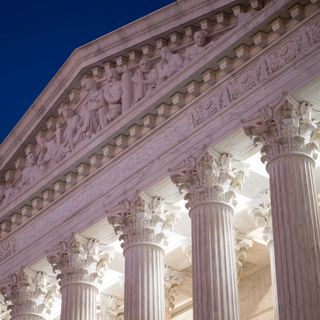
The Supreme Court denied the Trump administration's request Monday to hear its case regarding more than 20,000 California ballots that President Trump claims were cast by noncitizens . Why it matters: It's a blow to the administration, which has been tussling with the state in what it says is a fight to ensure all eligible voters can vote and have their ballots counted, as the law requires. What they're saying: " The application for injunction pending appeal presented to Justice Kagan and by her referred to the Court is denied, " an unsigned order from the court read . Catch up quick: The Trump administration sued California in mid-October, arguing that it had identified more than 20,000 noncitizens on the state's voter rolls. Judges have consistently rejected the administration's argument, finding that its lists contain factual errors and risk disenfranchising eligible voters. One judge even noted that when the administration claimed it had specifically verified more than 100 people as noncitizens in Nevada, the state proved they were, in fact, citizens. Zoom out: The court has often sided with Trump, but has notably broken with him on cases involving voting access. The president has no constitutional authority over elections. That power largely rests with the states and Congress. The White House and the Department of Justice did not respond to Axios' request for comment. Go deeper: Trump administration turns to SCOTUS in California ballot case
Josephine Walker ·
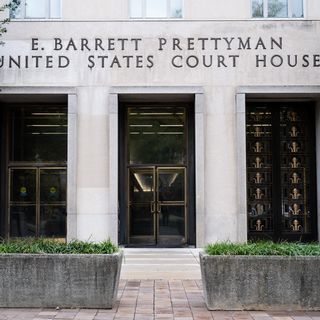
A federal judge on the eve of Election Day barred the Trump administration from demanding California officials set aside ballots from registered voters it suspects are noncitizens, finding the effort likely violates the Constitution. Why it matters: Courts had already rejected the Justice Department's attempts to force California to separate the ballots. Monday's ruling goes a step further, directly barring federal officials from making those demands even as DOJ turns to the Supreme Court to compel the state to comply. Driving the news: Chief U.S. District Judge James Boasberg ruled Monday that the Trump administration likely violated the Constitution by pressuring California officials to change how they count ballots. His order prohibits the Justice Department and the Department of Homeland Security from demanding officials set aside ballots or depart from existing state election procedures based on federal lists of suspected noncitizens. Boasberg found that the Constitution gives states and Congress, but not the executive branch, authority over election rules. The federal ban on noncitizen voting does not mean the administration can rewrite those rules. By the numbers: The DOJ claims it identified more than 20,000 suspected noncitizens on California's voter rolls. After Boasberg ordered DOJ to turn over its list, an expert found that at least 22 members of the Coalition for Humane Immigrant Rights — all known U.S. citizens — were wrongly included. The expert found another 66 members were almost certainly on the list. Boasberg found the expert credible and concluded the list's errors posed a real threat to eligible voters. What he's saying: "The President evidently believes that it would be good public policy for more stringent procedures to be put in place," Boasberg wrote. "No matter how strong that policy case may be, however, it does not justify overstepping the bounds of the Executive Branch's limited constitutional authority in this domain." The White House referred Axios to the Department of Homeland Security for comment. DHS and the Justice Department did not immediately respond to Axios' requests for comment. Catch up quick: In a separate lawsuit , DOJ sought to force California and Los Angeles County to segregate ballots from suspected noncitizens. A federal judge rejected that request Wednesday, as did an appeals court on Friday. Monday's ruling is different in that it restricts the federal government from making its demands rather than simply refusing to order California to comply. It also follows a broader nationwide temporary restraining order Friday that prohibits similar demands and threats of prosecution against election workers. Yes, but: Boasberg did not prohibit federal officials from investigating illegal voting or compiling lists of suspected noncitizens. Federal law makes it a crime for noncitizens to vote in federal elections, and DOJ can prosecute people who knowingly break that law. But that doesn't give DOJ the authority to order states to change how they verify voter eligibility or count ballots, Boasberg wrote. California can continue following its election procedures while federal prosecutors pursue illegal voting, Boasberg said. What's next: The Supreme Court could still order California to set aside the disputed ballots.
Andrew Pantazi ·
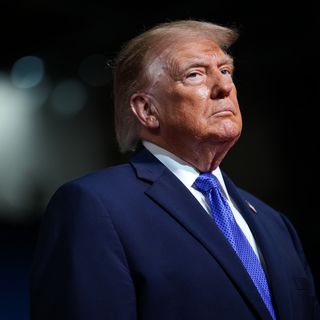
President Trump told Axios in a phone interview Monday he's "in no rush" to decide whether to resume fighting in Iran . Why it matters: The midterm elections have been seen as an inflection point for Trump on whether to unleash a massive bombing campaign to try to bring the war to an end. But it appears the president, at least for now, will continue on dual tracks — letting negotiations play out while preparing to go back to war if he concludes a deal isn't reachable. What he is saying: "One way or the other, we will do something, but there is no rush. We crippled them financially. They have no money, no gasoline and their people are getting very tired of it," Trump said in the interview. Driving the news: Qatari mediators have written a draft agreement outlining a three-day sequence of confidence-building measures aimed at resuming direct U.S.-Iran negotiations, according to regional sources. A diplomat with knowledge of the situation said the Qatari mediators are waiting for feedback from the U.S. and Iran. Qatari mediator Ali al-Thawadi traveled to Tehran on Monday to continue talks on the draft agreement and the diplomat said progress is building. Trump is giving diplomacy a chance but is clear-eyed about the chances of reaching a deal. "We are talking to them. It's going fine. The problem with them is ... they try and tap tap tap [us along]. There's less urgency [on the Iranian side] than you think there would be, but they want to make a deal more than they ever wanted," Trump said. Between the lines: Trump is weighing three courses of action, backed by three different camps: 1. Make a deal: Vice President JD Vance and White House envoy Steve Witkoff are urging him to move toward a deal because a renewed war might not change the situation for the better. Most Gulf countries support this position and have communicated that to Trump, sources say. 2. Go back to battle: Israeli Prime Minister Benjamin Netanyahu wants to resume combat, as does Secretary of Defense Pete Hegseth. They argue that Iran can't be trusted to make a deal let alone abide by one, and that Trump should finish the job militarily. 3. Maximum economic pain: Treasury Secretary Scott Bessent, CIA Director John Ratcliffe and Secretary of State Marco Rubio are advising Trump to maintain the "no war, no deal" status quo and allow the economic pressure campaign to continue, sources said. Ratcliffe told Trump that prolonged economic pain will induce Iran to make more concessions — or create enough instability inside the country that citizens revolt, a source with direct knowledge said. The CIA declined to comment. The other side: Iran's civilian leadership sounded hopeful on Monday about the prospects of reaching a deal. Iranian President Masoud Pezeshkian said Supreme Leader Mojtaba Khamenei "granted the government certain authorities" to try to reach an agreement through diplomacy. Iranian Foreign Minister Abbas Araghchi said Monday that the diplomatic exchanges "have become very intensive." "Qatar and Pakistan are playing very active roles as mediators. We have presented our conditions and our proposal, and everything depends on Washington's political rationality. If they choose genuine diplomacy, we are ready to engage. But if they intend to engage in deception and military operations, they will face a response more painful and severe than in the past," he said. Araghchi said that if the U.S. accepts Tehran's conditions for reopening the Strait of Hormuz, then "negotiations will resume." "Otherwise, the current situation will continue, and Iran will not bow down," he said. The big picture: Russia and China are taking an active role in the effort to reach a deal. Russian President Vladimir Putin spoke by phone Monday with Iran's Secretary of the Supreme National Security Council Gen. Mohsen Rezaei. The two discussed the efforts to reach a diplomatic agreement. Rezaei, who is very close to Khamenei, was also the recipient of a letter Vance sent recently proposing to resume negotiations. Russia has also offered to be part of any nuclear agreement, including by receiving Iran's enriched uranium stockpile. At the same time, Rezaei's deputy visited Beijing on Monday and met with the Chinese foreign minister. China is also urging the U.S. and Iran to resume direct negotiations to end the war. What they're saying: Vance told reporters on Monday that he and Trump "feel pretty good about the prospect of reaching a settlement" with Iran. "We made some progress and we will see if we can make some more," Vance said. He added: "We haven't set deadlines (for resuming strikes). We want to make sure the Iranians don't rebuild or try to rebuild their nuclear program. We do think there is a pathway there but it requires a firm and verifiable commitment that they don't rebuild their nuclear program."
Barak Ravid ·

President Trump extolled his administration's Reflecting Pool project , dug up debunked claims of vandalism and applauded the new White House helipad in a Monday pre-Election Day speech. The big picture: Trump's deep focus on remaking the nation's capital has taken center stage as the clock ticks down to midterm elections. Driving the news: "The pool is now better and more beautiful than it's ever been before, and we're very proud of it," Trump said in Monday's speech, adding, "We went through a lot with vandalism." But Trump's own Justice Department dropped vandalism charges against former Olympian David Hearn , whose case was later killed by a judge after prosecutors acknowledged that faulty installation caused the damage to the Pool. Trump added the administration was "giving serious thought" to renaming the Lincoln Memorial Reflecting Pool to the "Trump Reflecting Pool," before later saying he was kidding. Throughout the speech, he held up printed images he identified as pipes, joints and other Pool materials. He also showed an image that appeared to show "8647" sprayed onto the base of the emptied pool, claiming "that was a Comey phrase" — a reference to his former FBI director and top foe. Zoom out: He also discussed his White House renovation projects, including the recently installed helipad and Scotts Miracle-Gro's lawn restoration after the UFC fight on White House grounds. Friction point: Trump's projects, including his D.C.-area arch and White House ballroom, have been broadly panned by Americans in polling. "This project should be a project that unites all Americans," Trump said Monday of the newly reopened Reflecting Pool, which stood empty for an extended period earlier this year. Zoom in: His pre-election pitch at times sounded more like a typical rally speech, where he touted his immigration policies and war with Iran while slamming Democrats as "a party that hates America." This is the last day before the midterm elections, the most important midterm I believe in our lifetime," he said. "The Democrat Party has nominated the most extreme and dangerous slate of candidates in American history." He also reiterated his pitch to distribute $5,000 checks should Republicans win in the midterms. What's next: After inviting Interior Secretary Doug Burgum to speak, Trump then touted his planned " triumphal arch ," detailed plans for a "promenade" from the Lincoln Memorial to the Potomac River and teased his golf course renovation . "We have a lot of great things planned for Washington, and I could get into the nation, but for that you don't have enough time," Trump said. He ended his closing argument by lauding a "golden age," saying, "We were laughed at like we were stupid people. We were laughed at by every ruler, every president, every prime minister, every king, every queen. But they don't laugh anymore." Axios' Josephine Walker contributed to this report. Go deeper: Trump to make midterm closing argument at Lincoln Reflecting Pool
Avery Lotz ·

The top Senate GOP super PAC has nearly tripled its spending on streaming and social media platforms this election cycle to more than $200 million, Axios has learned. Why it matters : In a record cycle for ad spending, more political money is shifting to streaming, where super PACs have greater freedom to target voters, bargain and experiment — but platforms have more power to set the rules. In some states, streaming and social media have swallowed half of the Senate Leadership Fund (SLF) budget, according to a source familiar with the group's spending. SLF's $200M+ total for the 2026 cycle (up from $71M in 2024) includes tens of millions of dollars funneled through the SLF-linked Texas PAC and its affiliated nonprofit One Nation. The other side: The top Senate Democratic super PAC declined to provide a dollar figure for their spending on streaming. "Senate Majority PAC invested more this cycle in digital communications than any previous cycle, running digital campaigns in 12 states," SMP communications director Lauren French told Axios. Zoom in : Streaming and social platforms offer campaigns the power to target more specific audiences compared to traditional broadcast, and make it easier to measure the impact. "Its way more surgical than a linear broadcast buy," Zack Roday, managing director at Think Big, told Axios. But platforms can also set their own rules around which types of ads they want to accept. Some, like Netflix and TikTok, don't allow any candidate or issue ads . Republicans have complained about restrictions on ads that include transgender issues on Disney-owned platforms. Between the lines: Super PACs often pay multiple times what a campaign pays for ads on broadcast TV and radio because of laws ensuring candidates get the lowest rates. Online, super PACs can negotiate directly — and use their fat budgets and sprawling election maps as leverage. SLF works with platforms like SiriusXM, Paramount, Hulu, YouTube and others to lock in discounts based on their overall spending plans, according to the source. Groups can also experiment with different lengths and formats for ads online, breaking the 30-second broadcast mold. What to watch: Streaming ads can also be trickier for outside tracking. While Meta and Google provide public data on political ad buys, not every platform provides that kind of visibility, Streaming buys aren't covered by the same FCC filing requirements as political ad reservations on broadcast TV and radio. Broadcast filings can offer a preview of a group's targets months in advance, but streaming reservations are much harder to see. Although AI is changing the game, and there is a growing industry of companies offering better tracking tools. Super PACs still have to report independent expenditures to the FEC through 24- and 48- hour reports. Zoom out: Strong grassroots fundraising has helped Democratic candidates crush Republicans in dollars brought in directly to candidates. The GOP is hitting back with cash-flush committees and super PACs fueled by ultra-wealthy donors. In addition to super PACs moving more money to streaming, the National Republican Senatorial Committee jumped on a court decisions to coordinate ad buys with campaigns — giving them access to the candidate rate. It also allowed NRSC to negotiate with streaming platforms on behalf of multiple campaigns. The bottom line: It's just the beginning on maneuvering on streaming and coordinated buys. "That is definitely going to be the story of 2028," Kenny Day, senior vice president at IQM corporation, told Axios. He said the Supreme Court decision on coordinated spending "was too late for either party to really take advantage of the allowance of coordinated spending" in the 2026 cycle. Editor's note: This story has been corrected to show that the more than $200 million total included money spent through Texas PAC (not that it excluded that spending).
Stef W. Kight, Sara Fischer ·