Source
Axios

Axios (website)
Axios is an American news website based in Arlington, Virginia. It was founded in 2016 and launched the following year by former Politico journalists Jim VandeHei, Mike Allen, and Roy Schwartz. The site's name is based on the Ancient Greek ἄξιος.
From Wikipedia ↗, text under CC BY-SA 4.0; logo from Wikimedia Commons
- Type
- News outlet
- Lean
- Left-leaning
- Left-Center−2.8 of ±10
- High0.9 of 10 (lower is better)
- High
- Website
- axios.com ↗
- Feed
- RSS ↗
- Articles stored
- 980
- Tracked since
- Aug 15, 2026
Down: MBFC factual reporting score, 0 most factual to 10 least.
Bias and credibility ratings by Media Bias/Fact Check.
Axios on MBFC ↗Publishing rhythm
How many articles Axios published over the last 14 days, by publication time, and at which hours of the day.
Top keywords
All keyword charts for Axios →The people, places, organizations and topics Axios covered most that day, by the share of its stories that mention them. Article counts are shown for context.
No keywords that day yet.
Latest articles
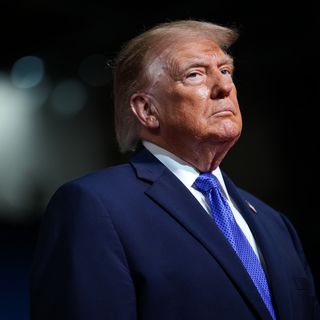
President Trump told Axios in a phone interview Monday he's "in no rush" to decide whether to resume fighting in Iran . Why it matters: The midterm elections have been seen as an inflection point for Trump on whether to unleash a massive bombing campaign to try to bring the war to an end. But it appears the president, at least for now, will continue on dual tracks — letting negotiations play out while preparing to go back to war if he concludes a deal isn't reachable. What he is saying: "One way or the other, we will do something, but there is no rush. We crippled them financially. They have no money, no gasoline and their people are getting very tired of it," Trump said in the interview. Driving the news: Qatari mediators have written a draft agreement outlining a three-day sequence of confidence-building measures aimed at resuming direct U.S.-Iran negotiations, according to regional sources. A diplomat with knowledge of the situation said the Qatari mediators are waiting for feedback from the U.S. and Iran. Qatari mediator Ali al-Thawadi traveled to Tehran on Monday to continue talks on the draft agreement and the diplomat said progress is building. Trump is giving diplomacy a chance but is clear-eyed about the chances of reaching a deal. "We are talking to them. It's going fine. The problem with them is ... they try and tap tap tap [us along]. There's less urgency [on the Iranian side] than you think there would be, but they want to make a deal more than they ever wanted," Trump said. Between the lines: Trump is weighing three courses of action, backed by three different camps: 1. Make a deal: Vice President JD Vance and White House envoy Steve Witkoff are urging him to move toward a deal because a renewed war might not change the situation for the better. Most Gulf countries support this position and have communicated that to Trump, sources say. 2. Go back to battle: Israeli Prime Minister Benjamin Netanyahu wants to resume combat, as does Secretary of Defense Pete Hegseth. They argue that Iran can't be trusted to make a deal let alone abide by one, and that Trump should finish the job militarily. 3. Maximum economic pain: Treasury Secretary Scott Bessent, CIA Director John Ratcliffe and Secretary of State Marco Rubio are advising Trump to maintain the "no war, no deal" status quo and allow the economic pressure campaign to continue, sources said. Ratcliffe told Trump that prolonged economic pain will induce Iran to make more concessions — or create enough instability inside the country that citizens revolt, a source with direct knowledge said. The CIA declined to comment. The other side: Iran's civilian leadership sounded hopeful on Monday about the prospects of reaching a deal. Iranian President Masoud Pezeshkian said Supreme Leader Mojtaba Khamenei "granted the government certain authorities" to try to reach an agreement through diplomacy. Iranian Foreign Minister Abbas Araghchi said Monday that the diplomatic exchanges "have become very intensive." "Qatar and Pakistan are playing very active roles as mediators. We have presented our conditions and our proposal, and everything depends on Washington's political rationality. If they choose genuine diplomacy, we are ready to engage. But if they intend to engage in deception and military operations, they will face a response more painful and severe than in the past," he said. Araghchi said that if the U.S. accepts Tehran's conditions for reopening the Strait of Hormuz, then "negotiations will resume." "Otherwise, the current situation will continue, and Iran will not bow down," he said. The big picture: Russia and China are taking an active role in the effort to reach a deal. Russian President Vladimir Putin spoke by phone Monday with Iran's Secretary of the Supreme National Security Council Gen. Mohsen Rezaei. The two discussed the efforts to reach a diplomatic agreement. Rezaei, who is very close to Khamenei, was also the recipient of a letter Vance sent recently proposing to resume negotiations. Russia has also offered to be part of any nuclear agreement, including by receiving Iran's enriched uranium stockpile. At the same time, Rezaei's deputy visited Beijing on Monday and met with the Chinese foreign minister. China is also urging the U.S. and Iran to resume direct negotiations to end the war. What they're saying: Vance told reporters on Monday that he and Trump "feel pretty good about the prospect of reaching a settlement" with Iran. "We made some progress and we will see if we can make some more," Vance said. He added: "We haven't set deadlines (for resuming strikes). We want to make sure the Iranians don't rebuild or try to rebuild their nuclear program. We do think there is a pathway there but it requires a firm and verifiable commitment that they don't rebuild their nuclear program."
Barak Ravid ·

President Trump extolled his administration's Reflecting Pool project , dug up debunked claims of vandalism and applauded the new White House helipad in a Monday pre-Election Day speech. The big picture: Trump's deep focus on remaking the nation's capital has taken center stage as the clock ticks down to midterm elections. Driving the news: "The pool is now better and more beautiful than it's ever been before, and we're very proud of it," Trump said in Monday's speech, adding, "We went through a lot with vandalism." But Trump's own Justice Department dropped vandalism charges against former Olympian David Hearn , whose case was later killed by a judge after prosecutors acknowledged that faulty installation caused the damage to the Pool. Trump added the administration was "giving serious thought" to renaming the Lincoln Memorial Reflecting Pool to the "Trump Reflecting Pool," before later saying he was kidding. Throughout the speech, he held up printed images he identified as pipes, joints and other Pool materials. He also showed an image that appeared to show "8647" sprayed onto the base of the emptied pool, claiming "that was a Comey phrase" — a reference to his former FBI director and top foe. Zoom out: He also discussed his White House renovation projects, including the recently installed helipad and Scotts Miracle-Gro's lawn restoration after the UFC fight on White House grounds. Friction point: Trump's projects, including his D.C.-area arch and White House ballroom, have been broadly panned by Americans in polling. "This project should be a project that unites all Americans," Trump said Monday of the newly reopened Reflecting Pool, which stood empty for an extended period earlier this year. Zoom in: His pre-election pitch at times sounded more like a typical rally speech, where he touted his immigration policies and war with Iran while slamming Democrats as "a party that hates America." This is the last day before the midterm elections, the most important midterm I believe in our lifetime," he said. "The Democrat Party has nominated the most extreme and dangerous slate of candidates in American history." He also reiterated his pitch to distribute $5,000 checks should Republicans win in the midterms. What's next: After inviting Interior Secretary Doug Burgum to speak, Trump then touted his planned " triumphal arch ," detailed plans for a "promenade" from the Lincoln Memorial to the Potomac River and teased his golf course renovation . "We have a lot of great things planned for Washington, and I could get into the nation, but for that you don't have enough time," Trump said. He ended his closing argument by lauding a "golden age," saying, "We were laughed at like we were stupid people. We were laughed at by every ruler, every president, every prime minister, every king, every queen. But they don't laugh anymore." Axios' Josephine Walker contributed to this report. Go deeper: Trump to make midterm closing argument at Lincoln Reflecting Pool
Avery Lotz ·
The top Senate GOP super PAC has nearly tripled its spending on streaming and social media platforms this election cycle to more than $200 million, Axios has learned. Why it matters : In a record cycle for ad spending, more political money is shifting to streaming, where super PACs have greater freedom to target voters, bargain and experiment — but platforms have more power to set the rules. In some states, streaming and social media have swallowed half of the Senate Leadership Fund (SLF) budget, according to a source familiar with the group's spending. SLF's $200M+ total for the 2026 cycle (up from $71M in 2024) includes tens of millions of dollars funneled through the SLF-linked Texas PAC and its affiliated nonprofit One Nation. The other side: The top Senate Democratic super PAC declined to provide a dollar figure for their spending on streaming. "Senate Majority PAC invested more this cycle in digital communications than any previous cycle, running digital campaigns in 12 states," SMP communications director Lauren French told Axios. Zoom in : Streaming and social platforms offer campaigns the power to target more specific audiences compared to traditional broadcast, and make it easier to measure the impact. "Its way more surgical than a linear broadcast buy," Zack Roday, managing director at Think Big, told Axios. But platforms can also set their own rules around which types of ads they want to accept. Some, like Netflix and TikTok, don't allow any candidate or issue ads . Republicans have complained about restrictions on ads that include transgender issues on Disney-owned platforms. Between the lines: Super PACs often pay multiple times what a campaign pays for ads on broadcast TV and radio because of laws ensuring candidates get the lowest rates. Online, super PACs can negotiate directly — and use their fat budgets and sprawling election maps as leverage. SLF works with platforms like SiriusXM, Paramount, Hulu, YouTube and others to lock in discounts based on their overall spending plans, according to the source. Groups can also experiment with different lengths and formats for ads online, breaking the 30-second broadcast mold. What to watch: Streaming ads can also be trickier for outside tracking. While Meta and Google provide public data on political ad buys, not every platform provides that kind of visibility, Streaming buys aren't covered by the same FCC filing requirements as political ad reservations on broadcast TV and radio. Broadcast filings can offer a preview of a group's targets months in advance, but streaming reservations are much harder to see. Although AI is changing the game, and there is a growing industry of companies offering better tracking tools. Super PACs still have to report independent expenditures to the FEC through 24- and 48- hour reports. Zoom out: Strong grassroots fundraising has helped Democratic candidates crush Republicans in dollars brought in directly to candidates. The GOP is hitting back with cash-flush committees and super PACs fueled by ultra-wealthy donors. In addition to super PACs moving more money to streaming, the National Republican Senatorial Committee jumped on a court decisions to coordinate ad buys with campaigns — giving them access to the candidate rate. It also allowed NRSC to negotiate with streaming platforms on behalf of multiple campaigns. The bottom line: It's just the beginning on maneuvering on streaming and coordinated buys. "That is definitely going to be the story of 2028," Kenny Day, senior vice president at IQM corporation, told Axios. He said the Supreme Court decision on coordinated spending "was too late for either party to really take advantage of the allowance of coordinated spending" in the 2026 cycle. Editor's note: This story has been corrected to show that the more than $200 million total included money spent through Texas PAC (not that it excluded that spending).
Stef W. Kight, Sara Fischer ·
The world seems convinced the end is near — and social media is amplifying that belief, convincing people to stock up on food, water, generators and other items. Why it matters: Online chatter is fueling viral predictions of societal collapse amid growing unease about the future. But you're probably not going to die tomorrow. What they're saying: Michael Mills, a researcher at the University of Kent who has studied doomsday prepping for more than a decade, told Axios that modern doomsday fears aren't necessarily about a specific apocalyptic scenario. "It's an overall reaction to uncertainty in most cases," Mills said. He noted that whereas Cold War-era survivalists were often focused on nuclear conflict, modern preppers worry about terrorism, climate disasters, geopolitical threats and emerging technologies. He described the modern mindset as a "multifaceted concern with uncertainty." State of play: Viral posts have repeatedly urged people around the world to stock up on food and water, following similar recommendations from various governments and warnings from former FBI Deputy Director Dan Bongino. The situation has gotten so buzzy that President Trump was asked about it in an interview Monday. He said Americans don't need to stock up because the U.S. is "in good shape. We're strong. We have a great military and we will not have those kind of problems." Separately, conservative commentator Tucker Carlson — a man with 17.9 million followers on X alone — published a lengthy post Sunday evening alleging that Israeli Prime Minister Benjamin Netanyahu is pressuring Trump to launch renewed attacks on Iran after the midterms, potentially with a nuclear weapon. For what it's worth, Carlson has been predicting similar doomsday scenarios for a while, and he's been wrong before. And the Pentagon's newly reported plan calls for U.S. military bases to prepare to operate without outside support for at least 90 days, terrifying some people into asking , "What's the government know that they're not telling us?" The big picture: Worries about financial insecurity , skyrocketing health care costs , a lack of rainy-day savings and younger generations' perceived inability to buy a house all contribute to the feeling that life is not okay. Then you've got AI , which could cut thousands of jobs, enable a cyberattack or help engineer a dangerous, and potentially deadly, biological disease. And then there's the geopolitical situation: wars, genocide and the possibility of global warfare as China continues to threaten Taiwan and rumors abound that the U.S. and Israel will reignite the Iran war with a fresh round of attacks. Zoom in: Political uncertainty can also fuel doomsday prediction culture, particularly around major elections . Mills described the prepper movement as historically right-leaning, with fears increasing during the Obama and Biden administrations and subsiding among some preppers after Trump's 2016 victory. During elections, "where it can often seem that everything is at stake... we don't know which way those contests are going to go and so naturally that uncertainty kind of flares up," Mills said. Reality check: Preparing for a catastrophe doesn't make you a conspiracy theorist. Governments commonly warn people about potential disasters, like advising them to evacuate before a hurricane. Mills distinguishes ordinary emergency readiness from prepping, which typically involves preparing for disasters lasting weeks or months, sometimes longer. The bottom line: Nobody knows what catastrophe, if any, might come next. But feeling prepared and stocking up for a couple of days without power can make sitting in the dark a little less scary. Go deeper: Here's how AI could kill us all (if the worst fears come true)
Josephine Walker ·
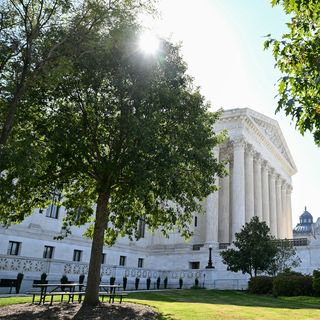
The Trump administration asked the Supreme Court to mandate that California separate ballots of more than 20,000 voters the government suspects are "likely" non-citizens. The big picture: A federal appeals court rejected the administration's bid to set aside mail ballots last week, erecting another roadblock in the DOJ's pre-election quest to demand the state root out claims of voter fraud in the final days of the midterm elections. Driving the news: "Once California commingles the challenged ballots with lawful ones, there is no way to get the challenged ballots back," the DOJ wrote in an application filed to the high court. "The only way to preserve the district court's ability to grant relief to the United States after a full merits proceeding, therefore, is to segregate the challenged ballots now," the application, signed by Solicitor General D. John Sauer, continued. The DOJ's initial lawsuit came after the administration threatened California officials with emergency court action unless it probed potential ineligible voters over 48 hours and set aside ballots. Catch up quick: A federal appeals court and a federal judge stymied the administration's bid. U.S. District Judge David Carter cast doubt on the government's voter lists in a late October order denying the administration's request for a temporary restraining order, citing the "vagueness" of the government's "descriptions of its procedures and the unreliability of its similar claims in other states." And in last week's 2–1 ruling, a federal appeals court found that granting the request "would provoke catastrophic change, upending the administration of the election." What they're saying: "We will continue pursuing every available legal avenue to protect the integrity of our elections and ensure federal law is enforced," Acting Deputy Attorney General Trent McCotter said in a statement shared to X. The California Secretary of State's office did not immediately respond to Axios' request for comment. This is a breaking news story and will be updated.
Avery Lotz ·
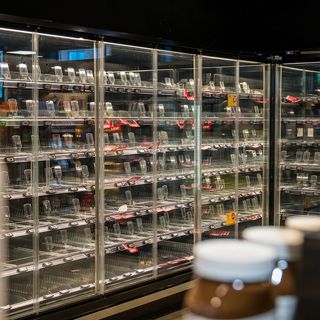
Cyberattacks are wreaking havoc on an unlikely target across Europe: supermarket refrigerators. Why it matters: Hackers are turning everyday, internet-connected equipment into physical hazards, spoiling food and causing costly damage. U.S. supermarkets use similar technology, and the Pentagon is already investigating suspected cyberattacks involving refrigeration systems at six military commissaries. Driving the news: Suspected cyberattacks sent refrigerator and freezer temperatures soaring at dozens of European supermarkets overnight, spoiling food and threatening costly losses. Grocery chains Ahold Delhaize and Colruyt reported incidents affecting stores in Belgium and Luxembourg, while Swedish chains ICA and Coop reported similar disruptions, per Reuters . A Belgian company that operates Delhaize's refrigeration systems said hackers switched the units into defrost mode. Here's what to know. Supermarkets hacked in Europe Supermarkets in Belgium, Estonia, Finland, Ireland, Luxembourg, the Netherlands and Sweden reported cyberattacks or IT disruptions, forcing some stores to discard spoiled food. Dozens of stores were affected, including an ICA supermarket in Sweden that said hackers set its refrigerator and freezer temperatures to 122°F, per ABC News . Authorities haven't shared who specifically is behind the attacks, per NBC News . Empty refrigerated shelves at a Proxy Delhaize supermarket in Maleizen, Belgium, following a refrigeration outage. Photo: Wiktor Dabkowski/Bloomberg via Getty Images Flashback: The incidents follow similar attacks in France last month, when hackers seized control of hundreds of refrigeration units, causing fires and spoiling food. It's unclear whether the attacks are connected. What they're saying: France's finance minister Roland Lescure said at the time that the attack "touches the heart of our food security." "It was a wake-up call for everyone," he said. How fridges get hacked How it works: Hackers aren't opening up each individual fridge and setting new temperatures. Instead, they target computer systems that control the temperatures of multiple refrigerated units remotely. Many stores use internet-connected controllers — small computer-like devices, sometimes with touchscreens — that allow maintenance workers to remotely monitor temperatures without having to visit every store. Hackers can exploit software flaws or stolen login credentials to change temperatures or activate defrost functions. Case in point: Danish manufacturer Danfoss said it identified security flaws last year and had long recommended customers install updates, according to The Guardian . In the Netherlands, some affected refrigeration systems used default passwords and were connected to unsecured networks. A supermarket manager discards spoiled food following a refrigeration outage linked to suspected cyberattacks across Europe on Nov. 2 in Belgium. Photo: Wiktor Dabkowski/Bloomberg via Getty Images The cost of hacked refrigerators Spoiled food: If temperatures rise overnight, the stores end up finding ruined meat, dairy and frozen products the next morning. In some French supermarkets, the soaring hot temperatures lasted for six hours, per Reuters. Spoiled food becomes unsafe to sell. Overheating and fires: Refrigerators can also overheat and cause fires. French prosecutors confirmed that the October attacks caused fires and food losses. Supermarkets lose money: Some stores lost more than €130,000. Two markets in the French region of Alsace reported combined losses of €270,000, per The Guardian . Intermarché's parent company estimated its nationwide losses in the tens of millions of euros. Yes, but: Not every attack causes extensive damage. In Estonia, a refrigeration company said technicians responded to the breach within minutes and halted any massive losses, per AP . Fridge attacks in the U.S. Zoom out: Many U.S. supermarkets use refrigeration technology similar to that found in Europe. Danfoss markets refrigeration monitoring and management systems in the U.S. Copeland, a U.S.-based refrigeration technology company, sells controllers that manage the grocery store display cases and walk-in refrigerators. What we're watching: The Pentagon is investigating whether cyberattacks caused freezer malfunctions at at least six U.S. military commissaries in August.
Herb Scribner ·
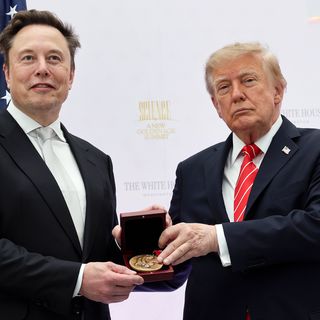
President Trump said Monday he'd move to protect Elon Musk if Democrats investigate the SpaceX and Tesla CEO after midterm elections. He also suggested the possibility of pre-emptive pardons for staff and others around him if Democrats win the election. Why it matters: Trump is positioning himself for a combative final two years in the White House, as polls increasingly point to the prospect of a significant blue wave. What they're saying: In an interview for the "Pod Force One" podcast published early Monday, host Miranda Devine asked Trump about rumors of Musk being investigated or having assets seized. "It's talk. But if it is talk, we'll have to protect them," Trump said. He went on to say he wouldn't hesitate to pardon staffers if he thought Democrats were pursuing them. Editor's note: This is a breaking news story and will be updated with more information.
Ben Berkowitz ·

Pharmaceutical companies facing a steep patent cliff are concluding the key to future profits may be customized treatments tailored to patients' genes and lifestyles — not blockbusters aimed at large patient populations. Why it matters: The pivot could influence which diseases get treated in the decades to come, and how much the health system pays. The stakes are huge. More than $500 billion in brand-name drug sales is potentially at risk from generic competition between 2026 and 2032, according to the consulting firm Evaluate. The latest: The race is on to find new treatments that each generate at least $2.4 billion in global sales, a new Iqvia Institute report finds. They're increasingly specialty treatments, biologics and rare disease drugs — with a small group of flagship products accounting for an outsized share of industry sales. GLP-1 drugs like Novo Nordisk's Ozempic and Eli Lilly's Zepbound now define that elite category. The next wave could include "biological missiles" that combine antibodies with chemotherapy to target specific cancer cells. "As precision medicine continues to advance, similar approaches may extend beyond oncology into areas such as immunology, metabolic disease and neurology," the report states. Reality check: It's not clear whether all of the innovation will cure more people, or just make health care more expensive. Novel RNA drugs and cell and gene therapies are expensive, hard to make and target small groups of patients. Challenges identifying eligible patients and getting insurers to pay for treatments have already revealed a disconnect between promising R&D and patient benefit. Widespread concern over high drug prices will force manufacturers to find more unmet needs and build sales more quickly after a drug's launch, according to the report. Context: Top-selling drugs historically were aimed at large patient populations with chronic conditions like high cholesterol. The ulcer drug Tagamet became the first to exceed $1 billion in sales in 1986. Over time, cancer and immunology drugs became major drivers of growth, followed by GLP-1s, which are sparking huge demand for conditions beyond obesity and diabetes but also driving up health costs. Iqvia found that blockbusters on average maintain a dominant market position for 12.1 years before losing market exclusivity, or nearly 80% of their commercial life. Specialty drugs for rare or complex diseases lasted even longer. Yes, but: A substantial number of top-sellers will lose patent protection and face potential competition from generics between 2028 and 2036. Bristol Myers Squibb's blood thinner Eliquis and Merck's cancer blockbuster Keytruda, which are both due to lose market exclusivity in 2028, accounted for a combined $65 billion in global sales in 2024. Follow the money: The search for new blockbusters is playing out in a highly charged environment. Drugmakers and biotechs not only have to figure out how to grow outside of crowded categories but also how much payers value new classes of drugs, Evaluate says . There's also uncertainty over China , where Western drug giants have invested tens of billions of dollars to bolster their product pipelines. Evaluate predicts that only autoimmune disease drugs will come close to rivaling GLP-1s, because of their potential to treat dozens of conditions. One example is AbbVie's injectable Skyrizi for plaque psoriasis, arthritis, Crohn's disease and ulcerative colitis, which could find more uses and generate more than $33 billion in sales in 2032. Iqvia identifies RNA therapeutics as a potentially important middle ground between traditional "small molecule" drugs for chronic diseases and highly specialized genetic treatments. These drugs can target disease-causing mutations across many genes and conditions, with applications for central nervous system, cardiovascular and kidney disease, as well as rare conditions. The bottom line: The success at innovating while also making sure patients have access to the new treatments "will ultimately determine whether the growth in blockbuster medicines observed over the past 25 years can continue at its extraordinary pace," Iqvia concludes.
Adriel Bettelheim ·

Republicans are burning tens of millions of last-minute ad dollars to try to rescue three red-state senators who they say ignored months of warnings that their campaigns were in danger. Why it matters: Senate races in Kansas, South Carolina and Mississippi are normally GOP layups. This year, Republicans have diverted resources from swing-state battles to defend them. The frustration with Sens. Roger Marshall (Kansas), Darline Graham (South Carolina) and Cindy Hyde-Smith (Mississippi) comes amid broader GOP finger-pointing as polls show a nationwide backlash against President Trump . "Democrats may win these seats in a wave ... but not a blue wave. It's the wave of arrogance [and] laziness ... that washed over these GOP incumbents and made them think they were invincible," said a national GOP operative involved in several key Senate races. By the numbers: National Republicans have spent $33 million in Kansas, $21 million in South Carolina and $2.4 million in Mississippi, according to data compiled by campaign finance expert Rob Pyers. Trump also has spent valuable campaign time in all three states. Behind the scenes: Republicans say the three senators ignored warnings to raise more money and build stronger campaign operations. National Republican Senatorial Committee chair Tim Scott warned all GOP senators in February 2025: "We do not need to spend time and money in places where races should not be competitive." Trump's political operation also warned Senate Republicans that they would need to pull their own weight. The most complaints center on Marshall, who has raised just $7.5 million compared with $19 million for his Democratic opponent, Adam Hamilton. Republicans blame his strained relationship with the banking and credit card industries — major GOP donors — and a lack of outreach to K Street. Republicans describe Marshall's campaign as overconfident. About a month ago, his team told aides to other GOP senators that the race would be effectively over within 10 days once it released opposition research on Hamilton. It wasn't. Strategists blame chief of staff Brent Robertson for Marshall's weak campaign operation. The campaign only recently tapped veteran Trump operative Chris Grant as part of a last-minute rescue effort. Alex DeGrasse, another veteran strategist recently hired to help Marshall, pointed to millions in spending by national Democrats and said the senator has made "hundreds of stops across all 105 counties in Kansas" and continues to "work hard for the people of Kansas." In Mississippi, Republicans have long viewed Hyde-Smith as a political underperformer. In 2020, she ran six points behind Trump. She has raised just $6.5 million despite warnings that Democratic megadonors, including George and Alex Soros, were preparing to spend heavily against her. Democratic groups have poured $13.7 million into the race. Republicans also fault Hyde-Smith for holding too few campaign events and underestimating her Democratic opponent, district attorney Scott Colom. Hyde-Smith's campaign did not respond to a request for comment. In South Carolina, Republicans fault Graham for failing to tap her late brother Lindsey Graham's donor network and showing little interest in soliciting contributions. In the first two weeks of October, Democrat Annie Andrews outraised Graham $4.2 million to $570,000. Graham spokesperson T.W. Arrighi said the senator "has faced unprecedented headwinds since losing her brother three months ago, and has risen to the occasion." Some Republicans are sympathetic to Graham, a political novice thrust into the Senate after her brother's death who faced a grueling primary and little time to campaign. They blame Trump for pushing her to run. Yes, but: Republicans point to Idaho Sen. Jim Risch, whose campaign required no spending from national GOP groups, as an example of an incumbent who took the political environment seriously. What they're saying: Representatives for the NRSC and the pro-GOP Senate Leadership Fund super PAC didn't respond to requests for comment. What's next: Top Republicans say the party needs to rethink how it deals with complacent incumbents in 2028 — and make clear that its campaign organizations can't be treated like a charity.
Alex Isenstadt ·
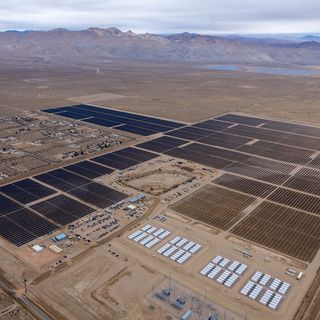
A powerful El Niño could bring major shifts in electricity supply and demand across the U.S. this winter, posing new challenges for utilities. Why it matters: The U.S. power grid has far more solar, wind and battery storage than during the last major El Niño, and the ongoing event could reveal whether that changing energy mix has made the grid more resilient or left it vulnerable in new ways. Driving the news: A very strong El Niño is strengthening in the tropical Pacific and is expected to continue into spring 2027, the National Oceanic and Atmospheric Administration says. NOAA's latest outlook favors wetter-than-normal conditions across California , the Southwest and much of the southern U.S. this winter, while the northern Rockies and parts of the Great Lakes lean drier and much of the northern U.S. leans warmer. The intrigue: El Niño doesn't affect every electricity resource the same way. A March study found that previous super El Niños were associated with reductions in potential solar power output of nearly 5% in parts of California over 12 months — and more than 10% in the state's north during winter. Vincent Tidwell, chief scientist at Pacific Northwest National Laboratory, says a wetter California winter could boost hydropower, while reduced precipitation or snowpack in the Pacific Northwest could cut generation there. Erik Smith, a climate scientist at the Electric Power Research Institute, tells Axios the Southeast is another region to watch for reduced solar generation as El Niño favors cloudier conditions. California now has more than 21 gigawatts of battery capacity , giving the grid another tool to manage fluctuations in electricity supply — one it barely possessed during the last very strong El Niño. The Columbia and Snake river basins accounted for roughly 62% of Western U.S. hydropower generation between 2001 and 2020, according to a Pacific Northwest National Laboratory analysis . Tidwell tells Axios that the Western grid is accustomed to shifting electricity between regions when hydropower conditions differ, helping compensate for shortages. Federal water managers, states and utilities use seasonal forecasts to plan for potential hydropower availability at Hoover and Glen Canyon dams on the Colorado River, Tidwell says. Zoom in: Tidwell expects natural gas to play a larger backup role if El Niño reduces Pacific Northwest hydropower and California solar generation this winter. Other resources, including wind, geothermal and nuclear power, provide additional options, though he says El Niño's effects on wind generation remain poorly understood. The big picture: A very strong El Niño could actually ease some pressure on the electricity system, Smith says. Warmer-than-normal conditions across the northern U.S. could reduce winter heating demand, potentially offsetting some of the pressure from changing electricity supplies elsewhere. Yes, but: Even a very strong El Niño doesn't guarantee specific weather impacts. A severe cold outbreak could still stress the grid despite a warmer-than-average winter, while a few major storms could radically alter regional rainfall and snowpack, Smith says. The bottom line: "We have a lot of confidence in how the averages are going to play out, but we don't have a lot of confidence in the day-to-day, week-to-week, particular weather events that could drive those averages," Smith says.
Rebecca Falconer ·
 top
I've spent the past week trying to figure out whether Apple's $2,000 iPhone Duo is the future of smartphones or just an expensive way to do things I could already do on my regular iPhone. The answer, unsurprisingly, is a bit of both. Why it matters: Apple wasn't first to the folding smartphone party. Samsung, Google and others began making them years ago. But Apple's arrival in a category has a way of reinventing it. The big picture : The most exciting thing about Apple's first foldable iPhone isn't necessarily what it can do today but what it can become. Already, it's inspiring developers to explore possibilities that could reshape how we use our devices. Old habits die hard One of my first surprises was how little I initially used the Duo's biggest selling point: its folding screen. While other reviewers talked about endlessly opening and closing their devices, I found myself mostly using the smaller outside display. After years of conventional iPhones, it was a mix of instinct and muscle memory. Zoom in: Over time, though, I found reasons to unfold it. Watching sports was one of the clearest advantages. I pulled out the Duo at Starbucks to watch the 49ers with my son and later followed a tied World Series game in a doctor's waiting room. At the WNBA Finals, having forgotten my laptop, I managed some quick edits to a story about Anthropic's IPO . I wouldn't want to write a full article that way, but it was reassuring to have the option. Playing the New York Times' Spelling Bee alongside its Spelling Bee Buddy helper was a small but delightful example of multitasking without constantly switching apps. Between the lines: The Duo's advantages aren't always about more screen space. Sometimes they're about what you can physically do with a phone that bends. I tried watching Netflix with the phone unfolded, propped up like a tent and partially folded into a miniature laptop. I also used the Duo's ability to stand on its own to capture wide shots of the WNBA Finals from a press-box ledge without needing a tripod. Other experiences were less seamless, including getting the orientation right when trying FaceTime's option to use multiple camera views. The developer wild card Perhaps the biggest difference between the Duo and the Android foldables is the enthusiasm Apple's device has sparked among independent developers. Zoom in: Some of the early experiments are more entertaining than useful, including apps that turn the Duo into a virtual cassette player or a grilled cheese toaster . My favorite was Tiny Computers , which let it simulate a semi-functional 1984 Mac, Windows 95 PC or candy-colored iMac. Nearly two decades after the App Store debuted, we aren't all using our iPhones as virtual cigarette lighters. And I doubt we'll all be making imaginary grilled cheese sandwiches on our phones 20 years from now. Zoom out: But these early experiments offer glimpses of what might be possible when developers start thinking beyond a conventional rectangular screen. The question isn't whether today's novelties become hits. It's whether all this experimentation eventually produces genuinely new ways of using our phones — the kind of breakthroughs that make today's smartphones feel indispensable. The $2,000 question For all the fun I've had with the Duo, its price is an insurmountable obstacle. At $2,000, it's simply not a purchase I could justify for myself, much less recommend broadly. The catch: There are other compromises. I missed Face ID, occasionally fumbling for the side-mounted Touch ID sensor until I started wearing an Apple Watch to make unlocking the phone easier. And when I needed to accomplish something quickly, I often instinctively reached for my familiar, traditional iPhone. What I'm watching: On Friday, I tried putting the Duo away to see if I missed it. I didn't find myself longing for it the way I sometimes felt when I only had the Duo only and missed having a better camera. The bottom line: The Duo is a fascinating glimpse of where smartphones could go next. But early buyers are paying a steep premium to participate in an experiment whose biggest rewards may still be years away.
Ina Fried ·
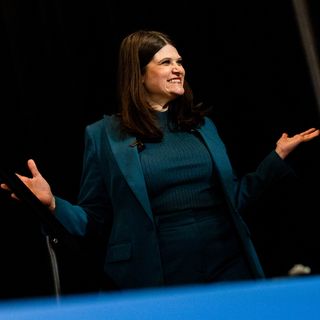
Some House Democrats want Rep. Haley Stevens (D-Mich.) expelled from their caucus after she crossed party lines to endorse Republican Mike Rogers for Senate on Sunday. Why it matters: It would be an extraordinary step that reflects the deep internal resentment towards Stevens within her own party. "I hope she doesn't return to work on Tuesday," Rep. Lateefah Simon (D-Calif.) told Axios, saying Stevens should be removed from the caucus. "Agreed," Rep. Marc Veasey (D-Texas) told Axios, arguing the endorsement "doesn't accomplish anything except hurt[ing] Haley" and that "she got bad advice." "I'd support that," Rep. Emily Randall (D-Wash.) said of removing Stevens from the caucus. Driving the news: Stevens infuriated colleagues on Sunday by endorsing Rogers over Democratic candidate Abdul El-Sayed, who defeated Stevens in the Senate primary in August. Stevens, a pro-Israel moderate, had been urging the more left-leaning El-Sayed to more forcefully denounce a super PAC ad partially blaming U.S. aid to Israel for rising prices. Stevens said the ad claimed "Jews are responsible for America's economic woes." El-Sayed pushed back in a statement saying Stevens "seems intent on relitigating a primary that ended three months ago." Stevens attended church with Rogers on Sunday and released a video to social media endorsing him. The two also held a joint press conference. What we're hearing: There has been private discussion about moving to oust Stevens, a senior House Democrat said, telling Axios, "That's what people want." Stevens was also removed from several House Democratic text chains, the senior lawmaker said. A second House Democrat told Axios: "I've heard people invoking the rule about not endorsing against Democrats." "Endorsing a Republican in a tipping point state is ridiculous, especially from a Democrat ... She should be removed from our caucus altogether," a third House Democrat said. Yes, but: Not everyone is on board with the idea — even those frustrated at Stevens. The senior House Democrat told Axios that, at the very least, "we need to wait and have the discussion after Tuesday." A fourth House Democrat said it's "too bad she chose to throw her career in Congress away so easily" but that the caucus "might still need her vote in the final two months before she's gone." Several lawmakers noted that Stevens is retiring anyway and that if El-Sayed wins, the point likely becomes moot. Stevens did not immediately respond to a text requesting comment on this story. The bottom line: "[I] am not letting it distract me from the work between now and Tuesday at 8pm," Randall told Axios.
Andrew Solender ·

Pennsylvania Gov. Josh Shapiro 's chances of being a presidential contender in 2028 are riding on his winning reelection in a landslide Tuesday. New York Rep. Alexandria Ocasio-Cortez 's future hinges on whether a fellow progressive can carry a swing state, for once. California Gov. Gavin Newsom has to show that his congressional redistricting gambit worked for Democrats — and he needs to beat back a state wealth tax proposal supported by Sen. Bernie Sanders (I-Vt.). Driving the news: Democrats eyeing White House runs have spent the past year preparing to emerge from Tuesday's midterms with momentum, and an argument for a 2028 candidacy. They want Democrats to do well — but to each, some races are especially important. Some have focused their time and money on particular contests for ideological reasons, or a desire to show strength in their home states. Others have hedged their bets across the nation, so that Tuesday is unlikely to be a huge victory or a significant defeat. Here's how the top potential Democratic contenders for president have placed their bets in this week's elections — and what success or failure will look like for them. Alexandria Ocasio-Cortez A great night: AOC has wagered just about everything on the Senate race in Michigan, where she's said that a win by progressive Abdul El-Sayed would "break open the entire political calculus in America" and show that "anybody can win anywhere." She's weighing whether to run for president or the Senate, and much of her electability argument for a national campaign hinges on an El-Sayed victory. Progressives are desperate to establish that one of their own can carry a presidential battleground state. Ocasio-Cortez has contributed $1 million to help El-Sayed and stumped for him at several events. An El-Sayed victory "would prove to the country, and the world, that competent, courageous progressive populists can win in the most competitive swing states in America," said Bhavik Lathia, a left-wing strategist from Michigan. "The implications for 2028 would be enormous." AOC would get bonus points Tuesday if other progressives she's supporting — such as House candidate Randy Villegas in California and Senate candidate Angie Nixon in Florida — win their swing-seat races. Worst-case scenario: If El-Sayed loses, many progressives think AOC would be less likely to run for president. That's why she's widely viewed as having more on the line Tuesday than any other potential Democratic contender for president, followed by Shapiro. Josh Shapiro A great night: Shapiro needs to win so big Tuesday that it makes Democratic presidential primary voters see his technocratic "get shit done" brand of governing as the party's best bet to take down the GOP in 2028. Shapiro is less known nationally than many 2028 hopefuls, and that has been by choice. He's largely focused on Pennsylvania this year, even as would-be rivals for president crisscrossed the country. A blowout in America's biggest swing state could help him stand out. A good night for Shapiro would be defeating Republican Stacy Garrity by double digits and carrying three Democratic House candidates — Janelle Stelson, Bob Brooks and Paige Cognetti — across the finish line to defeat Republican incumbents. He'd have a great night if his coattails were so long that he pulled a fourth Democratic House hopeful, Bob Harvie, to victory — taking down GOP Rep. Brian Fitzpatrick, who's known for surviving difficult electoral cycles. Shapiro would get extra credit if he helped Democrats win a trifecta in Harrisburg for the first time in decades by flipping control of the state Senate. Worst-case scenario: If only one or two Democrats in his state flip House seats or he wins by less than 10 points, Shapiro's setup for 2028 would fall short. Andy Beshear A great night: Kentucky Gov. Andy Beshear, who moonlights as chair of the Democratic Governors Association, put his chips this year on helping his party take control of a majority of the nation's governorships. Beshear would earn bragging rights if Democrats flip the two governors' seats needed to do that. He's eyeing the races in Iowa, Ohio, Georgia and Nevada. "I am laser-focused on these governors' races," he told us, arguing that the results will help determine what's possible in the 2028 presidential contest. "Rob Sand wins Iowa, Iowa's in play. When Amy Acton wins Ohio, Ohio's in play," Beshear said. Worst-case scenario: Beshear made enemies among some Latino Democrats this year when the DGA rebuffed calls to invest heavily in Gina Hinojosa's campaign for Texas governor. If Hinojosa loses to Texas Gov. Greg Abbott by a razor-thin margin or pulls an upset, Beshear's decision-making will come under heavy scrutiny — and he could have a problem with some Latino leaders in a 2028 campaign. Gavin Newsom A great night: Newsom won over many MS NOW moms and "resistance" liberals across the country when he responded to President Trump's push to create more GOP House seats in other states by fighting back with a successful voter proposition to do the same in California. His goal has been to gain five Democratic seats from the change to help Democrats take back the House. That's his bar to clear Tuesday. Some political insiders now think Democrats could gain 20 or more House seats across the country, so Newsom's contribution might not be as decisive as once thought. Newsom would score a political win if a proposed billionaire wealth tax on the ballot in his home state, which he opposes, fails. Worst-case scenario: If California voters approve the tax or Democrats flip fewer than five House seats there, it would diminish Newsom's California clout. Jon Ossoff A great night: A long-running knock against Georgia Sen. Jon Ossoff has been that he won his seat in 2021 by riding his fellow Peach State Sen. Raphael Warnock's coattails. Ossoff has the chance this year to prove he doesn't need Warnock, who isn't on the ticket. He's on his way to doing just that, with polls showing him comfortably leading GOP challenger Mike Collins. But to have a truly great night, Ossoff needs to show that he has enough sway in his state to help pull Democratic gubernatorial candidate Keisha Lance Bottoms to victory. Worst-case scenario: If Bottoms were to lose, Democrats say, Ossoff would be even less likely to leave the Senate for a presidential run, since Georgia's governor has the power to make a temporary appointment if a senator steps down. Ossoff, for his part, has said he has "zero interest" in a 2028 bid. But Barack Obama made similar comments before jumping into the 2008 race. Kamala Harris A great night: Former Vice President Kamala Harris has rallied voters to fight back against GOP redistricting and a recent Supreme Court decision on the Voting Rights Act that threatens Black representation in Congress. A huge uptick in turnout among Black voters — especially in the South — could strengthen the argument that Harris should be the nominee. Harris also has stumped for several Black Democrats running for governor and Senate this cycle, and their success could give her a boost. Worst-case scenario: Harris hasn't hitched her political fortunes to any specific contenders in this cycle. But a loss by female or Black candidates such as Bottoms could deepen some Democrats' skepticism that someone other than a white man could win the presidency in 2028. Pete Buttigieg A great night: Buttigieg has spread his chips around this election cycle, endorsing more than 100 candidates and stumping in person for more than half of them. That's helped Buttigieg cement his brand as a well-liked Democrat who methodically explains issues and can campaign anywhere in America. Worst-case scenario: Buttigieg's midterm strategy has been low-risk, low-reward — so he could end up as an afterthought Tuesday.
Holly Otterbein, Alex Thompson ·
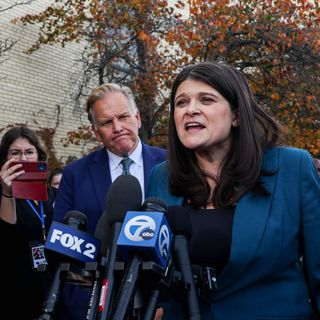
Rep. Haley Stevens (D-Mich.) faced fierce backlash from fellow Democrats, party officials and her own staffers after endorsing Republican Mike Rogers for U.S. Senate on Sunday. Why it matters: It's a stunning reversal in standing for Stevens, who came within a few percentage points of being her party's nominee for Senate in Michigan just months earlier. "Pathetic, petty, selfish, unhinged," Rep. Jared Huffman (D-Calif.) told Axios of her endorsement of Rogers. "You run out of words." Rep. Sam Liccardo (D-Calif.) said of the video Stevens posted to social media announcing her endorsement and her joint press conference with Rogers: "I've seen more pleasant self-immolations." State of play: Stevens' endorsement of Rogers came after her long-running feud with Democratic nominee Abdul El-Sayed reached a boiling point over the weekend. El-Sayed, a leftist who narrowly defeated the more moderate Stevens in the Senate primary in August, said in a statement on Friday that Stevens "seems intent on relitigating a primary that ended three months ago." Stevens had been pressing El-Sayed to more forcefully condemn an ad from an outside super PAC that suggested U.S. aid to Israel was partly to blame for rising prices. Stevens, in her video endorsing Rogers, said that El-Sayed "said that I was no longer welcome in his campaign, and that I should stay away," adding, "He's right. ... I don't belong in Abdul's campaign." What they're saying: Stevens' Democratic colleagues met her endorsement with shock and fury. "I am lost for words," Rep. Lateefah Simon (D-Calif.) told Axios. Rep. Glenn Ivey (D-Md.) said in a text to Axios: "WTF!!??" "I JUST SAW THIS BULLSHIT," Rep. Emily Randall (D-Wash.) texted. "There is too much on the line for BS like this." "What the fuck is she doing?" another House Democrat said. "This election is not about her, and this will not age well." Zoom in: "I'm dumbfounded that Haley told me one thing last night and changed her mind today," said Rep. Jamie Raskin (D-Md.), who had previously said Stevens told him in a phone call she was "voting straight down the line on the Democratic ticket." Raskin told Axios in a brief interview: "There is a great sense of betrayal for this to happen at the last minute before such a critical election." Rep. Adelita Grijalva (D-Ariz.) told Axios: "Stevens showed her true colors and Michiganders could see right through her. It's why she lost the Democratic primary." "I'm sincerely worried about my friend," Rep. Susie Lee (D-Nev.) said. What we're hearing: Several of Stevens' staff members resigned shortly after her announcement on Sunday, a former staffer familiar with the matter told Axios. Her former chief of staff Justin German said in a statement that he was "shocked and heartbroken" and that "many members of our team have resigned, including myself." Curtis Hertel, the chair of the Michigan Democratic Party, said in a post on X : "Congresswoman Stevens is not a current member of the Michigan Democratic Party, nor will she be in the future." The other side: "This is what happens to the far left when they go against the centrists," a centrist House Democrat told Axios. The lawmaker added: "I don't think I would have done what she did. But this is what the far left needs to understand when they burn bridges." Stevens did not immediately respond to a text seeking comment.
Andrew Solender ·

Sen. Chris Murphy (D-Conn.) suffered a stroke Saturday and is being treated at Johns Hopkins Hospital, his office said Sunday. The big picture: Murphy is one of the Senate's more visible Democrats and has been traveling the country campaigning ahead of Tuesday's midterms. Driving the news: Murphy, 53, began experiencing numbness in his arm while attending his son's hockey game Saturday, according to a statement from his chief of staff, Allison Herwitt. He was taken to a hospital where doctors determined he had suffered a stroke and transferred him to Johns Hopkins for monitoring. What they're saying: "The doctors are encouraged by his progress, he is awake and alert, and we are optimistic he will make a full recovery," Herwitt said in a statement. Sen. John Fetterman (D-Pa.), who suffered a stroke during his 2022 Senate campaign, said in a statement he understands "all too well how much this impacts your life" and that his family is rooting for Murphy's recovery. What's next: The statement did not specify the severity of the stroke or when Murphy might be discharged. Editor's note: This story has been updated with a statement by Sen. Fetterman.
Andrew Pantazi ·
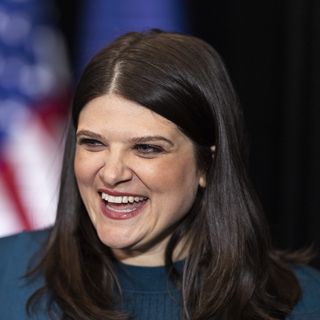
Rep. Haley Stevens (D-Mich.) appeared Sunday at Detroit's Perfecting Church alongside Republican Senate candidate Mike Rogers , praising his support for Black-owned businesses just two days before he faces the Democratic nominee she previously endorsed. Stevens then tweeted an endorsement for Rogers. Why it matters: Her endorsement gives Rogers a striking photo op as his party tries to peel away Black and Jewish voters in a tight race that could determine control of the Senate. Driving the news: In a video posted to X, Stevens said Democratic nominee Abdul El-Sayed told her she was no longer welcome in his campaign. "And he's right, and that's why I am endorsing Mike Rogers for the United States Senate today," Stevens said. Stevens' appearance with Rogers came after plans for her to attend a Detroit church service alongside Democratic nominee El-Sayed and Rep. Jim Clyburn (D-S.C.) collapsed. Her appearance with Rogers was arranged at the last minute after the two spoke this morning, per a person familiar. The intrigue: A video posted by Detroit journalist Sam Robinson showed Stevens entering the church and praising Rogers . Rep. Debbie Dingell (D-Mich.), who helped organize the original planned appearance with El-Sayed, told CNN she asked Stevens not to attend because the dispute had become distracting. Stevens narrowly lost the August Democratic primary to El-Sayed but endorsed him afterward. Catch up quick: The bitter primary rivalry erupted again last week when Stevens' fiancé, Jason Turkish, announced he would vote for Rogers, citing concerns about El-Sayed's rhetoric on Israel. Stevens subsequently demanded that El-Sayed condemn an outside group's ad linking U.S. support for Israel to higher grocery prices, and remove a campaign ad featuring Tucker Carlson. El-Sayed accused Stevens of re-litigating the primary. On Saturday, he explicitly rejected the outside ad's contents, prompting Stevens to say she welcomed his remarks. She then flipped her endorsement Sunday morning. What we're watching: Michigan voters choose between Rogers and El-Sayed on Tuesday, with Democrats facing a crucial test of whether they can reunite their coalition. This is a breaking news article and has been updated.
Andrew Pantazi, Alex Isenstadt, Holly Otterbein ·

President Trump had a candid phone call with Israeli Prime Minister Benjamin Netanyahu Saturday about the state of U.S. negotiations with Iran and how quickly to return to combat, according to one Israeli and one U.S. source. Why it matters: The sources said Netanyahu is pressing Trump to strike Iran immediately after the midterm elections on Tuesday. But Trump, for now, wants to let negotiations play out — a strategy Netanyahu is concerned about. The Israeli source said the call was "tough," while the U.S. source described it as "direct." The White House and the Israeli prime minister's office declined to comment. Driving the news: As he did before Operation Midnight Hammer in June 2025 and Operation Epic Fury in February, Trump is pursuing dual tracks — trying to reach a deal to restart peace talks while also preparing for a possible resumption of major combat operations after the midterms. Last week Vice President Vance sent a letter to Iran's national security chief Mohsen Rezaei about the possibility of restarting negotiations . It was the most senior-level outreach by the U.S. to Iran in several months. Trump told reporters on Saturday that negotiations with Iran are "going fine" and noted he is not "in much of a hurry." While the Iranians want to make a deal, the president said they "are not very reliable. ... They make a deal and then they back out." At the same time, Trump said the U.S. still has to "take care" of one or two nuclear sites in Iran. "We can do that in 10 minutes. We have that planned. You can look at Pickaxe Mountain. We need to take care of that. We can do that very quickly," Trump said, referring to a suspected nuclear site built into a mountain. The Wall Street Journal first reported the Trump-Netanyahu call, but did not describe its contents. State of play: Qatari mediators met with Iranian officials on Sunday for the third consecutive day in an effort to reach a deal to restart direct negotiations between the U.S. and Iran. Iranian Foreign Minister Abbas Araghchi said on Sunday that there is no agreement yet and stressed that a deal depends on the U.S. answering Iran's questions. "We are making every effort in this regard and hope that the other side will demonstrate enough rationality to choose diplomacy over other paths," he said.
Barak Ravid ·

Right after Tuesday's midterms, OpenAI will unleash a policy and PR blitz to try to get in sync with the new Washington, including an effort to rebrand data centers as "AI compute campuses." Why it matters: After two years of a friendly White House, AI companies will face a harsher Washington after Tuesday, when Democrats will likely win the House. OpenAI also aims to help frame the AI debate for the big field of 2028 presidential contenders that'll start forming on Wednesday. "You can try to chase the moment, or seek to inform the moment via the power of ideas," OpenAI chief global affairs officer Chris Lehane tells us, calling Tuesday an "electoral portal from one era to the next." Since August, Lehane and his team have been stockpiling policy proposals, some new and some repackaged, to drive urgency and steer the AI debate. It'll all start during the lame-duck session of Congress — the awkward but often consequential weeks between the election and the swearing-in of new members and senators on Jan. 3. This year's lame duck opens Nov. 9. The big picture: Other tech companies are also positioning themselves for a potential blue wave. Meta is taking steps to strengthen its ties with Democrats, Axios' Sara Fischer scooped Saturday . Other big AI and tech players can be expected to do the same. Tech titans who enjoy close relationships with President Trump will be top targets for Democrats, who are eager to ramp up scrutiny and regulatory pressure on the industry. OpenAI's plans, being revealed here for the first time, all involve control — trying to send the message that AI is being built for people, not to displace people. The proposals include: Speed limits: Building on earlier proposals , OpenAI plans to unveil new ideas for mandatory safeguards for the most powerful AI systems — speed limits for AI that will allow humans to keep their hands on the wheel. This'll include a more aggressive congressional drive. "You're going to see us talk more and more about the concept of speed limits," Lehane said. "Our belief is people should always remain in control of this technology. AI should be built by and for people, and people should have more control over how the technology shapes their lives and communities." Data centers: OpenAI hopes to stem the nationwide, bipartisan backlash by offering new community compacts and commitments to smooth the way for future data centers. In addition, the company will try to set a new industry standard by proposing state legislation that gives people a meaningful say in how projects are built and what benefits they receive. In an intentionally provocative rebranding effort, OpenAI will argue that the infrastructure it's building, in contrast to legacy data centers, should be called "AI compute campuses" that can economically transform host communities. OpenAI points to its role in developing a huge data center project that promises to bring thousands of jobs to Pike County in Ohio's Appalachian region. "We think the conversation is good and healthy," Lehane said. "It's democracy in action. Communities should hold companies responsible and accountable so they really and truly get a transformative benefit from these projects." Economic opportunity: OpenAI is developing ideas to help more people see AI as empowering for their daily lives and on the job, including supporting workers through disruption, widening access to education and training, and making it easier to start and grow a business. International cooperation: OpenAI will push for the U.S. to shape global standards with AI built on democratic values. Between the lines: OpenAI is trying to stake out a human-centered "third path" in a debate that often defaults to an artificial binary of doomers vs. accelerationists. OpenAI CEO Sam Altman, speaking to the UN Security Council in September, called for an AI approach that leads to a "new Renaissance of creativity and discovery." What we're watching: OpenAI's overtures are aimed partly at 2028 presidential hopefuls, who'll be increasingly vocal about their plans starting Wednesday. "AI is going to be the issue in 2028," Lehane said, calling the midterms a "bit of a movie trailer for what you're going to see in 2028." "I don't think it's going to be good enough just to say 'AI bad,'" Lehane added. "The public gets that this is a much more complex, nuanced conversation. They're going to be looking for whoever their FDR or Lincoln is who's actually going to want to try to lead them through this journey." Lehane said candidates should ask: "How do we start to think about trust? How do we think about the incredible anxiety that exists in modernity? How do we think about the fact that people are profoundly unhappy with where their social contract is, where the American dream is?" The bottom line: The plans for the coming months are just the beginning of OpenAI's effort to inject more urgency in Washington and push the industry on frontier safety. Remember: Every day, AI models get more powerful — and tougher to corral. "Our policy priorities — and urgency, especially on frontier safety — are about meeting the moment in response to the rapidly advancing capabilities," Lehane said. "And we expect that to continue as a new Congress ramps up." Axios' Bradley Olson contributed. Disclosure: Axios has a content licensing and technology agreement with OpenAI, emphasizing expansion of local news coverage. Go deeper : "AI governing the AI world."
Jim VandeHei, Mike Allen ·

Florida Republicans aren't panicking about sluggish turnout for the midterms , but in the words of one GOP elder: "We're white-knuckled." Why it matters: Florida once looked like a much safer Republican bet for the midterms. Losing any statewide race would stun and embarrass its elite Republican residents, starting with President Trump . "I don't necessarily want to be the bearer of bad news, but I don't think the turnout is as strong as we would like to see," Florida Gov. Ron DeSantis fretted last week. The biggest GOP concern is U.S. Rep. Byron Donalds' campaign for governor, though most polls show him narrowly leading Democrat David Jolly. Donalds has raised $176 million; Jolly just $28 million. Zoom in : The GOP's jitters are rooted in early turnout data. Republicans led Democrats in early ballots cast by just 2.8 percentage points as of Saturday afternoon. That's much lower than in the past two general elections — and it's despite a much-bigger Republican registration advantage over Democrats: 11 points. Republican turnout is weakest in parts of the conservative Panhandle and rural North Florida, including many of the 17 counties Donalds lost in the Republican primary. In those 17 counties, GOP turnout is 3.2 points below 2022, compared with 1.1 points below in counties that Donalds won, University of Florida political scientist Michael McDonald found. Between the lines: Republican turnout is made up of more habitual voters, while Democrats and independents are banking ballots from people who don't always show up. That could benefit Jolly if polls underestimate those voters. Democrats already have surpassed their entire 2022 early and mail-in vote totals in 15 counties, compared with four counties for Republicans. Nearly every poll shows independent voters favoring Democrats by double digits, so Republicans need a heavy turnout advantage. About two-thirds of Florida voters typically cast ballots before Election Day, making the early and absentee margins critical. Among voters who waited until Election Day in 2022, roughly 60,000 more Republicans than Democrats have already voted this year, Democratic strategist Steve Schale found. That means some voters Republicans rely on for their Election Day surge in 2022 have already cast ballots — potentially shrinking their usual Tuesday advantage. The big picture: Donalds could enter Election Day down by as many as 500,000 votes, according to internal Democratic and GOP estimates shared with Axios. To overcome that deficit, Donalds could need to win the Election Day vote by a 2:1 ratio. It's a tall order, but Republicans have delivered huge Election Day margins before, notably in 2022. By the numbers: Black and Hispanic voters, who are leaning more toward Democrats this year in Florida polling, are making up a growing share of the early electorate, accounting for a larger share of newly reported ballots. Across racial and ethnic groups , Democrats are voting at higher rates than Republicans. Among active Democrats, 50% of white voters, 39% of Black voters and 34% of Hispanic voters have cast ballots, compared with 35%, 21% and 28% of Republicans in those groups. Young voters show another substantial gap: 25% of active registered Democrats under 30 have voted, compared with just 9% of Republicans. Yes, but: Florida Republicans still outnumber Democrats by 1.5 million, with a larger pool of reliable voters. Florida's GOP is better funded and organized than the state's Democratic Party. Even in 2018, when a blue wave flooded the nation, Florida's red wall held. By razor-thin margins, DeSantis won the governor's race and then-Gov. Rick Scott was elected to the Senate. "We always win Election Day, and we know how to do this," state GOP chair Evan Power said. "A lot of the nerves here are because the last time we had a close election was eight years ago, and people forgot what a close election looks like here." Zoom out: Republicans face a different political climate than in 2018, when Trump was ascendant in the GOP and the economy was improving. Today, Trump's approval with Republicans is lower and gas prices are higher. Republicans worry they could lose 10 to 15 state House seats, jeopardizing their supermajority. In Miami's 27th Congressional District, voting patterns are flashing warning signs for Republican Rep. Maria Elvira Salazar in her race against Democrat Eliot Rodriguez. As for the three statewide Florida Cabinet posts (attorney general, chief financial officer, agriculture commissioner), "no one should feel safe, but there's reason to feel OK," said a Republican involved one of the races. Nationwide , the atmosphere is so bad for the GOP that Texas, Kansas, Alaska, Ohio and even South Carolina look in play. Behind the scenes : The early voting data sent a chill through Republican ranks in Tallahassee last week: What if the polling assumptions about stronger Republican turnout were wrong? "Just a few weeks ago I didn't think I would be feeling like this," a top consultant for one of the statewide races said. "It's not panic. At least not yet." Republicans remain more confident about Sen. Ashley Moody's race against state Rep. Angie Nixon, who's widely seen as too progressive for the red state's voters. Friction point: Republicans have quietly fretted that racism could hurt Donalds just as it may hurt Nixon. Donalds and Nixon are Black. "We're about to run the biggest experiment to see how racist some of our voters are," a longtime Republican consultant said, calling the counties Donalds lost "more culturally Confederate" than the rest of Florida. "During the primary, he underperformed in the Panhandle and if people think skin color didn't play a role in that, they are naive," MAGA influencer Laura Loomer posted Saturday on X.
Marc Caputo, Andrew Pantazi ·
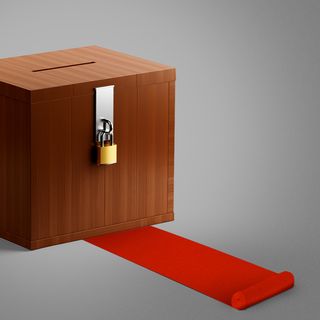
On the eve of midterms, President Trump is facing setbacks left and right in his push to investigate alleged election fraud . But in Georgia, he has an opening. Why it matters: Six years ago, Georgia was at the epicenter of Trump's efforts to overturn the 2020 presidential election. Now the state's own election board has invited his administration to investigate its voting system. Georgia features two high-stakes statewide campaigns: Sen. Jon Ossoff (D) against Rep. Mike Collins (R) for Senate, and former Atlanta Mayor Keisha Lance Bottoms (D) against businessman Rick Jackson (R) for governor. The big picture: The Justice Department disclosed in court on Friday that the administration has sent letters to officials in California, Washington, Pennsylvania, New Jersey and Nevada, asking some states to segregate mail-in ballots from suspected noncitizen voters. A federal judge on Friday issued an emergency order that blocks federal officials from threatening to charge election officials who count ballots from voters the DOJ claims are ineligible. In October, a federal judge restricted the Department of Homeland Security's investigations into suspected noncitizen voters. But Georgia is different . "We've managed with duct tape and bubble gum to be able to bootstrap our way through one last round, but that's not a way of running elections," a Georgia election official told Axios. Georgia's State Election Board asked the Justice and Homeland Security departments to review and potentially investigate the state's voting system and handling of election data. The Sept. 30 letter cited outdated software, threats to ballot secrecy and QR-code ballots it says may violate the Help America Vote Act. A DOJ spokesperson said in response to the letter: "We take seriously allegations that election officials have failed to adequately maintain election equipment and otherwise comply with federal law. We are evaluating the request and will investigate and, if appropriate, bring an enforcement action consistent with federal law." The other side: Georgia State Election Board Chair John Fevrier , appointed by Gov. Brian Kemp (R), opposed the letter and told Axios that a majority of the board now believes it "far exceeded what was in the resolution." Michon Lindstrom, senior director of communications for Georgia's secretary of state, said: "It's unfortunate that the state election board sought to inject chaos in the 11th hour of the election." In 2020, Georgia Secretary of State Brad Raffensperger rebuffed Trump's efforts to overturn Georgia's presidential election results. Friction point: Georgia has spent years debating how to address vulnerabilities in its voting system. The secretary of state's office said Georgia's machines haven't been updated since they were purchased in 2019. The state said it's starting a procurement process for new machines for the next election cycle. The state's legislature passed a law in 2024 to move away from a QR-code ballot system to hand-marked paper ballots. This transition was supposed to be implemented by this July, but lawmakers passed a deadline extension. A software glitch on the state's tabulators that could impact ballot secrecy has been known to the state since 2022. But an available fix hasn't been installed. Between the lines: "There are no clean hands in this," the Georgia election official told Axios. "The secretary of state could have fought harder for the funding... [The] legislature could have funded it when the secretary of state asked for it. But ... they all have pissed each other off so much." In 2025, Raffensperger urged lawmakers to reconsider a $47 million voting-machine upgrade, proposing a software update costing less than $15 million or delaying any purchases until the existing contract expired. In 2026, Raffensperger told legislators that there wasn't money for any election upgrades. No upgrades were funded. What they're saying: "Money allocation is ultimately the function of the legislative branch, and any questions about why they did not deem it necessary to fund 'election infrastructure improvements' should be directed to the legislature," Lindstrom told Axios. Fevrier told Axios: "I blame the legislature. If the legislature thought it was an issue, they would have fixed it, and they didn't." The Department of Homeland Security didn't respond to Axios's request for comment. The bottom line: The Trump administration suffered a setback in California on Friday, with an appeals court rejecting its demand to set aside mail-in ballots. But the dispute in Georgia shows that the fight over federal intervention in state elections is far from over.
Brittany Gibson ·