Source
Axios

Axios (website)
Axios is an American news website based in Arlington, Virginia. It was founded in 2016 and launched the following year by former Politico journalists Jim VandeHei, Mike Allen, and Roy Schwartz. The site's name is based on the Ancient Greek ἄξιος.
From Wikipedia ↗, text under CC BY-SA 4.0; logo from Wikimedia Commons
- Type
- News outlet
- Lean
- Left-leaning
- Left-Center−2.8 of ±10
- High0.9 of 10 (lower is better)
- High
- Website
- axios.com ↗
- Feed
- RSS ↗
- Articles stored
- 963
- Tracked since
- Aug 15, 2026
Down: MBFC factual reporting score, 0 most factual to 10 least.
Bias and credibility ratings by Media Bias/Fact Check.
Axios on MBFC ↗Publishing rhythm
How many articles Axios published over the last 14 days, by publication time, and at which hours of the day.
Top keywords
All keyword charts for Axios →The people, places, organizations and topics Axios covered most that day, by the share of its stories that mention them. Article counts are shown for context.
No keywords that day yet.
Latest articles

Right after Tuesday's midterms, OpenAI will unleash a policy and PR blitz to try to get in sync with the new Washington, including an effort to rebrand data centers as "AI compute campuses." Why it matters: After two years of a friendly White House, AI companies will face a harsher Washington after Tuesday, when Democrats will likely win the House. OpenAI also aims to help frame the AI debate for the big field of 2028 presidential contenders that'll start forming on Wednesday. "You can try to chase the moment, or seek to inform the moment via the power of ideas," OpenAI chief global affairs officer Chris Lehane tells us, calling Tuesday an "electoral portal from one era to the next." Since August, Lehane and his team have been stockpiling policy proposals, some new and some repackaged, to drive urgency and steer the AI debate. It'll all start during the lame-duck session of Congress — the awkward but often consequential weeks between the election and the swearing-in of new members and senators on Jan. 3. This year's lame duck opens Nov. 9. The big picture: Other tech companies are also positioning themselves for a potential blue wave. Meta is taking steps to strengthen its ties with Democrats, Axios' Sara Fischer scooped Saturday . Other big AI and tech players can be expected to do the same. Tech titans who enjoy close relationships with President Trump will be top targets for Democrats, who are eager to ramp up scrutiny and regulatory pressure on the industry. OpenAI's plans, being revealed here for the first time, all involve control — trying to send the message that AI is being built for people, not to displace people. The proposals include: Speed limits: Building on earlier proposals , OpenAI plans to unveil new ideas for mandatory safeguards for the most powerful AI systems — speed limits for AI that will allow humans to keep their hands on the wheel. This'll include a more aggressive congressional drive. "You're going to see us talk more and more about the concept of speed limits," Lehane said. "Our belief is people should always remain in control of this technology. AI should be built by and for people, and people should have more control over how the technology shapes their lives and communities." Data centers: OpenAI hopes to stem the nationwide, bipartisan backlash by offering new community compacts and commitments to smooth the way for future data centers. In addition, the company will try to set a new industry standard by proposing state legislation that gives people a meaningful say in how projects are built and what benefits they receive. In an intentionally provocative rebranding effort, OpenAI will argue that the infrastructure it's building, in contrast to legacy data centers, should be called "AI compute campuses" that can economically transform host communities. OpenAI points to its role in developing a huge data center project that promises to bring thousands of jobs to Pike County in Ohio's Appalachian region. "We think the conversation is good and healthy," Lehane said. "It's democracy in action. Communities should hold companies responsible and accountable so they really and truly get a transformative benefit from these projects." Economic opportunity: OpenAI is developing ideas to help more people see AI as empowering for their daily lives and on the job, including supporting workers through disruption, widening access to education and training, and making it easier to start and grow a business. International cooperation: OpenAI will push for the U.S. to shape global standards with AI built on democratic values. Between the lines: OpenAI is trying to stake out a human-centered "third path" in a debate that often defaults to an artificial binary of doomers vs. accelerationists. OpenAI CEO Sam Altman, speaking to the UN Security Council in September, called for an AI approach that leads to a "new Renaissance of creativity and discovery." What we're watching: OpenAI's overtures are aimed partly at 2028 presidential hopefuls, who'll be increasingly vocal about their plans starting Wednesday. "AI is going to be the issue in 2028," Lehane said, calling the midterms a "bit of a movie trailer for what you're going to see in 2028." "I don't think it's going to be good enough just to say 'AI bad,'" Lehane added. "The public gets that this is a much more complex, nuanced conversation. They're going to be looking for whoever their FDR or Lincoln is who's actually going to want to try to lead them through this journey." Lehane said candidates should ask: "How do we start to think about trust? How do we think about the incredible anxiety that exists in modernity? How do we think about the fact that people are profoundly unhappy with where their social contract is, where the American dream is?" The bottom line: The plans for the coming months are just the beginning of OpenAI's effort to inject more urgency in Washington and push the industry on frontier safety. Remember: Every day, AI models get more powerful — and tougher to corral. "Our policy priorities — and urgency, especially on frontier safety — are about meeting the moment in response to the rapidly advancing capabilities," Lehane said. "And we expect that to continue as a new Congress ramps up." Axios' Bradley Olson contributed. Disclosure: Axios has a content licensing and technology agreement with OpenAI, emphasizing expansion of local news coverage. Go deeper : "AI governing the AI world."
Jim VandeHei, Mike Allen ·

Florida Republicans aren't panicking about sluggish turnout for the midterms , but in the words of one GOP elder: "We're white-knuckled." Why it matters: Florida once looked like a much safer Republican bet for the midterms. Losing any statewide race would stun and embarrass its elite Republican residents, starting with President Trump . "I don't necessarily want to be the bearer of bad news, but I don't think the turnout is as strong as we would like to see," Florida Gov. Ron DeSantis fretted last week. The biggest GOP concern is U.S. Rep. Byron Donalds' campaign for governor, though most polls show him narrowly leading Democrat David Jolly. Donalds has raised $176 million; Jolly just $28 million. Zoom in : The GOP's jitters are rooted in early turnout data. Republicans led Democrats in early ballots cast by just 2.8 percentage points as of Saturday afternoon. That's much lower than in the past two general elections — and it's despite a much-bigger Republican registration advantage over Democrats: 11 points. Republican turnout is weakest in parts of the conservative Panhandle and rural North Florida, including many of the 17 counties Donalds lost in the Republican primary. In those 17 counties, GOP turnout is 3.2 points below 2022, compared with 1.1 points below in counties that Donalds won, University of Florida political scientist Michael McDonald found. Between the lines: Republican turnout is made up of more habitual voters, while Democrats and independents are banking ballots from people who don't always show up. That could benefit Jolly if polls underestimate those voters. Democrats already have surpassed their entire 2022 early and mail-in vote totals in 15 counties, compared with four counties for Republicans. Nearly every poll shows independent voters favoring Democrats by double digits, so Republicans need a heavy turnout advantage. About two-thirds of Florida voters typically cast ballots before Election Day, making the early and absentee margins critical. Among voters who waited until Election Day in 2022, roughly 60,000 more Republicans than Democrats have already voted this year, Democratic strategist Steve Schale found. That means some voters Republicans rely on for their Election Day surge in 2022 have already cast ballots — potentially shrinking their usual Tuesday advantage. The big picture: Donalds could enter Election Day down by as many as 500,000 votes, according to internal Democratic and GOP estimates shared with Axios. To overcome that deficit, Donalds could need to win the Election Day vote by a 2:1 ratio. It's a tall order, but Republicans have delivered huge Election Day margins before, notably in 2022. By the numbers: Black and Hispanic voters, who are leaning more toward Democrats this year in Florida polling, are making up a growing share of the early electorate, accounting for a larger share of newly reported ballots. Across racial and ethnic groups , Democrats are voting at higher rates than Republicans. Among active Democrats, 50% of white voters, 39% of Black voters and 34% of Hispanic voters have cast ballots, compared with 35%, 21% and 28% of Republicans in those groups. Young voters show another substantial gap: 25% of active registered Democrats under 30 have voted, compared with just 9% of Republicans. Yes, but: Florida Republicans still outnumber Democrats by 1.5 million, with a larger pool of reliable voters. Florida's GOP is better funded and organized than the state's Democratic Party. Even in 2018, when a blue wave flooded the nation, Florida's red wall held. By razor-thin margins, DeSantis won the governor's race and then-Gov. Rick Scott was elected to the Senate. "We always win Election Day, and we know how to do this," state GOP chair Evan Power said. "A lot of the nerves here are because the last time we had a close election was eight years ago, and people forgot what a close election looks like here." Zoom out: Republicans face a different political climate than in 2018, when Trump was ascendant in the GOP and the economy was improving. Today, Trump's approval with Republicans is lower and gas prices are higher. Republicans worry they could lose 10 to 15 state House seats, jeopardizing their supermajority. In Miami's 27th Congressional District, voting patterns are flashing warning signs for Republican Rep. Maria Elvira Salazar in her race against Democrat Eliot Rodriguez. As for the three statewide Florida Cabinet posts (attorney general, chief financial officer, agriculture commissioner), "no one should feel safe, but there's reason to feel OK," said a Republican involved one of the races. Nationwide , the atmosphere is so bad for the GOP that Texas, Kansas, Alaska, Ohio and even South Carolina look in play. Behind the scenes : The early voting data sent a chill through Republican ranks in Tallahassee last week: What if the polling assumptions about stronger Republican turnout were wrong? "Just a few weeks ago I didn't think I would be feeling like this," a top consultant for one of the statewide races said. "It's not panic. At least not yet." Republicans remain more confident about Sen. Ashley Moody's race against state Rep. Angie Nixon, who's widely seen as too progressive for the red state's voters. Friction point: Republicans have quietly fretted that racism could hurt Donalds just as it may hurt Nixon. Donalds and Nixon are Black. "We're about to run the biggest experiment to see how racist some of our voters are," a longtime Republican consultant said, calling the counties Donalds lost "more culturally Confederate" than the rest of Florida. "During the primary, he underperformed in the Panhandle and if people think skin color didn't play a role in that, they are naive," MAGA influencer Laura Loomer posted Saturday on X.
Marc Caputo, Andrew Pantazi ·

On the eve of midterms, President Trump is facing setbacks left and right in his push to investigate alleged election fraud . But in Georgia, he has an opening. Why it matters: Six years ago, Georgia was at the epicenter of Trump's efforts to overturn the 2020 presidential election. Now the state's own election board has invited his administration to investigate its voting system. Georgia features two high-stakes statewide campaigns: Sen. Jon Ossoff (D) against Rep. Mike Collins (R) for Senate, and former Atlanta Mayor Keisha Lance Bottoms (D) against businessman Rick Jackson (R) for governor. The big picture: The Justice Department disclosed in court on Friday that the administration has sent letters to officials in California, Washington, Pennsylvania, New Jersey and Nevada, asking some states to segregate mail-in ballots from suspected noncitizen voters. A federal judge on Friday issued an emergency order that blocks federal officials from threatening to charge election officials who count ballots from voters the DOJ claims are ineligible. In October, a federal judge restricted the Department of Homeland Security's investigations into suspected noncitizen voters. But Georgia is different . "We've managed with duct tape and bubble gum to be able to bootstrap our way through one last round, but that's not a way of running elections," a Georgia election official told Axios. Georgia's State Election Board asked the Justice and Homeland Security departments to review and potentially investigate the state's voting system and handling of election data. The Sept. 30 letter cited outdated software, threats to ballot secrecy and QR-code ballots it says may violate the Help America Vote Act. A DOJ spokesperson said in response to the letter: "We take seriously allegations that election officials have failed to adequately maintain election equipment and otherwise comply with federal law. We are evaluating the request and will investigate and, if appropriate, bring an enforcement action consistent with federal law." The other side: Georgia State Election Board Chair John Fevrier , appointed by Gov. Brian Kemp (R), opposed the letter and told Axios that a majority of the board now believes it "far exceeded what was in the resolution." Michon Lindstrom, senior director of communications for Georgia's secretary of state, said: "It's unfortunate that the state election board sought to inject chaos in the 11th hour of the election." In 2020, Georgia Secretary of State Brad Raffensperger rebuffed Trump's efforts to overturn Georgia's presidential election results. Friction point: Georgia has spent years debating how to address vulnerabilities in its voting system. The secretary of state's office said Georgia's machines haven't been updated since they were purchased in 2019. The state said it's starting a procurement process for new machines for the next election cycle. The state's legislature passed a law in 2024 to move away from a QR-code ballot system to hand-marked paper ballots. This transition was supposed to be implemented by this July, but lawmakers passed a deadline extension. A software glitch on the state's tabulators that could impact ballot secrecy has been known to the state since 2022. But an available fix hasn't been installed. Between the lines: "There are no clean hands in this," the Georgia election official told Axios. "The secretary of state could have fought harder for the funding... [The] legislature could have funded it when the secretary of state asked for it. But ... they all have pissed each other off so much." In 2025, Raffensperger urged lawmakers to reconsider a $47 million voting-machine upgrade, proposing a software update costing less than $15 million or delaying any purchases until the existing contract expired. In 2026, Raffensperger told legislators that there wasn't money for any election upgrades. No upgrades were funded. What they're saying: "Money allocation is ultimately the function of the legislative branch, and any questions about why they did not deem it necessary to fund 'election infrastructure improvements' should be directed to the legislature," Lindstrom told Axios. Fevrier told Axios: "I blame the legislature. If the legislature thought it was an issue, they would have fixed it, and they didn't." The Department of Homeland Security didn't respond to Axios's request for comment. The bottom line: The Trump administration suffered a setback in California on Friday, with an appeals court rejecting its demand to set aside mail-in ballots. But the dispute in Georgia shows that the fight over federal intervention in state elections is far from over.
Brittany Gibson ·

More than 40 third-party candidates in pivotal House and Senate races across the country are receiving support from outside super PACs, many of which have ties to the two major parties, an Axios analysis has found. Why it matters: The sums being thrown around, which total more than $16.5 million, are far greater than virtually any of those candidates have raised or spent on their own. The super PACs have spent an average of $375,000 more than the third-party candidates they are supporting. More than half of the 43 candidates haven't filed any financial paperwork with the Federal Election Commission. While it is a comparative drop in the bucket for a midterm that has already seen billions in ad spending nationally, the money will likely play an outsized role in races that are set to be decided by razor-thin margins. Those races, in turn, will help decide the balance of power in Congress next year. Data: Federal Election Commission; Note: Heikes is a self-identified Republican, but Sen. Dan S. Sullivan is the Republican Party-endorsed candidate in the race; Table: Andrew Solender/Axios The top spenders nationwide have been a pair of obscure groups which, like many of the other "pop-up" super PACs in this story, were formed this month and therefore won't have to disclose their donors until after Election Day. Buckeye Freedom PAC has reported spending more than $3.8 million on ads in Ohio's U.S. Senate election supporting Libertarian Bill Redpath and opposing Republican Sen. John Husted, who is in a tight race with Democratic former Sen. Sherrod Brown. Alaska Values PAC has disclosed spending $3.8 million backing Gerald Heikes, a self-identified Republican running on Alaska's ranked-choice U.S. Senate ballot with Republican Sen. Dan S. Sullivan and Democrat Mary Peltola. Between the lines : Third-party candidates in Alaska are facing national scrutiny after the New York Times reported that Heikes and another self-proclaimed Republican on the ballot, Dan J. Sullivan, were recruited into the race. Republicans have long accused Dan J. Sullivan of being a spoiler meant to siphon votes from the incumbent senator by confusing voters with their shared name. The "double-Dan" case is unique in that it reportedly included direct involvement from a political operative working with the Peltola campaign, who allegedly used pseudonyms as part of the effort. The Peltola campaign and the Democratic Senatorial Campaign Committee have denied recruiting any third-party candidates into the race. Enough Promises Ohio is another huge spender, putting $2.6 million behind supporting independent Senate candidate Greg Levy in Ohio, per its FEC filings. The group's mailers encourage voters to "join the revolution" and "send a worker to the Senate" by voting for Levy, a member of the Party for Socialism and Liberation who has disavowed the support . The group's FEC filings offer hints as to its partisan affiliation: It shares vendors with several Republican candidates and groups including MAGA Inc. Principled Patriots PAC has reported spending over $600,000 on digital ads supporting right-leaning and Libertarian candidates in 15 battleground House and Senate races, according to FEC filings and Google's Ad Transparency Center. The group's vendor for its ads, Movement Labs LLC, has primarily serviced Democratic clients, filings show. It touts itself as working for "progressive change everywhere." "Washington is spending money it doesn't have. Republicans raised the debt limit $5 trillion. Darline Graham is one of them," says a Principled Patriots' ad in the South Carolina Senate race — part of a $110,000 ad buy. Constitution Party candidate Mark Hackett, the ad continues, "lives here, works here, owes party bosses nothing. Not a Democrat, not a Republican. He'll end the waste, cut spending." "I have spent no money and asked for no help in my campaign," Hackett said in an email to Axios. He said of the PACs supporting him: "I still don't know who they are." Hackett said he will "remain" in the race and suggested he is not concerned about being a spoiler for Graham "since neither Graham nor Andrews have made defunding the wars in Ukraine and Iran an issue." Progressive Champions PAC , a group Republicans used to boost their preferred Democratic primary candidates in several battleground House districts, has quietly resurfaced in a pair of hotly contested general elections. In Virginia's 2nd District, the group has reported spending over $480,000 supporting independent Matthew Baker. One of its mailers, reported by the New York Times , highlights Baker's liberal positions on issues such as abortion. Baker, a self-described "radical centrist," told the Times the mailer makes him "mad as hell" because the group is "only telling half my story" and "trying to use me to trick people." Progressive Champions PAC also spent more than $500,000 on texts and mailers boosting Green Party candidate Shafina Barnett in Michigan's 4th District, according to filings. Our Heritage Matters has reported spending nearly $3.7 million to support third-party candidates in more than two dozen House and Senate races, per FEC filings. Most of the candidates are Libertarians. The group's mailers advertise the candidates as the conservative alternative to the Republicans in each race. Much of its spending is also listed in FEC filings as being in opposition to the GOP candidates. The Nebraska Senate race has seen easily the most separate instances of super PACs boosting third-party candidates — somewhat ironically, given Republican Sen. Pete Ricketts' chief rival is independent Dan Osborn. Outside groups have reported spending more than $450,000 supporting Robin Richards of the Working People Party and $115,000 boosting Mike Marvin of the Legal Marijuana Now Party. The group supporting Marvin, High Time Nebraska, shares a treasurer with a Republican House candidate in California, per filings. Its vendor, Potomac Strategy Group , is run by GOP operative Matt Mackowiak. Chuck Conboy of the America First Party, meanwhile, is one of the candidates supported by Principled Patriots PAC. The intrigue: Axios reported last week that the House Democratic campaign arm put messaging guidance on its website laying out how to boost third-party candidates in several key races. It may have come in handy. The Democratic Congressional Campaign Committee's page on VA-02 — known as a redbox — says white, college-educated men should see that Matthew Baker is "a staunch supporter of the 2nd amendment." Our Heritage Matters began spending for Baker on Wednesday with an initial $18,000 digital ad buy, according to filings. The redbox on Nevada's 2nd District says Republican women in the district should be informed Independent American Party candidate Lynn Chapman "has spent decades fighting for conservative values." Principled Patriots, Our Heritage Matters and another group called Nevadans for Sensible Government have spent a collective $82,000 to boost Chapman's candidacy, per filings, including with mailers touting her opposition to abortion.
Andrew Solender ·

A fight over whether the 2030 Census should stop asking about race and ethnicity has drawn more than 100,000 public comments, according to advocates tracking the federal docket. Why it matters: The change could weaken the nation's most complete snapshot of race — data used in civil rights enforcement and redistricting — just as America grows more multiracial. Catch up quick: The Census Bureau proposed in September to stop asking Americans about their race and ethnicity on the once-a-decade census. The Census Bureau says a shorter form could encourage more people to respond, while greater use of existing government records would reduce the need to ask certain questions. The proposal wouldn't end federal race data: Census could obtain demographic data from government records and other sources and ask about race and ethnicity on the American Community Survey (ACS) and other surveys. But civil rights advocates say that would give the federal government more power to determine people's race and ethnicity , rather than the respondents, leading to inaccurate data. State of play: Census extended the comment deadline from Oct. 13 to Nov. 2. An outside analysis of 52,424 published comments through Oct. 16 found 86% opposed the overall proposal, while 88% addressed removing race and ethnicity questions. This week, an advocacy alert citing Regulations.gov said the docket had topped 108,000 submissions . These comments are not meant to be treated like a survey or poll, but show that people who feel strongly enough to comment tend to be opposed. What they're saying: "If you've ever fought for political maps or explained why race or data matters...it is vital that you tell the Census Bureau what losing that information is going to mean to your work and to your community," said NC Counts Coalition executive director Stacey Carless. The big picture: Race has appeared in some form in every decennial census since 1790, but how Americans identify themselves has changed dramatically. The number of Americans reporting two or more races rose from 9 million, or 2.9%, in 2010 to 33.8 million, or 10.2%, in 2020. Census says improvements in question design, coding and processing accounted for a substantial share of that increase, along with demographic change. The bottom line: The Census Bureau hasn't explained how it would produce detailed racial population counts without asking Americans to identify themselves. The agency already combines information from government and other records to determine people's race and ethnicity when working with administrative data. But its proposal doesn't say whether that system would replace people's own answers in the 2030 Census.
Russell Contreras ·
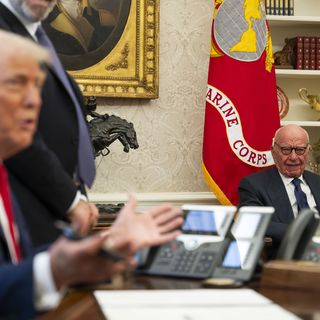
A federal judge on Saturday threw out President Trump's lawsuit against the Wall Street Journal and Rupert Murdoch over the paper's reporting on Trump's ties to Jeffrey Epstein, Why it matters: It's the second time this year courts have blocked Trump's efforts to sue the paper over stories about his relationship with the disgraced financier. As with the first one, courts found the president did not clear the high bar set by New York Times vs. Sullivan for allegations of defamation in critical reporting on public figures. Driving the news: Judge Darrin Gayles of the southern district of Florida issued the 20-page ruling Saturday afternoon, finding that Trump failed to prove the paper acted with "actual malice" by reporting on his links to Epstein. Gayles dismissed the amended complaint with prejudice, meaning it can't be refiled. Zoom out: Trump first filed suit against the paper and Murdoch in July 2025, seeking $20 billion in damages. At issue was a story describing a "bawdy" letter, bearing Trump's name and given to Epstein for his birthday, which the president insisted was fake. Gayles tossed the initial suit last April, but allowed Trump to file an amended complaint — which was the one he dismissed Saturday, saying it fell short of the burden to prove the paper acted maliciously. What they're saying: "Indeed, the allegations regarding malice are conclusory, vague, sometimes inconsistent with the Article, and often irrelevant to whether Defendants knew or should have known that the statements in the Article were purportedly false," Gayles wrote. For the record: " President Trump will continue to press forward in his powerhouse lawsuit against the Wall Street Journal and all of the other defendants. The President will continue to hold those who mislead the American People with Fake News and smears accountable for their actions," a spokesman for his legal team said in a statement. Editor's note: This story has been updated with additional details. Sara Fischer contributed.
Ben Berkowitz ·

The governments of Washington D.C. and Virginia asked a federal court to block construction of President Trump's planned " triumphal arch ," claiming it's unlawfully tall and would snarl traffic for years. Why it matters: It's a last-minute gambit to stop construction before the multi-year project begins, potentially as soon as this coming week. What they're saying: " This project is flagrantly unlawful," the two governments said in a Saturday filing in D.C. federal court, first reported by the Washington Post. "During the three-year period of construction, the Arch project will inevitably snarl traffic between the jurisdictions, produce pollution and stormwater runoff in the Potomac, interfere with emergency services, and pose numerous other challenges," they argue. They further claim that the defendants — the National Park Service and the Interior Department — have rushed the project without the proper consultations. The city and state are asking a judge to issue injunctions to stop any site preparation or construction on the project. Zoom out: The proposed 250-foot arch would be one of the largest such monuments in the world, sparking concerns that it could interfere with other national symbols, block views and even complicate landings for pilots at nearby airports. (The FAA found otherwise.) The Park Service's own August report indicated the construction of the arch would have adverse effects on nearby monuments and landmarks. The other side: The administration has argued it will be a major tourist attraction — but also vital to national security, serving as a base for snipers and drones. The White House was not immediately available to comment Saturday on the D.C. / Virginia petition. What's next: A federal judge held a hearing Friday on a separate challenge to the arch, and indicated she may block construction at least temporarily.
Ben Berkowitz ·

You won't need to stay up all night Tuesday to spot a big Democratic wave in the 2026 midterm elections . But it could take days — or even weeks — to know whether Republicans have survived a smaller one and held on to the House or Senate. Why it matters: A handful of early results in key states and congressional districts will tell us whether Democrats are headed for a landslide or disappointment. What we're watching: Florida, Florida, Florida. Most polls close at 7pm ET, and the state counts quickly — ready for release when the Panhandle finally calls it a night an hour later. At 8:01pm , refresh your browser and watch FL-14. The great mid-cycle redistricting wars transformed this Tampa-based district from Harris +8 to Trump +11. If Democratic Rep. Kathy Castor survives, Republicans can all but kiss their majority goodbye, according to party strategists. Next up is FL-25. The country's most expensive general election race is playing out in a district that went from Harris +4 to Trump +9. If Democratic Rep. Jared Moskowitz's race is close — or too close to call early in the night — House Republicans can keep hope alive. While you're at it, this is a good time to check on South Carolina's Senate race, where polls close at 7pm and the state counts relatively fast. If Sen. Darline Graham loses to Annie Andrews in the Trump +18 state, Senate Republicans can say goodbye to their majority. (And they'll be sweating if it's close.) "Underperformance is rarely isolated," said Jason Thielman, executive director of the National Republican Senatorial Committee in 2024. "If you see the GOP underperforming early in the East, it is likely going to continue as you move further West." At 9pm, check in on Virginia: The commonwealth's polls close at 7pm, but historically tight races often aren't called until the 9pm hour. If Democrats flip VA-01, a Trump +5 seat, they're in for a very good night. If they flip VA-05, a Trump +12 seat, they're in for a great night. Between the lines: VA-02 could tell us whether a strong Republican candidate can survive a Democratic wave, and whether Speaker Mike Johnson can keep his job. Trump carried the Hampton Roads district by just 0.2 percentage points in 2024, while Republican Rep. Jen Kiggans won by 3.8 points. The AP didn't call her race until 5:28pm ET the following Wednesday. GOP strategists believe Kiggans has run a nearly flawless campaign. If even she gets swept away in a 50-50 district, other Republicans in a low-single-digit Trump seat should brace for impact. If she holds on, that could bode well for Sen. Susan Collins in Maine and Rep. Ashley Hinson in the Iowa Senate race. The intrigue: Also keep an eye on Kentucky's 6th District. Polls close there at 6pm ET, but the state takes a more genteel approach to counting ballots. If Democrats take the open Lexington-based seat (Trump +15), Republicans will be downing their bourbon. Neat. Moving west: Polls close in Ohio at 7:30pm and Texas at 8pm ET, but Texas counts faster. If Texas Attorney General Ken Paxton holds on, Republicans still have a path to keeping their Senate majority. Iowa polls close at 9pm ET. If Hinson is looking good, the night might not be as bad as many Republicans feared. The bottom line: Don't stay up for the Senate results in either Maine or Alaska. Even a clear win (or defeat) for Collins may not be obvious until Wednesday. In 2020, when she won by nearly 9 percentage points, the AP didn't call the race until lunchtime Wednesday. In Alaska, with its ranked-choice voting, results could take weeks.
Hans Nichols ·
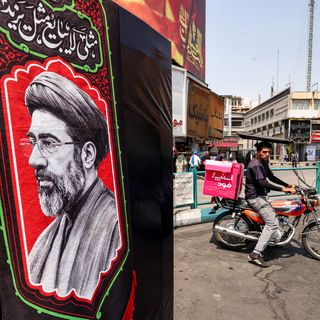
Iran's Supreme Leader Mojtaba Khamenei told the country's top three military commanders that a renewed attack by the U.S. and Israel ״must be met with an immediate and effective response, without geographical limitations״ in order to achieve "maximum deterrence," according to a statement from his office. Why it matters: This is the first publicly disclosed meeting between Khamenei and all the top commanders of Iran's armed forces since the war began. It comes as President Trump weighs major strikes on Iran after the midterm elections. Khamenei hasn't been seen or heard in public since he was wounded in an Israeli strike on the first day of the war. He has only issued written statements, which raised questions about his condition. The unusual apparent meeting took place a day after Qatari mediators held talks in Tehran for more than 12 hours in an effort to reach a deal to restart direct negotiations between the U.S. and Iran and avoid an outbreak of war after the midterms. The discussions continued in Doha, Qatar, on Saturday. What he's saying: "If the enemies once again launch military or terrorist attacks, it will be the Islamic Republic of Iran's Armed Forces and the Iranian nation that determine when and under what conditions those hostilities will end," Khamenei told the commanders, according to the statement. Zoom in: According to the statement, the meeting included armed forces chief of staff Gen. Ali Abdollahi, army commander Maj. Gen. Amir Hatami and Islamic Revolutionary Guard Corps commander Maj. Gen. Ahmad Vahidi. The commanders briefed Khamenei on the state of military readiness along the Gulf coastline and around the Strait of Hormuz, the Gulf of Oman, and Iran's northwestern and southeastern borders. They also reported "a several-fold increase" in production of various types of ammunition and reconnaissance, support, and combat weapons. Khamenei instructed the commanders that the "target bank" must be updated "so that all types of the American-Zionist enemy's material and non-material assets fall within the reach of the Armed Forces." Khamenei praised "the intelligent steadfastness" of Iran's proxies across the region and stressed "the unity of the different arenas" as a "decisive and strategic" element for Iran.
Barak Ravid ·

The world's biggest crypto heist is the latest feat by North Korean hackers who have spent years perfecting an arsenal of financial theft, social engineering and sophisticated cyberattacks. Why it matters : The suspected North Korean hackers behind the $6.3 billion Binance theft appear to have combined familiar hacking tactics with extraordinary speed and automation — raising fresh questions about how AI could supercharge their already sophisticated operations. Driving the news : Binance said late Thursday that its blockchain partners have frozen at least $3 billion of those $6.3 billion assets on-chain so far, and it believes the hackers gained initial access by compromising one engineer's laptop alongside other "points of breach." Several blockchain investigation firms have tied the hack to TraderTraitor, a group linked to the North Korean government's Lazarus Group collective. Binance co-CEO Richard Teng said in a video on social media Friday that the attackers also used a "self-destruct mechanism that destroyed tooling and traces" as they went, making it more difficult to investigate what happened. "This was a complex attack," he said. The big picture: North Korean government hackers have spent more than a decade carrying out financial heists and disruptive cyberattacks, and they have turned cryptocurrency theft into an industrial-scale operation. In 2016, hackers attempted to steal nearly $1 billion from Bangladesh's central bank, successfully making off with $81 million. In 2017, North Korea was blamed for the WannaCry ransomware outbreak , which disrupted hundreds of thousands of computers across more than 150 countries. In recent years, the country has intensified its focus on pillaging crypto exchanges in part because the digital assets can more easily be transferred and laundered across borders — although those attacks tend to leave more of a paper trail. The same North Korean hacking group, TraderTraitor, also set the last record for the world's largest crypto heist last year when they stole $1.5 billion from the ByBit crypto exchange. Between the lines: North Korean hackers are only getting better and faster at their attacks, experts tell Axios. "They're essentially crowding out other threat actors by stealing the bulk of the value that's taken in any given year," Eric Jardine, head of research at Chainalysis, told Axios. Zoom in : Chainalysis said in a research report Friday that hackers made off with the billions of funds in as little as 20 minutes. The hackers also laundered and destroyed evidence of their operations at an unprecedented speed, suggesting they used automation throughout the heist, researchers found. Researchers at TRM Labs found that the hackers started preparing for the attack just 36 hours before it began. "There were transactions happening with a frequency and a scale that just meant there could not have been someone involved in the approval of these," Jardine said. "It had to have been done by a computer." The intrigue: Social engineering and automation has been hallmarks of the latest North Korean cyberattacks, Vijay Balasubramaniyan, CEO and co-founder of Pindrop Security, told Axios. Advances in AI-powered video and audio tools have allowed North Koreans to vastly expand their widespread IT worker fraud , where American companies are tricked into hiring North Koreans for IT jobs. Balasubramaniyan said last year, North Korean job applicants made up 1 in every 343 applications. This year, across their customer base, these applicants make up 1 in 47. "It is absolutely underpinning everything," Balasubramaniyan said. "It's just not AI, it's the scale of AI — you have so many AI choices that the number of such tools is crazy, the cost is so cheap and it's becoming an ecosystem." What to watch: Law enforcement and blockchain investigators may still be able to recover the other half of the stolen Binance funds if they enter specific exchange infrastructure and operators can move quickly enough to freeze them, Jardine said. "It's still early days," he added. Go deeper: How North Korea's IT army is hacking the global job market
Sam Sabin ·
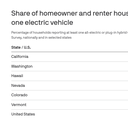
Data: U.S. Census Bureau, 2025 American Community Survey 1-year estimates; Table: Russell Contreras/Axios Homeowners were nearly twice as likely as renters to have an electric vehicle in 2025, new Census data show, revealing a striking divide in America's shift to electric cars. Why it matters : Homeownership is just one factor in EV adoption, but reliable access to charging is critical — giving homeowners with private driveways or garages an advantage over renters, particularly those in multifamily buildings. By the numbers: About 7.3 million U.S. households — 5.5% of the nation's 134 million — reported having at least one EV, according to the 2025 American Community Survey released Thursday. Homeowners reported EVs at a rate of 6.4%, compared with 3.6% of renters. California led the nation at 13.8% overall, more than twice the national rate. North Dakota (1.3%), Wyoming (1.6%) and Louisiana (1.6%) ranked among the lowest. State of play: For the first time, the Census Bureau asked households with vehicles kept at home whether they owned or leased an EV, offering a nationwide snapshot of who has gone electric. The figures cover fully electric vehicles and plug-in hybrids. Our thought bubble: Many factors, including local government policies, can influence EV adoption rates, but ultimately, it comes down to affordability and access to charging, says Axios Transportation Correspondent Joann Muller . Homeowners with higher incomes are more likely to afford EVs, sometimes as a second car. The intrigue: A 2026 study by researchers at the University of Vermont and University of California, Davis, found higher home-charger installation costs at rental properties in Burlington, Vermont. Renters were also less likely to adopt fully electric vehicles, even after researchers accounted for home values and vehicle preferences. Zoom in: Even California, the nation's EV leader, has a sharp homeowner-renter divide, new Census data show. About 17.7% of homeowners reported an EV, compared with 8.9% of renters. Santa Clara County, home to much of Silicon Valley, led the nation at 24.1% of households — roughly 163,000 households. Zoom out: Washington (8.9%), Hawaii (8.5%) and Nevada (8.2%) ranked among the leading states. Outside California, Boulder County, Colorado, and Loudoun County, Virginia, each recorded 13.9%. Yes, but: California renters reported EVs at a higher rate than homeowners nationwide. The Census figures don't track charging access or explain why households choose EVs. With only one year of data, they also can't tell us whether the homeowner-renter gap has grown.
Russell Contreras ·

The latest wave of hyperscaler earnings is spooking Wall Street. Bulls and bears alike have evidence to validate their wildest dreams — or their worst nightmares. Why it matters : The market's AI obsession has entered its Jekyll and Hyde era, with the latest earnings from tech giants offering contrary signals about the AI boom. Driving the news : The tech-heavy Nasdaq briefly sank into correction territory, falling 10% from its prior peak, losing $1.2 trillion in value for the month of October, after a slew of earnings reports pointed to AI's big risks. But it wasn't all horror: within the earnings statements, some investors found proof that the AI bet is going exactly as it should. Here are three examples of the AI trade's deepest contradictions — the good and the scary — from the earnings releases and calls of the Big Tech hyperscalers. Google: The scary: AI overviews are cannibalizing Google's core business: ad revenue from search. Yes, search queries are up, but results in AI mode have lower margins. The company has lost more than $500 billion in market value post-earnings, bringing the broader tech sector along with it. The good: Google Cloud is closing in on Microsoft's Azure cloud revenue, a stunning development given that Google was an also-ran in the cloud game only a few years ago. Much of Google's success is tied to demand for its TPU chips, which analysts expect to see massive growth in coming quarters. The takeaway: Google's predicament mirrors the problems of many tech giants, where AI represents a true threat to the golden goose but presents new opportunities if they can move fast enough. Microsoft and Amazon: The good: Both companies had explosive cloud growth, though the market was disappointed Amazon's wasn't higher. Microsoft touted its OpenAI investment and Amazon its Anthropic holdings. The iffy: Those private AI investments can help or hurt: Amazon's net income fell despite soaring operating profits, as it didn't repeat the pretax gain from its Anthropic investment that boosted earnings a year earlier. Microsoft's OpenAI investment boosted its net income slightly, which lifted its profit growth. The takeaway: Check under the hood. Is any given hyperscaler's earnings growth coming from private investments in AI labs, or is it due to their underlying business? Data: FactSet, company filings; Chart: Axios/Matt Phillips Free cash flow The good: Sure, some of the most asset-light tech companies have turned free cash flow negative to fund their AI ambitions, but they say that's because demand is outstripping supply! You want these businesses to keep investing in infrastructure to meet that demand and turn it into revenue. The bad: If there's a hit to that demand, and these companies poured trillions into creating more supply, that's, well, a recipe for a bit of a popped bubble situation. The takeaway: Watch the demand picture. Jeetu Patel, President and Chief Product Officer at Cisco, is bullish, but told Axios that a major cyber event that hits the core of AI demand could be a downside risk. The bottom line: Tech stocks are broadly under pressure following these results. DeepWater partner Gene Munster says the street is waking up to the risks of an agentic world: How does Google make money without ad search revenue? How does Amazon make money if shoppers are using bots? But those existential issues aren't stopping the AI capex spending spree, for now.
Madison Mills ·
A federal judge Friday blocked the Trump administration from threatening election workers with criminal prosecution for counting ballots cast by registered voters the administration claims are ineligible. Why it matters: The emergency order, issued four days before the midterms , prohibits federal pressure to sideline ballots based solely on allegations of ineligibility and forces the Justice Department to walk back threats it already sent to election officials. The big picture: The ruling adds to a series of courtroom losses for the administration, as federal officials intensify election-related investigations and challenges across the country. Judges are warning that federal threats and investigations are driving citizens out of elections and putting lawful votes at risk. Driving the news: U.S. District Judge Trina Thompson found that the Justice and Homeland Security departments likely violated the Voting Rights Act's prohibition on voter intimidation and exceeded their constitutional authority over elections. Her temporary restraining order prohibits demands that states remove registered voters, withhold their ballots or stop counting votes solely because the administration claims the voters are ineligible. It also bars threats of criminal prosecution against election workers who refuse those demands or process ballots in accordance with election laws. The judge ordered prosecutors to disclose pending search warrant applications, grand jury subpoenas and other demands related to its lists of allegedly ineligible voters. What she's saying: Thompson found the administration's actions forced election workers to choose between complying with "Defendants' unlawful demands" or risk criminal prosecution for performing their jobs. "In the lead-up to the election," she wrote, "high-ranking DOJ and DHS officials have engaged in a campaign to intimidate, threaten, and coerce state and local officials and employees who are engaged in administering the ongoing midterm 2026 election." Zoom out: The ruling comes amid a sweeping federal campaign to obtain voter records, investigate suspected noncitizen voting and threaten state officials over election administration. Since May 2025, the DOJ has filed 31 lawsuits seeking sensitive voter records. So far, 27 have been dismissed. In July, the DOJ warned election officials in all 50 states they could face criminal charges for knowingly allowing noncitizens to vote. On Thursday, it sent another round of letters nationwide, warning of criminal penalties for violating election-record preservation requirements. The other side: DOJ has defended its election-related actions as necessary to enforce federal prohibitions on noncitizen voting. The department did not immediately respond to Axios' request for comment, but a spokesperson previously told Axios the government would not wait for a "more convenient time" to enforce election laws. Reality check: Noncitizen voting in federal elections is already illegal. Research finds it is rare. Zoom in: In the final days of the election, the administration has stepped up its legal fights across the country. California: The DOJ sued to set aside ballots from more than 20,000 voters it suspects are noncitizens, threatened election workers and issued grand jury subpoenas. An appeals court rejected its emergency request Friday, warning of "potentially catastrophic effects on the entire system." Washington: Federal prosecutors demanded officials segregate ballots from more than 400 voters. Secretary of State Steve Hobbs said the federal list included U.S. citizens and was unreliable. Arizona: Prosecutors announced Friday evening an investigation into three Democratic-aligned registration groups after a right-wing outlet published an undercover video. The DOJ also requested the state's and Maricopa County's top election officials review registrations. Alaska: The DOJ sued to delay certification if Republican Sen. Dan Sullivan loses reelection and if votes for a similarly named candidate could have changed the outcome. Prosecutors confirmed a criminal investigation Friday into an alleged Democratic effort to recruit the other Sullivan. In a separate ruling Friday, the 9th U.S. Circuit Court of Appeals left in place restrictions on DHS election-related field operations involving known or suspected U.S. citizens in nine states through Election Day. The underlying order, by Judge Araceli Martínez-Olguín, found that federal threats had already caused citizens to "withdraw from participating in electoral activity." The appeals court also questioned the timing: "In an operation ostensibly focused on past voter fraud, the government could have aggressively pursued its campaign against non-citizen voting well before these elections commenced."
Andrew Pantazi ·

Qatari mediators held talks in Tehran for more than 12 hours on Friday in an effort to reach a deal to restart direct negotiations between the U.S. and Iran and avoid an outbreak of war after the midterms, according to diplomatic sources. The discussions will continue in Doha, Qatar, on Saturday. Why it matters: The U.S. is now just days away from a possible military operation that would inflict enormous damage on Iran and likely lead to retaliatory strikes against Israel and a host of Gulf countries. Driving the news: A diplomatic source said Qatari mediators were in regular contact with the White House during Friday's daylong session. "There was positive progress. Talks are still ongoing in an effort to unlock a deal between the U.S. and Iran," the source said. The Qataris are prodding the U.S. and Iran to agree on a set of reciprocal steps that would be implemented over a few days and get the parties back to direct talks on the Iranian nuclear program and other issues. A U.S. official said two competing demands have stymied the talks so far: the Trump administration's insistence that Iran make nuclear concessions as part of resuming talks, and Iran's stipulation that the U.S. first lift its naval blockade, release frozen funds and allow it to sell oil. The Qataris are trying to convince Iran to allow U.N. inspectors to visit its bombed nuclear sites as a confidence-building measure that the U.S. would respond to with some sanctions relief. The intrigue: Inside Trump's inner circle, there are different opinions on what he should do. Defense Secretary Pete Hegseth and Secretary of State Marco Rubio are highly skeptical that any nuclear agreement can be reached with the current Iranian regime. They think Trump's legacy should be to weaken the regime even more, including with further strikes, a U.S. official said. The person said that while Vice President Vance and Trump envoys Steve Witkoff and Jared Kushner want to resume negotiations, Trump is skeptical Iran will ever agree to a deal he finds acceptable. "There are talks. They want to talk. They keep talking. ... We have time, frankly. It's a war, but it is not a typical war," Trump told reporters on Friday. Treasury Secretary Scott Bessent, who is leading an economic pressure campaign dubbed "Operation Economic Outcast," is one of Trump's closest aides urging him to let the initiative play out rather than rush back into combat. Zoom out: Countries in the region like Egypt, Turkey, Iraq, Pakistan and Saudi Arabia have been urging Iran to agree to resume negotiations before the midterms, a regional source said. One U.S. official said Trump might be more inclined to order a major military operation if Republicans lose badly in the midterms. "If he feels embarrassed or disenfranchised he will do something bold. That's what everyone are telling the Iranians. Their best shot to get a deal is right now," the official said. A White House official said the election results won't be a factor in Trump's decision-making about Iran. The leaders of Saudi Arabia and Turkey urged Trump in recent days to allow more time for diplomacy. At the same time, Israeli Prime Minister Benjamin Netanyahu is lobbying Trump to launch a joint operation against Iran immediately after the election. The big picture: Renewed war could lead to massive destruction not only in Iran but in Gulf countries, exacerbating the global energy crisis. Iran has vowed to respond to any U.S. strikes on its energy infrastructure by attacking oil and gas facilities in Saudi Arabia, the UAE, Qatar, Kuwait and Bahrain. Any U.S. attack on Iran would be conducted jointly with Israel. Iran would likely retaliate with missile strikes, while Hezbollah could also wage attacks on Israel.
Barak Ravid ·
The Justice Department is investigating the Arizona voter registration efforts of three Democratic-aligned groups after an "undercover" video purported to show volunteers willing to register non-citizens. Why it matters: The Friday announcement comes four days before the Nov. 3 election, and nearly a month after Arizona's registration deadline passed, timing one Republican former elections official says could sow unnecessary doubt about the results. Driving the news: In a news release , the U.S. Attorney's Office for the District of Arizona announced it has "opened a case into recent reporting about three non-profit organizations registering non-citizens to vote in Arizona." The groups are nonprofits Worker Power and Stand Indivisible AZ, as well as When We Count, a voter-registration program of the Democratic National Committee. DNC spokesperson Angelo Fernández Hernández wrote to Axios, "We are not aware of any instances of our fellows … registering a noncitizen to vote." He called the allegations "fabricated" and "inspired by right-wing operatives." The other two groups did not immediately respond. State of play: The "recent reporting" appears to reference an Oct. 22 video by Muckraker , a right-wing media outlet with a marred past . The video shows a man posing as a felon or noncitizen and asking if he can register to vote. The U.S. attorney's office has "already referred the matter to the FBI," per the announcement. Between the lines: In letters to both Republican Maricopa County Recorder Justin Heap and Democratic Arizona Secretary of State Adrian Fontes, Courchaine wrote that it "appears these organizations … may have violated" a state law about knowingly registering ineligible persons. However, the video does not show them registering anyone, only discussing it. U.S. Attorney Timothy Courchaine asked both men for "a review of registrations submitted by these groups to ensure only United States Citizens were registered to vote." The U.S. Attorney's Office did not immediately respond to questions from Axios about what additional evidence, if any, it has against the groups. The big picture: The Arizona probe comes as the Justice Department has begun waging election legal challenges across the nation. The DOJ has sued 30 states and D.C. seeking detailed voter registration records and has lost in every case decided so far. Separately, a federal appeals court rejected Friday its bid to set aside mail ballots from 20,000 California voters, saying the department's claims it suspects them of being noncitizens was "not credible." And in Alaska, federal prosecutors confirmed Friday a criminal investigation involving a Senate candidate sharing the name of Republican incumbent Dan Sullivan. The DOJ is also seeking to segregate ballots there. The intrigue: The letters to the recorder and secretary of state are almost identical, except for one subtle difference. The letter to Heap , a Republican ally of President Trump, concludes with "I know you are dedicated to securing Arizona's elections." The one to Fontes , a Democrat critical of Trump, instead says, "I trust that you are dedicated." Reality check: Former Maricopa County Recorder Helen Purcell, a Republican, questions the timing of the announcement, warning it could mislead voters. Voter registration closed weeks ago, and elections officials have little time to review registrations. She also says that registrations would be checked for eligibility and the chance of an ineligible person receiving a ballot is low. What they're saying: "It just seems like we keep seeing these little steps to confuse people," Purcell says. Flashback: Arizona has been at the center of election-fraud conspiracy theories since President Trump's 2020 defeat, including a Republican-commissioned review of Maricopa County ballots by the firm Cyber Ninjas. The widely criticized review ultimately confirmed Joe Biden's victory. Heap won his office in 2024 backed by election-deniers, and just last week, he settled a lawsuit involving U.S. citizens whom his office had barred from voting, despite a county attorney's investigation confirming their citizenship. What we're watching: It's unclear whether Heap or Fontes will review the registrations as requested. Neither immediately responded to Axios' questions.
Zach Buchanan ·
A federal appeals court rejected the Justice Department's emergency bid to set aside mail ballots tied to more than 20,000 California voters the Trump administration suspects are noncitizens. Why it matters: The 2–1 ruling leaves California's election procedures intact just days before the midterms, with the judges citing doubts about the DOJ's voter list and the risk of disenfranchising eligible voters. The ruling is a major setback for a DOJ that has doubled down on unsubstantiated claims of widespread voter fraud in the Golden State. What they're saying: The majority cited the lower court's finding that the DOJ's process for identifying suspected noncitizens was "not credible," undermining its claims. "Granting [the United States]'s request would provoke catastrophic change, upending the administration of the election," it wrote, quoting the district court's finding. "There is a material risk that granting the United States its requested relief would result in disenfranchisement and could jeopardize [Los Angeles] County's entire election." The other side: Ninth U.S. Circuit Judge Patrick Bumatay dissented, arguing that counting votes from noncitizens dilutes the power of citizens. "The federal government proposes a modest remedy—stopping California from mixing the ballots of citizens and suspected noncitizens. This solution would not cancel any vote but would allow time to verify the eligibility of suspected noncitizens." The White House and the Justice Department did not immediately respond to Axios' request for comment. Catch up quick: The DOJ sued California in mid October for refusing to segregate the ballots it asserted were sent to noncitizens. A district court denied the request for an injunction, deciding that the federal law the DOJ was relying on to bring the suit did not supersede existing state law. The Trump administration appealed, leading to Friday's decision. The administration can now appeal again to the Supreme Court. Zoom out: Trump has continued to make false claims of widespread voter fraud throughout the year, which some election officials and voting rights groups argue could undermine trust in America's elections. Trump reacted to the district court's decision to reject the DOJ's arguments Thursday morning, claiming if elections in California "were honest," with an "honest vote count," he would have won the state "by a lot" when he ran for president. Trump provided no evidence for the claim. Editor's note: This is a breaking news story and will be updated.
Josephine Walker ·

A federal judge said Friday she plans to appoint a special master to investigate whether Justice and Interior Department officials misled the court about the Trump administration's plans to renovate a D.C. golf course, according to news reports . Why it matters: The investigation could lead to professional sanctions, contempt proceedings or criminal referrals against administration officials over allegations government lawyers misled the judge. Driving the news: U.S. District Judge Ana Reyes opened a hearing Friday by reading ethics rules requiring attorneys to be truthful with courts, then questioned Associate Attorney General Stanley Woodward Jr. about the administration's conflicting accounts, according to news reports. Trump announced Oct. 18 the golf course would close Nov. 15 for roughly 15 months of renovations. Woodward told the court the next day there was "no plan to close the course." On Oct. 28, the Justice Department acknowledged Trump had directed the closure. Catch up quick: A preservation group and two golfers are suing the administration over what they say is President Trump's illegal plan to convert the historic, public East Potomac Golf Links into a championship-level golf course. After government crews cut down more than 400 trees, Reyes barred further tree removal without court approval and required 10 business days' notice before closing the park or making irreversible changes. The administration has appealed. What they're saying: "The Department of Justice will not be deterred from executing on the President's agenda," a spokesperson said in an emailed statement. The White House and DOI didn't immediately respond to Axios' request for comment. What's next: Reyes said she intends to appoint a special master who could review documents, question witnesses under oath and hold hearings. The government would have five business days to object after a special master is selected, the Washington Post reported . This is a breaking news story and will be updated. Go deeper: Exclusive: Congress presses Trump on D.C. golf course plans
Josephine Walker ·
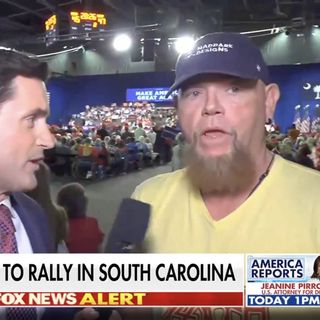
Have you seen the Oct. 29 clip ? The one where a guy compared a Trump rally to the 1978 Jonestown massacre while he was live on Fox News. "Wait, the Jonestown massacre?" Fox correspondent Lucas Tomlinson asked. "There's nothing like seeing a cult right up front, man," the interviewee responded. "Maybe this is not a Trump supporter," the reporter said before turning to another attendee. But not before the man got a plug in: "MadPark Designs," he said, pointing to his hat. Why it matters: MadPark Designs is a Charlotte screen printer launched in 2018 that prints for local businesses, musicians and organizations, and creates some of its own graphics. And that guy in the video — Tom Hoyle — is the co-owner and a local. The clip of him at the Rock Hill Trump rally on Oct. 29 has 5.3 million views on Mother Jones' Instagram and 206K views on TMZ's TikTok . It's also been posted on countless other pages, and was continuing to rack up views as of Friday afternoon. The latest: MadPark is now selling T-shirts for $28 with his now-viral quote and a skeleton graphic. "I think some people are going to dress up as Tom for Halloween," he told Axios. Courtesy of MadPark Designs Backstory: Hoyle said he planned to cause a commotion by yelling out as Trump was speaking, as protesters have done at other North Carolina campaign events. But before Trump got on stage, the Fox News reporter asked Hoyle for an interview. He later told Axios it was "divine intervention" and said he freestyled the cult comparison. Hoyle said the Secret Service came over and asked him to leave after the Fox interview. He wasn't even out of Rock Hill before his phone started lighting up with texts and calls from people viewing the clip, he added. What's next: He said he's tossing ideas around for another shirt, but doesn't want to get ahead of himself.
Alexandria Sands ·
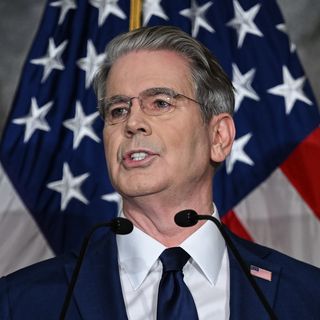
The U.S. naval blockade, sweeping economic sanctions and obstruction of overland export routes have crippled Iran's economy and intensified pressure on the regime, according to a new Treasury Department report obtained by Axios. Why it matters: Treasury Secretary Scott Bessent, who is leading an economic pressure campaign dubbed "Operation Economic Outcast," is one of Trump's closest aides urging him to let the initiative play out rather than rush back into combat. Though the report doesn't argue that the Iranian regime is close to collapsing, it does lay out the Treasury Department's view that its efforts have crippled Iran's economy and limited its ability to generate revenue. Driving the news: As he did before Operation Midnight Hammer in June 2025 and Operation Epic Fury in February, Trump is pursuing dual tracks — trying to reach a deal to restart peace talks while also preparing to possibly resume major combat operations after the midterms. The Treasury campaign, which launched in late August, is a third track. But U.S. officials say it needs more time to destabilize the regime and potentially convince the Iranian leadership to make concessions at the negotiations table. On Thursday, Trump met with his top national security and foreign policy aides to discuss the war. U.S. Central Command chief Adm. Brad Cooper, who commands forces in the Middle East, briefed Trump on the ongoing naval blockade . Bessent discussed the economic pressure campaign. "Bessent is telling the President the economic pressure campaign is working and that things are getting worse in Iran and that this could further destabilize the regime and push the Supreme Leader to agree to a deal," a U.S. official said. Zoom in: The Treasury report highlights several indicators of Iran's economic crisis: Currency collapse: The Iranian rial has lost roughly a quarter of its value since the operation began in August. In October, the unofficial exchange rate reached a record low of 2.687 million rials to the dollar. "The currency's decline reflects mounting pressure on Iran's economy and financial system, eroding purchasing power and making it increasingly costly for the regime to access goods and services abroad," the report argues. Soaring inflation: Iran's annual inflation rate reached 90% in September, compared to roughly 35% in early 2025. Oil exports: Iran has not loaded any oil onto tankers since Aug. 25 because of the blockade and sanctions, the report says. Tehran has also sold off its remaining oil stranded at sea, according to Kpler, which tracks maritime trade. Between the lines: The report details how the U.S. is seeking to cut Iran off not only from oil revenue but also from international trade routes, commercial aviation, banking networks and even digital currency alternatives. It states that Iran's effort to reroute trade overland around the U.S. naval blockade is facing major bottlenecks at borders with Pakistan, Turkey, Afghanistan, and Turkmenistan. Thousands of trucks are reportedly stranded at the Turkish border, facing delays of up to 20 days, while hundreds more are waiting at the Pakistani border, the report says. The UAE, Oman, Iraq, Georgia and Azerbaijan have barred Iranian airlines and canceled flights to Iran. Turkey has suspended all Mahan Air flights. Iranian banks have faced additional restrictions in Turkey, Lebanon and the UAE, while Treasury is targeting cryptocurrency exchanges used to evade sanctions.
Barak Ravid ·

A Texas grand jury indicted ICE officer Mario Alberto Morales with a charge of second-degree aggravated assault Friday after prosecutors said he deliberately drove his SUV into a fleeing immigrant in early October. Why it matters: This may be the first time an ICE agent has ever been indicted in Texas, making it a rare case of a federal immigration officer facing state charges. What they're saying: Harris County District Attorney Sean Teare announced the grand jury's charge of second-degree aggravated assault with a deadly weapon, namely a motor vehicle. Morales faces two to 20 years if convicted, Teare said. "Just because you have an ICE badge or any badge, if you are in Harris County and you are violating our community members' constitutional rights, there will be repercussions," he said. Catch up quick: Morales struck Miguel Parra Hernandez on Oct. 10 as Parra Hernandez fled on foot. Parra Hernandez, a Mexican national who has lived in Harris County for more than 30 years, had no criminal record and no pending immigration proceedings against him before the incident, Teare said. ICE has said Morales and other agents were looking for a different man identified as a deportation target, but that man's relatives say he died nearly a decade ago. Teare said Parra Hernandez is still rehabilitating from his injuries but is in ICE custody. The other side: An ICE spokesperson called the indictment "nothing more than a political stunt by Houston sanctuary politicians" in a statement to Axios. "Federal officers acting in the course of their duties can only be investigated by other Federal agencies. Local governments do not have the authority to run such an investigation." "Allegations that ICE struck Miguel Parra-Hernandez intentionally are RECKLESS and FALSE. The men and women of ICE are entrusted with upholding the rule of law and are held to the highest standards of professionalism, integrity, and ethical conduct." Zoom out: Teare said Morales was among the "surge hires" as part of efforts to speed up President Trump's mass deportation agenda. The DA declined to go into detail about the agent's prior work history, but said he could "unequivocally tell you that I've reviewed 1000s of job applications and resumes for law enforcement officers from around the state, and I'm not familiar with a single agency that would have hired this person based on his past." He also said he had "concerns about a number of the individuals that were hired during that surge" based on the investigation, and "concerns about the length of time that they're trained, and about what that training entails." What we're watching: Morales could attempt to move the case to federal court and argue federal law shields him from state prosecution. Teare said he was prepared to litigate such a move. Go deeper: Questions about Lorenzo Salgado Araujo's killing by ICE remain - Axios Houston
Josephine Walker ·