Source
Axios

Axios (website)
Axios is an American news website based in Arlington, Virginia. It was founded in 2016 and launched the following year by former Politico journalists Jim VandeHei, Mike Allen, and Roy Schwartz. The site's name is based on the Ancient Greek ἄξιος.
From Wikipedia ↗, text under CC BY-SA 4.0; logo from Wikimedia Commons
- Type
- News outlet
- Lean
- Left-leaning
- Left-Center−2.8 of ±10
- High0.9 of 10 (lower is better)
- High
- Website
- axios.com ↗
- Feed
- RSS ↗
- Articles stored
- 947
- Tracked since
- Aug 15, 2026
Down: MBFC factual reporting score, 0 most factual to 10 least.
Bias and credibility ratings by Media Bias/Fact Check.
Axios on MBFC ↗Publishing rhythm
How many articles Axios published over the last 14 days, by publication time, and at which hours of the day.
Top keywords
All keyword charts for Axios →The people, places, organizations and topics Axios covered most that day, by the share of its stories that mention them. Article counts are shown for context.
No keywords that day yet.
Latest articles
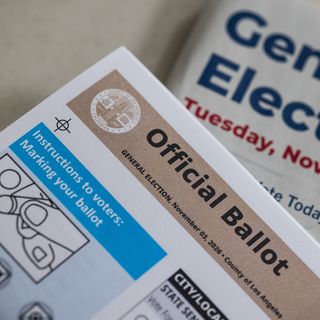
A federal appeals court rejected the Justice Department's emergency bid to set aside mail ballots tied to more than 20,000 California voters the Trump administration suspects are noncitizens. Why it matters: The 2–1 ruling leaves California's election procedures intact just days before the midterms, with the judges citing doubts about the DOJ's voter list and the risk of disenfranchising eligible voters. The ruling is a major setback for a DOJ that has doubled down on unsubstantiated claims of widespread voter fraud in the Golden State. What they're saying: The majority cited the lower court's finding that the DOJ's process for identifying suspected noncitizens was "not credible," undermining its claims. "Granting [the United States]'s request would provoke catastrophic change, upending the administration of the election," it wrote, quoting the district court's finding. "There is a material risk that granting the United States its requested relief would result in disenfranchisement and could jeopardize [Los Angeles] County's entire election." The other side: Ninth U.S. Circuit Judge Patrick Bumatay dissented, arguing that counting votes from noncitizens dilutes the power of citizens. "The federal government proposes a modest remedy—stopping California from mixing the ballots of citizens and suspected noncitizens. This solution would not cancel any vote but would allow time to verify the eligibility of suspected noncitizens." The White House and the Justice Department did not immediately respond to Axios' request for comment. Catch up quick: The DOJ sued California in mid October for refusing to segregate the ballots it asserted were sent to noncitizens. A district court denied the request for an injunction, deciding that the federal law the DOJ was relying on to bring the suit did not supersede existing state law. The Trump administration appealed, leading to Friday's decision. The administration can now appeal again to the Supreme Court. Zoom out: Trump has continued to make false claims of widespread voter fraud throughout the year, which some election officials and voting rights groups argue could undermine trust in America's elections. Trump reacted to the district court's decision to reject the DOJ's arguments Thursday morning, claiming if elections in California "were honest," with an "honest vote count," he would have won the state "by a lot" when he ran for president. Trump provided no evidence for the claim. Editor's note: This is a breaking news story and will be updated.
Josephine Walker ·

A federal judge said Friday she plans to appoint a special master to investigate whether Justice and Interior Department officials misled the court about the Trump administration's plans to renovate a D.C. golf course, according to news reports . Why it matters: The investigation could lead to professional sanctions, contempt proceedings or criminal referrals against administration officials over allegations government lawyers misled the judge. Driving the news: U.S. District Judge Ana Reyes opened a hearing Friday by reading ethics rules requiring attorneys to be truthful with courts, then questioned Associate Attorney General Stanley Woodward Jr. about the administration's conflicting accounts, according to news reports. Trump announced Oct. 18 the golf course would close Nov. 15 for roughly 15 months of renovations. Woodward told the court the next day there was "no plan to close the course." On Oct. 28, the Justice Department acknowledged Trump had directed the closure. Catch up quick: A preservation group and two golfers are suing the administration over what they say is President Trump's illegal plan to convert the historic, public East Potomac Golf Links into a championship-level golf course. After government crews cut down more than 400 trees, Reyes barred further tree removal without court approval and required 10 business days' notice before closing the park or making irreversible changes. The administration has appealed. What they're saying: "The Department of Justice will not be deterred from executing on the President's agenda," a spokesperson said in an emailed statement. The White House and DOI didn't immediately respond to Axios' request for comment. What's next: Reyes said she intends to appoint a special master who could review documents, question witnesses under oath and hold hearings. The government would have five business days to object after a special master is selected, the Washington Post reported . This is a breaking news story and will be updated. Go deeper: Exclusive: Congress presses Trump on D.C. golf course plans
Josephine Walker ·
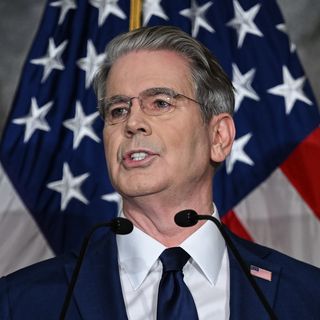
The U.S. naval blockade, sweeping economic sanctions and obstruction of overland export routes have crippled Iran's economy and intensified pressure on the regime, according to a new Treasury Department report obtained by Axios. Why it matters: Treasury Secretary Scott Bessent, who is leading an economic pressure campaign dubbed "Operation Economic Outcast," is one of Trump's closest aides urging him to let the initiative play out rather than rush back into combat. Though the report doesn't argue that the Iranian regime is close to collapsing, it does lay out the Treasury Department's view that its efforts have crippled Iran's economy and limited its ability to generate revenue. Driving the news: As he did before Operation Midnight Hammer in June 2025 and Operation Epic Fury in February, Trump is pursuing dual tracks — trying to reach a deal to restart peace talks while also preparing to possibly resume major combat operations after the midterms. The Treasury campaign, which launched in late August, is a third track. But U.S. officials say it needs more time to destabilize the regime and potentially convince the Iranian leadership to make concessions at the negotiations table. On Thursday, Trump met with his top national security and foreign policy aides to discuss the war. U.S. Central Command chief Adm. Brad Cooper, who commands forces in the Middle East, briefed Trump on the ongoing naval blockade . Bessent discussed the economic pressure campaign. "Bessent is telling the President the economic pressure campaign is working and that things are getting worse in Iran and that this could further destabilize the regime and push the Supreme Leader to agree to a deal," a U.S. official said. Zoom in: The Treasury report highlights several indicators of Iran's economic crisis: Currency collapse: The Iranian rial has lost roughly a quarter of its value since the operation began in August. In October, the unofficial exchange rate reached a record low of 2.687 million rials to the dollar. "The currency's decline reflects mounting pressure on Iran's economy and financial system, eroding purchasing power and making it increasingly costly for the regime to access goods and services abroad," the report argues. Soaring inflation: Iran's annual inflation rate reached 90% in September, compared to roughly 35% in early 2025. Oil exports: Iran has not loaded any oil onto tankers since Aug. 25 because of the blockade and sanctions, the report says. Tehran has also sold off its remaining oil stranded at sea, according to Kpler, which tracks maritime trade. Between the lines: The report details how the U.S. is seeking to cut Iran off not only from oil revenue but also from international trade routes, commercial aviation, banking networks and even digital currency alternatives. It states that Iran's effort to reroute trade overland around the U.S. naval blockade is facing major bottlenecks at borders with Pakistan, Turkey, Afghanistan, and Turkmenistan. Thousands of trucks are reportedly stranded at the Turkish border, facing delays of up to 20 days, while hundreds more are waiting at the Pakistani border, the report says. The UAE, Oman, Iraq, Georgia and Azerbaijan have barred Iranian airlines and canceled flights to Iran. Turkey has suspended all Mahan Air flights. Iranian banks have faced additional restrictions in Turkey, Lebanon and the UAE, while Treasury is targeting cryptocurrency exchanges used to evade sanctions.
Barak Ravid ·

A Texas grand jury indicted ICE officer Mario Alberto Morales with a charge of second-degree aggravated assault Friday after prosecutors said he deliberately drove his SUV into a fleeing immigrant in early October. Why it matters: This may be the first time an ICE agent has ever been indicted in Texas, making it a rare case of a federal immigration officer facing state charges. What they're saying: Harris County District Attorney Sean Teare announced the grand jury's charge of second-degree aggravated assault with a deadly weapon, namely a motor vehicle. Morales faces two to 20 years if convicted, Teare said. "Just because you have an ICE badge or any badge, if you are in Harris County and you are violating our community members' constitutional rights, there will be repercussions," he said. Catch up quick: Morales struck Miguel Parra Hernandez on Oct. 10 as Parra Hernandez fled on foot. Parra Hernandez, a Mexican national who has lived in Harris County for more than 30 years, had no criminal record and no pending immigration proceedings against him before the incident, Teare said. ICE has said Morales and other agents were looking for a different man identified as a deportation target, but that man's relatives say he died nearly a decade ago. Teare said Parra Hernandez is still rehabilitating from his injuries but is in ICE custody. The other side: An ICE spokesperson called the indictment "nothing more than a political stunt by Houston sanctuary politicians" in a statement to Axios. "Federal officers acting in the course of their duties can only be investigated by other Federal agencies. Local governments do not have the authority to run such an investigation." "Allegations that ICE struck Miguel Parra-Hernandez intentionally are RECKLESS and FALSE. The men and women of ICE are entrusted with upholding the rule of law and are held to the highest standards of professionalism, integrity, and ethical conduct." Zoom out: Teare said Morales was among the "surge hires" as part of efforts to speed up President Trump's mass deportation agenda. The DA declined to go into detail about the agent's prior work history, but said he could "unequivocally tell you that I've reviewed 1000s of job applications and resumes for law enforcement officers from around the state, and I'm not familiar with a single agency that would have hired this person based on his past." He also said he had "concerns about a number of the individuals that were hired during that surge" based on the investigation, and "concerns about the length of time that they're trained, and about what that training entails." What we're watching: Morales could attempt to move the case to federal court and argue federal law shields him from state prosecution. Teare said he was prepared to litigate such a move. Go deeper: Questions about Lorenzo Salgado Araujo's killing by ICE remain - Axios Houston
Josephine Walker ·
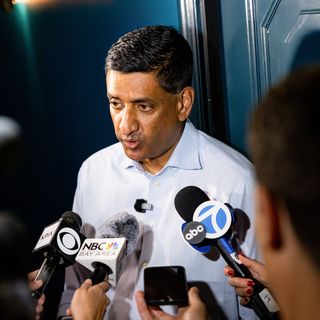
Rep. Ro Khanna (D-Calif.) is endorsing a trio of insurgent Democratic candidates who are challenging his fellow California House Democrats, Axios has learned. Why it matters: This is an aggressive move by a potential 2028 presidential contender who styles himself as one of the few Democrats willing to get into direct confrontations with the party establishment. He has backed members of the progressive "Bloc" who have refused to commit to voting for Minority Leader Hakeem Jeffries (D-N.Y.) as speaker. This is territory where even other high-profile House progressives — including Rep. Alexandria Ocasio-Cortez (D-N.Y.), another potential 2028er — have largely refused to tread. Driving the news: "Today I'm endorsing three new generation leaders Angela Gonzales-Torres, Eric Jones, and Mai Vang," Khanna said in a statement first shared with Axios. Gonzales-Torres, a former local elected official challenging Rep. Jimmy Gomez, "will join us in our fight against corruption, to stand up for survivors, and to lead with a moral vision," Khanna said. Khanna said he has known Jones — a venture capitalist running against Rep. Mike Thompson — "for many years," calling him "a change agent who understands the working class and building a better life for those left out." Vang, a Sacramento City Council member running against Rep. Doris Matsui, "will call out the genocide in Gaza, be for taxing billionaires, and stand for Medicare for All and the working class," Khanna said. Between the lines: Khanna said he has a "tremendous respect and admiration," for Thompson, 75, who has been in office since 1999. "But voters are crying out for change." Khanna said of Matsui, 82, who has held her seat since 2005: "I respect Doris Matsui's incredible service to our state and nation. This is the time to pass the baton." Jones is 35. Vang is 41. Khanna did not reference Gomez, who is under investigation by the House Ethics Committee over allegations of sexual misconduct. Gomez has admitted to "personal mistakes outside my marriage," but said his actions were "consensual" and denied breaking House rules. Asked about potential backlash from his colleagues for endorsing against fellow Democratic incumbents, Khanna said in a brief interview with Axios, "I think we need a new politics in this country, and we need a new party." "I've always been a reformer and independent-minded, that's what I believe," he added. The other side: A spokesperson for Gomez's campaign told Axios, "Instead of some Silicon Valley politician, the people of Los Angeles care a lot more about what Planned Parenthood thinks, what local teachers, nurses, and unions think – and they all support Jimmy Gomez." Said Thomas Dowling, a spokesperson for Thompson: "San Francisco venture capitalist Eric Jones and his Silicon Valley supporters are trying to buy our congressional seat, but it's not for sale. Mike's support comes from the people who actually live here." Matsui's campaign manager Bill Wong told Axios: "Voters in our district care about real results. Doris Matsui delivers. That's why the local teachers, firefighters, nurses, and women's and environmental organizations who see those results up close are standing with her." The intrigue: Khanna previously endorsed Thompson this cycle, which the latter congressman touted on social media as recently as May. The Thompson campaign even sent out a text to supporters, the content of which was shared with Axios, that reads: "This is Ro Khanna. I endorsed Mike Thompson for CA-4." Asked about the apparent discrepancy, Khanna told Axios: "I wanted to endorse [Gonzales]-Torres and then Mai Vang ... and I just thought, 'it's time for new blood,' and wanted to endorse Eric Jones." "I think very highly of Mike. I had, with the delegation, endorsed him earlier, so it's nothing against him. I just think it's a new generation and we're seeing bolder progressives win across the country," he added. Catch up quick: Matsui, Thompson and Gomez are each locked in Democrat vs. Democrat general elections with their rivals. All candidates ran in a single jungle primary in June, with the top two finishers — regardless of party — moving to the Nov. 3 general election. That means, unlike the rest of their colleagues who faced primary challenges, the trio will have to wait a little longer to find out if they will be returning to Capitol Hill next January. State of play: Jones and Gonzales-Torres both finished second in their respective primaries, while Vang narrowly came out ahead of Matsui. Polls have shown Jones leading Thompson and Gonzales-Torres essentially tied with Gomez. A senior House Democrat, speaking on the condition of anonymity to offer candid thoughts on Matsui's reelection, said party leaders "think she is gone" next Congress.
Andrew Solender ·

Pope Leo XIV voted in the 2026 Illinois midterm elections using a mail-in ballot, the Vatican confirmed Friday, becoming the first sitting pope known to vote in an American election. Why it matters: The pontiff, an American citizen, may be the first to vote in any secular democratic election. Joliet radio station WJOL first reported Oct. 23 that Leo had requested a mail-in ballot. What they're saying: The pope believes "in the right and the duty of citizens to participate in democratic processes," the Holy See Press Office said in a statement . The Vatican said Leo "has exercised his right to vote as a United States citizen, whenever he was eligible to do so" and that "in keeping with this long-standing practice of civic participation, he has submitted his mail-in ballot in Chicago." Pope Leo also voted whenever eligible during his years living in Peru, the Vatican's statement said. Zoom in: The pope's ballot includes Illinois Gov. JB Pritzker 's reelection bid, the race to succeed Sen. Dick Durbin and a House contest between Democratic Rep. Jonathan Jackson and Republican Christian Maxwell. Jackson, the son of the late Rev. Jesse Jackson, won his district handily in 2024. The pontiff's ballot will have to travel from Vatican city to Joliet, Illinois. Worth noting : Leo has voted in both Democratic and Republican primaries in the last two decades. The clerk's office in Will County, Illinois, where Leo is registered to vote, did not immediately respond to Axios' request for comment. Zoom out: The pope, who has been recovering from lung cancer surgery , met with Chicago-area advocates Wednesday who are supporting immigrants at an ICE facility in Broadview , Illinois. He's also clashed with President Trump and Vice President JD Vance, who is Catholic, over the war in Iran and the treatment of immigrants in America. Go deeper: Pope Leo XIV discharged from hospital after lung cancer surgery Axios Chicago's Carrie Shepherd contributed.
Josephine Walker ·

Democrats weighing 2028 presidential bids are piling onto the AI hate wave in their messaging, per an analysis shared exclusively with Axios. Why it matters: Democrats are turning AI anxiety into a political rallying cry ahead of 2028, while Republicans remain divided over how to respond. Driving the news: 2028 contenders including Gavin Newsom, Alexandria Ocasio-Cortez, Kamala Harris, Pete Buttigieg, Jon Ossoff and more have all increased their AI commentary in recent months, per new research from Upswing, conducted on behalf of Reset Tech, a nonprofit advocating for tech regulation. Among 21 Democrats named as potential 2028 contenders, tech mentions on X nearly quadrupled, and press release mentions nearly tripled since the start of the year. Tech is now the second-most common topic in releases, trailing only jobs and the economy, with the highest concentration of mentions around data centers and phone bans in schools. To gather the data, Upswing analyzed nearly 30,000 X posts from 38 accounts associated with 21 potential presidential contenders and 3,868 press releases from 16 officeholders between Jan. 1 and Oct. 15. Between the lines: Democrats are galvanizing around AI as a winning issue. Democrats are "taking a meaningful advantage" on AI after the topic was initially seen as a "jump ball" for both major political parties, Rishi Bharwani, U.S. director of Reset Tech, told Axios. AI regulation has gone from the back burner to a top issue over the last six months, he added. While the economy is still what matters most to voters, AI is increasingly part of the financial conversation as it dominates markets and the macroeconomic backdrop. Zoom in: It's not just messaging. While data center bans have been proposed in Democratic- and Republican-majority states, New York is so far the only one to pass a moratorium. House Democrats drafted a resolution opposing government bailouts for AI companies if the so-called "bubble" bursts. There are also a variety of legislative proposals, including model transparency measures and kill switches. Zoom out: This comes amid a groundswell of anti-AI sentiment among voters. Most Americans across the political spectrum take the risks of AI causing harm seriously, per a September YouGov poll of nearly 1,500 voters. Likely voters trust Democrats more than Republicans to respond to artificial intelligence, the poll said. The other side: Republicans are caught between their base being concerned by AI and President Trump's unfettered embrace of the industry. Republicans are distancing themselves from Trump to varying degrees. Gov. Ron DeSantis (R-Fla.), for example, has been among the loudest about state-level regulation on the technology. The bottom line: Democrats are coalescing around a more critical stance on AI, but whether it meaningfully impacts elections remains to be seen.
Madison Mills, Maria Curi ·

President Trump's energy policies and investment deals could become major targets of Democratic investigations if the party wins control of either chamber of Congress. Why it matters: Congressional probes could expose new details about the administration's dealings with major companies and foreign governments. What they're saying: House Democrats are likely to take a "shotgun" approach of "throwing everything out there and then seeing what sticks in the realm of popular opinion," TD Cowen analyst John Miller said via email. Democrats will be looking for agencies that exceeded their authority, deals involving administration officials' families, or both, Miller said. The big picture: Scratch the surface of Democrats' biggest potential oversight targets, and energy is everywhere. Russia. Trump's dealings with Moscow will again be front and center — and so will the energy dimension. Democrats in both chambers are likely to investigate Trump's diesel deal with Moscow, which they claim violates a 2022 law barring imports of Russian fuels. The inquiries could also extend to U.S. banks and ports, which lawmakers have already warned could face congressional investigation. Venezuela. "We expect Venezuela to be the subject of a number of inquiries," RBC Capital Markets analysts said in a note. Democrats have already raised questions about whether any oil companies knew about plans to depose Nicolás Maduro. Investigations could also examine the legality of the Pentagon's 35% stake in the corporate parent North American Blue Energy Partners and the terms of the deal, the note states. The Iran war. High gasoline and diesel prices give Democrats another reason to scrutinize the decision to attack Iran, especially if pain at the pump persists. Sens. Sheldon Whitehouse (D-R.I.) and Elizabeth Warren (D-Mass.) have already pressed major oil and gas companies about their profits during the conflict. AI and data centers. Wider and intense oversight of AI will touch on data centers' energy use and power costs — a topic various Democrats have already been probing. The House Energy and Commerce Committee, with its expansive jurisdiction, will be the "center of gravity" on data centers, according to Alyssa DaCunha, who co-chairs the congressional investigations practice at the law firm WilmerHale. Oversight could also extend to Trump administration efforts to spur data center development on federal lands amid the public backlash. Investments and family ties. "We ... expect congressional reviews of the government's equity stakes in several critical mineral firms," RBC analysts write. Democrats in both chambers are very interested in how the deals may benefit the families of President Trump and Commerce Secretary Howard Lutnick. Offshore wind deals. Several panels are poised to investigate Interior Department agreements to pay energy companies to relinquish offshore leases and redirect investment into fossil fuels. Rep. Jared Huffman (D-Calif.), who would head the Natural Resources Committee, has signaled plans . So has Rep. Chellie Pingree (D-Maine), the top Democrat on the Appropriations panel that oversees Interior. Rep. Jamie Raskin (D-Md.), who's likely to get the powerful Judiciary Committee gavel, has called it illegal, while Whitehouse, who's in line for Senate Judiciary if Dems retake, has also raised legal concerns. What they're saying: "The Democrats are already telegraphing that, once again, they have no agenda to improve the lives of Americans and will instead continue their decade-long obsession with investigating President Trump," White House spokesperson Taylor Rogers said in a statement. What we're watching: Political space for legislation beyond messaging bills will be limited but not completely absent.
Ben Geman ·

America's corporate titans greeted President Trump's 2024 victory with open checkbooks , 12-figure investment pledges and fawning tributes to his coming "Golden Age." Two years later, on the eve of a potential blue wave, Democrats are preparing to greet those same executives with a stack of subpoenas . Why it matters: The CEOs who staked their reputations and fortunes on MAGA's staying power could spend the final two years of Trump's presidency defending their dealings under oath. The big picture: A Democratic House would carry its campaign against billionaire power and corruption deep into corporate America, scrutinizing the relationships between Trump's White House and the executives who courted him . Corporate leaders now face a delicate balancing act: rebuilding ties with Democrats while avoiding retaliation from a president who still controls federal contracts, tariffs and regulators. Already, companies that scrambled to dismantle DEI programs or fund Trump's ballroom are hiring Democratic lobbyists , pushing back against the administration and rediscovering the virtues of bipartisanship. Zoom in: Elon Musk is taking a more confrontational approach. The billionaire, who has poured $445 million into Republican super PACs this election cycle alone, has threatened retaliation against Democrats preparing to investigate his sprawling business empire and tenure in the White House. DOGE: As head of Trump's short-lived cost-cutting initiative, Musk gutted USAID, drove mass federal layoffs and gave his team access to sensitive government systems. Investigators want to know whether his companies benefited from contracts or regulatory decisions while he wielded power inside the White House. Ukraine: A fierce critic of President Volodymyr Zelensky, Musk ordered Starlink restrictions that disrupted Ukraine's military satellite communications. Democrats are now demanding records of his communications with Trump and Vladimir Putin . Musk responds to reports that Democrats plan to investigate him. Screenshot via X. Zoom out: Across corporate America, the pursuit of Trump's favor has left a trail of donations, deals and concessions that Democrats are determined to follow. AI accelerationists: Trump has made the AI boom a centerpiece of his economic agenda, while giving industry leaders extraordinary influence over regulation and chip exports. Meta's Mark Zuckerberg, who set the template for corporate America's reconciliation with MAGA, is among the AI leaders likely to face scrutiny for pressing Trump to back off safety regulation. Media consolidation: Trump ally Larry Ellison helped finance his son David's rise to control of CBS and CNN, culminating in a $110 billion takeover of Warner Bros. Discovery. Along the way, Paramount paid $16 million to settle Trump's lawsuit against CBS while seeking federal approval for its Skydance merger. Elite law firms: Trump's pressure campaign against the legal establishment yielded $940 million in pledged free legal services and concessions on diversity policies from nine major firms. Democrats are probing the terms of those agreements and whether the firms compromised their independence to appease the White House. Ballroom donors: Trump's massive White House construction project has drawn at least $333 million in private commitments , including $25 million apiece from Apple and Nvidia. Many donors — including some who kept their contributions secret — have lucrative business before the administration. Equity deals: Trump has transformed the U.S. government into a major corporate investor, striking roughly $30 billion in equity and warrant arrangements spanning more than 40 companies. Democrats are questioning how the beneficiaries were selected and whether political connections influenced the deals. Fossil fuel giants: Trump asked oil executives to raise $1 billion for his 2024 campaign while promising sweeping regulatory relief. His administration has since delivered major tax breaks and environmental rollbacks, prompting a Democratic probe of the industry's political contributions and the government benefits that followed. The bottom line: Corporate America's old instinct for bipartisan relationships existed for a reason. The same executives who spent the past two years seeking Trump's favor could spend the next two explaining exactly how they obtained it.
Zachary Basu ·

El Salvador's strongman president, Nayib Bukele , is sending thousands of troops to Haiti to boost the island's push to wipe out its gang problem — and find four of his military personnel who were captured in a recent ambush. Bukele called President Trump on Tuesday to make sure he had no problem with this major military escalation, to which Haiti's government has agreed. "Do what you have to do," Trump told him, according to sources briefed on the call. Why it matters: If it works, Bukele's troop surge could stabilize Haiti, a country 700 miles from Florida that has been devastated by deadly gang violence and has lacked a president since the last one, Jovenel Moise, was assassinated five years ago. If it doesn't work, it could increase Haiti's death toll well beyond the 5,700-plus killed in gang violence this year, embarrass Bukele and mark yet another failed international effort to restore stability to the country. Haiti also may be a test case for Bukele and security contractor Erik Prince — a Trump and Bukele ally also operating in Haiti — to act as public-private proxies for U.S. muscle in the hemisphere. El Salvador announced Wednesday it was deploying as many as 2,000 troops to Haiti. That number could double or triple, sources say. "We didn't come to Haiti to make money, because no one is paying us to do it. We came to Haiti to fight against the wicked," Bukele, writing in Haitian Creole, wrote Thursday on X . Zoom in: Along with other countries, El Salvador has been part of a UN-established initiative called the Gang Suppression Force, or GSF, operating in Haiti's capital city of Port-au-Prince. On Oct. 18, four Salvadoran aviation technicians were ambushed and remain unaccounted for, according to the Miami Herald . Three days later, Bukele posted a warning on X : "I want you, the gang leaders, to understand one thing very clearly: Today's attack is nothing compared to what is coming if we do not get all four hostages back alive." "We have already finished with the gangs in El Salvador, and we can finish with you too," he wrote. Zoom out: First elected in 2019, Bukele rose to political fame and infamy for wiping out the MS-13 gang in El Salvador in a campaign of brute military force and mass incarceration. Bukele's efforts transformed El Salvador from a murder capital to what's widely viewed as one of the Western Hemisphere's safest countries. Bukele, who has a strong relationship with U.S. Secretary of State Marco Rubio, endeared himself to the new Trump administration by agreeing to accept third-country migrants who were mass-deported from the U.S. and then locked up in Bukele's notorious CECOT prison. Driving the news: Bukele's force was authorized to operate on the island in a bilateral agreement with Haiti approved on Wednesday as Salvadoran special forces and hardware began pouring in. Also Wednesday, Haiti's electoral council postponed presidential elections until next year because of the gang violence. Between the lines: Bukele's force appears to be operating parallel to the GSF — to which it currently belongs — and Prince's private security firm, Vectus Global, a successor to Blackwater. Florida Rep. Brian Mast (R), chair of the House Foreign Affairs Committee, said the UN-backed GSF is too bureaucratic and timid. The GSF's predecessor, led by Kenya, was too feckless and, at a cost of $1 billion, too expensive, he said. "We spent the equivalent of $1 million per Kenyan and the situation was worse at the end," Mast said. To show the butchery of Haitian gangs, Mast shared with Axios a video of a Haitian man who was hacked to death by machetes for helping the GSF. Rape, arson, extortion and kidnapping are rampant on the island. Beyond El Salvador finding its four missing personnel, Mast said, "I hope the mission is revenge, retribution and destruction of the gangs. Somebody needs to be there with motive and motivation." "Now the fight is personal to them and the fight will be taken to the gangs," he added. "The U.S. wants to be out of this and not spend millions on nothing." The intrigue: Bukele had proposed that the Trump administration let El Salvador pacify Haiti as a U.S. proxy force, but "Rubio wanted to stay away from that. He wants to keep Haiti off the radar," a source familiar with the discussions told Axios. Bukele had requested military equipment from the U.S., including drones and transport planes, but it was officially denied, according to another source who said that Colombia ultimately may act as an unofficial go-between to supply Bukele's force with no U.S. fingerprints on the mission. Inside the room : When Bukele called Trump on Tuesday, the president expressed sympathy and condolences over the plight of Bukele's missing military personnel, a White House official said. "Bukele doesn't want the U.S. to suddenly cut him off at the knees for going in," a source briefed on the call said. Trump's focus on Haiti is largely limited to making sure it takes back its citizens who were in the U.S. under temporary protected status, which Trump terminated last year. "Bukele told the president he was confidant he could do the job. But it might get messy," the source briefed on the call said. "The gangs f*cked with the wrong guy. He has something to prove."
Marc Caputo ·

A bipartisan deal to speed energy development is facing concerns it could favor natural gas over renewables because of President Trump's opposition to wind and solar. Why it matters: The worries from Rep. Sean Casten (D-Ill.) could complicate efforts to pass the bill before year's end, highlighting divisions even among Democrats who have long supported permitting reform. Driving the news: Casten, a former energy executive and leading Democratic voice on permitting reform, said he isn't yet backing the bill and is negotiating changes with Senate Democrats to prevent it from disproportionately benefiting natural gas. "My test for the bill is: I talk to energy developers, and ask, 'What would you build in response to this bill?' And the answer I get overwhelmingly is a lot of gas," Casten told Axios on stage at a University of Chicago event Wednesday. "I think you have to look at the bill in the context of everything else that the Trump administration has done." The big picture: The AI boom is fueling demand for electricity, prompting a rush to build natural gas power plants alongside renewable energy projects. The permitting deal could help determine which technologies benefit most from that expansion. Catch up quick: The bill, sponsored by two Republicans and two Democrats who lead the Senate's energy and environment committees, would speed construction of power lines and other energy infrastructure. An initial procedural vote is scheduled for Nov. 9, shortly after the midterm elections, setting up a potential push to pass the legislation before the new Congress takes office. Threat level: The bill aims to prevent political favoritism in energy permitting, but Casten worries one provision could have the opposite effect. It would allow developers to challenge discriminatory permitting decisions in part by comparing them with decisions made over the previous five years. Casten argues that as Trump's second term becomes part of that historical benchmark, the administration's treatment of renewable energy could effectively become the new normal. What we're hearing: The five-year provision is emerging as a concern in negotiations over the bill. "This is definitely one of the key issues that folks are thinking about right now," said an industry official tracking the negotiations closely, who spoke on the condition of anonymity to discuss congressional feedback. Clarifying or strengthening the language would "go a long way to reassuring folks who are on the fence," the official added. Zoom out: Divisions among Democrats are emerging about the overall bill. Former Energy Secretary Jennifer Granholm and climate activist Tom Steyer are urging its passage, while four Senate Democrats are demanding the restoration of canceled clean-energy grants and Rep. Rashida Tlaib (D-Mich.) is calling for its defeat. Yes, but: Casten also praised the bill's overall structure and said relatively small changes could win his support. He's negotiating those changes with Sens. Sheldon Whitehouse (D-R.I.) and Martin Heinrich (D-N.M.). "I think the structure of the bill is good," he said. "I think there are modest changes we could make to it to make sure it works and doesn't sort of create like a gold rush for gas." He favors passing the bill before year's end, unlike some Democrats who have suggested waiting to see whether the midterm elections give their party more power next year. What they're saying: The White House said it supports the bipartisan deal and is pushing for a vote. "The text of the legislation has been published, and all that is left to do is vote. We are in direct conversations with the lead negotiators in the Senate," a White House official said. A Heinrich spokesperson said the bill "will expedite the approval of clean energy projects and put more clean, cheaper electricity on the grid." The bottom line: The midterms could upend these delicate negotiations just days before the Senate's Nov. 9 procedural vote. Editor's note: Amy is a journalism fellow at the University of Chicago's Institute for Climate and Sustainable Growth and moderated Wednesday's event featuring Casten.
Amy Harder ·

The people at the frontlines of the ongoing barrage of AI-enabled cyberattacks are being pummeled with attacks, vulnerabilities and false alarms. Why it matters: Humans are still at the frontlines of a fight enabled largely by AI — and they're struggling to wade through mountains of threat data to determine who's been hit and which attacks pose a real danger to companies. What they're saying: "The last month has been the longest year of my life," Justin Timothy, threat intelligence consultant at GuidePoint Security, told Axios. Even before "Black October," Timothy was already swamped and dealing with hacker gangs that returned from a seasonal summer lull. These groups specialize in ransomware, essentially attacking the networks of an institution and holding it hostage. While AI is playing a role in many new cyberattacks, the ransomware scourge has already been shutting down pipeline systems, hospitals, education software and other essential services for years. It's only expected to get worse this year as powerful new AI systems are amplifying the capabilities of attackers faster than defenders can insulate vast corners of the unprotected internet. The big picture: The people companies call when they're hacked are being swamped, piling onto the persistent burnout that has plagued the industry. Troy Bettencourt, who leads Palo Alto Networks' global digital forensics and incident response practice, told Axios that demand for his team's services has climbed by double digits over the last six weeks. Unlike past surges tied to historically harmful attacks like SolarWinds , this year's workload has been relentless. "It's just a continuous grind that increases," Bettencourt said. The same heavy workload is happening across the industry, and even Palo Alto Networks' incident response subcontractors are at max capacity, he said. Investigations that could once be handled by a single consultant now require teams of five to 20 people, he said. The company is also pulling employees off other projects and shifting staff into incident response as it braces for more attacks exploiting the PHP vulnerabilities disclosed last week. Zoom in: Samantha Lewis, head of threat intelligence at Armadin, said her team has been inundated with requests from customers scrambling to determine whether their systems are exposed to AI-discovered flaws in foundational internet code. "This week has been pure chaos," she said. "The burden of that has been tremendous." Her team spent days sorting through hundreds of purported exploits, many of which didn't work , to determine which posed real threats to customers. Between the lines: AI's ability to uncover more software flaws threatens to bury defenders in even more work. The mounting workload is pushing security firms to use AI and automation to identify weaknesses and accelerate investigations. "The number of people you would need to actually defend against this starts to become entirely untenable," Lewis said. Yet the shift comes with another headache: Palo Alto's Bettencourt said he's juggling workers who are both exhausted by the caseload and worried that the AI tools being developed to ease their workloads could replace them. "They're burning out, and they're hearing everything in the media that AI is going to take everyone's job," Bettencourt said. "It's a tough balance." The intrigue: Even companies that largely escaped the latest security scares haven't been spared. Jack Nelson, Ivanti's chief information security officer and deputy general counsel, said he got "less sleep than normal this past week," despite the company's limited exposure to the PHP vulnerabilities. "It's been busy, there's no doubt about it," Nelson said. What to watch: Cyber defenders can't keep working at this pace indefinitely, but many are hopeful AI will offer them more ammunition in a battle some expect to go on for 12 to 18 months.
Sam Sabin ·

Alaska Gov. Mike Dunleavy (R) suggested Thursday the state could withhold certification of the U.S. Senate election results if Democrat Mary Peltola wins. Why it matters: Withholding certification could complicate Peltola's path to the Senate, as Republicans investigate allegations that Democrats recruited a candidate with the same name as GOP incumbent Dan Sullivan . Driving the news: Asked during an interview with NewsNation whether he would certify the election if Peltola wins while the matter remains under investigation, Dunleavy stopped short of committing to do so. "We're going to investigate it. We're going to follow the law," Dunleavy said, adding that any findings of illegal conduct "may in fact impact whether somebody is seated in the U.S. Senate." He said the matter would involve discussions with Senate leadership and that officials would need more information before determining "whether we send something down or not." Pressed on why he had not given an unequivocal yes, Dunleavy said: "We're going to ensure that we aren't going to send a scam to Washington." For the record: Peltola has denied any involvement in the alleged scheme. What they're saying: "Dunleavy's threat to overrule the will of Alaskan voters exemplifies what Alaskans hate about partisan politics and shows why he's the least popular governor in the country," a spokesperson for the "Alaskans for Mary" campaign said in an emailed statement Thursday night. "Mary won't be intimidated by Dunleavy, Sullivan, or any of their DC allies who are trying to steal this election from Alaskans before votes are counted — and she's going to win this race by focusing on solutions to Sullivan's price hiking policies and putting Alaska first." The big picture: House Oversight Committee Chair James Comer (R-Ky.) is investigating allegations that Democratic operatives recruited another candidate named Dan Sullivan to draw votes away from the Republican incumbent. President Trump accused Democrats and Peltola's campaign of fraud and perjury Wednesday after the New York Times reported that her aides helped recruit another Dan Sullivan. Meanwhile, Dunleavy has separately ordered Alaska's Department of Public Safety to investigate whether the alleged recruitment effort violated state law. The Justice Department has also filed a lawsuit seeking to delay certification of the election results if the incumbent Sullivan loses. What's next: Dunleavy's term ends Dec. 7, less than two weeks after Alaska's target date for certifying election results. Democrat Jonathan Kreiss-Tomkins is leading in recent polls to succeed him, raising the possibility that any certification dispute could extend into a new administration. Editor's note: This story has been updated with comment from the Alaskans for Mary campaign.
Rebecca Falconer ·

Crypto exchange Binance is investigating what could be the biggest crypto hack in history as users saw upwards of $5.7 billion in funds drained from wallets Thursday afternoon. Why it matters : The suspected hack comes after a wave of high-profile cyberattacks and data breaches during so-called "Black October," when a series of hacks and AI-discovered bugs triggered fears of a global crisis. Driving the news: Binance co-founder Changpeng "CZ" Zhao, who is no longer an executive at the company, said on X that the crypto exchange appears to have been hacked, although a company spokesperson says it's still investigating the matter. Analysts and traders who follow the crypto markets closely estimate that $1.7 billion to $5.7 billion was taken during the suspected cyberattack. "This is unprecedented," said Kevin March, a co-founder of JPEG Trading, a cryptocurrency trading firm that closely tracked the hack to monitor market conditions. Zoom in : Binance limited withdrawals and platforms including Tether and Circle froze more than $1 billion in cryptocurrencies, per Zhao. Such a step that would limit the scope of customer losses. Zhao and a Binance spokesperson said user funds are safe. The Binance spokesperson said the exchange's security teams are "reviewing all relevant information with urgency." The big picture: If estimates hold up, the suspected Binance hack would be the biggest crypto attack in history. In 2025, North Korea-linked hackers stole about $1.5 billion worth of crypto from the Bybit exchange. The country has turned hacking and scams into an industrial-scale scourge, focusing on crypto heists and a widespread practice of tricking Western companies into hiring North Korean workers . Between the lines : Crypto is a relatively common hacking target, but massive attacks can leave smaller exchanges vulnerable to collapse due to the potential for panicked withdrawals. Binance's size makes it more insulated, March said. "If this happened to any other business in crypto other than Binance, it would've been catastrophic." The exchange is capable of covering potential losses through its insurance and balance sheet, he said, although broad reverberations in crypto markets and prices remain possible. The intrigue: Reports of a breach came just hours after Polymarket confirmed it was facing a cyberattack, prompting the decentralized predictions market operator to pause trading for an hour after an attacker made off with at least $2.7 million in user funds. Researchers at Hudson Rock tied the Polymarket incident to a breach involving third-party website monitoring tool DebugBear , which said earlier Thursday it was responding to its own security incident. What to watch: Binance has yet to confirm who may be behind the attack and the total value of the currencies suspected hackers made off with.
Sam Sabin ·

Democrats' main Senate super PAC is privately telling top donors that Texas offers their best shot at flipping a deep-red Senate seat, followed by Ohio, where the race remains close. Senate Majority PAC also sees victories in Iowa and Alaska as within reach, though the outcomes could take longer to become clear. Why it matters: Democrats are increasingly confident about Election Day on Tuesday — and sharing their qualified optimism with their biggest donors. To retake the Senate, Democrats need to win two of those four states — all of which Trump won by double digits in 2024 — flip North Carolina and Maine, and avoid an upset in Michigan. JB Poersch, president of Senate Majority PAC, projected confidence that Democrats will wrest control of the Senate from Republicans during a private donor briefing this week as he walked through the races state by state. He also reminded donors that Kansas, where even Republicans are deeply worried, is a state Trump won by roughly 16 points in 2024. But it's in play . What they're saying: "This matches what we've been saying publicly and privately for weeks. There are signs of optimism in Texas, but it remains a toss-up, as do Iowa, Ohio and Alaska," said Lauren French, a spokesperson for SMP. "There is positive movement for Democrats, but it is critical to remember that every seat on the battleground map voted for Donald Trump by double digits," she said. "These are deep red states and we're focused on bringing them over the finish line so the Senate can work to provide real relief to families who are being crushed by the cost-of-living crisis." The big picture: Texas hasn't elected a Democratic senator since Lloyd Bentsen in 1988. Democrats thought they'd end the drought in 2018 and let themselves fall for then-Rep. Beto O'Rourke, who lost to Sen. Ted Cruz by 2.6 percentage points. Four years later, O'Rourke tried again to prove a Democrat could win statewide in Texas. He lost the governor's race by nearly 11 percentage points. This time around, Democrats have state Rep. James Talarico, who's narrowly led recent polls against Republican nominee Ken Paxton. Zoom in: During this unseasonably sunny week in Washington, private polls and scraps of data are flying from phone to phone at outdoor cafes as both parties search for a story to tell themselves, their candidates and their donors. At every table, there are essentially two camps: The pessimists find reasons to dismiss every glimmer of hope. Republicans are worried about a "red scream." The optimists blow past inconvenient facts that might kill their victory vibes. Some Democrats are "nauseously optimistic." In reality, optimists and pessimists — in both parties — are flying without instruments. Internal polls contradict each other by a point or three, door-knocking data is noisy, and early-vote numbers can be spun to tell almost any story. The bottom line: On some level, big-dollar donors know they lack the omniscience to read the political landscape with the same clarity they once brought to an IPO's S-1 filing. But they also believe they deserve better data and analysis than what's publicly available. At the very least, they want private briefings to give them a clearer picture than is epistemologically possible. Hence the flurry of briefings. The challenge for the super PACs is to return all the calls — and give donors hope without making promises they can't keep.
Hans Nichols ·

U.S. Central Command chief Adm. Brad Cooper, the commander of forces in the Middle East, briefed President Trump Thursday on the state of the Iran war, with a focus on the ongoing naval blockade , according to two U.S. officials. Why it matters: As he did before Operation Midnight Hammer in June 2025 and Operation Epic Fury in February, Trump is pursuing dual tracks — trying to reach a deal to restart peace talks while also preparing for a possible resumption of major combat operations after the midterms. Behind the scenes: Trump wanted to hear directly from the CENTCOM head on whether the naval blockade is working, the U.S. officials said. Cooper also briefed Trump on the military operation for guiding oil tankers out of the Strait of Hormuz to global energy markets. And he updated Trump on the economic pressure campaign the military is conducting in concert with the Treasury Department. Defense Secretary Pete Hegseth, Treasury Secretary Scott Bessent, Chairman of the Joint Chiefs of Staff Gen. Dan Caine, White House envoy Steve Witkoff and other senior officials also attended the meeting, the officials said. The White House and CENTCOM declined to comment. The Wall Street Journal first reported the meeting. Driving the news: A group of regional mediators led by Qatar is trying to get the U.S. and Iran to head off a resumption of war after the midterms in favor of negotiations. "The mediation is at a very sensitive stage," a regional source said. Qatari mediators recently delivered a letter from Vice President Vance to Iran's Secretary of the Supreme National Security Council, Gen. Mohsen Rezaei. Vance proposed restarting negotiations but stressed that any talks would have to address Iran's nuclear program. Trump and Vance met Wednesday to discuss a possible gesture of goodwill toward Iran, such as sending humanitarian goods like food and medicine, according to a source with knowledge. Later in the day, Trump publicly backed the idea. What they're saying: U.S. Ambassador to Turkey Tom Barrack told CNN on Thursday that the U.S. and Iran are "very close" to a deal to deescalate tensions. "I think we're very close to finally getting to a place where we can say, 'Let's just have a timeout,'" he said. "We're not going to have an overall solution immediately, but we can allow the region to find its own pace." The other side: Iranian officials on Thursday continued to demand the U.S. take a series of steps — such as lifting the blockade, releasing Iranian frozen funds and allowing Iran to sell oil — before resuming negotiations on their nuclear program.
Barak Ravid ·

The Pentagon's top military planner admitted to leaking classified information about Ukraine and Iran to two reporters from separate outlets over a one-year period, according to an internal report of the investigation shared with Axios. Why it matters: Army Lt. Gen. Brett Sylvia was fired this week by Defense Secretary Pete Hegseth for the alleged misconduct, which the career soldier acknowledged on video after he failed four polygraph tests, a U.S. official said. "He had trouble passing multiple polygraph interviews," the report said. The report accused the general of making "unauthorized disclosures to the media," and said he "was cooperative with answering questions about interactions with the media to resolve this, and provided his personal phone for a forensics examination." Zoom in: The report and U.S. officials said that Sylvia's leaking began as early as June 2025 — before mainstream media outlets were removed from the Pentagon — and continued afterward via secure Signal app and once at a Silver Diner in Arlington, Va. "The meeting at the diner occurred because [redacted's] access to the Pentagon was revoked between meetings," the report says. "During the meeting at the diner, [Sylvia] relied on notes he took while reviewing a classified secret report to orally give redacted on U.S. assistance to Ukraine, the report says. The report says the reporter in question was writing a book and met twice with Sylvia. It also emphasized that the general "did not coordinate these meetings with [the Pentagon's Public Affairs Office], or seek to have the information reviewed before providing it to the reporter." The intrigue: U.S. officials suspect that Sylvia intentionally deleted any trace of contact on Signal between him and one of the reporters, but pretended it was an accident. "Sometime between June or July, Sylvia received Signal messages from [redacted]. Sylvia is unable to recall exactly what was in that message," the report said. "But he believes it had something to do with Iran." "He stated that he did not respond to the message and instead deleted it. While deleting it, he believes he deleted the entire message thread with [redacted]," the report said. "This erased Signal messages and Signal phone calls that would have been recorded in Signal on his personal phone." For another story, the report said, Sylvia "admitted to being one of the 20 officials" cited in a story criticizing Pentagon leadership. Another U.S. official told Axios that Acting Army Secretary Adam Telle and his office lobbied the Joint Staff to put out a statement supporting Sylvia "to minimize the damage about any future claims of him leaking classified information." After someone within the Defense Department revealed to the Joint Staff why Sylvia was fired, the Joint Staff retracted its statement. Sylvia's dismissal marks the latest crackdown on leakers and the press from Hegseth's Pentagon. In July, the Defense Department announced a joint task force with the Justice Department that aimed to identify Pentagon leakers. It also called on the Pentagon's Office of General Counsel to prioritize prosecutions of those who make unauthorized disclosures to the media. Last year, in response to restrictive rules imposed by the Pentagon, several defense reporters and media outlets turned in their media passes. What they're saying: Sylvia did not immediately respond to a phone call, voicemail and text message left at the phone number listed for him in public records.
Marc Caputo, Thomas Novelly ·
The 2026 midterms already face a messy pileup of lawsuits and ballot battles, raising fears about election confidence before voters even finish casting ballots . Why it matters: Election challenges aren't unusual, but as the Trump administration continues to make false claims about widespread voter fraud, officials are juggling fights over voter lists, mail-ballot rules and election certification challenges. What they're saying: "The types of challenges that we are seeing pre-election, this close to election day, are very unusual, and mostly because they are coming from the federal government," Jonathan Diaz of the Campaign Legal Center told Axios. "These lawsuits are frivolous," Diaz said, adding they could "create doubt in the minds of the public about the legitimacy of the election process." "It shouldn't be allowed to happen, and it was done in conjunction with Schumer and everybody else. It's called VOTER FRAUD. It should not have been allowed to happen." The other side: The White House referred Axios to comments President Trump made to the media. The Department of Justice did not respond to Axios' request for comment. Here's some of the ways chaos and uncertainty have shaped the 2026 midterms: California In the Golden State, the Trump administration asked state election officials to set aside ballots from roughly 20,000 registered voters whom the DOJ suspects are noncitizens. A federal judge rejected that push Wednesday night, warning that the administration lacked sufficient evidence to justify potentially disenfranchising eligible voters. The judge noted that the DOJ had made similar claims in neighboring Nevada, where election officials determined that 185 voters the DOJ had flagged as noncitizens were actually U.S. citizens. Diaz told Axios that, from his perspective as a voting-rights advocate, the California battle is "not a real lawsuit. It's a political press release that they just happened to submit to the court." The other side: The White House directed questions about the ruling to remarks Trump made Thursday, in which he said "California is very corrupt," and the state's elections are "extremely corrupt." He did not provide evidence for his claims. Washington On Monday, the two U.S. attorneys' offices in Washington state asked the state to set aside ballots from more than 400 people they allege were illegally registered to vote. The letter mirrors similar demands sent to California before the Trump administration sued. Washington Secretary of State Steve Hobbs fired back Wednesday, tearing into the U.S. attorneys for making the request so close to Election Day and calling the timing "profoundly disappointing." Hobbs said a preliminary investigation confirmed that the federal list includes U.S. citizens and is unreliable. He asked prosecutors to provide individualized proof of ineligibility. North Carolina Nearly 4,000 mail-in ballots, or about 6%, processed in North Carolina through Oct. 24 have been flagged for problems that, if not fixed, could invalidate voters' choices. Time is running out for those voters to address the issues, and hundreds have yet to respond to notifications about their ballots. The rejections appear to stem in part from new guidance issued by the GOP-controlled state Board of Elections requiring the inner ballot envelope to be sealed, even if the outer envelope is already sealed. Alaska In Alaska's Senate race , two men named Dan Sullivan are on the ballot, Sen. Dan S. Sullivan and retired teacher Dan J. Sullivan. New reporting from The New York Times on Wednesday alleged that aides to Democratic candidate Mary Peltola helped recruit the other Dan Sullivan in an apparent attempt to confuse voters and siphon votes away from the incumbent senator. Peltola's campaign denies any involvement. Alaska Gov. Mike Dunleavy ordered an investigation Wednesday for investigators to determine whether the alleged scheme violated Alaska law and whether criminal charges or civil action are warranted. The DOJ has separately sued to delay certification of the Senate election if the incumbent loses and votes for the other Sullivan could have changed the outcome. Go deeper: Trump is pulling every lever to reshape U.S. elections
Josephine Walker ·

Reddit on Thursday said it's moving to become a primarily logged-in experience, marking one of the most significant shifts in its 21-year history. Why it matters: Reddit has long championed the open web. Now, it's pushing to build a more direct relationship with users while also protecting its data from increased scraping in the AI era. Driving the news: In an interview Thursday, Reddit co-founder and CEO Steve Huffman said the company is making the change to improve its user experience, bolster its ads business and prevent bots from scraping its proprietary data. Chief operating officer Jen Wong told Axios the move doesn't represent a change in strategy as the company has always focused on building a direct destination. "It's just that in the last 10 years, because our [data] corpus was open, we got a lot of search traffic, so that became part of the equation" but didn't change the company's mission. Zoom in: Huffman expressed confidence that the change would ultimately improve engagement and monetization, even as changes to traditional search continue to impact user growth in the U.S. "When users log in, they spend more time on Reddit, and we can we better know their interests, so we can target ads better," he said. He also noted that the short-term risk is limited because "the vast majority of engagement and over 80% of our monetization comes from our app and logged-in users." In a shareholder letter, Reddit acknowledged that search referral traffic was "down meaningfully in Q3" and said daily users could decline by a "low-double-digit percentage" in Q4 if search referral trends persist. How it works: Reddit will begin testing the fully logged-in experience this quarter outside the U.S. and collect data on the best approach before it rolls out broader changes gradually. Logged-in users can get tailored content, feeds and recommended communities based on their activity and interests, although they can opt out of personalization. The company is still working through what content will be available to users who do not login. Participation features, such as commenting and content ranking, will continue to be accessible only to logged-in users. Its homepage will still be accessible to logged-out visitors. People accessing the platform via search engines or shared links will still be able to see that linked content. Huffman said the company will monitor the conversion rate to logged-in users as one metric of success. Between the lines: Reddit has long prioritized user privacy and has supported user anonymity as a way to encourage authentic expression. Logged-in users will not be required to reveal their real name or real-world identity, the company said. The company is relaunching its incognito browsing mode within its app, which lets users browse and search without affecting their logged-in accounts. But the platform will be read-only in incognito mode, meaning users can't comment or engage. Follow the money: The changes will make user personalization more central to the Reddit experience, which Wong said will bolster the company's ads business. Logged-in user engagement is about five times that of logged-out users, Wong said. "They see more impressions, and therefore, yield more business outcomes for advertisers," she noted. Performance advertising, which now amounts to more than 60% of Reddit's ad revenue, is the fastest-growing part of the company's business. Reality check: Most other major consumer internet platforms have already made this shift. Huffman said he personally resisted the changes because of his belief in the open internet. He ultimately came around because Reddit's scale made personalization more important for users today and because protecting the platform's content from unauthorized scraping has become more urgent. The company said most of its unauthorized scrapes are of content that lives outside of the logged-in experience on the open web. The big picture: The change was announced alongside Reddit's Q3 earnings results, which saw the ads business grow a whopping 54% year over year. The company beat Wall Street estimates on revenue and earnings growth, but missed expectations on U.S. user growth amid weakened search traffic. Since going public in March 2024, Reddit's ads business has nearly tripled. The company earned $222.7 million in ad revenue in Q1 2024, compared with $847 million in Q3 this year. The vast majority of Reddit's revenue (94.7%) comes from ads. Zoom out: Reddit believes its content will become more valuable in the AI era, as people look for authentic human recommendations and content to validate information from chatbots. "We are a collection of human experiences and preferences that is extremely vast and fresh, and I don't think there's anything comparable to it," Wong said. As of Q3, Reddit has more than 27 billion posts and comments, an unprecedented trove of human data. Reddit will still license its content to third parties and rely on those agreements to set equitable terms for scraping and content usage. In its earnings release, the company said revenue outside of advertising, which includes data licensing, totaled $48 million in third quarter, up 35% year over year. What to watch: The shift to logged-in users will help Reddit be more intentional about third-party access to its data. Huffman explained the way that data is used and displayed on other platforms can impact the core experience of Reddit. Reddit announced an expanded partnership with Google in 2024, reportedly with $60 million annually. It announced a similar deal with OpenAI later that year. The company sued Anthropic and Perplexity in 2025 for unauthorized scraping. The bottom line: Huffman said the shift is not a response to Google Search changes, but rather "about making the best version of Reddit." In five years, "I want Reddit to be more Reddit," he remarked, saying he hopes the changes help users lean into the platform's core experiences, like intentional communities and up-or-down-ranking content.
Sara Fischer ·
Alaska's tight Senate race is facing a new controversy over two candidates named Dan Sullivan appearing on the ballot — a twist that's drawn attention from President Trump . The big picture: The controversy is adding uncertainty to one of the nation's most competitive Senate contests, with control of Congress on the line in next week's midterm elections. Catch up quick: The New York Times reported this week that Democratic operatives with ties to Mary Peltola's Senate campaign helped recruit a candidate named Dan J. Sullivan to challenge Republican incumbent Dan S. Sullivan. Trump accused Peltola and Democrats of election fraud and called for criminal prosecution, though the Times did not establish that any laws were broken. Alaska Gov. Mike Dunleavy ordered an investigation into Peltola's campaign over the NYT report. House Republicans are also launching an Alaska Senate race probe. Though the presence of two Sullivans in the Senate race has been known for months, the Times' report adds a new wrinkle to a dispute that's already reached the courts. Here's what to know about the controversy. The same-name Senate race controversy The controversy centers on two candidates with nearly identical names appearing on Alaska's Senate ballot: Republican incumbent Dan S. Sullivan and unaffiliated challenger Daniel J. Sullivan Jr. The ballot will show registered Republican "Sullivan, Dan S." and unaffiliated candidate "Sullivan, Daniel J. Jr." Peltola and Republican Gerald Heikes will also be on the ballot. The challenger initially filed as a Republican but later changed his registration to undeclared. He will appear on the ballot without a party label. Flashback: Concerns about the duplicate names have existed for months. In June, a top Alaskan election official ruled that candidate Daniel J. Sullivan was ineligible to run on the state's primary ballot. The official said she found the candidacy was "filed with a purpose to confuse or mislead and to thereby compromise the ballot's fairness or neutrality," per the Associated Press. The Alaska Supreme Court later ruled that state election officials lacked the authority to disqualify Sullivan based on their concerns about his motives, allowing him to appear on the ballot. The court did not determine whether his candidacy was intended to mislead voters. Trump reacts to Alaska controversy Flashback: Last week, the Justice Department sued Alaska, seeking to block certification of the Senate election if the incumbent loses by a margin potentially attributable to voters confusing the two Sullivans. Both Peltola's campaign and the Democratic Senatorial Campaign Committee have asked a federal judge to dismiss the case. Alaska officials are seeking dismissal of the lawsuit, arguing that it has no legal basis and that the federal government lacks authority to intervene in a matter governed by state election law. Zoom in: The new NYT report , published this week, cited texts, interviews and documents showing that Peltola's aides worked with Democratic operatives to recruit candidates who could siphon votes from the Republican senator. Per the report, a staffer was told to review every "Dan Sullivan" in the state, leading the team to Dan J. Sullivan, the retired schoolteacher who was registered as a Republican. Peltola's campaign and the DSCC denied recruiting Sullivan, per NYT. The latest: The NYT report sparked a reaction from Trump this week, who wrote on Truth Social that the recruitment by Peltola's campaign was done "in order to defraud, confuse, and obfuscate the Election," in his call for Peltola and the other Sullivan to be prosecuted. Gov. Dunleavy ordered a state investigation on Oct. 28 into the allegations, and House Oversight Chair James Comer launched a congressional probe on Oct. 29. What they're saying: "Mary got in this race because Alaskans deserve a champion who is fighting to lower their costs and put Alaska first, and no tweet or threat from any DC politician will keep her away from that fight," a spokesman for the Peltola campaign tells Axios. "The Alaskans for Mary campaign has no involvement with either Sullivan campaign." The other side: In a statement to Axios, Nate Adams, a spokesman for Dan S. Sullivan, accused Peltola, her advisers and Democratic operatives of coordinating with the DSCC to recruit candidates to deliberately confuse voters. "We always knew this was a coordinated effort to mislead Alaskans, and Mary Peltola was counting on it staying buried until after the election. Now that she's been caught red-handed, she still won't come clean," Adams said. "Instead, she's doubling down on the lie and is now attacking the same media outlets she's been misleading for months." How Sullivan confusion could affect the Alaska race Why it matters: Alaska's ranked-choice voting system could limit the impact of voter confusion for the two Sullivans. How it works: Ranked-choice voting allows voters to rank multiple candidates in order of preference. If no candidate wins a majority of first-place votes, the lower-performing candidates are eliminated and their supporters' votes go to the next-ranked choice. If Dan J. Sullivan is eliminated, ballots listing the incumbent as the next remaining choice would transfer to him. But voters who mistakenly select Dan J. Sullivan without ranking the incumbent could still cost the Republican votes in a close race. By the numbers: Dan J. Sullivan received 2.5% of the vote in Alaska's August primary, compared with 41.4% for the incumbent and 49.5% for Peltola.
Herb Scribner ·