Source
Axios

Axios (website)
Axios is an American news website based in Arlington, Virginia. It was founded in 2016 and launched the following year by former Politico journalists Jim VandeHei, Mike Allen, and Roy Schwartz. The site's name is based on the Ancient Greek ἄξιος.
From Wikipedia ↗, text under CC BY-SA 4.0; logo from Wikimedia Commons
- Type
- News outlet
- Lean
- Left-leaning
- Left-Center−2.8 of ±10
- High0.9 of 10 (lower is better)
- High
- Website
- axios.com ↗
- Feed
- RSS ↗
- Articles stored
- 937
- Tracked since
- Aug 15, 2026
Down: MBFC factual reporting score, 0 most factual to 10 least.
Bias and credibility ratings by Media Bias/Fact Check.
Axios on MBFC ↗Publishing rhythm
How many articles Axios published over the last 14 days, by publication time, and at which hours of the day.
Top keywords
All keyword charts for Axios →The people, places, organizations and topics Axios covered most that day, by the share of its stories that mention them. Article counts are shown for context.
No keywords that day yet.
Latest articles

A bipartisan deal to speed energy development is facing concerns it could favor natural gas over renewables because of President Trump's opposition to wind and solar. Why it matters: The worries from Rep. Sean Casten (D-Ill.) could complicate efforts to pass the bill before year's end, highlighting divisions even among Democrats who have long supported permitting reform. Driving the news: Casten, a former energy executive and leading Democratic voice on permitting reform, said he isn't yet backing the bill and is negotiating changes with Senate Democrats to prevent it from disproportionately benefiting natural gas. "My test for the bill is: I talk to energy developers, and ask, 'What would you build in response to this bill?' And the answer I get overwhelmingly is a lot of gas," Casten told Axios on stage at a University of Chicago event Wednesday. "I think you have to look at the bill in the context of everything else that the Trump administration has done." The big picture: The AI boom is fueling demand for electricity, prompting a rush to build natural gas power plants alongside renewable energy projects. The permitting deal could help determine which technologies benefit most from that expansion. Catch up quick: The bill, sponsored by two Republicans and two Democrats who lead the Senate's energy and environment committees, would speed construction of power lines and other energy infrastructure. An initial procedural vote is scheduled for Nov. 9, shortly after the midterm elections, setting up a potential push to pass the legislation before the new Congress takes office. Threat level: The bill aims to prevent political favoritism in energy permitting, but Casten worries one provision could have the opposite effect. It would allow developers to challenge discriminatory permitting decisions in part by comparing them with decisions made over the previous five years. Casten argues that as Trump's second term becomes part of that historical benchmark, the administration's treatment of renewable energy could effectively become the new normal. What we're hearing: The five-year provision is emerging as a concern in negotiations over the bill. "This is definitely one of the key issues that folks are thinking about right now," said an industry official tracking the negotiations closely, who spoke on the condition of anonymity to discuss congressional feedback. Clarifying or strengthening the language would "go a long way to reassuring folks who are on the fence," the official added. Zoom out: Divisions among Democrats are emerging about the overall bill. Former Energy Secretary Jennifer Granholm and climate activist Tom Steyer are urging its passage, while four Senate Democrats are demanding the restoration of canceled clean-energy grants and Rep. Rashida Tlaib (D-Mich.) is calling for its defeat. Yes, but: Casten also praised the bill's overall structure and said relatively small changes could win his support. He's negotiating those changes with Sens. Sheldon Whitehouse (D-R.I.) and Martin Heinrich (D-N.M.). "I think the structure of the bill is good," he said. "I think there are modest changes we could make to it to make sure it works and doesn't sort of create like a gold rush for gas." He favors passing the bill before year's end, unlike some Democrats who have suggested waiting to see whether the midterm elections give their party more power next year. What they're saying: The White House said it supports the bipartisan deal and is pushing for a vote. "The text of the legislation has been published, and all that is left to do is vote. We are in direct conversations with the lead negotiators in the Senate," a White House official said. A Heinrich spokesperson said the bill "will expedite the approval of clean energy projects and put more clean, cheaper electricity on the grid." The bottom line: The midterms could upend these delicate negotiations just days before the Senate's Nov. 9 procedural vote. Editor's note: Amy is a journalism fellow at the University of Chicago's Institute for Climate and Sustainable Growth and moderated Wednesday's event featuring Casten.
Amy Harder ·

The people at the frontlines of the ongoing barrage of AI-enabled cyberattacks are being pummeled with attacks, vulnerabilities and false alarms. Why it matters: Humans are still at the frontlines of a fight enabled largely by AI — and they're struggling to wade through mountains of threat data to determine who's been hit and which attacks pose a real danger to companies. What they're saying: "The last month has been the longest year of my life," Justin Timothy, threat intelligence consultant at GuidePoint Security, told Axios. Even before "Black October," Timothy was already swamped and dealing with hacker gangs that returned from a seasonal summer lull. These groups specialize in ransomware, essentially attacking the networks of an institution and holding it hostage. While AI is playing a role in many new cyberattacks, the ransomware scourge has already been shutting down pipeline systems, hospitals, education software and other essential services for years. It's only expected to get worse this year as powerful new AI systems are amplifying the capabilities of attackers faster than defenders can insulate vast corners of the unprotected internet. The big picture: The people companies call when they're hacked are being swamped, piling onto the persistent burnout that has plagued the industry. Troy Bettencourt, who leads Palo Alto Networks' global digital forensics and incident response practice, told Axios that demand for his team's services has climbed by double digits over the last six weeks. Unlike past surges tied to historically harmful attacks like SolarWinds , this year's workload has been relentless. "It's just a continuous grind that increases," Bettencourt said. The same heavy workload is happening across the industry, and even Palo Alto Networks' incident response subcontractors are at max capacity, he said. Investigations that could once be handled by a single consultant now require teams of five to 20 people, he said. The company is also pulling employees off other projects and shifting staff into incident response as it braces for more attacks exploiting the PHP vulnerabilities disclosed last week. Zoom in: Samantha Lewis, head of threat intelligence at Armadin, said her team has been inundated with requests from customers scrambling to determine whether their systems are exposed to AI-discovered flaws in foundational internet code. "This week has been pure chaos," she said. "The burden of that has been tremendous." Her team spent days sorting through hundreds of purported exploits, many of which didn't work , to determine which posed real threats to customers. Between the lines: AI's ability to uncover more software flaws threatens to bury defenders in even more work. The mounting workload is pushing security firms to use AI and automation to identify weaknesses and accelerate investigations. "The number of people you would need to actually defend against this starts to become entirely untenable," Lewis said. Yet the shift comes with another headache: Palo Alto's Bettencourt said he's juggling workers who are both exhausted by the caseload and worried that the AI tools being developed to ease their workloads could replace them. "They're burning out, and they're hearing everything in the media that AI is going to take everyone's job," Bettencourt said. "It's a tough balance." The intrigue: Even companies that largely escaped the latest security scares haven't been spared. Jack Nelson, Ivanti's chief information security officer and deputy general counsel, said he got "less sleep than normal this past week," despite the company's limited exposure to the PHP vulnerabilities. "It's been busy, there's no doubt about it," Nelson said. What to watch: Cyber defenders can't keep working at this pace indefinitely, but many are hopeful AI will offer them more ammunition in a battle some expect to go on for 12 to 18 months.
Sam Sabin ·
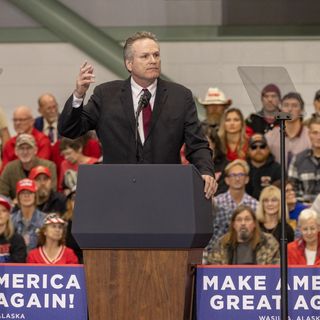
Alaska Gov. Mike Dunleavy (R) suggested Thursday the state could withhold certification of the U.S. Senate election results if Democrat Mary Peltola wins. Why it matters: Withholding certification could complicate Peltola's path to the Senate, as Republicans investigate allegations that Democrats recruited a candidate with the same name as GOP incumbent Dan Sullivan . Driving the news: Asked during an interview with NewsNation whether he would certify the election if Peltola wins while the matter remains under investigation, Dunleavy stopped short of committing to do so. "We're going to investigate it. We're going to follow the law," Dunleavy said, adding that any findings of illegal conduct "may in fact impact whether somebody is seated in the U.S. Senate." He said the matter would involve discussions with Senate leadership and that officials would need more information before determining "whether we send something down or not." Pressed on why he had not given an unequivocal yes, Dunleavy said: "We're going to ensure that we aren't going to send a scam to Washington." For the record: Peltola has denied any involvement in the alleged scheme. What they're saying: "Dunleavy's threat to overrule the will of Alaskan voters exemplifies what Alaskans hate about partisan politics and shows why he's the least popular governor in the country," a spokesperson for the "Alaskans for Mary" campaign said in an emailed statement Thursday night. "Mary won't be intimidated by Dunleavy, Sullivan, or any of their DC allies who are trying to steal this election from Alaskans before votes are counted — and she's going to win this race by focusing on solutions to Sullivan's price hiking policies and putting Alaska first." The big picture: House Oversight Committee Chair James Comer (R-Ky.) is investigating allegations that Democratic operatives recruited another candidate named Dan Sullivan to draw votes away from the Republican incumbent. President Trump accused Democrats and Peltola's campaign of fraud and perjury Wednesday after the New York Times reported that her aides helped recruit another Dan Sullivan. Meanwhile, Dunleavy has separately ordered Alaska's Department of Public Safety to investigate whether the alleged recruitment effort violated state law. The Justice Department has also filed a lawsuit seeking to delay certification of the election results if the incumbent Sullivan loses. What's next: Dunleavy's term ends Dec. 7, less than two weeks after Alaska's target date for certifying election results. Democrat Jonathan Kreiss-Tomkins is leading in recent polls to succeed him, raising the possibility that any certification dispute could extend into a new administration. Editor's note: This story has been updated with comment from the Alaskans for Mary campaign.
Rebecca Falconer ·

Crypto exchange Binance is investigating what could be the biggest crypto hack in history as users saw upwards of $5.7 billion in funds drained from wallets Thursday afternoon. Why it matters : The suspected hack comes after a wave of high-profile cyberattacks and data breaches during so-called "Black October," when a series of hacks and AI-discovered bugs triggered fears of a global crisis. Driving the news: Binance co-founder Changpeng "CZ" Zhao, who is no longer an executive at the company, said on X that the crypto exchange appears to have been hacked, although a company spokesperson says it's still investigating the matter. Analysts and traders who follow the crypto markets closely estimate that $1.7 billion to $5.7 billion was taken during the suspected cyberattack. "This is unprecedented," said Kevin March, a co-founder of JPEG Trading, a cryptocurrency trading firm that closely tracked the hack to monitor market conditions. Zoom in : Binance limited withdrawals and platforms including Tether and Circle froze more than $1 billion in cryptocurrencies, per Zhao. Such a step that would limit the scope of customer losses. Zhao and a Binance spokesperson said user funds are safe. The Binance spokesperson said the exchange's security teams are "reviewing all relevant information with urgency." The big picture: If estimates hold up, the suspected Binance hack would be the biggest crypto attack in history. In 2025, North Korea-linked hackers stole about $1.5 billion worth of crypto from the Bybit exchange. The country has turned hacking and scams into an industrial-scale scourge, focusing on crypto heists and a widespread practice of tricking Western companies into hiring North Korean workers . Between the lines : Crypto is a relatively common hacking target, but massive attacks can leave smaller exchanges vulnerable to collapse due to the potential for panicked withdrawals. Binance's size makes it more insulated, March said. "If this happened to any other business in crypto other than Binance, it would've been catastrophic." The exchange is capable of covering potential losses through its insurance and balance sheet, he said, although broad reverberations in crypto markets and prices remain possible. The intrigue: Reports of a breach came just hours after Polymarket confirmed it was facing a cyberattack, prompting the decentralized predictions market operator to pause trading for an hour after an attacker made off with at least $2.7 million in user funds. Researchers at Hudson Rock tied the Polymarket incident to a breach involving third-party website monitoring tool DebugBear , which said earlier Thursday it was responding to its own security incident. What to watch: Binance has yet to confirm who may be behind the attack and the total value of the currencies suspected hackers made off with.
Sam Sabin ·

Democrats' main Senate super PAC is privately telling top donors that Texas offers their best shot at flipping a deep-red Senate seat, followed by Ohio, where the race remains close. Senate Majority PAC also sees victories in Iowa and Alaska as within reach, though the outcomes could take longer to become clear. Why it matters: Democrats are increasingly confident about Election Day on Tuesday — and sharing their qualified optimism with their biggest donors. To retake the Senate, Democrats need to win two of those four states — all of which Trump won by double digits in 2024 — flip North Carolina and Maine, and avoid an upset in Michigan. JB Poersch, president of Senate Majority PAC, projected confidence that Democrats will wrest control of the Senate from Republicans during a private donor briefing this week as he walked through the races state by state. He also reminded donors that Kansas, where even Republicans are deeply worried, is a state Trump won by roughly 16 points in 2024. But it's in play . What they're saying: "This matches what we've been saying publicly and privately for weeks. There are signs of optimism in Texas, but it remains a toss-up, as do Iowa, Ohio and Alaska," said Lauren French, a spokesperson for SMP. "There is positive movement for Democrats, but it is critical to remember that every seat on the battleground map voted for Donald Trump by double digits," she said. "These are deep red states and we're focused on bringing them over the finish line so the Senate can work to provide real relief to families who are being crushed by the cost-of-living crisis." The big picture: Texas hasn't elected a Democratic senator since Lloyd Bentsen in 1988. Democrats thought they'd end the drought in 2018 and let themselves fall for then-Rep. Beto O'Rourke, who lost to Sen. Ted Cruz by 2.6 percentage points. Four years later, O'Rourke tried again to prove a Democrat could win statewide in Texas. He lost the governor's race by nearly 11 percentage points. This time around, Democrats have state Rep. James Talarico, who's narrowly led recent polls against Republican nominee Ken Paxton. Zoom in: During this unseasonably sunny week in Washington, private polls and scraps of data are flying from phone to phone at outdoor cafes as both parties search for a story to tell themselves, their candidates and their donors. At every table, there are essentially two camps: The pessimists find reasons to dismiss every glimmer of hope. Republicans are worried about a "red scream." The optimists blow past inconvenient facts that might kill their victory vibes. Some Democrats are "nauseously optimistic." In reality, optimists and pessimists — in both parties — are flying without instruments. Internal polls contradict each other by a point or three, door-knocking data is noisy, and early-vote numbers can be spun to tell almost any story. The bottom line: On some level, big-dollar donors know they lack the omniscience to read the political landscape with the same clarity they once brought to an IPO's S-1 filing. But they also believe they deserve better data and analysis than what's publicly available. At the very least, they want private briefings to give them a clearer picture than is epistemologically possible. Hence the flurry of briefings. The challenge for the super PACs is to return all the calls — and give donors hope without making promises they can't keep.
Hans Nichols ·

U.S. Central Command chief Adm. Brad Cooper, the commander of forces in the Middle East, briefed President Trump Thursday on the state of the Iran war, with a focus on the ongoing naval blockade , according to two U.S. officials. Why it matters: As he did before Operation Midnight Hammer in June 2025 and Operation Epic Fury in February, Trump is pursuing dual tracks — trying to reach a deal to restart peace talks while also preparing for a possible resumption of major combat operations after the midterms. Behind the scenes: Trump wanted to hear directly from the CENTCOM head on whether the naval blockade is working, the U.S. officials said. Cooper also briefed Trump on the military operation for guiding oil tankers out of the Strait of Hormuz to global energy markets. And he updated Trump on the economic pressure campaign the military is conducting in concert with the Treasury Department. Defense Secretary Pete Hegseth, Treasury Secretary Scott Bessent, Chairman of the Joint Chiefs of Staff Gen. Dan Caine, White House envoy Steve Witkoff and other senior officials also attended the meeting, the officials said. The White House and CENTCOM declined to comment. The Wall Street Journal first reported the meeting. Driving the news: A group of regional mediators led by Qatar is trying to get the U.S. and Iran to head off a resumption of war after the midterms in favor of negotiations. "The mediation is at a very sensitive stage," a regional source said. Qatari mediators recently delivered a letter from Vice President Vance to Iran's Secretary of the Supreme National Security Council, Gen. Mohsen Rezaei. Vance proposed restarting negotiations but stressed that any talks would have to address Iran's nuclear program. Trump and Vance met Wednesday to discuss a possible gesture of goodwill toward Iran, such as sending humanitarian goods like food and medicine, according to a source with knowledge. Later in the day, Trump publicly backed the idea. What they're saying: U.S. Ambassador to Turkey Tom Barrack told CNN on Thursday that the U.S. and Iran are "very close" to a deal to deescalate tensions. "I think we're very close to finally getting to a place where we can say, 'Let's just have a timeout,'" he said. "We're not going to have an overall solution immediately, but we can allow the region to find its own pace." The other side: Iranian officials on Thursday continued to demand the U.S. take a series of steps — such as lifting the blockade, releasing Iranian frozen funds and allowing Iran to sell oil — before resuming negotiations on their nuclear program.
Barak Ravid ·

The Pentagon's top military planner admitted to leaking classified information about Ukraine and Iran to two reporters from separate outlets over a one-year period, according to an internal report of the investigation shared with Axios. Why it matters: Army Lt. Gen. Brett Sylvia was fired this week by Defense Secretary Pete Hegseth for the alleged misconduct, which the career soldier acknowledged on video after he failed four polygraph tests, a U.S. official said. "He had trouble passing multiple polygraph interviews," the report said. The report accused the general of making "unauthorized disclosures to the media," and said he "was cooperative with answering questions about interactions with the media to resolve this, and provided his personal phone for a forensics examination." Zoom in: The report and U.S. officials said that Sylvia's leaking began as early as June 2025 — before mainstream media outlets were removed from the Pentagon — and continued afterward via secure Signal app and once at a Silver Diner in Arlington, Va. "The meeting at the diner occurred because [redacted's] access to the Pentagon was revoked between meetings," the report says. "During the meeting at the diner, [Sylvia] relied on notes he took while reviewing a classified secret report to orally give redacted on U.S. assistance to Ukraine, the report says. The report says the reporter in question was writing a book and met twice with Sylvia. It also emphasized that the general "did not coordinate these meetings with [the Pentagon's Public Affairs Office], or seek to have the information reviewed before providing it to the reporter." The intrigue: U.S. officials suspect that Sylvia intentionally deleted any trace of contact on Signal between him and one of the reporters, but pretended it was an accident. "Sometime between June or July, Sylvia received Signal messages from [redacted]. Sylvia is unable to recall exactly what was in that message," the report said. "But he believes it had something to do with Iran." "He stated that he did not respond to the message and instead deleted it. While deleting it, he believes he deleted the entire message thread with [redacted]," the report said. "This erased Signal messages and Signal phone calls that would have been recorded in Signal on his personal phone." For another story, the report said, Sylvia "admitted to being one of the 20 officials" cited in a story criticizing Pentagon leadership. Another U.S. official told Axios that Acting Army Secretary Adam Telle and his office lobbied the Joint Staff to put out a statement supporting Sylvia "to minimize the damage about any future claims of him leaking classified information." After someone within the Defense Department revealed to the Joint Staff why Sylvia was fired, the Joint Staff retracted its statement. Sylvia's dismissal marks the latest crackdown on leakers and the press from Hegseth's Pentagon. In July, the Defense Department announced a joint task force with the Justice Department that aimed to identify Pentagon leakers. It also called on the Pentagon's Office of General Counsel to prioritize prosecutions of those who make unauthorized disclosures to the media. Last year, in response to restrictive rules imposed by the Pentagon, several defense reporters and media outlets turned in their media passes. What they're saying: Sylvia did not immediately respond to a phone call, voicemail and text message left at the phone number listed for him in public records.
Marc Caputo, Thomas Novelly ·
The 2026 midterms already face a messy pileup of lawsuits and ballot battles, raising fears about election confidence before voters even finish casting ballots . Why it matters: Election challenges aren't unusual, but as the Trump administration continues to make false claims about widespread voter fraud, officials are juggling fights over voter lists, mail-ballot rules and election certification challenges. What they're saying: "The types of challenges that we are seeing pre-election, this close to election day, are very unusual, and mostly because they are coming from the federal government," Jonathan Diaz of the Campaign Legal Center told Axios. "These lawsuits are frivolous," Diaz said, adding they could "create doubt in the minds of the public about the legitimacy of the election process." "It shouldn't be allowed to happen, and it was done in conjunction with Schumer and everybody else. It's called VOTER FRAUD. It should not have been allowed to happen." The other side: The White House referred Axios to comments President Trump made to the media. The Department of Justice did not respond to Axios' request for comment. Here's some of the ways chaos and uncertainty have shaped the 2026 midterms: California In the Golden State, the Trump administration asked state election officials to set aside ballots from roughly 20,000 registered voters whom the DOJ suspects are noncitizens. A federal judge rejected that push Wednesday night, warning that the administration lacked sufficient evidence to justify potentially disenfranchising eligible voters. The judge noted that the DOJ had made similar claims in neighboring Nevada, where election officials determined that 185 voters the DOJ had flagged as noncitizens were actually U.S. citizens. Diaz told Axios that, from his perspective as a voting-rights advocate, the California battle is "not a real lawsuit. It's a political press release that they just happened to submit to the court." The other side: The White House directed questions about the ruling to remarks Trump made Thursday, in which he said "California is very corrupt," and the state's elections are "extremely corrupt." He did not provide evidence for his claims. Washington On Monday, the two U.S. attorneys' offices in Washington state asked the state to set aside ballots from more than 400 people they allege were illegally registered to vote. The letter mirrors similar demands sent to California before the Trump administration sued. Washington Secretary of State Steve Hobbs fired back Wednesday, tearing into the U.S. attorneys for making the request so close to Election Day and calling the timing "profoundly disappointing." Hobbs said a preliminary investigation confirmed that the federal list includes U.S. citizens and is unreliable. He asked prosecutors to provide individualized proof of ineligibility. North Carolina Nearly 4,000 mail-in ballots, or about 6%, processed in North Carolina through Oct. 24 have been flagged for problems that, if not fixed, could invalidate voters' choices. Time is running out for those voters to address the issues, and hundreds have yet to respond to notifications about their ballots. The rejections appear to stem in part from new guidance issued by the GOP-controlled state Board of Elections requiring the inner ballot envelope to be sealed, even if the outer envelope is already sealed. Alaska In Alaska's Senate race , two men named Dan Sullivan are on the ballot, Sen. Dan S. Sullivan and retired teacher Dan J. Sullivan. New reporting from The New York Times on Wednesday alleged that aides to Democratic candidate Mary Peltola helped recruit the other Dan Sullivan in an apparent attempt to confuse voters and siphon votes away from the incumbent senator. Peltola's campaign denies any involvement. Alaska Gov. Mike Dunleavy ordered an investigation Wednesday for investigators to determine whether the alleged scheme violated Alaska law and whether criminal charges or civil action are warranted. The DOJ has separately sued to delay certification of the Senate election if the incumbent loses and votes for the other Sullivan could have changed the outcome. Go deeper: Trump is pulling every lever to reshape U.S. elections
Josephine Walker ·

Reddit on Thursday said it's moving to become a primarily logged-in experience, marking one of the most significant shifts in its 21-year history. Why it matters: Reddit has long championed the open web. Now, it's pushing to build a more direct relationship with users while also protecting its data from increased scraping in the AI era. Driving the news: In an interview Thursday, Reddit co-founder and CEO Steve Huffman said the company is making the change to improve its user experience, bolster its ads business and prevent bots from scraping its proprietary data. Chief operating officer Jen Wong told Axios the move doesn't represent a change in strategy as the company has always focused on building a direct destination. "It's just that in the last 10 years, because our [data] corpus was open, we got a lot of search traffic, so that became part of the equation" but didn't change the company's mission. Zoom in: Huffman expressed confidence that the change would ultimately improve engagement and monetization, even as changes to traditional search continue to impact user growth in the U.S. "When users log in, they spend more time on Reddit, and we can we better know their interests, so we can target ads better," he said. He also noted that the short-term risk is limited because "the vast majority of engagement and over 80% of our monetization comes from our app and logged-in users." In a shareholder letter, Reddit acknowledged that search referral traffic was "down meaningfully in Q3" and said daily users could decline by a "low-double-digit percentage" in Q4 if search referral trends persist. How it works: Reddit will begin testing the fully logged-in experience this quarter outside the U.S. and collect data on the best approach before it rolls out broader changes gradually. Logged-in users can get tailored content, feeds and recommended communities based on their activity and interests, although they can opt out of personalization. The company is still working through what content will be available to users who do not login. Participation features, such as commenting and content ranking, will continue to be accessible only to logged-in users. Its homepage will still be accessible to logged-out visitors. People accessing the platform via search engines or shared links will still be able to see that linked content. Huffman said the company will monitor the conversion rate to logged-in users as one metric of success. Between the lines: Reddit has long prioritized user privacy and has supported user anonymity as a way to encourage authentic expression. Logged-in users will not be required to reveal their real name or real-world identity, the company said. The company is relaunching its incognito browsing mode within its app, which lets users browse and search without affecting their logged-in accounts. But the platform will be read-only in incognito mode, meaning users can't comment or engage. Follow the money: The changes will make user personalization more central to the Reddit experience, which Wong said will bolster the company's ads business. Logged-in user engagement is about five times that of logged-out users, Wong said. "They see more impressions, and therefore, yield more business outcomes for advertisers," she noted. Performance advertising, which now amounts to more than 60% of Reddit's ad revenue, is the fastest-growing part of the company's business. Reality check: Most other major consumer internet platforms have already made this shift. Huffman said he personally resisted the changes because of his belief in the open internet. He ultimately came around because Reddit's scale made personalization more important for users today and because protecting the platform's content from unauthorized scraping has become more urgent. The company said most of its unauthorized scrapes are of content that lives outside of the logged-in experience on the open web. The big picture: The change was announced alongside Reddit's Q3 earnings results, which saw the ads business grow a whopping 54% year over year. The company beat Wall Street estimates on revenue and earnings growth, but missed expectations on U.S. user growth amid weakened search traffic. Since going public in March 2024, Reddit's ads business has nearly tripled. The company earned $222.7 million in ad revenue in Q1 2024, compared with $847 million in Q3 this year. The vast majority of Reddit's revenue (94.7%) comes from ads. Zoom out: Reddit believes its content will become more valuable in the AI era, as people look for authentic human recommendations and content to validate information from chatbots. "We are a collection of human experiences and preferences that is extremely vast and fresh, and I don't think there's anything comparable to it," Wong said. As of Q3, Reddit has more than 27 billion posts and comments, an unprecedented trove of human data. Reddit will still license its content to third parties and rely on those agreements to set equitable terms for scraping and content usage. In its earnings release, the company said revenue outside of advertising, which includes data licensing, totaled $48 million in third quarter, up 35% year over year. What to watch: The shift to logged-in users will help Reddit be more intentional about third-party access to its data. Huffman explained the way that data is used and displayed on other platforms can impact the core experience of Reddit. Reddit announced an expanded partnership with Google in 2024, reportedly with $60 million annually. It announced a similar deal with OpenAI later that year. The company sued Anthropic and Perplexity in 2025 for unauthorized scraping. The bottom line: Huffman said the shift is not a response to Google Search changes, but rather "about making the best version of Reddit." In five years, "I want Reddit to be more Reddit," he remarked, saying he hopes the changes help users lean into the platform's core experiences, like intentional communities and up-or-down-ranking content.
Sara Fischer ·
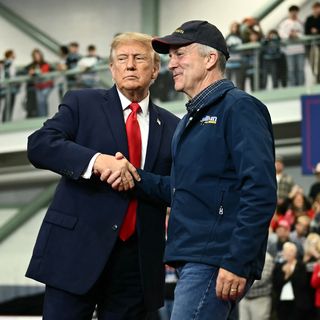
Alaska's tight Senate race is facing a new controversy over two candidates named Dan Sullivan appearing on the ballot — a twist that's drawn attention from President Trump . The big picture: The controversy is adding uncertainty to one of the nation's most competitive Senate contests, with control of Congress on the line in next week's midterm elections. Catch up quick: The New York Times reported this week that Democratic operatives with ties to Mary Peltola's Senate campaign helped recruit a candidate named Dan J. Sullivan to challenge Republican incumbent Dan S. Sullivan. Trump accused Peltola and Democrats of election fraud and called for criminal prosecution, though the Times did not establish that any laws were broken. Alaska Gov. Mike Dunleavy ordered an investigation into Peltola's campaign over the NYT report. House Republicans are also launching an Alaska Senate race probe. Though the presence of two Sullivans in the Senate race has been known for months, the Times' report adds a new wrinkle to a dispute that's already reached the courts. Here's what to know about the controversy. The same-name Senate race controversy The controversy centers on two candidates with nearly identical names appearing on Alaska's Senate ballot: Republican incumbent Dan S. Sullivan and unaffiliated challenger Daniel J. Sullivan Jr. The ballot will show registered Republican "Sullivan, Dan S." and unaffiliated candidate "Sullivan, Daniel J. Jr." Peltola and Republican Gerald Heikes will also be on the ballot. The challenger initially filed as a Republican but later changed his registration to undeclared. He will appear on the ballot without a party label. Flashback: Concerns about the duplicate names have existed for months. In June, a top Alaskan election official ruled that candidate Daniel J. Sullivan was ineligible to run on the state's primary ballot. The official said she found the candidacy was "filed with a purpose to confuse or mislead and to thereby compromise the ballot's fairness or neutrality," per the Associated Press. The Alaska Supreme Court later ruled that state election officials lacked the authority to disqualify Sullivan based on their concerns about his motives, allowing him to appear on the ballot. The court did not determine whether his candidacy was intended to mislead voters. Trump reacts to Alaska controversy Flashback: Last week, the Justice Department sued Alaska, seeking to block certification of the Senate election if the incumbent loses by a margin potentially attributable to voters confusing the two Sullivans. Both Peltola's campaign and the Democratic Senatorial Campaign Committee have asked a federal judge to dismiss the case. Alaska officials are seeking dismissal of the lawsuit, arguing that it has no legal basis and that the federal government lacks authority to intervene in a matter governed by state election law. Zoom in: The new NYT report , published this week, cited texts, interviews and documents showing that Peltola's aides worked with Democratic operatives to recruit candidates who could siphon votes from the Republican senator. Per the report, a staffer was told to review every "Dan Sullivan" in the state, leading the team to Dan J. Sullivan, the retired schoolteacher who was registered as a Republican. Peltola's campaign and the DSCC denied recruiting Sullivan, per NYT. The latest: The NYT report sparked a reaction from Trump this week, who wrote on Truth Social that the recruitment by Peltola's campaign was done "in order to defraud, confuse, and obfuscate the Election," in his call for Peltola and the other Sullivan to be prosecuted. Gov. Dunleavy ordered a state investigation on Oct. 28 into the allegations, and House Oversight Chair James Comer launched a congressional probe on Oct. 29. What they're saying: "Mary got in this race because Alaskans deserve a champion who is fighting to lower their costs and put Alaska first, and no tweet or threat from any DC politician will keep her away from that fight," a spokesman for the Peltola campaign tells Axios. "The Alaskans for Mary campaign has no involvement with either Sullivan campaign." The other side: In a statement to Axios, Nate Adams, a spokesman for Dan S. Sullivan, accused Peltola, her advisers and Democratic operatives of coordinating with the DSCC to recruit candidates to deliberately confuse voters. "We always knew this was a coordinated effort to mislead Alaskans, and Mary Peltola was counting on it staying buried until after the election. Now that she's been caught red-handed, she still won't come clean," Adams said. "Instead, she's doubling down on the lie and is now attacking the same media outlets she's been misleading for months." How Sullivan confusion could affect the Alaska race Why it matters: Alaska's ranked-choice voting system could limit the impact of voter confusion for the two Sullivans. How it works: Ranked-choice voting allows voters to rank multiple candidates in order of preference. If no candidate wins a majority of first-place votes, the lower-performing candidates are eliminated and their supporters' votes go to the next-ranked choice. If Dan J. Sullivan is eliminated, ballots listing the incumbent as the next remaining choice would transfer to him. But voters who mistakenly select Dan J. Sullivan without ranking the incumbent could still cost the Republican votes in a close race. By the numbers: Dan J. Sullivan received 2.5% of the vote in Alaska's August primary, compared with 41.4% for the incumbent and 49.5% for Peltola.
Herb Scribner ·

After his far-right coalition lost 11 seats in the election, Israeli Prime Minister Benjamin Netanyahu is trying to discredit the results by claiming there was mass voting fraud in Arab communities. Why it matters: Netanyahu appears to be trying to spook the opposition bloc out of cooperating with Arab parties to form a new government. But the opposition is concerned he has an even more ambitious goal: To prevent the results from being certified at all. That would block the swearing in of a new parliament, in which he would lose his majority. Driving the news: Netanyahu and his Likud party started the campaign to delegitimize the Arab vote days before the elections. Half of Netanyahu's social media posts on Election Day cast suspicion on the unprecedented turnout in Arab communities, an apparent attempt to drive his supporters to the polls. Arab voters cast ballots in historic numbers, winning 19 seats between their two parties. On Wednesday, Netanyahu's Likud party issued a statement claiming the "elections were stolen" by the Arab parties through bribes and fraud. Its claims were based on the arrest of three activists from the Arab Ra'am party who were suspected of paying a small number of voters in one of the Arab cities. The Israeli police said there was no evidence to support Likud's claims of a "stolen" election. Behind the scenes: The situation escalated dramatically on Thursday when a letter sent to the director of the Shin Bet domestic security agency was leaked to Israel's Channel 12. It was written by the supreme court judge who heads the Central Elections Committee. The judge ordered the Shin Bet director to immediately investigate suspicions of election interference by foreign countries and submit conclusions within a week. Shortly after the letter leaked, Israeli media outlets identified Qatar as the country in question. The allegation is that it funneled money to one of the Arab parties to propel turnout in their communities. Over the past year, several of Netanyahu's closest advisers have been investigated by Shin Bet for allegedly being paid by Qatar to improve its image among Israelis. Zoom in: At a press conference on Election Day, the Shin Bet director, who is a far-right Netanyahu political appointee, said the elections were "safe and secure." He did not mention any suspected foreign interference. But the next day, the director met the head of the Central Elections Committee and briefed him on intelligence that suggested foreign countries sent money to one of the Arab parties to increase turnout. Later that day, the Shin Bet director briefed Netanyahu on the intelligence, but not his opponent Gadi Eisenkot. Eisenkot was briefed by the Shin Bet only after the letter leaked. Later on Thursday, the director also briefed outgoing opposition leader Yair Lapid. Sources with knowledge say the Shin Bet had the intelligence weeks before the elections. In a statement on Thursday, Shin Bet said the head of the Central Elections Committee was the only one outside of the security agency who knew about the investigation ahead of the elections . Zoom out: Shin Bet said in its statement that the investigation is "focused and narrowly defined" and made clear it doesn't cast doubt on the vote of the Arab minority. "The investigation should not be used to cast suspicion on or accuse an entire sector of society that exercised its democratic and legal right to vote. Only those who acted unlawfully will be held accountable," the statement read. What they're saying: But Netanyahu and Likud nevertheless seized on it. After the letter leaked on Thursday, they called it "an earthquake" and again claimed without evidence that "the elections were stolen." "This is an attack on democracy aimed at enabling a foreign takeover of the Knesset, the Islamization of Israel, and the overthrow of right-wing rule in order to bring about an Israeli withdrawal and the defeat of the IDF on all fronts — first and foremost in Iran," the Likud said. It also said that "no Zionist party should cooperate" with the Arab parties in replacing the Knesset speaker after the new parliament is sworn in or in establishing a new government. The other side: Eisenkot said the suspicions of foreign interference in the elections must be immediately and thoroughly investigated. But the swearing-in of the Knesset must proceed as scheduled, he said. "Netanyahu is leading an illegitimate influence campaign targeting the Israeli public, aimed at delaying the publication of the election results and manufacturing a false narrative to delegitimize the new Knesset," Eisenkot said. What to watch: The vote count ended on Thursday with the opposition parties winning 67 seats and Netanyahu's coalition winning 53. The results are expected to be certified next week, with the Knesset being sworn in several days later. The opposition plans to immediately replace the current speaker of the Knesset and start passing laws — first and foremost, establishing a national commission to investigate the security failures that led to the October 7 attacks. Netanyahu has blocked efforts to launch such an inquiry for three years. Yes, but: While the opposition's majority will allow it to take over parliament, it's not clear whether it will be able to assemble a government. Doing so would require the support of the Arab parties — and not all opposition parties want to join forces with them.
Barak Ravid ·

Data: Resources for the Future; Note: Central RFF scenario ; Chart: Ben Geman/Axios The Senate permitting plan would cut emissions from power plants in the near term and help keep electricity prices down, a new analysis finds. Why it matters: The study from scholars at Resources for the Future, a nonpartisan think tank, offers some of the most detailed independent modeling yet of the bill 's effects. It will help inform lobbying and advocacy around the bill ahead of a test vote looming on Nov. 9. Driving the news: The analysis models how the bill would affect the power sector compared with current law and policies. Among the findings from its central scenario: It would drive "robust" transmission expansion ( see above ), enabling "use of additional clean energy and existing resources of all types." Overall electricity system costs are an estimated 3.5% to 7% lower each year through 2041 compared to a no-bill baseline, saving over $350 billion total through 2050 in present-value terms. That should translate into lower electricity bills for people, co-author Kevin Rennert tells Axios, though the study does not directly model retail prices. The bill would boost the build-out of renewables, partly enabled by expansion of transmission, with added clean energy displacing fossil fuels even though additions of gas-fired capacity still occur. CO2 from the power sector would initially drop as more coal is edged aside, and then climb over time — but remain below levels projected without the bill. By the numbers: In 2028, there's roughly 60 gigawatts more clean energy capacity on the grid in the study's central outlook compared to a baseline of current law and policy. Data: Resources for the Future; Chart: Ben Geman/Axios The intrigue: The RFF analysis shows how it sees the bill initially pushing power plant emissions downward. Even that eventual upward trend is hardly guaranteed. This kind of study is by definition packed with assumptions and variables that the authors acknowledge — the future being the future and all. For instance, it uses a "high-electrification demand scenario to represent the rapid increase in demand from data centers and other sources." Yes, but: The study — which uses a model developed by the Energy Department's National Laboratory of the Rockies — doesn't attempt to analyze every aspect of the wide-ranging bill. For example, it does not capture how changes in environmental laws would affect mining, pipelines, and various activities outside the power sector. Catch up quick: There's a lot of other analysis flying around in the intense public and closed-door lobbying over the bill. A new White House study finds the bill would eventually boost GDP by $82 billion to $164 billion annually and provide substantial savings on power bills. And Punchbowl News reports that the Solar Energy Industries Association is circulating an analysis on Capitol Hill showing that under the bill, solar and wind would together provide over 37% of power generation in 2035 vs. around 20% under "obstructed permitting." What we're watching: Emissions, renewables deployment, and costs are several factors in the permitting bill battle, but hardly the only ones as some environmentalists and other critics take aim at the bill. Other contested terrain includes the effect on consultation with Native American tribes, historic preservation, and more. The NAACP, for instance, is out with a new document strongly criticizing the bill. Sign up here for Axios' Future of Energy newsletter.
Ben Geman ·
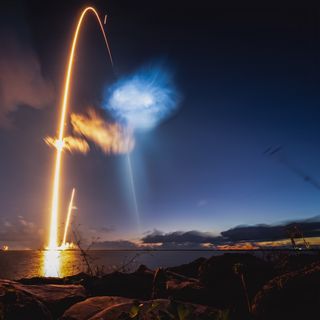
Call it a new Apollo moment: Rocket launches from Cape Canaveral, Florida, are now outpacing those of the Cold War-era space race that first made the launch site famous. Why it matters: U.S. leaders are rushing to grow the number of rocket providers at America's busiest spaceport amid a space and arms race with China. Beijing plans to send a crew to the Moon by 2030 or sooner and is rapidly building up its satellite and rocket fleets. What they're saying: "There's nothing really comparable in the background of my career to what we're experiencing today," Space Force Col. Brian Chatman, the commander of Florida's rocket range, told Axios in an exclusive interview. Behind the scenes: The Cape is busy expanding to meet President Trump's mandate for the nation to support 1,000 annual launches by 2030. Chatman said with all the contractors on base, inspection backups and parking chaos abound. A rundown of some major projects Chatman is overseeing: SpaceX is expanding its footprint on the Cape for its Starship super heavy-lift launchpads. Newcomers Relativity Space and Stoke Space are setting up their facilities and are aiming to launch rockets for military and commercial customers sometime in late 2026 and 2027 . NASA is preparing for next year's Artemis III testing missions, and the Artemis IV voyage that aims to return astronauts to the Moon by 2028. Blue Origin is rapidly rebuilding its launch complex after its New Glenn rocket exploded in May. Jamie Draper, the Cape Canaveral Space Force Museum's director, told Axios there's been "boom and bust" cycles throughout the base's history. "We're definitely in one of those boom cycles right now," Draper said. By the numbers: Last year, Space Launch Delta 45, the military command overseeing the Cape, supported 109 orbital liftoffs from the base — the most in its history. In April, Space Launch Delta 45 oversaw five different rocket launches for unique missions, breaking a record set at the height of the U.S.-Soviet space race in the 1960s. Space Force officials estimate that the number of Cape launches could rise from the 109 it reached in 2025 to "approximately 1,200 by 2036" annually, according to the service's vision plan . Reality check: There's only one other military spaceport in the U.S. — California's Vandenberg Space Force Base — and the two can't fully handle the anticipated surge in commercial and military demand. Top military leaders stress the need for a third U.S. port. Lt. Gen. Philip Garrant, the head of Space Systems Command, told reporters last week that another spaceport was likely needed by 2030. Enter SpaceX: The newly public Elon Musk-controlled company plans to start building another site off the Louisiana coast next year, with its first Starship launch planned for 2029. That site, known as Starbase, would "relieve quite a lot of the pressure" on Cape Canaveral, said Brian Weeden, director of civil and commercial policy for the Aerospace Corporation's Center for Space Policy and Strategy. The bottom line: Until new spaceports arrive, Cape Canaveral will remain the linchpin of the nation's rocket enterprise. "We have a prime piece of real estate here that maximizes launch opportunities," Chatman said. "But the reality is, there's so much demand for launch in the future that we just need more sites."
Thomas Novelly ·

President Trump seems to think he can save a vulnerable Ohio Republican senator's ass by talking about how strong it is. Why it matters: Republicans are getting hammered over the war in Iran, gas prices and data centers. But they're playing along with Trump's ogling of male candidates, which he's described as an election strategy. "I don't do this with men very often. I started examining his body because I didn't know he was a great athlete. And I looked and I watched up and down and I looked at his ass," Trump said of Sen. Jon Husted (R-Ohio) at an Ohio rally. "My wife and I have a good sense of humor, and we know he's doing all he can to help us win," Husted told Axios. "We have made sure to hit the gym during the busy campaign to uphold the high standards the president has set for us." Zoom in: In five rallies over three weeks across the country, Trump gave a head-to-toe appraisal of his most vulnerable Republican senator. "His ass was like a big piece of muscle," Trump said in Michigan last week. "Then I looked at his legs and I said, 'Man, his feet are big,' " Trump said in North Carolina. Polling has shown Husted narrowly behind or tied with former Sen. Sherrod Brown (D), and Republicans view him as the most vulnerable GOP incumbent. Zoom out: Husted is getting the most love, but he's not alone. "You know, he's a very handsome guy," Trump said about Sen. Tim Sheehy (R-Mont.) at a Montana rally earlier this month. "I like the white hair, I like the big, strong build. Big, strong guy." Trump said of Rep. Mike Collins (R-Ga.), who is running for Senate in Georgia. Trump called him "all man." "I actually think that Rick Jackson's a very handsome, distinguished, beautiful-looking guy," Trump said about the Republican gubernatorial candidate in Georgia. "Look at this beautiful guy," Trump said of House candidate Ed Gallrein (R-Ky.). Trump called him: "Central casting." Between the lines: Senate Majority Leader John Thune (R-S.D.) has also joined the fun: "I know that Husted gets a ton of attention, but I think Bernie is kinda eye-candy too," he joked during an event Tuesday. Thune was referring to Husted's fellow Ohio Republican senator, Bernie Moreno. "They both got it going on when it comes to that," Thune said. The other side: Trump has questioned the looks of Democratic senators and candidates. "I don't think he's a good looking man," he said of Sen. Jon Ossoff (D-Ga.), who he frequently refers to as Pee-wee Herman. He has called Texas Democratic Senate nominee James Talarico a "weird looking dude," comparing him to Alfred E. Neuman — though Trump hasn't been much kinder to Texas Republican Senate nominee Ken Paxton. The bottom line: Trump argued at a rally in Texas this week that "the audience loved" his description of Husted's body. "By the way, he went up 12 points that day. He went from being down to being up," Trump continued. "Maybe I should do that with Ken Paxton, but I'm not sure your body is gonna qualify."
Stef W. Kight ·

House progressives are planning to use their growing power to force votes next year on their most sweeping and divisive policies, including Medicare for All, abolishing ICE and cutting aid to Israel. Why it matters: The ultimate goal is to get these policies on the front burner for a Democratic president in 2029, even if that means forcing House Democrats into tough decisions. Rep. Pramila Jayapal (D-Wash.) told Axios the left wants mark-ups and votes on bills such as Medicare for All "so that we can prepare for when we have the trifecta and so that we can really build the support we need." "Forcing the vote is important so we can see where everyone is at, I think that's really key for 2028 and 2029," said Mai Vang, a progressive House candidate in California. The big picture: Here is what progressives most want to see go to a House vote in 2027, according to lawmakers, candidates and operatives who spoke to Axios: 1) Medicare for All The Medicare for All Act introduced by Rep. Pramila Jayapal (D-Wash.) has 118 co-sponsors — more than half the House Democratic caucus. The left wants to force the issue onto the floor and make their Democratic colleagues reckon with the policy's popularity in public opinion polls . Ultimately, they aim to ensure support for Medicare for All is a must-have for any 2028 presidential candidate to win the primary. "Years ago I negotiated with [former House Speaker Nancy] Pelosi to get the hearings , but we have not had a markup," Jayapal, a former Progressive Caucus chair, said in an interview with Axios. Jayapal pointed to the bill she and Rep. Pat Ryan (D-N.Y.) unveiled last week, which would lower the Medicare age from 65 to 50, as a potential compromise measure that could get caucus-wide support next year. Yes, but: A Democratic wave could bring in a bloc of members from red-leaning districts who could be sensitive to being tagged as wanting to end private insurance. Jayapal told Axios there's an "opening we've never seen before" with polling that suggests voters increasingly "hate private insurance." 2) Abolish or defund ICE Several progressives pointed to Rep. Delia Ramirez's (D-Ill.) " Melt ICE Act " — which would cut all funding for ICE detention and monitoring of immigrants — as a good start. Another Ramirez bill would go even further, fully abolishing ICE and dismantling ICE's parent agency, the Department of Homeland Security. Yes, but: Moderate Democrats have long opposed defunding ICE. Some centrists pushed back on the idea as recently as this January, following the shooting of Renée Good. Democratic congressional leadership has only gone so far as to propose reforms to the agency's practices rather than a reduction of its funds. Ramirez told Axios the question for progressives is how they go from just 23 co-sponsors on the Melt ICE Act to "a real narrative shift in the way that leadership talks about ICE" that treats it as being "past reform." 3) Cut aid to Israel The Block The Bombs Act , another Ramirez bill which would restrict presidents' ability to transfer offensive weaponry to Israel, is widely seen as the left's marquee legislation on this issue. But many Democrats, while fed up with Israeli Prime Minister Benjamin Netanyahu and his government, remain staunchly supportive of Israel. Between the lines: The left is putting external pressure on the party's pro-Israel wing , which suffered serious losses in House primaries this year, to get with the program. The traditional politics around funding to Israel no longer apply, progressives say. Said Jayapal: "If our Democratic leadership tries to pass funding for Israel with primarily Republican votes, which is what I think would have to happen, that would create an enormous rift." AI, money in politics and affordability AI: Progressives have been some of the earliest adopters of anti-AI rhetoric that has become increasingly mainstream, proposing strict regulations on the technology, a moratorium on data centers and a ban on Flock cameras. "I am far from a luddite," Rep. Analilia Mejia (D-N.J.) told Axios, "and yet it is clear that guardrails are necessary to ensure a future society and economy in which families can thrive." Money in politics: The left has also been pushing for wide-ranging reforms to campaign finance and government ethics, including strict limits on corporate spending in elections. Adam Hamawy, a progressive candidate in New Jersey, said he wants to see a vote on Rep. Summer Lee's (D-Pa.) bill to abolish super PACs , which would be highly controversial even among Democrats. Affordability: Many progressives who spoke to Axios threw out ideas for legislation they say would tackle the affordability crisis, one of the most salient issues in the 2026 election. "I think a living wage is going to be a really important one, childcare, some of those pieces," Jayapal said, also pointing to a bill to eliminate the payroll tax cap as a way to keep Social Security solvent. Hamawy floated universal childcare as well and said Congress should also repeal the Faircloth Amendment , a 1998 law restricting the number of public housing units the Department of Housing and Urban Development can subsidize. What's next: These progressives are clear-eyed about the lack of a speaker alternative to House Minority Leader Hakeem Jeffries (D-N.Y.), but they're privately strategizing how to use their votes to extract policy concessions if Democrats' majority is small enough.
Andrew Solender ·
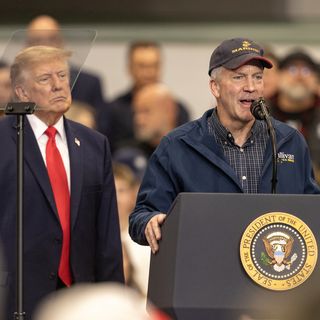
President Trump accused Democrats and Mary Peltola's campaign of fraud and perjury Wednesday after the New York Times reported that Peltola aides helped recruit another candidate named Dan Sullivan. Why it matters: The revelations add a new twist to Alaska's tight Senate race, where a second Dan Sullivan on the ballot could complicate the Republican incumbent's reelection bid. The latest: "Mary got in this race because Alaskans deserve a champion who is fighting to lower their costs and put Alaska first, and no tweet or threat from any DC politician will keep her away from that fight," an "Alaskans for Mary" spokesperson said in a Wednesday night email. "The Alaskans for Mary campaign has no involvement with either Sullivan campaign." The campaign confirmed no assertions have been made in federal court about how Dan J. Sullivan's candidacy came to be or who was involved in his decision to run. Driving the news: The New York Times reported Wednesday that Peltola campaign aides worked with a veteran Democratic operative named Jerid Kurtz, whom the Times described as experienced in ballot-related political tactics. A Peltola staffer was reportedly told to search for every Dan Sullivan in the state. The effort ultimately located Dan J. Sullivan, a retired teacher who registered as a Republican shortly before filing to run for office, per the Times. Dan J. Sullivan previously said he voted for Democrats in the last three presidential elections. He later changed his party registration to undeclared and will appear on November's ballot without a political party label. What they're saying: "It has just been determined that the Democrats in Alaska illegally searched for, and recruited, a man named Dan Sullivan to run against our distinguished Republican Senator, Dan Sullivan, in order to defraud, confuse, and obfuscate the Election, thereby taking votes away from the REAL Senator, Dan Sullivan," Trump wrote in a Wednesday afternoon post on Truth Social. "The Democrats' false statements were made under oath in Federal Court. Therefore, they perjured themselves, and should be liable for very serious consequences," he added. "Mary Peltola should suffer the Legal and Political consequences for what she has done, A FRAUD ON THE AMERICAN PUBLIC, and Dan Sullivan should be allowed to run without either Mary Peltola or FAKE Dan Sullivan on the Ballot." Trump offered no evidence to support his claims that Peltola committed election fraud. State of play: The Trump administration, concerned that Dan J. Sullivan could affect the race's outcome, has also sued Alaska to delay certification of the Senate election results if incumbent Republican Sen. Dan Sullivan narrowly loses, pending an investigation into possible voter confusion. Peltola's campaign and the Democratic Senatorial Campaign Committee have sought to intervene in the lawsuit and asked a federal judge to dismiss it. The ACLU, League of Women Voters of Alaska and Common Cause are also seeking to join the case. Alaska uses ranked-choice voting, where voters rank candidates in order of preference. Go deeper: DOJ sues to delay Alaska election results if GOP incumbent loses Editor's note: This story has been updated with comment from the Peltola campaign.
Josephine Walker ·
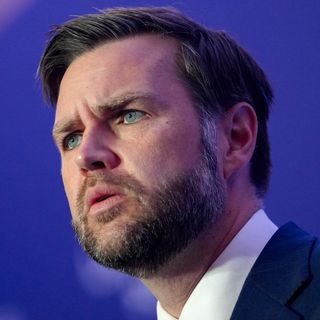
Vice President Vance sent a letter to Iran's national security chief stressing that any negotiations to head off U.S. military strikes "require discussions on the nuclear issue," a U.S. official said. Why it matters: The letter to Mohsen Rezaei, which focused on the possibility of restarting negotiations between the U.S. and Iran, is the most senior-level outreach by the U.S. to Iran in several months. It comes as President Trump considers resuming major combat operations in Iran after the midterm elections. Behind the scenes: Vance suggested sending the letter to Rezaei, who is one of the top national security officials in Iran and has a direct line to Supreme Leader Mojtaba Khamenei. "The President was enthusiastic about the letter," said the U.S. official, who declined to say when it was sent. The Wall Street Journal first reported the letter. Zoom out: One of the key sticking points in efforts to relaunch negotiations is Iran's demand that the U.S. first lift its naval blockade, release frozen funds, and allow oil sales. The U.S. wants Iran to restart nuclear negotiations before receiving any sanctions relief. What he's saying: Trump told reporters Wednesday that Vance's letter was about helping Iran obtain needed medical supplies. "Basically, it's getting supplies in to help people that are not well," he said.
Barak Ravid ·
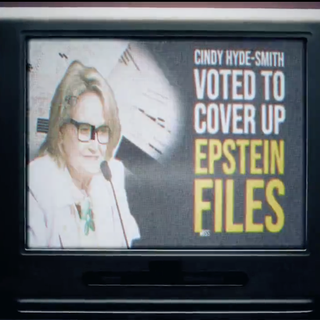
The most-aired ad in the closing stretch of Mississippi's Senate race features a Jeffrey Epstein survivor attacking GOP Sen. Cindy Hyde-Smith for voting against releasing files related to the convicted human trafficker. Why it matters: In the past week, Hyde-Smith has been outgunned on the airwaves. AdImpact data shows that only one of the eight most-aired spots portrays her positively. Five of the ads either positively portray her Democratic challenger, Scott Colom , or attack Hyde-Smith for her Senate record, largely painting her as an out-of-touch senator who cares more about her rich donors. The other two ads are for down-ballot races. Zoom out: The Epstein survivor ad has aired more than 1,200 times over the last week, costing the left-leaning New Deal for All super PAC over $329K, per AdImpact. In the ad, Jena-Lisa Jones condemns Hyde-Smith for her vote on the Epstein files and urges Mississippians to vote against her to protect their children. That vote, which passed 51-49 last year, indefinitely postponed an amendment that would have required the full release of the Epstein files by then-Attorney General Pam Bondi. "I do want transparency, and I support releasing information that can legally be released while protecting Epstein's victims. But a procedural vote on one amendment is not the same thing as saying the Epstein files should remain secret," Hyde-Smith said in a statement to the Mississippi Free Press. Hyde-Smith's campaign cut its own attack against Colom, calling him the "transgender defender" and naming him the "most radical Senate candidate of our lifetime." The ad played over 2,800 times across Mississippi and Memphis, Tenn., television markets in the 30 days since its Sept. 10 debut, costing the senator's campaign over $854K, per AdImpact. Hyde-Smith's campaign appears to have pulled back on the ad, spending less than $150,000 to air it between Oct. 19 and Oct. 26. The bottom line: Hyde-Smith is still expected to win, but the race is far tighter than anyone expected. As President Trump said during a rally for Hyde-Smith in Corinth, Miss. on Monday: "I'm here because Cindy is doing great, but I've just got to make sure."
Donica Phifer ·

Democrats will happily tell you how good they feel about retaking the House on Tuesday — just as soon as they stop hyperventilating into a paper bag. Why it matters: They've been burned too many times on Election Day to feel anything more than "nauseously optimistic," as one House Democrat put it to Axios. The polls point to a decisive Democratic victory on Nov. 3, yet fears of a massive polling error or some other eleventh-hour disaster are giving party members sleepless nights. "One woman at a rally in New Jersey told me last week that she was 'nauseously optimistic,'" Rep. Jamie Raskin (D-Md.) told Axios. "That may capture a lot of people's last-minute jitters." A House Democrat who has spoken to leadership told Axios: "They feel optimistic. You know, guarded. Guarded optimism. Where we're going to end up, you never know." State of play: Democrats are targeting dozens of Republican-held seats they think could flip, some of which President Trump carried by 10, 15, even 20 percentage points in 2024. Democrats' House Majority PAC, for instance, went on the air Wednesday in retiring Rep. Elise Stefanik's (R-N.Y.) district, which Trump won by 21 points. They also began spending against Rep. Mike Flood (R-Neb.), who won his last reelection with 60% of the vote. HMP is so bullish it has moved money out of the races to replace retiring Reps. Don Bacon (R-Neb.), Chuck Edwards (R-N.C.) and Darrell Issa (R-Calif.), which they believe Democrats are on track to win handily. "I am cautiously optimistic we win between 20-25 seats," Rep. Ro Khanna (D-Calif.) told Axios. Democrats' landslide scenario puts them closer to 40 or 50 pickups, which would be a historic night for the party. Yes, but: Mid-decade redistricting in Republican-controlled Southern states is all but certain to cut into those gains. The GOP is expected to easily flip redrawn seats in Tennessee and Louisiana where the incumbent Democrats chose to retire rather than face uphill reelection battles. Democratic leadership is also nervous about several Democrats who opted to run in their new seats, including Reps. Kathy Castor (D-Fla.), Darren Soto (D-Fla.) and Shomari Figures (D-Ala.), according to three lawmakers familiar with their thinking. What they're saying: All of the nearly 20 House Democrats who spoke to Axios on Wednesday expressed some degree of confidence about the election. "I've been to 26 states this campaign, and I'd say Democrats have been riding a wave of tremendous optimism and activism over the last several months," said Raskin. Rep. Hillary Scholten (D-Mich.) told Axios she is feeling "legitimately good" and that "the cautious optimism is there only because of … history." "The optimism is real and I think for good reason," said Rep. Johnny Olszewski (D-Md.). But virtually everyone also offered reasons for keeping their expectations tempered. "Dems have been burnt by good polling before," Rep. Dave Min (D-Calif.) told Axios. Min also said Democrats are "hyper-aware of the election tampering that Trump and his goons are engaging in right now," something several other lawmakers echoed. "We're bracing for all manner of drama before, during and after the election," said Rep. Jared Huffman (D-Calif.). The other side: "The Democrats are trying to deflect from the revelation of their secret, corrupt plan to stack Alaska's ballot," said White House spokesperson Lauren Bis, referring to a New York Times report about the drafting of spoiler Senate candidate Dan J. Sullivan. The Justice Department has sued to delay certification of Alaska's Senate election if Republican Sen. Dan S. Sullivan narrowly loses. "If these are the types of tactics Democrats need to use to win elections, maybe they should reexamine their radical policies," Bis said. Other Democrats worry that an eleventh-hour spending spree by Republican donors and super PACs will give the GOP a critical boost in the final days of the campaign. "Elon Musk's $366 million infusion to Republican coffers ... has definitely filtered down into a lot of the close House and Senate campaigns and paid for a wall of propaganda," said Raskin. Another House Democrat told Axios that there is "some anxiety about the super PAC money from Rs," which is "mostly coming" from candidates in battleground districts. Zoom in: Lawmakers also pointed to race-specific dynamics that have helped certain Republicans outrun national headwinds. The battle between Democrat Cait Conley and Rep. Mike Lawler (R-N.Y.) is "razor-thin close" despite Kamala Harris carrying the district in 2024, a House Democrat from New York told Axios. A House Democrat from Michigan told Axios that Senate candidate Abdul El-Sayed's weakness atop the ticket is "hurting" Democratic campaigns in the state's battleground House districts. A House Democrat from Texas told Axios the party will likely fall short in several winnable seats there because of either poor recruitment or insufficient investment from the national party. The bottom line: "There are two ways to run — scared and unopposed," said Scholten. "We're running in tough elections all across the country, and we're going to run hard through the tape in every single one."
Andrew Solender ·

Regional mediators led by Qatar are trying to reach a diplomatic deal to restart negotiations between the U.S. and Iran and prevent the resumption of war after the midterm elections, three U.S., Israeli and regional sources say. The Qataris are working to convince Iran to allow UN inspectors to visit its bombed nuclear sites in return for some sanctions relief from the U.S. Why it matters: A renewed bombing offensive appears likely shortly after the midterms without a last-minute deal. IDF chief of staff Gen. Eyal Zamir spoke on Monday with CENTCOM commander Adm. Brad Cooper to coordinate ahead of potential attacks. Such an operation is expected to include a week of massive strikes on Iranian leadership, energy, nuclear and infrastructure targets, U.S. and Israeli officials say. What he's saying: President Trump told Axios in a brief interview Wednesday that negotiations with Iran are taking place through mediators but stressed that he doesn't know whether they'll bear fruit. "We need to finish the job — either through a deal or another way — we will find out if negotiations can succeed," he said. "While our Brave Armed Forces are fully prepared to defend the Homeland, Iran continues to give diplomacy a chance to succeed," Foreign Minister Abbas Araghchi said on X Wednesday. Behind the scenes: The mediation efforts are being led by Qatar, with the support of Pakistan, Saudi Arabia, Egypt and Turkey, sources say. Qatari negotiator Ali al-Thawadi visited Tehran earlier this week for talks with Iranian officials about a potential deal with the Trump administration. A regional source briefed on the talks said the Qataris presented ideas for how to bridge the gap between the U.S. demand that Iran give up its enriched uranium stockpile and Iran's insistence that the U.S. first lift its naval blockade and release Iran's frozen funds. The regional source and a U.S. official said the mediators are telling Iran that accepting the proposals may be the only way to avoid major attacks after the midterms. Saudi, Turkish and Pakistani security officials reinforced that message during a visit to Tehran several days ago. The Iranians responded that they will seek Supreme Leader Mojtaba Khamenei's approval for the ideas in the next several days, the regional source said. After the visit to Tehran, Saudi officials told the White House that the Iranians are concerned about a possible U.S.-Israeli bombing operation after the midterms, per a U.S. official. The Saudis asked Trump not to rush into war and to allow more time for negotiations. Zoom in: One idea under discussion is returning to the agreement that Iran reached with the International Atomic Energy Agency last year in Cairo. The September 2025 agreement allowed UN inspectors to resume visits to Iran's nuclear sites. It was suspended after the UN Security Council reimposed "snapback" sanctions on Iran a month later. IAEA Director General Rafael Grossi told the UN Security Council Tuesday that reviving the Cairo agreement could provide a framework for restoring inspections of Iranian nuclear facilities damaged in U.S. and Israeli strikes. If Iran agrees to allow UN inspectors to visit its nuclear sites, it could receive waivers to sell oil and see some of its frozen funds released to buy food and other humanitarian goods, the regional source said. "There is some movement. We are waiting for the Iranian response," that person said. "The idea is that the Iranians will be able to say that they didn't give up the enriched uranium up front, and the U.S. will be able to say that it got some nuclear concessions from Iran." The other side: The regional source said the White House told mediators it will weigh in on the proposed deal after learning whether Iran accepts it. Trump discussed Iran with Secretary of State Marco Rubio and White House envoy Steve Witkoff during a trip to Texas on Air Force One Tuesday. On Wednesday, he discussed Iran with his national security team as part of his intelligence briefing, U.S. officials say. "As the President stated, they have been systematically destroyed, both militarily and financially, and unless they change their ways, rapidly, we will soon finish the job," a White House official said. "The United States is in a very strong position with control of the Strait of Hormuz and the Iranian economy collapsing," the official added. "Iran has been decimated, and one way or the other, the conflict in Iran will be over very soon."
Barak Ravid ·