Source
The Bulwark
- Type
- Newsletter on Substack
- Lean
- Right-leaning
- Right-Center+3.7 of ±10
- High1.0 of 10 (lower is better)
- High
- Website
- thebulwark.com ↗
- Feed
- RSS ↗
- Articles stored
- 58
- Tracked since
- Oct 21, 2026
Down: MBFC factual reporting score, 0 most factual to 10 least.
Bias and credibility ratings by Media Bias/Fact Check.
The Bulwark on MBFC ↗Publishing rhythm
How many articles The Bulwark published over the last 14 days, by publication time, and at which hours of the day.
Top keywords
All keyword charts for The Bulwark →The people, places, organizations and topics The Bulwark covered most that day, by the share of its stories that mention them. Article counts are shown for context.
No keywords that day yet.
Latest articles

You don’t have to love Democrats, progressives, or the left to know what to do. THE MIDTERM ELECTIONS are upon us, and the Trump administration is doing everything it can think of to remind us why we should be hoping for the Republicans to go down in a blue tsunami. Donald Trump and his minions flirt more brazenly than ever with Vladimir Putin’s Russia while trashing Ukraine. Trump, speaking at a rally, brags that “we’re making a freaking fortune” in oil-industry profits and mocks concerns about “people suffering at the pump.” The mass-deportation regime crosses yet another line of indecency with the planned expulsion of more than 150 legal immigrants and asylum seekers from Afghanistan—including family members of people who helped American troops—to Pakistan for transfer into the hands of the Taliban. Meanwhile, Trump reportedly rails against a former adviser over a $50 million pardon-for-pay deal—because he didn’t get a cut of the money. His public meltdowns are getting more and more unhinged: When he isn’t ranting at a reporter for being out of shape, he’s gushing about men’s derrieres. Also, the Department of Justice takes its third crack at carrying out Trump’s vendetta against former FBI director James Comey, filing a third case while one earlier case remains pending and another was dismissed. As they said in Joseph Stalin’s USSR: “Show me the man and I’ll show you the crime.” Or three crimes. Oh, and White House and cabinet officials are making racist Halloween posts. Happy Election Day, kids. AFTER DONALD TRUMP won in 2024, some right-wingers said things like this: Well, that, as they say, aged like fine milk. Most sane people’s reaction to that post today would be Actually, whatever I might have written down after Election Day 2024 would have been no match for what really happened. Would your piece of paper have had any of these: Trump, seconded by Vice President JD Vance and by other administration officials, makes repeated threats to invade Denmark? Trump starts a war with Iran (after throwing pro-democracy protesters to the wolves), repeatedly declares victory, and screws it up so badly he has to cite it as a plus that Russia didn’t help Iran more? Two U.S. citizens get shot dead in the streets by federal immigration officers? After a mass pardon of January 6th insurrectionists, about a hundred get arrested on new charges including ones of sex crimes against children, and several try to argue that the clemency applies to unrelated offenses? Trump tears down the East Wing to build a ballroom bigger than the White House itself? Trump puts a photo of an autopen where Joe Biden’s picture should be in the White House gallery of his predecessors and proudly shows it off to baffled foreign leaders? The Trump Department of Defense orders strikes on boats on mere suspicion of drug trafficking, almost certainly murdering innocent people in the process? The Trump administration basically shuts down refugee admissions except for white South Africans fleeing a mythical genocide? Trump publicly berates Norway and calls it a “shithouse country” because he didn’t get the Nobel Peace Prize? Trump’s secretary of health and human services pushes the vaccine/autism hoax? And the list could go on and on. Yes, Orange Man is bad, actually. I WANT TO TAKE A MOMENT to address people who agree that Trump and the Republicans are deeply flawed but are reluctant to vote against them (which obviously means voting for Democrats) because of the “woke left,” or DEI, or DSA. It’s hardly unreasonable to be critical of the left generally, or of specific subsets of progressivism, for overreach or toxicity or bad policy ideas. Rep. Alexandria Ocasio-Cortez’s comment that “Woke 1.0 was crazy” has become something of a meme, and I think it’s important to acknowledge that it was often damaging to careers, reputations, free expression, and the social climate. But you have to wear MAGA hat-sized blinders to insist in 2026 that wokeness is worse than—or at l…
Cathy Young ·
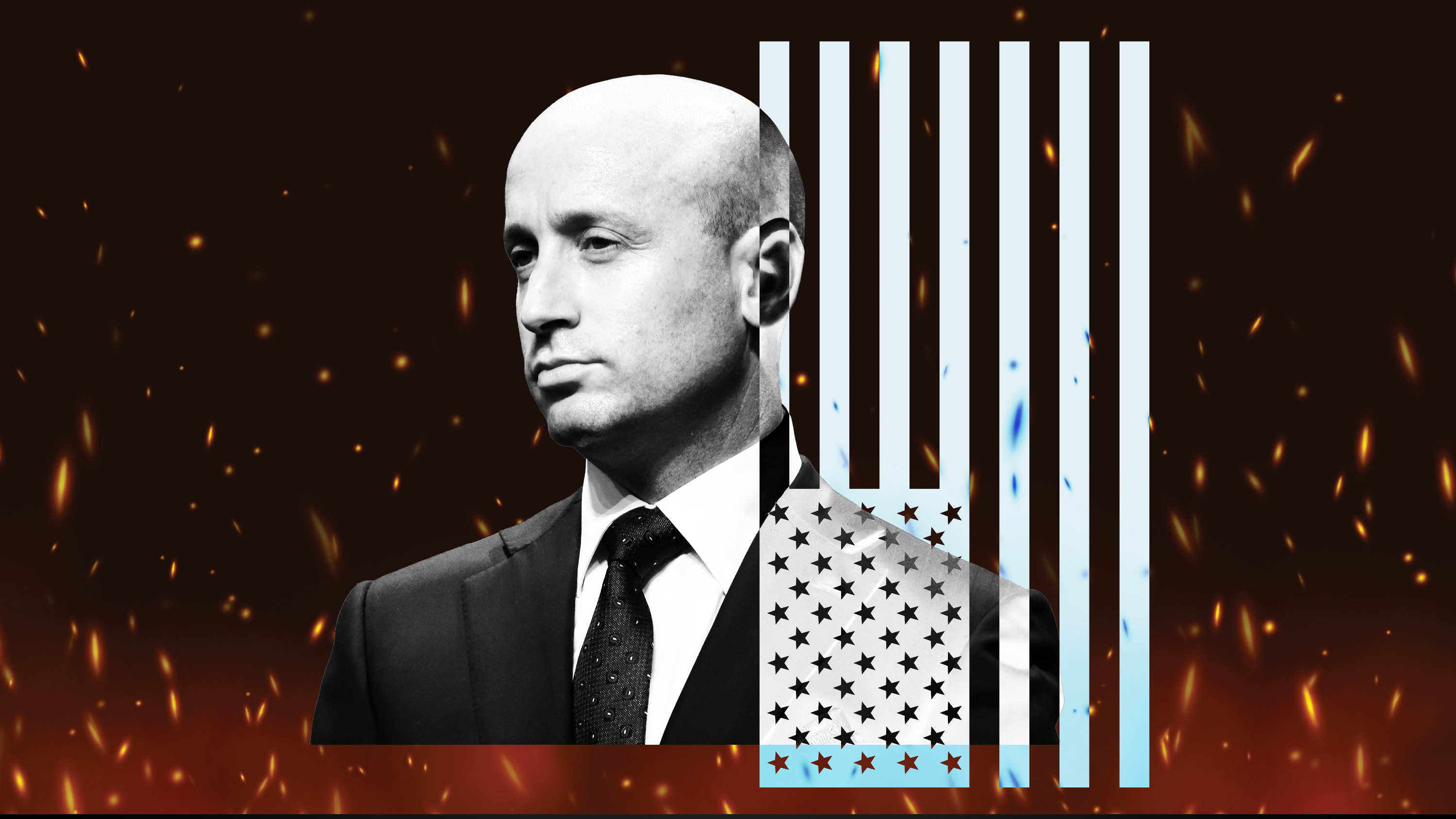
Changing a culture is hard—especially when the people in that culture don’t want you to. AS AMERICANS VOTE IN THE MIDTERM elections, arguments about the economy, immigration, national security, and the performance of our elected officials abound. But beneath the political debates lies a question that deserves more attention: What kind of country do we aspire to be? Last week, Donald Trump hosted an event in the Oval Office to introduce the Justice Department’s new “Fraud Whistleblower Incentive Program,” and his deputy chief of staff, Stephen Miller, used the opportunity to distinguish between people he portrayed as exploiting government benefits—namely refugees and immigrants—and the American taxpayers being robbed by them: The president is describing . . . a criminal conspiracy where a state knowingly aids and admits fraud that’s funneled into these communities. Again, oftentimes migrant communities. They then use those funds to fund the Democrat party. So it’s a self-enrichment scheme that’s being exposed, that is fundamentally a criminal conspiracy. I first grew suspicious of the administration’s attempts to transform American culture in the spring of 2025, when Miller delivered remarks from the White House “about what President Trump has done to secure our values, our culture and our way of life from the unwavering assault from the radical left and the communists and the Democrat party.” He went on to decry “the wave of racial discrimination, so called diversity, equity and inclusion policies, that have taken over both public sector and private sector entities,” and promised that “this administration is not going to let our society devolve into communist woke DEI strangulation.” After a disconcerting soliloquy about prison rape and child abuse, Miller promised that “children will be taught to love America, children will be taught to be patriots. Children will be taught civic values for schools that want federal taxpayer funding. . . . For any nation to be successful it cannot teach its children to hate themselves and to hate their country.” Miller and the rest of the Trump administration have been explicit about their desire to reshape our society, from what children are taught in schools to how Americans understand equality, national identity, immigration, and patriotism. But I wonder whether they truly understand the complexity of what they are attempting. LEADERSHIP, VALUES, CHARACTER, and organizational culture are interrelated. I’ve commanded military organizations with tens of thousands of soldiers, worked with physicians and hospital executives to transform health care organizations, and taught business leaders struggling to change their companies’ cultures. In almost every instance, the challenge was far more complicated than the leaders initially imagined. Culture is not a policy memorandum, a strategic plan, or a collection of slogans posted. It is the accumulation of history—the good and the bad—made up of our shared experiences, traditions, values, and behaviors. It is reflected in what people believe, how they treat one another, what they consider acceptable, and what they are willing to defend. Leaders certainly influence culture, but every individual also shapes it. One of the first lessons leaders learn when attempting to change culture is that authority and influence are not the same thing. A CEO can change organizational structures, revise policies, replace executives, and change performance standards. A military commander can issue lawful orders, establish priorities, and enforce discipline. But genuine cultural change requires credibility, trust, consistency, and, perhaps most importantly, a willingness among all members of the organization to embrace the values their leaders claim to represent. A leader’s most powerful tool to change a culture is personal example. People watch what leaders do far more closely than they listen to what leaders say. When leaders preach integrity but practice deception, d…
Mark Hertling ·

Pro-democracy groups have spent months prepping for an election crisis—and confronting what happens if their defenses fail. THEY FLEW IN FROM AROUND THE COUNTRY: Some 250 lawyers, policy experts, communication staffers, and other leaders from the American Civil Liberties Union huddled in a hotel conference room in Philadelphia last April trying to figure out what to do if American democracy goes to shit. For two and a half days, the group walked through twenty-five variations on how Donald Trump and his allies might mess with the midterm elections. The scenarios ranged from Trump casting doubt on the results without evidence, to interference from the Justice Department, to the deployment of ICE or the National Guard at the polls, to the refusal by Republican leaders in Congress to seat Democratic victors. Such hypotheticals had been discussed publicly and privately before. What the ACLU was trying to do at that gathering was to wargame what effective responses would look like—and to explore a more uncomfortable question: What if no response comes together? The participants wrote up mock press releases and came up with advocacy, legal, and organizing game plans. They made state-specific plans and worked through who, in each scenario, would be their first call: the state attorney general, the election director, or some other figure. Lending a feeling of urgency to the proceedings was some breaking news: As the participants worked through the scenarios, the Supreme Court announced its ruling gutting Section 2 of the Voting Rights Act. ACLU officials told me that while they weren’t surprised by the ruling, they were caught off guard by how quickly Republican-controlled states rushed to carve up the electoral power of black voters in the South—underscoring the importance of the work they were doing. And one other theme emerged as the conference went on: More than in any previous election, this year’s midterms would be contested in states with known election deniers in positions of power over election administration. “It’s hard to imagine that these people who have gone to such trouble, to such lengths, to try to take power, are going to just peacefully accept the results,” Deirdre Schifeling, the ACLU’s chief political and advocacy officer, told me. “We are prepared on all fronts,” Schifeling said. The ACLU is not the only pro-democracy organization that has been engaged in this type of preparation in the leadup to the midterms. In fact, in nearly a dozen conversations with officials at civil-society groups and Democratic-aligned organizations this week, it became clear that quietly, behind the scenes,
Paid postLauren Egan ·

Democrats agree on reversing Trump’s cuts. Tuesday will determine what bigger plans they’ll consider. Ypsilanti, Michigan THE MIDTERM ELECTION IS ABOUT a lot of things: gas prices and groceries, the spread of corruption, and the future of democracy. And yet, as much as any single issue, it’s about health care. You can tell by listening to all the Democrats talking about high deductibles, drug costs, and insurance companies as they campaign around the country. Or you can tell by reading all the public-opinion surveys in which voters consistently rank health care as one of their top concerns. But if you really want to know why this is a health care election, your best source isn’t the politicians or the pollsters. It’s the people on the front lines. One of them is Raymond Rion, a family medicine physician and executive director of Packard Health, a small network of clinics spanning Ann Arbor and Ypsilanti on the western outskirts of the Detroit metro area. Packard is what’s known as a Federally Qualified Health Center, where anybody can get care regardless of income or insurance status. And like similar safety-net providers all over America, for the past decade it has benefited directly from the Affordable Care Act. “We almost went bankrupt in 2011,” Rion told me in a conversation last week, recalling how in the old days staff at Packard would work the phones furiously to get supplies and find specialists who would take referrals. Now many more patients have either Medicaid or private coverage they’ve purchased through HealthCare.gov, the online marketplace that the law created, so that the proportion of uninsured patients has fallen from around one in three to one in ten. It’s a lot easier to find referrals for these insured patients, though thanks to the infusion of paying customers Packard can do much more on its own. In particular, Rion said, the organization has opened two new branches, started a pharmacy, begun offering prenatal services, and vastly expanded behavioral health care by bringing on a half-dozen new doctors, nurses, and case workers. Now a retrenchment is underway. Coverage options on the HealthCare.gov marketplace got more expensive because Donald Trump and the Republicans refused to renew temporary subsidies that had been reducing the price of insurance. On top of that, the first cuts to Medicaid as part of last year’s “One Big Beautiful Bill” are starting to take effect. Rion told me Packard has already laid off a provider in anticipation of less revenue next year. Patient volume is down, he went on to explain, in part because uninsured patients sometimes avoid care altogether out of fear a single visit will lead to more treatments with more bills. And postponing care in that way can have serious medical consequences, as his colleague Ron Romero told me. “So you have somebody with diabetes, their chronic condition isn’t getting cared for,” said Romero, who like Rion is a family physician. “Their sugars rise, and they end up having other medical problems. Their kidneys start to get damaged. They start to have eye damage. They increase risk for heart attacks and strokes. . . . They end up in the emergency room.” And things are likely to get worse. Partly that’s because next year most of the remaining Medicaid cuts will take full effect, throwing more people off coverage. And partly it’s because forces that have nothing to do with Trump or Republican actions are making medical care more expensive for everyone, including those with employer insurance and Medicare. That will lead to still more people delaying or skipping care, ending up in the emergency rooms, and putting yet more cost pressure on providers. Rion wasn’t taking a position on the election or political parties, he made clear. He was just describing the reality he sees around him: “The whole system is being pressured. Nobody is immune to this stuff.” He’s right. And here’s the thing: This has all happened before. We know happens next.
Paid postJonathan Cohn ·
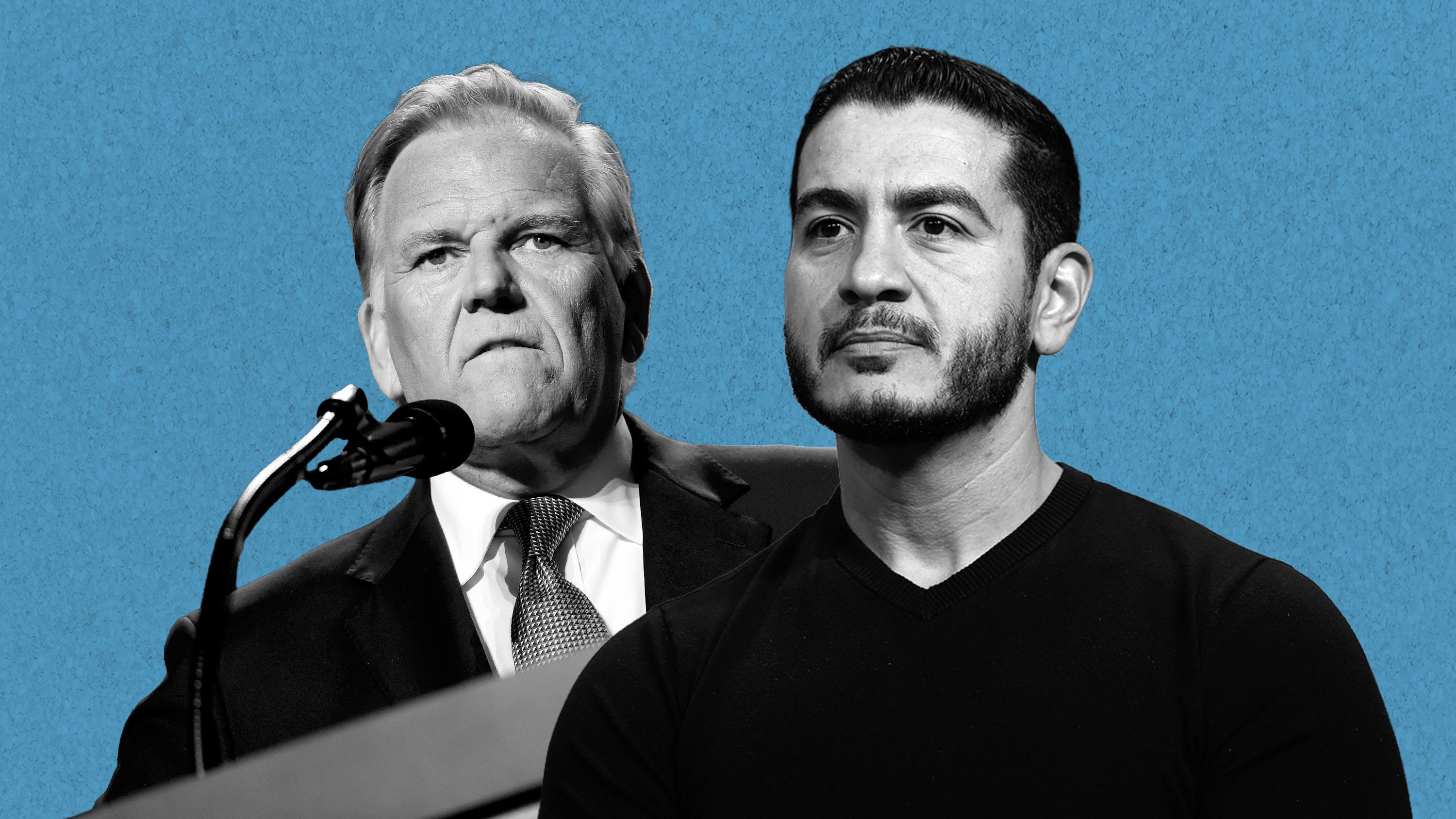
What we learned from ten gettable Trump voters. MICHIGAN HAS ONE OF THE FEW Senate races where Democrats seem poised to underperform the national environment. Part of that is because the party’s internecine fighting simply won’t die, and no one involved—from Abdul El-Sayed to his primary opponent Haley Stevens to her fiancé Jason Turkish—seems inclined to end it. But another part is owed to the cartoonishly bigoted attacks that the Republicans have directed at El-Sayed. To date, Sen. Ted Cruz has called El-Sayed a “jihadist leprechaun,” said that “Americans will die” if he were placed on the Senate Intelligence Committee, and warned that if he learned that a group of terrorists were about to be apprehended, he would “let those terrorists know.” Cruz and other Republicans (including Rogers) have claimed El-Sayed is a supporter of the Muslim Brotherhood. Sen. Bernie Moreno has said we can’t have a senator who hasn’t accepted Jesus as his savior. And a speaker at a recent Trump rally said that having an American birth certificate doesn’t make El-Sayed an American. Mike Rogers claimed in a debate that El-Sayed “can’t condemn Hamas.” A Senate Leadership Fund ad claimed El-Sayed wanted to impose sharia law in the United States. This is, to put a fine point on it, the most bigoted Senate campaign in modern history. Which raises an ominous question: Will it work? To help find out, we convened one last focus group: ten Michiganders who voted for Trump in 2024 but now disapprove of his job performance. Like Stevens’s household, they were pretty divided on El-Sayed, mainly because, likely thanks to some of those attack ads, they distrust him. But the focus group actually wasn’t all bad news for Democrats:
Paid postSarah Longwell ·

Plus: What You Missed This Week From The Bulwark Happy Halloween 👻! Once you’ve recovered from tonight’s spooky activities, hang with the gang tomorrow night for a preview of what to expect on Tuesday. Sunday’s members-only live stream starts at 8:30 p.m. ET. Tim Miller, Sam Stein, Lauren Egan and more of the Bulwark fam will be covering the latest races and taking your questions, which you can drop in the comments of this post. So grab your favorite beverage, candy, kick back your feet and tune in to prepare for the week ahead. 🚨OVERTIME🚨 Happy Halloween! As the elections approach, I’ve been thinking a lot about our friend Shane DiGiovanna, whom we lost this year. Shane loved elections—and especially the maps. I would have loved to hear his take on this year’s electoral map and what it might mean for 2028. He’ll be on my mind over the next few days. So many of you donated to his charity after his death, and I want to thank you again. I’ll also be thinking of Shane over the upcoming holiday as I watch The Slightest Touch, a new HBO film about Colin Farrell and his friend Emma Fogarty, who has lived with EB for forty years. 🎵 On the Jukebox…🎵A new single from friend of the newsletter Chris Jones & The Night Drivers, in collaboration with Mountain Home Music Company called See It Now. You can watch Jones talk about it here, but: It’s a song in praise of flip-flopping, or looking at it in a more positive light: it’s a song about coming to a different viewpoint after reflecting and taking a deeper look. Maybe that’s something we should all do more often. Near Gettysburg? Our friends at Principles First are gathering at The Barn Resort on Thursday, November 5, at 6 p.m. for Ours to Keep: What’s Next for the Republic. Two days after the midterms, there should be plenty to discuss about where the country stands… and what comes next. Details and tickets here. Use code gettysburg26 for a treat: free admission! The Great Boomer Bust-out… Hannah Yoest on playing with nomenclature in America’s fractured reality. Congrats to Bryce B…. Who won our World Series prediction contest, picking the Brewers to beat the Rays. His winnings are on their way. And congrats to all Brewers fans out there on this historic win. While baseball is over for now… It is playoff football here in Ohio, and my alma mater is on the move! Here’s an interview with my high school English teacher, the great “Chico” Kyle, who happens to be one of the most successful high school football coaches. He talks about helping kids go from wanting to be the star to wanting to contribute to the team… and why even the star had to get his schoolwork done. Whatever happens in the midterms, we’d all do well to give Chico a listen. Tech support questions? Visit our new HELP Center! Questions for me? Respond to this message. —30— Editorial photos provided by Getty Images and Shutterstock. For full credits, please consult the article.
Jim Swift ·
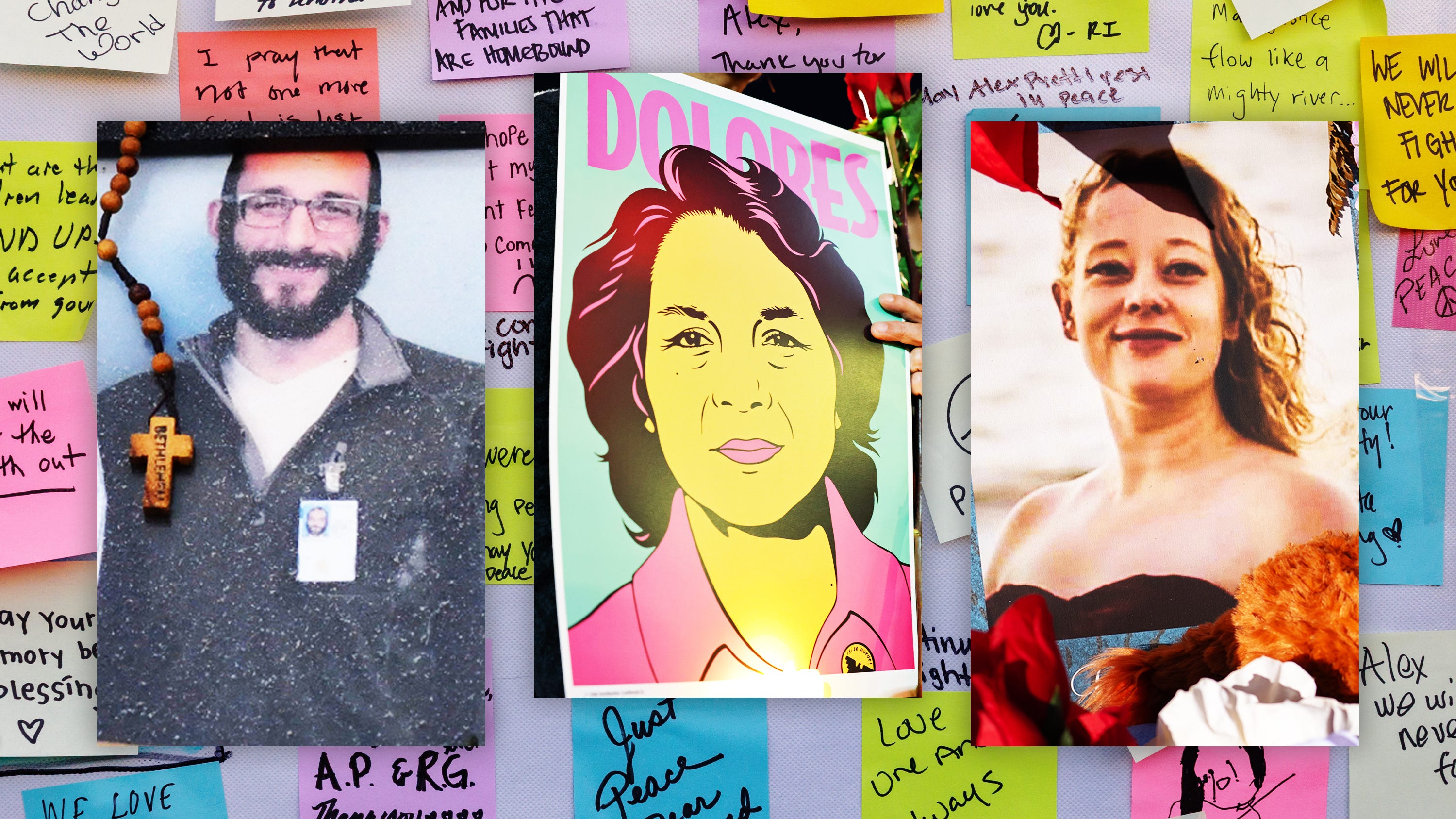
The families of Alex Pretti and Renée Good are demanding answers. Plus: Remembering Dolores Huerta. MICHAEL PRETTI HAD A STARK MESSAGE at a press conference in Minneapolis this week: “Our son Alex was shot and killed by the government.” After nine months of being stonewalled by the Trump administration, the slain man’s parents are demanding accountability. “We will no longer stay silent about the actions of the Department of Justice,” Michael Pretti said, saying that when it has deigned to communicate at all, the DOJ has lied and obfuscated about their son’s death. “This is not normal. This is not justice. This is morally wrong,” he continued. Michael and Susan Pretti join the family of Renée Good in demanding action from a government that has killed and slandered their loved ones while refusing to hold its agents accountable for their actions. Neither family wanted to take on such a public role; the Prettis make clear they do not want to be seen as political activists. Yet it’s likely that the only way these families—and the many more victimized by ICE—will see real justice is through political action leading to political change, starting with the midterm elections. But the Prettis didn’t foreground politics at their press conference on Tuesday. The main thing they conveyed was their grief. They talked about missing their son—his big heart, his warmth, his humor, his intolerance of bullies. Michael described their tight-knit Midwestern family. He wishes he could chat with his son about cars and hiking. Minnesotans have maintained a memorial for Alex, a subject that brought Susan Pretti close to tears. “I save every post, I save everything that is ever written. It’s my only connection,” she said. “So for everyone that says anything about Alex, we read it, we keep it, we cherish it.” Michael added that they have received over two thousand letters. “[We] read every single word, every single card.” But memories of their son naturally point back to the manner in which he was taken away from them. And as parents and as citizens, they want justice. “Michael and I are not asking for any special treatment,” Susan said. We do not want to be on TV. We are not political activists, nor do we want to become political activists. All we want is justice for Alex. We are here today to simply request that the federal government treat us with the dignity and respect that our son deserves. Dignity and respect would signal a change in the government’s M.O. when it comes to the Prettis, who have received a combination of silence and lies from the Department of Justice about Alex’s death. The DOJ has also refused to cooperate with a state investigation into the killing. “He was peaceful, he was observing, he was not protesting, this was not a protest that Alex was at. His hands were in the air when he was tackled to the ground, he was face down on the ground when he was executed,” Michael said. In the immediate aftermath of the killing, the Trump administration did not reach out to Pretti’s family. Instead, cabinet members went on TV and implied he was a domestic terrorist. “Imagine that your child was killed by the actions of the federal government. Imagine learning that your child had been murdered by watching it on TV. No one from the government called us that day. They didn’t call us the next day nor the next, nor the next 275 days,” Michael said. The Prettis called on Daniel N. Rosen, U.S. attorney for the District of Minnesota, and Attorney General Todd Blanche to “stop shielding Alex’s killers” and to resume sharing information with state-level investigators. Renée Good’s family held a similar press conference earlier this month, announcing the filing of two related civil lawsuits against the U.S. government and against the individual Trump officials who oversaw the failed immigration enforcement operation in Minnesota last winter: White House deputy chief of staff Stephen Miller, disgraced former DHS chief Kristi Noem, former acting ICE dire…
Adrian Carrasquillo ·
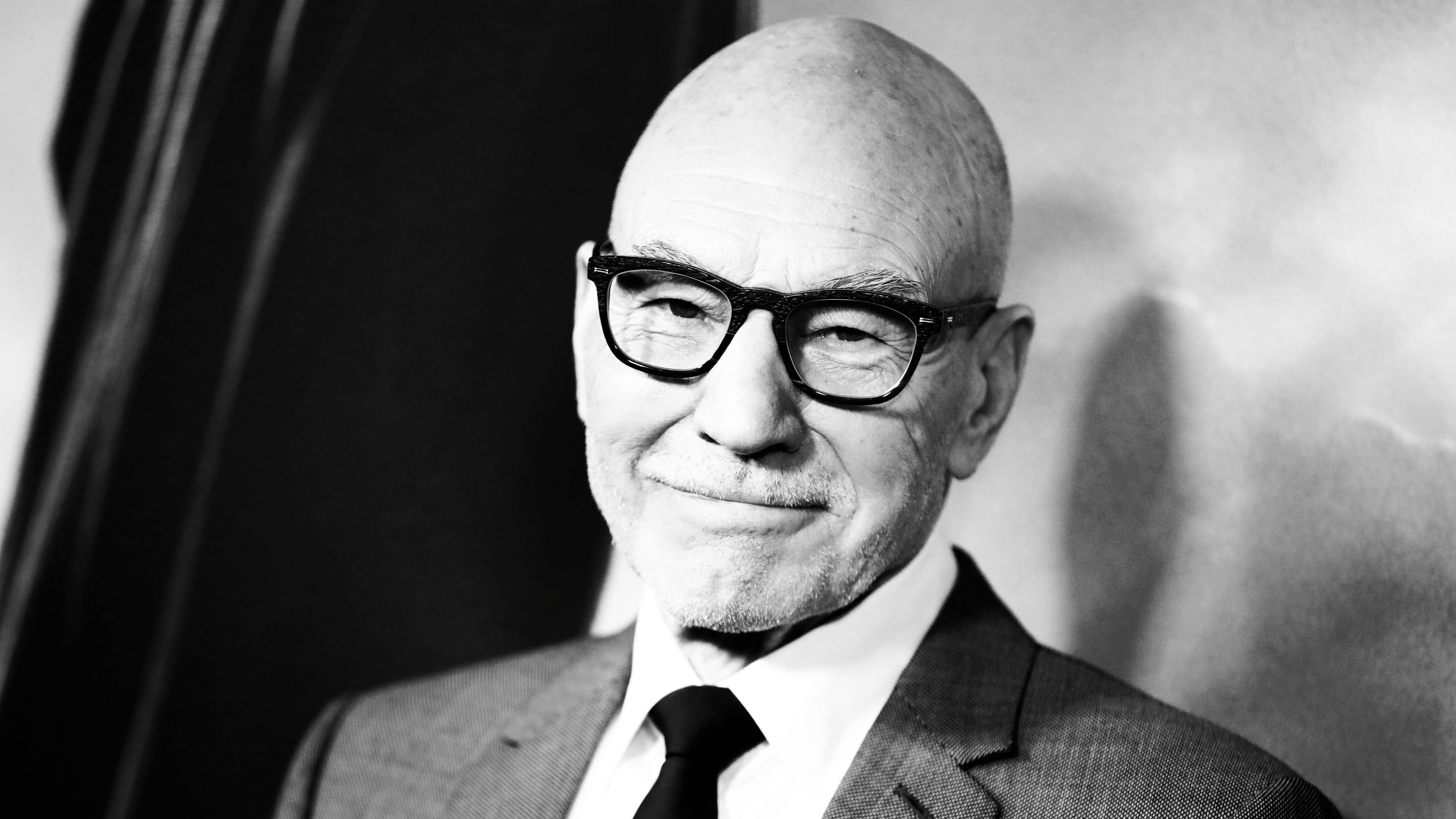
Plus: The hidden danger of film tax credits. PATRICK STEWART WAS A KEY PART of my childhood and young adulthood, first as Captain Jean-Luc Picard on Star Trek: The Next Generation and then as Professor Charles Xavier in the X-Men series. In the debates over which Star Trek captain is the greatest, Picard was always my pick because The Next Generation was always my show: It’s one of the first instances of must-see viewing I can remember, and the biggest reason was the bizarre magnetism of this wiry, bald Brit who, for some reason, had a French name. This, naturally, didn’t quite make sense (though he had a good explanation), but none of that mattered because Stewart was so damn commanding onscreen. This may have been the first time I really realized what “acting” is: He just had a presence, an authority, one that transcended mere Starfleet rank. You could buy him as a leader because he had both forcefulness and empathy. It wasn’t until some years later that I realized, “Oh, right, he was just a classically trained Shakespearean,” because a 6-year-old doesn’t know Macbeth from Mack Brown. But he was, of course, a Shakespearean actor, and he was, of course, one of the greats. (One of my rare regrets is not having seen his Macbeth on stage.) If you haven’t read his 2023 memoir, Making It So, you should: It’s deeply funny (his story about meeting Sting before knowing who the Police are is delightful) and also a reminder of a bygone era when working-class lads just kind of fell into acting and became learned monologists almost by accident. His Professor X was almost too on the nose (I’m sure Stewart was offered up in more than one Wizard magazine fancast), but no less perfect as a result. That he’s been returning to the role for more than twenty-five years (including a final appearance in Avengers: Doomsday this December) is a testament to how completely he has come to define the role of Charles Xavier, mutantkind’s best hope and strongest advocate for coexistence with humanity. In those films, Stewart played opposite Ian McKellen, another great Shakespearean whom he previously respected and knew but not very well. After their turns as Professor X and Magneto, they became very close, enjoying a warm bromance and appearing together onstage in Waiting for Godot and No Man’s Land. McKellen—who back in 1987 had been the “single dissenting voice” warning Stewart not to give up the British stage for Star Trek, advice McKellen would go on to admit he was wrong about—officiated at Stewart’s wedding in 2013. In the first of the four Star Trek movies in which he appeared, Generations, Stewart’s Captain Picard is told by the time-traveling villain played by Malcolm McDowell that time is “like a predator. It’s stalking you.” That’s a great line for an actor like McDowell to chew on, very menacing. Only at the movie’s end does Picard get off a reply. His line could easily come across as unbearably, unnaturally, ruinously cheesy, but the Shakespearean Stewart delivers it with such comfortable seriousness that it just works: “Someone once told me that time was a predator that stalked us all our lives. I rather believe that time is a companion who goes with us on the journey and reminds us to cherish every moment. Because they’ll never come again.” “What we leave behind,” he adds, “is not as important as how we’ve lived.” Lights, Camera, Ideological Compliance IndieWire’s Brian Welk wrote a pretty jarring story about the state of Texas’s decision to withhold grant funding for an indie film shot in Texas due to Governor Greg Abbott’s distaste for the film’s subject matter. It is a reminder that financial assistance for the arts often comes with strings attached—or the threat of strings being attached—that may make some filmmakers think twice before attempting to take advantage of the money-saving benefits. You should read the whole thing, but the basics are pretty straightforward: Danish-Iranian director Milad Avaz shot Elastic Hearts, starring Cole…
Sonny Bunch ·
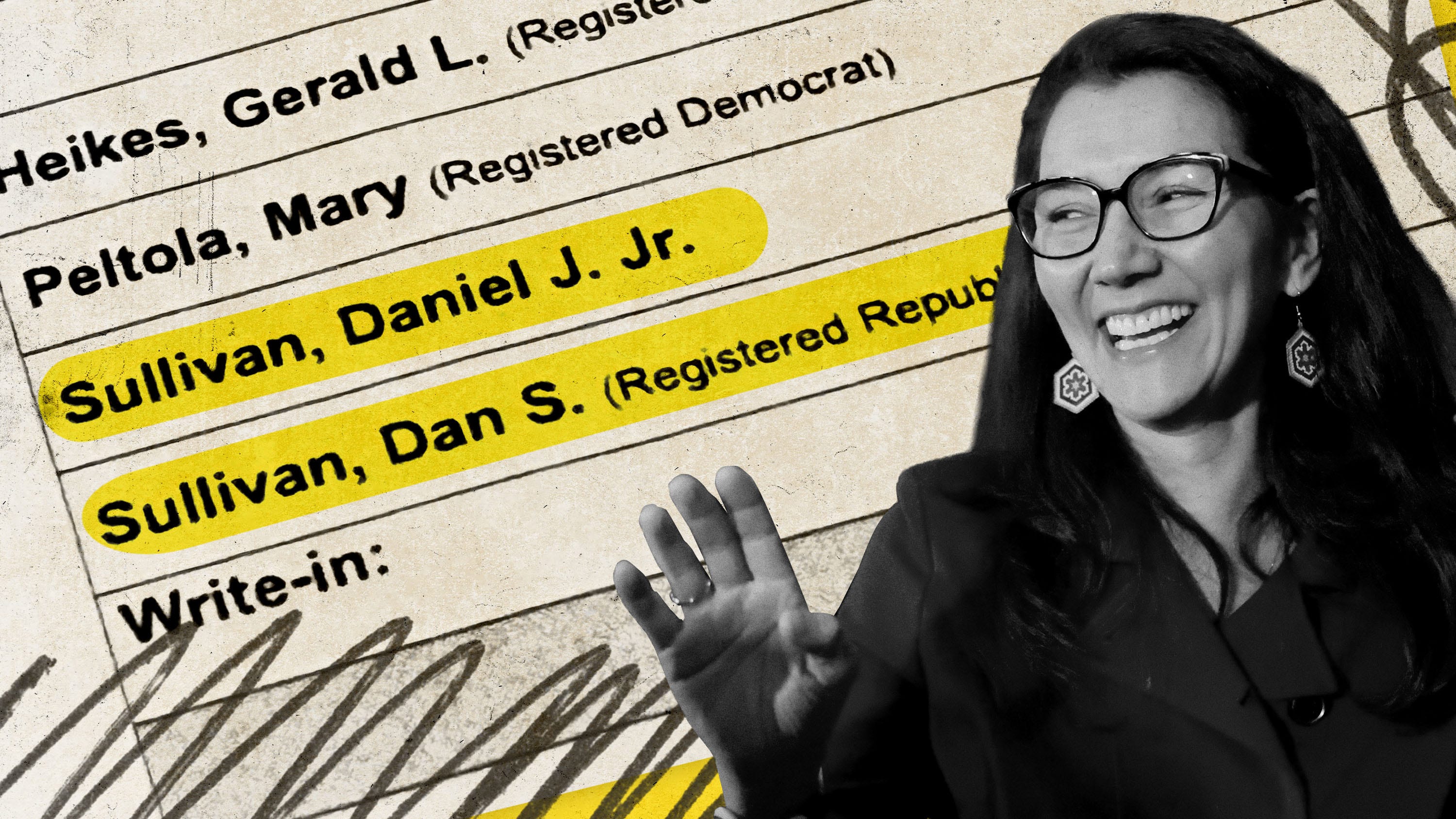
Republicans are babies. Some progressives are, too. Quick alert! I got something special for you on the Secret later today. You’ll thank me. —JVL 1. Boo Hoo Mary Peltola’s team did something not nice and unsportsmanlike. They went and found another guy named Dan Sullivan and got him on the ballot in their race against incumbent Sen. Dan Sullivan. Republicans are outraged—not just random Republicans on X, but national, elected Republicans. They have sued. They are calling on Peltola to drop out of the race. They are demanding that if Peltola wins the election, her victory not be certified, or she not be seated. President Trump has said Peltola should be prosecuted. AYFKM? Is Peltola’s trick illegal? No. It is perfectly within the law. Is Peltola’s trick dishonest? No. No reasonable person could be confused by the Dan Sullivans on the ballot. Can Peltola’s trick influence the election? No. Because Alaska has ranked-choice voting so even if a Dan Sullivan voter picked the wrong Dan Sullivan first, she would presumably pick the other Dan Sullivan second. Is Peltola’s trick nice? No. You may have noticed during the course of this campaign that Mary Peltola has been exposed as a not-very-cuddly politician. She is surly. She has sharp elbows. She plays for keeps. So if someone wanted to make the argument that Alaskans should vote against Peltola on character grounds, because she isn’t very nice, that would be fine. By all means, the Party of Trump and Epstein should absolutely play the character card. But don’t tell me—not for one second—that Peltola has done something beyond the pale. This is what hardball looks like. Republicans were perfectly fine with hardball when Ron DeSantis was steamrolling the legislature into adopting his newly gerrymandered congressional map. We live in a world where legality is the standard. Mary Peltola’s dirty trick was legal. End of story. So quit your whining, Republican snowflakes. You like that? Great. Now let me make you angry by yelling at some progressive whiners.
Paid postJonathan V. Last ·
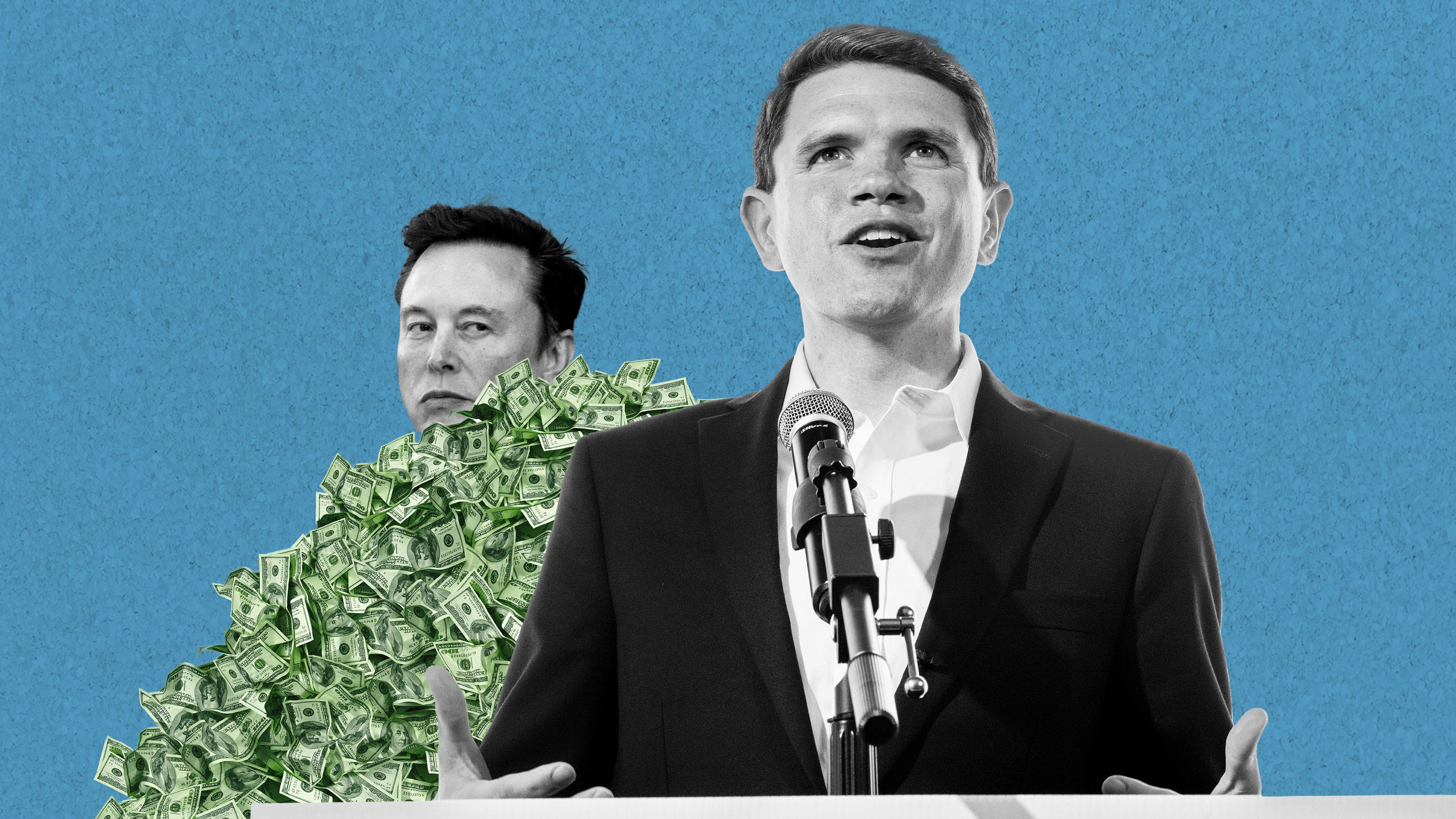
Musk’s spending: $190 million. Talarico’s vibes: priceless. ELON MUSK MIGHT WANT KEN PAXTON to be a senator more than Ken Paxton does. The CEO of SpaceX and Tesla and owner of X has personally shoveled $190 million of his prodigious wealth into electing Paxton. It’s bought him a lot of attack ads about how James Talarico thinks there are six genders, how he is a Christian but “hates Christianity,” and even a hostage-like video from a state senator encouraging people to vote for her philandering estranged husband. But will it buy Paxton a seat? To find out, we convened one more focus group of 2024 Trump voters who disapprove of Trump’s job performance. What we found was
Paid postSarah Longwell ·
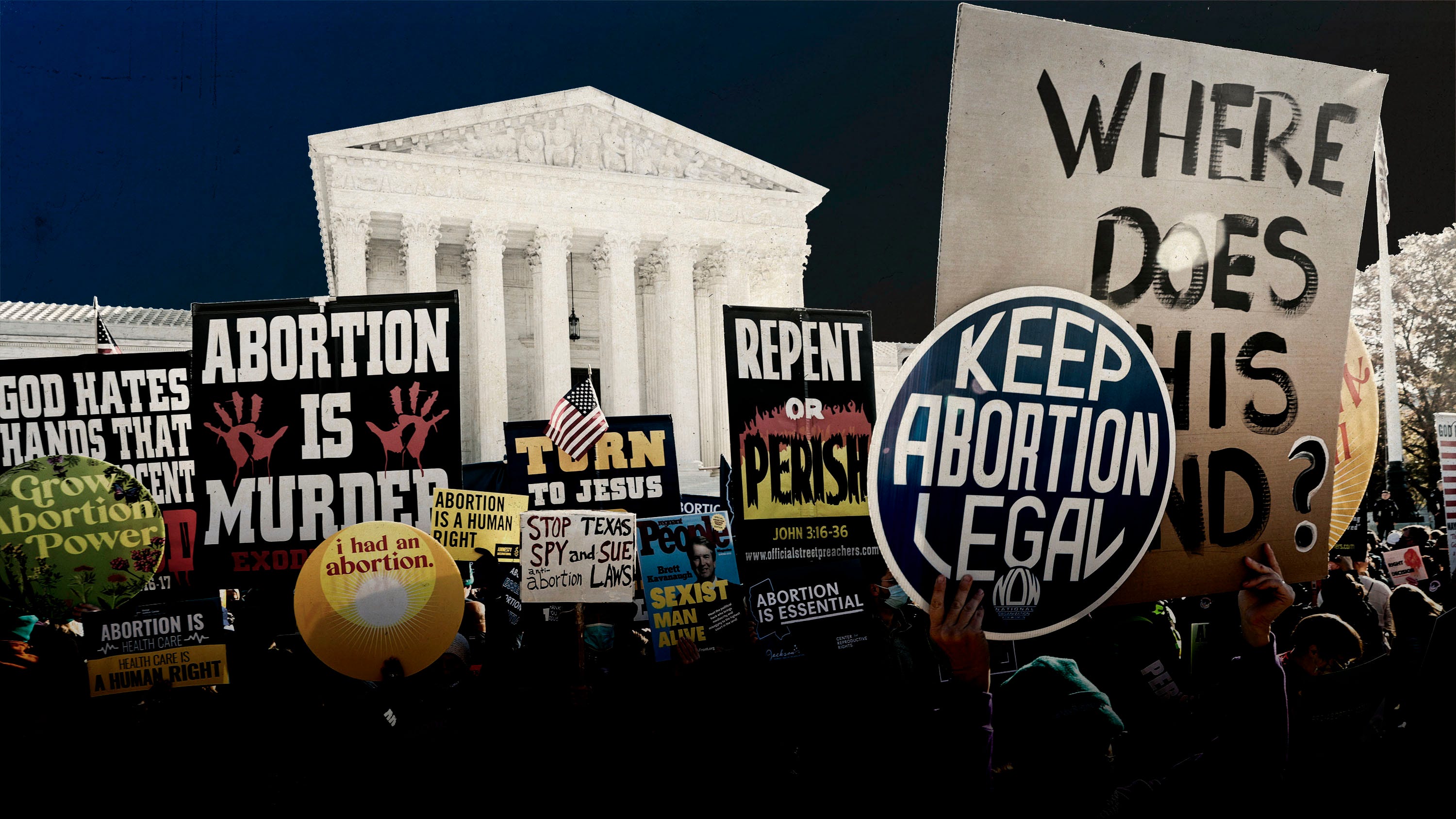
Don’t worry, though, it’ll come back. We’re nearly to the climax of Spooky Season: The midterms are just four days away. Bulwark+ members can join us on Sunday at 8:30 p.m. ET for a livestream on all things midterms—we’ll give you the state of play, our best predictions, and take your questions! Happy Friday. Where’d Roe Go? by Andrew Egger In 2022, the Supreme Court struck down Roe v. Wade, turned abortion access back into a state-level issue, and seemingly ushered in a new era of abortion-centric politics. For years, the issue was hotly contested: Red states passed laws slapping new abortion restrictions in place, while voters in many blue and red states passed ballot referendums rolling those restrictions back. In 2022 and especially 2024, Democrats spent heavily messaging the issue: Joe Biden and Kamala Harris campaigned in front of a “RESTORE ROE” banner while trying to stave off the comeback of a president who had embraced the label “the most pro-life president in American history.” Today, however, abortion politics is an afterthought. A few states have abortion-policy ballot measures on the ballot this year, and the issue has come up in a few races: In Maine, Troy Jackson has repeatedly attacked Sen. Susan Collins for her votes to confirm the Supreme Court justices who ultimately struck down Roe, while Collins has pointed out that Jackson opposed abortion early in his legislative career. By and large, though, the issue has vanished from candidates’ stump speeches and from the airwaves. This summer, AdImpact estimated that Democrats were buying ads mentioning abortion four times less than in the same period in 2024. Adsmom, a platform that tracks digital ad spending on Meta and Google, found that political spending on abortion ads in October came fifteenth among 26 different topics, below issues like data centers and the climate. It’s common for one party or the other to inch away from a given issue as it becomes clear the opposition has the more popular position. What’s strange today is that both parties have dropped abortion messaging—for totally different reasons. For Democrats, it’s mostly a matter of other issues crowding abortion out. In 2022 and 2024, when Democrats held the presidency, it was Republicans who were making the kick-the-bums-out cost-of-living message. Today, amid growing anger about rising prices thanks to tariffs and the Iran war, Democrats seem to see every moment not spent uttering the word “affordability” as a moment wasted. Cost of living, Democratic strategist David Axelrod told The Bulwark, is “an urgent issue that unifies the largest number of people, so it makes sense that other issues, such as abortion, are playing a lesser role.” Meanwhile, as Trump has become deeply unpopular and Democrats have pushed the political map deep into red states, they’re suddenly competing for the votes of plenty of Americans who may not fully agree with them on abortion politics. Here, too, it makes more sense to stick to the grand unifying theme of affordability. “I think the reproductive freedom conversation—although very important—is a very specialized and nuanced conversation,” said Antjuan Seawright, a Democratic strategist in South Carolina. “You don’t think about that when you’re going to pay your light bill.” All that makes sense. But it also makes it somewhat stranger that Republicans, playing defense in so many red states, aren’t turning to abortion politics to try to rally the troops. The GOP’s midterm strategy has been to give up independents for lost and spend all their time and energy juicing base turnout—so where’s the rally-round messaging for pro-lifers? One major factor is that Trump and his allies, having seen abortion-access initiatives pass even in red states in 2022 and 2024, are no longer confident that their base actually finds abortion politics particularly motivating. While abortion remains an animating issue for highly religious voters, most social conservatives seem to have execute…
Andrew Egger ·
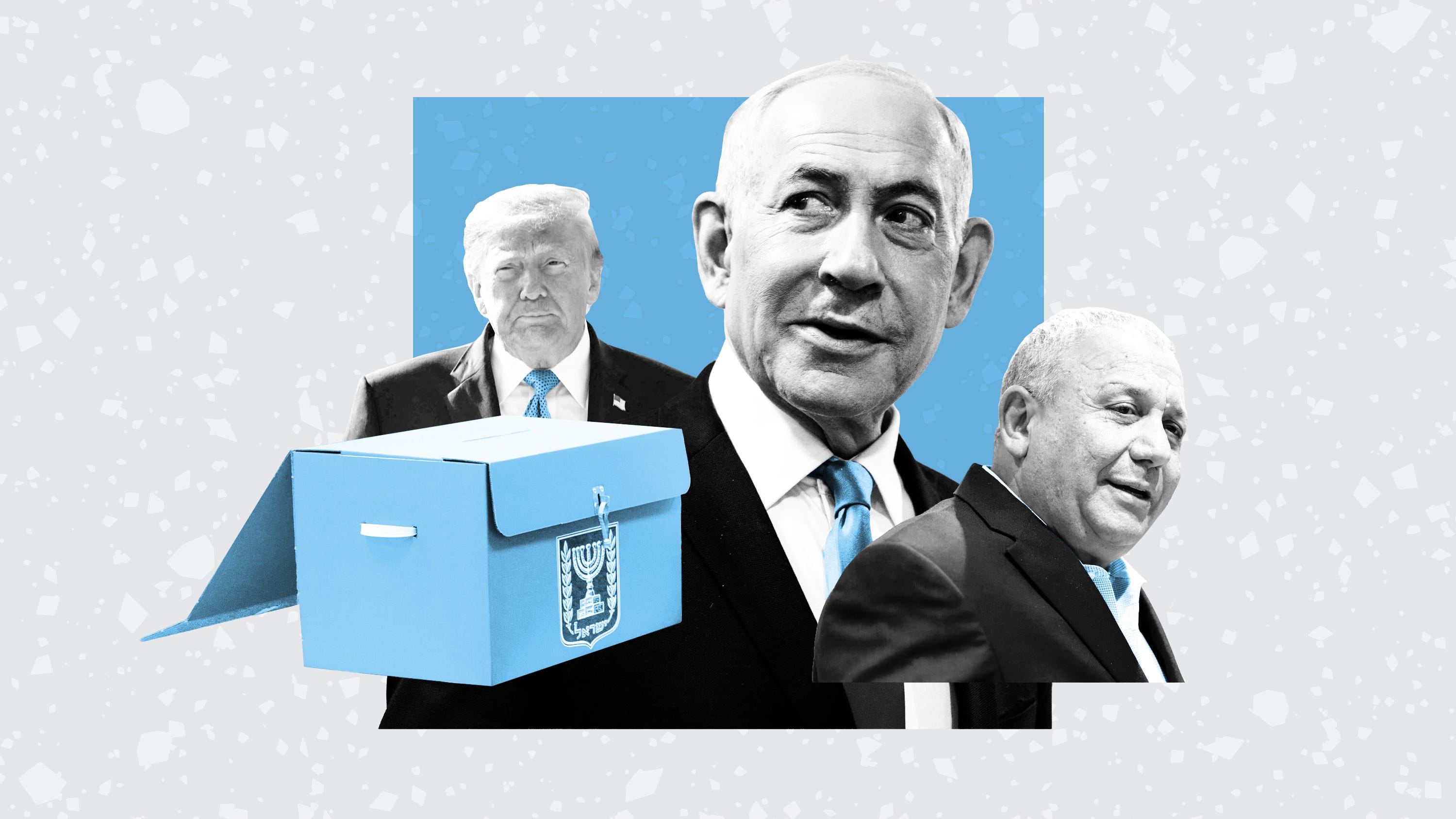
No answers, no new questions, no good options. ISRAEL’S ELECTIONS SEEMED TO PROMISE resolution: an answer to what kind of judiciary Israel would have, to how its war with Iran and its proxies would be managed, to what place the ultra-Orthodox and settler extremists have in Israeli society, and to what kind of relationship Israel would have with the United States. Instead, the elections seem to have offered more of the same—more logjam, more muddling through, more uncertainty, more frustration. Israelis don’t receive much sympathy these days. Much of the world is angered by the conduct of Israel’s campaign in Gaza, the violence perpetrated by Israeli extremists in the West Bank, and Israel’s advocacy for the war with Iran that has led to regional and global economic disruptions. But even for those who hold such views, it may be possible to summon some understanding of the frustration many Israeli voters feel after a hard-fought election campaign, which led to only one conclusion: Israeli politics are stuck. In the election held this week, a clear majority of voters registered their desire for change. While counting continues, the parties in Prime Minister Benjamin Netanyahu’s coalition, which currently hold 68 seats in the 120-seat Knesset, are set to decline to around 53 seats. The demand for change is not primarily driven by the issues that grab international headlines, like the war with Iran and the situation in Gaza. As in every country at almost every time, internal considerations dominate: leadership, accountability, burden-sharing, the rule of law. Voters who are demanding change view Netanyahu and his coalition as derelict on all of these measures. They see in him a divisive, corrupt leader who places his own interests and survival above the nation’s. He has blocked the formation of a state commission of inquiry to establish accountability for the failures ahead of the massive Hamas terrorist attack of October 7th. He backs the demands of his ultra-Orthodox partners to exempt their communities from military conscription, even as other Israelis have served hundreds of days of reserve duty in the last three years. And his government makes minimal effort to crack down on criminality, whether by Jewish extremists attacking Palestinians (and others) in the West Bank or a wave of organized crime killings in Israel’s Arab communities. Those grievances helped consolidate an opposition coalition made up of democracy defenders, good-government right-wingers, survivors of the October 7th attack, those concerned with Israel’s international standing, and Arab citizens. Gadi Eisenkot, the former chief of staff of the Israel Defense Forces, led an opposition bloc of four parties who agreed on the fundamental requirement of ousting Netanyahu, which netted around 48 seats. The turnout in the Arab sector set new records, and two Arab parties will likely hold 18–19 seats between them. But it is not enough. It is clear that Netanyahu retains support, reflected in the fact that his Likud Party will remain the largest single party in the Knesset, with around 27 seats. He has his die-hard supporters, those who see him as an experienced security hand, those who treat voting Likud as a tribal loyalty, believers in a deep state that is trying to railroad him, and young Israelis who have known almost no other leader. Despite the failures of October 7th, some give him credit for Israel’s military achievements afterwards. In his election-night speech, he recited the list of Hamas, Hezbollah, and Iranian leaders killed by Israel in the past three years. He is an expert campaigner. While locking in coalition partners—ultra-Orthodox and far-right parties—with nowhere else to go, he then cannibalized seats from within his own bloc, ensuring that Likud and the bloc as a whole overperformed pre-election polls. Even so, he has no easy path to form a government. In Hebrew, they call this a “plonter”: a complete entanglement with no solution. FOR EISENKOT’S…
Daniel B. Shapiro ·

The question is, why were they so shortsighted about appeasing him? PRETTY SOON THERE WILL BE a new sheriff in town. And already, companies that collaborated with the Trump regime are shaking in their boots. The question is why (almost) none of them saw this coming. If you have been following my work, you know I’m obsessed with the connection between the rule of law and the economy, and with how corporations have aided Donald Trump in degrading the democratic, rules-based system that for so long helped the private sector flourish. Rather than resist his bullying and assaults on norms, they preemptively capitulated. Trump was a transactionalist, they figured; so as long as they kept him onside, it didn’t matter whether he trampled the Constitution (or free markets). Trump came to Corporate America hat in hand, occasionally flashing the loaded gun tucked in his waistband. Companies and C-suite execs responded with gifts, praise, ballroom “donations,” contracts, soft-focus documentaries, equity stakes, and help with executing some of the most legally questionable parts of the Trump agenda. Some capitulated. Others more gleefully collaborated. All who cozied up to Trump were shortsighted. That shortsightedness may soon cost them: Democrats are on the verge of retaking at least one chamber of Congress, giving them subpoena power and a chance to hold not just Elon Musk but the rest of the corporate quislings accountable. Just this week Rep. Jamie Raskin (D-Md.), for instance, warned oil companies not to assist in importing Russian diesel—despite Trump’s deal with the Kremlin, and his pressure on U.S. energy firms—because doing so would break the law. But if Democrats truly want to restore the rule of law, and create better incentives for companies, they can’t just mete out punishment. They must also do some other things that may make them feel queasy. Let’s talk about it.
Paid postCatherine Rampell ·

The GOP Senate candidate keeps changing the same old story. Re-grifter Mike Rogers, the Republican nominee in Michigan’s Senate race, met a guy. A guy with a story. And the guy’s story, which is about getting more work after his company became more successful, has become Rogers’s favorite story. He loves the story so much, he’s been telling it every chance he gets. There are just a few problems: When Rogers tells the story, he often presents it as a recent revelation—a conversation he had just a “couple of weeks ago” or “the other day,” even though he’s told the story at least 31 times over the past year and a half. It’s also not exactly clear who Rogers’s guy is, which industry he works in, or if he is actually a composite guy made up of several people. That’s because Rogers’s anecdote changes rather frequently. The point of Rogers’s story is that Trump’s tariffs have directly made life better for people who work in manufacturing. As Rogers tells it, this guy—who is sometimes several guys or even an entire factory’s worth of guys—has a business that has been able to add a second shift because of increased orders resulting from reshoring, a happy consequence of Trump’s tariffs. The first recorded instance of Rogers relating the anecdote occurred in May 2025, when, during a local radio interview, he said, “I talked to a guy who is putting on a second shift for the first time in twenty-five years because automobile companies are trying to reshore here in the United States. That’s a win, that’s a win for Michigan.” Rogers repeated the story later that week in another interview. (In that instance, he mentioned that the guy worked as a “fabricator.”) Over the rest of the summer, Rogers brought up what the guy told him three more times that we were able to find. This makes sense—it’s a great, illustrative story if your goal is to advocate for and defend Trump’s tariff policy, which Rogers has done throughout his Senate campaign. During a town hall event in September 2025—four months after initially telling the anecdote—Rogers mentioned it again, but this time, he moved up the timestamp to make it a bit more current. “They are starting to repurpose and reshore here in Michigan,” Rogers said. “Talked to a guy just a couple—two weeks ago, adding a second shift. Why? Because the car companies called them and said, ‘Well, I really can’t bring it from China anymore. How about you?’” Rogers would bring up the second-shift man dozens more times over the following year. But as he did, he started tinkering with more details. Check out this supercut of the 31 times we found Rogers telling variations of the story:
Paid postJoe Perticone ·
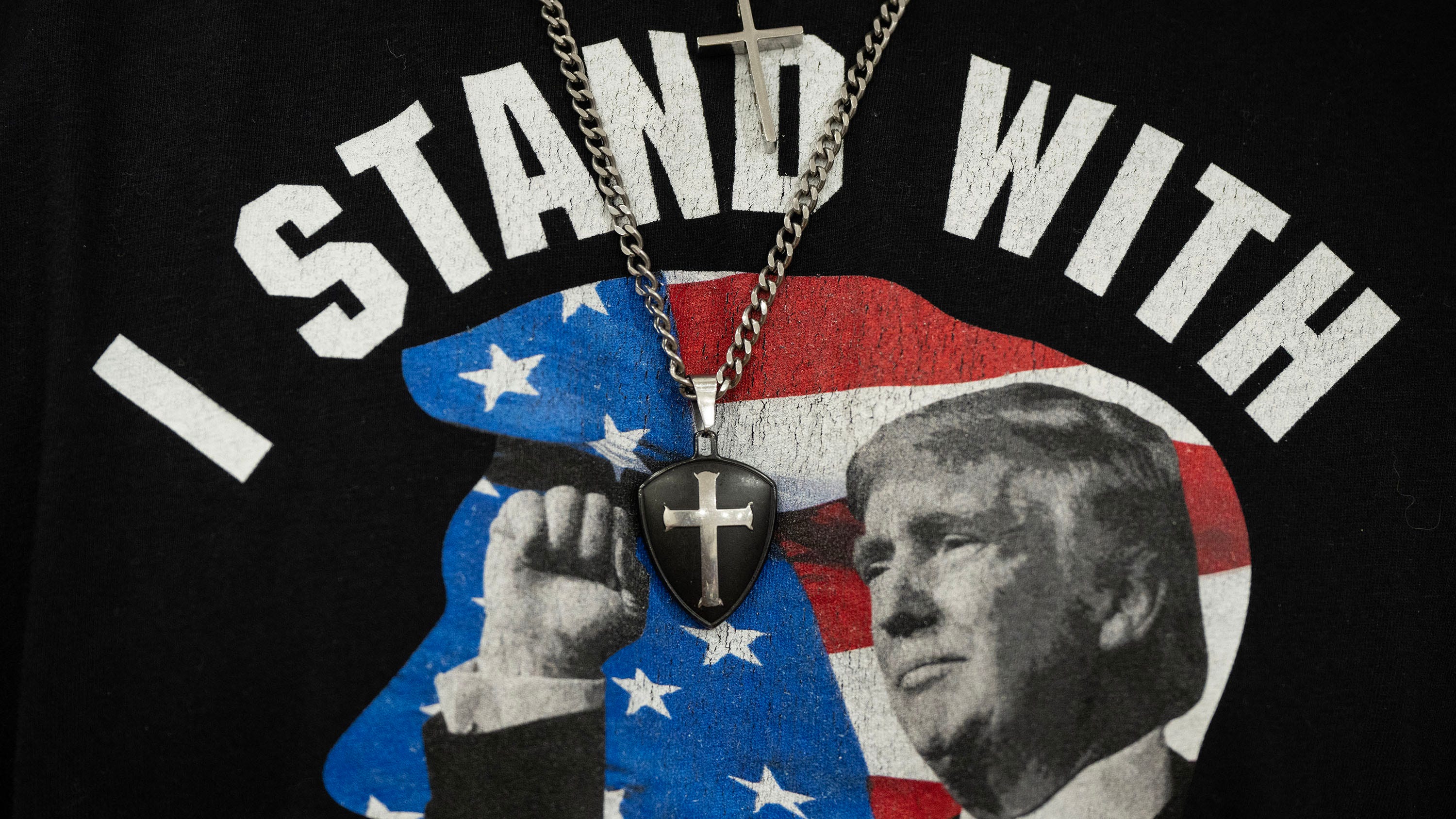
Don’t expect “Christian nationalism” to disappear when Trump disappears. 1. Christian Nationalism Someday the Lord will call Donald Trump home. At that happy hour, as Trump is welcomed to eternal life, there will be a great deal of uncertainty in American politics. What will happen next? My thesis is that there will be no return to normal because Trump has fundamentally changed the character and desires of a large group of American voters. This is the sort of idea that’s hard to quantify because you can’t come at it head-on. You have to look for oblique angles. The Public Religion Research Institute just gave us some interesting data points. I want to talk about them, and the Gospel, and the future of American politics. And empathy. PRRI’s latest survey asks a number of interesting questions. For instance, what do people think of the term “Christian nationalism”? It’s important to understand that Christian nationalism is not a type of Christianity. It’s a type of nationalism. Christianity is, by definition, universal. “For God so loved the world that He gave His one and only Son, that whoever believes in Him shall not perish but have eternal life.” Note “the world” here, not “Israel,” or “Egypt,” or “Samaria.” Or, obviously, America. The bedrock idea of Christianity is that Jesus Christ is the literal Son of God and that He was sent for all. Christianity, again by definition, can have no foundation in nationhood. In a very real sense, it is antithetical to the idea of nationhood. So what is Christian nationalism? It is a form of nationalism that cloaks itself in Christian identity. Which is to say: It is a false Christianity. Again, just by definition. Most Americans understand this dichotomy, which is why a plurality of Americans (48 percent) view “Christian nationalism” unfavorably. But there are two groups that have glommed on to the idea: Republicans and white evangelical Christians. Favorable views of Christian nationalism are up from four years ago. Where did this increase come from? Largely white non-evangelical Protestants and white Catholics. Take a look at what’s going on here to really understand the character of Christian nationalism. Among Hispanic Protestants and Hispanic Catholics and black Protestants, support for Christian nationalism fell off a cliff. But among white non-evangelical Protestants, white Catholics, and Jews—huge increases in favorability. There is no way to interpret this shift as anything but an increased, shared understanding that “Christian nationalism” isn’t about Christ. It’s about white ethnonationalism. That’s why Hispanic Protestant support dropped by a third while Jewish support nearly tripled. Everyone understands the score. Now what happens when religious groups stop seeing themselves as based on theological concepts and start viewing themselves in terms of ethnonationalism?
Paid postJonathan V. Last ·

Truly weird stuff happening at the Department of Education. WITH THE ELECTION just five days away, things are looking grim for Republicans. The generic House ballot puts Democrats up 10 points among registered voters. The highly regarded New York Times/Siena poll suggests the Senate race in deep-red South Carolina is tied. And as I mentioned earlier this week, even right-wing influencers are seeing the end of the world in their tea leaves. It’s at this moment, with the Trump administration facing super-lame-duck status, that the Department of Education has opted to go all in on right-wing, genderqueered Harry Potter fan fiction. On Tuesday, the department’s X account made a post that appeared to embrace the right’s burgeoning “Malfoid” meme—a fanfic concept that imagines Harry Potter’s nemesis Draco Malfoy not as the Boy Who Lived’s male rival at Hogwarts, but as a cute girl for Harry to fall in love with. In the picture posted by the department,
Paid postWill Sommer ·

Our national pastime, our dark future, our big moment. “Any election that doesn’t go my way is fraud.” That’s the Trump model, and his right-wing allies around the world are starting to embrace it too. “The elections in the state of Israel were stolen by Arab parties that support terrorism and the elimination of the Jewish state,” Israeli Prime Minister Benjamin Netanyahu posted yesterday on X. “We demand from the police and the Shin Bet a thorough investigation into the election theft by the Arab parties and a full prosecution of the criminals.” Law enforcement, he said, “must act with an iron fist and in an immediate manner.” Not every such claim gets Trump’s blessing, however. Brazil’s Flávio Bolsonaro, who fled the country after his own election loss this week, yesterday posted a letter thanking Trump and Argentinian president Javier Milei for helping him escape to the United States. In it, he declared himself the “true president-elect of Brazil.” But Trump immediately poured water on the claim: “I’m not going to make a comment about that,” he told reporters. “I won’t get involved.” Bolsonaro subsequently deleted the letter and reposted it, sans president-elect claim. Happy Thursday. Baseball, Politics, and War by William Kristol A quick look this morning at three pieces of news from yesterday evening: one about sports, one about politics, and one about war. The Milwaukee Brewers are the World Series champions. It was the first World Series victory for the franchise, which came into existence as an expansion team in 1969. A mere 57 years later (!), they took it all. They pulled this off while playing in the league’s smallest media market, and with baseball’s nineteenth-biggest payroll. And they did it impressively and decisively, defeating the Padres 3–1 in the division championship series, taking the league championship 4–0 over the defending champion Los Angeles Dodgers, and then putting away Tampa Bay in the World Series 4 games to 1. The Brewers’ 11–2 postseason record this year was one of the four best performances in the last thirty years. One might even call what happened this year a Brew Wave. (Sorry.) The Brewers’ talent and momentum overcame the obstacles of money and history. Perhaps a good omen for next week? Speaking of omens, here’s another one. A couple of hours before the first pitch last night, Donald Trump posted an announcement to Truth Social: I’m going to be doing a major TeleRally for Julia Letlow, who is running for the U.S. Senate and is spectacular, and our fantastic Speaker of the House, Mike Johnson, on Monday evening, LIVE. The state where Julia Letlow is running for the Senate is Louisiana—which Trump won by a 22 percent margin just two years ago. This is a race where both national Democrats and Republicans have spent almost no money, assuming it couldn’t be competitive. But a poll a month ago (admittedly sponsored by the campaign of the Democratic nominee, Jamie Davis, but done by a very reputable pollster, Hart Research) showed a 4-point race. And since then we’ve seen an early vote in Louisiana that is even more bullish for Davis. (Lauren Egan reported yesterday on how encouraging the high early voting numbers in predominantly black areas are for Democrats.) Davis is a talented and hard-working—though underfunded—candidate. Kind of like the Brewers. Letlow, by contrast, has been mailing it in, assuming that in the general election as in the primary, her “complete and total endorsement” by Donald Trump would carry her to victory. But the Hart poll showed Trump’s approval underwater in the state. And with Democrats now, I believe, on a path to victory in neighboring Texas, and with neighboring Mississippi on the other side clearly in play (Trump visited there Monday), the Louisiana alarm bells seem to have belatedly gone off. Thus the last-minute “TeleRally” on Monday. But could it be like Tampa Bay’s rally to win the fourth game Sunday night and bring the Series to 3–1: too little, too late?…
William Kristol ·

The past is never dead. (But a lot of people in these movies are.) FOR A MOVIE ABOUT a cancer-riddled hitman for the CIA who holds the secret to the Kennedy assassination but can’t remember if he asked his coworker to kill him among the big stone heads of Easter Island, Wild Horse Nine has a surprising number of laugh-out-loud lines. The riff on democracy turning countries gay, which in turn leads to the development of fine cheeses; the resemblance of various religious totems to dwarves with which sexual congress has yet to be had; a character who exclaims, with something approaching tired exasperation, “Not once did I say ‘Fuck a clown’”: Martin McDonagh knows how to put the comic in darkly comic. Of course, anyone who has seen In Bruges, one of the best films of the 2000s, or The Banshees of Inisherin, one of the best films of the 2020s, likely already knows that. If you’ve seen those movies, you’ve already got the release date for Wild Horse Nine—with its cast of John Malkovich as the ailing CIA agent, Chris Carlisle; Sam Rockwell as his mentee, Lee Chesterfield; and Steve Buscemi as MJ, their pain-in-the-ass bureau chief out of Chile—circled in your day planner. The plot matters less than the talent. Which is good, since there’s not much in the way of plot here. Chris and Lee go to Easter Island in 1973, where Chris hopes to finish his memoir before he asks Lee to kill him, and MJ hopes to learn the location of the rifle that killed JFK, which may or may not be in MJ’s possession. While there, they run into some Chilean students who may or may not wind up tortured to death in the middle of Santiago’s National Stadium several months hence, once the coup Lee and Chris are plotting takes place, and Lee’s wife (Parker Posey) may or may not be fucking the aforementioned clown. Who’s to say? Wild Horse Nine is, in certain respects, an elliptical film, one moving forward a bit before circling back to its central preoccupation with guilt and regret. It has the sort of script that only works in the hands of skilled chatters, actors with perfect comic timing and the ability to bounce off one another. We’re in good hands, as few are better at this sort of thing than Malkovich and Rockwell. Malkovich’s sad, droopy eyes undercut the sardonic glee with which he spends much of the movie revealing the CIA’s plans, while Rockwell has mastered the ability of looking confidently befuddled, no easy trick. And it really is a very funny film, albeit one you can never be entirely sure you should be laughing at. Are we allowed to titter at Lee and Chris’s annoyance at the repeated deployment of the phrase “indigenous,” which feels like a mild anachronism for a movie set in 1973? Should we acknowledge the grim truth that Chris is, ultimately, right when he questions the usefulness of marches and instead insists “shooting people changes stuff”? Or is that simply the jaundiced view of a man who spent his career changing stuff by shooting people? Become a Bulwark+ member and join a community that loves great movies, big ideas, spirited arguments, and discovering something new together. MUCH OF WILD HORSE NINE focuses on real-world activities by the CIA around the world, which is why its insistence on veering into conspiratorial tangents about JFK is mildly distracting. It is very much a movie about the actions of the past weighing on the people of the present. Fatherland, too, concerns the way the past intersects with the present and how much the sins of the past should impact behavior in the present. Writer-director Paweł Pawlikowski’s film follows German writer Thomas Mann’s (Hanns Zischler) return to Germany in 1949, where he will receive a Goethe Prize. His son, Klaus (August Diehl), is disgusted by the journey; the family fled in 1933, following the rise of Hitler, and he and his sister, Erika (Sandra Hüller), consider Germany to be still riddled with fascists. Some of whom remain eager to stay in power. The most interesting political moments in…
Sonny Bunch ·
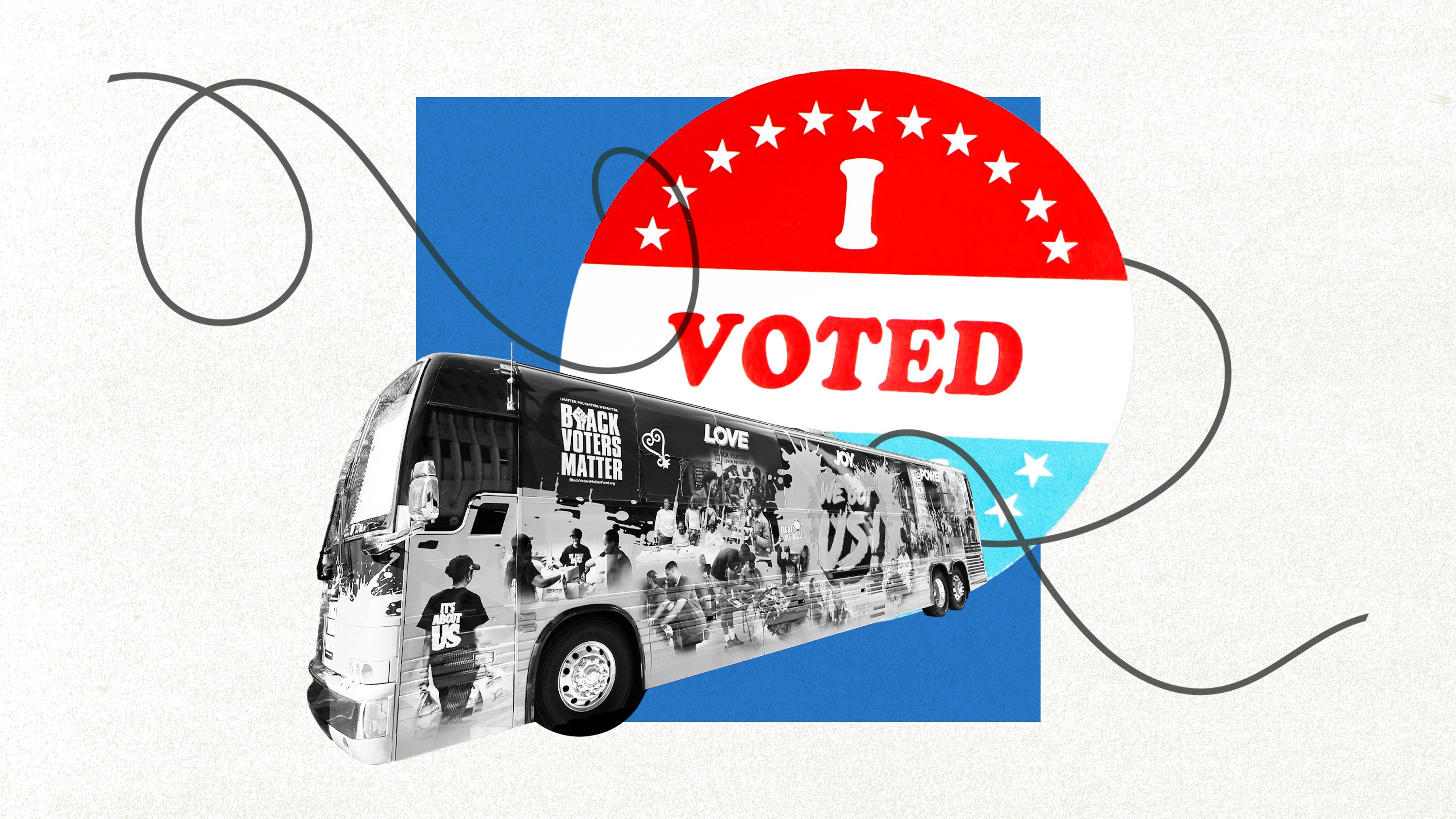
Early-voting numbers suggest the GOP redistricting spree may have helped mobilize the voters it was meant to marginalize. AS DEMOCRATIC OFFICIALS AND STRATEGISTS mapped out their game plan for the midterms earlier this year, they speculated that the Supreme Court’s ruling gutting Section 2 of the Voting Rights Act—and the ensuing rush to carve up the electoral power of black voters in the South—could help drive black voter turnout. They figured that Republicans’ gleeful race to eliminate majority-black congressional districts would motivate black voters who otherwise wouldn’t turn out in a non-presidential year. At the time, it was a largely hypothetical prediction with a number of skeptics. Raymond Smith, a former state representative who is running to flip North Carolina’s 3rd Congressional District, told me back in June that while he was certain older black voters would be fired up over redistricting, he worried that the GOP’s efforts “could be lost on the younger generation.” But early-vote data suggests that black voters are turning out in big numbers. So far, black voters have cast over 160,000 more ballots this year than they had at the same point in the 2022 midterm elections. And while it’s impossible to say for sure what’s motivating the turnout, it’s notable that the biggest change from four years ago in the share of votes cast by black voters is largely occurring in Southern states, particularly Louisiana—where the Supreme Court case originated—as well as South Carolina. “If you look at the turnout patterns of African Americans—particularly the turnout pattern of more sporadic African-American [voters]—what you’re trying to figure out is if this turnout is a reflection of the typical electorate just coming in early, or is there something else going on?” said Cornell Belcher, a Democratic pollster working on the gubernatorial race in Georgia and closely tracking black turnout in the state. “When you look at how more sporadic voters are turning out and are a part of the early-vote conversation, you do get a sense that something different is going on. . . . If that’s held fairly constant, you’re looking at a very different face of the electorate than you’ve typically seen in a midterm, for sure—and even than what you’ve seen in a presidential year.” The fight over who gets a voice in American democracy won’t end on Election Day. Neither will our reporting. Become a Bulwark+ member and help us cover this election—and what comes next. Belcher and other strategists I spoke with cautioned that early-vote data provides an incomplete picture of the election. They also noted that not every state includes racial demographics in their early-vote reports, which means operatives instead look at counties with large black populations to assess whether turnout is up. Mississippi and Alabama, states with significant black populations, don’t even offer in-person early voting. Plus, it’s possible that white voter turnout could surge on Election Day, reducing the proportion of black votes overall. It’s important, they emphasized, not to overread the early numbers. But even with all those caveats in mind, Tom Bonier, a Democratic strategist and senior adviser to the data and polling firm TargetSmart, told me that with more than 30 million votes already cast nationwide, there’s a large enough sample size to draw some preliminary conclusions. “When you break down the increase in black voter turnout, it’s overwhelmingly being driven by younger black voters, which is somewhat surprising or unexpected because we know that early voting tends to skew older,” Bonier told me, adding that it suggested younger voters may be more plugged into the recent erosion of voting rights than Democrats had initially thought. Officials at the top Democratic campaign committees have been closely monitoring the turnout numbers to gauge whether high black voter turnout could put some unexpected seats in play. When Republicans rushed to create new maps after Loui…
Lauren Egan ·
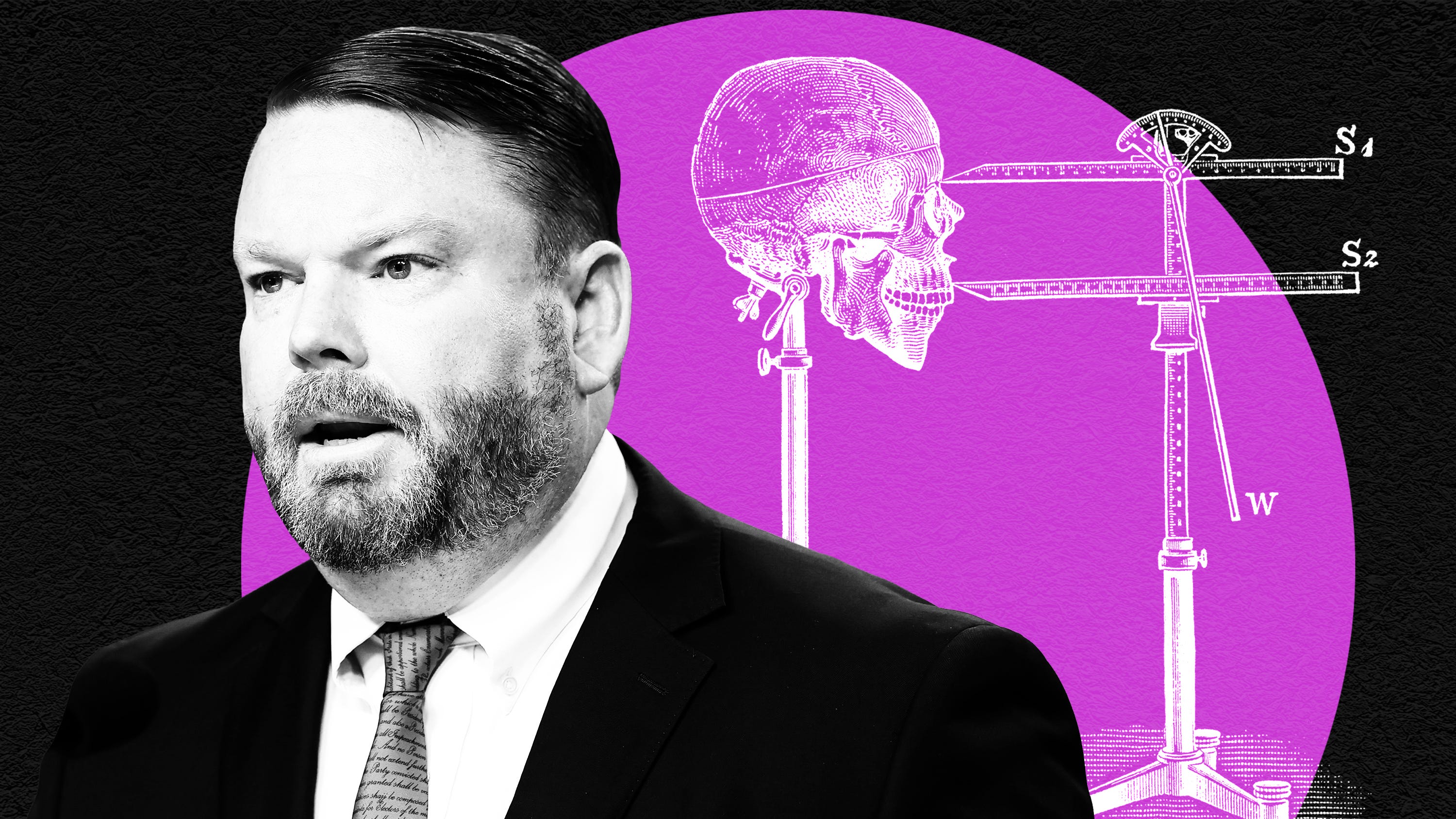
‘Praise the Lord’ a U.S. attorney said, when talking about removing 5 percent of the population from the gene pool. DONALD TRUMP’S DEPARTMENT OF JUSTICE likes to present a tough-on-crime image. But how far it goes to cultivate that image has been a recurring source of controversy. It’s not just the prosecution of political opponents and the greenlighting of immigration crackdowns that largely dispense with due process. It’s also in the rhetoric—which often veers into the disturbing and the bizarre. Last week, one of the department’s top prosecutors argued that, in the pursuit of cracking down on criminals, eugenics could be a useful tool. The prosecutor in question was Ellis Boyle, U.S. attorney for the Eastern District of North Carolina. Boyle was appearing on a local conservative livestream, NC Chats, to discuss—among other things—the administration’s investigation of Rep. Ilhan Omar, as well as the indictments of a handful of noncitizens for having allegedly voted illegally in the 2024 elections in North Carolina. Eventually, however, the conversation turned to crime, the supposed enabling of it by liberals, and how frustrating it is to see violent criminals get off on an insanity defense. “I’ve suffered with PTSD for most of my life,” host Cassie Clark said in the October 21 episode. “I also disassociate with it whenever it hits real bad. And you know what I’ve never done? I’ve never hurt anybody. Not one single time. It’s never even crossed my mind to hurt anyone, even at the worst of it, because I know right from wrong.” Boyle seemed persuaded. “What I’ve observed is, you know—it occurs to me, and this is not a new thought, I heard someone else say it, and I started looking, and if you look, you see it,” he replied. “Five percent of the population cause 90 percent of the crime.” So far, so whatever—it’s true that most violent crimes are carried out by a proportionally small segment of the population. But Boyle didn’t stop there: I think there’s a big component—if you took out [the] 5 percent of the population that’s bad and removed them from society, so they don’t create mayhem and create, you know, babies with the gene pool of more bad, then I think, in two, maybe three generations, think of how great this population would be. “But,” he finished, “that’s something that takes willpower.” “That’s very biblical,” Clark said. “I like it.” “Praise the Lord,” Boyle replied. Boyle’s stats aren’t the problem here. Again: Although the exact figures vary across different studies, criminologists have known for decades that the vast majority of violent crimes are carried out by a proportionally small percentage of the population. But endorsing the cleansing of the gene pool as a means of tackling this problem is way outside the mainstream. Most people recoil at the idea that the human race can be improved over time by forcible control of the gene pool, in part due to the history of shocking human rights abuses that eugenics-embracing governments perpetrated in the twentieth century. But eugenicist ideas have kept a toehold on the darkest white-supremacist fringes of the right—a fringe that has burst back into the mainstream during the Trump era. Boyle didn’t make the point in terms of race. Still, that a prominent prosecutor at the Justice Department would casually endorse the idea that 5 percent of the population should be “removed from society” and prevented both from “creat[ing] mayhem” and “creat[ing] babies with the gene pool of more bad” is astonishing. Per his government biography, Boyle is a former private-sector trial lawyer and general counsel at North Carolina’s Department of Public Safety. He also served as an assistant U.S. attorney in the civil division of the same office he now leads. He was appointed to his current post last year by then-Attorney General Pam Bondi. Elsewhere in the interview, Boyle seemed a bit more guarded about how unusual political views might come across. While discussing whether moonshine shoul…
Andrew Egger ·