Source
The Bulwark
- Type
- Newsletter on Substack
- Lean
- Right-leaning
- Right-Center+3.7 of ±10
- High1.0 of 10 (lower is better)
- High
- Website
- thebulwark.com ↗
- Feed
- RSS ↗
- Articles stored
- 45
- Tracked since
- Oct 21, 2026
Down: MBFC factual reporting score, 0 most factual to 10 least.
Bias and credibility ratings by Media Bias/Fact Check.
The Bulwark on MBFC ↗Publishing rhythm
How many articles The Bulwark published over the last 14 days, by publication time, and at which hours of the day.
Top keywords
All keyword charts for The Bulwark →The people, places, organizations and topics The Bulwark covered most that day, by the share of its stories that mention them. Article counts are shown for context.
No keywords that day yet.
Latest articles

The GOP Senate candidate keeps changing the same old story. Re-grifter Mike Rogers, the Republican nominee in Michigan’s Senate race, met a guy. A guy with a story. And the guy’s story, which is about getting more work after his company became more successful, has become Rogers’s favorite story. He loves the story so much, he’s been telling it every chance he gets. There are just a few problems: When Rogers tells the story, he often presents it as a recent revelation—a conversation he had just a “couple of weeks ago” or “the other day,” even though he’s told the story at least 31 times over the past year and a half. It’s also not exactly clear who Rogers’s guy is, which industry he works in, or if he is actually a composite guy made up of several people. That’s because Rogers’s anecdote changes rather frequently. The point of Rogers’s story is that Trump’s tariffs have directly made life better for people who work in manufacturing. As Rogers tells it, this guy—who is sometimes several guys or even an entire factory’s worth of guys—has a business that has been able to add a second shift because of increased orders resulting from reshoring, a happy consequence of Trump’s tariffs. The first recorded instance of Rogers relating the anecdote occurred in May 2025, when, during a local radio interview, he said, “I talked to a guy who is putting on a second shift for the first time in twenty-five years because automobile companies are trying to reshore here in the United States. That’s a win, that’s a win for Michigan.” Rogers repeated the story later that week in another interview. (In that instance, he mentioned that the guy worked as a “fabricator.”) Over the rest of the summer, Rogers brought up what the guy told him three more times that we were able to find. This makes sense—it’s a great, illustrative story if your goal is to advocate for and defend Trump’s tariff policy, which Rogers has done throughout his Senate campaign. During a town hall event in September 2025—four months after initially telling the anecdote—Rogers mentioned it again, but this time, he moved up the timestamp to make it a bit more current. “They are starting to repurpose and reshore here in Michigan,” Rogers said. “Talked to a guy just a couple—two weeks ago, adding a second shift. Why? Because the car companies called them and said, ‘Well, I really can’t bring it from China anymore. How about you?’” Rogers would bring up the second-shift man dozens more times over the following year. But as he did, he started tinkering with more details. Check out this supercut of the 31 times we found Rogers telling variations of the story:
Paid postJoe Perticone ·
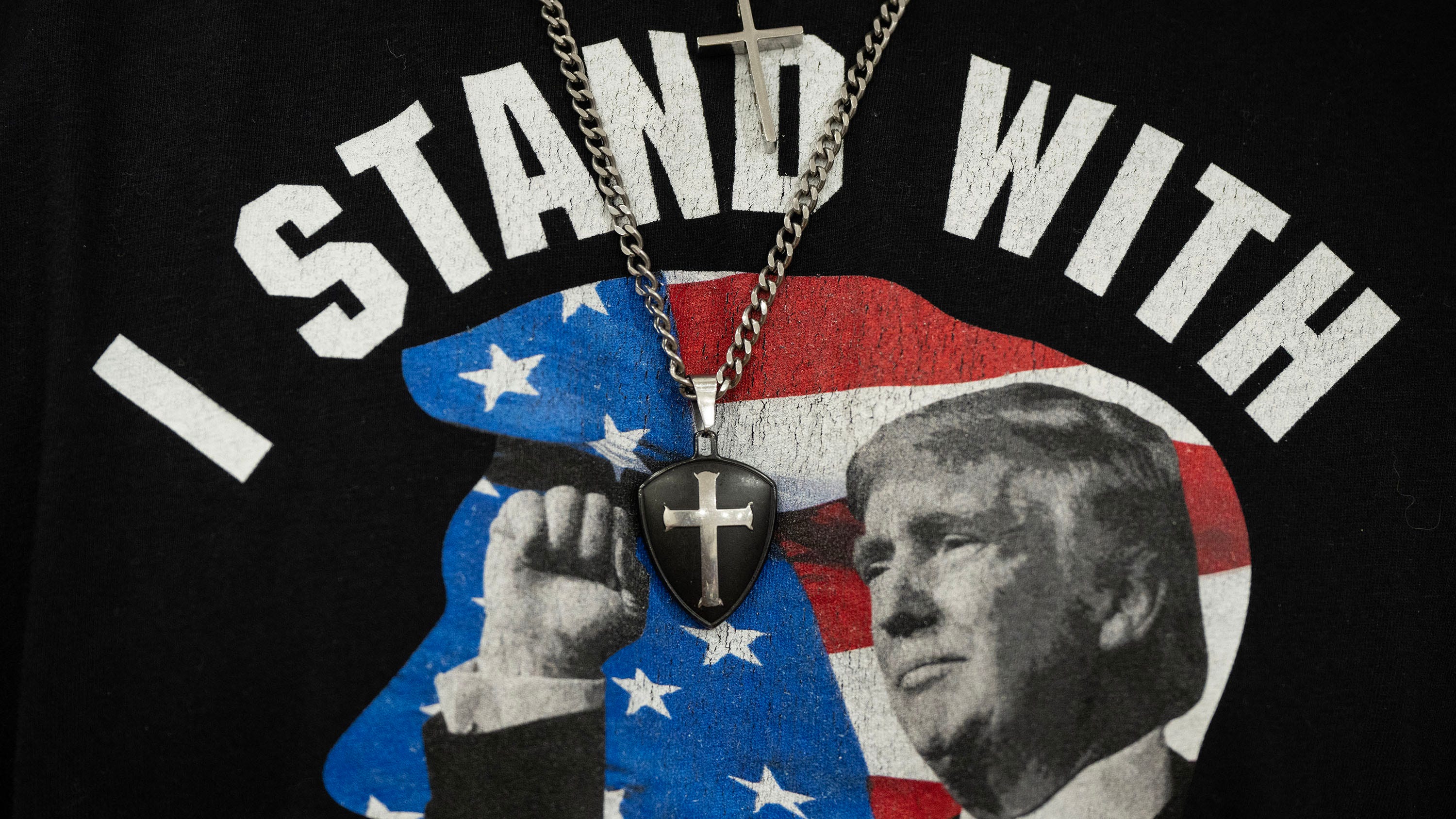
Don’t expect “Christian nationalism” to disappear when Trump disappears. 1. Christian Nationalism Someday the Lord will call Donald Trump home. At that happy hour, as Trump is welcomed to eternal life, there will be a great deal of uncertainty in American politics. What will happen next? My thesis is that there will be no return to normal because Trump has fundamentally changed the character and desires of a large group of American voters. This is the sort of idea that’s hard to quantify because you can’t come at it head-on. You have to look for oblique angles. The Public Religion Research Institute just gave us some interesting data points. I want to talk about them, and the Gospel, and the future of American politics. And empathy. PRRI’s latest survey asks a number of interesting questions. For instance, what do people think of the term “Christian nationalism”? It’s important to understand that Christian nationalism is not a type of Christianity. It’s a type of nationalism. Christianity is, by definition, universal. “For God so loved the world that He gave His one and only Son, that whoever believes in Him shall not perish but have eternal life.” Note “the world” here, not “Israel,” or “Egypt,” or “Samaria.” Or, obviously, America. The bedrock idea of Christianity is that Jesus Christ is the literal Son of God and that He was sent for all. Christianity, again by definition, can have no foundation in nationhood. In a very real sense, it is antithetical to the idea of nationhood. So what is Christian nationalism? It is a form of nationalism that cloaks itself in Christian identity. Which is to say: It is a false Christianity. Again, just by definition. Most Americans understand this dichotomy, which is why a plurality of Americans (48 percent) view “Christian nationalism” unfavorably. But there are two groups that have glommed on to the idea: Republicans and white evangelical Christians. Favorable views of Christian nationalism are up from four years ago. Where did this increase come from? Largely white non-evangelical Protestants and white Catholics. Take a look at what’s going on here to really understand the character of Christian nationalism. Among Hispanic Protestants and Hispanic Catholics and black Protestants, support for Christian nationalism fell off a cliff. But among white non-evangelical Protestants, white Catholics, and Jews—huge increases in favorability. There is no way to interpret this shift as anything but an increased, shared understanding that “Christian nationalism” isn’t about Christ. It’s about white ethnonationalism. That’s why Hispanic Protestant support dropped by a third while Jewish support nearly tripled. Everyone understands the score. Now what happens when religious groups stop seeing themselves as based on theological concepts and start viewing themselves in terms of ethnonationalism?
Paid postJonathan V. Last ·

Truly weird stuff happening at the Department of Education. WITH THE ELECTION just five days away, things are looking grim for Republicans. The generic House ballot puts Democrats up 10 points among registered voters. The highly regarded New York Times/Siena poll suggests the Senate race in deep-red South Carolina is tied. And as I mentioned earlier this week, even right-wing influencers are seeing the end of the world in their tea leaves. It’s at this moment, with the Trump administration facing super-lame-duck status, that the Department of Education has opted to go all in on right-wing, genderqueered Harry Potter fan fiction. On Tuesday, the department’s X account made a post that appeared to embrace the right’s burgeoning “Malfoid” meme—a fanfic concept that imagines Harry Potter’s nemesis Draco Malfoy not as the Boy Who Lived’s male rival at Hogwarts, but as a cute girl for Harry to fall in love with. In the picture posted by the department,
Paid postWill Sommer ·

Our national pastime, our dark future, our big moment. “Any election that doesn’t go my way is fraud.” That’s the Trump model, and his right-wing allies around the world are starting to embrace it too. “The elections in the state of Israel were stolen by Arab parties that support terrorism and the elimination of the Jewish state,” Israeli Prime Minister Benjamin Netanyahu posted yesterday on X. “We demand from the police and the Shin Bet a thorough investigation into the election theft by the Arab parties and a full prosecution of the criminals.” Law enforcement, he said, “must act with an iron fist and in an immediate manner.” Not every such claim gets Trump’s blessing, however. Brazil’s Flávio Bolsonaro, who fled the country after his own election loss this week, yesterday posted a letter thanking Trump and Argentinian president Javier Milei for helping him escape to the United States. In it, he declared himself the “true president-elect of Brazil.” But Trump immediately poured water on the claim: “I’m not going to make a comment about that,” he told reporters. “I won’t get involved.” Bolsonaro subsequently deleted the letter and reposted it, sans president-elect claim. Happy Thursday. Baseball, Politics, and War by William Kristol A quick look this morning at three pieces of news from yesterday evening: one about sports, one about politics, and one about war. The Milwaukee Brewers are the World Series champions. It was the first World Series victory for the franchise, which came into existence as an expansion team in 1969. A mere 57 years later (!), they took it all. They pulled this off while playing in the league’s smallest media market, and with baseball’s nineteenth-biggest payroll. And they did it impressively and decisively, defeating the Padres 3–1 in the division championship series, taking the league championship 4–0 over the defending champion Los Angeles Dodgers, and then putting away Tampa Bay in the World Series 4 games to 1. The Brewers’ 11–2 postseason record this year was one of the four best performances in the last thirty years. One might even call what happened this year a Brew Wave. (Sorry.) The Brewers’ talent and momentum overcame the obstacles of money and history. Perhaps a good omen for next week? Speaking of omens, here’s another one. A couple of hours before the first pitch last night, Donald Trump posted an announcement to Truth Social: I’m going to be doing a major TeleRally for Julia Letlow, who is running for the U.S. Senate and is spectacular, and our fantastic Speaker of the House, Mike Johnson, on Monday evening, LIVE. The state where Julia Letlow is running for the Senate is Louisiana—which Trump won by a 22 percent margin just two years ago. This is a race where both national Democrats and Republicans have spent almost no money, assuming it couldn’t be competitive. But a poll a month ago (admittedly sponsored by the campaign of the Democratic nominee, Jamie Davis, but done by a very reputable pollster, Hart Research) showed a 4-point race. And since then we’ve seen an early vote in Louisiana that is even more bullish for Davis. (Lauren Egan reported yesterday on how encouraging the high early voting numbers in predominantly black areas are for Democrats.) Davis is a talented and hard-working—though underfunded—candidate. Kind of like the Brewers. Letlow, by contrast, has been mailing it in, assuming that in the general election as in the primary, her “complete and total endorsement” by Donald Trump would carry her to victory. But the Hart poll showed Trump’s approval underwater in the state. And with Democrats now, I believe, on a path to victory in neighboring Texas, and with neighboring Mississippi on the other side clearly in play (Trump visited there Monday), the Louisiana alarm bells seem to have belatedly gone off. Thus the last-minute “TeleRally” on Monday. But could it be like Tampa Bay’s rally to win the fourth game Sunday night and bring the Series to 3–1: too little, too late?…
William Kristol ·
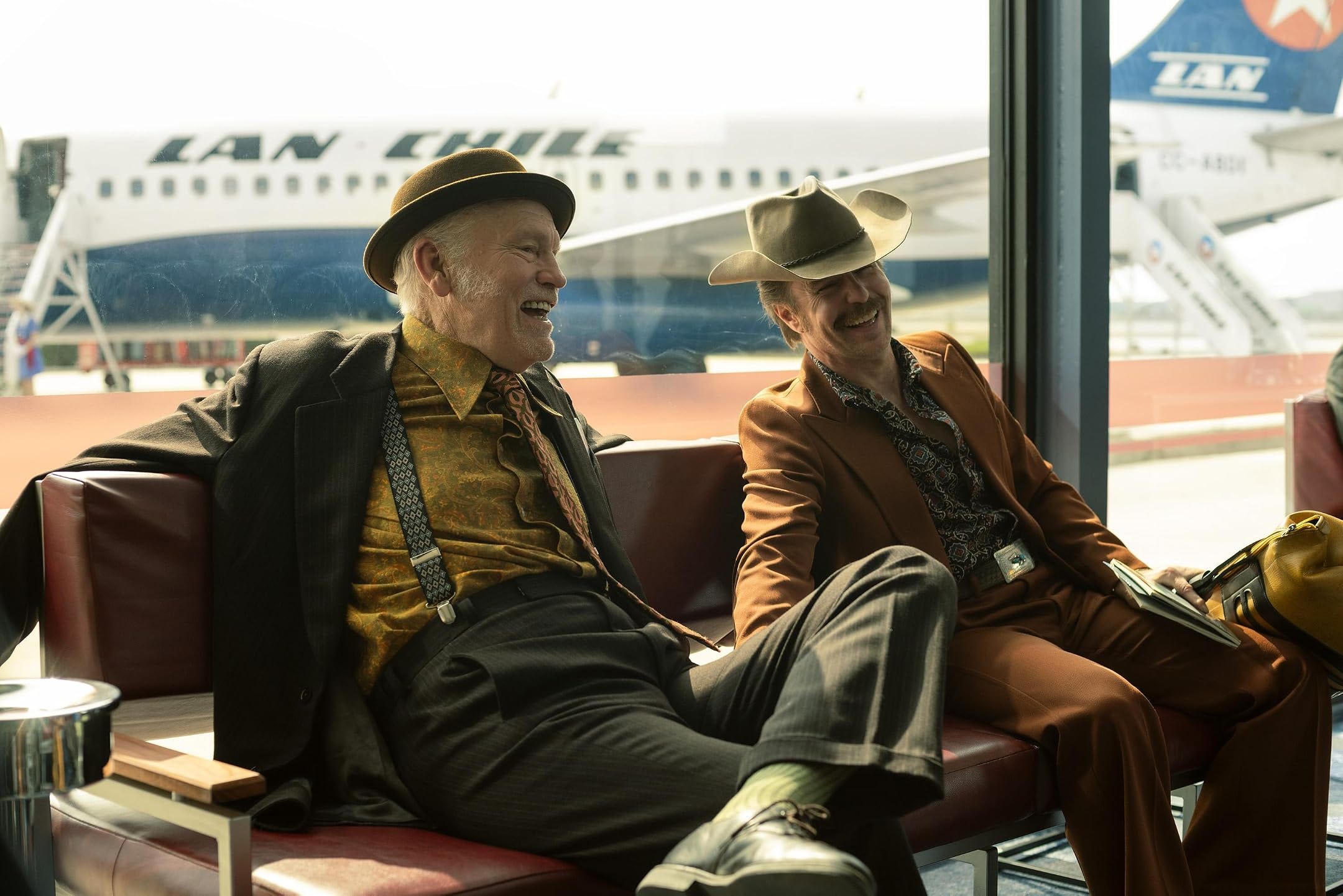
The past is never dead. (But a lot of people in these movies are.) FOR A MOVIE ABOUT a cancer-riddled hitman for the CIA who holds the secret to the Kennedy assassination but can’t remember if he asked his coworker to kill him among the big stone heads of Easter Island, Wild Horse Nine has a surprising number of laugh-out-loud lines. The riff on democracy turning countries gay, which in turn leads to the development of fine cheeses; the resemblance of various religious totems to dwarves with which sexual congress has yet to be had; a character who exclaims, with something approaching tired exasperation, “Not once did I say ‘Fuck a clown’”: Martin McDonagh knows how to put the comic in darkly comic. Of course, anyone who has seen In Bruges, one of the best films of the 2000s, or The Banshees of Inisherin, one of the best films of the 2020s, likely already knows that. If you’ve seen those movies, you’ve already got the release date for Wild Horse Nine—with its cast of John Malkovich as the ailing CIA agent, Chris Carlisle; Sam Rockwell as his mentee, Lee Chesterfield; and Steve Buscemi as MJ, their pain-in-the-ass bureau chief out of Chile—circled in your day planner. The plot matters less than the talent. Which is good, since there’s not much in the way of plot here. Chris and Lee go to Easter Island in 1973, where Chris hopes to finish his memoir before he asks Lee to kill him, and MJ hopes to learn the location of the rifle that killed JFK, which may or may not be in MJ’s possession. While there, they run into some Chilean students who may or may not wind up tortured to death in the middle of Santiago’s National Stadium several months hence, once the coup Lee and Chris are plotting takes place, and Lee’s wife (Parker Posey) may or may not be fucking the aforementioned clown. Who’s to say? Wild Horse Nine is, in certain respects, an elliptical film, one moving forward a bit before circling back to its central preoccupation with guilt and regret. It has the sort of script that only works in the hands of skilled chatters, actors with perfect comic timing and the ability to bounce off one another. We’re in good hands, as few are better at this sort of thing than Malkovich and Rockwell. Malkovich’s sad, droopy eyes undercut the sardonic glee with which he spends much of the movie revealing the CIA’s plans, while Rockwell has mastered the ability of looking confidently befuddled, no easy trick. And it really is a very funny film, albeit one you can never be entirely sure you should be laughing at. Are we allowed to titter at Lee and Chris’s annoyance at the repeated deployment of the phrase “indigenous,” which feels like a mild anachronism for a movie set in 1973? Should we acknowledge the grim truth that Chris is, ultimately, right when he questions the usefulness of marches and instead insists “shooting people changes stuff”? Or is that simply the jaundiced view of a man who spent his career changing stuff by shooting people? Become a Bulwark+ member and join a community that loves great movies, big ideas, spirited arguments, and discovering something new together. MUCH OF WILD HORSE NINE focuses on real-world activities by the CIA around the world, which is why its insistence on veering into conspiratorial tangents about JFK is mildly distracting. It is very much a movie about the actions of the past weighing on the people of the present. Fatherland, too, concerns the way the past intersects with the present and how much the sins of the past should impact behavior in the present. Writer-director Paweł Pawlikowski’s film follows German writer Thomas Mann’s (Hanns Zischler) return to Germany in 1949, where he will receive a Goethe Prize. His son, Klaus (August Diehl), is disgusted by the journey; the family fled in 1933, following the rise of Hitler, and he and his sister, Erika (Sandra Hüller), consider Germany to be still riddled with fascists. Some of whom remain eager to stay in power. The most interesting political moments in…
Sonny Bunch ·
Early-voting numbers suggest the GOP redistricting spree may have helped mobilize the voters it was meant to marginalize. AS DEMOCRATIC OFFICIALS AND STRATEGISTS mapped out their game plan for the midterms earlier this year, they speculated that the Supreme Court’s ruling gutting Section 2 of the Voting Rights Act—and the ensuing rush to carve up the electoral power of black voters in the South—could help drive black voter turnout. They figured that Republicans’ gleeful race to eliminate majority-black congressional districts would motivate black voters who otherwise wouldn’t turn out in a non-presidential year. At the time, it was a largely hypothetical prediction with a number of skeptics. Raymond Smith, a former state representative who is running to flip North Carolina’s 3rd Congressional District, told me back in June that while he was certain older black voters would be fired up over redistricting, he worried that the GOP’s efforts “could be lost on the younger generation.” But early-vote data suggests that black voters are turning out in big numbers. So far, black voters have cast over 160,000 more ballots this year than they had at the same point in the 2022 midterm elections. And while it’s impossible to say for sure what’s motivating the turnout, it’s notable that the biggest change from four years ago in the share of votes cast by black voters is largely occurring in Southern states, particularly Louisiana—where the Supreme Court case originated—as well as South Carolina. “If you look at the turnout patterns of African Americans—particularly the turnout pattern of more sporadic African-American [voters]—what you’re trying to figure out is if this turnout is a reflection of the typical electorate just coming in early, or is there something else going on?” said Cornell Belcher, a Democratic pollster working on the gubernatorial race in Georgia and closely tracking black turnout in the state. “When you look at how more sporadic voters are turning out and are a part of the early-vote conversation, you do get a sense that something different is going on. . . . If that’s held fairly constant, you’re looking at a very different face of the electorate than you’ve typically seen in a midterm, for sure—and even than what you’ve seen in a presidential year.” The fight over who gets a voice in American democracy won’t end on Election Day. Neither will our reporting. Become a Bulwark+ member and help us cover this election—and what comes next. Belcher and other strategists I spoke with cautioned that early-vote data provides an incomplete picture of the election. They also noted that not every state includes racial demographics in their early-vote reports, which means operatives instead look at counties with large black populations to assess whether turnout is up. Mississippi and Alabama, states with significant black populations, don’t even offer in-person early voting. Plus, it’s possible that white voter turnout could surge on Election Day, reducing the proportion of black votes overall. It’s important, they emphasized, not to overread the early numbers. But even with all those caveats in mind, Tom Bonier, a Democratic strategist and senior adviser to the data and polling firm TargetSmart, told me that with more than 30 million votes already cast nationwide, there’s a large enough sample size to draw some preliminary conclusions. “When you break down the increase in black voter turnout, it’s overwhelmingly being driven by younger black voters, which is somewhat surprising or unexpected because we know that early voting tends to skew older,” Bonier told me, adding that it suggested younger voters may be more plugged into the recent erosion of voting rights than Democrats had initially thought. Officials at the top Democratic campaign committees have been closely monitoring the turnout numbers to gauge whether high black voter turnout could put some unexpected seats in play. When Republicans rushed to create new maps after Loui…
Lauren Egan ·
‘Praise the Lord’ a U.S. attorney said, when talking about removing 5 percent of the population from the gene pool. DONALD TRUMP’S DEPARTMENT OF JUSTICE likes to present a tough-on-crime image. But how far it goes to cultivate that image has been a recurring source of controversy. It’s not just the prosecution of political opponents and the greenlighting of immigration crackdowns that largely dispense with due process. It’s also in the rhetoric—which often veers into the disturbing and the bizarre. Last week, one of the department’s top prosecutors argued that, in the pursuit of cracking down on criminals, eugenics could be a useful tool. The prosecutor in question was Ellis Boyle, U.S. attorney for the Eastern District of North Carolina. Boyle was appearing on a local conservative livestream, NC Chats, to discuss—among other things—the administration’s investigation of Rep. Ilhan Omar, as well as the indictments of a handful of noncitizens for having allegedly voted illegally in the 2024 elections in North Carolina. Eventually, however, the conversation turned to crime, the supposed enabling of it by liberals, and how frustrating it is to see violent criminals get off on an insanity defense. “I’ve suffered with PTSD for most of my life,” host Cassie Clark said in the October 21 episode. “I also disassociate with it whenever it hits real bad. And you know what I’ve never done? I’ve never hurt anybody. Not one single time. It’s never even crossed my mind to hurt anyone, even at the worst of it, because I know right from wrong.” Boyle seemed persuaded. “What I’ve observed is, you know—it occurs to me, and this is not a new thought, I heard someone else say it, and I started looking, and if you look, you see it,” he replied. “Five percent of the population cause 90 percent of the crime.” So far, so whatever—it’s true that most violent crimes are carried out by a proportionally small segment of the population. But Boyle didn’t stop there: I think there’s a big component—if you took out [the] 5 percent of the population that’s bad and removed them from society, so they don’t create mayhem and create, you know, babies with the gene pool of more bad, then I think, in two, maybe three generations, think of how great this population would be. “But,” he finished, “that’s something that takes willpower.” “That’s very biblical,” Clark said. “I like it.” “Praise the Lord,” Boyle replied. Boyle’s stats aren’t the problem here. Again: Although the exact figures vary across different studies, criminologists have known for decades that the vast majority of violent crimes are carried out by a proportionally small percentage of the population. But endorsing the cleansing of the gene pool as a means of tackling this problem is way outside the mainstream. Most people recoil at the idea that the human race can be improved over time by forcible control of the gene pool, in part due to the history of shocking human rights abuses that eugenics-embracing governments perpetrated in the twentieth century. But eugenicist ideas have kept a toehold on the darkest white-supremacist fringes of the right—a fringe that has burst back into the mainstream during the Trump era. Boyle didn’t make the point in terms of race. Still, that a prominent prosecutor at the Justice Department would casually endorse the idea that 5 percent of the population should be “removed from society” and prevented both from “creat[ing] mayhem” and “creat[ing] babies with the gene pool of more bad” is astonishing. Per his government biography, Boyle is a former private-sector trial lawyer and general counsel at North Carolina’s Department of Public Safety. He also served as an assistant U.S. attorney in the civil division of the same office he now leads. He was appointed to his current post last year by then-Attorney General Pam Bondi. Elsewhere in the interview, Boyle seemed a bit more guarded about how unusual political views might come across. While discussing whether moonshine shoul…
Andrew Egger ·
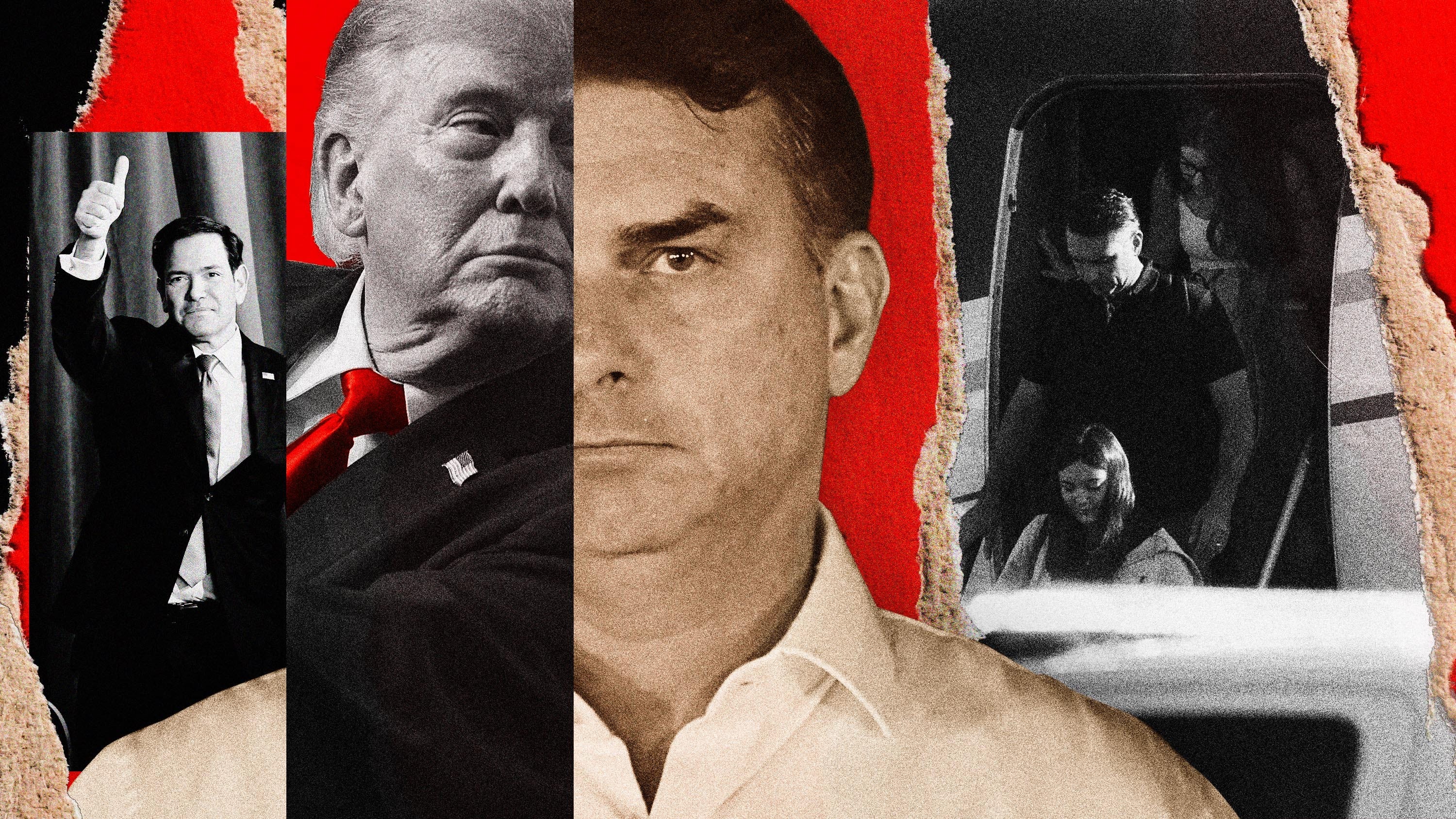
Give me your tired, your rich, your aspiring dictators. 1. Flávio Today, a Brazilian national under investigation for vast crimes arrived in America. This suspected criminal stands accused of money laundering of more than a billion dollars. Police in his home country were ordered to seize his passport. Some of the country’s officials have also asked that Interpol put out a Red Notice to prevent him from crossing borders in the civilized world. How did this alleged thief, fleeing the legal heat, get into America? Marco Rubio arranged it. The secretary of state worked clandestinely to bend/ignore American laws to give this one particular suspected criminal safe haven. Then Rubio gave him a visa, after the fact. And just like that—poof!—the Trump administration’s cavils about illegal immigrants, criminals, gang members, Tren de Aragua, the whole absurd megillah, vanished. By now you realize I’m talking about Flávio Bolsonaro, who snuck into the United States with Sec. Rubio’s help and Donald Trump’s blessing. And by now you realize that Make America Great Again isn’t actually about “illegal immigration.” It was never about illegal immigration. It’s about
Paid postJonathan V. Last ·
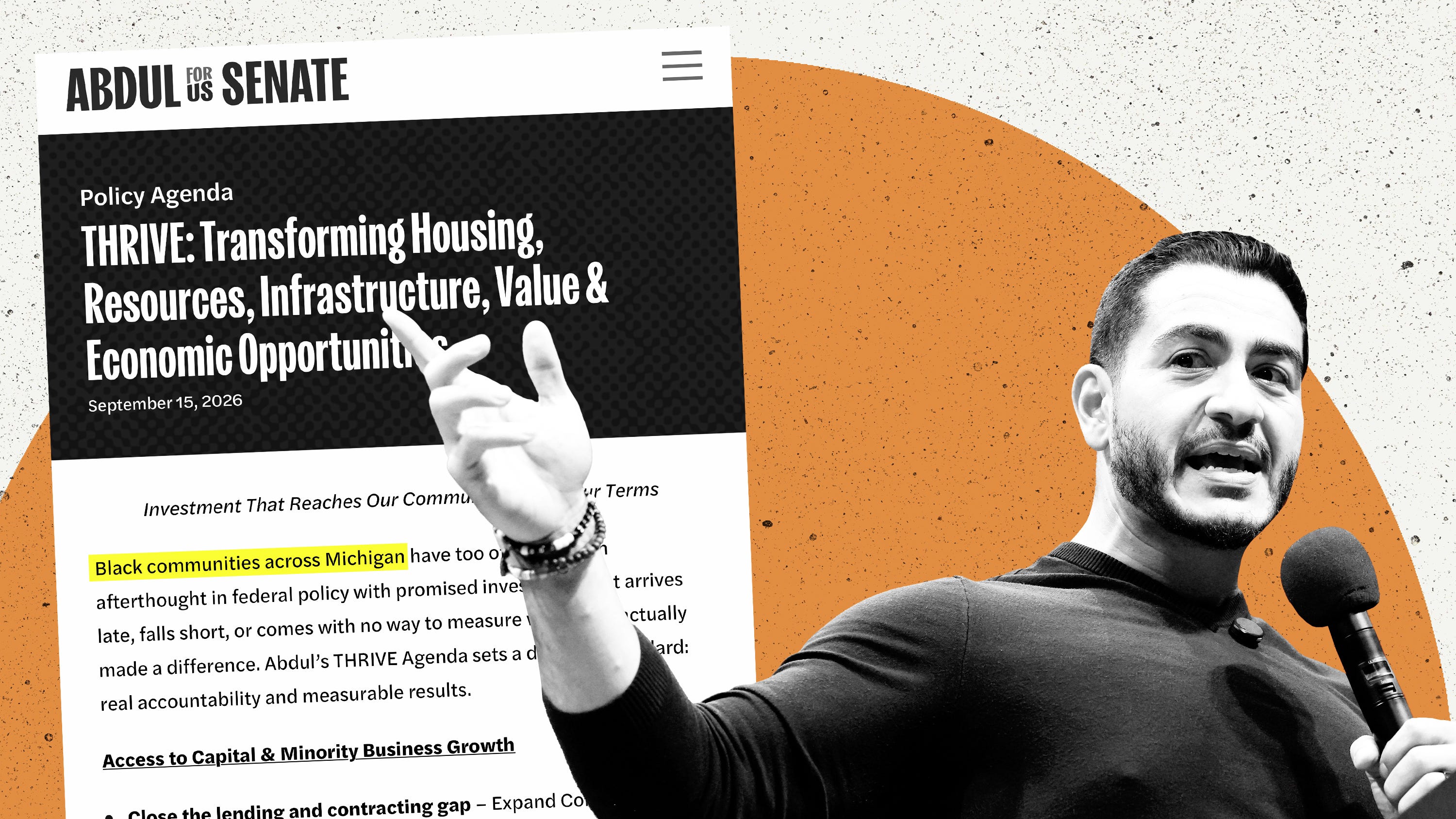
His opponent says he takes them for granted—but let’s compare the candidates’ agendas. A NEW ADVERTISEMENT running against Abdul El-Sayed in Michigan’s Senate race targets black voters by arguing the Democratic nominee takes them for granted. “Abdul El-Sayed’s platform is nearly five thousand words,” says a narrator. “He names fifteen foreign countries he cares about. A single mention of black people? Not once.” The narrator then lists issues like housing and school choice as important to black voters on which El-Sayed allegedly says nothing. “He can’t find the words to talk about us,” the narrator concludes, “and he wonders why we don’t trust him.” The ad’s central premise is an abject lie. If you type “El-Sayed agenda black Americans” into Google, literally the very first hit is a page from his campaign website called “Abdul El-Sayed Announces Policy Agenda to Empower Michigan’s Black Communities.” The page summarizes (and links to a longer version of) what El-Sayed has called his “THRIVE” agenda, released in September. It includes a twenty-one-point plan to help black Michiganders through a variety of programs, including housing assistance and education reform. The attack ad, which comes from an independent political action committee that opposes El-Sayed, isn’t the only dishonest one circulating in the tightly contested Michigan Senate race. But the ad has extra political significance because of its target audience. To win in Michigan, Democrats have in modern times needed both overwhelming support of black voters and high turnout, too. El-Sayed struggled with these voters during the primary, and his Republican opponent, former congressman Mike Rogers, has been trying to exploit that weakness by appealing directly for their support. The contest for Michigan’s black voters has gotten a ton of media attention (including from me!). It’s a genuinely important story that sheds light on larger, deeper issues, like historical tensions between black and Arab communities in Michigan and the way black voters think about progressive versus moderate politics in the Democratic party. But something important is missing from the current dialogue: What the two candidates
Paid postJonathan Cohn ·
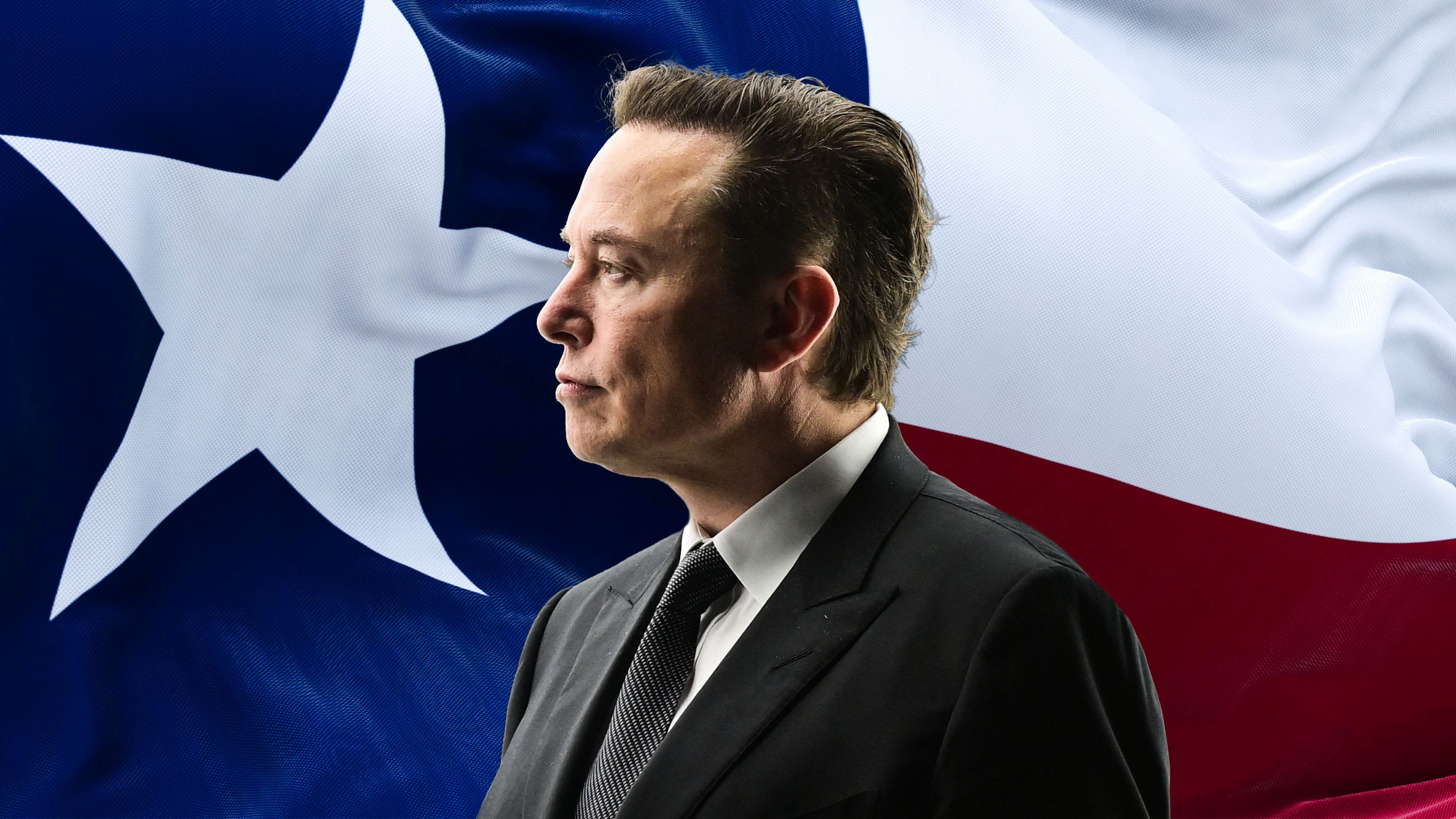
Maybe he’s the villain Democrats needed. A new New York Times poll today has some surprising findings in close Senate races: South Carolina is basically a tie at 48 percent for Sen. Darline Graham and the same for Annie Andrews. Florida isn’t nearly as close: Sen. Ashley Moody, at 50 percent, is six points ahead of Democrat Angie Nixon. In Minnesota, Peggy Flanagan is at 54 percent, while Michele Tafoya is basically on the sidelines of her own race. Happy Wednesday. Talarico vs. the Tycoon by Andrew Egger Democrats’ main hope for next week’s elections is to win enough seats to put a check on Donald Trump. But in Texas, James Talarico is trying to create a Democratic template for another problem: How to deal with Elon Musk. There is no preexisting playbook for dealing with Musk, because Musk is something new in American political life. It’s not just that he’s the richest man in the world and the biggest individual donor in American history. (Musk’s political expenditures since 2024 have already surpassed George Soros’s campaign contributions over his entire lifetime.) It’s also his extraordinary level of engagement. If Musk decides he wants a Democrat gone, he doesn’t just throw a bunch of money behind that Democrat’s opponent—he makes it his personal mission to stamp him out. This cycle, Musk has trained his sights on Talarico. Of the astonishing $446 million he has plowed into the midterms, around $180 million has gone to the Texas Senate race—financial life support that Talarico’s opponent Ken Paxton has desperately needed. Most billionaire political donors would be content to throw their lucre into a PAC to buy up a bunch of ad time and call it a day. Musk goes further. Some of the dirtiest tricks of the cycle seem to be connected to his spending. Last week, I wrote about a Wyoming group calling itself the Texas Transgender Student Union (TTSU) and its apparent attempt to gin up a new trans panic by impersonating a genuine Texas trans-rights group, the Transgender Education Network of Texas (TENT), and sending inflammatory mailers to Texas Republican voters. TENT sued, and yesterday, Texas reporter Steven Monacelli reported that TTSU had retained an interesting lawyer: Chris Hilton, who defended Ken Paxton during his impeachment and represents Musk in a defamation lawsuit against the organization Media Matters. The trillionaire has other megaphones. On X, where he has 240 million followers and owns the algorithms that ensure everyone sees his posts, he has tweeted, retweeted, or replied to tweets attacking Talarico more than forty times in the last 20 days. That number doesn’t include all the attacks Musk’s shared without mentioning the candidate. Talarico is “a far left extremist.” Talarico “hates Texas and America.” There is something “deeply wrong” with “the creep” Talarico who “supports voting fraud” and “wants to trans your kids and destroy the border.” This last is a recurring theme: Musk has repeatedly claimed that Talarico “will vote to take away your children and transition them.” Democrats have wealthy donors of their own, of course. But there’s nothing they can do to match Musk in raw wealth and raw rage. Democrats have only one hope: to poison his donations by turning his involvement in their races into a major liability for the Republicans he supports. That’s exactly what Talarico has been trying to do lately. In his stump speeches and campaign ads over the last week, the Texas Democrat has gone hard after Musk’s enormous investments in Texas, casting him as a shadowy figure single-handedly propping up Paxton’s campaign for his own ends. “In all likelihood, if you’ve seen an attack ad on your screen, that was Elon. If you’ve gotten lies in your mailbox, that was Elon. If you’ve received a text message saying scary things about me, that was Elon too,” Talarico has been saying on the stump. “Elon Musk wants our land. He wants our water. He wants our taxpayer dollars. He wants his very own personal United States s…
William Kristol ·

Our on-again-off-again conflict with the Houthis is about more than Iran. OF ALL THE WARRING GROUPS in all the various conflicts in the Middle East, the Houthis in Yemen seem to me to be the least well understood relative to their importance, at least based on news reports about them. Too often this faction is summarized as merely an “Iran-backed” terrorist group. That is true, but nothing close to the whole truth, and so misleading that I worry it may cause some Americans—including policymakers—to arrive at unrealistic and dangerous conclusions about what kind of threat the Houthis pose to American interests and what American policy toward them should be. Last weekend, Saudi Arabia once again defended itself against Yemen. The Houthis fired at least twelve missiles and two drones at Saudi territory. While Saudi air defenses claim they intercepted and destroyed the missiles, including one headed toward Riyadh, the incident marks the continuation of a month of bombardment against the kingdom that has grounded thousands of flights and disrupted shipping. The Houthis have escalated their attacks against Saudi Arabia’s airports, energy facilities, and military installations, including a devastating attack earlier this month on Riyadh’s international airport that killed thirteen and wounded hundreds more—the deadliest attack on the country in over a decade. For Americans focused on the Iran war, the temptation may be to view these attacks as yet another example of Tehran directing its regional proxies. That interpretation overlooks the fact that Houthis have been fighting Saudi Arabia for more than a decade. The current campaign reflects the Houthis’ own particular political, territorial, and economic ambitions. They don’t need instructions from Iran to attack their northern neighbor (although Iran certainly benefits), they have reason enough—and now they also have cover from the ongoing confrontation between the United States and Iran. The Houthis are a major problem, not just for the Yemeni government and for Saudi Arabia but for all international trade, and therefore for the United States. To know how to address the problem, it’s first necessary to know who the Houthis are, where they come from, and what they want. THE HOUTHIS EMERGED IN THE 1990s from a political and religious movement in northern Yemen. Rooted in the country’s Zaydi Shia community, they initially challenged the Yemeni government’s political and economic policies, eventually becoming an armed insurgency. By 2014, the Islamist group had beaten back the Yemeni Army and seized the capital, Sanaa. Saudi Arabia feared that a hostile insurgency along its southern border, especially one supported by Iran, could become a permanent threat to the security of the Saudi state and the royal family. What followed was a grinding war involving airstrikes, ground offensives, missile attacks, blockades, and an extraordinary humanitarian catastrophe. Since 2014, hundreds of thousands have been killed by violence, disease, or famine; millions have been displaced; and Yemen has become one of the world’s most desperate humanitarian emergencies. But for all that, neither side has achieved its original objectives. Even with support from the UAE, Saudi Arabia’s military superiority did not translate into the defeat of the Houthis, while the Houthis’ control of northern Yemen never translated to control of the entire country. Over time, with the help of Iranian technology and know-how, the Houthis improved their missile and drone capabilities and repeatedly demonstrated that they could threaten Saudi cities and critical infrastructure. A United Nations–brokered truce in 2022 significantly reduced large-scale fighting, and Saudi Arabia subsequently pursued negotiations to extricate itself from the conflict. But the truce never resolved Yemen’s underlying and ever-expanding political disputes, and negotiations failed to produce a lasting settlement. The fighting diminished, but the war’s…
Mark Hertling ·
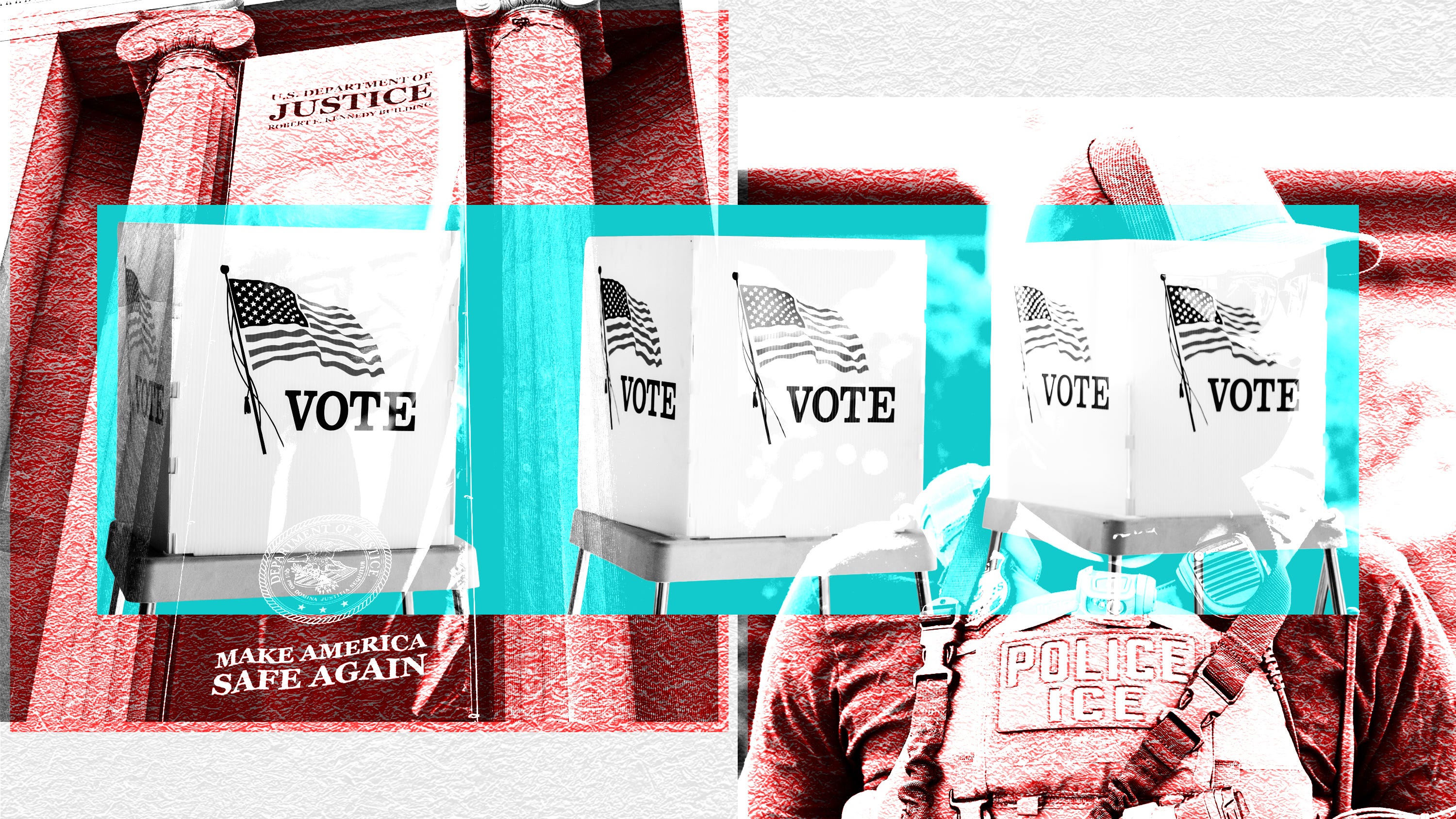
A look inside their election-defense operation. Stopping the steal While it might feel to you as though this year’s midterm elections sneaked up on us, a handful of House Democrats have been preparing for this moment for years. One of the upshots of January 6th and the related attempts to disrupt the certification of Joe Biden’s 2020 presidential win was that congressional Democrats realized they could no longer count on American elections going smoothly. As a result, there is now significant infrastructure to track and respond to election disputes as they arise. Democrats are just hoping that they’re not missing anything. Multiple lawmakers have expressed concern about the upcoming vote and tried to fortify what they see as vulnerabilities. “The Department of Justice has been anything other than a bulwark. They’ve been an aggressor, and they continue to try to disrupt and throw, frankly, spaghetti at the wall,” said Rep. Joe Morelle (D-N.Y.). “But I think we’re prepared. I know we’re prepared, and we’re observing and watching every move they make.” During the past year, the administration has sought to restrict mail-in voting, mused about deploying ICE agents and other federal law enforcement officers to polling locations, and much else. The expected flurry of lawsuits and election challenges is keeping Democrats and local officials up at night. As I noted last week, Marc Elias, a Democratic election lawyer deeply involved in the party’s planning process to respond to disputes, said he’s expecting the Trump administration to use the same kind of flood-the-zone strategy that the president and his allies used after losing the 2020 election. “Those will be defeated,” Elias said. Democrats are already working to preempt these anticipated maneuvers, which will put them in a better position to deal with other, less-predictable challenges that might come up on or after Election Day. Trained congressional staffers are being sent to races where Republicans or rogue election officials might try to contest unfavorable results. They are primarily going to serve as observers, taking contemporaneous notes and recording witness accounts that could become useful in court if results are disputed. While Democrats have enlisted nearly three hundred staffers for these roles, where they are ultimately sent will depend on which races have the most problems. “I think it’ll be an expanded list beyond what we would typically do,” said a senior Democratic staffer on the House Administration Committee. “We could be somewhere between sixty or seventy districts.” Morelle, who is the ranking Democrat on the House Administration Committee, repeatedly expressed confidence in his team’s ability to prevail over anything the administration throws their way. Over the summer and into the fall, Morelle has led shadow hearings to examine readiness efforts and take stock of resources in high-pressure districts across the United States. But lawmakers are also feeling a bit nervy about the possibility that the federal government will use intimidation tactics at polling sites and ballot drop-off locations for mail-in voting. And they’re not thinking only about whether ICE agents will show up at polling stations. Rep. Mark Takano (D-Calif.) told reporters that “ICE being deployed and even visible, even if it’s outside of the 200-foot perimeter” of a polling precinct or high-traffic ballot drop-off location, could intimidate key voter demographics. “There’s some credible fear among American citizens who may be of Latino descent, who may be of Asian descent,” Takano said. “People might have legitimate fears that they could be apprehended by ICE.” While voting is underway in many states, the Trump administration has already started to meddle, filing a lawsuit in the Alaska Senate race arguing that voters might not understand the difference between the two Dan Sullivans. That’s the argument of a lawsuit filed by the Justice Department, contending that Alaska should delay t…
Joe Perticone ·

Live by the government, get regulated by the government. 1. Beginnings I’ve been making the case for nationalizing SpaceX for years, but I’ve never put the arguments all in one place. That’s what we’re doing today. Let’s stipulate that this newsletter won’t have all the answers. It’s a starting point for deeper discussions. But a longstanding reality is suddenly obvious to people: SpaceX is a national security vulnerability. Something must be done about it. Two things up front: First, my headline is “Nationalize SpaceX,” but that’s shorthand. I don’t know that we need to “nationalize” the company, per se. Maybe we do! Or maybe it needs to be broken up! Or aggressively regulated! So for the purposes of discussion, please treat “Nationalize SpaceX” as a catchall and not a specific policy proposal. We can talk about nationalization as we go; just understand that it’s only one tool. That’s the first thing. The second thing is that we should divorce the person of Elon Musk from this conversation. Musk is a uniquely dangerous individual and the fact that he controls SpaceX increases the national security risks. But the risks would still exist no matter who controlled the company. Imagine a wise, beneficent trillionaire instead. If he controlled SpaceX outright, it would still be an unacceptable risk for America. In the first section I’ll explain why SpaceX is a danger to national security. In the second I’ll lay out some possible policy solutions. Are you ready? Good. Let me start by explaining why you can’t buy a combat-ready fighter jet.
Paid postJonathan V. Last ·

They might not hate her. But they’re “very disappointed.” YES, SUSAN COLLINS SITS ON A THRONE of skulls of her former political opponents. And no one should underestimate her ability to defy the odds yet again this election cycle. And yet, the vibes do feel different this time around. A group of Mainers who voted for Joe Biden and Susan Collins in 2020 tells us why.
Paid postSarah Longwell ·

Knock wood. Throw salt. Cross your fingers. Can Bibi Netanyahu hang on? Israel’s six-term prime minister faces a stiff challenge in Israel’s elections today. Polls show the bloc led by Netanyahu’s Likud party neck and neck with the bloc led by former military chief Gadi Einsenkot’s Yashar party, and voters are turning out at levels not seen in Israel for half a century. Meanwhile, Yair Golan of the Democrats party faced an apparent assassination attempt at an election-day campaign stop just hours ago. Happy Tuesday. Rubbing a Rabbit’s Foot by William Kristol We’re a week out from election day, and things continue to look good. In fact, I’ve got to say, they’re looking a little bit better every day. The early vote— [I INTERRUPT THIS NEWSLETTER TO KNOCK ON WOOD, TOSS SALT OVER MY SHOULDER, AND, YES, PULL ON MY EARLOBE (THAT ONE’S NEW TO ME, TOO, BUT APPARENTLY THEY DO THAT AS WELL IN SOME PARTS OF THE WORLD). I DO THESE THINGS OF COURSE TO PREVENT BEING JINXED AND TO WARD OFF THE EVIL EYE AFTER MAKING SUCH A HOPEFUL OR CONFIDENT STATEMENT. I WANT TO ASSURE ANY AND ALL JEALOUS DEITIES READING THIS NEWSLETTER THAT I’M NOT TRYING TO BE PRESUMPTUOUS. REALLY! I’M JUST TRYING TO TELL IT LIKE IT IS.] Anyway, as I was saying . . . Insofar as one can read the entrails of the early vote—and more than 30 million Americans, roughly a quarter of the likely overall turnout, have already voted—they seem to confirm the polls, which continue to signal a big blue wave. For example, Reuters/Ipsos, which collected responses as recently as yesterday, has President Trump at 35 percent approval and 65 percent disapproval among registered voters, with 15 percent strongly approving and an astounding 53 percent strongly disapproving. Democrats lead the generic ballot among both registered and likely voters by 9 points. And Democrats say they’re more enthusiastic about voting than Republicans. The Reuters/Ipsos poll is no outlier. In the FiftyPlusOne polling average, the generic ballot now has Democrats ahead by 9.2 percent, up from 7.7 percent at the beginning of October, and 6.3 percent at the beginning of September. The trend remains Democrats’ friend, and the Republican spending onslaught hasn’t done much if anything to stop it. Meanwhile, Trump’s election subversion schemes have so far proven ineffectual (which doesn’t mean we won’t see lots of desperate efforts over the next week, and then perhaps after the votes are counted). And it’s hard to see any great surprise emerging in these last few days for the Republicans. [I INTERRUPT THIS NEWSLETTER ONCE AGAIN TO KNOCK WOOD, TOSS SALT, MUTTER HEARTFELT IMPRECATIONS TO THE GODS . . .] Okay, back to business. So the House is almost certain to flip, and the Senate seems likely—I’d say very likely—to do so. [WOOD KNOCKED, SALT TOSSED, IMPRECATIONS MUTTERED, ONCE AGAIN.] Since 1954, there’ve only been two occasions on which both chambers have changed hands in a midterm election: 1994 and 2006. The 2006 precedent could serve as something of a warning. That midterm wave was followed by a big Democratic presidential victory in 2008 and further congressional gains. But the financial crisis of 2008 was so severe that the Obama administration had to spend an awful lot of time cleaning it up. The administration also made some political miscalculations. And the midterm elections of 2010 changed the country’s political momentum decisively. In an economic and geopolitical environment as fraught as the one we’re now in, it’s going to be a real challenge not just to follow up a midterm victory with a presidential electoral victory, but then to govern in a way that succeeds in actually reversing the nation’s course and changing the country significantly for the better. As I suggested last week, the 1930–1932 sequence, which cleared the path for the New Deal, is probably the best precedent for that. But that was a long time ago, in a different nation and world. “Hardly a man is now alive” who remembers that era. But that…
William Kristol ·

Our new survey explores masculinity, sports gambling, and whether Americans want their commentators running the country. SECRETARY OF DEFENSE PETE HEGSETH obviously sees himself as a paragon of masculinity. He insists on calling his department by the tough-guy nickname Department of War. He has mandated testosterone-deficiency screenings for military personnel. He regularly showcases himself working out with troops. He frequently expresses disdain for people who are overweight (whom he mocks as “fatties”). And his general disapproval of women in leadership roles is a matter of public record. With the amount of effort the secretary puts into demonstrating his manhood, you’d think he’d be seen as a kind of model for young men who are struggling academically, socially, professionally, and emotionally in today’s world. But a new national survey conducted by The Bulwark and Pablo Torre Finds Out shows it’s exactly the opposite. Only 28 percent of American adults said they viewed Hegseth as a strong role model for American men, compared with 39 percent who didn’t. Looking at just 18-to-29-year-olds, only 18 percent viewed Hegseth as a strong role model compared to the 34 percent who did not. The findings show the limitations of Hegseth’s alpha male preening. But if there is a silver lining in these findings for the ex–weekend talk show cohost, it’s that he fared only second-worst among the nine men from politics, sports, and Hollywood we asked about. The person who finished at the bottom of the male-role-model rankings was his boss, Donald Trump, with 55 percent of respondents saying he was not a strong male role model, and 37 percent saying he was (creating a negative 18-point margin). By contrast, the strongest male role models we polled included Matthew McConaughey (net +33), Barack Obama (+28), and LeBron James (+25). Of those three, Obama was most likely to be rated a strong male role model, with 59 percent of adults viewing the former president as a strong male role model (a number that includes 28 percent of those who voted for Trump). But not all Democrats polled so well. California Governor Gavin Newsom came in with a -2 male-role-model rating, with 35 percent saying he is a strong male role model and 37 percent disagreeing. Those results are just a sampling of the insights from the new poll investigating how the public views the intersection of sports and politics and the figures that dominate both fields. Respondents were also asked their thoughts on sports commentators, sports betting and prediction markets, and transgender athletes. Our findings suggest that sports are one of the last venues in which Americans come together and put aside their differences. But they also show growing ambivalence about the future of athletics—including a significant appetite for greater regulation of the prediction markets that have enveloped much of sports. GIVEN THE PROLIFERATION of sports betting over the past decade, the survey asked Americans how often, if ever, they bet money on sporting events. Sixty-eight percent said they never bet on sports, while 6 percent said they do so often and 27 percent said they do so occasionally. By a 14-point margin, men were more likely to report that they often or occasionally bet on sports than women. And 42 percent of those who voted for Trump reported that they bet on sports compared to just 30 percent of Kamala Harris voters. But across most demographic groups, a plurality of Americans believes that legalized sports gambling has had a negative effect on sports (44 percent). This includes 54 percent of Harris voters and 47 percent of those who backed Trump. Only 7 percent of Americans see the legalization of sports betting as having a positive impact on sports, compared to 34 percent who said it has had neither a positive nor negative effect. Part of this pessimistic attitude toward sports betting might be explained by the fact that more than half of Americans believe that professional athletes o…
Brendan Hartnett ·

Detractors say the Old Glory Club has become the ‘Old Gloryhole Club.’ THE SECRETIVE FAR-RIGHT Old Glory Club launched in 2022 with a particular goal: to build networks of far-right men who could work together in the event of governmental collapse—or at least exploit divisions within the existing Republican party in the meantime. But last week, far from restoring America from the imaginary ashes, the Old Glory Club itself started cracking up. The club, which has claimed to have hundreds of members and forty chapters across the country, expelled two of its chapters as part of a clash over what the club’s stances should be on Donald Trump and on Israel. As one disenchanted critic said of the humiliating public airing of private acrimony, it’s become more like the “Old Gloryhole Club.” As the bad blood spills into public view, the episode has provided further proof that no right-wing group, no matter how obscure, can hold itself above the right’s churning war over groyperism. “Another organization sabotaged by wignats,” groaned Geoffrey Martin, a prominent Canada-based far-right X user under the name “Captive Dreamer,” describing the club’s discontents with a brutish portmanteau for “wigger nationalists.” Old Glory Club leadership, as well as the heads of the two banished clubs, did not respond to requests for comment about what sparked the feud. Maybe that secrecy is deliberate—conservative commentator Chris Brunet, who has dug up a lot about the current imbroglio, describes the club as a “not-so-secret secret society.” Recounting this inter-right drama can all get a little ridiculous: It’s an organization where the chapters are called things like the “Leatherstocking Heritage League” (Upstate New York) and prominent figures include the outlandishly named Ryan Turnipseed—a renegade Lutheran excommunicated from his conservative church for calling it woke. But while the Old Glory Club sounds like a LARP gone weird, it has a truly ominous side, too.
Paid postWill Sommer ·
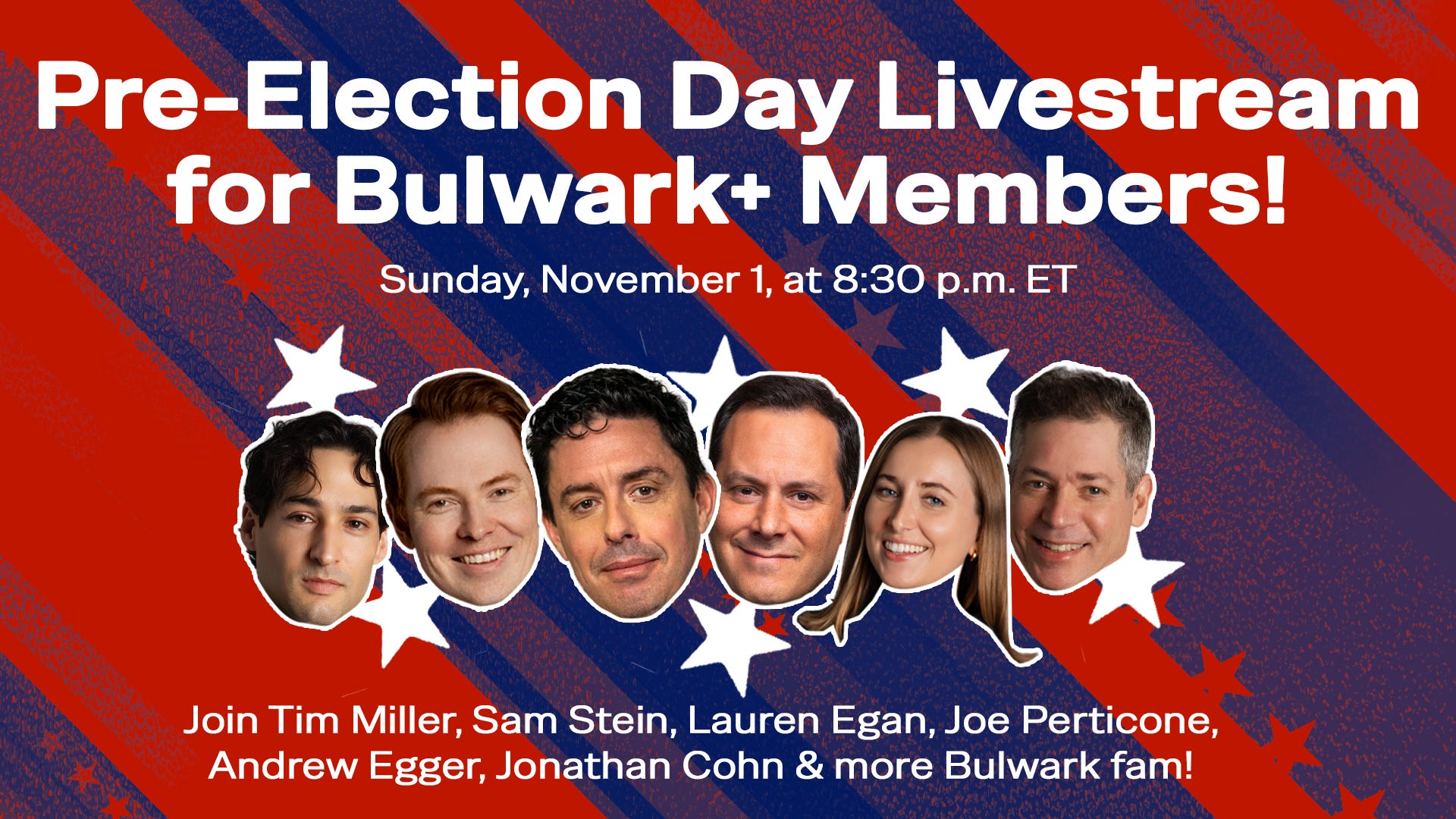
A Bulwark+ members-only livestream with Q&A Tune in: Sunday, November 1 at 8:30 p.m ET for a livestream exclusively for Bulwark+ members featuring Q&A and live chat. Join us this Sunday for a pre-election night livestream for members featuring Joe Perticone, Andrew Egger, Tim Miller, Sam Stein, Lauren Egan and Jonathan Cohn. The gang will cover the latest news in the hottest races and take your questions. Can’t join us live? No problem. We’ll post the show afterwards on the Bulwark Takes feed and on the site. Watch your inbox for the link to the livestream.
Paid postJoe Perticone ·
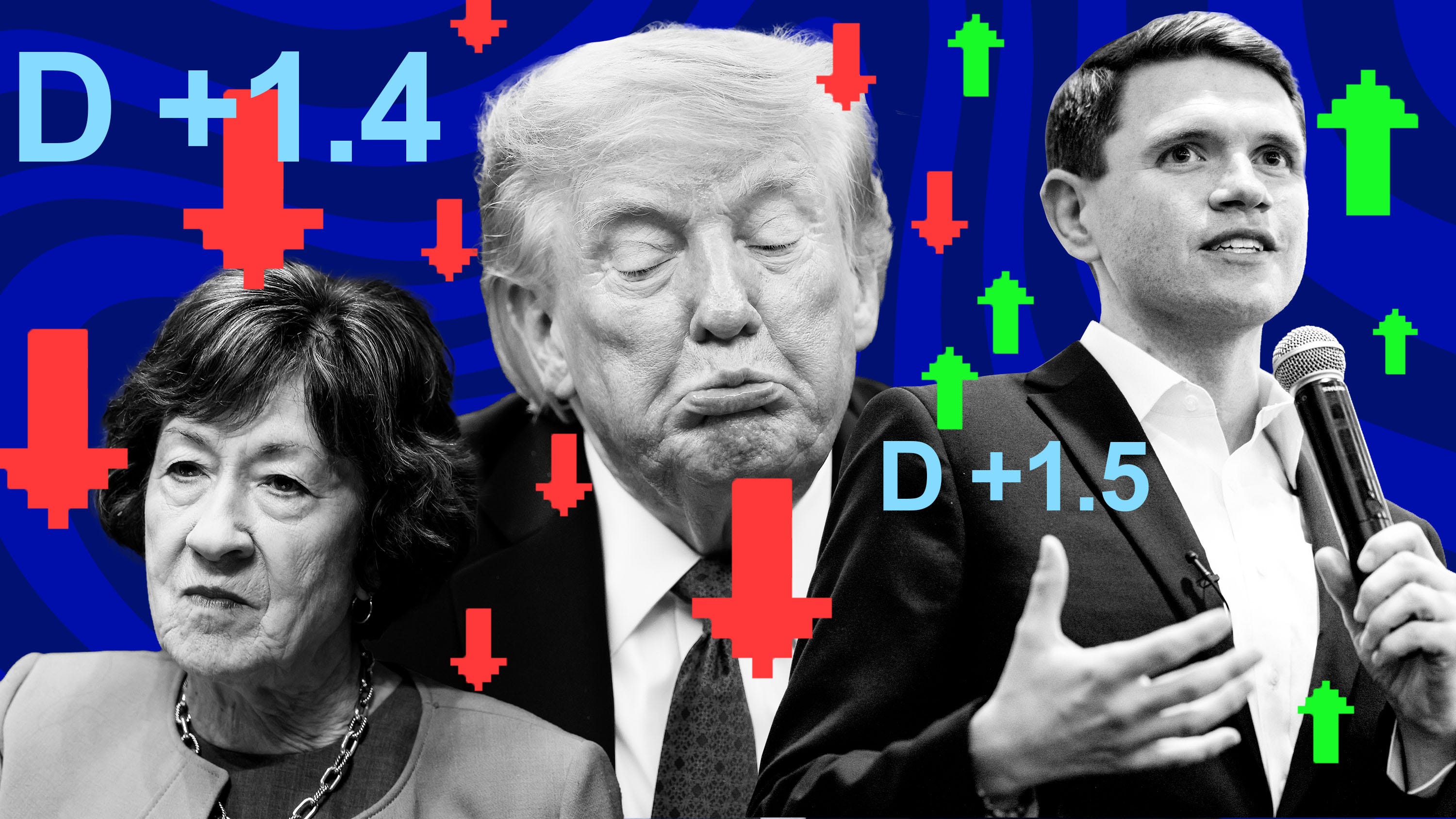
There’s a divergence in the Matrix. 1. Forecasts We’re eight days out from Election Day. Early voting is happening. And we have two very different outlooks on the election. If you go by the vibes we’re looking at a gigantic Democratic wave. If you go by the polls, the picture is . . . more complicated. Today we’re going to look at both of them in some depth. If you want the TL;DR, it goes something like this: Vibes: Democrats have a huge advantage on candidate quality. There is no good economic news for Republicans. The president is extremely unpopular. All of the qualitative markers are moving away from Republicans. Polls: Even in places where the Democrat has pushed the Republican around from day 1, the polls are still within the margin of error. We’re looking at a series of coin flips. That’s the short version. The long version? Buckle up, buttercup. There are no easy answers here. The downside risk is pretty rough. But the upside outcome? You’re gonna need a cigarette for what I’m calling the HULK SMASH Kaiju Tsunami . . .
Paid postJonathan V. Last ·
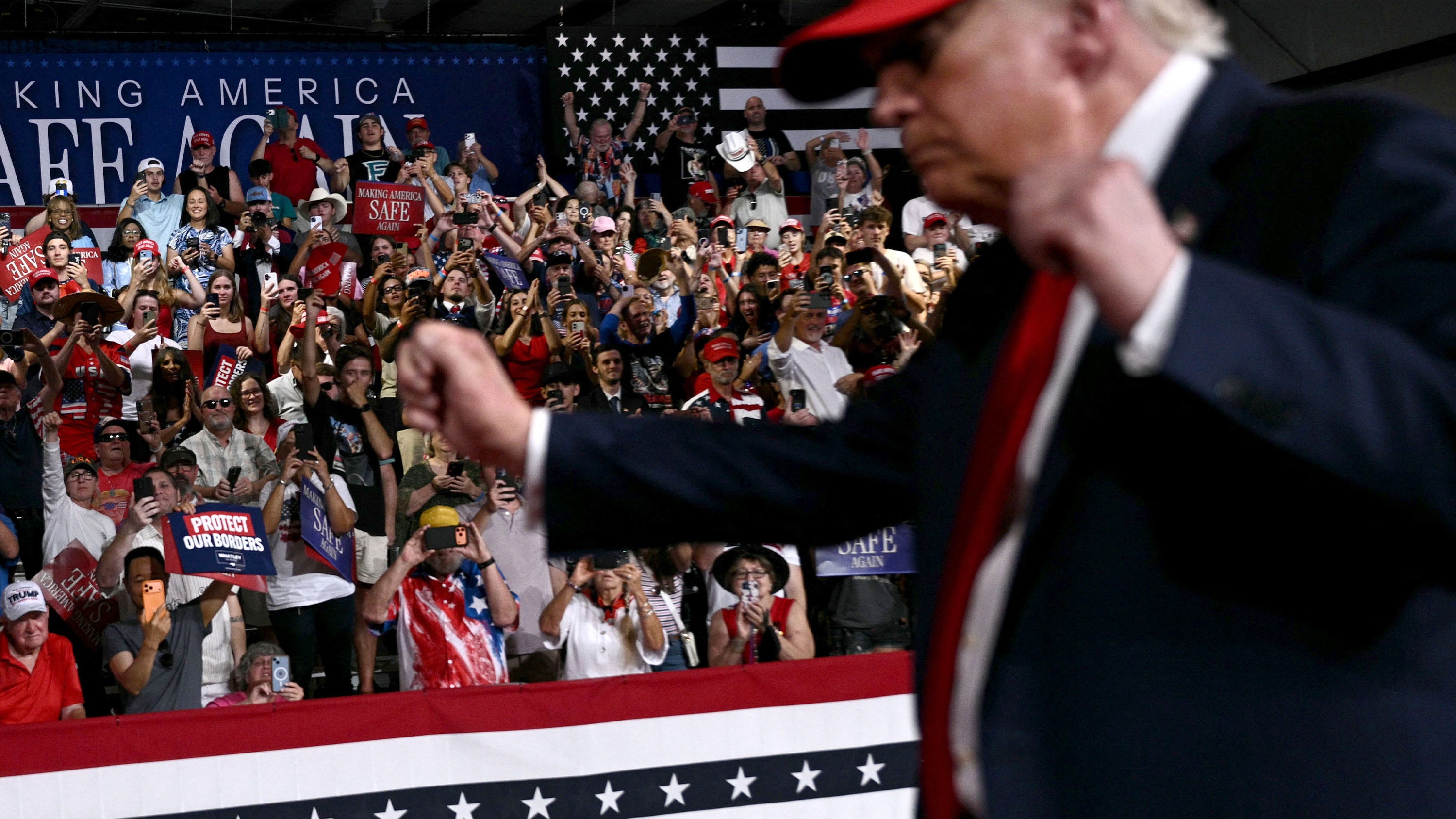
Fake-ass promises, real ass obsession. Eight days to go. Happy Monday. Ass Clown by Andrew Egger In a weird way, it’s almost sad to see. Donald Trump has spent a decade as the main character of our politics. He has managed to break and destabilize shockingly much in that time. Yet now, watching him stagger toward a humiliating midterm rebuke with his movement seemingly on the brink of collapse, I have to admit it’s hard to feel much pleasure about it all. Instead, I still mostly feel disgust and shame: This is the would-be Napoleon who managed to haul the United States of America to this ridiculous place? Trump, who still apparently believes in the mystical election-saving power of his rallies, has spent weeks dragging himself from stage to stage across the country. He is plainly exhausted; he is noticeably hoarser, looser, and less energetic than he was even a couple weeks ago. Most of what he dishes out is reheated sludge—microwaved leftovers from 2016 and 2024. Two things are new, though. One is this ass thing. Can we talk about this ass thing? Trump can’t stop talking about the derrieres that surround him. Mostly it’s Ohio Sen. Jon Husted, but it’s started to spread. “I’ve been living with this whole thing about the ass,” he said last night in Michigan. Then he turned to Mike Rogers: “I’d say that about your ass, too, Mike, if it gets you a guaranteed victory.” Not in a gay way, though, he hastened to clarify. “By the way, I’ve looked at one hell of a beautiful ass before,” he added. “Nicki Minaj. That’s hard to miss.” He then invited Minaj, who was in the audience, to stand up so people could get a better view. But the main new thing is the conditional promise. You’ve heard the big one, of course: Trump’s no-foolin’ pledge that, if Republicans win the midterms, he’ll reward the public’s good behavior with $5,000 checks for every adult. What you may not realize, if you don’t watch the rallies, is how basically every Trump promise is now framed like this. He goes to Westchester, Kentucky, and promises a new $100 million Defense Department investment in a pharmaceutical plant there—but only “if Republicans win.” “You have to win, Andy,” he tells Senate candidate Andy Barr. “Otherwise, forget it.” He goes to Park City, Kansas, and promises a farmer-pleasing change to allow the sale of ethanol-blended gas year round—but only if Sen. Roger Marshall wins re-election. “If Adam Hamilton is in, I’m not doing it,” Trump says. “I’m only doing it for him.” He goes to Greenville, North Carolina, and promises to settle longstanding claims from veterans exposed to contaminated drinking water while serving at nearby Camp Lejeune decades ago. But only “if we win the House and Senate.” “If we don’t win, there’s no money,” Trump says. “If we do win, you’re getting it, and it’s going to be finally over with that nightmare that’s been going on for so many years.” As is typical with Trump, none of these quid pro quo promises are actually true. Some of these things—the $5,000 checks, say—are never happening, whether Republicans win or not. Others—the Westchester plant, the Camp Lejeune settlements—are moving forward either way. The president either doesn’t know this, or does know it but thinks his voters won’t. And what if they were true? What if the president was actually planning to try to withhold settlements from veterans genuinely harmed by government carelessness out of pique that American voters rejected him and gave Congress back to the Democrats? Which possibility would be more embarrassing? Which would be more shameful? Once upon a time, this stuff actually seemed to work for Trump. He built a whole lurid Technicolor artificial world for his supporters to live in: a world where pedophile satanist Democrat elites and murderous asylum-escapee migrants had conspired to kill America, a world where he had arrived as Messiah to resurrect it and lead it to the promised land. He lied and lied, and then from time to time he won. But now it’s ov…
William Kristol ·