Source
The Free Press

The Free Press (CBS News)
The Free Press, formerly Common Sense, is an American media company based in New York City. Founded by opinion writer Bari Weiss and her spouse Nellie Bowles, the company started as a newsletter in 2021, and grew into an associated media company in 2022. Since October 2025, it is an independent entity within CBS News, whose parent company Skydance Corporation acquired it in 2025 for $150 million.
From Wikipedia ↗, text under CC BY-SA 4.0; logo from Wikimedia Commons
- Type
- News outlet on Substack
- Lean
- Right-leaning
- Right-Center+4.1 of ±10
- Mixed4.8 of 10 (lower is better)
- Medium
- Website
- thefp.com ↗
- Feed
- RSS ↗
- Articles stored
- 183
- Tracked since
- Sep 10, 2026
Down: MBFC factual reporting score, 0 most factual to 10 least.
Bias and credibility ratings by Media Bias/Fact Check.
The Free Press on MBFC ↗Publishing rhythm
How many articles The Free Press published over the last 14 days, by publication time, and at which hours of the day.
Top keywords
All keyword charts for The Free Press →The people, places, organizations and topics The Free Press covered most that day, by the share of its stories that mention them. Article counts are shown for context.
No keywords that day yet.
Latest articles

In today’s Front Page, Larissa Phillips on being a MAHA mom. Plus: The best of our midterms coverage. It’s Friday, November 6. This is The Front Page, your daily window into the world of The Free Press—and our take on the world at large. Today: How Democrats won red states. Everything you need to read about the midterm elections. And much more. But first: When did caring about your health become right-wing? The tribal affiliations of the beliefs you hold dear can switch so fast that it gives you whiplash. This is something many of today’s politically homeless Americans have learned through experience in the last decade or so. “I’ve heard my fellow refugees from the left say they have the exact same beliefs they’ve always held—about immigration or crime or biological sex—but somehow, these days, expressing them gets us labeled as Republicans or fascists,” writes Larissa Phillips in today’s essay. And so it was interesting to watch in the run-up to this week’s midterm elections how some Democrats dialed back the rhetoric that so disappointed the nation’s normal lefties. For example, “James Talarico said it was ‘cringey’ that he once said God is ‘nonbinary’—and became the first Democrat to win a Senate seat in Texas since 1988,” writes Larissa. Even progressives reached out across the aisle. “Alexandria Ocasio-Cortez privately met with the archetypal MAHA mom, Zen Honeycutt, then started talking about pesticides.” If this is a sign of good political strategy, it’s also an illustration of how fickle a movement’s orthodoxy can be. In today’s essay, Larissa writes that as a left-wing mom in Brooklyn in the 1990s, it was perfectly acceptable not to give her baby certain vaccines—and to complain to the school about ultra-processed foods. A few years ago, she watched, confused, as these things became the preserve of Trump-voting women. “I bristled a little—but not because of MAHA,” she writes. She was glad Republicans were objecting to food norms. “But the more the right has claimed this territory, the more the left seems to have let it go.” Once upon a time, the Democrats were the party of holding Big Agriculture and Big Food and Big Pharma to account. Now, it is the tribe that sneers at people who genuinely want to do their own research, because they dare to feel disillusioned with public-health authorities. With the MAGA-MAHA alliance falling apart, perhaps the left can reclaim good health. For now, Larissa is “missing the spirit of the old left.” —Freya Sanders The Week the End of the Trump Era Began At the end of an enormous news week, we want to take stock of what just happened, and re-up some of our reporting and writing about the day when the American electorate delivered a clear rebuke to Donald Trump and his Republican Party. On election night in 2024, when Trump defeated Kamala Harris and pulled off the political comeback of the century, Eli Lake delivered the definitive take on “How Trump Won.” This Tuesday, Eli returned with a follow-up: “How Trump Blew It.” You can tell the story of the last two years in those two pieces. Read Eli’s election night report here: As the shock waves from Tuesday night spread, we asked Free Press regulars for their first reactions, from Niall Ferguson on why Trump couldn’t escape political gravity to Caitlin Flanagan on the Democrats’ miraculous revival. And Victor Davis Hanson drew five lessons from the wipeout, the biggest of which may be how much we still don’t know. If one explanation rises above the rest, Michael Brendan Dougherty argued, it’s the war with Iran. Trump ran on ending wars, then launched one. It’s a scenario Michael warned about in our pages over a year ago, and his account of how it unfolded is essential reading. How did election night go down on the ground? For that, we turn to Olivia Reingold and Noah Bernstein. They were at the victory parties for Democrats in the two most closely watched states this cycle: Michigan and Texas, respectively. Read Olivia’s report from Abdu…
The Free Press ·
Today in TGIF: The blue tsunami, a massive crypto hack, advanced embryo testing, Medicare scams, and more! Welcome back, one and all. This week, a new world was born. Pronouns are going back into bios, and everyone who has an odd-numbered birthday needs to report for their gender reassignment on Monday. Evens are the week after. Asymmetrical haircuts are back, and so are MFAs in creative nonfiction. Pick up your kale or risk immediate hanging. Jews are, I’m so sorry to report, out. But at least it’s a return to form. → Blue tsunami: The final iteration of Trumpism has been roundly rejected. MAGA bye-bye. People took a good, hard look at Trump 2024–2026 and said: No, thanks. They didn’t like the tariffs. They didn’t like random deportations of longtime, law-abiding workers. They didn’t like the family grift. And, though it pains me to say it, people associate Trump now with Israel and Jewishness, and they don’t much like either of those things at the moment either. Republicans lost the House and the Senate. Trump is now a real-deal lame duck. Dems are about to get the largest majority in the House in 36 years. People are flipping Dem so hard that even a woman who was literally served with a felony warrant for auto theft at a campaign event defeated the local Republican incumbent. A democratic socialist just won the Los Angeles mayor’s race, unseating the progressive incumbent who I previously thought was pretty radical. Just look at those arrows (link for 2024 presidential votes and for 2026 Senate ones): Here is a national exit poll asking about the importance of issues to someone’s vote: GOVERNMENT CORRUPTION Crucial/Major — 90% Minor/No factor — 10% COST OF LIVING Crucial/Major — 89% Minor/No factor — 11% IRAN WAR Crucial/Major — 74% Minor/No factor — 26% IMMIGRATION ENFORCEMENT Crucial/Major — 73% Minor/No factor — 27% AI & DATA CENTERS Crucial/Major — 56% Minor/No factor — 44% The presumptive next leader of the Republican Party, J.D. Vance, looks at all this and sees one word: Israel. Oh yeah, baby, here’s our story. It’s all happening. He wrote a eulogy for MAGA on X, saying that the loss is not about immigration enforcement or tariffs or corruption. No, no. Per J.D. Vance: “The reason we lost is the war.” His prescription for winning: “1) End the war, 2) Focus on cost of living/inflation, 3) Put America First, 4) Change our relationship to Israel.” So to translate 1. Israel, 2. Economy, 3. Israel, 4. Israel. Maybe he’s right! Maybe he’s wrong. But what’s clear is that this is what he’s going to build his political future on. It’s not crazy. You can certainly win elections on that. Me, when it comes to this election, I think there were some other factors swaying people too. Such as, perhaps, tariffs?
Paid postNellie Bowles ·

In my day, it was progressive to worry about plastic. Now, it gets you accused of being a right-wing nut, writes Larissa Phillips. “These people shouldn’t even have children,” my co-worker railed. Another piped in: “The parents should be arrested for neglect!” We were in an editorial meeting in a Midtown Manhattan magazine office, batting around the news of the day, and the issue of non-vaccinators had come up. This was 1999, and the anti-vax movement was just beginning to stir in the U.S., but in those days it was associated with people on the furthest-left edge of society: hippies, homesteaders, and other holdouts from the counterculture of the ’60s. Normal people didn’t question the advice of the medical establishment, and neither did my older and far more conservative co-workers at this classic women’s magazine. Listening to them eviscerate the parents who would deny vaccines to their kids, I shrank in my seat—which was hard to do, because I was seven months’ pregnant with my first child. The truth was, I was likely to become exactly the type of parent they were lambasting. I was considering not vaccinating my baby, and that was only the beginning. Other things I planned to keep away from my child included plastic toys and cups (endocrine disrupters); snack foods that are wickedly marketed to children (high-fructose corn syrup, seed oils, artificial colors); fast food (gross); and disposable diapers (landfill cloggers). I also planned to serve my kid home-baked bread and foods with a minimum of processed ingredients, white flour, and sugar. Does this all sound familiar? Minus the political views, I was a MAHA mom before my time—highly skeptical of the status quo and willing to forge my own path to health.
Paid postLarissa Phillips ·

The midterm elections made it clear: We hate data centers. Now the tech industry is coming up with ingenious solutions, writes Evan Gardner. On a spring evening in Stockton, California, Chase Ott-Wick was strolling into a bar when a stranger stopped him. The man had heard that Chase was the guy building a new data center in town—and he wanted to say: Please don’t. “He had a beautiful home that he paid for and had been living in for years, and was concerned that his view would be disrupted,” Chase told me. But as the conversation went on, he said, it became increasingly clear that what the man really feared was something bigger. “When you turn that thing on,” Chase remembers him saying, “our lives are going to change.” The people of Stockton, which is 40 miles northeast of Silicon Valley as the crow flies, worried the harsh growl of the data center would drown out the lapping sounds of the San Joaquin River; they feared the rampant water use would turn their rolling green golf courses into a sickly bed of beige; they suspected their precious populations of migratory birds and Chinook salmon would be wiped out by pollution. They had heard rumors the data center would soon be operational, and were steeling themselves to fight back.
Paid postEvan Gardner ·

‘My wife started to pull away after our third child was born,’ writes a 42-year-old husband. ‘In the last seven years, we’ve had sex once.’ Abigail Shrier weighs in. Abigail, I’m a 42-year-old father who has been married for the past 13 years. We’ve had a great marriage for the most part with three wonderful kids. We have healthy social lives, together as a couple and individually. We both do activities outside the home such as Pilates and soccer. We go surfing together. But in the last seven years, we’ve had sex once. My wife started to pull away physically after our third child was born. At the time, we lived abroad for my work. We rallied around each other after the birth, but we were alone—some friends but no family. Then came the pandemic. Sex dried up completely, except once. We made the decision to leave where we were and move to my home country, where a good job was on offer. We had friends there and family support. Though life wasn’t aggressively social, we did go out. Our physical relationship was nonexistent. I tried to talk about this numerous times—“I’m struggling here,” “Would you consider therapy to address this”—but I was stonewalled with answers like: “I don’t know,” “This is the wrong time,” “Get over it, and be an adult.” I found it very frustrating to not get a real discussion or response. It has been seven years. She’s fluctuated in her desire to sleep in the same bed as me, or get changed in the same room as me. Despite all this, I love her, and we have a wonderful family. We have great holidays with our kids, though life can be tense at times when we’re at home and I’m working. I’ve tried to address the sexlessness of our marriage. I communicate, we date, we go away without the kids, we go out separately. Nothing works. Recently a co-worker in a similar situation more or less told me she wants to have an affair. Why shouldn’t I? I’ve tried to repeatedly address the issue. Nothing happens. Divorce isn’t something I want as my kids are lovely and our life is mostly happy. Should I really be sexless? —Ed, 42 Ed, “My wife won’t sleep with me” is among the most common letters I receive. You are far from alone. Some men contemplate leaving as soon as the kids are out of the house. These men don’t want to leave, they tell me. But they’ve trudged along for years under a pall of rejection. One man wrote to tell me his wife occasionally gives in, stone-faced, with the aid of a vibrator, acting out an unhappy obligation. Each case, on its surface, presents a husband and wife whose individual needs conflict. She doesn’t want sex and doesn’t understand why she should be called upon to provide it. She isn’t a sex worker. Shouldn’t sex be about mutual desire? Well, there isn’t any. For his part, he wants sex desperately and more physical affection in general. He sets out to beg and bargain for it. It’s something he says he needs. Maybe they could find a way to compromise? Maybe she could give him more sex than she wants to, and he could ask for less than he desires?
Paid postAbigail Shrier ·
Joe Klein, Rod Dreher, Olivia Reingold, Audrey Fahlberg, Michael Brendan Dougherty, Jesse Arm, Yemisi Egbewole, and Liel Leibovitz serve up more reporting and analysis on a historic election. It’s Thursday, November 5. This is The Front Page, your daily window into the world of The Free Press—and our take on the world at large. Today: Joe Klein on whether the Democrats can capitalize on their midterm triumph. Audrey Fahlberg, Michael Brendan Dougherty, and Rod Dreher on the GOP blame games. Olivia Reingold on the meaning of Abdul El-Sayed’s victory in Michigan. Jesse Arm and Yemisi Egbewole on what a divided Washington will look like. And more. But first: The highway that explains the midterm results. There was good news for Democrats nationwide on Tuesday, but if you want to understand why they did so well—and what the party needs to do to capitalize on their victory—the legendary political journalist Joe Klein says you must focus not just on one part of the country but a single highway: the I-35 corridor that starts in Laredo, Texas, and winds its way up through Kansas, Iowa, and Minnesota. It is, Joe writes, “where the election of 2026 took place, spiritually and politically.” It is also “where the governing strategy for the Democratic Party should now reside.” If you want to understand not just what happened on Tuesday but what the next two years hold, read Joe on the I-35 Democrats and the lessons contained in their triumphs. —The Editors Red Faces on the Right It didn’t take long after the blue wave swept the country for one question to rise to the fore among Republicans: Who’s to blame? Some of those Republicans have the cell phone number of Free Press Washington correspondent Audrey Fahlberg, who reports today on the vicious fight to evade responsibility for Tuesday’s GOP disaster. “On Wednesday, the mood inside the White House was bleak,” reports Audrey. “Aides and other officials had expected to lose, but not this badly.” In her piece today, Audrey takes us inside the Trump administration, where aides and cabinet secretaries are already pointing fingers. Who’s responsible? Is this the end of MAGA? And what does it mean for 2028? If you ask conservative columnist Michael Brendan Dougherty, the most plausible explanation for Tuesday night’s rout is the simplest: the unpopular war with Iran. Trump started the fight, writes Michael, made himself personally responsible for its outcome, and ensured his party would bear the cost. Republicans lost power, he argues, because their leader promised to put “America First” and did anything but. So where do Republicans go from here? For Rod Dreher, the answer depends on their willingness to clean house. Some on the radical right, like Nick Fuentes and the Groypers, had backed the Democrats this cycle with the explicit intention of burning the GOP to the ground and rebuilding it in their image. More broadly, an angry faction of young conservatives see the defeat as a reason to embrace white identity politics. That, says Rod, would be a disaster for the Republican Party, and a disaster for the country. If anyone is serious about fixing the GOP, argues Rod, they need to make enemies to the right. And for more on the midterms and the beginning of the end of MAGA, read Ross Douthat’s latest column: Abdul El-Sayed and the Israel Test In the early hours of Wednesday morning, Democrat Abdul El-Sayed defeated Republican Mike Rogers in the Michigan Senate race, one of the most hotly contested battles this cycle. Olivia Reingold spent election night at Abdul El-Sayed’s victory party in Detroit—and after the “Free Palestine” chants and victorious whoops died down, she spoke with supporters about what drove them to the polls: gas prices, concerns over “anti-Muslim” rhetoric, and Palestine. Read her dispatch on what propelled the Muslim progressive firebrand to victory, and why his win signals a seismic shift for the Democratic Party. It’s a peculiar reality that a domestic congressional race ha…
The Free Press ·
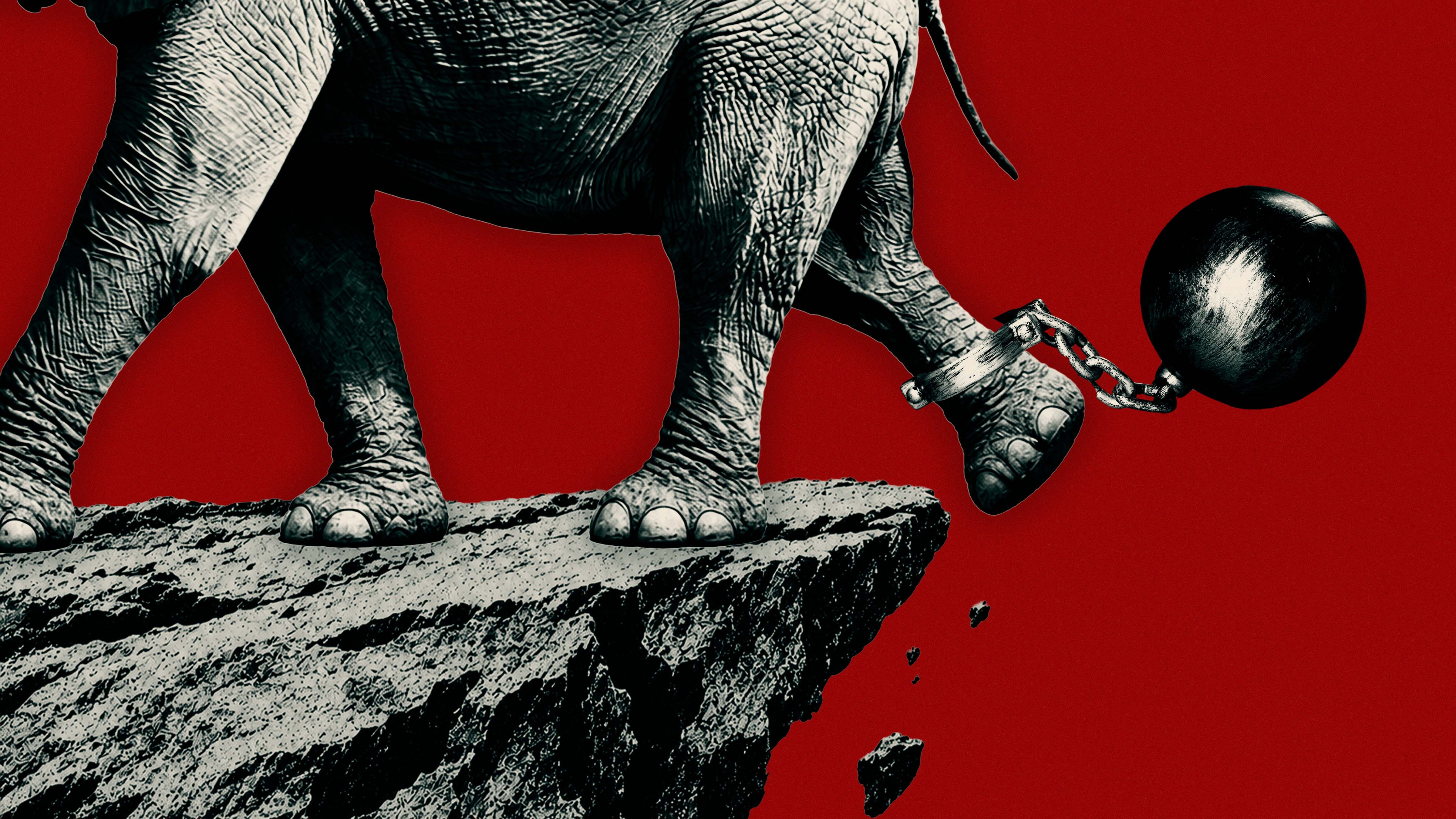
With MAGA in ruins, some Republicans will be tempted by white identity politics. That would be a catastrophic mistake not just for the GOP but for America, writes Rod Dreher. MAGA may be dead but Donald Trump is very much still with us, which means the GOP must try to rebuild for 2028 in a crossfire hurricane. On one side will be the energized Democrats, who will spend the next two years dragging administration officials before Congress. But surviving Republicans will also face gale-force baiting for Donald Trump, who is taking no responsibility for leading the GOP off a cliff, and who will surely torment any Republican who dares to speak the truth about the cause of the party’s suicide.
Paid postRod Dreher ·
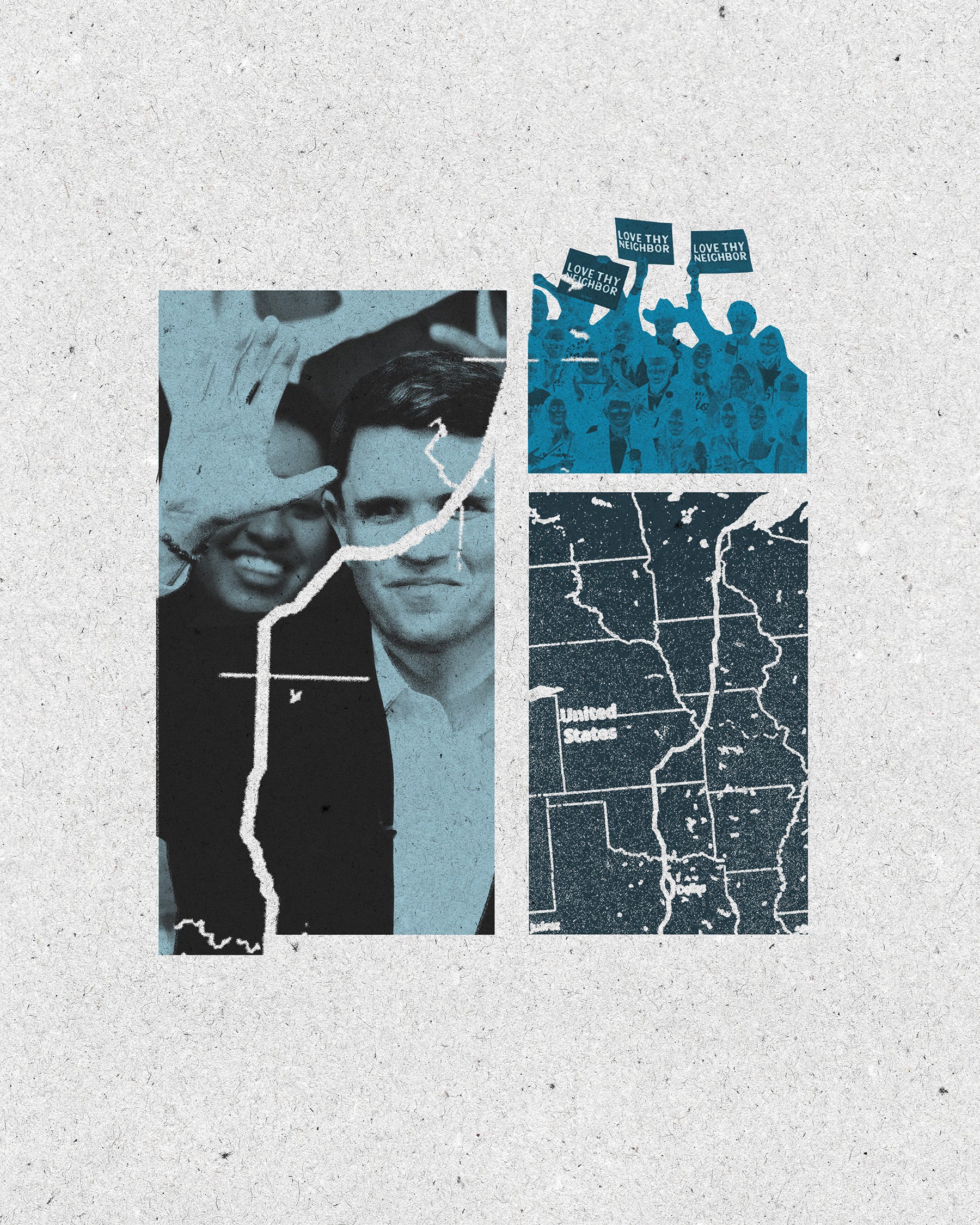
Politicians suck at reading elections. They see mandates where there are only mirages. But if there was a mandate from the election, it was for the quiet competence of the candidates along I-35, writes Joe Klein. I-35 is a great American highway. It starts at the southern border in Laredo, Texas, then moseys its way through Kansas, Iowa, and Minnesota, straight up through the gut of the country. It is where the election of 2026 took place, spiritually and politically. It is where the governing strategy for the Democratic Party should now reside. The midterm election really began in Minnesota during the winter ICE raids and the brutal deaths of Renee Good and Alex Pretti. The question nagged throughout the year: Is this who we are? Didn’t a guy like Pretti treat me at the hospital when I slashed my hand on the job? Didn’t we all know a wandering soul like Good, who had landed in Minneapolis with her three kids just eight months earlier? It was the subtext for all that followed. We wanted the border closed—good job, Mr. President—but did we really vote for brutal, masked gangster feds fighting our fellow citizens in the streets?
Paid postJoe Klein ·
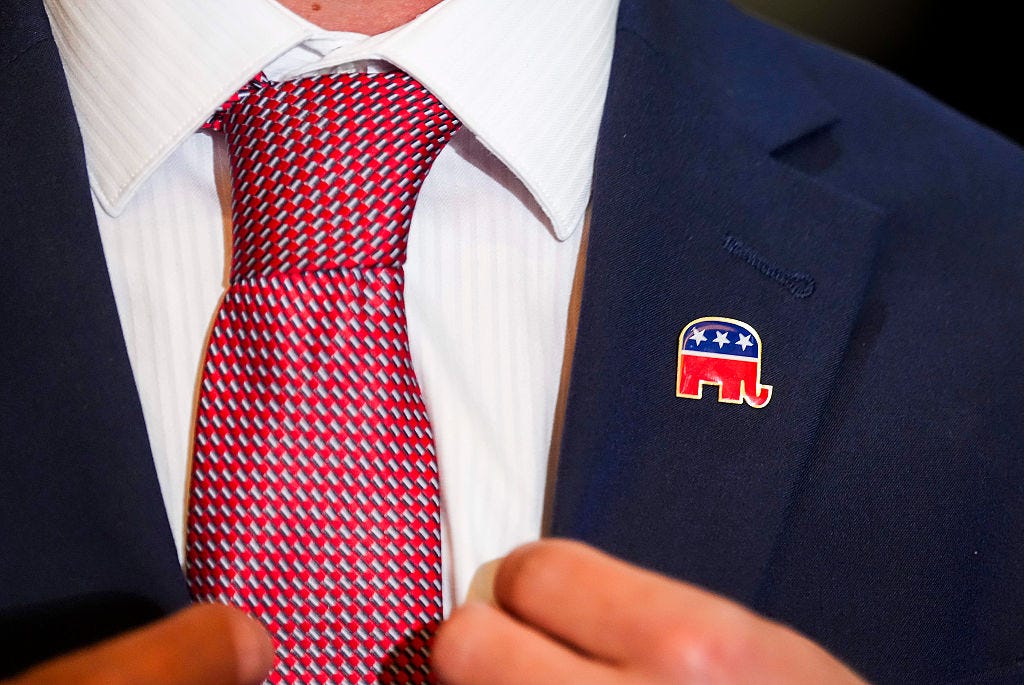
Tuesday’s humiliating defeat has quickly turned into distancing the Republican Party from some of Trump’s views—but no clear idea how to move on, either with the president or in spite of him, writes Audrey Fahlberg. Just two years ago, Donald Trump romped to victory in a sweep of the popular vote and seven battleground states that left Republicans confident—even arrogant—that their grip on power was impregnable, at least through the president’s second term. That confidence has been shattered by voters who put Trump back in the White House but made clear in Tuesday’s midterm elections that they are through with MAGA. On Wednesday, the mood inside the White House was bleak. Aides and other officials had expected to lose, but not this badly. Many were caught extremely off guard by the Democratic sweep, a person familiar with the matter told The Free Press, and were stunned by the Democratic Party’s historic gains in the deepest red territory. The most jaw-dropping examples include James Talarico’s double-digit Senate win in Texas, the defeat of Senator Darline Graham in South Carolina by Annie Andrews, who has never held elected office, and a comfortable flip of a Senate seat in Kansas to the Democrats for the first time since 1932. Now comes the circular GOP firing squad about what went wrong—and the big question of how the party can rebuild.
Paid postAudrey Fahlberg ·

For years, both parties have turned aid to Israel into a proxy fight for domestic political grievances. If these elections are an excuse to end that arrangement, we’ll all be better for it, writes Liel Leibovitz. On Tuesday morning, just hours before the GOP suffered a historic shellacking in the midterm elections, Donald Trump came out with what he hoped would be a game-changing announcement: The U.S., he declared, would soon end its annual $4 billion military aid to Israel. The news should’ve made me happy—my Tablet colleague Jacob Siegel and I spent the last three years making the case for this exact policy. But there was little to celebrate about Trump’s declaration, because anyone listening closely to the president on Election Day, or to the vice president the following morning, would have realized that the administration is making very few right moves—and even then, always for the wrong reasons, and often with disastrous consequences. How so? To answer the question, and to understand why this week’s political upheaval may actually be very good news for anyone concerned with America’s strength and security, it helps to first understand precisely what U.S. aid to Israel is—or, more accurately, what it is not.
Paid postLiel Leibovitz ·

The new right claimed power in 2024. Then it fell completely on its face, writes Ross Douthat. The new right that emerged in American politics after Donald Trump’s 2016 victory, manifest first in memes and secondarily in podcasts and policy journals and think tanks, prided itself on staring contemporary realities in the face rather than taking refuge in Reagan-era platitudes, recognizing all the things that the conservatism of the prior 20 years had failed to meaningfully conserve. For its many critics—Reaganite and centrist and left wing—the movement’s claim to know what time it is was a bully’s credo, or a youthful boast unseasoned by experience. But younger eyes really do see certain things more clearly, and in the late 2010s and early 2020s the new right had a strong claim to be more in tune with the American moment than many rival factions.
Paid postRoss Douthat ·
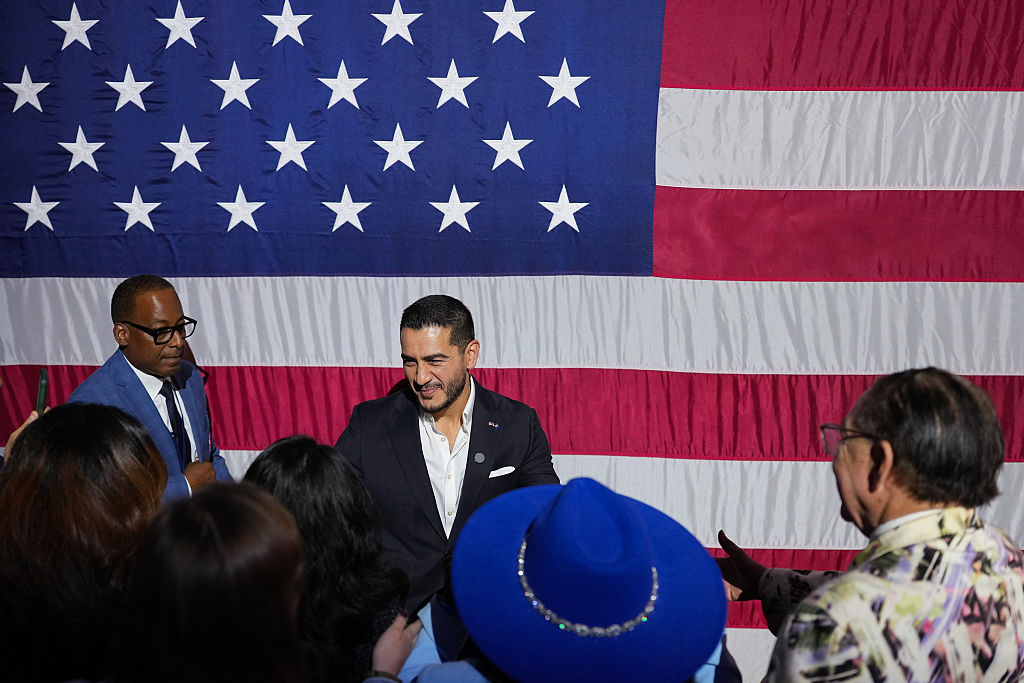
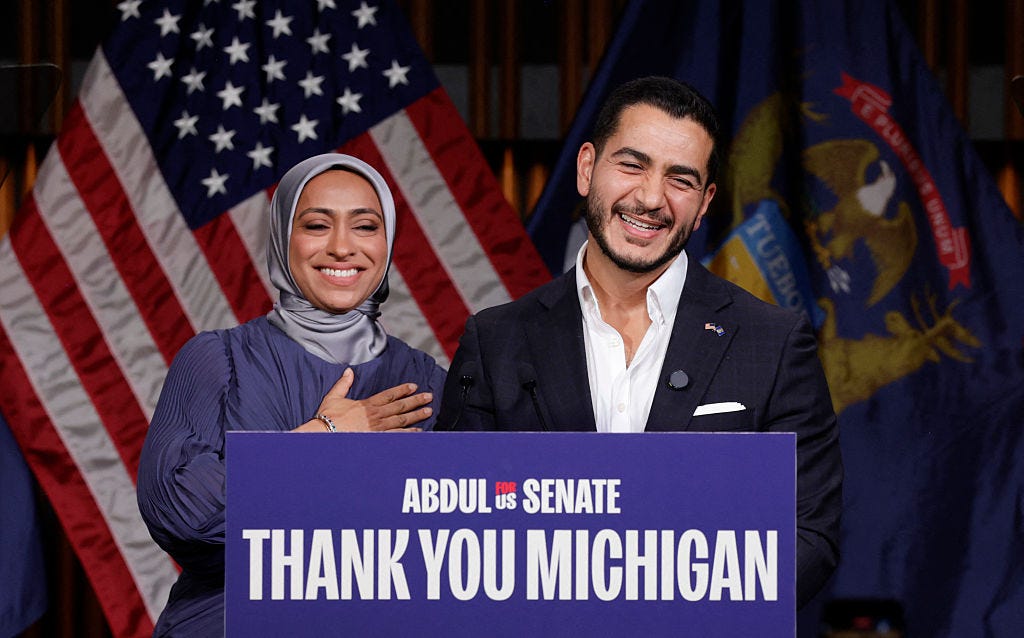
Olivia Reingold reports from Detroit, where the Muslim progressive’s election signifies a seismic shift in the scales of power. Socialism, TikTok, and anger now reign supreme. DETROIT, Michigan — “LET’S FUCKING GOOOOOO!” A blonde with a tattoo of the state of Michigan on her forearm thrusts her fist into the air. It is just after 1:30 a.m., and Abdul El-Sayed, a doctor turned podcaster, has been senator-elect for approximately one minute. Three friends next to me embrace in a hug. Hundreds of his supporters, crowded into a downtown event space, raise their smartphones. As his signature walk-out song, Tupac Shakur’s “Changes,” fades into the background, the 42-year-old leads the crowd into his usual ritual. “All right, friends, you know how we do,” he beamed. For the past year and a half, El-Sayed’s crowds across Michigan have finished his three signature campaign slogans at nearly every rally. Tonight, his promises are victory cries. “Money out of—” “POLITICS!” “Money in your—” “POCKET!” “Medicare for—” “ALL!”
Paid postOlivia Reingold ·
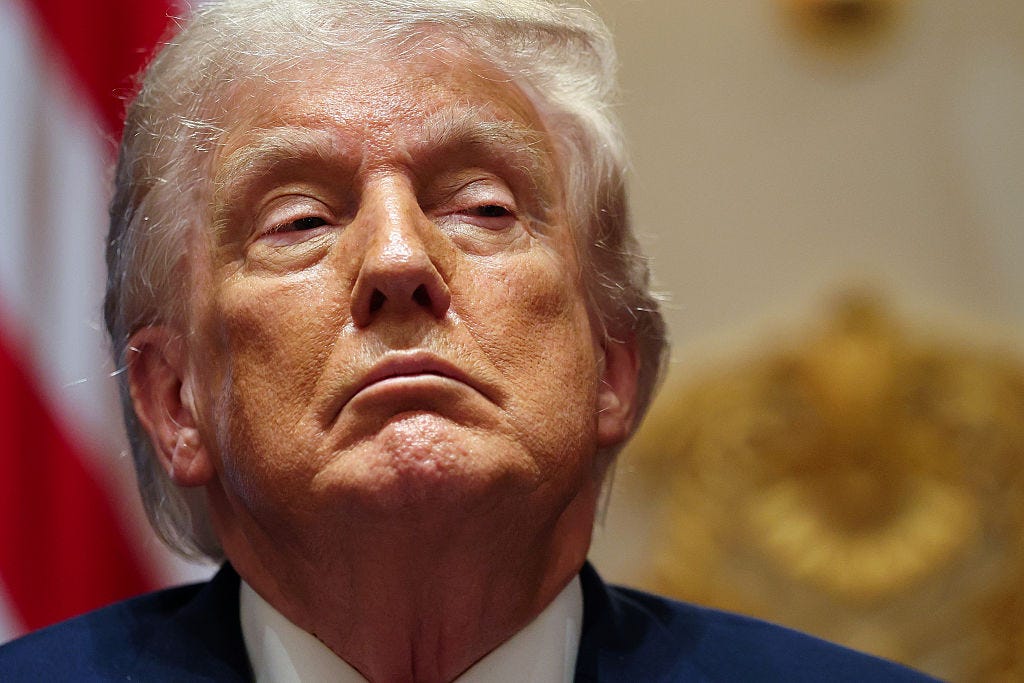
The Iran war was the biggest factor in this election. The president started the fight, made himself solely responsible for it, and guaranteed that his party would pay the cost for whatever happened, writes Michael Brendan Dougherty. As the dust settles after an undeniable electoral disaster for Republicans, one thing is clear: These losses come down to the Iran war. The exit polls have Donald Trump’s approval at 38 percent, lower than George W. Bush’s in 2006. Yes, the climbdown started on “liberation day” and coincided with a popular reaction against Immigration and Customs Enforcement raids. But it began really tanking with the war, dropping to 33 percent by August of this year. Polls suggest that a healthy majority of voters say he made the wrong decision in starting the war. CBS found that a quarter of Republicans agree. And though election analysis will say that voters ranked the cost of living higher than foreign policy issues—which is certainly true—this year, they are not separate issues. Consider that just four days before he resumed hostilities with Iran in February, Trump was bragging about falling gas prices. At the time the national average was $2.98. By Election Day it was $4.15. Diesel jumped from $3.75 to $6.29. Estimates put the cost of the war at nearly $2,000 per family. The energy supply shock provoked inflation. So did Trump’s tariffs, though not as much. But in a price-sensitive environment, every dollar counts. Americans across the country have a lot of time to think about their credit card bill on their way to the gas station, grocery store, or bank. The war has shown up in nearly every American’s household budget. People have a reason to remember Trump’s decision every time they put their hand in their pocket. And who can they look to blame? There was no vote authorizing the war in Congress, even though Republicans controlled both chambers. Anticipating a swift and undeniable victory, Trump never bothered to make a case for war to the American public. In February, he announced the resumption of war with Iran in the middle of the night one Saturday from Mar-a-Lago while most of America was sleeping. “Bombs will be dropping everywhere,” he said. Much of that address wasn’t even aimed at an American audience, but nominally at Iranians themselves, whom he encouraged to rise up. Congress was given a letter the following Monday.
Paid postMichael Brendan Dougherty ·
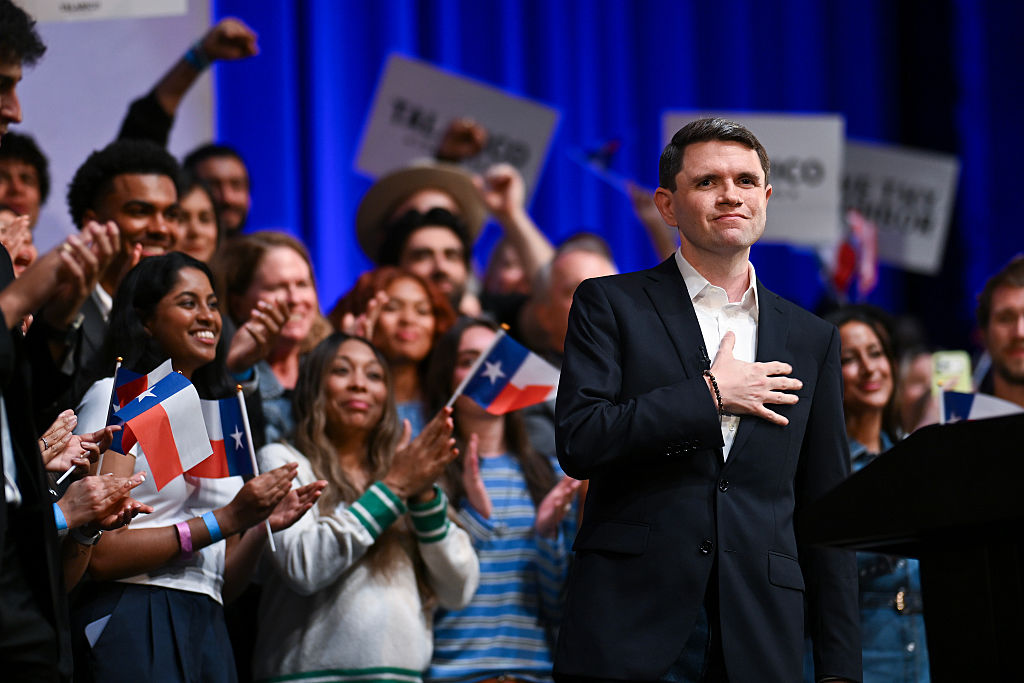
Democrats take the House and the Senate. Eli Lake, Niall Ferguson, Victor Davis Hanson, Caitlin Flanagan, Peter Savodnik, and more Free Pressers break down the results. It’s Wednesday, November 4. This is The Front Page, your daily window into the world of The Free Press—and our take on the world at large. It’s the morning after the 2026 midterm elections, and yes, the blue tsunami arrived. Today: Last night’s results and what they mean. Barely 15 minutes after the first polls closed on Tuesday night, the signs were there: The Democrats were going to win big. And that is exactly what happened. Republicans have lost control of the House and the Senate. Texas is blue—Democrats didn’t just win the Senate seat but, astonishingly, the governor’s race too. Kansas will have a Democratic senator for the first time since the Great Depression. Not to mention Ohio, North Carolina, South Carolina, Michigan, Iowa and Maine. It wasn’t just a blue tsunami, but as expert election watcher Sean Trende quipped on X last night, a “100-year flood.” For the Republicans, it was a disaster—and one that comes just two years after Donald Trump pulled off the greatest political comeback in living memory and was riding high with a unified government and a 6–3 conservative majority in the Supreme Court. So how did it all go wrong for the president who told Americans to “pretend I’m on the ballot” when they cast their vote this election? In our first offering today, Eli Lake tells the story of “broken campaign promises, a fractured coalition, and a president who prized loyalty over competence in both politics and governance” that means the “Trump era is all but over.” As is always the case when big news breaks, we want to hear from the voices we trust the most. So, as the aftershocks of last night’s political earthquake were still rippling across the country, we asked Free Press regulars for their take. Click below for Niall Ferguson on the return of political presidency; Caitlin Flanagan on the Democrats’ miraculous revival; Joe Klein on the deep thinking to be done on both sides; Mene Ukueberuwa on a changed political map; Aaron MacLean on what the results mean for the ongoing war with Iran, and more. But while many may be inclined to look at last night’s results and draw sweeping conclusions about the country’s future, Victor Davis Hanson says not so fast. Today, the historian lays out five lessons from the election, arguing that much remains uncertain: Midterm losses are nothing new for the party in power, Trump’s ability to advance his agenda may be less affected than it seems, and the political landscape heading into 2028 is still taking shape. In other words, he argues, the biggest takeaways from last night may be what we still don’t know. Noah Bernstein spent the last stretch of the campaign in Texas. Perhaps no result was more symbolic of the national story than James Talarico’s victory in the Senate race last night. The Lone Star State has been a conservative bastion for decades. Trump won by nearly 14 points only two years ago. And yet, it was a shellacking for the Texas GOP right down the ticket, with Democrat Gina Hinojosa beating Republican incumbent Greg Abbott in the governor’s race, Democrats taking both chambers of the state legislature and on track to win the majority of the statewide races. What’s the lesson from the Talarico win? Read Noah’s report to understand what the victory means for the future of Texas politics. If the GOP is licking its wounds and figuring out who to blame, last night’s results have the Democratic Party united in celebration. But how long will that unity last? Not long, according to Peter Savodnik. He’s been reporting on a party at war with itself for months—and once the hangovers among the activists and operatives have worn off today, the same divides will still be there. Read Peter on why tonight’s results only fuel the fight for the future of the Democrats. The 2026 Midterms: Taking Stock Over the past severa…
The Free Press ·
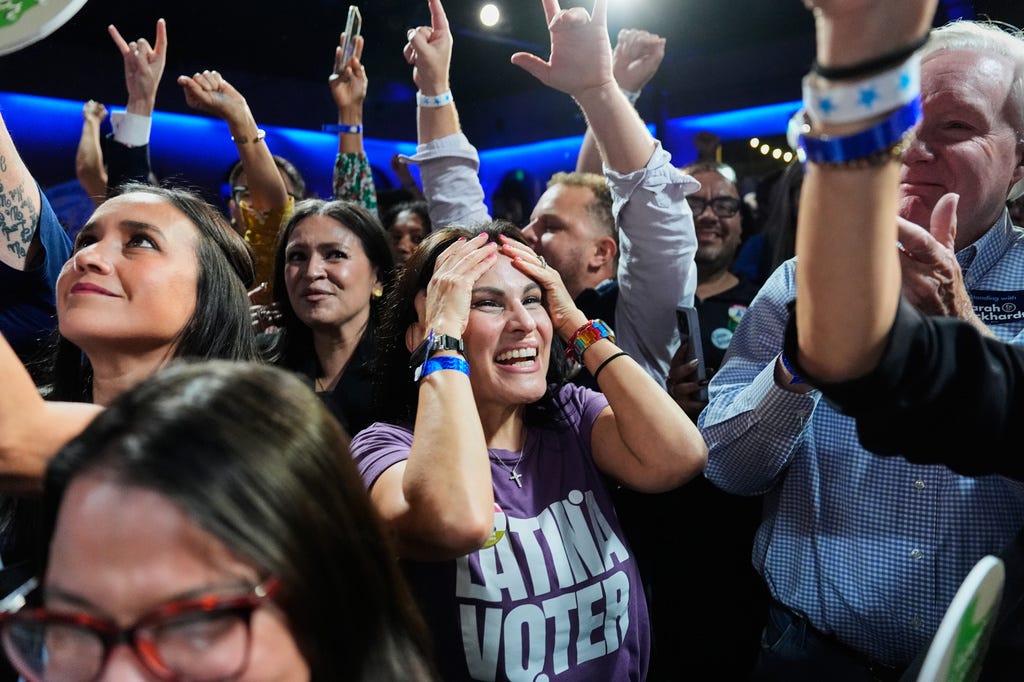
Victory in the midterms will hardly paper over the party’s divisions, writes Peter Savodnik. The Great Democratic Crack-Up starts now. That may sound a bit odd, given the party’s historic thrashing of Donald Trump and the Republican Party on Tuesday. Let me explain. For months, the anger and divisions have been bubbling up—the uber-progressive left pushing back against what it views as a feeble and feckless Democratic leadership, the leadership trying to hold things together, and the bundlers in New York and Los Angeles and elsewhere raising oodles of cash. Georgia senator Jon Ossoff reeled in $115 million; Texas’s new Democratic senator James Talarico, $146 million; and Rep. Alexandria Ocasio-Cortez, $38 million—of which she gave $1 million to Democratic Senate contender Abdul El-Sayed. That spending paid off: The Democrats now control the House and the Senate. Mission accomplished. Meanwhile, the influencers and podcasters—who feed off the intraparty fireworks—have been lapping up the likes and views, with leftist streamer Hasan Piker becoming something of an issue on the campaign trail, and the pod bros emerging as the new Democratic kingmakers. James Carville, the longtime Democratic strategist who ran Bill Clinton’s 1992 campaign, said Tuesday that the party’s “civil war starts Wednesday”—the day after the election. A Democratic consultant in Washington told me, “It feels like the Democratic civil war has already started.” He was referring to the trio of leftists who had just been elected to the House, and were backed by New York City mayor Zohran Mamdani.
Paid postPeter Savodnik ·
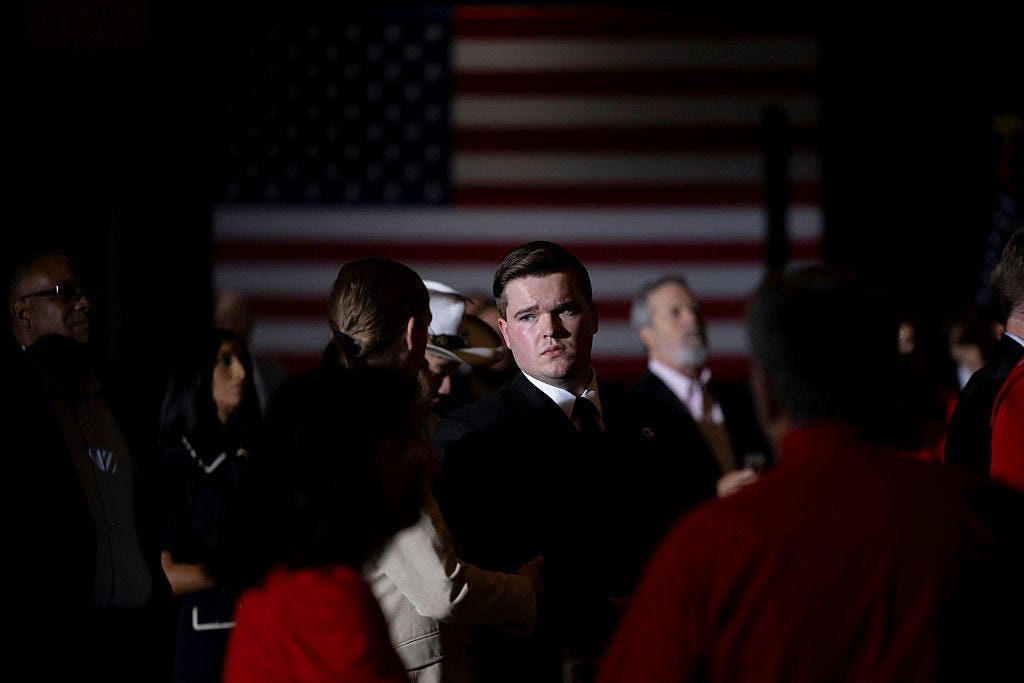
The biggest takeaway from Tuesday’s results is how much we still don’t know, writes Victor Davis Hanson. There are five easy takeaways from the results (so far). 1) History: Remember that, in the 126 years of midterms since 1900, the party in the White House has lost House seats 90 percent of the time and Senate seats 75 percent of the time. So the losses are not unexpected. Yet Trump’s midterm losses may rival the cataclysmic losses of Clinton in 1994 and Obama in 2010 (both of whom ironically left office with the highest ratings of their presidencies). Saving midterm congressional seats is always hard for an incumbent president. 2) Trump’s last two years: The blue wave will give the extremist left enormous momentum. But if the last two years of the Clinton and Obama administrations (both of which had earlier lost their initial House and Senate majorities) are any guide, it won’t radically derail Trump’s last two-year initiatives—since it is still unlikely Democrats will gain a veto-proof Senate. Except for judicial and cabinet nominations, which will all be blocked, Trump will continue Obama-like, pen and phone, executive-order domestic policies. Abroad, he will do largely as he has in the past, the way Clinton did in Serbia and in his Middle East negotiations, and Obama did with the Iran nuclear deal, the Paris Climate Accords, and the normalization of relations with Cuba. He will succeed or fail on whether the economy takes off and he achieves the denuclearization of Iran—and quickly.
Paid postVictor Davis Hanson ·

Niall Ferguson, Caitlin Flanagan, Mene Ukueberuwa, and more on last night’s political earthquake, and what it means for the country. Two years ago, Donald Trump swept all seven swing states, won the popular vote, and carried Republicans to control of Congress. On Tuesday night, he lost both houses in a thrashing that reached into traditionally deep-red parts of the country. The damage went well beyond battlegrounds. Texas hasn’t elected a Democrat to the Senate since 1988. Kansas hasn’t had a Democratic senator since the Great Depression. Now Trump has officially entered lame duck territory, with Democrats running Congress for the final two years of his presidency. Was this a referendum on Trump himself, or just the punishment nearly every second-term president gets? Was it the Iran war, the cost of living, or the stench of corruption that did the damage? And will Democrats hold on to voters who turned out against Trump rather than for their party? To make sense of it, we asked some of our most trusted voices for their immediate reactions. Here’s what they had to say. —The Editors Caitlin Flanagan: Democrats Finally Remembered How to Win Jesus, take the wheel: The Democrats are finally talking like they want to win some elections. It’s a miracle. Throughout the campaigns they’ve stayed focused on the issues, and for the most part they’ve steered away from the kind of niche social issues that many people have never heard of and that caused the party so much trouble in the last presidential election. The party limped out of the Chicago convention two years ago, and you really wondered if they would ever come back. They have. This country is the kind of mess you don’t see in the charts and reports from the National Bureau of Economic Research—it’s a crisis that shows up in people’s homes. It’s in the places where the food and gas is too expensive, and where the medical bills are crumpled up in a drawer you never open but will never let you sleep. We’ve been pricing people out of their own lives. And Trump’s two pet projects—the tariffs and the war in Iran—have the whole system wrapped up in the baling wire of high inflation. And you know what you don’t want to see when you’re coping with all of that? Mr. Monopoly leering down at you from the top of the board.
Paid postThe Editors ·
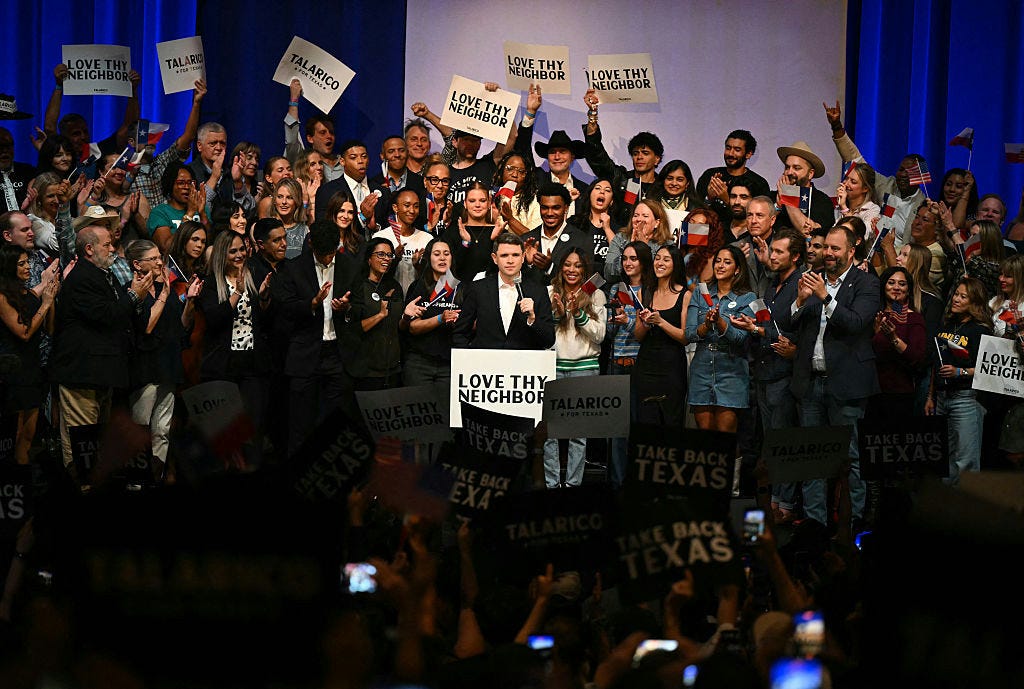
The state lawmaker is the first Democrat to win statewide office since 1994, writes Noah Bernstein. AUSTIN, Texas — James Talarico is a religious man. But he needed an act of God to turn Texas blue. And on Tuesday night, he brought about a miracle. “We just took back Texas,” Talarico said in his victory speech. “And tonight we defeated Goliath.” Talarico’s victory signals the full crest of a blue tsunami. Senate races in North Carolina and Ohio were high-profile contests, but each amounted to a competition over purple territory. Democrats also flipped hard-to-win seats in red states such as South Carolina and Kansas. But Texas is in a league of its own. It’s the second-largest state in the union, the spiritual home of American conservatism, and it has been deep red for decades. Before Tuesday, Texans hadn’t elected a Democrat statewide since 1994. And Donald Trump won the state by more than 1.5 million votes just two years ago, making Talarico’s win as big a pickup for either party in recent memory and putting 40 electoral college votes in play come 2028. In an equally unlikely turn, his fellow Democrat Gina Hinojosa won the governorship, defeating once-popular three-term incumbent Greg Abbott.
Paid postNoah Bernstein ·
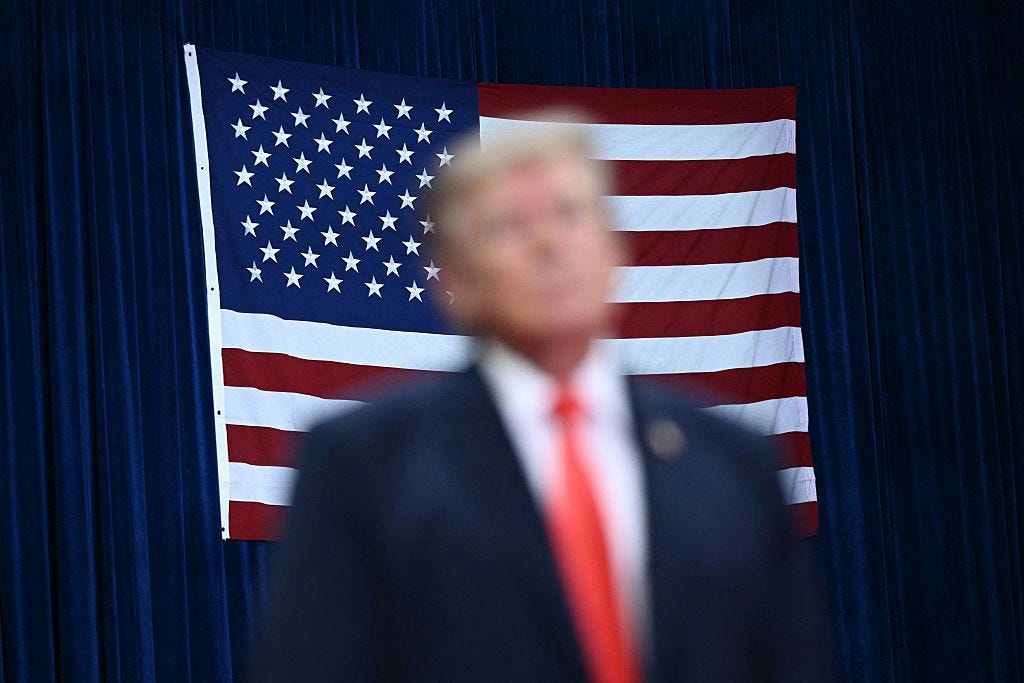
Two years ago, voters powered Trump to the political comeback of the century. On Tuesday, they rejected him comprehensively, writes Eli Lake. When Donald Trump came into office for his second term, his approval ratings were in the high 40s. He had won the greatest political comeback in presidential history with a coalition that ranged from working-class white men to vaccine-skeptical wine moms. Trump won nearly half of all Latino votes, and 15 percent of the black vote, the highest tally for a Republican presidential candidate in decades. Republicans controlled the House and the Senate, and had a 6–3 edge on the Supreme Court. The future was MAGA and there was nothing the Democrats could do about it. Or so it seemed. Two years later, Trump has squandered those gains. At a special GOP midterm convention in Texas this summer, Trump asked the crowd to “pretend I’m on the ballot.” It appears that’s exactly what the voters did. The result is that the president’s House and Senate majorities are gone. Some of the deepest red states in the union, like South Carolina, have gone blue. Texas, which last elected a Democratic senator in 1988, will send James Talarico to Washington to fill John Cornyn’s seat. Georgia, which Trump won in 2024, gave Democratic senator Jon Ossoff an easy reelection victory and elected the first black governor in its history, Democrat Keisha Lance Bottoms. By midnight, it looked like Democrats were having their best midterm since 1974, after President Richard Nixon resigned in disgrace due to the Watergate scandal.
Paid postEli Lake ·
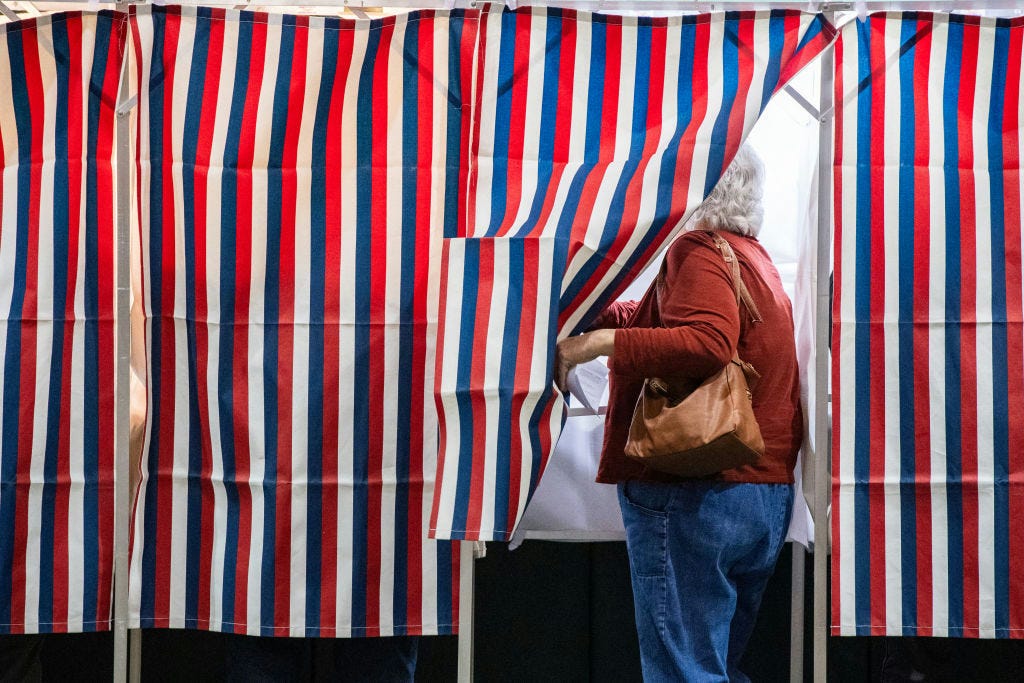
In the final round of The Honesty Project, we asked Americans about the biggest midterm topics. We found that opinion has shifted regarding both parties’ main weaknesses, writes Mene Ukueberuwa. Welcome back to The Honesty Project, a series of opinion surveys from The Free Press exploring what Americans really think about the most consequential issues in public life. We’re going beyond the questions usually asked in a typical poll. In partnership with Populace, an opinion-research think tank, we developed surveys designed to uncover respondents’ “private” opinions—the beliefs they consider too sensitive to express openly. We want to get past the biases that can distort polling and prompt people to give less-than-candid answers, and learn more about aspects of American life people don’t feel comfortable discussing freely. (Click to learn more about the initiative and methodology.) This Election Day, we asked Americans what matters most as they decide how to vote, including how they view President Donald Trump and his Democratic critics.
Paid postMene Ukueberuwa ·