Source
The Free Press

The Free Press (CBS News)
The Free Press, formerly Common Sense, is an American media company based in New York City. Founded by opinion writer Bari Weiss and her spouse Nellie Bowles, the company started as a newsletter in 2021, and grew into an associated media company in 2022. Since October 2025, it is an independent entity within CBS News, whose parent company Skydance Corporation acquired it in 2025 for $150 million.
From Wikipedia ↗, text under CC BY-SA 4.0; logo from Wikimedia Commons
- Type
- News outlet on Substack
- Lean
- Right-leaning
- Right-Center+4.1 of ±10
- Mixed4.8 of 10 (lower is better)
- Medium
- Website
- thefp.com ↗
- Feed
- RSS ↗
- Articles stored
- 170
- Tracked since
- Sep 10, 2026
Down: MBFC factual reporting score, 0 most factual to 10 least.
Bias and credibility ratings by Media Bias/Fact Check.
The Free Press on MBFC ↗Publishing rhythm
How many articles The Free Press published over the last 14 days, by publication time, and at which hours of the day.
Top keywords
All keyword charts for The Free Press →The people, places, organizations and topics The Free Press covered most that day, by the share of its stories that mention them. Article counts are shown for context.
No keywords that day yet.
Latest articles
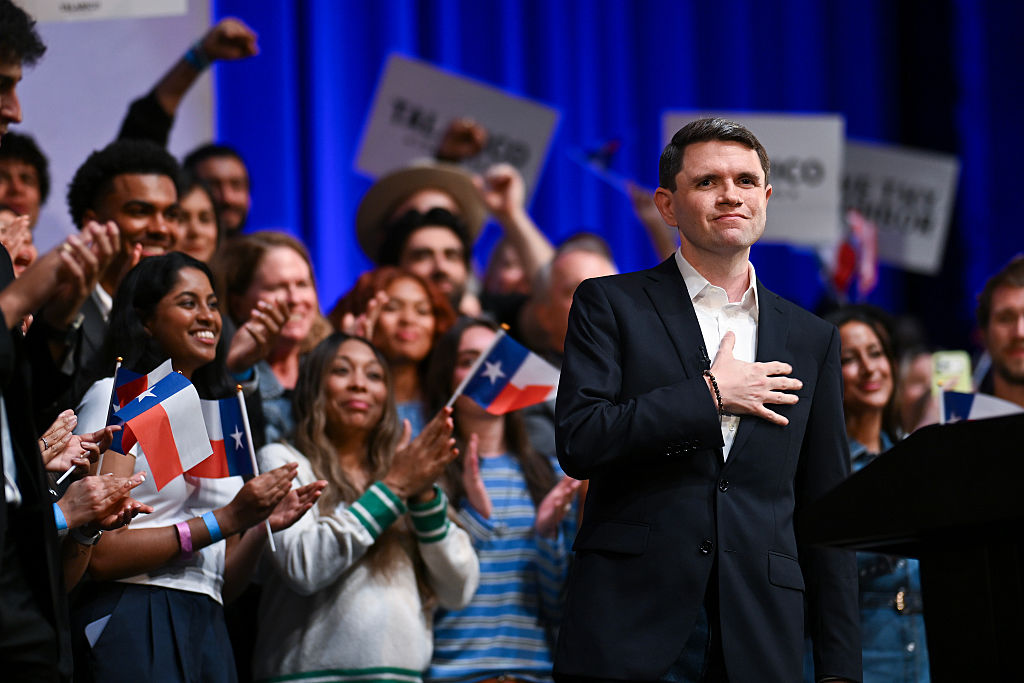
Democrats take the House and the Senate. Eli Lake, Niall Ferguson, Victor Davis Hanson, Caitlin Flanagan, Peter Savodnik, and more Free Pressers break down the results. It’s Wednesday, November 4. This is The Front Page, your daily window into the world of The Free Press—and our take on the world at large. It’s the morning after the 2026 midterm elections, and yes, the blue tsunami arrived. Today: Last night’s results and what they mean. Barely 15 minutes after the first polls closed on Tuesday night, the signs were there: The Democrats were going to win big. And that is exactly what happened. Republicans have lost control of the House and the Senate. Texas is blue—Democrats didn’t just win the Senate seat but, astonishingly, the governor’s race too. Kansas will have a Democratic senator for the first time since the Great Depression. Not to mention Ohio, North Carolina, South Carolina, Michigan, Iowa and Maine. It wasn’t just a blue tsunami, but as expert election watcher Sean Trende quipped on X last night, a “100-year flood.” For the Republicans, it was a disaster—and one that comes just two years after Donald Trump pulled off the greatest political comeback in living memory and was riding high with a unified government and a 6–3 conservative majority in the Supreme Court. So how did it all go wrong for the president who told Americans to “pretend I’m on the ballot” when they cast their vote this election? In our first offering today, Eli Lake tells the story of “broken campaign promises, a fractured coalition, and a president who prized loyalty over competence in both politics and governance” that means the “Trump era is all but over.” As is always the case when big news breaks, we want to hear from the voices we trust the most. So, as the aftershocks of last night’s political earthquake were still rippling across the country, we asked Free Press regulars for their take. Click below for Niall Ferguson on the return of political presidency; Caitlin Flanagan on the Democrats’ miraculous revival; Joe Klein on the deep thinking to be done on both sides; Mene Ukueberuwa on a changed political map; Aaron MacLean on what the results mean for the ongoing war with Iran, and more. But while many may be inclined to look at last night’s results and draw sweeping conclusions about the country’s future, Victor Davis Hanson says not so fast. Today, the historian lays out five lessons from the election, arguing that much remains uncertain: Midterm losses are nothing new for the party in power, Trump’s ability to advance his agenda may be less affected than it seems, and the political landscape heading into 2028 is still taking shape. In other words, he argues, the biggest takeaways from last night may be what we still don’t know. Noah Bernstein spent the last stretch of the campaign in Texas. Perhaps no result was more symbolic of the national story than James Talarico’s victory in the Senate race last night. The Lone Star State has been a conservative bastion for decades. Trump won by nearly 14 points only two years ago. And yet, it was a shellacking for the Texas GOP right down the ticket, with Democrat Gina Hinojosa beating Republican incumbent Greg Abbott in the governor’s race, Democrats taking both chambers of the state legislature and on track to win the majority of the statewide races. What’s the lesson from the Talarico win? Read Noah’s report to understand what the victory means for the future of Texas politics. If the GOP is licking its wounds and figuring out who to blame, last night’s results have the Democratic Party united in celebration. But how long will that unity last? Not long, according to Peter Savodnik. He’s been reporting on a party at war with itself for months—and once the hangovers among the activists and operatives have worn off today, the same divides will still be there. Read Peter on why tonight’s results only fuel the fight for the future of the Democrats. The 2026 Midterms: Taking Stock Over the past severa…
The Free Press ·
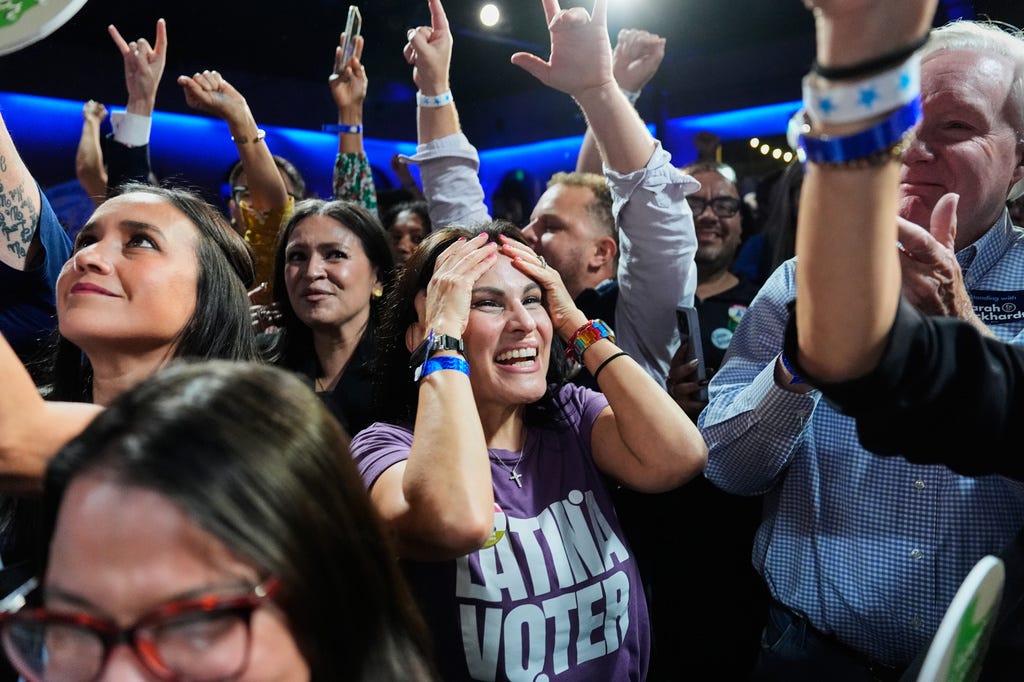
Victory in the midterms will hardly paper over the party’s divisions, writes Peter Savodnik. The Great Democratic Crack-Up starts now. That may sound a bit odd, given the party’s historic thrashing of Donald Trump and the Republican Party on Tuesday. Let me explain. For months, the anger and divisions have been bubbling up—the uber-progressive left pushing back against what it views as a feeble and feckless Democratic leadership, the leadership trying to hold things together, and the bundlers in New York and Los Angeles and elsewhere raising oodles of cash. Georgia senator Jon Ossoff reeled in $115 million; Texas’s new Democratic senator James Talarico, $146 million; and Rep. Alexandria Ocasio-Cortez, $38 million—of which she gave $1 million to Democratic Senate contender Abdul El-Sayed. That spending paid off: The Democrats now control the House and the Senate. Mission accomplished. Meanwhile, the influencers and podcasters—who feed off the intraparty fireworks—have been lapping up the likes and views, with leftist streamer Hasan Piker becoming something of an issue on the campaign trail, and the pod bros emerging as the new Democratic kingmakers. James Carville, the longtime Democratic strategist who ran Bill Clinton’s 1992 campaign, said Tuesday that the party’s “civil war starts Wednesday”—the day after the election. A Democratic consultant in Washington told me, “It feels like the Democratic civil war has already started.” He was referring to the trio of leftists who had just been elected to the House, and were backed by New York City mayor Zohran Mamdani.
Paid postPeter Savodnik ·
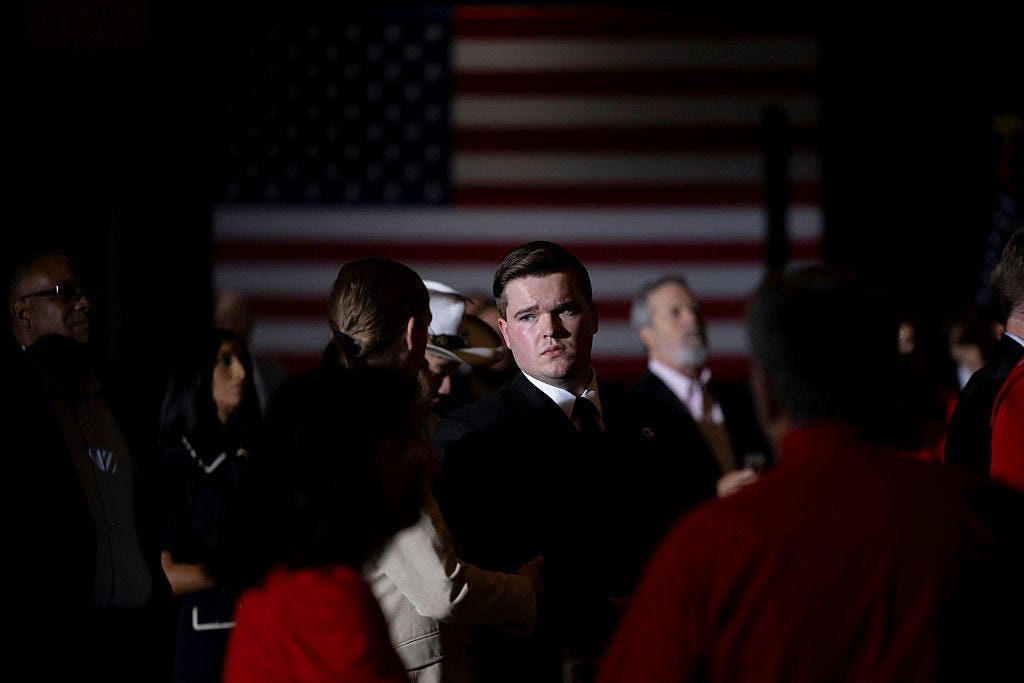
The biggest takeaway from Tuesday’s results is how much we still don’t know, writes Victor Davis Hanson. There are five easy takeaways from the results (so far). 1) History: Remember that, in the 126 years of midterms since 1900, the party in the White House has lost House seats 90 percent of the time and Senate seats 75 percent of the time. So the losses are not unexpected. Yet Trump’s midterm losses may rival the cataclysmic losses of Clinton in 1994 and Obama in 2010 (both of whom ironically left office with the highest ratings of their presidencies). Saving midterm congressional seats is always hard for an incumbent president. 2) Trump’s last two years: The blue wave will give the extremist left enormous momentum. But if the last two years of the Clinton and Obama administrations (both of which had earlier lost their initial House and Senate majorities) are any guide, it won’t radically derail Trump’s last two-year initiatives—since it is still unlikely Democrats will gain a veto-proof Senate. Except for judicial and cabinet nominations, which will all be blocked, Trump will continue Obama-like, pen and phone, executive-order domestic policies. Abroad, he will do largely as he has in the past, the way Clinton did in Serbia and in his Middle East negotiations, and Obama did with the Iran nuclear deal, the Paris Climate Accords, and the normalization of relations with Cuba. He will succeed or fail on whether the economy takes off and he achieves the denuclearization of Iran—and quickly.
Paid postVictor Davis Hanson ·

Niall Ferguson, Caitlin Flanagan, Mene Ukueberuwa, and more on last night’s political earthquake, and what it means for the country. Two years ago, Donald Trump swept all seven swing states, won the popular vote, and carried Republicans to control of Congress. On Tuesday night, he lost both houses in a thrashing that reached into traditionally deep-red parts of the country. The damage went well beyond battlegrounds. Texas hasn’t elected a Democrat to the Senate since 1988. Kansas hasn’t had a Democratic senator since the Great Depression. Now Trump has officially entered lame duck territory, with Democrats running Congress for the final two years of his presidency. Was this a referendum on Trump himself, or just the punishment nearly every second-term president gets? Was it the Iran war, the cost of living, or the stench of corruption that did the damage? And will Democrats hold on to voters who turned out against Trump rather than for their party? To make sense of it, we asked some of our most trusted voices for their immediate reactions. Here’s what they had to say. —The Editors Caitlin Flanagan: Democrats Finally Remembered How to Win Jesus, take the wheel: The Democrats are finally talking like they want to win some elections. It’s a miracle. Throughout the campaigns they’ve stayed focused on the issues, and for the most part they’ve steered away from the kind of niche social issues that many people have never heard of and that caused the party so much trouble in the last presidential election. The party limped out of the Chicago convention two years ago, and you really wondered if they would ever come back. They have. This country is the kind of mess you don’t see in the charts and reports from the National Bureau of Economic Research—it’s a crisis that shows up in people’s homes. It’s in the places where the food and gas is too expensive, and where the medical bills are crumpled up in a drawer you never open but will never let you sleep. We’ve been pricing people out of their own lives. And Trump’s two pet projects—the tariffs and the war in Iran—have the whole system wrapped up in the baling wire of high inflation. And you know what you don’t want to see when you’re coping with all of that? Mr. Monopoly leering down at you from the top of the board.
Paid postThe Editors ·
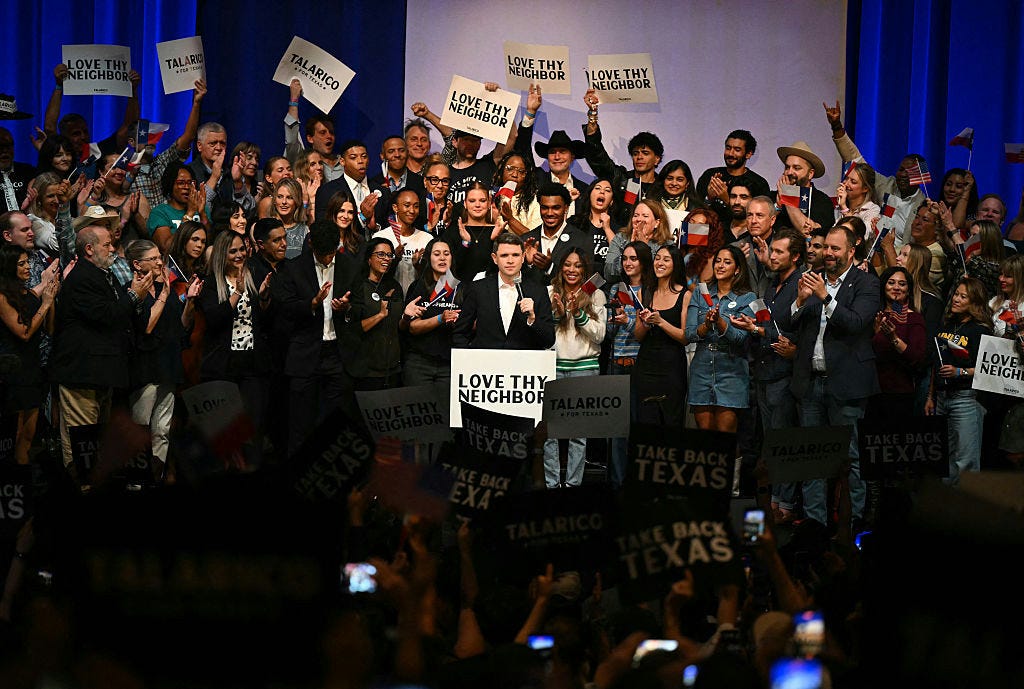
The state lawmaker is the first Democrat to win statewide office since 1994, writes Noah Bernstein. AUSTIN, Texas — James Talarico is a religious man. But he needed an act of God to turn Texas blue. And on Tuesday night, he brought about a miracle. “We just took back Texas,” Talarico said in his victory speech. “And tonight we defeated Goliath.” Talarico’s victory signals the full crest of a blue tsunami. Senate races in North Carolina and Ohio were high-profile contests, but each amounted to a competition over purple territory. Democrats also flipped hard-to-win seats in red states such as South Carolina and Kansas. But Texas is in a league of its own. It’s the second-largest state in the union, the spiritual home of American conservatism, and it has been deep red for decades. Before Tuesday, Texans hadn’t elected a Democrat statewide since 1994. And Donald Trump won the state by more than 1.5 million votes just two years ago, making Talarico’s win as big a pickup for either party in recent memory and putting 40 electoral college votes in play come 2028. In an equally unlikely turn, his fellow Democrat Gina Hinojosa won the governorship, defeating once-popular three-term incumbent Greg Abbott.
Paid postNoah Bernstein ·
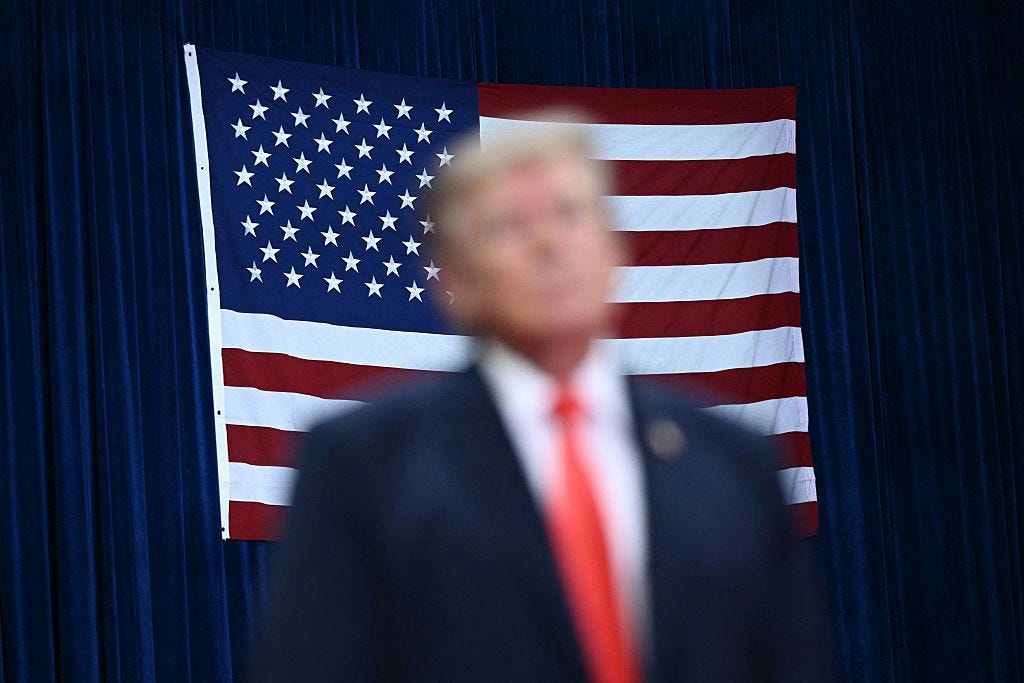
Two years ago, voters powered Trump to the political comeback of the century. On Tuesday, they rejected him comprehensively, writes Eli Lake. When Donald Trump came into office for his second term, his approval ratings were in the high 40s. He had won the greatest political comeback in presidential history with a coalition that ranged from working-class white men to vaccine-skeptical wine moms. Trump won nearly half of all Latino votes, and 15 percent of the black vote, the highest tally for a Republican presidential candidate in decades. Republicans controlled the House and the Senate, and had a 6–3 edge on the Supreme Court. The future was MAGA and there was nothing the Democrats could do about it. Or so it seemed. Two years later, Trump has squandered those gains. At a special GOP midterm convention in Texas this summer, Trump asked the crowd to “pretend I’m on the ballot.” It appears that’s exactly what the voters did. The result is that the president’s House and Senate majorities are gone. Some of the deepest red states in the union, like South Carolina, have gone blue. Texas, which last elected a Democratic senator in 1988, will send James Talarico to Washington to fill John Cornyn’s seat. Georgia, which Trump won in 2024, gave Democratic senator Jon Ossoff an easy reelection victory and elected the first black governor in its history, Democrat Keisha Lance Bottoms. By midnight, it looked like Democrats were having their best midterm since 1974, after President Richard Nixon resigned in disgrace due to the Watergate scandal.
Paid postEli Lake ·
In the final round of The Honesty Project, we asked Americans about the biggest midterm topics. We found that opinion has shifted regarding both parties’ main weaknesses, writes Mene Ukueberuwa. Welcome back to The Honesty Project, a series of opinion surveys from The Free Press exploring what Americans really think about the most consequential issues in public life. We’re going beyond the questions usually asked in a typical poll. In partnership with Populace, an opinion-research think tank, we developed surveys designed to uncover respondents’ “private” opinions—the beliefs they consider too sensitive to express openly. We want to get past the biases that can distort polling and prompt people to give less-than-candid answers, and learn more about aspects of American life people don’t feel comfortable discussing freely. (Click to learn more about the initiative and methodology.) This Election Day, we asked Americans what matters most as they decide how to vote, including how they view President Donald Trump and his Democratic critics.
Paid postMene Ukueberuwa ·
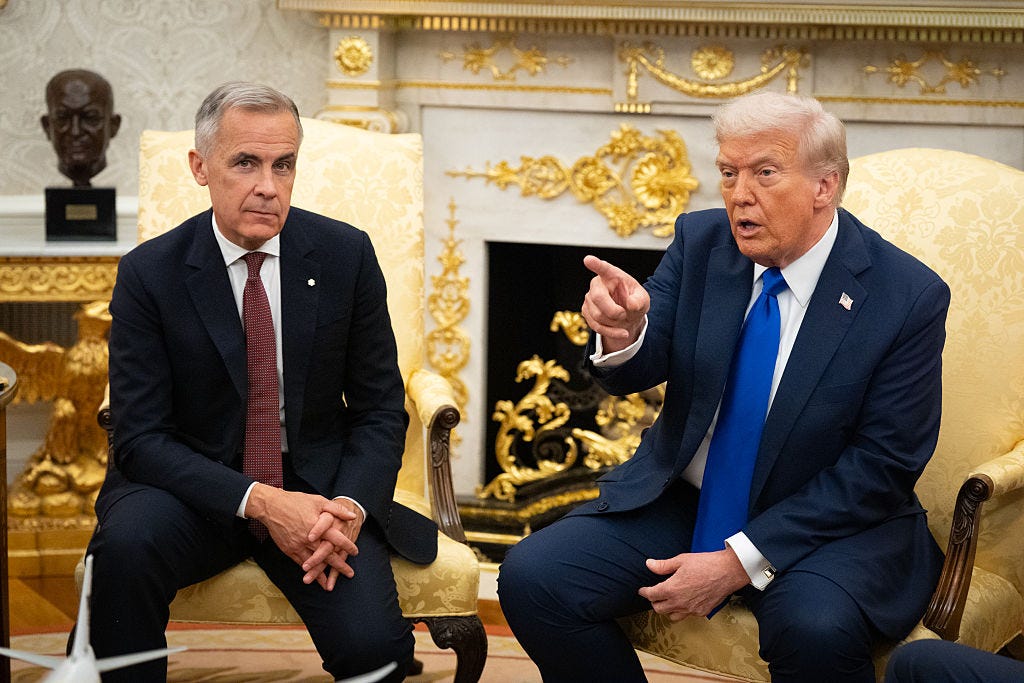
In the latest This Week in Canada newsletter, a Catholic school bus driver who put a very troubling sign in the window claims discrimination, a masked man gets away from Toronto police, time seems to be on Carney’s side, and more, writes Rupa Subramanya. Welcome back to This Week in Canada, where Carney’s refusal to buckle to Trump on trade might just be working; three masked men unmask our crime problem; “The Lolita Line” is back in service; and more. Let’s jump right in! Is Canada’s gamble to refuse a bad trade deal and wait for political pressure to build on Donald Trump going to pay off? Prime Minister Mark Carney said last week that Canada is prepared to muddle through its trade war with the United States until 2029 rather than “lock in something that’s not in Canada’s interests,” according to Politico. “Every month that goes by, Canada grows stronger,” Carney said. “Our options increase.” That isn’t quite what the economic numbers say. Canada is surviving the trade war, now in its third month of 50 percent tariffs imposed on CAD$27.6 billion of Canadian-made goods, better than some people feared, but the costs are steep. The average U.S. tariff has climbed to 7.5 percent from essentially zero, the Bank of Canada estimates, while employment growth is particularly weak in industries that are most reliant on U.S. demand. Steel exports to the U.S. have fallen by half, and auto, steel, and aluminum companies have delayed investment, scaled back production, or shifted some investment to avoid tariffs. Carney isn’t really hoping to win a trade war against an economy more than 10 times the size of Canada’s. He is hoping that Canada can withstand the ongoing pain, buy more time to reduce its economic dependence on the U.S., and allow political pressure to build on the other side of the border.
Paid postRupa Subramanya ·
In today’s Front Page, two perspectives on the Democrats’ Haley Stevens Rorschach test. Arthur Brooks on how to raise kids who love reading. Michael Doran on whether Trump can broker a unity government in Israel. And much more. It’s Tuesday, November 3. This is The Front Page, your daily window into the world of The Free Press—and our take on the world at large. Today: Joe Klein and Eli Lake on Haley Stevens and the Democrats’ civil war she provoked. Arthur Brooks on why it’s okay to read to your teenagers. And more. But first: Trump’s closing argument and the volunteers taking election integrity into their own hands. If Republican candidates braced for midterm defeat were hoping for some eleventh-hour message discipline from Donald Trump, let’s hope they didn’t turn on their televisions on Monday afternoon. Had they done so, they would have found the president standing not in a swing state but in front of the reflecting pool. The president eventually made his closing pitch to voters. But not before a 20-minute riff extolling the renovations to the Washington landmark he ordered earlier this year, including pictures of pipes and a detailed rundown of the “high-quality materials” used by the contractors. When the president finally got to the election, he didn’t exactly sound optimistic. “For some reason, the sitting president doesn’t win the midterms. But we gave this a very strong shot,” he said. While Trump is setting expectations low, Democrats are trying not to get ahead of themselves. We may have learned by now not to trust the polls, but everything suggests a blue wave. To find out whether or not that blue wave materializes, tune in to our election livestream tonight (scroll down for more details and mark your calendars here). Before that, though, Americans have to vote and their ballots have to be counted. And that—in case you’ve been living under a rock for the past decade—has become a more contentious process than one would like. Today, Olivia Reingold meets the ranks of progressive activists fashioning themselves as “Election Defenders” at polls across the country. Read Olivia’s piece for an Election Day look at the messy, combustible picture on the ground as Americans head to the polls. —Oliver Wiseman Will Democrats Regret Spurning Haley Stevens? Haley Stevens just might be the most hated woman in Democratic politics right now. On Sunday, the Michigan congresswoman, who lost to Abdul El-Sayed in the Democratic primary for Senate, un-endorsed her former opponent and instead backed Republican Mike Rogers. The subsequent vitriol from her erstwhile colleagues has been astonishing, with Senate Minority Leader Chuck Schumer calling her switch a “despicable betrayal.” Today, we have two pieces about l’affair Stevens from different perspectives. Joe Klein considers Trump “a clear and present danger to our country” and dearly hopes that both houses of Congress will elect Democratic majorities after today’s election results are in. But, he argues, Democrats need to be clear-eyed about the danger El-Sayed poses to the party. If they don’t, he writes, the party “will pay the price in a loss of decency and humanity.” For his part, Eli Lake wonders when all the Democratic pooh-bahs who are now furiously condemning Stevens will realize what a mistake they’ve made by getting behind El-Sayed as a means to gain back the Senate. “They all have chosen to purge Stevens instead of thinking through what happens when the man they have endorsed wins his election and becomes a kingmaker,” Eli writes. “Perhaps then the Democrats making a show of their solidarity with El-Sayed will learn they have invited a wolf into their henhouse.” And ICYMI, catch up on Olivia Reingold’s exclusive interview with Stevens on the ground in Michigan. Tune In for LIVE Midterms coverage with The Free Press and 2WAY! The Free Press and 2WAY are teaming up for a real-time interactive election night special. You can tune in right here. Will Rahn will co-host with Ma…
The Free Press ·
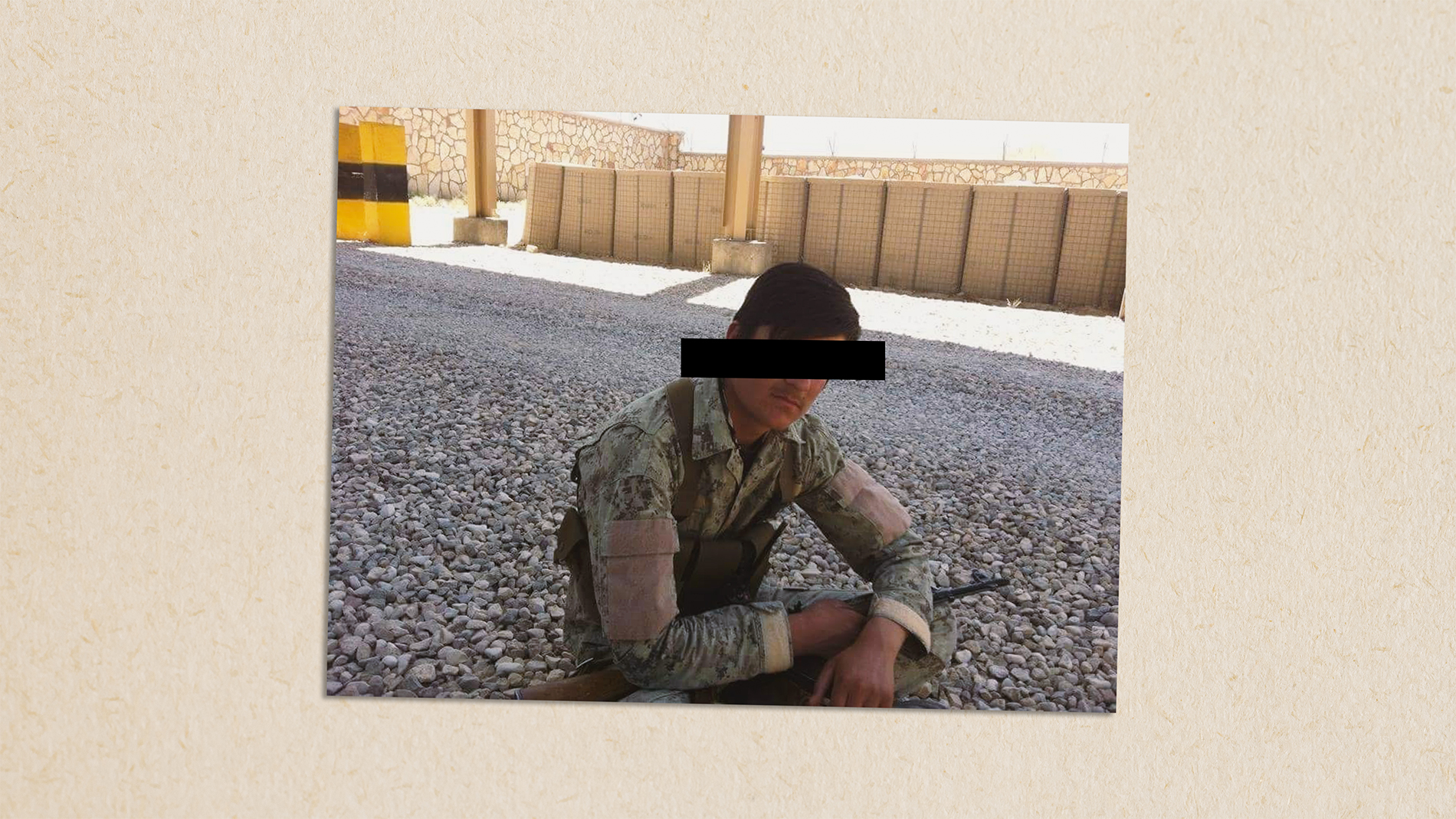
The wife of an Afghan man who once assisted the U.S. military feels ‘numb,’ she tells Frannie Block. ‘They are sending him back to be in danger.’ A 32-year-old man, Ali, is currently sitting in an ICE detention facility in western Louisiana, contemplating whether he is about to die. As soon as today, the United States could be shipping as many as 80 Afghans back to Afghanistan. But Ali’s wife, Hamida, said if he returns, he will be killed by the Taliban. He previously assisted the U.S. military forces in Kabul as a police officer, and the Taliban, who has ruled the country ever since the U.S. withdrawal in 2021, has a long documented history of persecuting Afghans perceived to have assisted the United States, including by subjecting them to beatings, starvation, and other forms of torture inside secret prisons. “We are human,” Hamida told me. “We helped the U.S. government for a while, all of us, directly or indirectly.” She pleads that the U.S. government “believe and trust” that people like her and her husband have only “come here for a better life.” (I am using pseudonyms to identify Ali and his wife, who spoke to me under the condition of anonymity.) On Monday, a group of 66 Democrats from both the House and the Senate signed a letter pleading with Secretary of State Marco Rubio to “cancel” any planned deportation flights to Afghanistan. “Our nation made a promise to stand by Afghans who risked their lives and their families’ safety to stand by U.S. service members,” the letter reads. “This mass deportation—potentially to their deaths—is a violation of that promise and our moral obligations to the Afghan community who stood alongside our troops.”
Paid postFrannie Block ·
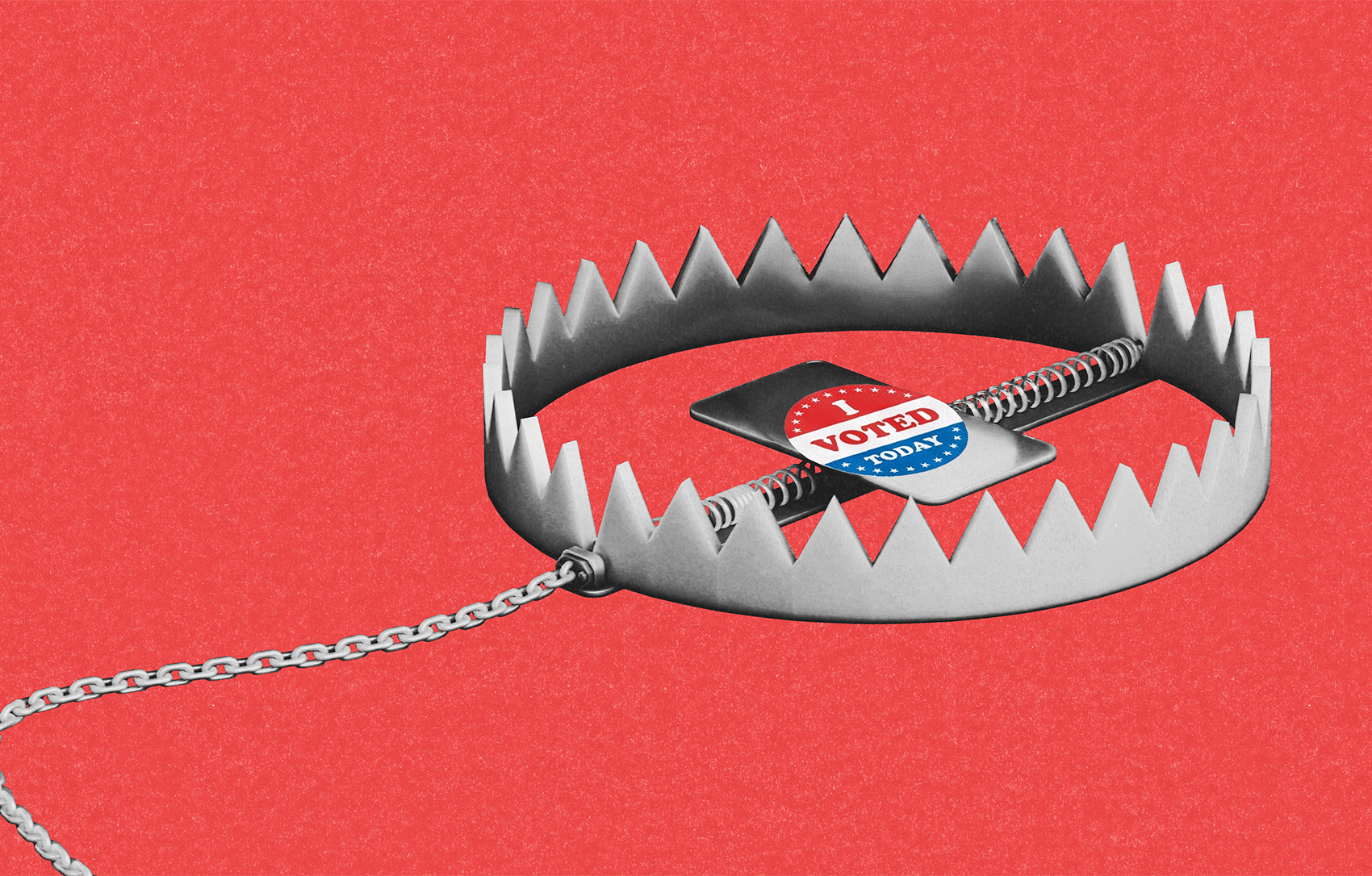
Democrats are recruiting tens of thousands to monitor poll sites and report voter intimidation. Olivia Reingold talks to the progressives taking ‘election integrity’ into their own hands. Last Tuesday, I joined a call with 79 progressives from around the country on “Election Safety Training.” Held by Women’s March, a nonprofit founded in the wake of the first Trump administration, the hourlong crash course braced participants for Republicans’ dirtiest tricks. Or, as one of the organizers described the party, the “GOP: Gang of Pedophiles.” Kalaya’an Mendoza, a “holistic safety and security” expert, briefed us on how to document potential vote tampering using a protocol inspired by the U.S. military: “ALERTA: Activity, Location, Equipment, Request, Time, Appearance,” a six-step process to gather information he said we would then disseminate to a “community rapid response group.” “It’s important that we prepare so that we don’t panic,” he cautioned, directing us to write down the hotline number for tips of voter interference. Mendoza told us we should be “very prepared for some kind of foolishness” that could come from any direction: the Trump administration, the Proud Boys, or even a group of men carrying “strange pseudo-Nazi paraphernalia.”
Paid postOlivia Reingold ·
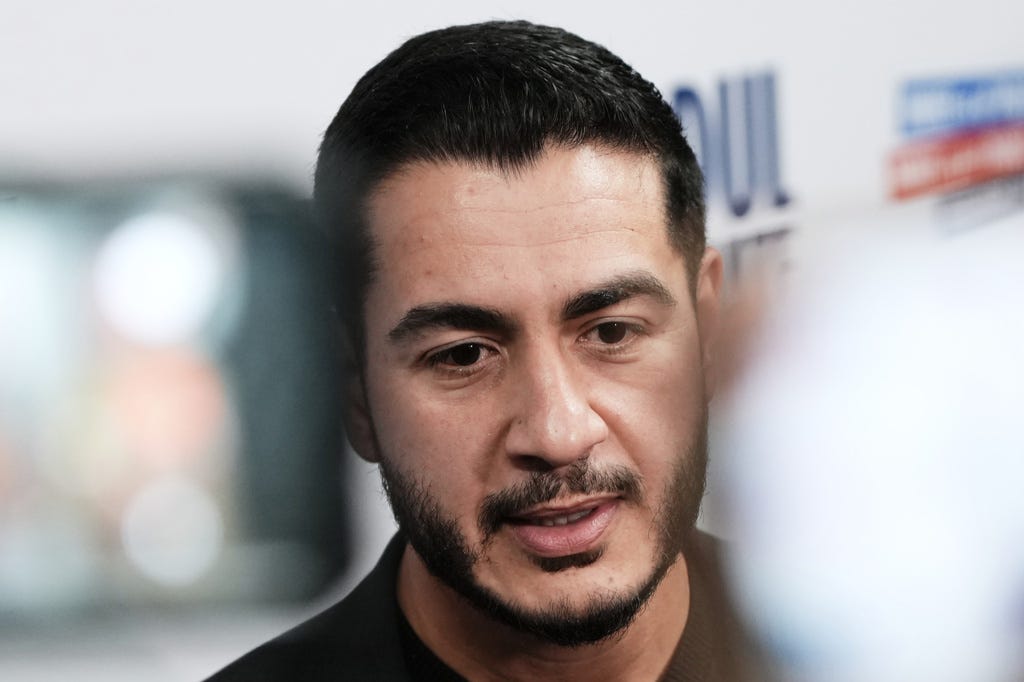
I would like both houses of Congress to gain Democratic majorities, but not at the cost of empowering extremists who don’t like Israel or, more to the point, Jews, writes Joe Klein. I just read Simon Schama’s essay in The Jewish Quarterly about the reemergence of Jew hatred. You should read it, too. You should read it if you’re a conservative, but especially if you’re a liberal and are considering voting for certain members of the Democratic Party this year—and most especially if the Democrat on your ballot is a member of the Democratic Socialists of America (DSA) or just a free-range anti-Israel bigot like the Democratic Senate candidate in Michigan, Abdul El-Sayed. Though I often vote for Democrats, I could never support any member of the Jew-hating “socialist” left. I consider Donald Trump a clear and present danger to our country. I would like both houses of Congress to gain Democratic majorities, but not at the cost of empowering academic extremists who don’t like Israel or, more to the point, Jews.
Paid postJoe Klein ·
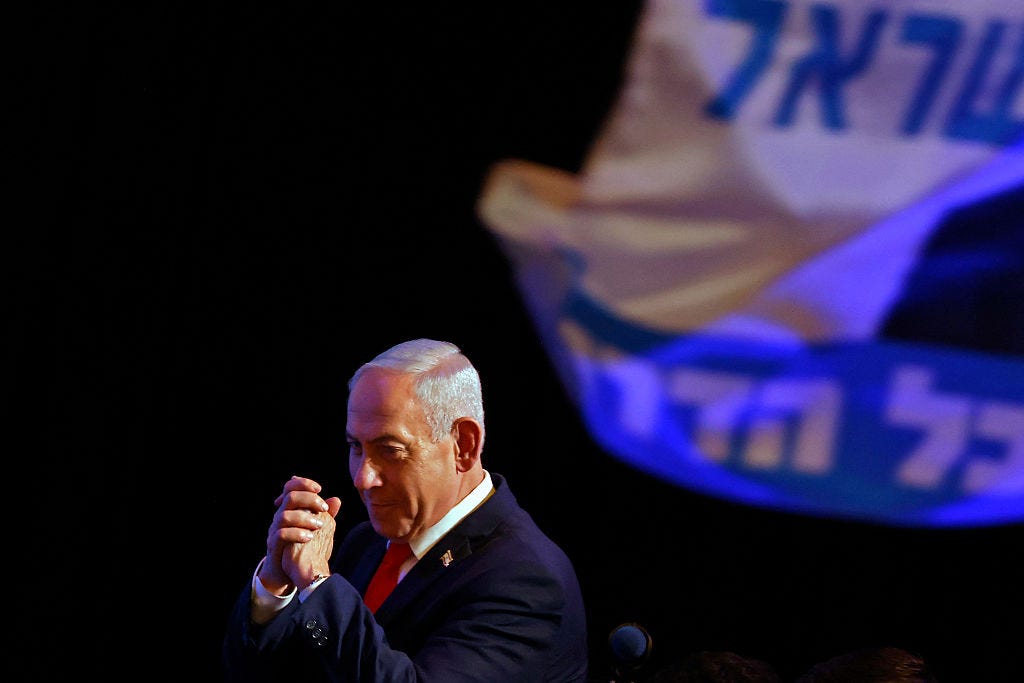
Israel cannot afford months of political paralysis. Trump should broker a unity government before the country’s internal divisions undermine its ability to confront its enemies, writes Michael Doran. Benjamin Netanyahu towers over Israeli politics like a colossus. Two factors, more than any others, determine how Israelis vote: their attitude toward religion and their attitude toward the prime minister. At the polls, Israelis choose among a bewildering array of parties, but nearly every one of them falls clearly into one of two blocs: pro-Netanyahu or anti-Netanyahu. The Hamas attacks on October 7, 2023, gave the anti-Netanyahu bloc its best chance yet to topple the king, because they exposed grave flaws in Israeli security and defense policy—long considered Netanyahu’s strongest suit. Last week’s election was the first since that fateful day, and therefore the first real opportunity for voters to hold the leadership accountable. The anti-Netanyahu forces took their best shot—and missed, with Netanyahu’s coalition winning a plurality of seats in Israel’s 120-seat parliament, the Knesset. They failed for two reasons. First, the leader of the anti-Netanyahu bloc is lackluster. To call Gadi Eisenkot a creation of consultants and public-relations gurus would be an exaggeration, but his very real accomplishments mattered less than the ways they could be weaponized against Netanyahu. Eisenkot spent 41 years in the Israel Defense Forces, rising to chief of staff before retiring in 2019. He also has a wrenching personal story: He lost a son and two nephews in the war in Gaza. He presented himself to the electorate as a security professional untainted by October 7 who had nonetheless paid an unbearable personal price for the leadership’s failures. Even the name of his new party, Yashar—“straight” or “upright”—drew a pointed contrast with a prime minister he and his supporters portray as crooked. Eisenkot’s biography checked the boxes the moment seemed to require, but it never answered the more important question: Why this particular security professional, and why now? Eisenkot entered politics in 2022, after the mandatory cooling-off period for retired generals, and has left almost no mark since. In his first election, he ran third on the list in Benny Gantz’s National Unity Party, which won 12 seats in the Knesset. It sat in the opposition coalition, then joined the emergency government formed after October 7, only to walk out a few months later. Thus, Eisenkot’s only stint in civilian office lasted about eight months. He has never run a ministry, never led a party into government, and never shown he can assemble a coalition and hold it together. His record as a soldier is solid. The political case the consultants built on it is mushy.
Paid postMichael Doran ·

Join The Free Press for an exclusive screening of the new film, Confession, followed by a conversation and reception with Ben Shapiro and Bari Weiss. Tomorrow, Americans head to the polls to decide the direction of our country. Among the questions hanging over this election: What kind of economic and political future do Americans want—and how much do we understand about the ideas shaping it? One of the defining stories of this election cycle is the rise of socialism on parts of the left. Candidates aligned with the Democratic Socialists of America (DSA) have surged to victory in primaries from Colorado to New York, and are now poised to carry that momentum into their general elections come Tuesday. At The Free Press, we’ve been covering this ideological shift closely. This summer, we asked some of our sharpest thinkers to examine the movement gaining influence within the Democratic Party. Former Soviet dissident Natan Sharansky warned of Marxism’s return under a new name. Coleman Hughes wondered why younger Americans lack the historical memory that once tempered socialism’s appeal. Others challenged the comparison between today’s democratic socialism and communism. But most were united on this: As socialism’s appeal grows, our collective memory of the devastation it wrought throughout the 20th century appears to be fading. A healthy democracy requires more than the freedom to vote. It requires an understanding of history and the courage to challenge popular ideas. That’s why we’re bringing Confession, a new film written by Ben Shapiro and produced by The Daily Wire, to New York City. Ben, a staunch defender of free speech and Western civilization, has written a film set in Stalin’s Moscow in 1938. It follows a former literature professor imprisoned and interrogated by his brilliant and brutal former student. It’s a story about conscience, courage, and what happens when ideology becomes absolute. On Thursday, November 12, The Free Press will host an exclusive screening of Confession, followed by a conversation between Ben Shapiro and Bari Weiss and an intimate cocktail reception with both.
Paid postOlga Moriarty ·
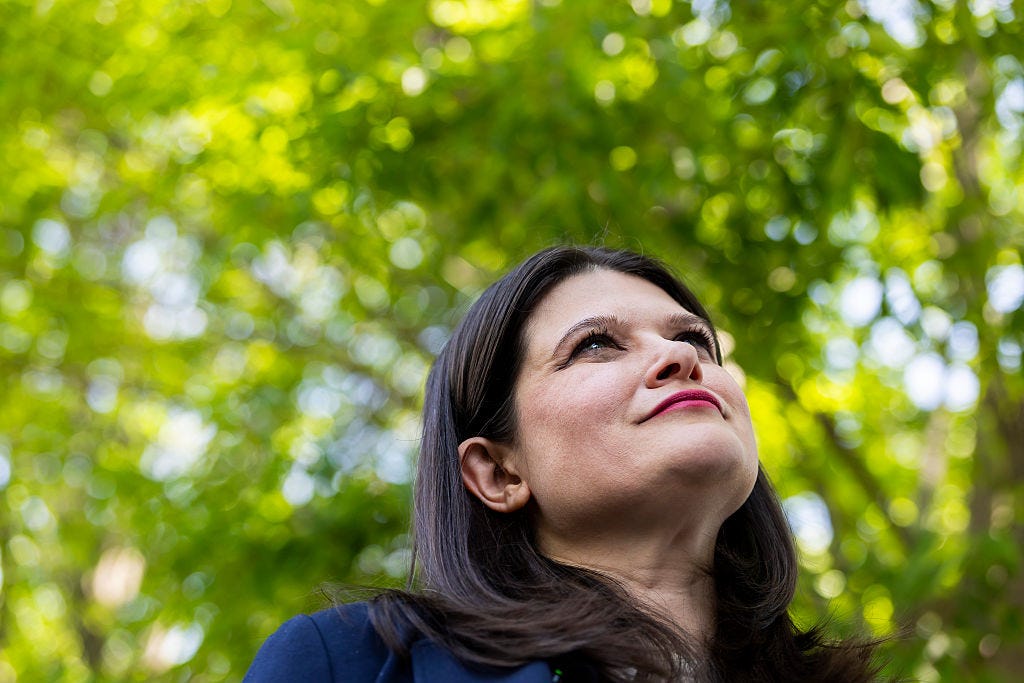
Michigan congresswoman Haley Stevens is trying to save the Democrats from themselves. Too bad they won’t let her, writes Eli Lake. For a party locked in an ideological civil war, Democrats have finally found an issue that unifies them: Haley Stevens. She, of course, is the Michigan congresswoman and Democratic Senate candidate who lost her primary bid against Abdul El-Sayed. On Sunday, she shocked the political world by not only withdrawing her earlier endorsement of El-Sayed but taking the additional step of urging fellow Democrats to vote for his Republican opponent, former congressman Mike Rogers. She told my colleague Olivia Reingold that she concluded El-Sayed just didn’t care about Jewish voters. “God, I wanted to vote for him, but he just kind of said, ‘Forget it,’ ” she said.
Paid postEli Lake ·
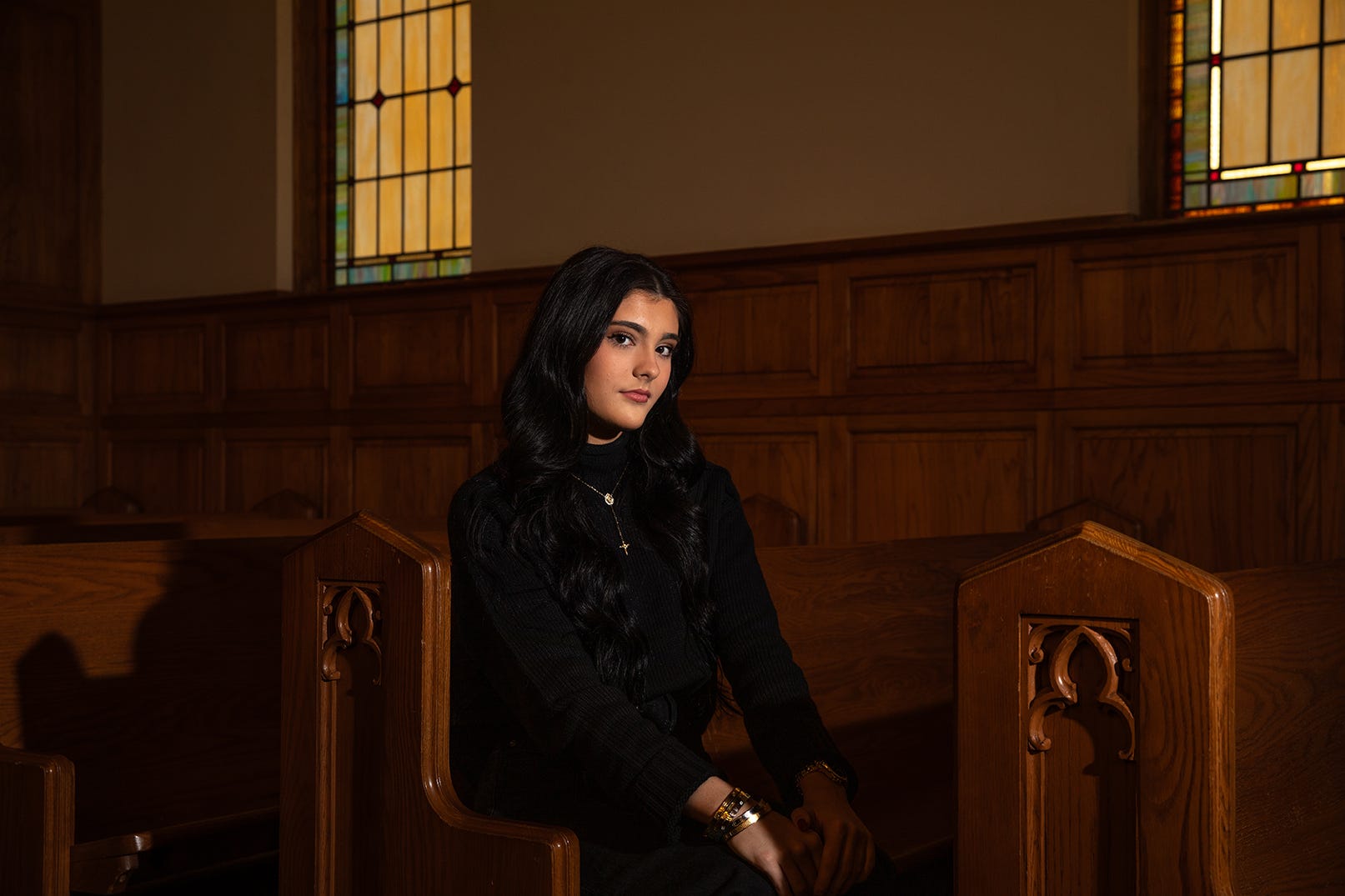
Two years ago, Peter Savodnik reported on the ‘great scramble’ that was upending our politics. Today, after assassination attempts, wars, and the rise of the radical fringe, he reports that things are even stranger. In June 2023, Faith Merrill and her mother drove 11 hours from their home in the Florida Panhandle to Dallas to see social-media influencer Candace Owens speak at the Young Women’s Leadership Summit. The summit had been organized by Charlie Kirk’s organization, Turning Point USA, and drew about 3,000 attendees. “It’s like your basic Turning Point event, except pink and glittery,” Merrill told me. She was electrified by Owens, who had built a nationwide audience as a combative, black conservative and then veered into peddling conspiracy theories about Jews controlling Hollywood and the Atlantic slave trade, among other lies. Her audience is now north of six million. “Watching her on the stage and just being so unapologetic for her takes, I just realized I didn’t have to be this shy, scared girl,” Merrill, 20, said of Owens. Other attendees included television personality Laura Ingraham and college swimmer Riley Gaines, who had become a right-wing media personality by sparring with trans women competing in women’s sports. Merrill loved Owens’s willingness to offend—to allege the Walt Disney Company employed “child groomers and pedophiles” or to slam George Floyd or to say “Russian lives matter” after Russia invaded Ukraine. (The Russian embassy in Washington reposted that one.) And, over the next few years, she would laugh at (or with) Owens’s more provocative, ahistorical takes—including her Holocaust denial. In 2024, Owens called the accusation that Nazi Josef Mengele had experimented on human beings “bizarre propaganda.” “We all know how Twitter is,” Merrill said. “You’re going to put out the most crazy statement to try to get a reaction. Me, personally, I will always support Candace no matter what she says.” On the drive back from Dallas in her mom’s Honda SUV, Merrill and her mom listened to Owens’s podcast and the Christian rock station K-LOVE, and Merrill resolved to become an influencer. By October 2023, she had about 10,000 TikTok followers. “That was my first TikTok account,” Merrill said. “I am currently on my ninth from getting banned all the time”—with an audience of 65,000. She also has 52,000 Instagram followers and nearly 10,000 YouTube subscribers. In 2024, Merrill started at Troy University, in Alabama, and in the spring of this year, she was baptized in the Catholic Church. She had attended Protestant churches growing up—her father was an Air Force pilot, and they ping-ponged between Florida and California—but “I never had a deep connection.” “I remember Candace Owens became Catholic, and I thought, I guess I’ll do my research into that, ” she said. Merrill, like Owens, was part of a trend of “nationalists” embracing a hard-line, hyperpolitical Catholicism. They were fond of posting: CHRIST IS KING. That was her brand: posting about the glory of God and marriage and railing against hook-up culture. She advertised her newfound faith. “Go to Mass today,” she posted in February. (Merrill has since deleted her X account because, she said, it has become “a cesspool” of “negativity” and “doom.”) She didn’t really have an agenda. Her agenda, she said, was always shifting. That was the reason I wanted to talk with her. Two years earlier, in January 2024, as we were inching toward the presidential election, I had spoken to Americans of varying tribe, background, and political orientation about their stories and beliefs, because it seemed like the traditional labels that we attached to ourselves and other people no longer made much sense. We still grouped ourselves in the old groups: liberal, conservative, Democrat, Republican, and so forth. But those words had been mostly sapped of their meanings, or stretched or contorted in such a way that they no longer communicated what we thought they did. I called it…
Paid postPeter Savodnik ·
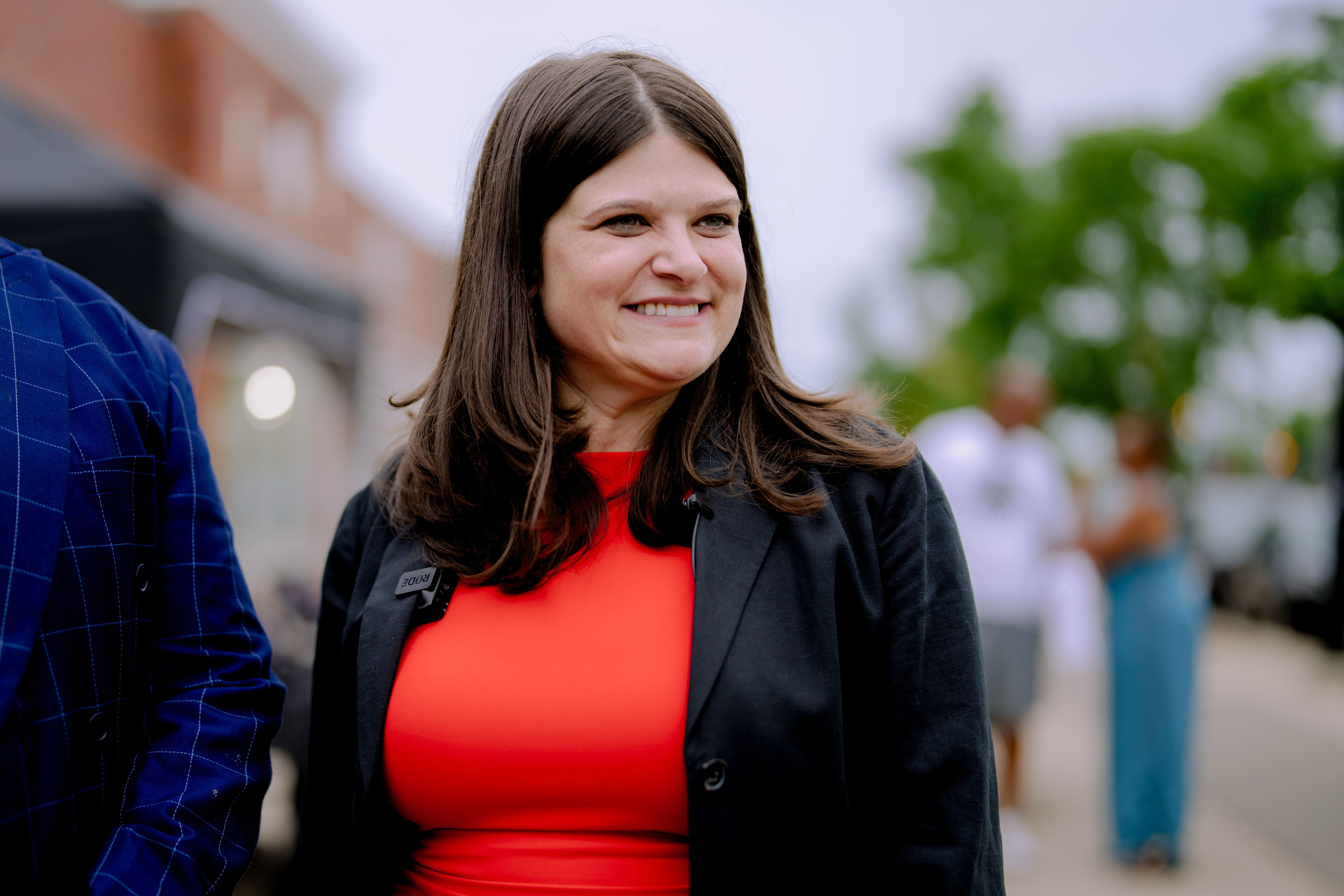
Michigan congresswoman Haley Stevens says she endorsed Republican Mike Rogers because “I think he loves the country.” HUNTINGTON WOODS, Michigan — “I was like, wait a moment, what am I doing?” That is how Congresswoman Haley Stevens described her epiphany less than 24 hours earlier, when she realized she could no longer back Abdul El-Sayed—the Democratic darling favored to win Michigan’s open Senate seat. It’s Sunday night at 11 p.m., and she’s seated on her fiancé’s couch at his home in the Detroit suburbs, fishing around a popcorn bowl while telling me how her discomfort with El-Sayed had been building ever since he beat her in the August primary by fewer than 14,000 votes. “I wasn’t being honest with myself after a certain point,” she said with a shrug.
Paid postOlivia Reingold ·

Kids are reading a lot, but it is making their lives worse, not better, writes Arthur Brooks. This is because of what they are reading: texts, group chats, captions, comments, posts, search results, and websites—not books. When I was a kid, my dad read to my brother and me almost every night before bed. Very early on, it was Dr. Seuss. Dad literally knew Yertle the Turtle by heart. Later, it was The Chronicles of Narnia and the like, and always a lot of Bible stories. When my kids were little, we read many of the same things together as a family, giving me a new perspective on these old stories. Who knew that Yertle was actually a fable against Adolf Hitler? This tradition of family reading was based on two assumptions: that our kids would grow up to be readers themselves, and that reading would make them happy and smart. The first assumption was and is mostly correct—more on that below. But while the second was true before, today it no longer is, especially for millennial parents. Kids are reading a lot, but it is making their lives worse, not better. This is because of what they are reading: texts, group chats, captions, comments, posts, search results, and websites. Thousands upon thousands of words of information harvested during multiple hours spent online every day.
Paid postArthur Brooks ·
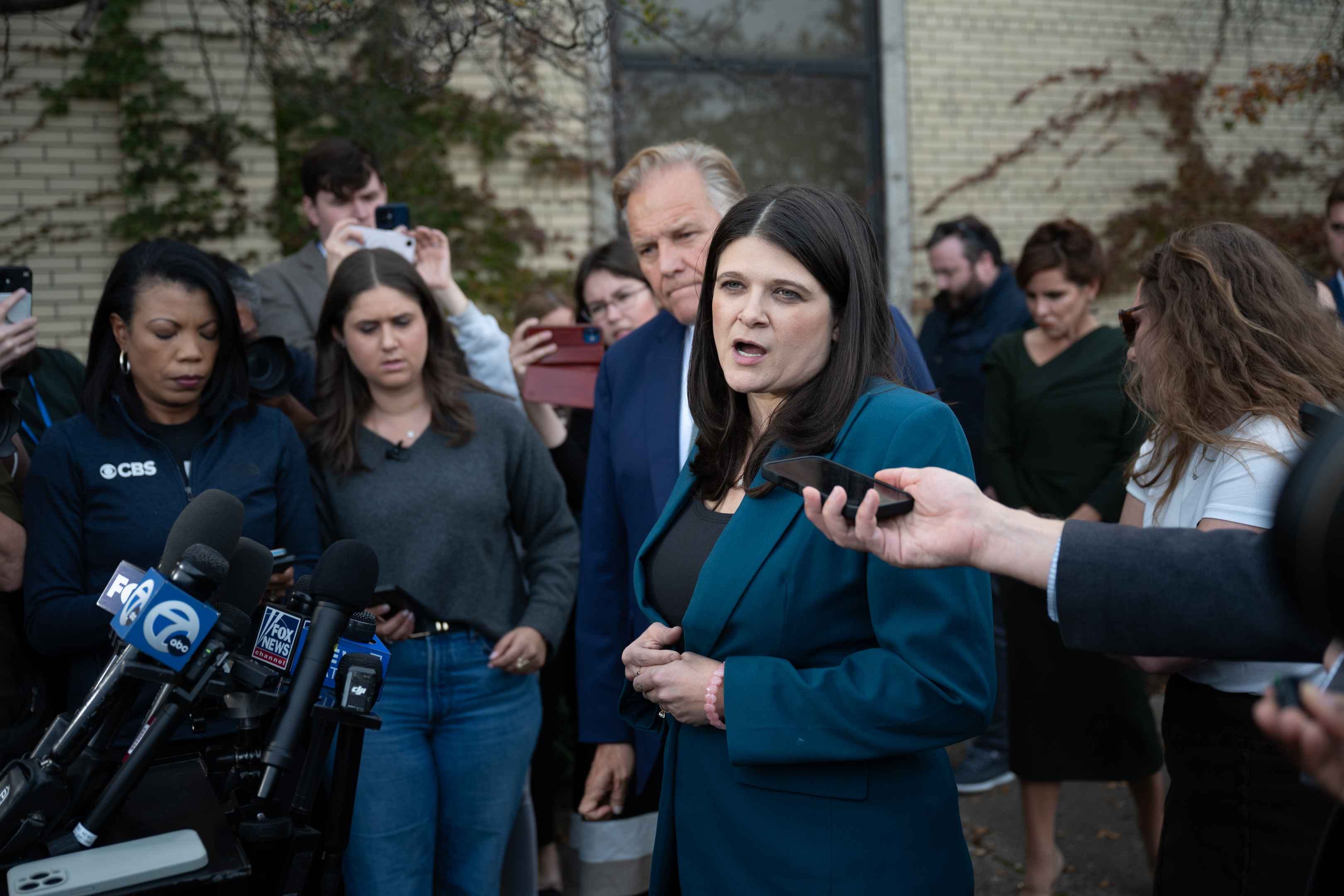
In today’s Front Page, James Kirchick and Mark Halperin on a surprise endorsement in Michigan. Tyler Cowen on the bipartisan flight from economics. The Florida tax fight dividing Republicans. RFK Jr.’s new hire. And more. It’s Monday, November 2. This is The Front Page, your daily window into the world of The Free Press—and our take on the world at large. Today: Why economics loses no matter who wins in the midterms. Josh Code meets the woman who spent 14 years on psychiatric drugs and is now joining HHS to fix the system. Mark Manson on why happiness is overrated. And much more. But first: the Michigan midterm bombshell. Just when we thought Election Day would arrive without the usual late “October surprise,” Michigan’s Senate race took an unforgettable November turn. Yesterday, Rep. Haley Stevens, who narrowly lost the Democratic primary to Abdul El-Sayed in August, endorsed El-Sayed’s Republican opponent, Mike Rogers. The last-minute change of heart caught everyone off guard, but it reflects a truth that’s easy to forget in today’s politics: Some fissures run deeper than the line between parties. Stevens made her move after El-Sayed refused to condemn an ad from a supporter’s PAC that blamed Israel for the rising cost of Americans’ groceries. With control of the Senate potentially hinging on Michigan, Democratic leaders were quick to denounce her. But is she a traitor, or a Democrat putting her country over her party? James Kirchick argues it’s the latter. Two years ago, he notes Democrats welcomed Liz Cheney’s endorsement of Elissa Slotkin for Michigan’s other Senate seat as an act of political courage. Now that a Democrat has made the same choice, her party is branding her as a turncoat. And what does Stevens’s endorsement mean for El-Sayed’s chances on Tuesday? The polls show El-Sayed ahead, but could this change things? Mark Halperin says her defection has exposed divisions Democrats had worked to keep hidden in the final weeks of the campaign. Before Sunday, insiders in both parties told him El-Sayed could win Michigan without a blue wave. Now, Halperin writes, he probably needs one. Michigan is just one of many key races this cycle. For predictions of their outcomes, we turn to two of our favorite Washington insiders, Jesse Arm, a conservative, and Yemisi Egbewole, a liberal. They go state by state through the biggest contests, and find themselves agreeing more often than you might expect. And tomorrow, don’t miss our live election night special with 2WAY, from 8 p.m. till midnight ET. Will Rahn, Mark Halperin, and a lineup of Free Press writers will follow the results as they come in. Mark your calendars! —The Editors MORE FROM THE FREE PRESS THE NEWS A federal judge on Sunday threw out the Justice Department’s bid to delay certifying Alaska’s Senate results should Republican incumbent Dan Sullivan lose in tomorrow’s midterm elections. The DOJ had argued that another man with the same name was put on the ballot to confuse voters and help Democrat Mary Peltola, whose campaign denies any role. Senator Chris Murphy of Connecticut suffered a stroke on Saturday after feeling his arm go numb at his son’s hockey game. The 53-year old Democrat, a possible 2028 presidential contender, is being treated at Johns Hopkins and is expected to make a full recovery. A private jet flying from Texas to The Bahamas nosedived and crashed in Palm Beach County, Florida, on Sunday, killing all nine people aboard. Drivers on a nearby road captured video of the plane plummeting from the sky, and the cause is still under investigation. New York City mayor Zohran Mamdani said Saturday that President Trump agreed in a phone call to quickly grant a visa to the mother of Javits Frimpong, a 15-year-old Ghanaian immigrant who was shot on his way to school in the Bronx last week. The police have not made any arrests in his killing. Russian authorities detained a teenager Sunday after the U.S. warned of a possible terror attack in Moscow. Russia’s FSB…
The Free Press ·
By endorsing the Republican, she broke her formal rival’s odds. To win, El-Sayed may now need a blue tsunami, writes Mark Halperin. Don’t miss our live election special Tuesday night with 2WAY, from 8 p.m. until midnight ET, featuring Mark Halperin, Will Rahn, and a lineup of Free Press writers following the results. Mark your calendars here. —The Editors It may be the ultimate shocking but not surprising twist of the Democratic Party’s 2026 midterm cycle, in an election season that has witnessed Graham Platner dropping out of the Maine Senate race amid accusations of sexual misconduct, James Talarico vanishing from the Texas campaign trail for nearly a fortnight, and Mary Peltola’s team apparently coaxing a second Dan Sullivan onto the Alaska ballot to distract voters from her Republican opponent, incumbent senator Dan S. Sullivan. On Sunday, Michigan congresswoman Haley Stevens, who lost the Senate primary in August after a rancorous battle with Abdul El-Sayed, endorsed his Republican opponent, former congressman Mike Rogers, appearing with Rogers at a morning service at Detroit’s Perfecting Church, and then releasing a video offering her full support. “Hey, Michigan” she began, “As you may have seen, our Democratic nominee for U.S. Senate, Abdul, said I was no longer welcome in his campaign and that I should stay away. And he’s right—that’s why I am endorsing Mike Rogers for the U.S. Senate today.” Stevens called the Michigan race “the conscience of the Senate, and our Michigan moment,” and said “I’m just letting you know where I am. I’m still a very proud Democrat; I still very much believe in everything I voted for and said. I’ve worked really hard and will continue to do so. . . Godspeed and love you all so much.” Mark your calendars. The Free Press and 2WAY are teaming up for a real-time interactive election night special, November 3 from 8 p.m. ET until late. See you there. It is not unprecedented for politicians to endorse across party lines. Former senator Joe Manchin has endorsed Susan Collins twice, both this past September, and in 2019 when he was still officially a Democrat. Democratic senator Joe Lieberman endorsed his dear friend John McCain in the 2008 presidential election. This year, former Republican governors Bill Graves and Mike Hayden are supporting Democratic Senate candidate Adam Hamilton in Kansas, and House Democrat Jared Golden is supporting his across-the-aisle colleague Mike Lawler in New York.
Paid postMark Halperin ·