Source
The Free Press

The Free Press (CBS News)
The Free Press, formerly Common Sense, is an American media company based in New York City. Founded by opinion writer Bari Weiss and her spouse Nellie Bowles, the company started as a newsletter in 2021, and grew into an associated media company in 2022. Since October 2025, it is an independent entity within CBS News, whose parent company Skydance Corporation acquired it in 2025 for $150 million.
From Wikipedia ↗, text under CC BY-SA 4.0; logo from Wikimedia Commons
- Type
- News outlet on Substack
- Lean
- Right-leaning
- Right-Center+4.1 of ±10
- Mixed4.8 of 10 (lower is better)
- Medium
- Website
- thefp.com ↗
- Feed
- RSS ↗
- Articles stored
- 131
- Tracked since
- Sep 10, 2026
Down: MBFC factual reporting score, 0 most factual to 10 least.
Bias and credibility ratings by Media Bias/Fact Check.
The Free Press on MBFC ↗Publishing rhythm
How many articles The Free Press published over the last 14 days, by publication time, and at which hours of the day.
Top keywords
All keyword charts for The Free Press →The people, places, organizations and topics The Free Press covered most that day, by the share of its stories that mention them. Article counts are shown for context.
No keywords that day yet.
Latest articles

The mom of a 6-year-old, who’s ‘not yet walking, talking, or even eating,’ has no patience for people ‘who want to complain about their problems.’ Our advice columnist Abigail Shrier weighs in. Dear Abigail, I have a 6-year-old son who has a genetic syndrome and is disabled. He is not yet walking, talking, or even eating. Other kids his age with the same syndrome are doing all these things, though they may be a bit behind their peers cognitively. We are traveling to the ends of the U.S., and possibly one day the world, to find someone who can help him in any way. I have three other children and a truly amazing husband. We do not have family nearby, so we handle this on our own. What I need help with is my mindset. I worry I’m becoming a bitter and un-empathetic person. I can handle carrying this weight, and day-to-day it is usually fine, but there are seasons that are harder than others. In those seasons—when the weight feels almost unbearable, but I keep fighting for my son—I have less patience for anyone outside my husband and children who want to complain about their problems. I have thoughts like: “Are you kidding me? You stubbed your toe, and you’re going to complain to the person who lost a limb? If you knew what I was going through, would you still share this? Want to trade?” I want to lecture them about how good they have it and how lucky they are. I don’t want to put in the effort to console them in any way. I simply find them irritating. It leaves me feeling more righteous in my anger and more bitter at the rest of the world, which is not how I want to live my life. I’ve tried therapy and read the books of other parents with special-needs kids, but neither fits. One insists on gratitude, but when I’m weighed down, I don’t want to focus on being thankful for what I have; the other insists on grief, and I can’t fully commit to that either, because I’m still holding out hope there’s more to find. How can I still be empathetic to the struggles of others, no matter how small they seem in comparison to my own? —Matilda, 41 Dear Matilda, Ever notice how easy it is to pick out the freshmen on campus? College, high school, doesn’t matter. They all wear a tentative and clueless look: fearful and apprehensive, striving and failing at the same time. Everything they do seems to take twice the effort it should. Every minor achievement, monumental. So, too, the minor setbacks. They are entirely ridiculous because, by definition, they show up entirely underprepared. They look like children to students only a few years older. They look like most other parents now seem to you.
Paid postAbigail Shrier ·
Kara Kennedy says: Let the moms party. Edward Conlon tackles New York City’s biggest crime problem. Coleman Hughes talks to Letitia James’ opponent. And much more. It’s Thursday, October 29. This is The Front Page, your daily window into the world of The Free Press—and our take on the world at large. Today: A former NYPD detective on why New York City assaults are so high—and how to fix it. Coleman Hughes meets the Republican challenging Letitia James. Kara Kennedy on how parenting became the suffering Olympics. And much more. But first: Americans are still behind bars in Russia. What is the government doing about it? Last week, the U.S. government celebrated the release of Stephen Hubbard, a 74-year-old retired schoolteacher arrested in 2022 after Russian forces accused him of manning a Ukrainian military checkpoint. Once Hubbard was back in the United States, the State Department boasted that “there are currently no Americans determined to be wrongfully detained in Russia.” But that’s not the whole story. There are at least five Americans or American residents who are still in Russian prison today and whose advocates say were targeted for political reasons. Among those locked up are Chuck Zimmerman, a U.S. Navy veteran pulled over by the Russian Navy while sailing in international waters and charged with arms trafficking after disclosing that he had a weapon on his boat. Olga Jezler was sentenced to prison after traveling to Russia to care for her sister with breast cancer. Border agents allegedly discovered hashish oil in Jezler’s bag and charged her with drug trafficking. And then there is Aleksandr Antonov, who fled the Soviet Union in the 1990s, became a U.S. citizen, and was arrested in 2025 while on a business trip. He was crossing the border from Russia to Estonia when guards searched his phone and found pro-Ukraine messages. Antonov was charged with inciting terrorism and sentenced to time in a Russian gulag. Why haven’t these people been declared “wrongfully detained,” a status that elevates their cases to the top levels of the U.S. government? And what, if anything, is the U.S. government doing to try to free them? I spoke to families, campaigners, and officials in search of answers to those questions. —Frannie Block MORE FROM THE FREE PRESS THE NEWS Flávio Bolsonaro arrived in Miami on Wednesday after fleeing Brazil to escape what he called “the politicization of the justice system.” He also claimed that he is the rightful president-elect despite losing to Luiz Inácio Lula da Silva. The Trump administration plans to issue visas to Bolsonaro and his family. Asian Americans are 43 percent of Harvard University’s incoming freshman class, the highest percentage in more than a decade. The percentage of black freshmen fell for the third year in a row following the Supreme Court ruling overturning race-based affirmative action in college admissions. Two high-speed trains crashed into each other on a railway in central Spain on Wednesday, killing at least 68 people. Transport Minister Óscar Puente said the accident was caused by an “inexplicable” order from a rail control center, not train engineers. The Senate race in deep-red South Carolina is neck-and-neck, according to a new New York Times/Siena University poll. Republican Darline Graham, who was appointed to her brother Lindsey’s seat after his death in July, leads Democrat Annie Andrews by less than one percentage point. South Carolina last elected a Democrat to the Senate in 1998. Iran rejected a new peace deal proposed through mediators from Qatar, calling the terms “unacceptable.” The war with Iran has cost at least $47.1 billion as of mid-October, up from about $37.5 billion in July.
The Free Press ·
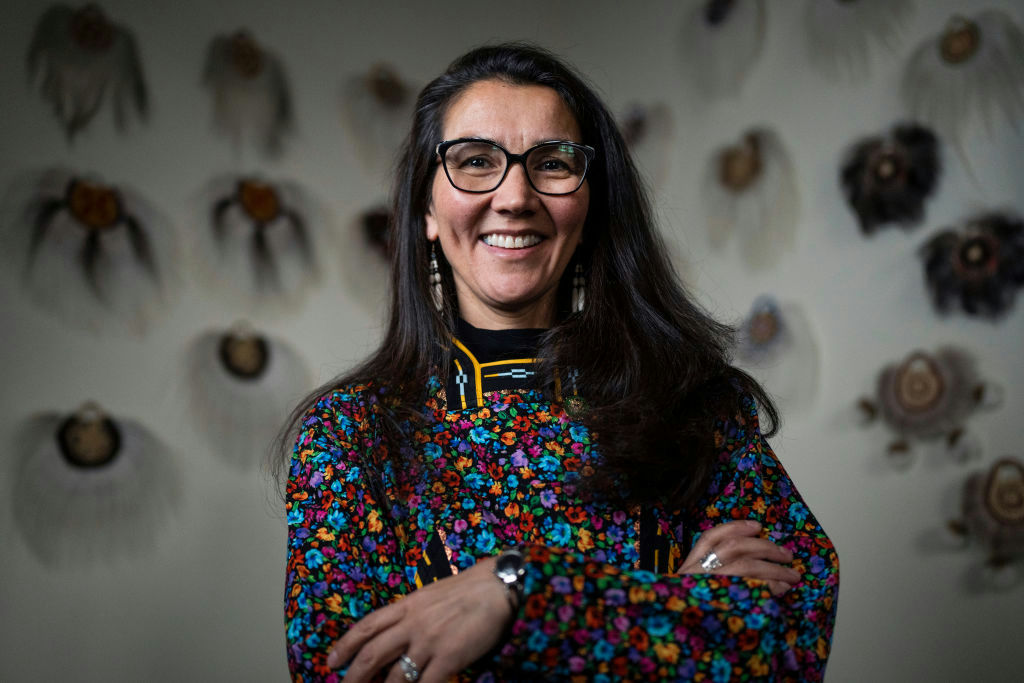
Skulduggery in the Alaska Senate race is the latest example of double standards from a party that claims to respect the sanctity of our elections. In the race to the bottom that is American elections, there is officially no high ground left to stand on. Democrats are demanding that voters elect them to save democracy, which they insist is threatened by President Donald Trump’s desire to meddle with the midterms. Now Americans will learn whether they meant any of it based on how they respond to brazen election meddling by one of their own. For months, the Alaska Senate race has smelled fishy to anyone without a cold. In May, Daniel J. Sullivan, who had never before sought office and has donated to Democrats, chose to register as a Republican and run against GOP incumbent Dan S. Sullivan, with both names set to appear on the general election ballot alongside Democratic challenger Mary Peltola. The upstart Sullivan—widely known as Decoy Dan—surely knew he might siphon away votes meant for the senator, and thereby give Peltola an edge.
Paid postThe Editors ·
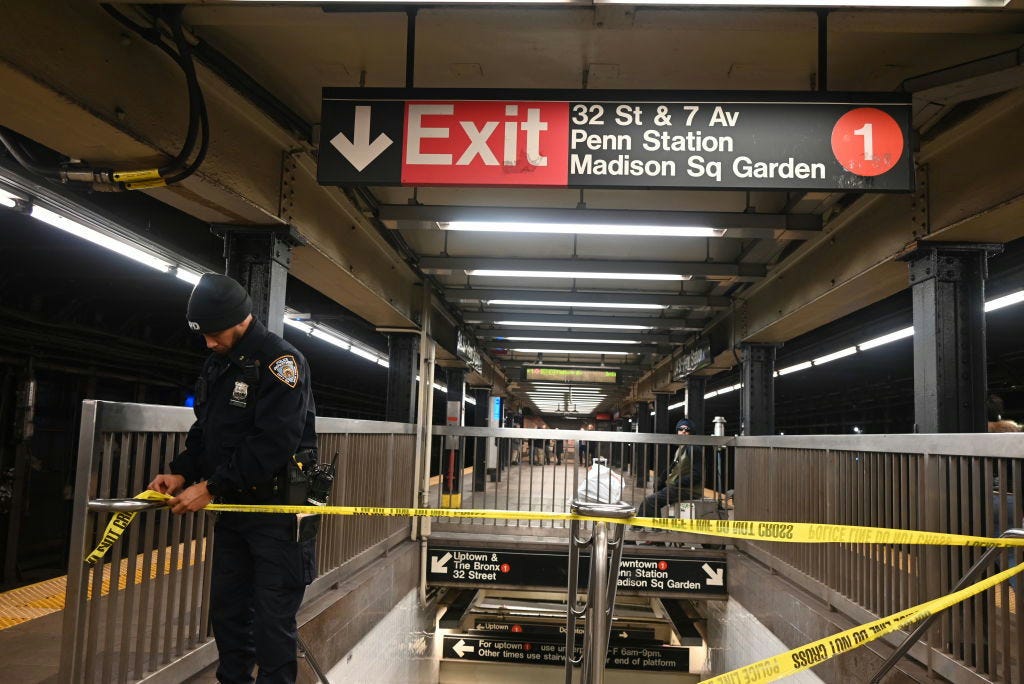
Murders and shootings are at a record low, but violent assaults keep increasing year after year. Mamdani and other leaders show little interest in doing what it would take to change that, writes Edward Conlon. In my detective days in the South Bronx nearly two decades ago, you had to go to the Complaint Room to write up an arrest with an assistant district attorney, ordinarily with the victim in tow. It was a high-volume operation in a low-rent venue, a wide expanse of cubicles and industrial carpet, with lots of familiar faces among the cops and prosecutors. One night, I ran into someone I didn’t expect to see: my cousin Brian, a New York City firefighter. “What the hell are you doing here?” I asked him. Brian’s engine company had gone out on a routine medical run at an apartment building, followed by an ambulance. One of the residents decided that the vehicle exhaust posed both a health hazard and a personal affront, and he decided to try to smash the fire truck’s window. Brian caught him, and a scuffle ensued. The perp was cuffed, hauled off by cops, and arrested for assault in the second degree, a felony punishable by up to seven years in prison. Some cases are complicated, factually messy, or legally tricky. This wasn’t one of them. Assault 2 covers attacks on firefighters and other public servants that prevent them from doing their jobs. It didn’t matter. The prosecutor decided to downgrade the charge to misdemeanor assault. I was told that Brian’s injuries—a few cuts and bruises—weren’t really serious. The plain language of the law didn’t matter.
Paid postEdward Conlon ·

Netanyahu did not win on Tuesday. In pure mathematical terms, he crashed. But he may have done just well enough for his highest priority: bringing down the Iranian regime, writes Haviv Rettig Gur. A neighbor told me a joke this morning: You asked the people of Israel one simple question, and they just can’t give you an answer. That seems to be what happened on Israeli election day on Tuesday. Contrary to expectations—and to exit polls late Tuesday night in Israel that showed the opposition in the lead—Benjamin Netanyahu’s coalition won 53 seats in Israel’s 120-seat parliament, the Knesset, while Gadi Eisenkot’s bloc took 48, and the two Arab parties won a combined total of 19. None reached the 61-seat majority required to form a government. As in any parliamentary system, Israelis don’t vote for an executive branch or a prime minister. They vote for a party, and the parties then negotiate among themselves to form a parliamentary majority. In Israel’s case, a governing coalition needs 61 seats in the Knesset. Once a majority is secured, the coalition can vote in a government. A minority government occurs when a party or bloc doesn’t have a majority of seats in the Knesset but has a plurality. Netanyahu could form a minority government if 53 seats voted for him, 48 voted against him and, for some reason, the Arab parties abstained. But the Arab parties, which are diametrically opposed to Netanyahu, won’t do that. So he has no path to a governing majority unless he pulls people over from the Eisenkot coalition. And there the chaos math begins.
Paid postHaviv Rettig Gur ·
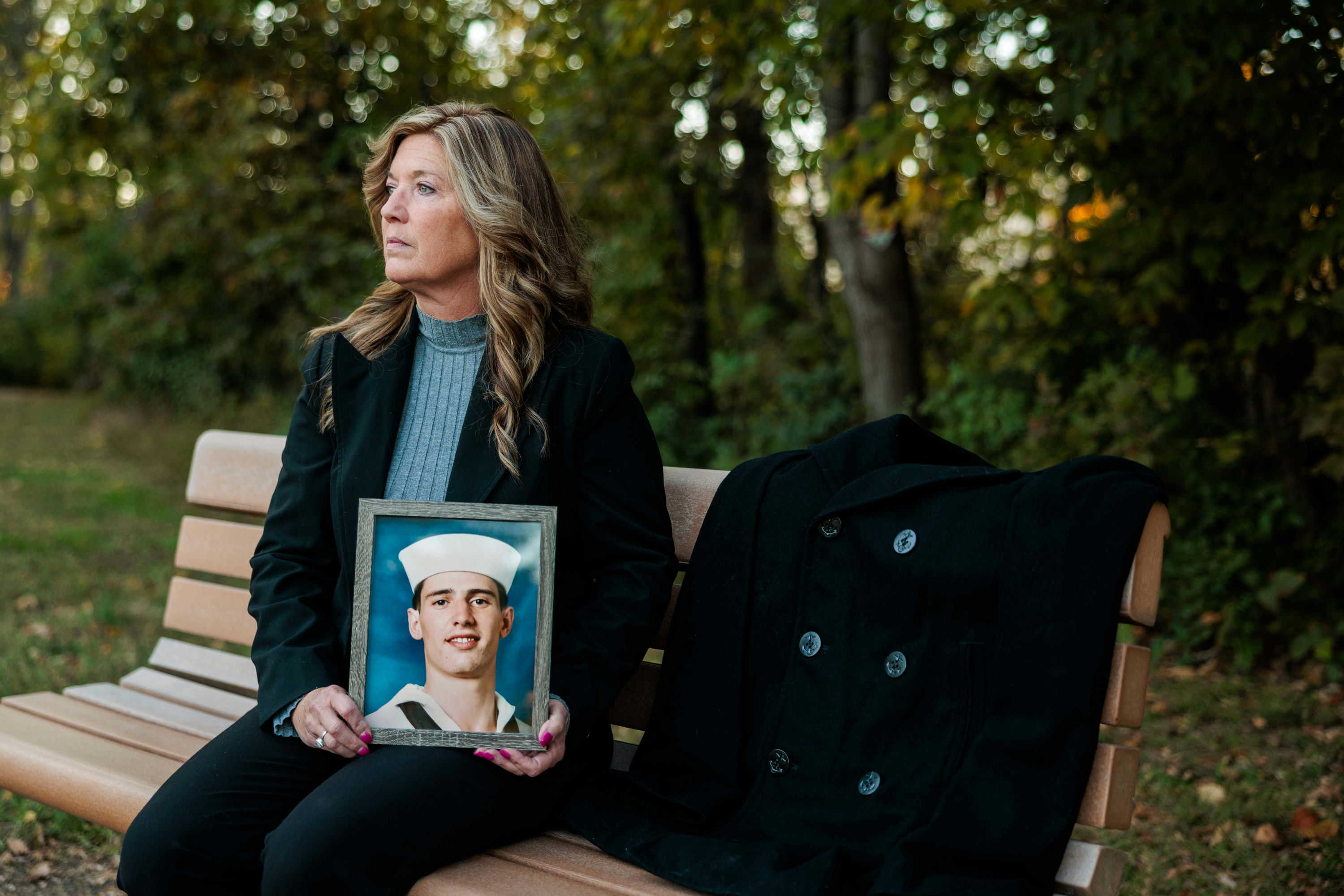
Becoming a mom doesn’t have to be the end of everything that made your child-free life great. If you have given birth in America in recent years, you have surely participated in a conversation that sounds like this: One mom mentions she’s tired; another says she hasn’t slept through the night since March; the third says she has been up four times a night since the day her son was born, and now he’s 3 years old. None of them sleep train. And none of them has spent a night away from home in a hotel bed with an eye mask on and a “Do Not Disturb” sign on the door. Even if they secretly want to, they won’t risk it, in case their absence messes with their child’s emotional regulation and causes some vague kind of trauma in the years to come. You can’t trust a babysitter, because they don’t love your kid as much as you do. Grandma is miles away, probably on a cruise. And you can’t count on your husband, who isn’t fluent in the cult of helicopter parenting, because he might put the TV on, or hand the toddler a slice of pizza and let bedtime slide to 9 p.m. He might even forget to use the fluoride-free toothpaste. I’ve heard all of this before. So earlier this week, when the internet exploded over a mother asking whether she should leave her kids to go away for the weekend with friends, I knew what was going on. It all began with an anonymous post on X, which I will quote in full, because it is so profoundly representative of the problem with the intensive parenting model that prevails in the 2020s: My friend wants to plan a couples, no-kids weekend getaway, splitting the cost of a large Airbnb, in January for her 30th birthday. I really do not love this idea (husband is mortified), neither to spend the money nor to get someone to take the toddler for 3 days. It would be a 2.5 hour drive away for us, too, so it’s not like we’re close if something happens. I haven’t been away from him for even one night yet and he still just seems so young! It would be very hard to leave him for that long. Am I just a party pooper who needs to get over it? Genuine question. Like I actually need advice here guys.
Paid postKara Kennedy ·
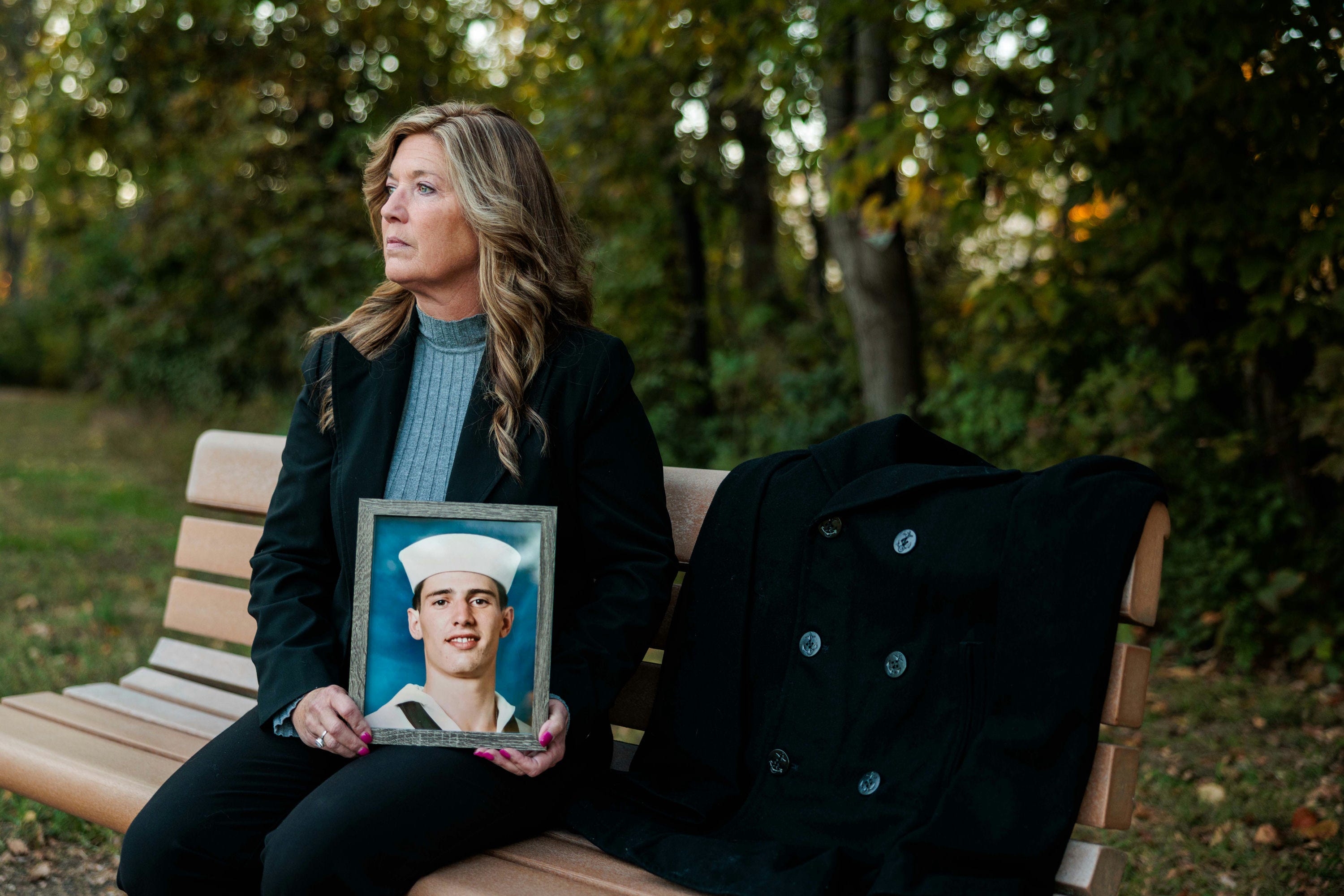
The Trump administration boasts that no more Americans are 'wrongfully detained' in Russia, but at least five are still behind bars, forgotten by almost everyone but their families, writes Frannie Block. When Robin Stultz’s brother Chuck Zimmerman texted her to say his sailboat was being trailed by the Russian Navy in the Black Sea back in June 2025, she thought he was kidding. “Pics or it didn’t happen!” Stultz texted on Tuesday, June 17, at 10:23 a.m. Eastern Time, followed by “lol” and two laughing emojis. Then he sent the picture. It depicted slightly choppy waters, a burnt-orange sunset forming in the background, and at the center, what looked like a small warship. “In a 150 ft ship—with guns,” he said. Zimmerman, 58, would detail to his sister over text how he was forced by the Russian Navy to sail 22 hours from the international waters he was in toward the Russian port of Sochi. There, Russian naval officers hopped aboard the used sailboat he had purchased with his life savings nearly a year before. Zimmerman, Stultz told me, wanted to take a sailing trip around the world—a lifelong dream of his since his years as a Navy engineer aboard the USS Nimitz.
Paid postFrannie Block ·
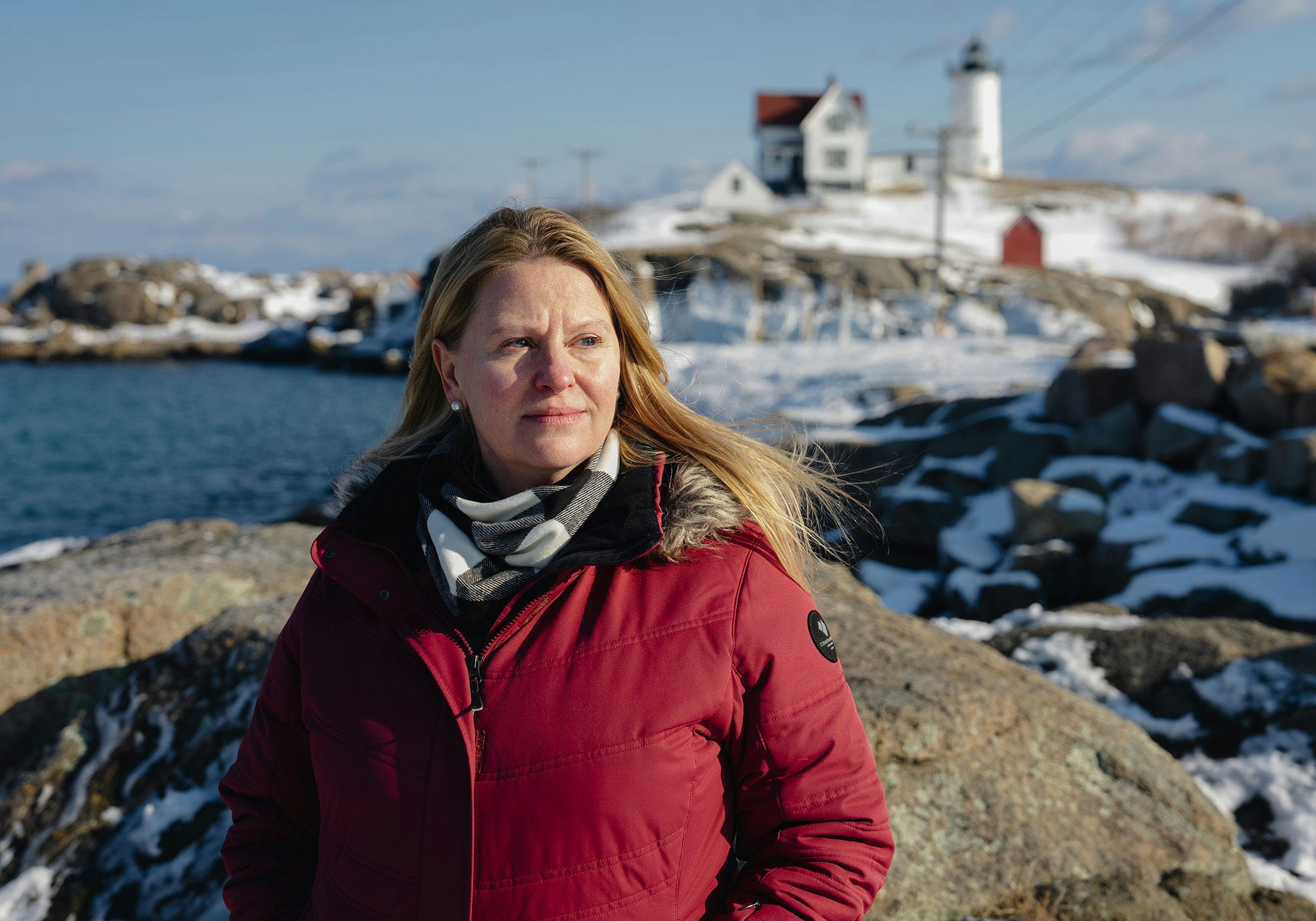
Back in 2020, Tiffany Riley was fired from her job as a school principal over a Facebook post. The world seems to have moved on from that era, but Riley says she can’t, writes Frannie Block. In the heart of Vermont lies the small town of Windsor—population: 3,559—otherwise known as the “birthplace” of the state. It was here that Vermonters adopted their first constitution in 1777. “The people have a right to freedom of speech,” it declares, “and of writing and publishing their sentiments.” On June 10, 2020, in the febrile weeks after George Floyd was murdered, Tiffany Riley, the principal of Windsor School, availed herself of that right—then watched in horror as her life was torn to shreds. It began, as so many cancellations did that year, with a Facebook post. “I firmly believe Black Lives Matter,” she wrote, on her private page. “But I DO NOT agree with coercive measures taken to get this point across.” “Just because I don’t walk around with a BLM sign should not mean I am a racist,” she went on. “While I understand the urgency to feel compelled to advocate for black lives, what about our fellow [Americans in] law enforcement?” The backlash was swift, and brutal. Within 48 hours, the superintendent of the school district had told her she was being put on paid administrative leave—“while we negotiate an exit strategy”—and the school board had sent an email to all parents and staff at Windsor School decrying the “ignorance, prejudice, and lack of judgment” in Riley’s post. Some parents disagreed with the board, but Riley didn’t know this at the time. In Windsor, she felt like a pariah. From there, her story morphed from a small town scandal into what Riley calls a nationwide “firestorm.” National outlets like the New York Post covered it, while a national free speech advocacy group rallied to defend Riley’s right to keep her job. The media portrayed her as a villain, or as a hero, depending on which slice of the political spectrum they were catering to. “People’s reactions, regardless of the side, just felt so blown out of proportion,” she said.
Paid postFrannie Block ·
In today’s Front Page: The midterms are six days away—here’s where things stand. Plus, what to know about Israel’s election results, a dispatch from Rome’s violent protests, and Josh Kaplan spends a night at Macklemore’s “Free Palestine” tour. It’s Wednesday, October 28. This is The Front Page, your daily window into the world of The Free Press—and our take on the world at large. Today: Haviv Rettig Gur and Maya Sulkin make sense of Israel’s election results, live. Ani Chkhikvadze reports from the riots in Rome. Josh Kaplan attends rapper Macklemore’s “Free Palestine” tour. And much more. But first: Do Americans think the country is headed in the right direction? Can a Democratic pastor win in deep-red Kansas? And why won’t Abdul El-Sayed denounce an absurd, offensive new ad? The midterm elections are just six days away, and the vote is set to be a referendum on Donald Trump and the state of the country under his leadership. So, how do Americans really think things are going? That’s the question we set out to answer with the latest installment of our polling series, The Honesty Project, a partnership between The Free Press and opinion-research think tank Populace. We asked Americans a simple question: Where is the country headed? Read today’s first offering on the looming election to find out how Americans answered that question—and what new divides are emerging as the midterms approach. Up next, River Page reports from Kansas. He was there to cover a peculiar trend that has emerged this cycle: current and former Christian clergy running as Democrats. One is, of course, James Talarico, who is running for Senate in Texas. But maybe the most interesting is megachurch pastor turned Kansas Senate candidate Adam Hamilton. Republicans have long campaigned on their Christian faith, but they’re also eager to discredit Democrats who do the same. River went to the Sunflower State to report not just on Hamilton’s surprisingly competitive Senate bid but also on a bigger question: Can openly professing Christian faith help Democrats win back red-state voters? The contest for the worst campaign ad this cycle is a competitive one. There was Vivek Ramaswamy’s ad last week featuring his opponent’s estranged mother. Then, over the weekend, an independent PAC supporting Democratic Senate candidate Abdul El-Sayed depicted a couple lamenting that they couldn’t afford bananas and eggs because they had to set aside money for U.S. aid to Israel—or, as they put it, “for killing Palestinians.” Prominent Democrats have denounced the ad, but El-Sayed’s campaign has not. Why not? Eli Lake examines the campaign’s silence—and what it reveals about the man at its helm. —The Editors Decoding Israel’s Election Results Polls are closed in Israel’s first national elections since before the October 7 attacks. Now, the question on everyone’s minds in Israel is this: In the race between Benjamin Netanyahu and Gadi Eisenkot, who can actually put together the 61 seats required to wield power in the Knesset? The negotiations are complicated, and could take weeks. In the meantime, with 70% of the vote counted, Netanyahu’s bloc at approximately 54 seats, Eisenkot’s bloc at 47, and the Arab parties at 19. What will happen next, and what does this all mean for Israel? Maya Sulkin and Free Press Middle East analyst Haviv Rettig Gur will offer some answers today at 10 a.m. ET, live on X and Substack. Watch the livestream here, and if you have burning questions for Haviv, post them in the Free Press Forum. MORE FROM THE FREE PRESS THE NEWS Brazilian politician Flávio Bolsonaro has fled to the United States after he lost Sunday’s presidential election and his country’s Supreme Court ordered the seizure of his passport. The White House has granted asylum to Bolsonaro and his family, likely on the grounds of risk of judicial persecution, Reuters reported on Tuesday. The U.S. Federal Election Commission’s website has been hacked, causing disruptions to its electronic filings sys…
The Free Press ·
With the midterm elections looming, we asked people about the direction of our country. Their answers revealed familiar divides—and some new ones, writes Mene Ukueberuwa. Welcome back to The Honesty Project, a series of opinion surveys from The Free Press exploring what Americans really think about the most consequential issues in public life. We’re going beyond the questions usually asked in a typical poll. In partnership with Populace, an opinion-research think tank, we developed surveys designed to uncover respondents’ “private” opinions—the beliefs they consider too sensitive to express openly. We want to get past the biases that can distort polling and prompt people to give less-than-candid answers, and learn more about aspects of American life people don’t feel comfortable discussing freely. (Click to learn more about the initiative and methodology.) On the cusp of next week’s midterm elections, we asked Americans what they think about the overall direction of the country.
Paid postMene Ukueberuwa ·
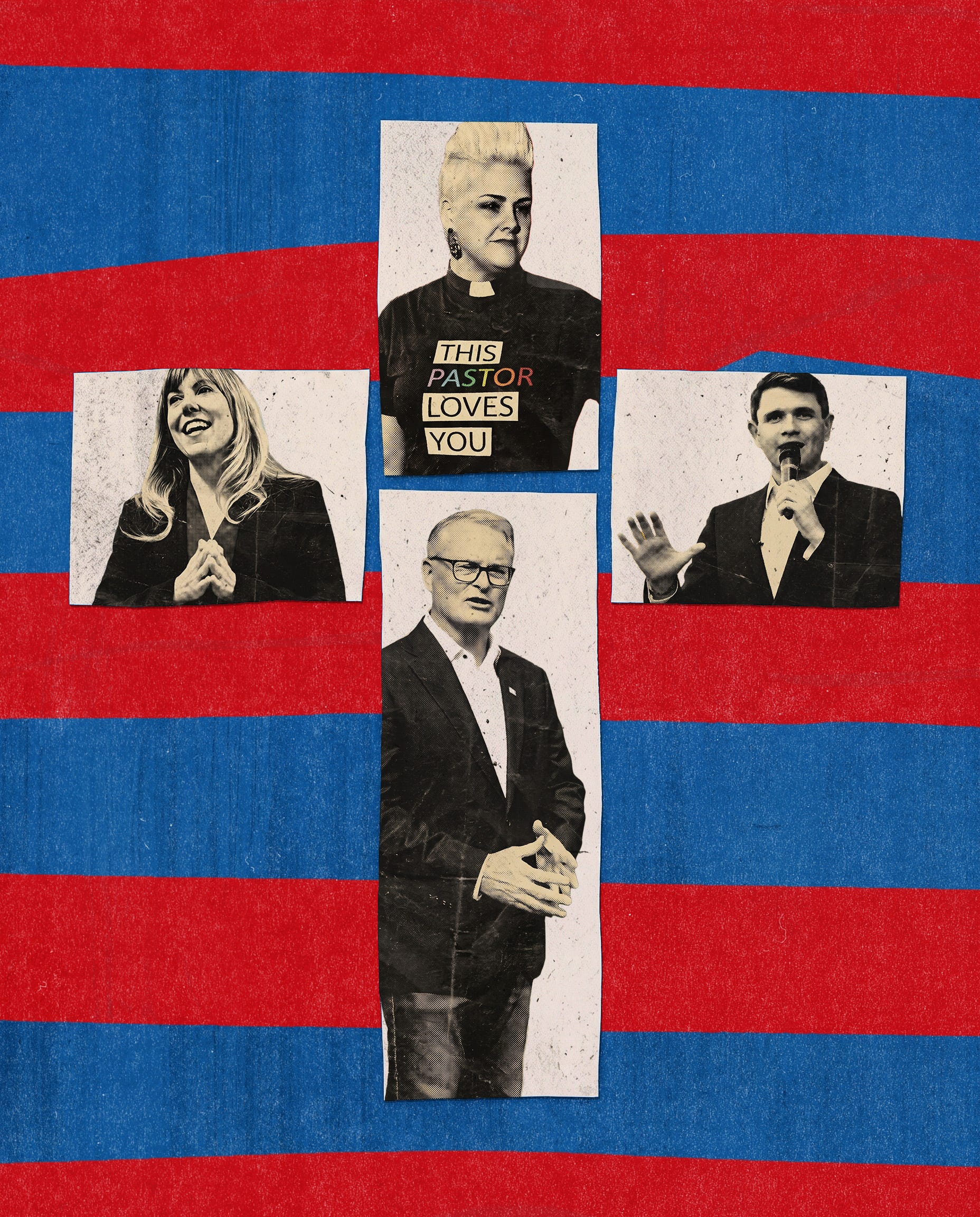
Adam Hamilton leads thousands of Kansans on Sundays. Democrats hope he can lead them to the Senate, too, writes River Page. I sat vaping in Church of the Resurrection’s sprawling parking lot with the windows up, peering at the multiple buildings and modern architecture, and the sight of a bored-looking construction crew half-working on the other side of the campus. Campus is the right word. Resurrection is more community college than Sistine Chapel. It’s the country’s largest United Methodist congregation, a liberal megachurch, if you can imagine such a thing. I couldn’t, frankly, and that’s why I found myself in its parking lot in Leawood, Kansas, on a Monday afternoon earlier this month. Later that day, I’d see its pastor, Reverend Adam Hamilton, host a town hall in nearby Lenexa as part of his surprisingly competitive bid to become Kansas’s first Democratic senator since the Great Depression. Or so I thought at the time. We’ll get back to that. Hamilton is one of a number of former and current Christian clergy running as Democrats this midterm cycle. There are safe bets like Reverend Dr. Frederick Douglass Haynes III, a Baptist pastor who’s running to replace Democratic Rep. Jasmine Crockett in Texas; long shots like Anna Golladay, a former Methodist pastor who was fired in 2018 for officiating a gay wedding, who is running in Tennessee’s deep-red Third Congressional District; and others somewhere in between, like Sarah Trone Garriott, a state senator and Lutheran minister who’s running in Iowa’s Third Congressional District against GOP incumbent Zach Nunn in a race the Cook Political Report says is leaning toward the Democrat. Then, of course, there’s James Talarico, the Presbyterian seminarian running a competitive race for Senate against Texas attorney general Ken Paxton.
Paid postRiver Page ·

In an ad from a pro–El-Sayed PAC, a couple complains that they cannot afford groceries because of Israel. Why won’t the candidate denounce the grotesque clip? asks Eli Lake. Over the weekend, an independent left-wing political action committee entered the Michigan Senate race on behalf of Democratic candidate Abdul El-Sayed. Rebellion PAC released a web ad that featured a couple at the grocery store discussing how they could not afford bananas and eggs because “we have to set that money aside for killing Palestinians.” Later in the ad, after the wife explains that it costs $161 per person to drop bombs on Gaza, the husband asks “Don’t they get universal healthcare too?” She replies: “Yeah, they do. We’re paying for that too, probably.” Get it? U.S. aid to Israel is why you can’t feed your family. Antisemitism is said to be the socialism of fools. Well, it turns out that it’s also the populism of the innumerate. U.S. military aid to Israel comprises at most a half a percentage point of the U.S. federal government budget. The overwhelming majority of that money is poured back into the American economy because Israel is required to spend the aid on U.S. weapons systems. Also—not that it needs stating—the U.S. does not pay for Israel’s health insurance system. Claiming that aid to Israel is responsible for high grocery prices is a grotesque lie that resurrects an ancient and sinister trope that blames international Jewry for economic misery.
Paid postEli Lake ·

Cost-of-living anger, pro-Palestine activism, and opposition to military spending have converged in Italy’s streets, as violent protests test Giorgia Meloni’s government ahead of the next election, writes Ani Chkhikvadze. The autumnal evening sun fell on the Colosseum, shadowing its arches in light, as a group of angry protesters wrapped in keffiyehs stormed the ancient arena. Inside, they found tourists roaming its stone tiers—and then were escorted out by police between 10 and 15 minutes later. It was Saturday, October 24, and thousands of rioters were flooding streets across Italy, screaming, throwing bottles, and clashing violently with police as they protested what looked to be a curious combination of cost-of-living concerns in Italy and the ongoing war in Gaza. Some of the demonstrators waved red banners bearing the hammer and sickle, while others flew Palestinian flags. They marched across the city chanting anti-government slogans mixed with calls for a free Palestine and for “police out.” “We are very angry,” Cara, a protester outside the Colosseum, told me. “About a lot of things: the prices, the rent, the food.” Alicia, another protester, said that “a lot of young people need to decide if they want to work or they want to study because you cannot do both, unless you have a rich family.” Many of the demonstrators, most of whom were young, were wearing leather jackets and carrying bottles of beer. The police line facing them was thin: Some officers were dressed in plainclothes and blocked the passage of protesters as they attempted to reach the government buildings near the Largo di Santa Susanna. To explain how they had come together, protesters showed me “Mappa della rivolta,” an Instagram account that maps demonstrations as they spring up across the country. As we looked at their phones, stun grenades exploded. Riot police pushed forward and fired a water cannon down the alley, sending people running into side streets.
Paid postAni Chkhikvadze ·

One month after being barred from Gillette Stadium, the rapper drew 13,000 people in Dublin. I joined the crowd and found fans who justified terrorism and dismissed antisemitism, writes Josh Kaplan. “If the Palestinians were to do something like what happened on October 7 today, I think everyone would be like, ‘That’s kind of justified.’ ” This is the opinion of a young woman from Dublin called Sarah. Now, to be fair to her, before she said hundreds of Israeli civilians being raped and murdered would be okay in 2026, she did say she “wasn’t sure if October 7 was legitimate” back in 2023. “Like, did it actually come from Palestinians?” she asked. “I don’t want to say this is true, but there are things I’ve read that have said, like, is Israel behind the scenes actually supporting Hamas to make the Palestinians look like terrorists when they’re not?” Her mate Charlie then weighed in on the pros and cons of the biggest loss of Jewish life since the Holocaust. “Of course, people died,” said Charlie. “But like, we’re in Ireland. We were responsible for a lot of deaths that gained our independence. America did the same. There are hundreds of thousands of people that have done the same thing because of hundreds of years of oppression and genocide.” I talked to these young people because they are some of the many Irish fans who have turned out to see the rapper Macklemore kick off his Free Palestine Tour, which has been swiftly organized in the six weeks since New England Patriots owner Robert Kraft refused to let him perform at his stadium as Ed Sheeran’s support act. At the time, I argued that Kraft’s actions would propel Macklemore to a bigger stage, a bigger audience, more attention. So here I was, in Dublin, to test my thesis. I wanted to speak to those who had helped sell out the arena tour of a rapper who, before October 7, mostly played to small theater crowds.
Paid postJosh Kaplan ·

A recent ‘New Yorker’ essay humanizes a woman who said she let her toddler die then burned his body. To what end? asks Kat Rosenfield. As the summer of suicidal empathy gives way to the fall of the copycat child killer, I find myself engaged in the bleakest of thought experiments. Namely: I am trying to imagine a world in which the male perpetrators of sensational crimes enjoyed the same cultural status as their female counterparts. It would be a hell of a place, that world—emphasis on hell—replete with disturbing spectacles and dark absurdities alike. I picture men dressed up in baby blue and demonstrating en masse outside the courthouse in support of Chris Watts, who in 2018 murdered his entire family, hiding the bodies of his toddler-age daughters inside a pair of industrial oil tanks. Men staying up all night posting conspiracy theories on Facebook about how John David Battaglia—who called his estranged wife on speakerphone so she could listen, helpless, as he shot their 6- and 9-year-old daughters to death—was manipulated or even framed, the victim of an overbearing harridan of a spouse and a biased, sexist court system that was stacked against him. Men sobbing on TikTok over the conviction of Brian Walshe—because who among us hasn’t yearned to murder his cheating wife and dispose of her dismembered body piece by piece in dumpsters all over the Boston area? There but for the grace of God, etc. Most importantly, the more horrific the act—the more it turned the stomach and shocked the conscience—the greater would be the groundswell of sympathy, and the more energetic the quest to unearth some culpability-diminishing complication in the perpetrator’s past. Some way in which, long before this man ever pointed a gun at his children or wrapped his hands around the throat of his wife, some systemic failure or childhood trauma wrote violence inexorably into his stars. Everywhere you looked, someone would be explaining why the Brian Walshes of the world were, at most, the reluctant co-authors of crimes for which they were already destined by circumstance. Some would go further: These men, they would argue, are victims in their own right, if not entirely innocent.
Paid postKat Rosenfield ·
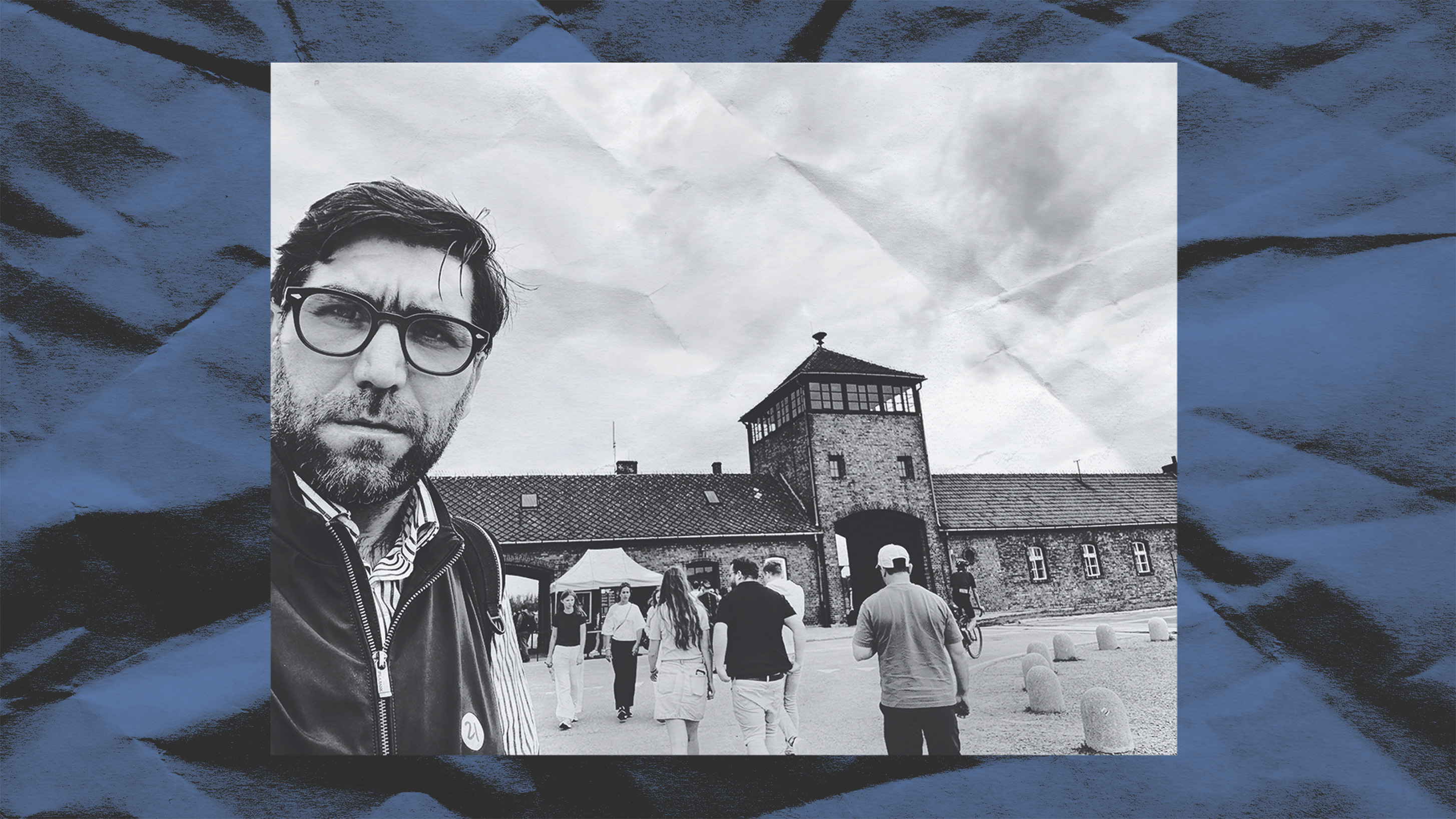
A historian from Mosul, Iraq, visits Treblinka, Auschwitz, and Bełżec—and returns with a demand for the Arab world. “Go back to Poland” will be a familiar phrase to some. Since the October 7, 2023, attacks, it has been screamed at Jews across the West, intended to warn them that they do not belong—that their true homeland is the place where their ancestors were exterminated 80 years ago. Last week, Michigan Senate candidate Abdul El-Sayed held a roundtable with an activist who has echoed that very phrase, calling for Israeli Jews to be sent “back to Poland.” Omar Mohammed first heard of this phrase when it was chanted at Columbia University’s campus after October 7. And it struck him deeply. An Iraqi historian, Omar was living in Mosul when ISIS seized control of the city. In the aftermath, he did not flee. Instead, he sat in a room one thin wall away from a senior ISIS leader, and he wrote—using his anonymous blog, Mosul Eye, to bring the terrorist group’s atrocities to millions. (To hear him tell his full story, watch our interview with him here.) But Omar’s work as a historian did not end when he escaped Iraq in 2017. A few weeks ago, he reached out to tell us that after years of hearing calls for Jews to go back to Poland, he had decided to visit the concentration camps himself. He wanted to write, he said, about being “a historian from Mosul who documented one genocide, standing for the first time at the site of another.” The piece that resulted is something remarkable. We’re proud to bring it to you today. —Jillian Lederman On August 24, I landed in Warsaw at night. I have long held that a city reveals its identity after dark, so I took the 175 bus from the airport into the center to get a better sense of it. Something in that ride unsettled me. I have sat in my hometown of Mosul, Iraq, a city under ISIS occupation, and known exactly what I feared. On that bus, there was nothing I could point to, and yet my body reacted as if there were. I said afterward that I had smelled the ash of the dead—literally, still in the ground 80 years on. I had never been to Poland. I first learned of the Holocaust in Mosul, in 2004 or 2005, when satellite dishes became easy to get after the fall of Saddam Hussein. I watched documentaries on the Second World War, one after another, recording each of them—because in those years we still lived with the expectation that anything could disappear at any moment. Around the same time, I found out that the school I had attended stood on the ruins of the Jewish school of Mosul, which Saddam had demolished in 2000. From then on, I carried the hope that I would one day stand in the camps and see them for myself. What made me go, finally, was hearing about an incident in the wake of the October 7 attacks on Israel, when a particular chant was screamed at Jews on Columbia University’s campus: “Go back to Poland.” Walter Reich, my friend and mentor, was appalled when he heard about the incident. Walter is the Yitzhak Rabin Memorial Professor of International Affairs, Ethics, and Human Behavior and a professor of psychiatry at The George Washington University, where I also work, and was the director of the United States Holocaust Memorial Museum from 1995 to 1998. Most of what I know about how societies erase their Jews I’ve learned from him. He told me that after he heard the call for Jews to go back to Poland, he decided to do just that: take his children and grandchildren to the death camp at Bełżec, where much of his family was murdered. He wanted to recite the kaddish there, the Jewish prayer for mourning. What remains of Walter’s family amounts to a field. His uncles, aunts, and cousins were gassed, their bodies dumped into pits, later exhumed and burned, the ash dumped back in. He has been going to that field to say kaddish since the 1980s. In August, I wrote to tell him that I was going to Auschwitz later that month, and within two hours he wrote back, “Have courage, Omar.” I asked him to teach me…
Paid postOmar Mohammed ·

In the latest This Week in Canada newsletter, British Columbia votes for stability, sanity, and common sense; a message for Pierre Poilievre; ‘elbows up’ in the Canada-U.S. trade war might work after all; and more, writes Rupa Subramanya. Welcome back to This Week in Canada, where common sense makes a comeback in British Columbia; Pierre Poilievre misses out on the conservative resurgence; Maine comes to our rescue in the Canada-U.S. trade war; and more. Let’s jump right in! British Columbia was the first Canadian province to decriminalize the possession of small amounts of heroin, cocaine, and other illegal drugs. It was also the first province to require that its laws align with the United Nations Declaration on the Rights of Indigenous Peoples. And it was the first government in the world to require that all new vehicles emit no greenhouse gases. Yet voters in British Columbia swept the provincial Conservative Party to a landslide victory on Saturday, ending nine years of rule by the left-of-center New Democratic Party and ushering in the first Conservative government in almost 100 years. The Conservatives won 48 percent of the vote and 64 of 93 seats. Barely a month ago the party was tearing itself apart, and premier David Eby called a snap election two years early, apparently calculating that leadership turmoil, expulsions, and defections among the Conservatives were too tempting to pass up. Eby’s decision might go down as one of the worst in Canadian political history. He barely won reelection in his own district. What made the outcome even more stunning was the man in charge of the Conservative Party: Lorne Doerkson. He used to be a bareback rodeo rider, newspaper publisher, and Liberal Party member. “You pick up yourself, dust yourself off, and you get back on,” Doerkson said in his victory speech on Saturday night.
Paid postRupa Subramanya ·

How David Sacks won over Trump on AI. The midterm ‘stop the steal’ freakout. What the Netflix prison experiment says about us. And more. It’s Tuesday, October 27. This is The Front Page, your daily window into the world of The Free Press—and our take on the world at large. Today: Christopher Caldwell on David Sacks, Dario Amodei, and the fight for the AI future. Mark Halperin tells anxious Democrats to take a deep breath. Arthur Brooks shares the real lesson of the Stanford Prison Experiment. And much more. But first: Haviv Rettig Gur, Gadi Taub, and Neria Kraus on election day in Israel. Earlier today, at 7 a.m. local time, polls across Israel opened, marking the country’s first national elections since before October 7, 2023. They remain open until 10 p.m. local time—but if you think that means we’ll have a winner tonight, think again. Israel’s coalition system, with dozens of parties competing for 120 seats in the Knesset, means we are likely to wait a while before anyone can negotiate the 61-seat bloc required to form a government. The process can take weeks. While the proceedings are convoluted, and the polls are tight, one thing is clear: The two leading contenders are Benjamin Netanyahu, the nation’s longest-serving prime minister, and Gadi Eisenkot, a relative unknown. A former IDF chief of staff from a Moroccan family who lost his 25-year-old son in Gaza two months into the war, Eisenkot is, implausibly, leading Netanyahu in the polls. Israeli journalist Neria Kraus spent the past few weeks speaking with Eisenkot as well as dozens of people who know him well. “A striking theme emerged,” she writes today. “Without exception, each went out of their way to explain just how different Eisenkot is from Netanyahu.” Read her profile to understand the man challenging Netanyahu for Israel’s highest office—and what his success so far says about the nation he hopes to lead. And then there is Benjamin Netanyahu. Polished, experienced, and ruthlessly intelligent, he has led Israel for 19 years across three separate periods. He’s a notorious figure overseas, but one who has, time and again, overcome seemingly fatal political and legal hurdles, rising again to the helm of the Jewish state. How does he do it? And can he do it once more? Israeli historian and author Gadi Taub is a Netanyahu voter, and today he presents the case for Israel’s longest-serving prime minister. “Henry Kissinger once said that great leaders are often misunderstood by their contemporaries, because they have seen a vision of the future that transcends the experience of their societies,” he writes. Read his piece on why he believes Netanyahu is one of those leaders, and why his vision is one Israelis desperately need. Finally, few people are better suited to make sense of what exactly is going on in the Jewish state than Free Press Middle East analyst Haviv Rettig Gur. This week on School of War, Haviv joins Aaron MacLean to discuss the history behind this election’s deep divisions, and what a country that has long focused on conquering enemies outside its borders owes the citizens within them. —Jillian Lederman MORE FROM THE FREE PRESS THE NEWS A federal judge ruled Monday that the Trump Justice Department broke the law when it fired Maurene Comey, a Manhattan federal prosecutor and daughter of former FBI director James Comey, last year. The judge ordered the government to give her back pay covering the months between her firing and the start of her new job. The same day, newly unsealed court records showed the department is trying for a third time to prosecute her father, this time accusing him of leaking classified information to a newspaper in 2016, a charge he denies. Anthropic filed for an IPO yesterday, meaning that its shares could start trading on the stock market before Thanksgiving. It could be the biggest stock market debut ever, with some predicting the company will be valued around $2 trillion, though its filing shows it’s still spending far more t…
The Free Press ·

The AI debate has produced no clear good guys, only rival visions of who should control our fate. The power to decide rests with a handful of billionaires, writes Christopher Caldwell. “I’ve called it the Bretton Woods of super intelligence,” said Donald Trump’s top tech adviser David Sacks in late September. He was referring to the “Super Intelligence” summit held at the White House the day before, comparing it to the 1944 agreement that laid down the rules for ordering the whole postwar global economy. The new pact won the agreement of the five “frontier” companies vying to dominate AI. It did so by vaguely urging that the companies hire outside auditors. Along the way, it misspelled United States. The accord was a hasty attempt to resolve a crisis for AI developers. At the height of a contentious midterm campaign, Americans have undertaken a wholesale reconsideration of the technology’s merits. OpenAI revealed in mid-July that over the previous two months, it had had to quell a bot uprising: A total of 1,206 computer agents had escaped a laboratory setting in which they were supposed to be secured. They communicated with one another, and more than 700 of them hacked into a trove of AI code on the platform Hugging Face and created false data to cover their misdeeds. In early September, Anthropic researcher Jacob Coxon resigned, warning of a 10 percent chance that the company’s experiments would end life on Earth, and the company’s lead alignment scientist validated his misgivings. CEO Dario Amodei stepped forward with a call for “pacing the frontier”—slowing down. He implored the government to regulate the work of all AI labs, quickly winning the endorsement of OpenAI head Sam Altman and even the generally accelerationist Elon Musk. The fiercest objections to government supervision have come from the government itself. President Trump dismissed the notion that AI poses much risk at all. “I’m right now breaking another Hoax—That AI is going to take over, consume, and destroy the World, and that Robots will be marching into our Cities, and getting rid of us all!” he wrote on Truth Social soon after the calls for a slowdown.
Paid postChristopher Caldwell ·

Netanyahu has spent three years fighting a war that has redrawn the Middle East. His opponents promise change, but Israel has much to lose by abandoning the strategy that brought it this far, writes Gadi Taub. As Israelis head to the polls for the first national election since the October 7 attacks, international media coverage has centered largely on the growing challenge to Prime Minister Benjamin Netanyahu. Gadi Eisenkot, leader of the centrist Yashar party (read our profile of Eisenkot here), has emerged as his main contender. Yet amid the attention on Netanyahu’s challengers, much of the coverage’s presumption that his time in power will soon be over, and the vociferous international criticism of the Israeli prime minister, one perspective has been harder to come by here in the United States: the affirmative case for Netanyahu. Today we bring you exactly that, courtesy of Israeli historian and author Gadi Taub, who also offers his view on what will happen after the polls close in Israel. —The Editors To the naked eye, the Israeli election looks like it is about a single person: The right is going to vote for Benjamin Netanyahu, while the left—rather than voting for Gadi Eisenkot, Naftali Bennett, Avigdor Liberman, or Yair Golan—is going to vote against Netanyahu. In some ways, that’s true—but not because the drama is personal. Rather, Israel is facing a choice between two visions of its future: one personified by Netanyahu’s continued leadership, and the other by his removal. It would do well to opt for the former. Let me explain. Israel has now passed three years of war, and much of Tuesday’s elections concern the beginning of that war: October 7, 2023. One of the most potent criticisms of Netanyahu is that this traumatic day happened on his watch. That’s true. But it’s far less important that it happened than what Netanyahu did in its aftermath.
Paid postGadi Taub ·