Source
TIME

Time (magazine)
Time is an American news magazine based in New York City. It was published weekly for nearly a century. Starting in March 2020, it was published every other week. It was first published in New York City on March 3, 1923, and for many years it was run by its co-founder, Henry Luce.
From Wikipedia ↗, text under CC BY-SA 4.0; logo from Wikimedia Commons
- Type
- News outlet
- Lean
- Left-leaning
- Left-Center−4.0 of ±10
- High1.2 of 10 (lower is better)
- High
- Website
- time.com ↗
- Feed
- RSS ↗
- Articles stored
- 643
- Tracked since
- Aug 15, 2026
Down: MBFC factual reporting score, 0 most factual to 10 least.
Bias and credibility ratings by Media Bias/Fact Check.
TIME on MBFC ↗Publishing rhythm
How many articles TIME published over the last 14 days, by publication time, and at which hours of the day.
Top keywords
All keyword charts for TIME →The people, places, organizations and topics TIME covered most that day, by the share of its stories that mention them. Article counts are shown for context.
No keywords that day yet.
Latest articles
 Politics
After a midterm rout, aides anticipate more staff turnover, more Supreme Court battles and a more isolated Trump.
Eric Cortellessa ·

Interviews with party leaders and insiders reveal an ambitious agenda and big challenges
Nik Popli and Julia Terruso ·

The 2026 midterms revealed the winners and losers of AI’s first major electoral test, as opposition to data centers grew and rival factions of the AI industry battled for political influence.
Andrew R. Chow and Harry Booth ·

Yes, errands were boring. But I’m not less bored now, I’m just bored in a different way, writes Gabe Bullard.
Gabe Bullard ·

El-Sayed has defeated former Rep. Mike Rogers in Michigan’s open Senate race, making him the first Muslim elected to the United States Senate.
Nik Popli ·

Democrat Brian Poindexter, a union worker and local councilman, has beaten out Miller in the race for Ohio’s seventh congressional district.
Connor Greene ·

The road to 2028 looks very different if Republicans can't count on Texas' 40 electoral votes.
Philip Elliott ·

Collins' loss delivers Democrats one of their most sought-after wins of the midterms
Julia Terruso ·
 Politics
Hinojosa will become the first Democrat to lead the state in decades, and Texas' first-ever Hispanic governor.
Philip Wang ·

Democrats won control of the Senate in a midterm wave, gaining the power to block Trump’s nominees and derail his agenda.
Philip Elliott ·

Talarico is the first Democrat to win a statewide race in Texas since 1994.
Philip Elliott ·

A divisive attack ad drew bipartisan condemnation before Acton’s victory delivered a significant blow to Republicans in Ohio.
Chantelle Lee ·

Democrat Annie Andrews defeated Darline Graham in South Carolina’s Senate race, flipping the late Lindsey Graham’s seat.
Chantelle Lee ·

Election Day is underway, but it could be days, or even weeks, before it becomes clear which party will control Congress.
Connor Greene ·

For some Americans, the process of casting their ballot is a little more complex than heading to the local school or library.
Callum Sutherland ·
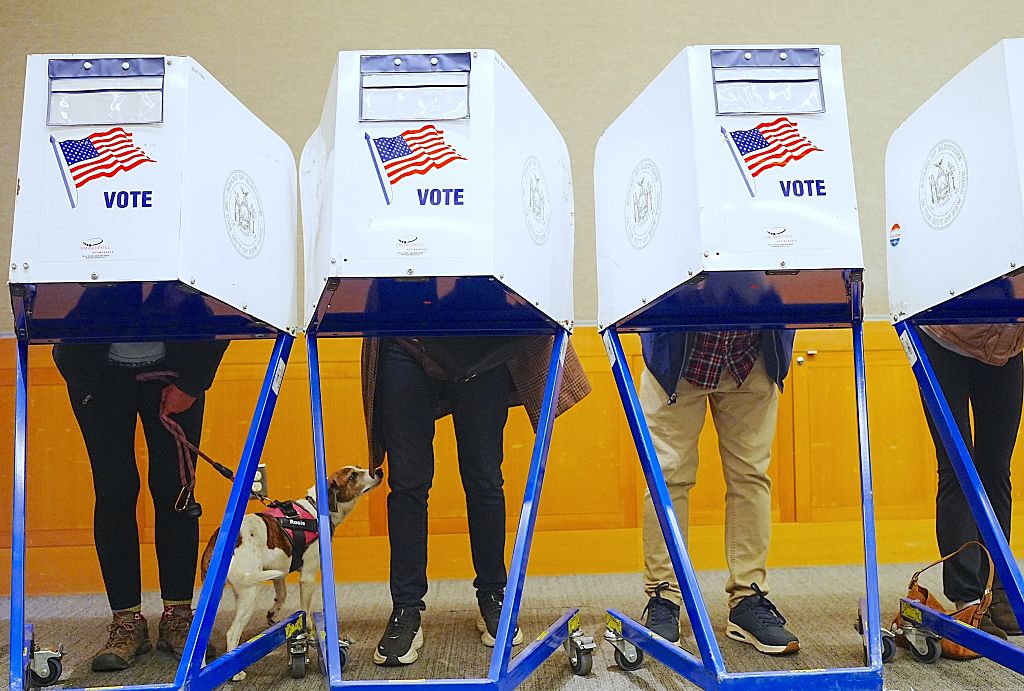
Voters are heading to the polls in midterms that will shape the rest of Trump's presidency.
TIME Staff ·

Use your brain before you prompt.
Angela Haupt ·

Doctors are seeing an exponential rise in pediatric injuries from e-bikes and scooters.
Veronique Greenwood ·
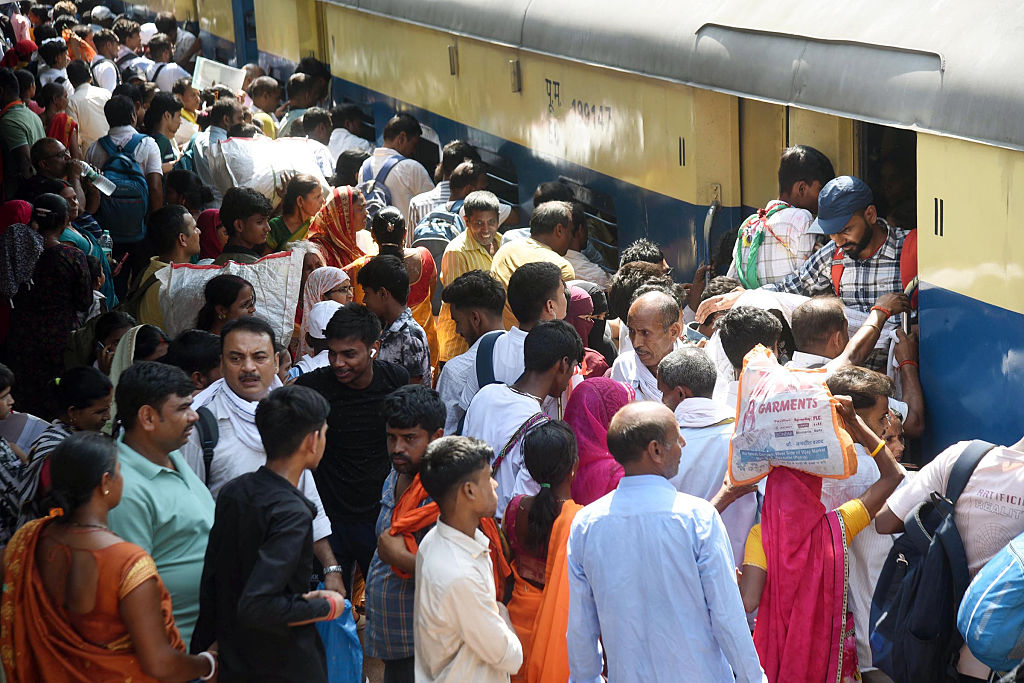
India cannot tackle its challenges of education, health, manufacturing and jobs unless it fixes the quality, competence and integrity of the state.
Devesh Kapur ·

—Photo-illustration by TIME; SOPA Images, Bloomberg, NurPhoto and UCG—Getty Images For the first time, TIME and data firm Statista have presented Asia-Pacific's Best Employers 2027. In a region shaped by rapid economic transformation, evolving workforce expectations, and intensifying competition for talent, it is essential to recognize employers that create outstanding workplaces. By featuring these leading organizations, the ranking sets a benchmark for employers across APAC and encourages businesses to place employee wellbeing, development, and inclusion at the core of their people strategies. Methodology The ranking drew from an initial pool of over 7,000 of the Asia-Pacific's largest and most influential companies. A rigorous three-step methodology was applied to identify the Top 500. Eligibility criteria Companies were eligible for consideration if they had a significant operational presence in the Asia-Pacific region. Headquarters did not need to be located in APAC; however, companies were required to employ at least 1,000 people in the region and maintain operational sites in at least two of the following APAC markets: Australia, Hong Kong, India, Indonesia, Japan, China, Macau, Malaysia, New Zealand, the Philippines, Singapore, South Korea, Taiwan, Thailand, and Vietnam. Data collection The survey was conducted using several online access panels to guarantee a representative sample of employees across the region. Participants were asked, through an open-ended question with an auto-complete function, to name their current employer. This method ensures neutrality and prevents companies from influencing the selection of respondents. The survey gathered a representative sample of over 80,000 employees, including both part-time and full-time employees in the region. Scoring model The final score combines two types of evaluations: employees’ willingness to recommend their current employer and, where applicable, their previous employer (direct score), as well as their willingness to recommend other employers within the same industry (indirect perception score). The score is based on data collected in 2024, 2025, and 2026. Direct score: Respondents were asked to rate their willingness to recommend their current employer and, where applicable, their previous employer to friends and family. Responses were recorded on a scale from 0 to 10, where 0 means “I wouldn’t recommend my employer under any circumstances” and 10 means “I would definitely recommend my employer.” Indirect score: Employees were also asked about their willingness to recommend other employers within their industry. Respondents were shown a list of employers in their industry and asked to give an opinion on those that stood out, either positively or negatively (response options: "would recommend," "would not recommend," "no opinion"). Additionally, an open-ended question allowed respondents to name other employers they would recommend. Greater weight was given to direct recommendations, as they provide the strongest reflection of employee satisfaction. An overall score was calculated for each company, with a maximum achievable score of 100. Ranking The top 500 companies with the highest scores were awarded the title of Asia-Pacific's Best Employers 2027. This ranking reflects not only how employees view their own workplace but also how companies are perceived across their sector, creating a balanced and independent assessment of the region's top employers. The final list recognizes organizations that have demonstrated a genuine commitment to their people and serves as a trusted guide for job seekers and industry stakeholders across the Asia-Pacific. See the full list here .
TIME Staff ·