Source
TIME

Time (magazine)
Time is an American news magazine based in New York City. It was published weekly for nearly a century. Starting in March 2020, it was published every other week. It was first published in New York City on March 3, 1923, and for many years it was run by its co-founder, Henry Luce.
From Wikipedia ↗, text under CC BY-SA 4.0; logo from Wikimedia Commons
- Type
- News outlet
- Lean
- Left-leaning
- Left-Center−4.0 of ±10
- High1.2 of 10 (lower is better)
- High
- Website
- time.com ↗
- Feed
- RSS ↗
- Articles stored
- 628
- Tracked since
- Aug 15, 2026
Down: MBFC factual reporting score, 0 most factual to 10 least.
Bias and credibility ratings by Media Bias/Fact Check.
TIME on MBFC ↗Publishing rhythm
How many articles TIME published over the last 14 days, by publication time, and at which hours of the day.
Top keywords
All keyword charts for TIME →The people, places, organizations and topics TIME covered most that day, by the share of its stories that mention them. Article counts are shown for context.
No keywords that day yet.
Latest articles

For some Americans, the process of casting their ballot is a little more complex than heading to the local school or library.
Callum Sutherland ·
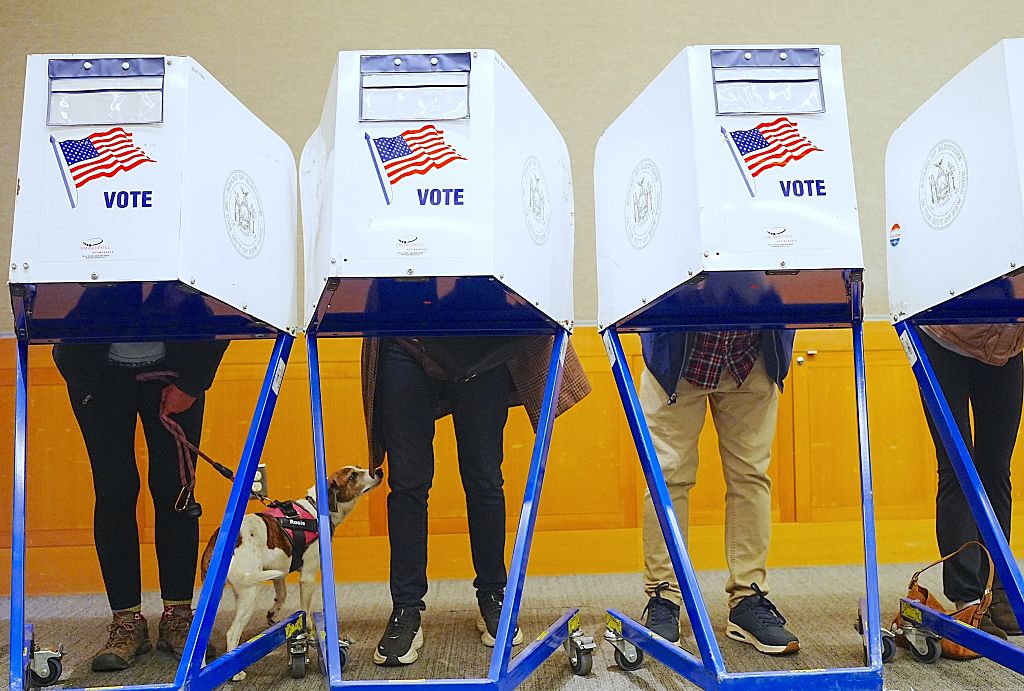
Voters are heading to the polls in midterms that will shape the rest of Trump's presidency.
TIME Staff ·

Use your brain before you prompt.
Angela Haupt ·

Doctors are seeing an exponential rise in pediatric injuries from e-bikes and scooters.
Veronique Greenwood ·
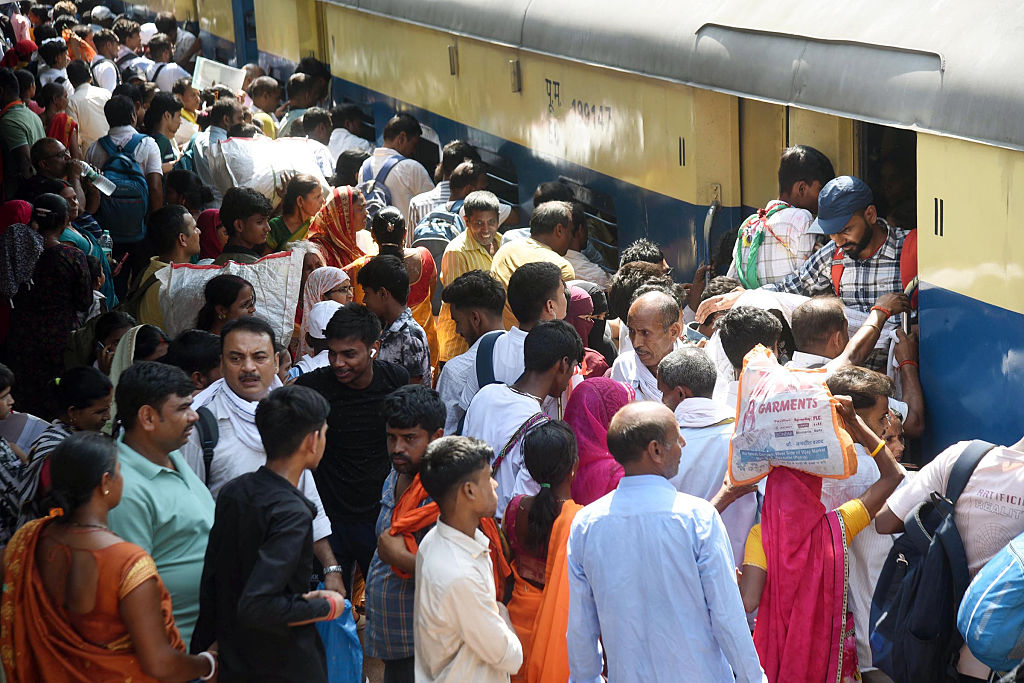
India cannot tackle its challenges of education, health, manufacturing and jobs unless it fixes the quality, competence and integrity of the state.
Devesh Kapur ·

—Photo-illustration by TIME; SOPA Images, Bloomberg, NurPhoto and UCG—Getty Images For the first time, TIME and data firm Statista have presented Asia-Pacific's Best Employers 2027. In a region shaped by rapid economic transformation, evolving workforce expectations, and intensifying competition for talent, it is essential to recognize employers that create outstanding workplaces. By featuring these leading organizations, the ranking sets a benchmark for employers across APAC and encourages businesses to place employee wellbeing, development, and inclusion at the core of their people strategies. Methodology The ranking drew from an initial pool of over 7,000 of the Asia-Pacific's largest and most influential companies. A rigorous three-step methodology was applied to identify the Top 500. Eligibility criteria Companies were eligible for consideration if they had a significant operational presence in the Asia-Pacific region. Headquarters did not need to be located in APAC; however, companies were required to employ at least 1,000 people in the region and maintain operational sites in at least two of the following APAC markets: Australia, Hong Kong, India, Indonesia, Japan, China, Macau, Malaysia, New Zealand, the Philippines, Singapore, South Korea, Taiwan, Thailand, and Vietnam. Data collection The survey was conducted using several online access panels to guarantee a representative sample of employees across the region. Participants were asked, through an open-ended question with an auto-complete function, to name their current employer. This method ensures neutrality and prevents companies from influencing the selection of respondents. The survey gathered a representative sample of over 80,000 employees, including both part-time and full-time employees in the region. Scoring model The final score combines two types of evaluations: employees’ willingness to recommend their current employer and, where applicable, their previous employer (direct score), as well as their willingness to recommend other employers within the same industry (indirect perception score). The score is based on data collected in 2024, 2025, and 2026. Direct score: Respondents were asked to rate their willingness to recommend their current employer and, where applicable, their previous employer to friends and family. Responses were recorded on a scale from 0 to 10, where 0 means “I wouldn’t recommend my employer under any circumstances” and 10 means “I would definitely recommend my employer.” Indirect score: Employees were also asked about their willingness to recommend other employers within their industry. Respondents were shown a list of employers in their industry and asked to give an opinion on those that stood out, either positively or negatively (response options: "would recommend," "would not recommend," "no opinion"). Additionally, an open-ended question allowed respondents to name other employers they would recommend. Greater weight was given to direct recommendations, as they provide the strongest reflection of employee satisfaction. An overall score was calculated for each company, with a maximum achievable score of 100. Ranking The top 500 companies with the highest scores were awarded the title of Asia-Pacific's Best Employers 2027. This ranking reflects not only how employees view their own workplace but also how companies are perceived across their sector, creating a balanced and independent assessment of the region's top employers. The final list recognizes organizations that have demonstrated a genuine commitment to their people and serves as a trusted guide for job seekers and industry stakeholders across the Asia-Pacific. See the full list here .
TIME Staff ·
The Asia-Pacific region has been the world’s fastest-growing region in recent years, with banking and financial services, IT software and services, and the semiconductor industry driving the region’s economic growth. So it’s no surprise that these industries lead the Asia-Pacific Best Employers of 2027, a list curated by TIME and global data firm Statista that ranks the top 500 companies based on employee satisfaction surveys from 2024 to 2026. American semiconductor-equipment company KLA tops this year’s list. Of its approximately 17,000 regular full-time employees across 18 regions, 50% are in Asia. Based on its Securities and Exchange Commission filing, KLA’s employee voluntary turnover rate was under 3.4%. In the past year, the company reported investing in manpower training and development: its full-time-equivalent employees took 38.3 hours of training on average in 2025, and its internal promotion rate at the vice-president level reached 78%. Methodology: How TIME and Statista Determined Asia-Pacific's Best Employers of 2027 Pei Ying Chua, LinkedIn’s head economist for Asia-Pacific, tells TIME that the booming semiconductor industry appeals to employees as “people working within that space will probably have more opportunities to advance,” adding that skills in that industry will remain in demand. In second place is U.S. banking firm JPMorganChase, whose regional corporate banking revenue has grown well above 20% as of August. Its leaders told Reuters that it is close to completing a 15% increase in regional staff this year, after a 20% expansion in 2025, and that it’s eyeing a similar manpower increase in the region for 2027. Taking the third spot is Australian design startup Canva, which indicated a hiring slowdown , followed by Microsoft in fourth. Conglomerates also had a strong showing in this year’s list: their 57 entries had an industry average score of 78.81 out of 100. From Japan, Sony Corporation ranked fifth, and Toyota Group ranked 7th. Toymaker LEGO and video-game company Nintendo take the 6th and 8th spots respectively, while Google’s American parent company Alphabet ranked 9th. Estonian-British financial technology company Wise rounded out the top 10. Of the top 50, 16 are Japanese brands, representing one of the largest contingents near the list’s high rankers, followed by American multinationals, who dominate the list of 500. Trevor Yu, an associate professor at Nanyang Technological University’s Nanyang Business School, tells TIME these companies rely on decades of reputation-building, including on career opportunities, innovation, and competitive rewards for their workers. But the region’s not insulated from global headwinds. While Asia’s export-led, manufacturing-based model has historically helped keep regional unemployment low, the rapid adoption of AI has changed the job landscape. An October report from the International Monetary Fund shows that, since the launch of ChatGPT in 2022, employer demand in the region fell nearly 10% in more exposed occupations, like coding, relative to less exposed jobs that require more human output. “Employers increasingly need to renew their employment value proposition,” Yu says. “They need to communicate transparently about how work is changing, acknowledge employees' concerns about job transformation and retrenchment, and demonstrate that they will invest in helping people adapt.” Yu adds that employers who build trust by involving employees in the transformation will emerge the strongest. See the full list of Asia-Pacific’s Best Employers of 2027 below:
Chad de Guzman ·

An analysis of race ratings from 10 election forecasters found 12 contests where some favor the Democratic candidate while others favor the Republican.
Ruairí Arrieta-Kenna ·

An analysis of race ratings by 10 election forecasters found eight Senate races that are not rated unanimously in favor of one party.
Ruairí Arrieta-Kenna ·

Director Takashi Yamazaki explains the genesis of the idea of the new movie, which follows up his Oscar-winning 2023 'Godzilla Minus One.'
James Grebey ·

Ahead of Election Day, Trump packed his schedule with back-to-back tele-rallies for Republican candidates.
Philip Wang ·

The most capable technology ever built is being aimed at the least important problems argues Kai-Fu Lee.
Kai-Fu Lee ·

Less than 24 hours before Election Day, Trump railed against Democrats and contended that if his supporters show up to the polls, Republicans “will win in a landslide.”
Chantelle Lee ·

Emerging research suggests a little-known benefit to getting more sun.
Dominique Mosbergen ·

The Land O’Lakes CEO talks about her career path, the state of American farmers and farm workers, and more.
Sam Jacobs ·
 Politics
Recent polls indicate that GOP Sen. Darline Graham is facing a tough fight against her Democratic challenger in the race for her late brother Lindsey Graham's seat.
Chantelle Lee ·

Democratic operatives say the two men are among the most in-demand surrogates this cycle
Philip Elliott ·

Rep. Adam Smith is set to become chair of House Armed Services if Democrats regain control of the House.
Nik Popli ·

The 2026 midterms could see the U.S.’s first Muslim, first Native woman, and first openly gay man elected to the Senate, among other potential barrier-breakers.
Chad de Guzman ·

The Democratic congresswoman from Michigan endorsed a Republican nominee for U.S. Senate, potentially upending the race.
Chad de Guzman ·