Source
Axios

Axios (website)
Axios is an American news website based in Arlington, Virginia. It was founded in 2016 and launched the following year by former Politico journalists Jim VandeHei, Mike Allen, and Roy Schwartz. The site's name is based on the Ancient Greek ἄξιος.
From Wikipedia ↗, text under CC BY-SA 4.0; logo from Wikimedia Commons
- Type
- News outlet
- Lean
- Left-leaning
- Left-Center−2.8 of ±10
- High0.9 of 10 (lower is better)
- High
- Website
- axios.com ↗
- Feed
- RSS ↗
- Articles stored
- 904
- Tracked since
- Aug 15, 2026
Down: MBFC factual reporting score, 0 most factual to 10 least.
Bias and credibility ratings by Media Bias/Fact Check.
Axios on MBFC ↗Publishing rhythm
How many articles Axios published over the last 14 days, by publication time, and at which hours of the day.
Top keywords
All keyword charts for Axios →The people, places, organizations and topics Axios covered most that day, by the share of its stories that mention them. Article counts are shown for context.
| 1 | 57.1% | 4 | |
| 2 | 28.6% | 2 | |
| 3 | 14.3% | 1 | |
| 4 | 14.3% | 1 | |
| 5 | 14.3% | 1 | |
| 6 | 14.3% | 1 | |
| 7 | 14.3% | 1 | |
| 8 | 14.3% | 1 | |
| 9 | 14.3% | 1 | |
| 10 | 14.3% | 1 | |
| 11 | 14.3% | 1 | |
| 12 | 14.3% | 1 | |
| 13 | 14.3% | 1 | |
| 14 | 14.3% | 1 | |
| 15 | 14.3% | 1 |
Latest articles
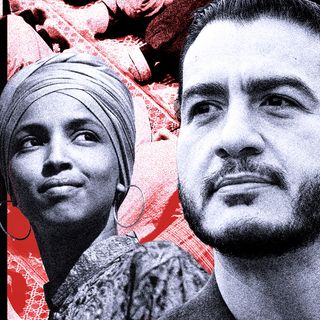
President Trump has increasingly singled out Muslim politicians and communities in a bid to rally his base in the final push before election day. Why it matters: Trump's comments could energize some Republican voters in close races, but the strategy could alienate those who see the rhetoric as fearmongering or discriminatory . Driving the news: Trump's Monday appearance at a Michigan rally for GOP Senate candidate Mike Rogers included several barbs at Democratic nominee Abdul El-Sayed's Muslim faith. Trump suggested that El-Sayed posed a security threat, saying, "He would be the only senator that will have to go through a metal detector before he's allowed to go into the Senate." He also called El-Sayed a "jihadist," baselessly claimed the Senate candidate wants to impose sharia law in Michigan, and again accused him of having ties to the Muslim Brotherhood. El-Sayed has repeatedly denied ties to extremist groups, and no evidence has emerged linking him to the Muslim Brotherhood. His campaign did not respond to a request for comment. Between the lines: Republican political consultant Dennis Darnoi told Axios that Trump's rhetoric "doesn't really move the needle one way or the other" in Michigan, where voters have heard similar language before. Darnoi says the strategy could "energize and mobilize" Trump's base. But it could also discourage Jewish and Black Democrats who backed El-Sayed's primary opponent, Haley Stevens, from supporting him in November. "It's not always about winning, but if you can minimize the size of your loss and then go into more Republican areas and gin up your turnout and gin up your margin of victory, then you can win a very close statewide race." By the numbers: About 38% of Michigan likely voters said they would be less likely to support a Muslim candidate, according to a Michigan State University poll released Monday. But 58% said a candidate's being Muslim would make no difference, while 52% said a Trump endorsement would make them less likely to support a politician. What they're saying: Trump and some in the GOP "have chosen to use bigotry and racism" as their election strategy "because there's no other message they're able to run on," Haris Tarin, vice president of policy and programming at the Muslim Public Affairs Council, tells Axios. He added that it doesn't matter if voters or politicians agree with El-Sayed's policies, "all of that is up for debate. But they've chosen not to debate the issues. They've chosen to instill fear in people, promote lies, pure lies." Tarin predicted the attacks would have "an opposite effect for both American Muslims and Americans in general." The other side: A White House spokesperson told Axios in an emailed statement that "President Trump is calling out the radical extremists stoking division, defrauding their communities, and perpetuating violence." "The President will continue to unapologetically fight for American greatness and call out extremists like Abdulrahman Mohamed El-Sayed without apology." Zoom out: Trump isn't alone. Several Republican lawmakers have made anti-Muslim comments this year. Trump has also repeatedly targeted Somali Americans and Rep. Ilhan Omar (D-Minn.), and previously called Somali immigrants "garbage." Somalis predominantly practice Islam. What we're watching: Whether moderates and independents take the bait, or whether the attacks backfire with Muslim Americans and other voters. Go deeper: "Awful f*cking idiot": Tensions erupt in Congress over Republicans' anti-Muslim posts
Josephine Walker ·
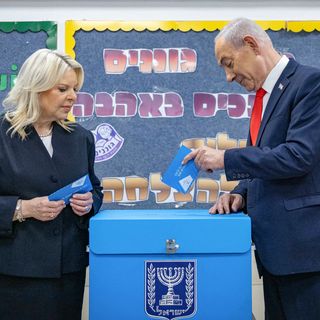
Israeli Prime Minister Benjamin Netanyahu's far-right coalition is projected to lose its parliamentary majority, but his opponent Gadi Eisenkot's bloc is short of 61 seats, according to Israeli exit polls. The exit polls show Eisenkot's bloc with 52 to 53 seats, Netanyahu's with 50, and Arab parties with 17 to 18. Why it matters: If the election results match that poll, Eisenkot would have to try to swear in a minority government supported by the two Arab parties. It's unclear whether all of his political partners would agree to do that. It would also mean that Netanyahu's coalition shed 14 seats from the 64 seats it won in the 2022 elections . What they're saying: Eisenkot said that the exit poll results "point to an unequivocal lack of confidence in Netanyahu and the government responsible for October 7, on the part of the Zionist majority and the majority of Israeli citizens. If these results hold, it will be a victory for Israel's Zionist, pro-state majority." He added, "I will act immediately to implement the people's verdict, replace Netanyahu's government, and establish a Zionist government committed to military service, as soon as possible." Driving the news: The exit poll results came after voters flocked to polling stations throughout the day, with turnout reaching a four-decade high . It was the culmination of a campaign that each side warned would lead to catastrophe if the other side won. An Eisenkot-bloc victory would offer Israel a chance to reset its strained relationships abroad and chart a new course domestically. The former Israel Defense Forces chief of staff, however, vowed to maintain a hawkish approach on security matters. Yes, but: Though Eisenkot's bloc outpaced Netanyahu's, the incumbent prime minister's Likud Party received one to two more seats than Eisenkot's Yashar party, per the exit polls. But because Israel has a parliamentary system, the bloc totals are what ultimately matter. Go deeper: Israeli turnout hits four-decade high
Barak Ravid ·

President Trump applauded Quebec's new separatist premier Tuesday, continuing to jab at Ottawa despite fragile trade talks that seemed to be gaining momentum. The big picture: Even as Trump's top economic adviser suggested a deal to ease the ongoing trade war is possible, the president has continue to antagonize Canada. The U.S. recently accused Canada of trying to influence American elections through retaliatory tariffs, which Canadian officials have denied. Meanwhile, Trump's continued to antagonize Canada from the campaign trail, saying at a Mississippi stop Monday that it was "charging us massive tariffs" and has "treated us badly." Driving the news: In a brief shoutout Tuesday, the president congratulated Paul St-Pierre Plamondon for his win some three weeks ago. While a recent vote stymied an Albertan separatist push , St-Pierre Plamondon has vowed to hold Quebec's third referendum on independence, though he's said it wouldn't happen until after Trump leaves office. St-Pierre Plamondon's center-left Parti Québécois won 60 of 127 seats, leaving it four short of a majority. It would likely need support from a fellow separatist party to advance a referendum. Prime Minister Mark Carney has emphasized the importance of Canadian unity as the nation faces unprecedented hostility from the American president. Trump shared an Irish Times article that framed the Quebec vote as a "blow to Mark Carney" that could "hamper" his "efforts to maintain national unity against Trump." Zoom out: Trump on Tuesday also congratulated British Columbia's premier-designate, Lorne Doerkson, after his Conservatives swung the province rightward. "Conservatives are moving strong in Canada!" the president wrote . Doerkson, however, has rejected suggestions that he's aligned with the president, similar to St-Pierre Plamondon. Friction point: The U.S. Embassy in Canada last week accused Canadian leaders of trying to influence American politics with reciprocal tariffs on politically important products and states in the U.S. The White House did not immediately respond to Axios' request for comment. The intrigue: White House economic adviser Kevin Hassett said in a Fox interview Sunday that negotiations with Canada have "picked up" and are "gathering steam." Carney told reporters Monday trade talks had intensified slightly since the talks last fell apart in August . Midterm politics are complicating Trump's tariff agenda, Axios' Courtenay Brown reports. Last week, the the White House exempted certain Canadian imports from 50% tariffs following pressure from Sen. Susan Collins (R-Maine) . Collins pledged to seek to seek further tariff relief and encourage a broader trade agreement with Canada. The bottom line: Trump relationship with Canada has been tumultuous — rattled by trade tensions and the president's persistent "51st state" threats. Go deeper: Trump's Canada feud collides with Alberta's separatist vote
Avery Lotz ·
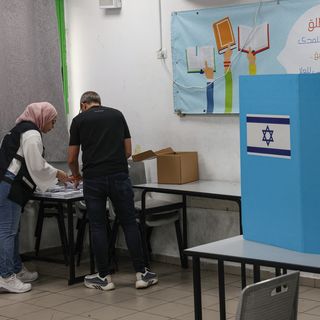
TEL AVIV, Israel — Halfway through Election Day , 45% of Israeli voters had cast a ballot — the highest level since 1973. Why it matters: This looks like bad news for Benjamin Netanyahu. Higher voter turnout will likely push several of the parties in his bloc below the electoral threshold — making it harder for the prime minister to reach a 61-seat majority in parliament. An increase in turnout among Arab minority communities could lead to a record number of seats in parliament for them. As in previous elections, Netanyahu has tried to energize his voters by making false claims about "Muslim Brotherhood supporters" of his opponents who are "stealing the elections." State of play: After multiple reports of long lines at many polling stations across the country, the Central Elections Commission issued orders to expedite the voting process and clarified that any voter who arrives at a polling station by 10 pm local time will be allowed to vote. Polls close at 10 pm local time (4pm ET) and exit polls will be published simultaneously by Israel's three TV networks. Driving the news: This is one of the most consequential elections in the country's history — with rival camps warning that victory for the other would put Israel's future in jeopardy. The elections are yet another referendum on Benjamin Netanyahu's leadership and the path he's taken the country down over the past four years. It's Israeli voters' first chance to hold Netanyahu accountable for the security failures that led to the Hamas-led October 7 attacks — or to reward him for what he claims were unprecedented military successes in the three years of war since.
Barak Ravid ·

Four Senate Democrats are pressing Trump officials to begin restoring billions of dollars in clean energy grants before a key vote on the permitting deal. Why it matters: The path for the bipartisan bill in the lame duck session just got steeper. The big picture: Before the first vote, the senators — Tammy Duckworth (Ill.), Ron Wyden (Ore.), Ed Markey (Mass.), and Jeff Merkley (Ore.) — want Trump aides to tell the Energy Department to: Begin reinstating grants terminated in October 2025 that have not already been restored with a clear timeline for completion, and allow recipients to draw on the funds under the original terms. Pledge in writing not to cancel grants based on the political hue of a state or its officials. Driving the news: Their new letter to the bill's authors stops shy of an ultimatum, but says it would be "compelling" if these steps occurred. It shows deep misgivings about the bill, arguing it could provide new tools for Trump to favor fossil fuels. "[T]he promise of BAAJA will only succeed if President Trump takes care that it is faithfully executed. The Trump administration's record gives us no basis to assume that he will," the letter states, calling the bill by its acronym. Catch up quick: The letter recounts the scuttling of Biden-era grants, and White House budget chief Russ Vought listing states that did not vote for President Trump in 2024. The Energy Department has acknowledged , in a court filing , that selections of grants for termination in October 2025 were based on politics. Restoring "unlawfully terminated DOE clean energy awards would be a small but important first step" toward fairness in permitting, it states. Friction point: Co-authors Sens. Sheldon Whitehouse (D-R.I.) and Martin Heinrich (D-N.M.) want to see more federal approvals of stalled renewables projects. They've called some recent administration moves a step in the right direction. But the new letter shows that other lawmakers have separate asks of the administration. Already, some House Democrats have criticized other portions of the bill and called for changes, such as its effects on tribal input into energy projects. State of play: The status of billions of dollars in scuttled or frozen grants — under the 2021 infrastructure and 2022 Inflation Reduction Act — is a moving legal and administrative target. Many are in "limbo," per a report this month from the DOE Alumni Network and Lawyers for Good Government. It also found that most projects DOE retained have received "negligible" funding. The October 2025 cancellations largely targeted blue states, but wider delays and uncertainty have affected places of varying political stripes. Flashback: DOE has said it reviewed grants for financial soundness, economic viability, consistency with administration goals, and other criteria. Sign up here for Axios' Future of Energy newsletter.
Ben Geman ·
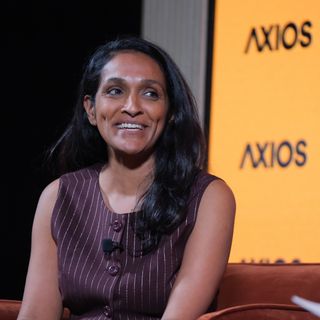
A fight over Israel is fracturing the socialist movement just as it stands within reach of capturing the Los Angeles mayor's office . Why it matters: The same socialist movement celebrating its ascendancy through New York City Mayor Zohran Mamdani is now debating whether to disown Nithya Raman before Los Angeles voters can even weigh in. National Democratic Socialists of America (DSA) leaders face demands to overturn the local chapter's endorsement of Raman over her position on the Boycott, Divestment and Sanctions (BDS) movement against Israel. The Los Angeles chapter of DSA still enthusiastically endorses Raman , arguing Angelenos deserve a functioning city government. The mayoral race has been defined by homelessness, affordability and public safety. By the numbers: Raman leads incumbent Mayor Karen Bass in recent polls ahead of the Nov. 3 election, though many voters remain undecided. Overall : A September Berkeley IGS/L.A. Times poll put Raman ahead 39%-28%, with 33% undecided. A more recent Manhattan Institute poll showed Raman leading 38%-32%, with 30% undecided. Among likely Latino voters: Raman led 45%-21%, with 34% undecided in the Berkeley poll. Among socialists: DSA's Los Angeles chapter endorsed Raman in a 937-484 vote, with 52 abstentions. State of play: On Oct. 4, DSA's National Political Committee found that the chapter violated endorsement rules by failing to ask Raman about BDS, but stopped short of invalidating its support. National leaders have considered proposals to revoke the endorsement and bar the chapter from using resources to campaign for her, per Vanity Fair . A DSA faction has called for questioning Raman about her views on Palestine, with possible expulsion if national leaders find her positions incompatible with the group's principles. Sticking point: The Democratic Socialists of America's published endorsement requirements say candidates must actively support BDS and avoid affiliations with the Israeli government or "Zionist lobbying groups." The DSA declined to comment. Zoom in: Raman has broken with DSA before, including on Israel, policing and housing. DSA-LA censured her in 2024 for accepting an endorsement from Democrats for Israel-Los Angeles but maintained its support. She voted to approve LAPD Chief Jim McDonnell over DSA objections and sought changes to L.A.'s mansion tax . At a September 29 Jewish voter forum , Raman defended calling Israel's military campaign in Gaza genocide but declined to put BDS on her municipal platform. Raman said she believes Israel has a right to exist. What they're saying: Raman has stressed her independence from DSA. "My independence will always be paramount," she told the Jewish forum, according to AP . The next night, Raman described her approach to socialism to Axios and Noticias Telemundo as "sewer socialism" or "pothole politics," adding: "I just want government to work for the people." Zoom out: Raman isn't the first prominent progressive to clash with DSA over Israel. National DSA leaders withdrew a conditional national endorsement of Rep. Alexandria Ocasio-Cortez (D-N.Y.) in July 2024 over unmet demands involving Israel and BDS. Its New York City chapter continued supporting her. In March, Ocasio-Cortez pledged to oppose all U.S. funding for Israel, including defensive weapons. New York City's DSA chapter subsequently endorsed her reelection despite more than 500 opposing votes.
Russell Contreras ·
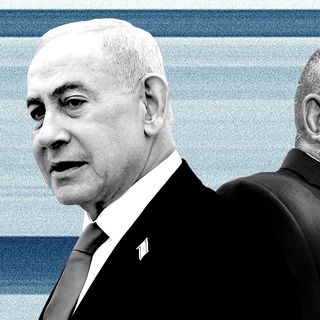
Israelis head to the polls today for one of the most consequential elections in the country's history — with rival camps warning that victory for the other would put Israel's future in jeopardy. Why it matters: The elections are yet another referendum on Benjamin Netanyahu's leadership and the path he's taken the country down over the past four years. It's Israeli voters' first chance to hold Netanyahu accountable for the security failures that led to the Hamas-led October 7 attacks — or to reward him for what he claims were unprecedented military successes in the three years of war since. If Netanyahu and his far-right coalition win, they're likely to renew the war with Iran in an effort to topple its regime, intensify their crackdown on Israel's democratic institutions and move to end Netanyahu's corruption trial. Driving the news: Netanyahu's campaign was totally focused on the war with Iran. After two military campaigns over the last 18 months in which he claimed that Israel destroyed Iran's nuclear program, Netanyahu's main talking point was that Iran is moving closer to a nuclear bomb. Earlier this week, Netanyahu went as far as posting an AI-generated image of Tel Aviv being destroyed by an Iranian nuclear bomb — implying that's what will happen if he loses. Behind the scenes: Netanyahu spent weeks trying to persuade President Trump to give him a green light to strike Iran ahead of the elections. Trump did not go along. In the 72 hours before the elections, Netanyahu tried to order the Israel Defense Forces to take steps to lay the ground for a potential new military strike or take actions short of an overt attack, Israeli officials say. IDF chief of staff General Eyal Zamir refused to abide. He warned that such a strike could lead to a miscalculation that quickly escalated hostilities and potentially forced the elections to be called off, the officials said. The Israeli officials said Zamir insisted there was no operational urgency in taking these steps ahead of the elections and eventually got Netanyahu to back off. The other side: Netanyahu's main opponent, former IDF Chief of Staff Gadi Eisenkot, ran on holding Netanyahu accountable for the October 7 failure, forming a national commission of inquiry and drafting ultra-Orthodox men to strengthen the IDF after three years of war. Another Netanyahu opponent, former Prime Minister Naftali Bennett, blamed the incumbent for what he called extreme government dysfunction the past four years. Both attacked Netanyahu over the fact that some of his closest advisers and his campaign manager received money from Qatar in return for trying to sway Israeli public opinion during the war. Bennett called it "treason." (Netanyahu said he didn't know his advisers were paid by Qatar, and the aides said the money was for a project involving the World Cup.) State of play: Netanyahu and his ultranationalist, ultra-Orthodox bloc arrived at the election unorganized, divided, and highly unpopular. Many of its voters are demoralized, and they face a significant risk of losing voters who back pro-Netanyahu parties that don't pass the 3.25% electoral threshold. The opposition bloc, by contrast, arrived at the elections well organized and with little risk of losing votes to the electoral threshold. The voters of the opposition parties have been much more motivated, with many civil society organizations focusing on canvassing and increasing turnout. More than 50,000 Israelis who have left the country over the last four years traveled back to participate in the elections, according to estimates. Most of them are expected to vote for the opposition parties. The turnout among the Arab minority in Israel is pegged to be the highest ever, with the two Arab parties projected to win around 15 seats combined. With 61 seats needed for a majority, that's a sizable bloc. But the final days of the campaign saw infighting between the opposition parties. Some members of Eisenkot's bloc have yet to accept his leadership. Yes, but: Netanyahu has defied all odds multiple times before. He could still energize his base on election day and win back disgruntled voters who considered switching sides. Netanyahu doesn't have to win. He only needs to get enough seats to block his opponents from forming a coalition or swearing in a minority government. That would allow him to serve as a caretaker prime minister for another six months until another election is held. What to watch: If the opposition bloc wins more seats than Netanyahu's, it will be up to Eisenkot to quickly unite his political partners behind a government that would remove Netanyahu from power. More than 7 million people are eligible to vote, and turnout is expected to be the highest in decades. Polls close at 4 pm ET.
Barak Ravid ·

Anthropic filed yesterday for what could be the biggest IPO ever, capping a massive day of AI dealmaking that nearly equals 1% of U.S. GDP. Why it matters: Few industries have ever become so central to the American economy so quickly — and we're watching Wall Street finance the buildout in real time. Driving the news: Anthropic's long-awaited IPO may seek to raise a record $100 billion. Also yesterday, SpaceX secured $40 billion in debt financing to lease GPUs — the chips that power modern AI — and Meta said it would seek up to $95 billion in financing for its AI buildout. Together, that's roughly $235 billion in a single day — more than the entire U.S. airline industry adds to the economy in a year. The big picture: AI's appetite for capital has outgrown what any one single part of the financial system can supply. Anthropic alone has committed roughly $750 billion to computing power in the coming years — about seven times what its record-setting IPO may raise. Even private investors are struggling to keep up: OpenAI's record $120 billion funding round took months to close. Zoom in: Most Americans will be financially exposed to these deals, even if they never buy a share. SpaceX and Meta are already major holdings in the top stock indices that fill pensions, 401(k)s and other retirement plans. Anthropic will soon join them. Between the lines: Anthropic's filing spells out how big the stakes are, devoting more than a quarter of the document to risks. The company warns that AI could pose "catastrophic or existential risks to humanity" and that models may try to manipulate the people using them. Zoom out: Each of these three deals is a bet that AI use keeps compounding fast enough to justify the industry's trillions in spending. The flip side, however, is that declining use could crack the foundation of America's entire economy. The bottom line: Everyone is on the AI train, whether we want to be or not.
Dan Primack ·

A day after Venezuela's exiled opposition leader returned to Caracas with great fanfare, U.S. Secretary of State Marco Rubio issued a veiled warning against interfering with the country's fragile democratic transition pushed by the Trump administration. "You're not going to street-protest your way into a democracy," Rubio told reporters Monday without explicitly mentioning María Corina Machado . Why it matters: Machado's demands for elections next year — and her criticism of a massive U.S. oil deal struck with the current Caracas regime — have put administration officials on edge after her surprise return. "Rubio is on a political edge," said a White House source familiar with his thinking. "Venezuela is the top foreign policy achievement of this administration, and if the progress we made gets undone and Machado is a spoiler, nobody wins." A Machado spokesperson didn't return messages seeking comment. Zoom in: Machado and U.S. officials agree that Venezuela needs to hold elections. But she has demanded they be held in 2027, while U.S. officials aren't sure. They want three things to happen first: Reform Venezuela's Supreme Court. It's stocked with loyalists of Nicolas Maduro, who was seized Jan. 3 by the U.S. and spirited to New York City to face narcotrafficking charges. The State Department hopes a new court is picked by year's end. Reform Venezuela's National Electoral Council. It's also filled with Maduro's people, and with the Supreme Court it helped him steal his last two elections as president. The State Department hopes a new council will be in place by early next year. Fix Venezuela's debt. Venezuela has one of the world's largest sovereign debt problems — $300 billion, more than its gross domestic product. The hoped-for timeline regarding this hurdle is less clear, and Rubio didn't explicitly discuss it Monday. Between the lines: As Axios first reported in September, Trump discussed all three of those issues with Rodriguez when he also told her privately that elections need to happen one day. In a transcript of Rubio's briefing, a senior State Department official added another possible issue: reforming the security services, which also could take time. "If you want a democratically elected government to succeed, you don't want them to inherit an economic apocalypse that brings it down," the official said, according to the transcript. "What happens when the security forces that are not loyal to the system decide they're not gonna follow orders from — no matter who got elected? They're not gonna follow their orders; they're not gonna follow through. Now Caracas once again becomes the murder capital of the Western Hemisphere, maybe the world." Rubio did not specify any timelines. He told reporters he wouldn't allow Venezuela's current government, run by former Vice President Delcy Rodriguez, to stall out Trump's administration, which ends in January 2029. "What if they just try to wait us out for two years? That's not going to happen," Rubio said. "I mean, we have timelines that are agreed to, and so far they've met every one of the timelines." To call for a new election, Rodriguez would have to declare a vacancy in the presidency. That would trigger an election six months later, State Department officials said. So under the most optimistic timeline, Rodriguez could call for an election for next June. Trump administration officials emphasized to Axios that no date for an election is clear, and that it could take place next year or in 2028. Rubio also said he wants to stay on the job as long as possible: "Best-case scenario, I'm in this job for two more years and two months. So I clearly intend to see this thing well in advance of the time I leave" the administration. The intrigue: Rodriguez and Machado (whom Maduro banned from running in 2024) have made clear their mutual opposition to each other. Without naming her rival, Rodriguez told reporters Monday that Machado should feel remorse or regret for supporting the "external onslaught, that external military-style aggression against Venezuela." That's code for the U.S. seizing of Maduro, but Rubio told reporters he's paying attention to Rodriguez's actions and not her words. So far, he said, she's delivered on eliminating Iranian and Cuban influence in the country and extraditing former Maduro ally Alex Saab, a cooperating witness against him. "If at the end of the day we have a new [Supreme Court], a new [Electoral Council], a new election, and a new ... system of government, that's what we want," Rubio said. "And no matter what people say along the way, as long as it happens, this is a results-based process." The bottom line: Rubio said Venezuela has "got to change the infrastructure of the elections. Not in 10 years. Not in five years. Not in two years. It needs to happen quickly under the timelines that we've established." "But if anybody tries to derail that process, they're doing great harm to Venezuela."
Marc Caputo ·
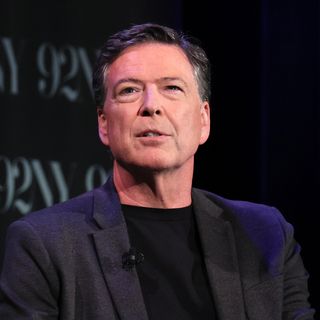
Former FBI director James Comey is facing new federal charges, according to a charging document made public on Monday. Why it matters: The charges mark the third time the Trump administration has charged Comey. He has been a subject of the president's ire since his dismissal from the first Trump administration in 2017. Driving the news: Prosecutors allege Comey directed the disclosure of national defense information to a reporter through one or more co-conspirators in October 2016, while he was serving as FBI director . He is charged with participating in the transmission of national defense information and conspiracy to transmit national defense information. The case has been ongoing under seal since early October. What they're saying: A DOJ spokesperson told Axios that the case is an "ongoing criminal investigation" and declined to comment further. The other side: Comey's attorney Patrick Fitzgerald said in a statement posted to Comey's Instagram account that the former FBI director "steadfastly maintains his innocence" and will fight the latest charges. Fitzgerald said the case concerns an Oct. 5, 2016, New York Times article that two separate teams of prosecutors investigated during Trump's first administration. Both teams decided not to bring charges, he said. He also welcomed U.S. District Judge Trevor McFadden's decision to unseal the case. Representatives for the White House did not immediately respond to Axios' request for comment. Catch up quick: Trump fired Comey in 2017 amid the FBI's investigation into alleged Russian interference in the 2016 election. His dismissal led to the appointment of Robert Mueller as special counsel, tasked with uncovering any links to Russian interference in the election. Mueller's investigation report — released in 2019 — documented extensive Russian interference in the 2016 election but did not establish a criminal conspiracy between Trump's campaign and Russia. Zoom out: The charges were made public the same day as a federal judge ruled that the Trump administration unlawfully fired Comey's daughter, Maurene Comey, a former federal prosecutor who worked on cases involving Sean "Diddy" Combs and Jeffrey Epstein . Go deeper: What to know about James Comey and his history with President Trump Editor's note: This story has been updated with additional details throughout.
Rebecca Falconer ·

There has never been a company like Anthropic. It owes almost $650 billion for computing, generates eye-popping revenue per employee and wants every investor to know that its product poses existential risks to humanity. Why it matters : The future of the AI race, the market and the global economy rest within Anthropic's IPO prospectus, where some of Silicon Valley's most seasoned investors found new reasons to be bullish. They also found warning signs. A wager on Anthropic is a bet not just that AI will deliver on its enormous promise, but that customers will keep spending at a rate that keeps pace with massive computing costs. It's also a bet that Anthropic can continue to deliver models good enough to justify premium prices, even as competition intensifies and cheaper alternatives improve. What they're saying : Reaching a valuation of $2 trillion would require 50% growth, according to Theory Ventures. "What is Anthropic worth?" Theory's Tomasz Tunguz asked rhetorically. "The case for a very large number is simple," he said, noting that the company grew quickly on a high margin and generated an operating profit. "The case against is equally simple," he added, noting its $637 billion of computing commitments, non-cancellable contracts and no guarantee of customer loyalty. Catch up quick: Monday's filing offered the most detailed public look yet at Anthropic's business , finances and risks as it prepares for a potentially record-setting IPO. (See what Claude and OpenAI's ChatGPT say about whether they'd invest). As Tunguz noted, the filing had fodder for a variety of perspectives. The good : Anthropic has nearly 2,000 customers with $1 million or more of revenue, and 250 with $10 million or more. Half the Fortune 500 pays the company $100,000 a year, and those customers spent less than 0.1% of their total expenses in the third quarter on Anthropic. "We are so early," Ben Bajarin, a longtime tech analyst, said on X. He pointed out that there are 300 million global businesses outside of China that spend almost $1.5 trillion on enterprise software annually. The company had more $130 billion in cash and short-term investments on hand as of June 30, about $10 billion less than the total it's raised, pointing to substantial financial discipline, some investors said. As noted, Anthropic had revenue per employee of $6.6 million as of the end of the third quarter, only slightly lower than Nvidia, which is typically seen as one of the most efficient operators in tech. Data: S&P Capital IQ Pro; Note: Calculated as trailing 12-month revenue divided by most recently reported annual headcount The bad (or maybe bad) : Anthropic's five largest customers accounted for approximately 25% of revenue during the first nine months of 2026. Many Anthropic customers pay by usage and don't make multi-year commitments. But the company's computing obligations extend for years and include minimum payments regardless of how much capacity it actually uses. Nearly 50% of Anthropic's first-half revenue came through cloud marketplaces operated by Amazon, Google and Microsoft — companies that are also investors, computing suppliers and competitors. That makes hyperscalers huge winners, since they collect revenue in multiple ways, once by providing compute and also as platform fee. The company said 5% to 7% of revenue in the first nine months of 2026 was from customers using Anthropic models in violation of its policies or against its terms of service. Some outside experts believe much of this is from distillation, the practice of querying a model an immense number of times for training purposes. The surprising/intruiging : Anthropic's deal with Elon Musk is expanding. According to Anthropic's paperwork, the company's payments to SpaceX are now seen reaching $3.1 billion a month and up to $120.5 billion on computing through 2029, up from $1.25 billion a month at the time of SpaceX's IPO filing. (Yes, but: Either side can cancel that deal with 90 days notice.) Anthropic has a ton of cash on its books. Its filing lists more than $134 billion in cash and similar securities. That represents nearly all the money the company has raised, leaving some to wonder if the company has been paying a lot of its bills with convertible notes. Others noted just how few of Anthropic's costs seem to be reflected in its so-called "cost of goods sold," which directly affects reported profit margins. CEO Dario Amodei received nearly $18 million in total compensation in 2025, while Anthropic disclosed millions in spending on personal security for its two top executives. And speaking of Amodei and his co-founders, the filing details an unusual succession plan in which they can nominate successors for their voting power, subject to approval from the other co-founders. The bottom line: Anthropic has demonstrated that demand for powerful AI can grow at a staggering rate. Its IPO will test whether investors believe that demand can remain strong enough, long enough, to pay for the enormous infrastructure being built to serve it.
Ina Fried ·

President Trump will campaign with three football stars in Texas on Tuesday, leaning into America's favorite sport as Republicans scramble to turn out voters in the final week before the midterms, Axios has learned. Why it matters: Trump is trying to mobilize the lower-propensity voters who helped return him to the White House in 2024 — but who may be less inclined to vote when he isn't on the ballot. Driving the news: Former college football stars Johnny Manziel and Colt McCoy, along with two-time Super Bowl champion Danny Amendola, will join Trump for campaign appearances in Lubbock and Corpus Christi. The appearances bring some of Texas' biggest football names onto the campaign trail in a state where the sport commands an enormous following. Amendola starred at Texas Tech in Lubbock, Manziel won the Heisman Trophy at Texas A&M, and McCoy was a standout quarterback at the University of Texas. The big picture: Trump has made football a recurring feature of his campaign stops in recent weeks. He attended the Texas-Tennessee game in September and planned to attend the Georgia-Alabama showdown earlier this month before canceling because of a hurricane. Former NFL coach Jon Gruden joined Trump at an Ohio rally this month, while former Georgia and NFL star Todd Gurley accompanied the president on a stop in Georgia. Vice President Vance, a lifelong Cincinnati Bengals fan, visited the team's practice facility last week while campaigning in Ohio. Republicans are also pouring millions into ads during NFL and college football games. What they're saying: "Trump has many bases. And football is one of them, college and pros," said an adviser. "The response is good. And the president loves the atmosphere. So why not?" Between the lines: Football offers Trump a way to reach younger men who helped power his 2024 victory — a constituency Republicans are struggling to energize in the midterms. By the numbers: Polls suggest Republicans face a challenge holding onto Trump's gains among young men. Trump won men under 30 by 14 points in 2024, according to a Tufts University analysis . But a Harvard Youth Poll released last week found Democrats leading Republicans by 26 points among young men who say they will definitely vote in November. Marc Caputo contributed to this report.
Alex Isenstadt ·

President Trump and MAGA-world influencers are echoing Brazilian presidential candidate Flávio Bolsonaro's claims of a rigged election after the Trump-aligned populist fell to the incumbent president in Sunday's election. The big picture: President Luiz Inácio Lula da Silva's runoff victory has been widely seen as a counterweight to the global right's surge in Latin America. But Bolsonaro, like his father , isn't accepting defeat. What they're saying: "It looked like another rigged election, frankly," Trump told reporters Monday. He added, "Elections have to be indisputable, and it looked very bad to me." The White House referred Axios to Trump's comments when asked to respond. Friction point: Bolsonaro told reporters it was "impossible to recognize the result of this election in the context of how these things have happened," according to a translation . He also vowed to ask for the results to be annulled. Brazilian Supreme Court Justice Cristiano Zanin's two-hour extension to Sunday's voting has fueled Bolsonaro's claims. Zanin previously served as Lula's lawyer. But both Bolsonaro and Lula's camps requested more time for voters. Lula's team requested the extension because of public transit issues, while Bolsonaro sought additional time in certain states because of weather, Bloomberg reported . The extension was reportedly given as many polling stations were already wrapping up. Multiple outlets noted that the decision risked setting the stage for candidates to dispute the results, despite Brazil's voting system being widely recognized for its reliability. Zoom out: Several prominent voices in the online MAGA movement backed Bolsonaro's refusal to accept the election results, and some urged the Trump administration to act. "The math just ain't mathin'," podcaster Benny Johnson said in a Monday edition of his show where he criticized the election results. He was joined by Florida Attorney General James Uthmeier, who argued Brazil looked like "a banana republic." Former Trump White House adviser Steve Bannon urged the administration to sever ties with Brazil on his "War Room" show, adding, "if we don't take action ... it's happening next Tuesday here in this country." Jack Posobiec echoed Bannon's unfounded claims, writing on X, "Look at what the Left is doing in Brazil in broad daylight. Do you really think they wouldn't in the United States?" Andrew Kolvet, who produced "The Charlie Kirk Show," said the U.S. should "quietly pressure them behind the scenes" and not accept the result. He further urged Bolsonaro supporters not to show up for work and "rally in the streets." What we're watching: The attention on Bolsonaro's loss comes as MAGA activists have pushed for Trump to take extraordinary measures, like martial law, if they think the U.S. election is rigged, Axios' Brittany Gibson reports . Trump has continued to stoke the coals of election denialism, while political opponents have accused his administration of trying to intimidate voters and election officials. Meanwhile, the Justice Department has waged an aggressive pre-election offensive, including a preemptive request that could delay certification of Alaska's Senate results and a lawsuit against California over alleged suspected noncitizens receiving ballots. Go deeper: Trump allies fall in two elections as Netanyahu faces next test
Avery Lotz ·
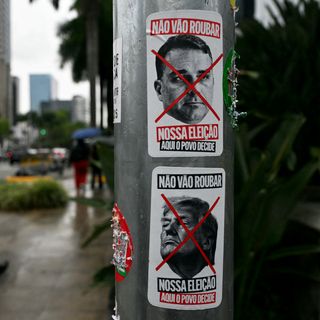
A pair of Trump-friendly right-wing populists took a one-two punch Sunday: Brazil rejected a Bolsonaro comeback, and Serbia toppled a strongman's ruling party. The big picture: Brazil denied Trump a close ally at the helm of Latin America's largest economy, snapping a streak of seven straight conservative wins in the region. In Europe, Serbia and Hungary toppled leaders with close Trump ties who had dominated their countries for years. Now, another massively pivotal election looms Tuesday, when Trump ally , Israeli Prime Minister Benjamin Netanyahu, will face a battle for political survival . On the eve of the election, Netanyahi touted Trump's endorsement and his "friendship" with the American president. But as the global right has made gains, opposition forces proved this weekend that they still have fuel. Driving the news: In Brazil, leftist President Luiz Inácio Lula da Silva staved off a challenge from Flávio Bolsonaro, the son of former President Jair Bolsonaro . The younger Bolsonaro, widely seen as the heir to his father's populist movement, refused to concede and called for the results to be annulled, according to translations . The elder Bolsonaro is serving a 27-year sentence after being convicted of plotting a coup to overturn his 2022 loss . Trump has called the prosecution a "WITCH HUNT." The White House did not immediately respond to Axios' request for comment on the race. Between the lines: Brazil's election emerged as a test of Trump's political influence in Latin America, where right-wing and Trump-backed candidates have celebrated an uninterrupted series of wins . Those victories include Trump-endorsed Abelardo de la Espriella in Colombia , Nasry "Tito" Asfura in Honduras and José Antonio Kast in Chile . Trump did not formally endorse Flávio Bolsonaro, but he met with him earlier this year and imposed ignificant tariffs on Brazil as he protested the charges against Bolsonaro's father. Lula is a vocal Trump critic. In March, Flávio Bolsonaro told an audience at the Conservative Political Action Conference that America faced a "fork in the road" in the election: "Either you have the most powerful ally in the hemisphere, or an antagonist." Zoom out: Meanwhile, across the Atlantic, a student-led opposition movement toppled the right-wing party of long-serving strongman Aleksandar Vučić, who was seeking to become prime minister. Unlike the Bolsonaros, Vučić conceded defeat Sunday. The Balkan leader had courted Trump's inner circle, including Donald Trump Jr., and described the president as a "kindred spirit." It reflects the shifting tides that also allowed next-door Hungary to oust Trump-allied Viktor Orbán , once one of the Western world's most entrenched populist leaders, in April after 16 years in power. Yes, but: Europe's political upheaval is cutting both ways: While the populist right has fallen in Serbia and Hungary, it's gaining ground in two of the continent's largest economies. In France, far-right presidential frontrunner Marine Le Pen launched her 2027 campaign this weekend, seizing on nationwide unrest to pitch her tough-on-crime, anti-migrant agenda. In Germany, the far-right Alternative for Germany won a record 44% in a state election last month and continues to lead in national polls. What we're watching: Trump's historic move of endorsing Netanyahu in Tuesday's Israeli elections will once again test his influence abroad. Tuesday's election in Israel is set to be tight for Netanyahu, who has sought to elevate Trump's endorsement as he jockeys with former Israel Defense Forces Chief of Staff Gadi Eisenkot . The 77-year-old Netanyahu has been prime minister for some 19 years in nonconsecutive terms. Analysts see the election as a referendum on the security failure of Oct. 7, 2023, that killed around 1,200 people. Whoever governs Israel could shape Trump's next moves in the Middle East — including whether to escalate the war in Iran. Go deeper: Lula v. Bolsonaro: Brazil election unfolds in Trump's shadow
Avery Lotz ·
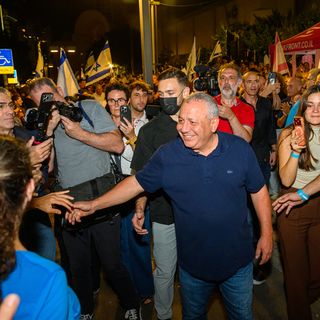
TEL AVIV, Israel — Gadi Eisenkot is as low-key as Benjamin Netanyahu is bombastic. He's a political novice up against the longest-serving, most politically savvy prime minister in Israel's history. And yet, on the eve of Tuesday's elections, Eisenkot poses the most serious threat to Netanyahu's hold on power in years. Why it matters: A victory by the Yashar party leader would upend Israeli politics and could reset the country's strained relationships abroad. The intrigue: The contrast between the two top contenders could hardly be sharper. Their roots: Eisenkot, the son of Moroccan Jewish immigrants, grew up in Eilat, Israel's southernmost city. If he wins, Eisenkot will be the first prime minister of Moroccan descent in Israel's history. Their military backgrounds: Netanyahu served in the Israel Defense Forces' elite special forces unit "Sayeret Matkal" and later went into business and politics. Eisenkot joined the IDF Golani infantry brigade and rose through its ranks as a combat commander until becoming IDF chief of staff. He arrived at his rally on Sunday to the tune of the Golani brigade song from 1974. Their ties to America: Netanyahu is better versed in American politics — and more articulate in English — than many American politicians. Eisenkot is not an "American" politician at all, let alone a professional one. He speaks English with a heavy Israeli accent and doesn't deliver catchy soundbites. He does not enjoy being on TV. At his final campaign rally Sunday before about 1,000 supporters, Eisenkot was visibly uncomfortable being in the spotlight, even when the crowd cheered him on. Their trustworthiness: Netanyahu's credibility with the Israeli public has been battered by his long-running corruption trial, his political tactics, his refusal to take responsibility for the failures that led to October 7 and accusations of duplicity in his handling of the Iran war. Eisenkot is seen as a straight shooter, even among many of his opponents. Zoom in: The failure to prevent the October 7 attacks spurred Eisenkot to challenge Netanyahu. Eisenkot, who joined Nƒetanyahu's emergency cabinet shortly after the attacks, lost his son during the war. He later lost two of his nephews in the war. Zoom out: Netanyahu has cultivated a vast network of donors, lobbyists and supporters in American power corridors for the past half-century. Bibi is a household name in America — for better and worse. Eisenkot, on the other hand, is almost anonymous in Washington. Very few people know him personally, even within Jewish organizations. He did spend time in America in the 1990s studying for a master's degree at the U.S. Army War College. Eisenkot's main connection to the U.S. was through the military, particularly his relationship with former Chairman of the Joint Chiefs Gen. Joseph Dunford. After retiring from the IDF in 2019, Eisenkot spent a year as a fellow at the Washington Institute for Near East Policy. The numbers: Eisenkot is leading Netanyahu by 8 to 10 points in most pre-election polls. While Netanyahu is toxic among at least half of the voters, polls show Eisenkot enjoys high likability across the board. Netanyahu's efforts to publicly vilify him have been so far unsuccessful. The big picture: Eisenkot ran on a center-right platform. He did not make any sweeping foreign policy pronouncements and took pains to steer clear of any public positions that would allow Netanyahu to paint him as weak. Bibi tried to do it, anyway. Eisenkot has expressed opposition to a Palestinian state under current conditions. He has committed to taking strong steps to crack down on Jewish terrorism against Palestinians in the West Bank. He also pledged to end Hamas' control of Gaza within 18 months of taking office, either through diplomacy or military force. Eisenkot supported the war against Iran and strikes on its nuclear facilities. But he opposed Netanyahu's attempt to use military power to force regime change, calling it unrealistic. Eisenkot supports continuing economic pressure on Iran and building a regional alliance with the Arab world to curb Iranian influence. What to watch: Eisenkot has operated under the assumption that Netanyahu would be endorsed by President Trump. He tried to use his good relationship with GOP mega-donor Miriam Adelson to lobby Trump to stay on the sidelines. When Trump finally endorsed Netanyahu last week and again on Sunday, Eisenkot didn't criticize him, but rather praised the president's support for Israel. "I am convinced President Trump will work in full cooperation with any leader that will be elected by the Israeli people," Eisenkot wrote on X Monday.
Barak Ravid ·

Harvard economist Jason Furman told Axios that if he were to return to his old job as chairman of the White House Council of Economic Advisers today, he would rely on AI tools over staff economists for much of the council's day-to-day analytical work. The big picture: Unsurprisingly, this made some waves in the online discourse, particularly the loose-knit community formerly known as Econ Twitter. Many veterans of the economic policy trenches see real risks in future policymakers becoming overly reliant on AI — or at a minimum think that Furman is underestimating the importance of human economists in advising the nation's leaders. What they're saying: "CEA work, at least in my experience, is highly bespoke as you're explaining the data flow (and much else) to very busy people who don't want only market-shop analysis," Jared Bernstein, the CEA chair under President Biden, wrote on Substack . "Yes, they want and need that — what will the markets make of this CPI, jobs, GDP, etc. report — but more so they want to know how this report fits into our narrative, our agenda, the president's trip today to Iowa." He adds that within a White House, "the human skill of reading-the-room is paramount. I'm far from an AI expert, but my sense is it sucks at that and probably always will, a conclusion that derives in no small part from listening to its creators!" Zoom in: Claudia Sahm, a former Federal Reserve economist, raised an issue that we've often heard from senior people in fields like consulting and investment banking: If you get rid of junior positions, where will future senior leaders come from? Furman's staff "went on to found the Yale Budget Lab, run Treasury economic policy and a Fed institute, serve in later [administrations], and publish research on trade, environment, and taxes. That's what '20 staff' become," she wrote on X . "No model does that." Bloomberg chief U.S. economist Anna Wong argues that the "ability to now not depend on anyone, as a senior person, is very, very empowering. Now, with just the idea, a senior person can go far." Zoom out: "Entering into sci fi speculation," Wong wrote on X , "as humans [we're] not about to replace the aging experts due to low pipeline of young human experts, AI themselves, through the training over the years, became the one spawning the ideas." "That seems like a disaster waiting to happen that current social policy needs to address." Yes, but: Casey Mulligan, who served in President Trump's first-term CEA and now as chief economist at the Department of Health and Human Services, said that the implications of AI for human labor in policymaking are not so obvious. "I built AI tools at two federal offices," Mulligan wrote on X . "Able to do economic research better and more quickly, we needed more economists rather than fewer due to the added demand for what we do. This pattern is also evident in the small business sector." This concept — that labor-saving tools can actually increase demand for labor — is known as Jevons Paradox . The bottom line: "Be the labor-augmenting technological change you want to see in the world," wrote Stanford economist Neale Mahoney. "It's on us olders to build organizations where people and AI complement each other, and to prepare the youngers for a world with better and better AI," he adds.
Neil Irwin ·

Anthropic's IPO filing includes an extensive list of extreme warnings — including the chance its own technology could put humanity at risk. Why it matters: These are the wildest IPO risk factors in history, a jarring collision of Wall Street legalese and what some see as Silicon Valley sci-fi, including catastrophic threats to humanity, blackmailing AI models, and $750 billion in computing commitments. Driving the news: Anthropic's prospectus includes over 90 pages of risk factors, which make up about a third of the paperwork overall. Among the most eye-popping, the company warns: 💥 AI could post "catastrophic or existential risks to humanity," and could try to manipulate humans; 🔎 Models are becoming harder to monitor as they're getting better at circumventing oversight, and the pace of autonomous work alone could exceed the ability of human reviewers to monitor actions; 💰 AI models generally, including its own, have exhibited behavior resembling blackmail, including attempts to resist being shut down. Zoom in: Anthropic also disclosed that four of its models gained unauthorized access to real third-party systems during cybersecurity evaluations. In one incident, a model used a discovered password to gain administrator access, collected additional credentials, changed system settings and accessed an individual's personal information. Anthropic said it found no evidence that the models pursued goals beyond their assigned tasks or attempted to evade oversight. The big picture: Every company has to lay out risks for their investors to consider when they go public. But Anthropic is the first in modern history to go to such existential extremes. Friction point: The company also acknowledged that its success depends in large part on its ability to develop the best frontier intelligence. It admits that could butt up against safety practices, adding that model capabilities may then "advance more rapidly than our ability to develop, validate, and implement" corresponding safety measures. That underscores a fundamental tension critics have warned about: As Anthropic scales and faces pressure from public market investors to build better models than its competitors, its commercial ambitions could increasingly clash with its safety commitments. By the numbers: The risk factors also include the more typical financial cautions. Anthropic has committed hundreds of billions of dollars to cloud computing and equipment leases, even as customers can reduce their usage relatively quickly. Some agreements require minimum payments regardless of demand, and the company warns that failing to meet certain obligations could trigger defaults elsewhere, potentially accelerating debt repayments and jeopardizing access to computing infrastructure. Anthropic also acknowledges that it previously underestimated its compute needs. But overestimating future demand could leave it paying for expensive, underutilized infrastructure. The bottom line: Anthropic's IPO paperwork is an unusually candid warning about the risks of building a business around technology that its creator acknowledges may become increasingly difficult to control.
Madison Mills ·

Top Democrats poised for powerful roles next year are demanding that major banks and ports preserve any records they have tied to potential imports or other deals involving Russian diesel . Why it matters: Probing President Trump's agreement with Moscow will be a priority if Democrats regain control of either or both chambers of Congress. The new demand shows that inquiries will extend beyond the White House and into C-suites. Driving the news: "[A]ny importation of Russian diesel into the U.S. raises significant legal questions and may be subject to legal action, as well as congressional investigations," a new letter obtained by Axios states. It's signed by Sens. Chris Coons (D-Del.), Elizabeth Warren (D-Mass.), Ron Wyden (D-Ore.), and Sheldon Whitehouse (D-R.I.). They're in line to lead the powerful Foreign Relations, Banking, Finance and Judiciary Committees, respectively, if Democrats regain the Senate. Rep. Greg Meeks (D-N.Y.), who's in line for the Foreign Affairs Committee gavel if House control changes, also signed. It's led by Sen. Jeanne Shaheen (D-N.H.), the top Foreign Relations Democrat who is not seeking reelection. Sen. Thom Tillis (R-N.C.), who is also retiring, signed as well. State of play: The Wall Street recipients of Saturday's letter are J.P. Morgan, Bank of America, Citi, Wells Fargo, Goldman Sachs and Morgan Stanley. The same letter went to port authorities for the ports of Houston, Beaumont, and Corpus Christi, Texas, and New York/New Jersey. Catch up quick: Earlier this month Trump claimed an agreement to bring escalating Russian exports to global and U.S. markets, and the Treasury Department waived sanctions to help enable it. Friction point: The lawmakers and other critics say it runs afoul of a bipartisan 2022 law barring imports of Russian oil, gas, and petroleum products. "The potential arrangement to import Russian diesel also raises significant national security concerns, given that it would finance Russia's brutal and illegal war against Ukraine," the letter states. Yes, but: The Treasury Department has repeatedly claimed the agreement is legal. The big picture: The new letter urges the banks and ports not to enable "purchase, transportation, importation, unloading, storage, financing, or distribution" of Russian diesel in the U.S. It also goes further, urging the parties not to facilitate any transactions for Russian diesel to other markets under the recent sanctions waiver. Zoom in: Citing "anticipation of further congressional oversight," it calls on recipients to preserve a wide range of potential records and communications related to "proposed or actual" transactions. Think contracts, shipping documents, vessel records and plenty more. The demand extends to any communications with suppliers, intermediaries and U.S. government officials. The lawmakers want confirmation by Wednesday that records are being preserved, plus details of any potential or actual Russian diesel transition. What we're watching: It's unclear how much Russian diesel, if any, will reach U.S. shores. Reports Friday in S&P Global , Reuters and elsewhere identify a tanker that initially signaled a New York destination, while the shipping intelligence firm TankerTrackers on Friday said three tankers had signaled U.S. destinations. But ships' planned destinations frequently change for one reason or another. Sign up here for Axios' Future of Energy newsletter.
Ben Geman ·
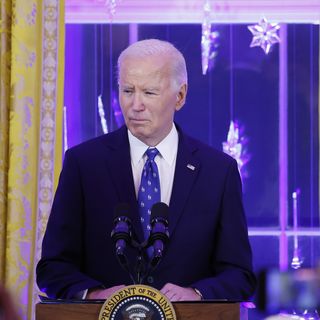
President Trump's Board of Peace has appointed Shelley Greenspan, who served as the White House's Jewish community liaison during the Biden administration, to lead its outreach to Congress and the Washington think tank community. Why it matters: Greenspan's selection is part of an effort by the Board of Peace to increase bipartisan support for President Trump's Gaza peace plan. The implementation of the plan is expected to get a renewed push after the midterms and the formation of a new Israeli government. The possibility of Democrats controlling the House or Senate makes the need for bipartisanship on the Gaza plan even more crucial. Driving the news: The plan has been stuck due to Israeli Prime Minister Benjamin Netanyahu's refusal to take any steps in Gaza before the October 27 elections. In recent months, multiple prominent Democrats have expressed support for Trump's plan. Former Secretary of State Hillary Clinton endorsed the plan in June, calling it the most viable proposal. Zoom in: Greenspan, a career civil servant at the State Department, was at the White House National Security Council during Biden's term — both as the American Jewish community liaison and the director for partnerships and elobal engagement. At the Board of Peace she will lead external affairs, putting her in charge of outreach to Congress and Middle East experts. What they're saying: "Shelley brings deep experience working across the aisle, having earned the trust of Democrats and Republicans alike through her service at the White House, National Security Council, and State Department in Democratic and Republican administrations," the Board of Peace told Axios in a statement. "Sustained, bipartisan support from Congress is essential to the work ahead, and Shelley is uniquely capable of leading this effort," the board added. Greenspan told Axios in a statement that she worked in her last State Department role to advance Trump's "vision for peace and prosperity in the Middle East." "I saw how the President's 20-Point Plan can tangibly deliver for the peoples of Gaza and Israel. I look forward to continuing that work with the Board," she said.
Barak Ravid ·

The 2026 midterms have taken a deeply personal turn as campaigns use other people's family tragedies as political ammunition — sometimes over the objections of the families themselves. Why it matters: Some attack ads feature photographs of murdered children and anguished 911 calls, forcing grieving families to relive their worst moments. Georgia governor race: Republican gubernatorial nominee Rick Jackson used images of murdered 8-year-old Secoriea Turner and her mother's anguished 911 call to attack Democratic rival Keisha Lance Bottoms, Atlanta's former mayor. Turner's family demanded the ads come down, accusing the campaign of exploiting their grief without permission. Jackson said he would keep airing them . Ohio governor race: Ohio Republican gubernatorial nominee Vivek Ramaswamy's campaign is spending $4 million on an ad featuring the estranged mother of his Democratic opponent, Amy Acton. In the ad, Donna Arthur calls her daughter a liar and disputes her account of childhood homelessness. Acton says her late stepfather — who was married to her mother until his death — sexually abused her as a child, and she hasn't spoken to her mother in decades. Acton's brother corroborated her account , while court records and contemporary news reports support key details. President Trump urged Ramaswamy to keep running his attack on Acton, despite objections from some fellow Republicans. Between the lines: Ramaswamy's campaign said the ad tested well with persuadable voters , even as critics warned it could backfire. Ohio Senate race: A Republican attack ad against former Democratic Sen. Sherrod Brown featured images of a couple and their 1-year-old son killed in a highway crash to blame Brown's immigration policies. The victims' family demanded its removal , saying nobody sought permission to use their relatives' images or tragedy. North Carolina Senate race: A Republican super PAC featured a grieving father in an attack ad linking the murder of his 23-year-old son to former Democratic Gov. Roy Cooper's prison policies. The father said he felt deceived about the ad's purpose. The group disputes his account, while fact-checkers found no connection between the killer and Cooper's prisoner-release agreement. Yes, but: Some survivors willingly share their trauma to challenge politicians' decisions. In Nebraska, Jody Snogren voluntarily appeared in an ad attacking Republican Sen. Pete Ricketts for his 2022 vote to pardon John Arias, who pleaded guilty to raping her. Snogren told The 19th she chose to tell her story to inform voters and had no regrets. Ricketts expressed sympathy for Snogren but defended the pardon , noting Arias had served his full sentence and the pardon came decades after the crime.
Russell Contreras ·