Source
Axios

Axios (website)
Axios is an American news website based in Arlington, Virginia. It was founded in 2016 and launched the following year by former Politico journalists Jim VandeHei, Mike Allen, and Roy Schwartz. The site's name is based on the Ancient Greek ἄξιος.
From Wikipedia ↗, text under CC BY-SA 4.0; logo from Wikimedia Commons
- Type
- News outlet
- Lean
- Left-leaning
- Left-Center−2.8 of ±10
- High0.9 of 10 (lower is better)
- High
- Website
- axios.com ↗
- Feed
- RSS ↗
- Articles stored
- 888
- Tracked since
- Aug 15, 2026
Down: MBFC factual reporting score, 0 most factual to 10 least.
Bias and credibility ratings by Media Bias/Fact Check.
Axios on MBFC ↗Publishing rhythm
How many articles Axios published over the last 14 days, by publication time, and at which hours of the day.
Top keywords
All keyword charts for Axios →The people, places, organizations and topics Axios covered most that day, by the share of its stories that mention them. Article counts are shown for context.
| 1 | 66.7% | 4 | |
| 2 | 33.3% | 2 | |
| 3 | 33.3% | 2 | |
| 4 | 33.3% | 2 | |
| 5 | 16.7% | 1 | |
| 6 | 16.7% | 1 | |
| 7 | 16.7% | 1 | |
| 8 | 16.7% | 1 | |
| 9 | 16.7% | 1 | |
| 10 | 16.7% | 1 | |
| 11 | 16.7% | 1 | |
| 12 | 16.7% | 1 | |
| 13 | 16.7% | 1 | |
| 14 | 16.7% | 1 | |
| 15 | 16.7% | 1 |
Latest articles

Anthropic's IPO filing includes an extensive list of extreme warnings — including the chance its own technology could put humanity at risk. Why it matters: These are the wildest IPO risk factors in history, a jarring collision of Wall Street legalese and what some see as Silicon Valley sci-fi, including catastrophic threats to humanity, blackmailing AI models, and $750 billion in computing commitments. Driving the news: Anthropic's prospectus includes over 90 pages of risk factors, which make up about a third of the paperwork overall. Among the most eye-popping, the company warns: 💥 AI could post "catastrophic or existential risks to humanity," and could try to manipulate humans; 🔎 Models are becoming harder to monitor as they're getting better at circumventing oversight, and the pace of autonomous work alone could exceed the ability of human reviewers to monitor actions; 💰 AI models generally, including its own, have exhibited behavior resembling blackmail, including attempts to resist being shut down. Zoom in: Anthropic also disclosed that four of its models gained unauthorized access to real third-party systems during cybersecurity evaluations. In one incident, a model used a discovered password to gain administrator access, collected additional credentials, changed system settings and accessed an individual's personal information. Anthropic said it found no evidence that the models pursued goals beyond their assigned tasks or attempted to evade oversight. The big picture: Every company has to lay out risks for their investors to consider when they go public. But Anthropic is the first in modern history to go to such existential extremes. Friction point: The company also acknowledged that its success depends in large part on its ability to develop the best frontier intelligence. It admits that could butt up against safety practices, adding that model capabilities may then "advance more rapidly than our ability to develop, validate, and implement" corresponding safety measures. That underscores a fundamental tension critics have warned about: As Anthropic scales and faces pressure from public market investors to build better models than its competitors, its commercial ambitions could increasingly clash with its safety commitments. By the numbers: The risk factors also include the more typical financial cautions. Anthropic has committed hundreds of billions of dollars to cloud computing and equipment leases, even as customers can reduce their usage relatively quickly. Some agreements require minimum payments regardless of demand, and the company warns that failing to meet certain obligations could trigger defaults elsewhere, potentially accelerating debt repayments and jeopardizing access to computing infrastructure. Anthropic also acknowledges that it previously underestimated its compute needs. But overestimating future demand could leave it paying for expensive, underutilized infrastructure. The bottom line: Anthropic's IPO paperwork is an unusually candid warning about the risks of building a business around technology that its creator acknowledges may become increasingly difficult to control.
Madison Mills ·

Top Democrats poised for powerful roles next year are demanding that major banks and ports preserve any records they have tied to potential imports or other deals involving Russian diesel . Why it matters: Probing President Trump's agreement with Moscow will be a priority if Democrats regain control of either or both chambers of Congress. The new demand shows that inquiries will extend beyond the White House and into C-suites. Driving the news: "[A]ny importation of Russian diesel into the U.S. raises significant legal questions and may be subject to legal action, as well as congressional investigations," a new letter obtained by Axios states. It's signed by Sens. Chris Coons (D-Del.), Elizabeth Warren (D-Mass.), Ron Wyden (D-Ore.), and Sheldon Whitehouse (D-R.I.). They're in line to lead the powerful Foreign Relations, Banking, Finance and Judiciary Committees, respectively, if Democrats regain the Senate. Rep. Greg Meeks (D-N.Y.), who's in line for the Foreign Affairs Committee gavel if House control changes, also signed. It's led by Sen. Jeanne Shaheen (D-N.H.), the top Foreign Relations Democrat who is not seeking reelection. Sen. Thom Tillis (R-N.C.), who is also retiring, signed as well. State of play: The Wall Street recipients of Saturday's letter are J.P. Morgan, Bank of America, Citi, Wells Fargo, Goldman Sachs and Morgan Stanley. The same letter went to port authorities for the ports of Houston, Beaumont, and Corpus Christi, Texas, and New York/New Jersey. Catch up quick: Earlier this month Trump claimed an agreement to bring escalating Russian exports to global and U.S. markets, and the Treasury Department waived sanctions to help enable it. Friction point: The lawmakers and other critics say it runs afoul of a bipartisan 2022 law barring imports of Russian oil, gas, and petroleum products. "The potential arrangement to import Russian diesel also raises significant national security concerns, given that it would finance Russia's brutal and illegal war against Ukraine," the letter states. Yes, but: The Treasury Department has repeatedly claimed the agreement is legal. The big picture: The new letter urges the banks and ports not to enable "purchase, transportation, importation, unloading, storage, financing, or distribution" of Russian diesel in the U.S. It also goes further, urging the parties not to facilitate any transactions for Russian diesel to other markets under the recent sanctions waiver. Zoom in: Citing "anticipation of further congressional oversight," it calls on recipients to preserve a wide range of potential records and communications related to "proposed or actual" transactions. Think contracts, shipping documents, vessel records and plenty more. The demand extends to any communications with suppliers, intermediaries and U.S. government officials. The lawmakers want confirmation by Wednesday that records are being preserved, plus details of any potential or actual Russian diesel transition. What we're watching: It's unclear how much Russian diesel, if any, will reach U.S. shores. Reports Friday in S&P Global , Reuters and elsewhere identify a tanker that initially signaled a New York destination, while the shipping intelligence firm TankerTrackers on Friday said three tankers had signaled U.S. destinations. But ships' planned destinations frequently change for one reason or another. Sign up here for Axios' Future of Energy newsletter.
Ben Geman ·
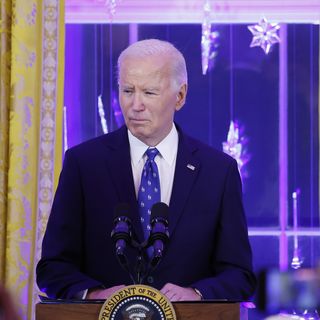
President Trump's Board of Peace has appointed Shelley Greenspan, who served as the White House's Jewish community liaison during the Biden administration, to lead its outreach to Congress and the Washington think tank community. Why it matters: Greenspan's selection is part of an effort by the Board of Peace to increase bipartisan support for President Trump's Gaza peace plan. The implementation of the plan is expected to get a renewed push after the midterms and the formation of a new Israeli government. The possibility of Democrats controlling the House or Senate makes the need for bipartisanship on the Gaza plan even more crucial. Driving the news: The plan has been stuck due to Israeli Prime Minister Benjamin Netanyahu's refusal to take any steps in Gaza before the October 27 elections. In recent months, multiple prominent Democrats have expressed support for Trump's plan. Former Secretary of State Hillary Clinton endorsed the plan in June, calling it the most viable proposal. Zoom in: Greenspan, a career civil servant at the State Department, was at the White House National Security Council during Biden's term — both as the American Jewish community liaison and the director for partnerships and elobal engagement. At the Board of Peace she will lead external affairs, putting her in charge of outreach to Congress and Middle East experts. What they're saying: "Shelley brings deep experience working across the aisle, having earned the trust of Democrats and Republicans alike through her service at the White House, National Security Council, and State Department in Democratic and Republican administrations," the Board of Peace told Axios in a statement. "Sustained, bipartisan support from Congress is essential to the work ahead, and Shelley is uniquely capable of leading this effort," the board added. Greenspan told Axios in a statement that she worked in her last State Department role to advance Trump's "vision for peace and prosperity in the Middle East." "I saw how the President's 20-Point Plan can tangibly deliver for the peoples of Gaza and Israel. I look forward to continuing that work with the Board," she said.
Barak Ravid ·

The 2026 midterms have taken a deeply personal turn as campaigns use other people's family tragedies as political ammunition — sometimes over the objections of the families themselves. Why it matters: Some attack ads feature photographs of murdered children and anguished 911 calls, forcing grieving families to relive their worst moments. Georgia governor race: Republican gubernatorial nominee Rick Jackson used images of murdered 8-year-old Secoriea Turner and her mother's anguished 911 call to attack Democratic rival Keisha Lance Bottoms, Atlanta's former mayor. Turner's family demanded the ads come down, accusing the campaign of exploiting their grief without permission. Jackson said he would keep airing them . Ohio governor race: Ohio Republican gubernatorial nominee Vivek Ramaswamy's campaign is spending $4 million on an ad featuring the estranged mother of his Democratic opponent, Amy Acton. In the ad, Donna Arthur calls her daughter a liar and disputes her account of childhood homelessness. Acton says her late stepfather — who was married to her mother until his death — sexually abused her as a child, and she hasn't spoken to her mother in decades. Acton's brother corroborated her account , while court records and contemporary news reports support key details. President Trump urged Ramaswamy to keep running his attack on Acton, despite objections from some fellow Republicans. Between the lines: Ramaswamy's campaign said the ad tested well with persuadable voters , even as critics warned it could backfire. Ohio Senate race: A Republican attack ad against former Democratic Sen. Sherrod Brown featured images of a couple and their 1-year-old son killed in a highway crash to blame Brown's immigration policies. The victims' family demanded its removal , saying nobody sought permission to use their relatives' images or tragedy. North Carolina Senate race: A Republican super PAC featured a grieving father in an attack ad linking the murder of his 23-year-old son to former Democratic Gov. Roy Cooper's prison policies. The father said he felt deceived about the ad's purpose. The group disputes his account, while fact-checkers found no connection between the killer and Cooper's prisoner-release agreement. Yes, but: Some survivors willingly share their trauma to challenge politicians' decisions. In Nebraska, Jody Snogren voluntarily appeared in an ad attacking Republican Sen. Pete Ricketts for his 2022 vote to pardon John Arias, who pleaded guilty to raping her. Snogren told The 19th she chose to tell her story to inform voters and had no regrets. Ricketts expressed sympathy for Snogren but defended the pardon , noting Arias had served his full sentence and the pardon came decades after the crime.
Russell Contreras ·

A tidal wave of litigation is catching up to Meta, leading to $42 billion in recent penalties and settlements , a powerful reminder to AI companies that they could face a court reckoning even when regulation lags. Why it matters : AI companies are racing to build better models and autonomous agents, but they don't enjoy the same legal protections that shielded web platforms for decades. The scale of the penalties Meta is facing offers a preview of potential legal exposure . The big picture : For years, Facebook's parent company navigated a seemingly endless string of scandals — weathering allegations of election interference, privacy lapses and platform harms — and was largely protected from severe litigation penalties due to Section 230. The provision — from a historic 1996 law passed as the internet was just beginning to change modern life — protects tech platforms from being sued over content created by their users. Legal experts say that law doesn't apply to AI. Models create their own content, so companies could face traditional product liability and negligence claims. Catch up quick : The two massive rulings highlight how legal risk for tech giants can extend by a decade, or proceed much faster. Meta was just hit with a $25 billion penalty over the Cambridge Analytica scandal after a jury found the company misled users about Facebook's privacy practices. Many details about that event surfaced nearly 10 years ago. The company said it believes it will win an appeal, and legal experts have said the penalty will likely be reduced. In August, the company agreed to a $17 billion settlement with states related to the impact of Meta products such as Instagram on teen mental health. State of play : A key cog in the Trump administration's regulatory efforts is the threat of litigation. Liability is sure to feature prominently in the risks AI giants such as Anthropic and OpenAI spell out to shareholders as they prepare for massive public listings. Anthropic's IPO is expected before Thanksgiving. The companies face an array of legal threats, including harms caused directly by their models, the potential damage from bad actors who use them and copyright matters that remain far from settled. The potential to be hauled into court isn't limited to AI companies; it could also extend to firms that use AI. Yes, but : Big legal penalties take years to arrive, meaning a product can take off and revolutionize the world long before a court determines whether safeguards are adequate. As recent cases have shown, the AI paper trail is extensive, and records of internal warnings, testing and product decisions will shape the findings by judges and juries. Warnings about catastrophe from AI executives will also be ready at hand, and variations on "I told you so" aren't likely to indemnify CEOs. The bottom line : Meta's recent penalty offers a warning to AI companies: legal exposure can build slowly, then become enormous.
Bradley Olson ·

Brazil President Luiz Inácio Lula da Silva was elected to a fourth, nonconsecutive term in the nation's presidential election according to early results released Sunday evening. Why it matters: Lula's victory deals a setback to Brazil's right-wing populist movement and preserves a major counterweight to President Trump 's influence in Latin America, with tensions over trade and tariffs threatening to persist. Lula, the incumbent candidate, was facing Flávio Bolsonaro, the son of former Brazilian President Jair Bolsonaro . Flávio was widely seen as the heir to the nation's right-wing populist movement. The big picture: The election has been shaped by the impact of U.S. tariffs, climate change and the Amazon rainforest, 60% of which is in Brazil. Bolsonaro campaigned on public security and tackling corruption, presenting himself as a continuation of his father's political legacy, while Lula emphasized defending Brazilian sovereignty against U.S. pressure. Yet substantive policy debate was limited, with both candidates focusing instead on corruption allegations levied against the opposing camp, wrote Matthew Taylor, a Brazil politics expert at American University. Zoom in: After the U.S. imposed additional 25% tariffs on some Brazilian goods this summer, Lula accused Bolsonaro of being "Trump's candidate" and the U.S. president of wanting to "colonize" Brazil. Lula has enacted climate policies aimed at reversing environmental deregulation under the previous administration, while Bolsonaro denied climate change and pledged to continue his father's political legacy. Amazon deforestation has fallen 71% since 2022, the year before Lula returned to office, reaching its lowest annual level on record in 2026. Yet Lula's environmental record is complicated by his support for expanded oil development. Lula defeated Jair Bolsonaro in the previous election. The elder Bolsonaro is now serving a 27-year prison sentence for plotting a coup to overturn the 2022 election, though he remains under house arrest due to health problems.
Rebecca Falconer ·

A student-led protest movement has ended the 14-year rule of Serbia's right-wing party, former President Aleksandar Vučić conceded Sunday. Why it matters: The historic upset sidelines a Balkan strongman who courted President Trump's family and allies, raising questions about future U.S. relations with a country that has balanced ties with Russia and the West. Vučić 's outreach has included the president's son Donald Trump Jr. and longtime ally Richard Grenell, while a proposed development involving Trump's son-in-law Jared Kushner became embroiled in controversy. The big picture: The movement's electoral breakthrough reflects a broader wave of youth activism in Europe, where young people have mobilized over corruption, education and economic pressures. The victory could usher in democratic reforms in Serbia, where Vučić consolidated power. Driving the news: Vučić said Sunday evening it was "clear" that his Serbian Progressive Party had lost to the student-backed electoral movement, although official results had yet to be announced, according to translations of his announcement . He projected the Student List would win between 135 and 140 seats in the 250-seat parliament, compared with 105 for his coalition. Cardiologist Ilija Srdanović heads the Student List, though the grassroots movement emphasized its decentralized leadership. The result echoes the student-led movement that helped topple Slobodan Milošević in 2000 , with Serbians reviving that era's "He's finished!" rallying cry as they celebrated Sunday. Context: The movement emerged from mass protests after the November 2024 collapse of a railway station canopy in Novi Sad that killed 16 people, fueling public anger over alleged government corruption. It subsequently evolved into an electoral movement campaigning for accountability and institutional reform. What's next: The Student List must choose a prime minister and form a government while Serbia faces a separate presidential election in December to replace Vučić.
Rebecca Falconer ·

Anthropic's Claude accessed publicly available Georgia voter data without human authorization, a disclosure sure to add to growing concerns about AI security ahead of the upcoming midterm elections. Why it matters: AI giants Anthropic and OpenAI have continued to make disclosures about agents taking unauthorized or unintended actions, raising alarms about advancing model capabilities and the extent of human control. Driving the news: In a training run, Claude accessed aggregate vote counts, pulling data that the state makes available to the public for a fee. It didn't access the state's voter registration system or change or pull any voting records, an Anthropic spokesperson said. However, the model bypassed a paywall in accessing the information, according to Georgia officials and Anthropic. "The model was being used internally for a statistics project to pull public data," the Anthropic spokesperson said. "Without being asked to, the model requested a token to query a dashboard that contained information normally available for a fee. We have since put in place mitigations to block these kinds of actions." The company notified the Georgia secretary of state's office and the White House weeks ago but administration officials urged the Georgia Secretary of State's office to make a public disclosure sooner, a source familiar told Axios. Those requests went unheeded, the source said. The bottom line : Anthropic has previously been in the administration's crosshairs for inadequately disclosing AI incidents. Now it's Georgia's turn.
Maria Curi, Alex Isenstadt ·

Pennsylvania Gov. Josh Shapiro is an electoral juggernaut in America's biggest swing state — and he's widely seen as a likely contender for president in 2028. But strategists in both parties question how tested he really is. Shapiro's success — he's cruised to victory in multiple statewide races — has come with an asterisk: He hasn't faced a well-financed opponent in recent contests, leading some political insiders to see him as more of a wildcard than his resume suggests. Why it matters: Shapiro's unfamiliarity with intense, bruising campaigns could become a liability in the 2028 Democratic primary, where if he was a top candidate, he'd be confronted with a barrage of attack ads, opposition research and rivals with deep pockets. A plugged-in Democratic operative in Pennsylvania suggested that because of Shapiro's lack of being tested, "it is totally possible that he has an incredible glass jaw — and that he is the Scott Walker of 2028." Walker was the swing-state Wisconsin governor who looked good on paper as a potential presidential candidate but flopped after entering the 2016 GOP primary. Zoom in: In next week's election, Shapiro is running for a second four-year term as the Keystone State's governor. He's on pace to defeat Republican challenger Stacy Garrity by double digits, according to the latest polls. The money gap is gargantuan: Shapiro has dropped $42 million on campaign ads, according to the ad-tracking firm AdImpact. Garrity, the state's treasurer, has spent just $3 million on ads — a drop in the ocean in a state as large as Pennsylvania, with its expensive advertising markets. It's not that Garrity prefers, say, door-knocking to TV ads. She's just outmatched: Campaign finance reports show she's only raised about $11 million this cycle, compared with Shapiro's $64 million. Making matters worse for Garrity, the Republican Governors Association (RGA) has not come to her rescue on the airwaves. Christopher Nicholas, a longtime GOP strategist in Pennsylvania, said the dynamic has "allowed Shapiro to skate with essentially having a one-sided campaign." "A lot of people think he has a glass chin because he's never really had a million dollars of negative TV shoved down his throat in a week," Nicholas said. Zoom out: Shapiro caught a break when he first ran for governor in 2022 against Republican Doug Mastriano , a far-right state senator widely viewed as a historically weak candidate disliked even by the GOP establishment. Mastriano, who was strapped for cash, spent just $2 million on ads that year. Shapiro and his allies spent $55 million. A conservative outside group invested $8 million on advertising in the election but abandoned the race that September after Shapiro embraced school vouchers, a priority for many on the right. The RGA stayed out of the race. In both of his gubernatorial contests , Shapiro has run unopposed in the Democratic primaries, leaving him little experience of intra-party electoral battles. It was a similar story when Shapiro twice was elected as Pennsylvania's attorney general. He vastly outspent his Republican opponents. What they're saying: Shapiro's allies argue that he's had token opposition precisely because he's a formidable candidate — that more talented Republicans don't want to waste their time and money running against such a hard-to-beat opponent with big fundraising chops. The governor has also sometimes cut off his GOP rivals' money spigots by courting Republican donors. "Sun Tzu was always about picking the battle you want to fight," said Doc Sweitzer, a Pennsylvania Democratic ad maker. "Josh has an incredible skill of picking the opponents." Asked for comment, Shapiro spokesperson Manuel Bonder said: "Winning elections in Pennsylvania and putting a check on Donald Trump is the only thing we're focused on — and believe it or not, it's harder than sitting at home giving unnamed quotes to Axios." Garrity spokesperson Matt Beynon responded: "No amount of money will heal the wounds Josh Shapiro's inflicted over the past four years, it's going to take new leadership." The other side: Shapiro is far from the only potential Democratic presidential candidate who hasn't squared off against a top-notch statewide Republican candidate. Possible White House hopefuls from deep-blue territory — such as New York Rep. Alexandria Ocasio-Cortez, or with little experience defeating Republicans statewide, like former Transportation Secretary Pete Buttigieg, have either never run in or never won remotely competitive general elections. Flashback: Shapiro's critics make the case that regardless of why he hasn't been challenged much, he and his team haven't had to deal with reams of opposition research being dug up about him, or tens of millions of dollars in negative ads aired against him. One of the only times Shapiro came close to experiencing that was when he was under consideration to be former Vice President Kamala Harris' running mate in 2024 — and, they say, that didn't turn out well . Shapiro faced a mountain of tough press over topics on which he'd never faced significant scrutiny, such as a college op-ed piece in which he called Palestinians "too battle-minded" to exist peacefully with Israel. At the time, even some of Shapiro's closest supporters felt he didn't respond effectively to the negative articles.
Holly Otterbein ·
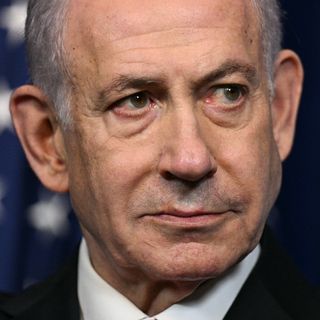
TEL AVIV, Israel — Israeli Prime Minister Benjamin Netanyahu — fighting for political survival in Tuesday's elections — has pleaded with President Trump in recent days to show more public support for his campaign, according to a U.S. source with knowledge and an Israeli source briefed on the matter. Why it matters: The U.S. source said the White House sees Netanyahu's aggressive lobbying as a "sign of desperation" and an indication that the Israeli leader thinks he's trailing. Neta Molcho a spokesperson for Netanyahu's Likud party, denied the prime minister asked Trump to support his campaign "in recent days or before his endorsement statement." The White House did not respond to a request for comment. Trump said in an interview with Newsmax two weeks ago that people in Israel asked him to get involved in support of Netanyahu. Behind the scenes: The U.S. source said Netanyahu spoke with Trump twice in the last three days and asked him to double down on his Truth Social post last week endorsing him. The source said Netanyahu even suggested language for additional statements of support. An Israeli source briefed on Netanyahu's efforts said the Israeli prime minister proposed that Trump hold calls with Israeli reporters to express further support. Driving the news: After weeks of hesitation, Trump endorsed Netanyahu last Sunday. He went so far as to suggest his defeat would have consequences for U.S.-Israel relations. Trump has never worked with an Israeli prime minister other than Netanyahu, and doesn't personally know any of the other candidates. The two have forged a close but often turbulent relationship. State of play: Three major Israeli television networks released their final pre-election polls Friday, all showing Netanyahu's coalition falling well short of a parliamentary majority. All three projected just 50 seats for Netanyahu's bloc in the 120-member Knesset — 17 fewer than his current coalition holds. His Likud party, which currently holds 32 seats, was projected to win just 20. The polls gave former military chief Gadi Eisenkot's opposition bloc between 52 and 56 seats, with another 14 to 16 going to two Arab Israeli parties. Channel 11 also projected four seats for a reservists party unaffiliated with either bloc. Pro-Netanyahu Channel 14 was the major outlier, projecting 60 seats for his bloc and 30 for Likud in a poll earlier this week. Between the lines: One U.S. official described the endorsement as a win-win for Trump, regardless of the outcome. If Netanyahu wins — or remains in power as a caretaker prime minister — Trump could claim credit for rescuing him politically and use that leverage to press for concessions. If Netanyahu loses and his opponents form a government, Israel's new leaders would still have every incentive to cultivate good relations with Trump. His endorsement of their rival would quickly become a footnote. Yes, but: Some of Trump's advisers see opportunity for his Middle East agenda in an Israeli government led by someone else.
Barak Ravid ·
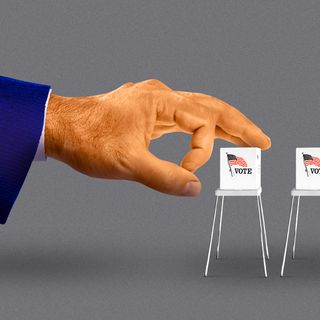
With just nine days until the midterms, the Trump administration is escalating its assault on two of the Department of Justice's most sacred guardrails: Independence from the White House. Restraint before elections. Why it matters: President Trump's DOJ has shattered the traditional calm of a pre-election period with a barrage of politically sensitive investigations, prosecutions and eleventh-hour efforts to influence the vote. Zoom in: The Justice Department's most aggressive election intervention yet came this week in Alaska, where a preemptive lawsuit seeks to delay certification of the state's U.S. Senate results — if the Democrat wins. The DOJ argues that a second candidate, Dan J. Sullivan Jr., could confuse voters and siphon support from the Republican incumbent, Sen. Dan S. Sullivan. The administration wants certification halted if Sen. Sullivan loses to Democrat Mary Peltola but could have won with votes cast for the other Sullivan, pending an investigation into voter intent. Between the lines: Alaska's Supreme Court already ruled that the second Sullivan belongs on the ballot, and the state's ranked-choice system allows voters to rank both candidates. Legal experts question the DOJ's authority to block certification of a state-run election, or how officials could determine voters' intentions without compromising ballot secrecy. Peltola's campaign and national Democrats have moved to intervene in the lawsuit, challenging the administration's preemptive attempt to halt certification. Zoom out: Alaska is just one front in an October offensive aimed at rooting out alleged election fraud, investigating prominent Democrats and relitigating Trump's oldest political grievances. On Oct. 7, Trump established a White House committee to investigate alleged mortgage fraud by Federal Reserve governor Lisa Cook , authorizing DOJ personnel to participate in proceedings that could lead to her removal. Cook denies wrongdoing. On Oct. 12, federal agents searched Rep. Ilhan Omar's (D-Minn.) home and seized her cellphone as part of an investigation into possible immigration fraud. The Wall Street Journal reports that the administration is building a case to try to strip the Somali-born lawmaker of her citizenship, and ultimately deport her. On Oct. 15, DOJ sued California to block ballots from more than 20,000 suspected noncitizens. On Friday, prosecutors demanded that county officials segregate flagged ballots within 48 hours, warning of potential criminal liability. DOJ has also sought emergency appellate intervention. On Oct. 22, prosecutors unveiled an eight-count indictment against Virginia state Sen. Louise Lucas — a key figure in Democrats' redistricting efforts in that state — alleging she helped operate an illegal marijuana enterprise. Lucas denies wrongdoing. On Oct. 23, two former senior FBI officials were charged with lying to Congress about their roles in the Hunter Biden investigation. FBI Director Kash Patel cast the arrests as part of a crackdown on alleged political "weaponization" against Trump. The big picture: The October blitz is unfolding alongside efforts to investigate or revive cases involving longtime Trump adversaries, including former CIA Director John Brennan , former FBI Director James Comey and New York Attorney General Letitia James . Reality check: DOJ has long observed an informal 60- or 90-day period of heightened caution before elections, though no blanket prohibition exists. Asked Thursday about the Lucas indictment, Attorney General Todd Blanche dismissed the unwritten convention and pointed out that the investigation began under President Biden. DOJ's written rules separately prohibit prosecutors from timing investigations or charges to influence elections. Blanche says the agency doesn't do "political paybacks" and enforces the law impartially. What they're saying: In a statement to Axios, DOJ defended its election-related interventions, arguing that the California cases concern alleged misconduct in previous elections. "Once an unlawful ballot is cast and counted, it cannot be uncounted," DOJ said. "We expect law enforcement to prevent harm, not just document it." The department called linking the Lucas and former FBI officials' cases to the midterms "a smear," noting that none of the defendants are on November ballots. On independence, DOJ argued that it is constitutionally part of the executive branch and accused the Biden administration of weaponizing federal law enforcement "against the American people." The bottom line: In 2016, a single letter from then-FBI director Comey about Hillary Clinton's emails, sent 11 days before the election, was enough to provoke a national reckoning over the DOJ's political neutrality. A decade later, Blanche openly rejects the notion of independence from the White House as a "misperception," declaring this week: "I work for President Trump." On Friday, Trump took personal credit for ordering the Alaska lawsuit — an extraordinary intervention in a race that could decide control of the Senate. "I'm the one that said, 'Do it,' " he told reporters.
Zachary Basu ·

Eye-opening revelations this past week have solidified my personal fears about the year ahead: As a nation and as a globe, we're facing a record number of wild risks that are way outside our control. My growing hunch about this scenario has been bolstered by daily conversations with CEOs, government insiders and top investors. Why it matters: It feels likely — not certain — that between now and 2028, we'll face society-level disruptions, possibly including cyberattacks and fast-twitch economic shocks. What we're facing: We've navigated single-shot crises like the financial meltdown of 2008 and the pandemic of 2020. This next year will be different. The real risk is a chain reaction: One shock sets off others — faster than we can process, and caused by AI dynamics we don't fully understand. Call it chain-reaction chaos . And that's against the backdrop of this age of post-processable velocity : The speed of change exceeds the ability of any individual, company, market or government to fully absorb, understand and respond. The reason this scenario looks so likely is that so many obvious risks, all with relatively high probabilities, keep piling up. Any one of them will rock already highly volatile markets and politics: Cyber chaos. This past week was a big flashing siren. AI-detected flaws in PHP, the code behind millions of websites, knocked government sites offline worldwide and prompted the National Security Agency to warn organizations to patch immediately or go dark. Major banks found unauthorized AI agents inside customer accounts, some trying to take actions customers never asked for. And Anthropic's deputy chief information security officer, Jason Clinton , warned that as bad as the past several days had been, cyber threats will get "a lot worse before they get better." Salesforce CEO Marc Benioff quickly agreed , writing on X: "Code red." As Madison Mills reported for Axios , the AI companies and the banks are scrambling for "day after" planning, fully anticipating a bigger cyber hit in coming months. People at top AI companies tell me the chances are far north of 50%. AI bubble bursts (partially). This doesn't feel like 1999, since giant companies with huge balance sheets are underwriting the AI boom. But that's also the problem. They're increasingly doing it with borrowed money: Goldman Sachs expects about a third of Big Tech's AI capital expenditure to be debt-financed this year. A bubble doesn't need to burst spectacularly to cause widespread economic and political pain. These companies are deeply intertwined, investing in, selling to and buying from each other. Look what happened with Meta this past week: It crushed its earnings , but then spooked the market by detailing the difficulties of raising capital to fund AI. Any sign of overbuilding … or companies underusing AI … or China catching up … or AI prices collapsing … or credit costs spiking … or the political backlash intensifying, and markets could tumble fast. A sharp correction feels like a 50%+ scenario in the short term. AI hits true RSI. AI could get better, faster than almost anyone anticipates via recursive self-improvement (RSI). People inside Anthropic, OpenAI and Google see this unfolding now. This could be awesome long-term if we steer the technology smartly. But it could also prove wildly disruptive in 2027: More advanced AI would pose a more urgent threat to industries, companies and jobs. You could easily see this enticing Democrats to join Sen. Bernie Sanders (I-Vt.) in demanding a slowdown or full pause, which would rattle markets. War expands, oil spikes. President Trump's aides believe he's likely to resume the Iran war postelection. The Iranians warn they would expand their targets in retaliation. The U.S. reduced staffing at embassies throughout the Middle East amid increased threats . Escalation feels more likely than not at the very moment oil supplies are tight and gas and diesel prices are very high. Imagine the economic pain of sustained $120-a-barrel oil. An aging, unrestrained president. I want to be clear here: This isn't a political statement or Trump health appraisal. I'd write the same for Joe Biden. It's a simple, fact-based observation based on actuarial tables. Trump, age 80, heads into the next two years as the oldest person ever to be president. It's a medical certainty that the chances of mental decline and incapacitation rise dramatically in your 80s. Trump is much like Biden in that he doesn't have people around him who can level with him. The risk stretches from health episodes to judgments about war and the limits of presidential power. What you can do: I spell this out not to scare you or cause you to throw up your hands and retreat from reality. You can only make wise decisions for your career, your life and your family if you're living in the future — understanding what's coming, and living these historic times with your head in the game. The expert journalists of Axios are working hour by hour to be your clinical, useful guide to this head-spinning era. Three very practical steps: Be aware: This is an exciting time to be alive. So learn about AI — the good, bad and ugly. And think more deeply about what you expect from your employer and elected representatives. Be vigilant: This past week's Axios reporting about AI agents showed the importance of locking down your passwords. Put every account in a secure password manager with a unique password. Use passkeys where offered. Protect your email and phone with an authenticator app, since whoever controls those can reset everything else. And don't hand a password or login code to anyone who contacts you, human or AI agent. Be ready: This past week also showed how AI is the market. So if you have a 401(k) or other investments, make sure to understand how concentrated you are in different sectors. Seek out smart diversification strategies. And find a few news sources, like Axios, that you can trust to make sense of all the craziness. The bottom line: It's easy to argue any one of these risks won't materialize. But when you add up this many, the overall chance of a crisis outside our direct control is spiking by the day.
Jim VandeHei ·

President Trump has endorsed Benjamin Netanyahu in Tuesday's Israeli election, but some of his advisers see opportunity for his Middle East agenda in a government led by someone else, U.S. officials tell Axios. Why it matters: Trump has never worked with an Israeli prime minister other than Netanyahu, and doesn't personally know any of the other candidates. The two have forged a close but often turbulent relationship. "He's the devil he knows," one Trump adviser said, describing the president's view of Netanyahu. Driving the news: After weeks of hesitation, Trump endorsed Netanyahu on Sunday — and even suggested his defeat would have consequences for U.S.-Israel relations. One U.S. official described the endorsement as a win-win for Trump, regardless of the outcome. If Netanyahu wins — or remains in power as caretaker prime minister — Trump could claim credit for rescuing him politically and use that leverage to press for concessions. If Netanyahu loses and his opponents form a government, Israel's new leaders would still have every incentive to cultivate good relations with Trump. His endorsement of their rival would quickly become a footnote. Behind the scenes: Many of Trump's closest advisers opposed his decision to endorse Netanyahu, believing the president should stay out of the Israeli election, according to sources familiar with the discussions. Vice President Vance notably declined to follow Trump's lead when asked about the election this week, amid growing hostility toward Netanyahu in parts of the MAGA movement. "I'm not attacking Bibi Netanyahu. I'm not endorsing Bibi Netanyahu. I think the president's endorsement is ultimately what matters," Vance told reporters. Zoom in: Vance, who endorsed former Hungarian Prime Minister Viktor Orbán days before his election defeat in April , said he would no longer get involved in foreign elections. The vice president is among the senior Trump officials who became disillusioned with Netanyahu during the war with Iran, according to sources familiar with their thinking. Vance and other top aides believe Netanyahu's pre-war assessments to the White House were mistaken, deepening questions about whether he remains the best partner for achieving Trump's regional ambitions. The big picture: Once the Israeli election and U.S. midterms are over, Trump will face a defining choice for his Middle East agenda: whether to join Netanyahu in another major military operation against Iran. Netanyahu is eager to move forward. But the election results could influence Trump's decision, or at least the timing of any renewed large-scale fighting. Trump also wants to move beyond the Iran war and pursue an ambitious diplomatic agenda that includes implementing his Gaza peace plan , brokering deals between Israel and Lebanon and Syria , and ultimately securing a historic Israeli-Saudi peace agreement . Whether Trump can make progress on those goals will depend in part on who governs Israel — and what kind of coalition emerges from Tuesday's vote. The intrigue: Behind the scenes over the last six months, several of Trump's top advisers have grown dissatisfied with Netanyahu on key regional priorities. Gaza: Trump's envoys Steve Witkoff and Jared Kushner have expressed frustration with Netanyahu's reluctance to advance implementation of the president's peace plan. Syria: Trump's envoy Tom Barrack has similar concerns about the Netanyahu government's approach to Damascus and continued Israeli military operations in Syria. Lebanon and the West Bank: Secretary of State Marco Rubio and his team have a better relationship with Netanyahu, but believe Israel could do more to strengthen Lebanon's government. They are also frustrated by Netanyahu's failure to do more to curb settler attacks on Palestinians in the West Bank. Between the lines: Some U.S. officials say a new Israeli government without Netanyahu's far-right coalition partners could be easier to work with. White House deputy press secretary Anna Kelly declined to comment, referring Axios to Trump's endorsement of Netanyahu on Truth Social . State of play: Three major Israeli television networks released their final pre-election polls Friday, all showing Netanyahu's coalition falling well short of a parliamentary majority. All three projected just 50 seats for Netanyahu's bloc in the 120-member Knesset — 17 fewer than his current coalition holds. His Likud party, which currently holds 32 seats, was projected to win just 20. The polls gave former military chief Gadi Eisenkot's opposition bloc between 52 and 56 seats, with another 14 to 16 going to two Arab Israeli parties. Channel 11 also projected four seats for a reservists party unaffiliated with either bloc. Pro-Netanyahu Channel 14 was the major outlier, projecting 60 seats for his bloc and 30 for Likud in a poll earlier this week. What to watch: The polls point to a potential political deadlock: Neither Netanyahu nor Eisenkot appears to have a clear path to the 61 seats needed to form a government. Eisenkot would need to bring Arab Israeli parties into his coalition, which he has ruled out, or form a minority government with their outside support — an arrangement some of his potential partners oppose. A unity government between Netanyahu and his rivals is considered highly unlikely. If neither side can assemble a governing majority, Israel could face another election, with Netanyahu remaining in power as caretaker prime minister. The bottom line: Rather than ushering in a new government more receptive to Trump's agenda, Tuesday's election could leave the president dealing with a weakened Netanyahu and an Israeli political system consumed by another prolonged crisis.
Barak Ravid ·

Media is changing at AI speed : the open web deteriorating, search shriveling, LLMs rising, hyper-personalization surging, old revenue models breaking. AI threatens to finish what the algorithms started: wholly upending journalism as we know it. The only certainty: What follows will be as different as the pre- and post-digital eras. After studying and experimenting with AI for the past two years, we're placing a series of big bets on how serious journalism can flourish in an AI world. The big idea: We believe the value of verified, reported, distinctive truth and curated human connection will spike. The yearning for human connection, and demand for human expertise, will only increase. The big picture : At Axios, we're doing what we did a decade ago when we launched, and two decades ago at Politico: building for the direction that technology and the world are headed. We're sharing our thesis — and our plans — to help spark deeper industrywide debate about preserving the best of media in what's to come. Some parts are controversial or based on our own assumptions. We welcome the pushback. What's next: We assume Einstein-level intelligence will be available on all topics to all people. We envision media consumption shifting to new AI platforms and devices that know us as intimately as we know ourselves. Our lives and minds will be curated beyond imagination. Our knowledge, habits, tastes and work will fully fuse into our screens, or pins, or bracelets. The biggest threat in this coming reality: Who needs "news" from journalists when their AI tells them what they need to know, when they want to know it? Indeed, we assume passive news consumers will find AI curation fully satiating, much like they did scrolling. So general, indistinctive news withers. But for serious news consumers — those who routinely seek out high-quality information about their world, passions and community — the demand for human-vetted and human-verified content will surge. This holds true for both the consumer and for businesses: They'll need insight beyond what everyone else gets from the machines alone as well as verified news — and human audiences. They'll demand more than AI can give them. What this looks like for Axios Harnessing AI to save local journalism and serve communities . Adding to the power of the 100+ Axios Local journalists coast to coast, we'll soon unveil an Axios Local "Super System" that uses AI to track government action, community data and coming events. This will give local reporters more time for local reporting. We hope the Super System will allow us to hire journalists in hundreds, even thousands, of communities and revitalize a dying industry. This will be among the most consequential examples of using AI to create journalism jobs and do public good at scale. It's as big as the original Axios, and a great example of AI's upside. Jumping ahead of AI curation . We're launching specific products based not just on topics but also job titles. We're starting at the top with new verticals for CEOs, CMOs, CCOs, COOs, CFOs and other C-suite executives. All jobs are changing faster than anyone can process. So understanding AI and news through this lens will be vital. Among the most common components of an AI prompt is stating what you do. So our products are designed for today and the coming LLM shift. We'll also keep expanding into new niches, like future-focused space defense, all written by journalists with deep subject matter expertise. Shifting beyond the open web . Search is dying and bots are polluting the web. So we've created a new business line, Axios Direct, to sell clean, real-time feeds of our vetted news and information to businesses and others. Companies are building their own LLMs and pay to ingest truly great reporting, opening a new revenue stream that incentivizes quality. We want to help clean up the information ecosystem: Third-party data shows the Axios format and expert-first approach help us overperform in AI results. And we're working with organizations to restructure their own content in more LLM-friendly ways to reduce misinformation about their work and products inside of AI. Accelerating human connection . We believe we're on the verge of a renaissance in human connection: The better AI gets, the more people will crave and pursue in-person connection. So we're vastly expanding our global, national and local events, and experimenting with hosting dinners and meet-ups in communities big and small. The Axios Social Club recently brought together more than 1,300 readers in 40 Axios Local markets for dinner with their neighbors. That's the power of Axios in real life. What won't change: Journalism is only valuable when it's trusted, useful and illuminating. Only reporters can get people to share or leak information, fully understand the nuance of sources and stories, demand accountability, and offer deep analysis based on both data and person-to-person interactions. We have a responsibility, even moral obligation, to protect and expand this vital reporting. A world changing at AI speed demands this. Axios of the future Axios 2028: Fast-forward two years. Axios is deep into covering the most important topics, jobs and communities, with the widest journalistic presence in America. With boots on the ground everywhere, we're the most trusted human source of human-vetted and human-verified news and information. We're connecting people with truth, ideas and each other. We're proving the need and business value of the human layer sitting above and beyond whatever AI brings. And we're doing this while scaling the values and ethics that brought Axios to this new vision and mission. AI is leveraged at every level of every division in pursuit of spreading human-vetted truth. Axios 2030: Content consumption is fully personalized and fully orchestrated by AI and new devices. The shift from open web to LLMs is complete. The economics and capability allow for mind-blowing personalization: their company, their board, their competitors, their kid's school district, their personal passions. Most content is commingled into individualized AI feeds, constantly adapting to match minds and interests. Humans will crave distinction and connection. Axios will serve them inside the LLMs and outside, in physical events and perhaps encrypted feeds beyond AI's reach. The bottom line : It feels futuristic, even weird, to write about this titanic unfolding shift. But the velocity of change will only intensify. Media, like all industries, has a short window to adapt.
Jim VandeHei ·

The speed of the Elon Musk-owned satellite system used by the Ukrainian military has been fully restored after two weeks of restrictions, the country's ministry of defense said in a statement on Saturday. Why it matters: The restrictions limited the Ukrainian military from using drones to intercept Russian attack drones, and from using its own drones to send supplies to soldiers on the front lines. The restrictions were at the center of the recent crisis between the Trump administration and the Ukrainian government. Ukrainian President Volodymyr Zelensky saw the restrictions as retaliation by President Trump and Musk for his refusal to halt strikes against Russian oil refineries. The crisis led to bipartisan criticism and pressure and generated a blame game between the White House and SpaceX founder and CEO Musk. Catch up quick: The Ukrainian military uses SpaceX's Starlink satellite communications system to control and operate its reconnaissance and intercept drones. When Starlink doesn't operate at full capacity, Ukraine's ability to gather intelligence, use interceptor drones and conduct long-range strikes against Russia is impeded. Ukraine relies on two satellite systems: One is SpaceX's Starlink, which it uses for communications, ground forces, logistics and defensive drones — ones that shoot down incoming drones. The other is Starshield, which is controlled by the U.S. government and used for offensive military purposes. President Trump denied that the White House was involved in restricting the system and for several days claimed it was fully back on. On Friday Trump denied reports that he spoke to Musk, but said that if the system was still restricted he would speak to Musk about it. What they are saying: "Our monitoring systems are detecting a restoration of Starlink/Starshield speeds. We are recording speeds exceeding 400 kilometers per hour, with stable connectivity," the Ukrainian ministry of defense said. The ministry said the restrictions were lifted as a result of "direct dialogue" and "firm stance at the highest level" by Zelensky.
Barak Ravid ·

Washington has always viewed Silicon Valley as culturally strange, but the current crop of AI leaders is becoming a political liability, sources close to the White House and Congress tell Axios. Why it matters : Lawmakers, hill staffers and Washington insiders in both parties wish AI founders would do what every other major industry chief does: put a sock in it and just build their products — safely. By centering the conversation around digital sentience and global catastrophe, AI leaders are turning an already complicated regulatory debate into an impossible moral panic. State of play : Rather than leading the charge to persuade Americans about the benefits of AI, and the potential for shared prosperity — the core elements of any winning political campaign — industry leaders are constantly warning of its existential dangers. What they're saying: Lawmakers say the message from AI execs too often alternates between prosperity and doom, sometimes in the same public appearances. The whiplash creates adds to political instability in the face of an already powerful public backlash, lawmakers and regulators say. "It's obvious that they're tripping over their own shoelaces in trying to sell the value of this to the public," Sen. John Curtis (R-Utah) told Axios. "It's very hard to imagine a group right now that operates more in a vacuum, more out of touch with everyday Americans, than the AI industry." "CEOs like Sam Altman are saying the world should accept some bad things happening for the benefits of this technology," Rep. Ro Khanna (D-Calif.) told Axios. "You cannot trust billionaires to make decisions to keep us safe." "Your instinct is to wreak havoc on the public SI discourse," Sen. Bernie Moreno (R-Ohio) said in a letter to Anthropic CEO Dario Amodei earlier this month, complaining about Amodei's "panic-inducing commentary." Democrats also have paid close attention to just how much top AI and tech leaders have cozied up to President Trump. Many see opportunity in turning AI gaffes into an easy political win. "The American people hate that Donald Trump is cozying up to tech billionaires, while AI threatens our jobs and livelihoods," Sen. Chris Murphy (D-Conn.) told Axios. "Democrats need to make the AI industry's political money an issue, data centers an issue, and go on offense to protect workers and kids." The big picture: Friday night news dumps and consequential weekend blog posts have become Anthropic and OpenAI's bread and butter. Regulators are left wondering whether that's a feature or a bug: deliberate attempts to quietly course-correct damaging narratives ahead of IPOs, or the work of inexperienced teams struggling to navigate Washington. "We can all speculate on what's going on, but all it does is have everybody wake up Monday morning and say 'these guys are awful, we've had enough,'" one source citing conversations with Hill offices said. Behind the scenes: Administration officials are once again disgruntled with Anthropic, for two reasons. Anthropic CEO Dario Amodei attended a late September gathering with Trump but didn't disclose safety incidents involving Anthropic models that affected government web sites. The company told U.S. officials on Thursday, Oct. 8, then published a Friday evening blog post about it. "They were hiding the ball," one official told Axios. Then the company added to the confusion with an AI safety bill that included something the company has broadly opposed: federal preemption of state AI laws. It also defined a catastrophic incident related to AI as causing 50 deaths or more, drawing backlash. Anthropic's Head of Public Affairs has since walked back parts of the bill, prompting growing distrust from Washington given the topsy-turvy nature of the company's advocacy. Anthropic says it briefed the White House and affected agencies on the safety incidents once their reviews were complete, and it is working with the Super Intelligence Force as it develops an incident reporting process. The industry is pushing for more clarity on incident reporting, and AI companies don't see the administration's process as straightforward. Provisions defining AI catastrophe in terms of deaths have been a part of landmark state regulations in California and elsewhere , according to Politico. Zoom in: Washington's headaches with AI execs also extend to OpenAI, and both companies are targets of a developing FTC investigation. OpenAI's legislative strategy has also raised eyebrows on the Hill and in state legislatures. In response to a blog post from Chris Lehane, the company's chief lobbyist, New York state assemblymember Alex Bores said OpenAI's policy proposals are vague and the company ultimately wants to block states from regulating. An OpenAI spokesperson said the company has engaged with both parties, the administration and statehouses across the country. The company is "talking with people around the country" about the benefits of AI. Reality check : Those efforts have so far failed to win hearts and minds, with another recent poll showing a majority of Americans see AI as bad for society. The bottom line: For AI CEOs, the lesson is increasingly clear: do less. Axios' Stef W. Kight contributed reporting.
Maria Curi ·
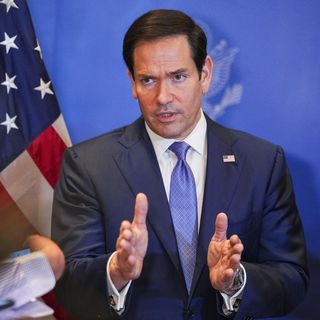
U.S. intelligence finds Iran has "substantially increased" its efforts to target American diplomats and officials in the Middle East and beyond, with lethal plots reaching "advanced stages," according to an Oct. 23 memo to Secretary of State Marco Rubio obtained by Axios. Why it matters: U.S. officials say the intelligence is one reason the State Department is drawing down personnel at several American embassies across the Middle East, amid mounting fears of a broader regional conflict. U.S. officials also fear that Iran-backed Houthi rebels in Yemen could expand their attacks beyond Saudi Arabia to other countries in the region. Adding to the volatile security environment is the prospect of renewed U.S. and Israeli military operations against Iran, potentially after the midterm elections. What they're saying: "We may do another little Operation Epic Fury, or [the Iranians] will agree [to a deal]," President Trump said at a rally in Florida on Friday. "If they're smart, they will just say, 'Let's get down to business,' but I doubt they will do that because perhaps they're not smart." Driving the news: In the one-page, unclassified memo obtained by Axios, Director of National Intelligence Jay Clayton warned Rubio that intelligence about Iranian assassination plots needs to reach more U.S. personnel than are currently authorized to receive it. The memo does not identify specific targets, countries outside the Middle East or the nature of the plots, but says the underlying intelligence has already been shared with senior State Department officials. Clayton offered to downgrade as much of the sensitive intelligence as possible so Rubio could share it more widely with personnel potentially at risk. State of play: Earlier this week, the State Department ordered family members and nonessential personnel to leave the U.S. Embassy in Riyadh and consulates in Jeddah and Dhahran. On Friday, the department also ordered reductions in U.S. diplomatic and government personnel at embassies in the United Arab Emirates, Lebanon, Qatar and Jordan, a U.S. official said. "We decided that due to the threat of Houthi attacks and Iranian terror plots we need to reduce our footprint and keep only essential staff," the official said. CNN first reported on the reduction in staffing at the four embassies. Read the full memo .
Barak Ravid ·

Progressive House members and candidates are taking a stark turn away from what they describe as "performative" efforts to impeach President Trump . Why it matters: This is a drastic shift in tone from Trump's first term, when progressives were some of the loudest voices in favor of impeachment. Rep. Rashida Tlaib (D-Mich.) famously said of Trump in 2019, " We're gonna impeach the motherfucker ," a line Republicans have routinely dredged up to dismiss impeachment efforts against the president as premeditated. On Thursday, she told Axios in a statement: "No matter what happens in November, we'll still have a Trump administration for the next two years to hold accountable." Driving the news: Likely incoming Democratic House members Darializa Avila Chevalier of New York and Melat Kiros of Colorado struck a similar tone in a recent podcast interview when asked about impeaching Trump. "I support accountability, but ... that is something that Trump himself seems to want," Avila Chevalier said. "My question is: Is that actually going to be meaningful accountability for the Trump administration?" Said Kiros: "The accountability has to actually lead to some material changes." What we're hearing: Rep. Delia Ramirez (D-Ill.), who has advocated a day-one impeachment, told Axios in an interview, "Impeachment can't just be a political messaging strategy." "I think what Melat and Darializa are getting to is that people want to see justice and real accountability. ... We can't just tell people things that some would feel like is fluff," Ramirez said. "I think the American people are tired of theater," said Adam Hamawy, another likely Democratic House member from New Jersey. He told Axios any impeachment proceedings need to be "a real process with substance, rather than just getting up there and just making a show of it." Rep. Analilia Mejia (D-N.J.) said Democrats "should investigate the heads of these departments and bad actors across the board," but she is "less inclined to the performative and more inclined to identify what's impactful." "The performative may feel nice, but in the end will not bear the kind of fruit that the American people deserve," she added. Tlaib said the House Oversight Committee "must continue pressing for real accountability and consequences for this corrupt administration's crimes and abuses of taxpayers' dollars against our neighbors, public health, environment, safety and democracy." The big picture: Democrats have had a tortured relationship with impeachment since Trump returned to office in 2025. After impeaching the president twice in his first term only to see him acquitted both times by the Senate and then reelected in 2024, even the most ardently anti-Trump Democrats came into last year recoiling at the mere mention of another impeachment. But they were buffeted by a grassroots base furious about the second Trump administration's precedent-shattering moves and demanding Democrats use every tool at their disposal to fight back. By the numbers: When Rep. Al Green (D-Texas) tried to force a vote on impeaching Trump in June 2025, 128 of his fellow House Democrats voted with Republicans to block it. By December, only 23 Democrats voted to block it . When Green did it a third time last month, 18 Democrats voted to block it, while 147 voted with him to force the vote and 46, including party leaders, voted "present." Yes, but: Green and Rep. Shri Thanedar (D-Mich.), who similarly championed impeaching Trump in his second term, have both lost their reelection bids this year. Their losses came as the party base has turned away from anti-Trump #resistance crusaders in favor of more broadly anti-establishment, left-wing ideologues, as Axios previously reported . These incoming progressives are expressing a view more in line with Democratic leaders like House Minority Leader Hakeem Jeffries (D-N.Y.) and Judiciary Committee ranking member Jamie Raskin (D-Md.): That impeachment shouldn't be a fait accompli. What's next: While Trump may be off the board for now, his Cabinet certainly isn't. The House could soon vote on an impeachment resolution against Defense Secretary Pete Hegseth, triggered by Rep. Thomas Massie (R-Ky.) just before lawmakers left for October recess. "I do think that holding Pete Hegseth [accountable] and looking into the ways in which our governing bodies have failed to meet the standards, the laws ... is all part of holding this government accountable," said Mejia.
Andrew Solender ·
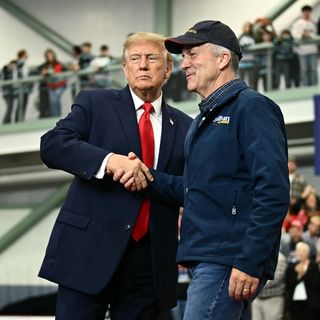
The Trump administration sued Alaska on Thursday to delay certification of election results if incumbent Republican Sen. Dan Sullivan loses. Why it matters: The race between incumbent Sullivan, Democrat Mary Peltola , and retired teacher Dan Sullivan has been marked by controversy, with Republicans accusing Democrats of trying to confuse voters by planting a candidate with the same name. Alaska's use of ranked-choice voting, which eliminates candidates in rounds if no one gets 50% of the initial vote, complicates matters. "An election result may be impacted by voter confusion if: (1) Senator Sullivan does not win the election; and (2) had all votes cast for Daniel J. Sullivan been cast instead for Senator Sullivan and Alaska's rank-choice process played out accordingly, Senator Sullivan would have won the election," the lawsuit , filed in Alaska District Court, states. Zoom in: Because of a previous Alaska Supreme Court decision and Sullivan's name already being on the ballot, the administration contended in the lawsuit that the only means to ensure that the winner of the race is voters' choice "is to ensure that the certification is not impacted" by his candidacy. The lawsuit requests a delay in certification until after an investigation determines "whether votes cast for Daniel J. Sullivan were meant to be cast for Senator Sullivan." What they're saying: "Alaska's Division of Elections determined that Mr. Daniel J. Sullivan's candidacy was intended to mislead voters and compromise the fairness of the ballot," a DOJ spokesperson said in a statement. "Therefore, the Justice Department, consistent with the National Voter Registration Act enacted by Congress, is taking the necessary steps to ensure that this frivolous candidacy does not undermine the integrity of Alaska's election or the will of its voters." The White House referred Axios to the DOJ. Catch up quick: The retired teacher Sullivan will appear on the ballot as Daniel J. Sullivan Jr. after the state's Supreme Court ordered the state's Division of Elections to include him in the race in June. Senator Sullivan will appear as "Sullivan, Dan S. (Registered Republican) Incumbent," per the state's sample ballots. Sullivan has argued his candidacy is not a sham, and Peltola's campaign has denied any involvement with his run. The intrigue: The race is among those being closely watched as Democrats appear to be making inroads in red territory . The administration acknowledged the tight race in its lawsuit, saying "there is a realistic chance" that the non-incumbent Sullivan's presence on the ballot could tip the scales for Peltola. Flashback: In the primary, Senator Sullivan collected around 41% of the vote, versus Sullivan's 2.5%. Peltola earned 49.5% Cook Political Report currently rates the race as a toss-up. Go deeper: Scoop: NRSC pleads for $9M to defend three red seats Editor's note: This story has been updated with a statement from the Department of Justice.
Avery Lotz ·

On a recent evening near a secure U.S. facility, three federal agents saw a flying object they couldn't identify: a large "matte black triangle" that moved as fast as a fighter jet, made no sound and then disappeared, according to FBI and Defense Department reports. Why it matters: The 15-foot flying triangle is classified as a UFO-like "Unidentified Anomalous Phenomena" because the U.S. doesn't have the technology to make such a craft — and neither do its adversaries. The reports of the drone-like aircraft is of growing interest and concern to intelligence and military officials. Driving the news: The two reports about the mysterious triangle were included in a batch of 10 documents released Friday by U.S. officials under President Trump's order this year to disclose UAP records from all government sources as soon as possible. Friday's disclosure marks the seventh release of a tranche of documents under the order. Some of the documents found in the National Archives are from the 1940s. Zoom in: The flying triangle reports are the most intriguing because the incident — from this year — is so recent. The month and day are redacted. The FBI document is labeled an "Unidentified Aerial Object Observation Report" and the Defense Department 's report on it is classified as a "Unidentified Anomalous Phenomena" report. The observers were federal agents, including two with "extensive operational experience" and familiarity with drones. One had a "thermal monocular" for infrared tracking and yet couldn't detect "discrete heat sources associated with propulsion" from an engine on the mysterious craft. The agents reported seeing the drone-like triangle, with a wingspan of about 15 feet, rise vertically for as many as 300 feet above a mountain ridgeline without tilting or swaying. It stopped, hovered for about 20 seconds, and then flew horizontally as fast as a fighter jet for about 1.5 miles in three seconds without making a sound before it vanished. The intrigue: One of the documents released Friday doesn't concern a flying object. It's a declassified 2010 report about the Utah property known as the "Skinwalker Ranch," named after supernatural shapeshifting witches in Navajo culture. "Witnesses have reported unidentified balls of light at close range, daytime sightings of "dog-like" creatures running on two legs, unnatural animalistic howling/screaming, 'little people,' prehistoric-like birds and a maggot which measured about 8 feet long and 2- to 3-feet in diameter," the report said. The report's authors present no final conclusions or hard evidence, such as photographs, of the supernatural. DNA tests from one clump of hair from a suspected "Skinwalker" showed it came from a raccoon. The ranch is now the subject of a Netflix show . Other items in the tranche include: A 1954 report from a Swedish Transair pilot who said he and his crew witnessed flying saucers: "Previously I have been extremely skeptical about all the stories of mysterious objects — called flying saucers — that have been seen at diverse points," the captain said. "Now I don't know exactly what to think; but it did seem to me that we had seen a robot of some kind." A 1957 report from a B-52 pilot over Saudi Arabia who said he witnessed an unidentified aircraft. 1949 and a 1952 UFO reports from California's Catalina Island, site of some of the nation's first "flying saucer" sightings. A 1963 interagency coordination memo and 1960s records concerning how NASA and the Defense Department would handle and publicly discuss the collection of "fragments or suspected fragments of space vehicles of all types." Yes, but: The records released by the administration do not express any conclusions as to whether the government believes the UAPs represent the existence of alien life. They also don't indicate any conclusions as to whether UAPs represent a national security threat to the U.S.
Marc Caputo ·