Source
The Bulwark
- Type
- Newsletter on Substack
- Lean
- Right-leaning
- Right-Center+3.7 of ±10
- High1.0 of 10 (lower is better)
- High
- Website
- thebulwark.com ↗
- Feed
- RSS ↗
- Articles stored
- 37
- Tracked since
- Oct 21, 2026
Down: MBFC factual reporting score, 0 most factual to 10 least.
Bias and credibility ratings by Media Bias/Fact Check.
The Bulwark on MBFC ↗Publishing rhythm
How many articles The Bulwark published over the last 14 days, by publication time, and at which hours of the day.
Top keywords
All keyword charts for The Bulwark →The people, places, organizations and topics The Bulwark covered most that day, by the share of its stories that mention them. Article counts are shown for context.
No keywords that day yet.
Latest articles
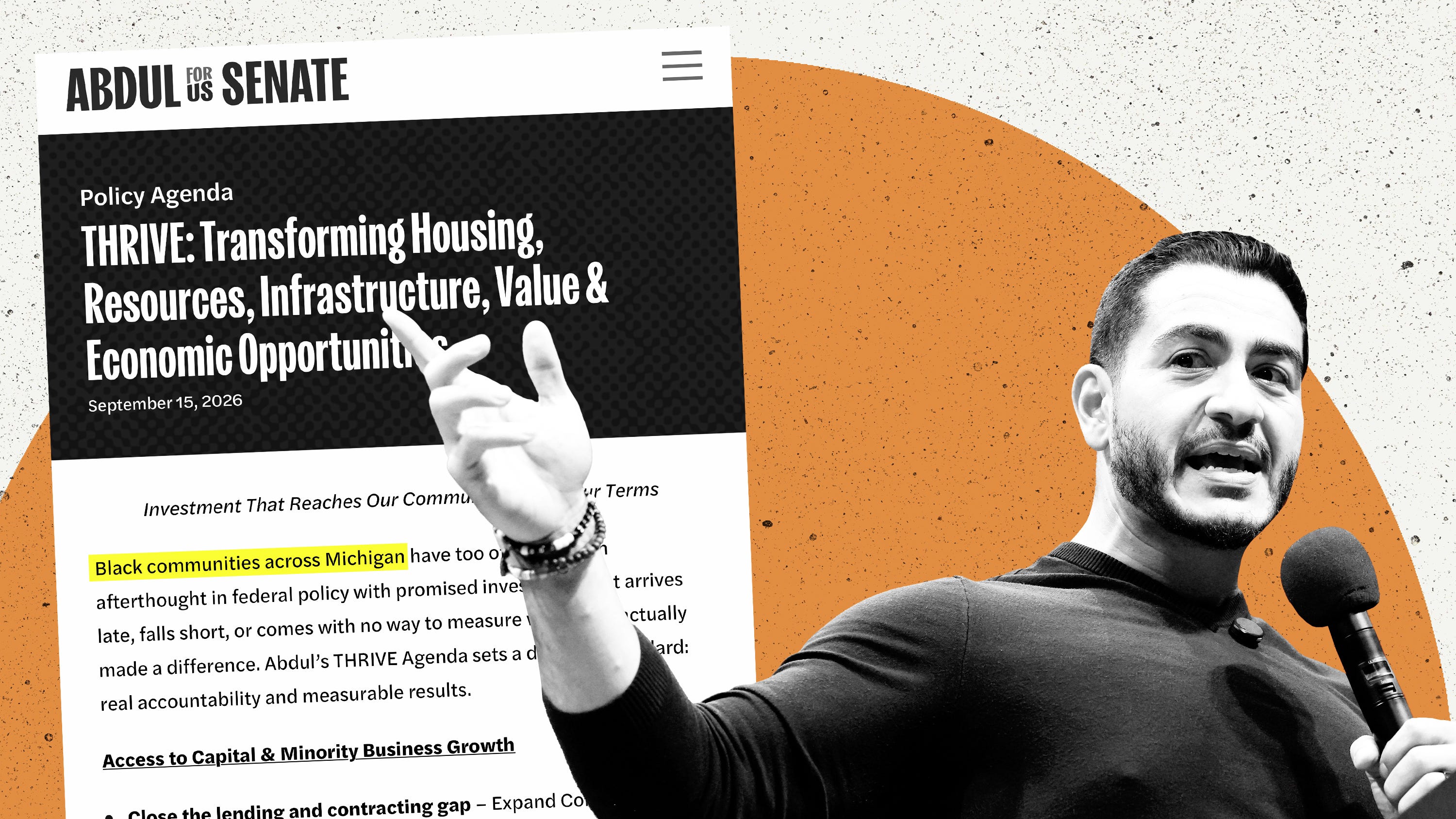
His opponent says he takes them for granted—but let’s compare the candidates’ agendas. A NEW ADVERTISEMENT running against Abdul El-Sayed in Michigan’s Senate race targets black voters by arguing the Democratic nominee takes them for granted. “Abdul El-Sayed’s platform is nearly five thousand words,” says a narrator. “He names fifteen foreign countries he cares about. A single mention of black people? Not once.” The narrator then lists issues like housing and school choice as important to black voters on which El-Sayed allegedly says nothing. “He can’t find the words to talk about us,” the narrator concludes, “and he wonders why we don’t trust him.” The ad’s central premise is an abject lie. If you type “El-Sayed agenda black Americans” into Google, literally the very first hit is a page from his campaign website called “Abdul El-Sayed Announces Policy Agenda to Empower Michigan’s Black Communities.” The page summarizes (and links to a longer version of) what El-Sayed has called his “THRIVE” agenda, released in September. It includes a twenty-one-point plan to help black Michiganders through a variety of programs, including housing assistance and education reform. The attack ad, which comes from an independent political action committee that opposes El-Sayed, isn’t the only dishonest one circulating in the tightly contested Michigan Senate race. But the ad has extra political significance because of its target audience. To win in Michigan, Democrats have in modern times needed both overwhelming support of black voters and high turnout, too. El-Sayed struggled with these voters during the primary, and his Republican opponent, former congressman Mike Rogers, has been trying to exploit that weakness by appealing directly for their support. The contest for Michigan’s black voters has gotten a ton of media attention (including from me!). It’s a genuinely important story that sheds light on larger, deeper issues, like historical tensions between black and Arab communities in Michigan and the way black voters think about progressive versus moderate politics in the Democratic party. But something important is missing from the current dialogue: What the two candidates
Paid postJonathan Cohn ·
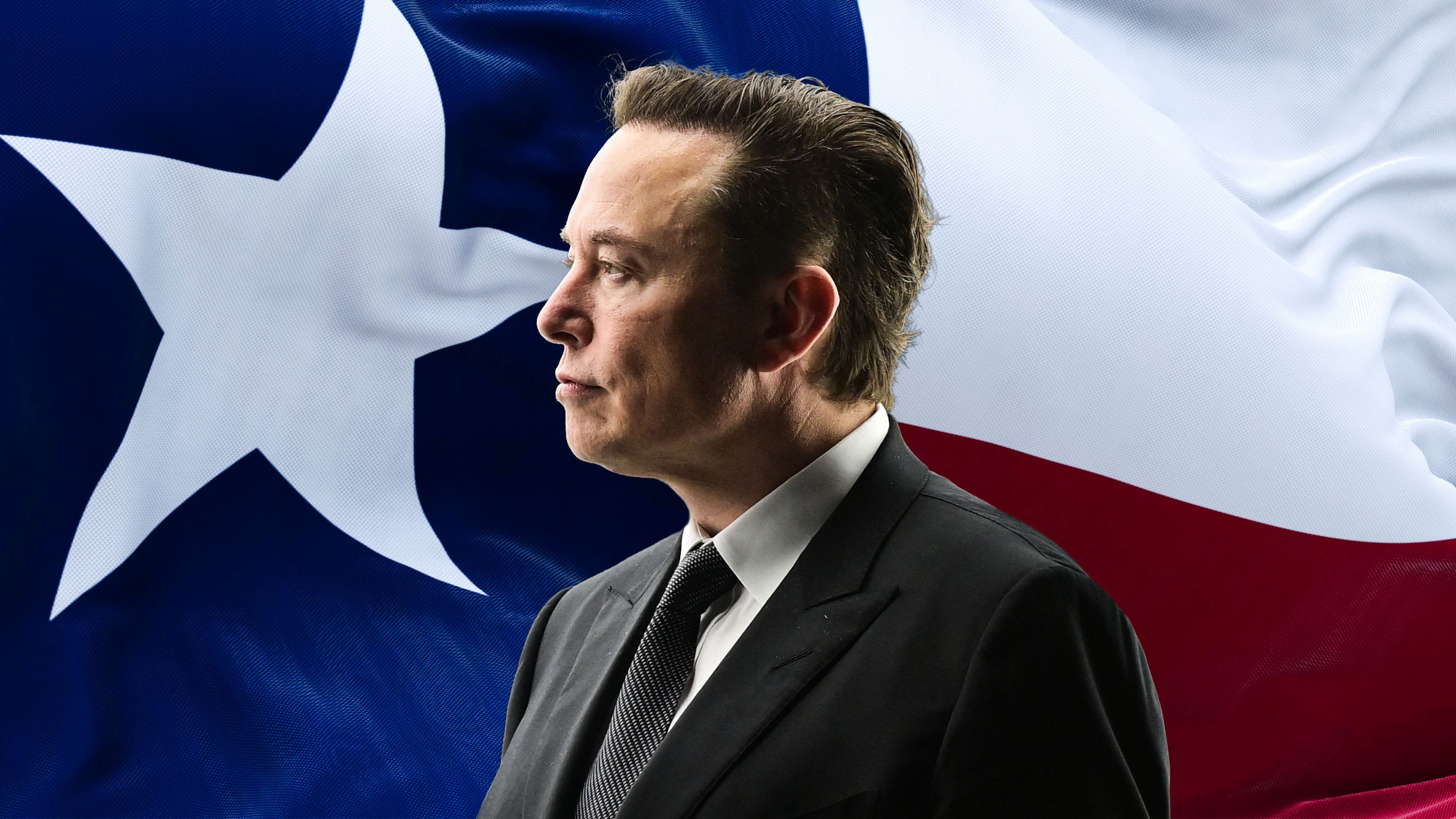
Maybe he’s the villain Democrats needed. A new New York Times poll today has some surprising findings in close Senate races: South Carolina is basically a tie at 48 percent for Sen. Darline Graham and the same for Annie Andrews. Florida isn’t nearly as close: Sen. Ashley Moody, at 50 percent, is six points ahead of Democrat Angie Nixon. In Minnesota, Peggy Flanagan is at 54 percent, while Michele Tafoya is basically on the sidelines of her own race. Happy Wednesday. Talarico vs. the Tycoon by Andrew Egger Democrats’ main hope for next week’s elections is to win enough seats to put a check on Donald Trump. But in Texas, James Talarico is trying to create a Democratic template for another problem: How to deal with Elon Musk. There is no preexisting playbook for dealing with Musk, because Musk is something new in American political life. It’s not just that he’s the richest man in the world and the biggest individual donor in American history. (Musk’s political expenditures since 2024 have already surpassed George Soros’s campaign contributions over his entire lifetime.) It’s also his extraordinary level of engagement. If Musk decides he wants a Democrat gone, he doesn’t just throw a bunch of money behind that Democrat’s opponent—he makes it his personal mission to stamp him out. This cycle, Musk has trained his sights on Talarico. Of the astonishing $446 million he has plowed into the midterms, around $180 million has gone to the Texas Senate race—financial life support that Talarico’s opponent Ken Paxton has desperately needed. Most billionaire political donors would be content to throw their lucre into a PAC to buy up a bunch of ad time and call it a day. Musk goes further. Some of the dirtiest tricks of the cycle seem to be connected to his spending. Last week, I wrote about a Wyoming group calling itself the Texas Transgender Student Union (TTSU) and its apparent attempt to gin up a new trans panic by impersonating a genuine Texas trans-rights group, the Transgender Education Network of Texas (TENT), and sending inflammatory mailers to Texas Republican voters. TENT sued, and yesterday, Texas reporter Steven Monacelli reported that TTSU had retained an interesting lawyer: Chris Hilton, who defended Ken Paxton during his impeachment and represents Musk in a defamation lawsuit against the organization Media Matters. The trillionaire has other megaphones. On X, where he has 240 million followers and owns the algorithms that ensure everyone sees his posts, he has tweeted, retweeted, or replied to tweets attacking Talarico more than forty times in the last 20 days. That number doesn’t include all the attacks Musk’s shared without mentioning the candidate. Talarico is “a far left extremist.” Talarico “hates Texas and America.” There is something “deeply wrong” with “the creep” Talarico who “supports voting fraud” and “wants to trans your kids and destroy the border.” This last is a recurring theme: Musk has repeatedly claimed that Talarico “will vote to take away your children and transition them.” Democrats have wealthy donors of their own, of course. But there’s nothing they can do to match Musk in raw wealth and raw rage. Democrats have only one hope: to poison his donations by turning his involvement in their races into a major liability for the Republicans he supports. That’s exactly what Talarico has been trying to do lately. In his stump speeches and campaign ads over the last week, the Texas Democrat has gone hard after Musk’s enormous investments in Texas, casting him as a shadowy figure single-handedly propping up Paxton’s campaign for his own ends. “In all likelihood, if you’ve seen an attack ad on your screen, that was Elon. If you’ve gotten lies in your mailbox, that was Elon. If you’ve received a text message saying scary things about me, that was Elon too,” Talarico has been saying on the stump. “Elon Musk wants our land. He wants our water. He wants our taxpayer dollars. He wants his very own personal United States s…
William Kristol ·

Our on-again-off-again conflict with the Houthis is about more than Iran. OF ALL THE WARRING GROUPS in all the various conflicts in the Middle East, the Houthis in Yemen seem to me to be the least well understood relative to their importance, at least based on news reports about them. Too often this faction is summarized as merely an “Iran-backed” terrorist group. That is true, but nothing close to the whole truth, and so misleading that I worry it may cause some Americans—including policymakers—to arrive at unrealistic and dangerous conclusions about what kind of threat the Houthis pose to American interests and what American policy toward them should be. Last weekend, Saudi Arabia once again defended itself against Yemen. The Houthis fired at least twelve missiles and two drones at Saudi territory. While Saudi air defenses claim they intercepted and destroyed the missiles, including one headed toward Riyadh, the incident marks the continuation of a month of bombardment against the kingdom that has grounded thousands of flights and disrupted shipping. The Houthis have escalated their attacks against Saudi Arabia’s airports, energy facilities, and military installations, including a devastating attack earlier this month on Riyadh’s international airport that killed thirteen and wounded hundreds more—the deadliest attack on the country in over a decade. For Americans focused on the Iran war, the temptation may be to view these attacks as yet another example of Tehran directing its regional proxies. That interpretation overlooks the fact that Houthis have been fighting Saudi Arabia for more than a decade. The current campaign reflects the Houthis’ own particular political, territorial, and economic ambitions. They don’t need instructions from Iran to attack their northern neighbor (although Iran certainly benefits), they have reason enough—and now they also have cover from the ongoing confrontation between the United States and Iran. The Houthis are a major problem, not just for the Yemeni government and for Saudi Arabia but for all international trade, and therefore for the United States. To know how to address the problem, it’s first necessary to know who the Houthis are, where they come from, and what they want. THE HOUTHIS EMERGED IN THE 1990s from a political and religious movement in northern Yemen. Rooted in the country’s Zaydi Shia community, they initially challenged the Yemeni government’s political and economic policies, eventually becoming an armed insurgency. By 2014, the Islamist group had beaten back the Yemeni Army and seized the capital, Sanaa. Saudi Arabia feared that a hostile insurgency along its southern border, especially one supported by Iran, could become a permanent threat to the security of the Saudi state and the royal family. What followed was a grinding war involving airstrikes, ground offensives, missile attacks, blockades, and an extraordinary humanitarian catastrophe. Since 2014, hundreds of thousands have been killed by violence, disease, or famine; millions have been displaced; and Yemen has become one of the world’s most desperate humanitarian emergencies. But for all that, neither side has achieved its original objectives. Even with support from the UAE, Saudi Arabia’s military superiority did not translate into the defeat of the Houthis, while the Houthis’ control of northern Yemen never translated to control of the entire country. Over time, with the help of Iranian technology and know-how, the Houthis improved their missile and drone capabilities and repeatedly demonstrated that they could threaten Saudi cities and critical infrastructure. A United Nations–brokered truce in 2022 significantly reduced large-scale fighting, and Saudi Arabia subsequently pursued negotiations to extricate itself from the conflict. But the truce never resolved Yemen’s underlying and ever-expanding political disputes, and negotiations failed to produce a lasting settlement. The fighting diminished, but the war’s…
Mark Hertling ·
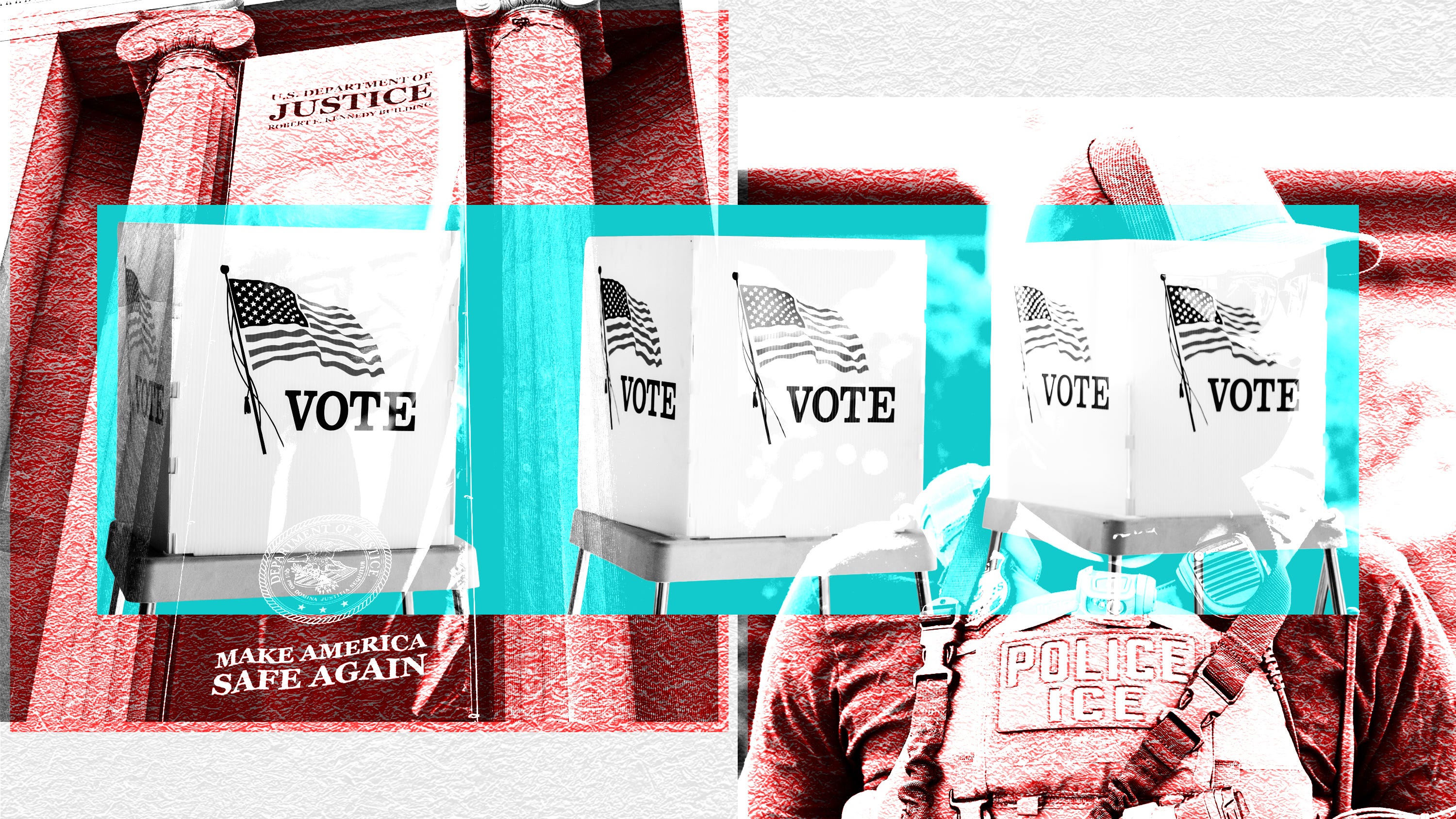
A look inside their election-defense operation. Stopping the steal While it might feel to you as though this year’s midterm elections sneaked up on us, a handful of House Democrats have been preparing for this moment for years. One of the upshots of January 6th and the related attempts to disrupt the certification of Joe Biden’s 2020 presidential win was that congressional Democrats realized they could no longer count on American elections going smoothly. As a result, there is now significant infrastructure to track and respond to election disputes as they arise. Democrats are just hoping that they’re not missing anything. Multiple lawmakers have expressed concern about the upcoming vote and tried to fortify what they see as vulnerabilities. “The Department of Justice has been anything other than a bulwark. They’ve been an aggressor, and they continue to try to disrupt and throw, frankly, spaghetti at the wall,” said Rep. Joe Morelle (D-N.Y.). “But I think we’re prepared. I know we’re prepared, and we’re observing and watching every move they make.” During the past year, the administration has sought to restrict mail-in voting, mused about deploying ICE agents and other federal law enforcement officers to polling locations, and much else. The expected flurry of lawsuits and election challenges is keeping Democrats and local officials up at night. As I noted last week, Marc Elias, a Democratic election lawyer deeply involved in the party’s planning process to respond to disputes, said he’s expecting the Trump administration to use the same kind of flood-the-zone strategy that the president and his allies used after losing the 2020 election. “Those will be defeated,” Elias said. Democrats are already working to preempt these anticipated maneuvers, which will put them in a better position to deal with other, less-predictable challenges that might come up on or after Election Day. Trained congressional staffers are being sent to races where Republicans or rogue election officials might try to contest unfavorable results. They are primarily going to serve as observers, taking contemporaneous notes and recording witness accounts that could become useful in court if results are disputed. While Democrats have enlisted nearly three hundred staffers for these roles, where they are ultimately sent will depend on which races have the most problems. “I think it’ll be an expanded list beyond what we would typically do,” said a senior Democratic staffer on the House Administration Committee. “We could be somewhere between sixty or seventy districts.” Morelle, who is the ranking Democrat on the House Administration Committee, repeatedly expressed confidence in his team’s ability to prevail over anything the administration throws their way. Over the summer and into the fall, Morelle has led shadow hearings to examine readiness efforts and take stock of resources in high-pressure districts across the United States. But lawmakers are also feeling a bit nervy about the possibility that the federal government will use intimidation tactics at polling sites and ballot drop-off locations for mail-in voting. And they’re not thinking only about whether ICE agents will show up at polling stations. Rep. Mark Takano (D-Calif.) told reporters that “ICE being deployed and even visible, even if it’s outside of the 200-foot perimeter” of a polling precinct or high-traffic ballot drop-off location, could intimidate key voter demographics. “There’s some credible fear among American citizens who may be of Latino descent, who may be of Asian descent,” Takano said. “People might have legitimate fears that they could be apprehended by ICE.” While voting is underway in many states, the Trump administration has already started to meddle, filing a lawsuit in the Alaska Senate race arguing that voters might not understand the difference between the two Dan Sullivans. That’s the argument of a lawsuit filed by the Justice Department, contending that Alaska should delay t…
Joe Perticone ·

Live by the government, get regulated by the government. 1. Beginnings I’ve been making the case for nationalizing SpaceX for years, but I’ve never put the arguments all in one place. That’s what we’re doing today. Let’s stipulate that this newsletter won’t have all the answers. It’s a starting point for deeper discussions. But a longstanding reality is suddenly obvious to people: SpaceX is a national security vulnerability. Something must be done about it. Two things up front: First, my headline is “Nationalize SpaceX,” but that’s shorthand. I don’t know that we need to “nationalize” the company, per se. Maybe we do! Or maybe it needs to be broken up! Or aggressively regulated! So for the purposes of discussion, please treat “Nationalize SpaceX” as a catchall and not a specific policy proposal. We can talk about nationalization as we go; just understand that it’s only one tool. That’s the first thing. The second thing is that we should divorce the person of Elon Musk from this conversation. Musk is a uniquely dangerous individual and the fact that he controls SpaceX increases the national security risks. But the risks would still exist no matter who controlled the company. Imagine a wise, beneficent trillionaire instead. If he controlled SpaceX outright, it would still be an unacceptable risk for America. In the first section I’ll explain why SpaceX is a danger to national security. In the second I’ll lay out some possible policy solutions. Are you ready? Good. Let me start by explaining why you can’t buy a combat-ready fighter jet.
Paid postJonathan V. Last ·

They might not hate her. But they’re “very disappointed.” YES, SUSAN COLLINS SITS ON A THRONE of skulls of her former political opponents. And no one should underestimate her ability to defy the odds yet again this election cycle. And yet, the vibes do feel different this time around. A group of Mainers who voted for Joe Biden and Susan Collins in 2020 tells us why.
Paid postSarah Longwell ·

Knock wood. Throw salt. Cross your fingers. Can Bibi Netanyahu hang on? Israel’s six-term prime minister faces a stiff challenge in Israel’s elections today. Polls show the bloc led by Netanyahu’s Likud party neck and neck with the bloc led by former military chief Gadi Einsenkot’s Yashar party, and voters are turning out at levels not seen in Israel for half a century. Meanwhile, Yair Golan of the Democrats party faced an apparent assassination attempt at an election-day campaign stop just hours ago. Happy Tuesday. Rubbing a Rabbit’s Foot by William Kristol We’re a week out from election day, and things continue to look good. In fact, I’ve got to say, they’re looking a little bit better every day. The early vote— [I INTERRUPT THIS NEWSLETTER TO KNOCK ON WOOD, TOSS SALT OVER MY SHOULDER, AND, YES, PULL ON MY EARLOBE (THAT ONE’S NEW TO ME, TOO, BUT APPARENTLY THEY DO THAT AS WELL IN SOME PARTS OF THE WORLD). I DO THESE THINGS OF COURSE TO PREVENT BEING JINXED AND TO WARD OFF THE EVIL EYE AFTER MAKING SUCH A HOPEFUL OR CONFIDENT STATEMENT. I WANT TO ASSURE ANY AND ALL JEALOUS DEITIES READING THIS NEWSLETTER THAT I’M NOT TRYING TO BE PRESUMPTUOUS. REALLY! I’M JUST TRYING TO TELL IT LIKE IT IS.] Anyway, as I was saying . . . Insofar as one can read the entrails of the early vote—and more than 30 million Americans, roughly a quarter of the likely overall turnout, have already voted—they seem to confirm the polls, which continue to signal a big blue wave. For example, Reuters/Ipsos, which collected responses as recently as yesterday, has President Trump at 35 percent approval and 65 percent disapproval among registered voters, with 15 percent strongly approving and an astounding 53 percent strongly disapproving. Democrats lead the generic ballot among both registered and likely voters by 9 points. And Democrats say they’re more enthusiastic about voting than Republicans. The Reuters/Ipsos poll is no outlier. In the FiftyPlusOne polling average, the generic ballot now has Democrats ahead by 9.2 percent, up from 7.7 percent at the beginning of October, and 6.3 percent at the beginning of September. The trend remains Democrats’ friend, and the Republican spending onslaught hasn’t done much if anything to stop it. Meanwhile, Trump’s election subversion schemes have so far proven ineffectual (which doesn’t mean we won’t see lots of desperate efforts over the next week, and then perhaps after the votes are counted). And it’s hard to see any great surprise emerging in these last few days for the Republicans. [I INTERRUPT THIS NEWSLETTER ONCE AGAIN TO KNOCK WOOD, TOSS SALT, MUTTER HEARTFELT IMPRECATIONS TO THE GODS . . .] Okay, back to business. So the House is almost certain to flip, and the Senate seems likely—I’d say very likely—to do so. [WOOD KNOCKED, SALT TOSSED, IMPRECATIONS MUTTERED, ONCE AGAIN.] Since 1954, there’ve only been two occasions on which both chambers have changed hands in a midterm election: 1994 and 2006. The 2006 precedent could serve as something of a warning. That midterm wave was followed by a big Democratic presidential victory in 2008 and further congressional gains. But the financial crisis of 2008 was so severe that the Obama administration had to spend an awful lot of time cleaning it up. The administration also made some political miscalculations. And the midterm elections of 2010 changed the country’s political momentum decisively. In an economic and geopolitical environment as fraught as the one we’re now in, it’s going to be a real challenge not just to follow up a midterm victory with a presidential electoral victory, but then to govern in a way that succeeds in actually reversing the nation’s course and changing the country significantly for the better. As I suggested last week, the 1930–1932 sequence, which cleared the path for the New Deal, is probably the best precedent for that. But that was a long time ago, in a different nation and world. “Hardly a man is now alive” who remembers that era. But that…
William Kristol ·

Our new survey explores masculinity, sports gambling, and whether Americans want their commentators running the country. SECRETARY OF DEFENSE PETE HEGSETH obviously sees himself as a paragon of masculinity. He insists on calling his department by the tough-guy nickname Department of War. He has mandated testosterone-deficiency screenings for military personnel. He regularly showcases himself working out with troops. He frequently expresses disdain for people who are overweight (whom he mocks as “fatties”). And his general disapproval of women in leadership roles is a matter of public record. With the amount of effort the secretary puts into demonstrating his manhood, you’d think he’d be seen as a kind of model for young men who are struggling academically, socially, professionally, and emotionally in today’s world. But a new national survey conducted by The Bulwark and Pablo Torre Finds Out shows it’s exactly the opposite. Only 28 percent of American adults said they viewed Hegseth as a strong role model for American men, compared with 39 percent who didn’t. Looking at just 18-to-29-year-olds, only 18 percent viewed Hegseth as a strong role model compared to the 34 percent who did not. The findings show the limitations of Hegseth’s alpha male preening. But if there is a silver lining in these findings for the ex–weekend talk show cohost, it’s that he fared only second-worst among the nine men from politics, sports, and Hollywood we asked about. The person who finished at the bottom of the male-role-model rankings was his boss, Donald Trump, with 55 percent of respondents saying he was not a strong male role model, and 37 percent saying he was (creating a negative 18-point margin). By contrast, the strongest male role models we polled included Matthew McConaughey (net +33), Barack Obama (+28), and LeBron James (+25). Of those three, Obama was most likely to be rated a strong male role model, with 59 percent of adults viewing the former president as a strong male role model (a number that includes 28 percent of those who voted for Trump). But not all Democrats polled so well. California Governor Gavin Newsom came in with a -2 male-role-model rating, with 35 percent saying he is a strong male role model and 37 percent disagreeing. Those results are just a sampling of the insights from the new poll investigating how the public views the intersection of sports and politics and the figures that dominate both fields. Respondents were also asked their thoughts on sports commentators, sports betting and prediction markets, and transgender athletes. Our findings suggest that sports are one of the last venues in which Americans come together and put aside their differences. But they also show growing ambivalence about the future of athletics—including a significant appetite for greater regulation of the prediction markets that have enveloped much of sports. GIVEN THE PROLIFERATION of sports betting over the past decade, the survey asked Americans how often, if ever, they bet money on sporting events. Sixty-eight percent said they never bet on sports, while 6 percent said they do so often and 27 percent said they do so occasionally. By a 14-point margin, men were more likely to report that they often or occasionally bet on sports than women. And 42 percent of those who voted for Trump reported that they bet on sports compared to just 30 percent of Kamala Harris voters. But across most demographic groups, a plurality of Americans believes that legalized sports gambling has had a negative effect on sports (44 percent). This includes 54 percent of Harris voters and 47 percent of those who backed Trump. Only 7 percent of Americans see the legalization of sports betting as having a positive impact on sports, compared to 34 percent who said it has had neither a positive nor negative effect. Part of this pessimistic attitude toward sports betting might be explained by the fact that more than half of Americans believe that professional athletes o…
Brendan Hartnett ·

Detractors say the Old Glory Club has become the ‘Old Gloryhole Club.’ THE SECRETIVE FAR-RIGHT Old Glory Club launched in 2022 with a particular goal: to build networks of far-right men who could work together in the event of governmental collapse—or at least exploit divisions within the existing Republican party in the meantime. But last week, far from restoring America from the imaginary ashes, the Old Glory Club itself started cracking up. The club, which has claimed to have hundreds of members and forty chapters across the country, expelled two of its chapters as part of a clash over what the club’s stances should be on Donald Trump and on Israel. As one disenchanted critic said of the humiliating public airing of private acrimony, it’s become more like the “Old Gloryhole Club.” As the bad blood spills into public view, the episode has provided further proof that no right-wing group, no matter how obscure, can hold itself above the right’s churning war over groyperism. “Another organization sabotaged by wignats,” groaned Geoffrey Martin, a prominent Canada-based far-right X user under the name “Captive Dreamer,” describing the club’s discontents with a brutish portmanteau for “wigger nationalists.” Old Glory Club leadership, as well as the heads of the two banished clubs, did not respond to requests for comment about what sparked the feud. Maybe that secrecy is deliberate—conservative commentator Chris Brunet, who has dug up a lot about the current imbroglio, describes the club as a “not-so-secret secret society.” Recounting this inter-right drama can all get a little ridiculous: It’s an organization where the chapters are called things like the “Leatherstocking Heritage League” (Upstate New York) and prominent figures include the outlandishly named Ryan Turnipseed—a renegade Lutheran excommunicated from his conservative church for calling it woke. But while the Old Glory Club sounds like a LARP gone weird, it has a truly ominous side, too.
Paid postWill Sommer ·
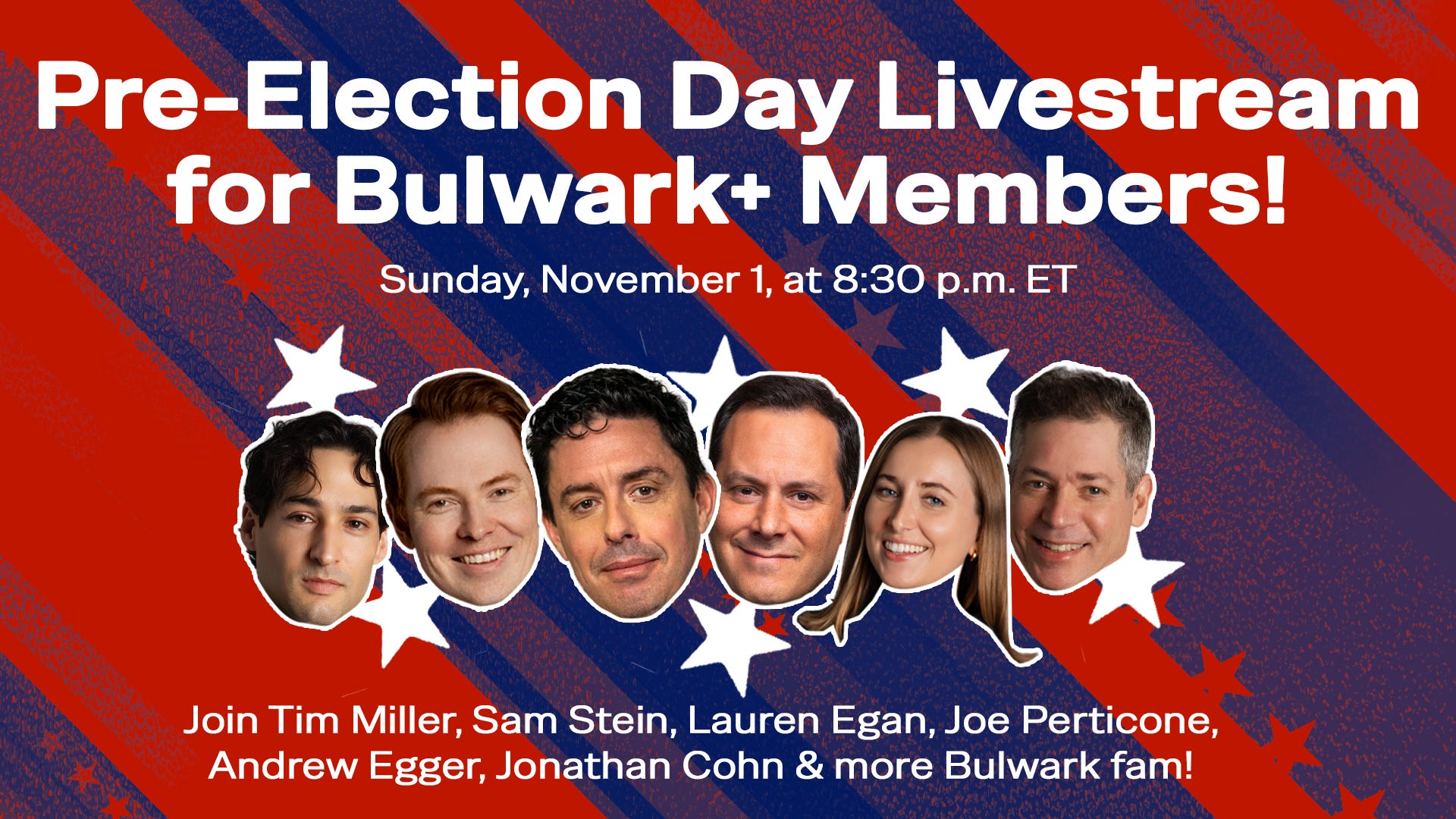
A Bulwark+ members-only livestream with Q&A Tune in: Sunday, November 1 at 8:30 p.m ET for a livestream exclusively for Bulwark+ members featuring Q&A and live chat. Join us this Sunday for a pre-election night livestream for members featuring Joe Perticone, Andrew Egger, Tim Miller, Sam Stein, Lauren Egan and Jonathan Cohn. The gang will cover the latest news in the hottest races and take your questions. Can’t join us live? No problem. We’ll post the show afterwards on the Bulwark Takes feed and on the site. Watch your inbox for the link to the livestream.
Paid postJoe Perticone ·

There’s a divergence in the Matrix. 1. Forecasts We’re eight days out from Election Day. Early voting is happening. And we have two very different outlooks on the election. If you go by the vibes we’re looking at a gigantic Democratic wave. If you go by the polls, the picture is . . . more complicated. Today we’re going to look at both of them in some depth. If you want the TL;DR, it goes something like this: Vibes: Democrats have a huge advantage on candidate quality. There is no good economic news for Republicans. The president is extremely unpopular. All of the qualitative markers are moving away from Republicans. Polls: Even in places where the Democrat has pushed the Republican around from day 1, the polls are still within the margin of error. We’re looking at a series of coin flips. That’s the short version. The long version? Buckle up, buttercup. There are no easy answers here. The downside risk is pretty rough. But the upside outcome? You’re gonna need a cigarette for what I’m calling the HULK SMASH Kaiju Tsunami . . .
Paid postJonathan V. Last ·

Fake-ass promises, real ass obsession. Eight days to go. Happy Monday. Ass Clown by Andrew Egger In a weird way, it’s almost sad to see. Donald Trump has spent a decade as the main character of our politics. He has managed to break and destabilize shockingly much in that time. Yet now, watching him stagger toward a humiliating midterm rebuke with his movement seemingly on the brink of collapse, I have to admit it’s hard to feel much pleasure about it all. Instead, I still mostly feel disgust and shame: This is the would-be Napoleon who managed to haul the United States of America to this ridiculous place? Trump, who still apparently believes in the mystical election-saving power of his rallies, has spent weeks dragging himself from stage to stage across the country. He is plainly exhausted; he is noticeably hoarser, looser, and less energetic than he was even a couple weeks ago. Most of what he dishes out is reheated sludge—microwaved leftovers from 2016 and 2024. Two things are new, though. One is this ass thing. Can we talk about this ass thing? Trump can’t stop talking about the derrieres that surround him. Mostly it’s Ohio Sen. Jon Husted, but it’s started to spread. “I’ve been living with this whole thing about the ass,” he said last night in Michigan. Then he turned to Mike Rogers: “I’d say that about your ass, too, Mike, if it gets you a guaranteed victory.” Not in a gay way, though, he hastened to clarify. “By the way, I’ve looked at one hell of a beautiful ass before,” he added. “Nicki Minaj. That’s hard to miss.” He then invited Minaj, who was in the audience, to stand up so people could get a better view. But the main new thing is the conditional promise. You’ve heard the big one, of course: Trump’s no-foolin’ pledge that, if Republicans win the midterms, he’ll reward the public’s good behavior with $5,000 checks for every adult. What you may not realize, if you don’t watch the rallies, is how basically every Trump promise is now framed like this. He goes to Westchester, Kentucky, and promises a new $100 million Defense Department investment in a pharmaceutical plant there—but only “if Republicans win.” “You have to win, Andy,” he tells Senate candidate Andy Barr. “Otherwise, forget it.” He goes to Park City, Kansas, and promises a farmer-pleasing change to allow the sale of ethanol-blended gas year round—but only if Sen. Roger Marshall wins re-election. “If Adam Hamilton is in, I’m not doing it,” Trump says. “I’m only doing it for him.” He goes to Greenville, North Carolina, and promises to settle longstanding claims from veterans exposed to contaminated drinking water while serving at nearby Camp Lejeune decades ago. But only “if we win the House and Senate.” “If we don’t win, there’s no money,” Trump says. “If we do win, you’re getting it, and it’s going to be finally over with that nightmare that’s been going on for so many years.” As is typical with Trump, none of these quid pro quo promises are actually true. Some of these things—the $5,000 checks, say—are never happening, whether Republicans win or not. Others—the Westchester plant, the Camp Lejeune settlements—are moving forward either way. The president either doesn’t know this, or does know it but thinks his voters won’t. And what if they were true? What if the president was actually planning to try to withhold settlements from veterans genuinely harmed by government carelessness out of pique that American voters rejected him and gave Congress back to the Democrats? Which possibility would be more embarrassing? Which would be more shameful? Once upon a time, this stuff actually seemed to work for Trump. He built a whole lurid Technicolor artificial world for his supporters to live in: a world where pedophile satanist Democrat elites and murderous asylum-escapee migrants had conspired to kill America, a world where he had arrived as Messiah to resurrect it and lead it to the promised land. He lied and lied, and then from time to time he won. But now it’s ov…
William Kristol ·

Dreams of a bigger map. LET’S IMAGINE FOR A SECOND that November 3 goes extremely well for the Democratic party. The polls were largely correct, and maybe they even underestimated the party’s strength in a few races. Democrats flip the Senate, picking up seats in Ohio, Iowa, Alaska, North Carolina, Texas, and Kansas, and win governorships in some of those states—states that Donald Trump won three presidential cycles in a row. They even get within a point or two of winning in Mississippi and South Carolina. Obviously, when it comes to electoral results for Democrats, this would be nirvana. But party strategists and advisers are cautiously considering it as a possibility, and they aren’t just thinking about 2026. These sorts of victories could have real implications for 2028, too. “If you win Iowa in the governor’s race, if you win Ohio in the governor’s race, you are effectively putting those states in play in 2028,” Dan Kanninen, the battleground director for the Biden-turned-Harris presidential campaign, told me. Superstitious Democrats are loath to talk about the next presidential cycle in the closing week of a hard-fought midterm election. But Kanninen is not the only one whose eyes are gazing towards the political horizon. His argument echoes one Kentucky Gov. Andy Beshear has been making on the campaign trail throughout the year: that the party’s success in 2028 depends on The midterms are just days away, and the battle to shape what Americans believe is reaching a fever pitch. Campaigns are spending millions trying to persuade voters. But democracy needs more than political messaging. It needs independent journalism that asks uncomfortable questions, challenges falsehoods and exposes hypocrisy, and seeks to understand voters, even when—especially when—it complicates the story. That kind of work takes time and resources. It’s our members who make it all possible. Help us keep telling the stories that matter—from these midterms through 2028 and beyond—by joining Bulwark+ today.
Paid postLauren Egan ·

The attacks on Abdul El-Sayed are dishonest and ugly. But will they work? REPUBLICANS KEEP SAYING their campaign against Abdul El-Sayed isn’t trying to exploit fear and hatred of Muslims. Then they keep doing things to prove that it is. They’ve been at it for months—literally since the first hours after El-Sayed won the Democratic nomination in early August, when the GOP launched ads referring to him by his full first name, “Abdulrahman.” But they may have hit a new low last week, with an attack ad that’s all over the internet and television. Its central claim is that El-Sayed wants to impose sharia law, the religious code of Islam, on the rest of America. The ad and the effort behind it are worth examining in detail, regardless of whether you care about Michigan’s Senate race—or, for that matter, how you feel about El-Sayed potentially becoming Michigan’s next senator. That’s because the campaign against him is an example of a destructive, dangerous trend visible all over America: Republicans and their allies not even pretending to observe traditional standards of accuracy, civility, and basic decency in politics, especially when it comes to Muslims. Those standards have never been particularly high, to be clear, and Republicans aren’t alone in twisting facts to suit their political agendas. But the freedom that they feel to describe Islam and its adherents as menaces—along with their willingness to exploit the truth-bending capabilities of social media—makes for an especially toxic mix. You can see it in Georgia, where a Republican candidate for lieutenant governor put out an AI-generated ad of Muslims invading a suburban neighborhood. You can see it in Alabama, where a GOP candidate for attorney general proclaimed in a campaign spot that anybody who supports “radical Islam” can “Allahu Akbar your butt all the way back to the Middle East.” You can see it in Texas, where the state GOP platform literally calls for passing “Don’t Sharia My Texas” legislation. The rhetoric and strategy are all over the U.S. Capitol, too, where some Republicans have formed a “Sharia-Free America Caucus.” And that’s not to mention what you’ll hear from Donald Trump himself, who has repeatedly—including this past Friday—called El-Sayed “a violent, vicious jihadist.” Trump and the others may actually believe El-Sayed is some kind of threat. Or not. Who knows. But this much is clear: Their willingness to bash Muslims and Islam shows they believe the strategy works, and they are sure to keep at it if the midterms go their way. SO LET’S TALK ABOUT that Michigan ad, which you can watch here: The narrator begins by quoting something El-Sayed once told the New York Times: “When I die and I stand before God and go through everything I did in my life, I don’t want to say I did it the easy way instead of the Sharia-compliant way.” Dark, intense music, the kind you’d expect from an overdramatized thriller or horror film, plays in the background while the narrator asks: “The Sharia law way: What’s that?” Then comes the answer, words appearing in red and white against the backdrop of a woman in a black niqab: “Using government to dictate how women dress, requiring they have a guardian, or prohibiting women from filing for divorce.” “The Sharia-law compliant way,” the narrator concludes. “Abdul El-Sayed’s way.” It’s difficult to capture the full dishonesty of the ad. But a good starting point is what El-Sayed was actually saying in that quote, and what he was not. It comes from an interview El-Sayed gave seventeen years ago, to a reporter writing about a Michigan bank that offers customers a special kind of home loan for Islamic customers. The article itself is actually quite heartwarming. It tells the story of an Ann Arbor banker who learned from a customer that Islamic law forbids the charging or payment of interest. The banker, who is Catholic, adopted some alternative financial packages (like loans that build interest into the selling price) that made mortga…
Jonathan Cohn ·
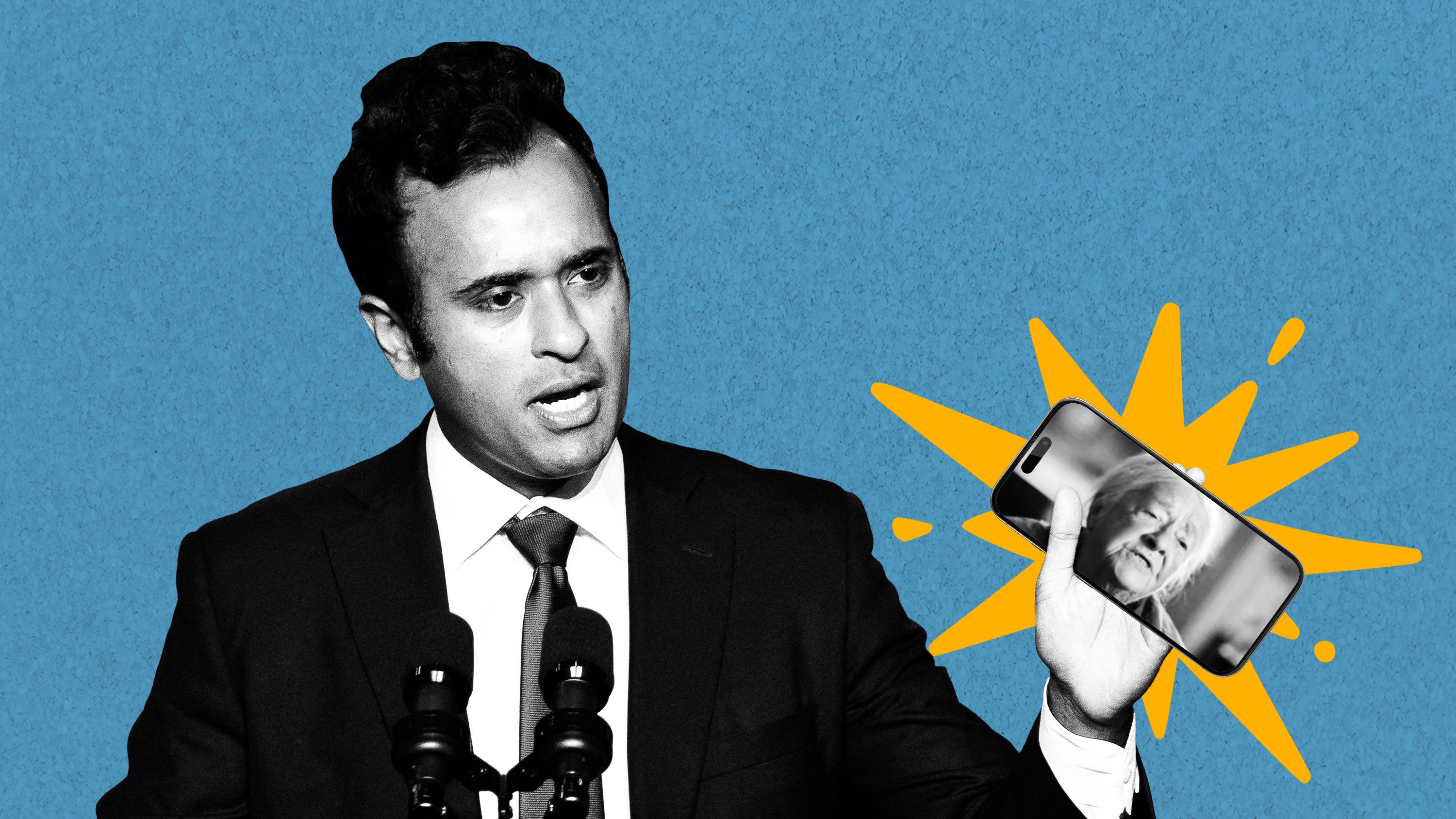
He spent millions smearing Amy Acton, prompting national criticism. But how low is too low for Trump voters? BY NOW, YOU’VE SURELY HEARD about the ad Vivek Ramaswamy is running against his opponent in the Ohio gubernatorial election, Democrat Amy Acton—the one featuring Acton’s mother accusing her of lying about her past. Not mentioned in the ad: that this woman hasn’t seen Acton in forty-eight years, since she fled Ohio with her husband after he was charged with having raped Acton starting when she was 10 years old. Ramaswamy put $4 million behind the spot and he’s been cheered on by President Donald Trump and Vice President JD Vance. It’s a massive bet that voters will believe the mom—despite overwhelming evidence that she is the one lying—and not recoil (as basically much of the top ranks of the Ohio Republican Party have) at the sheer vileness of the attack. Will it work? To find out, on October 22, three days after the ad started circulating online, we convened a group of ten Ohioans who voted for Trump in 2024 but have since soured on him. Of those ten, five people had participated in a past focus group and expressed some openness to Ramaswamy. The remaining five were lukewarm at best on Ramaswamy prior to the group. We played the ad for them, as well as the ad the Acton campaign released in response, featuring her brother. Here’s what happened next: If we’re going to protect American democracy, we have to understand the voters, even when what they tell us is surprising, frustrating, or downright infuriating. That’s why we run so many focus groups: to listen, ask questions, challenge our assumptions, and find out what Americans actually think—not just what we wish they thought. That work takes resources, and it’s our Bulwark+ members who make it all possible. Become a member yourself today and help us keep bringing you the insights you won’t find anywhere else.
Paid postSarah Longwell ·

Trump’s deportation force is giving ordinary people new ways to threaten, torment, and punish their neighbors. “ICE is facial recognition, ICE is surveillance, and ICE is coming after you regardless of your status.” SO SAID REP. ALEXANDRIA OCASIO-CORTEZ at a “Students vs. Billionaires” town hall event in late September. And while her rhetoric is heated, the New York congresswoman has a point. Since the beginning of Trump 2.0, we’ve seen ICE perpetrate wanton violence, especially against Latino fathers and husbands. The agency relies on a gigantic, AI-powered surveillance network to pursue its targets and intimidate protesters. And ICE has assaulted and detained U.S. citizens, showing that in the minds of their agents, the actual legal status of the people they accost does not seem to be a primary concern. Take Ricardo Gonzalez in Long Beach, California. A U.S. citizen and former city employee, Gonzalez was riding an e-bike near his home when ICE agents set upon him. A video of the episode shows an unmarked car driving the wrong way down a one-way street, then swerving at Gonzalez, obscuring him from view. A masked agent then draws a gun, yelling, “Get on the ground.” Gonzalez appears to respond, “Fuck you. You hit me with your fucking car. I’m a fucking U.S. citizen.” A neighbor and witness said an agent jumped out of the car and tackled Gonzalez, and video footage shows Gonzalez yelling in pain that his arm is broken as an ICE agent kneels on his back. The Long Beach Post reports Gonzalez was tased twice, and that one agent taunted the growing crowd of protesters at the scene, saying they didn’t “look legal.” Gonzalez’s daughter confirmed the tasing and said the family is raising money for his hospital bills and recovery. Long Beach Mayor Rex Richardson has filed a complaint on behalf of the city asking for a formal investigation into the ICE operation, and answers to questions such as whether an ICE vehicle hit Gonzalez, whether he was tased, and why medical aid was not rendered immediately. “Many people—they relegate use of force to ‘this person must have done something wrong,’” Richardson told me. “[Gonzalez] was a U.S. citizen. But even if he wasn’t, do these agents have the right to brutalize who they want with no accountability and no oversight? Because if they do, no one is safe.” ICE has also run up a body count this year. Some of the men killed or brutalized—fathers, brothers, and sons—have been undocumented, it’s true. But none deserved the brutal treatment they received for it. And neither did their children or spouses (many of whom are U.S. citizens) do anything to warrant having their fathers or husbands violently taken away. Sometimes the children were with these men when they were attacked. That’s what happened to 24-year-old Sebastian, who was dropping off his two children at their babysitter at 7:30 a.m. on Tuesday when ICE drove him off the road, wrecking his car. The hard-to-watch video shows Sebastian desperately holding onto his toddlers as ICE agents methodically pry his fingers off them. As the two children cry, a crowd gathers, filming the encounter. In this case, the agents eventually let the terrified father go, telling him to report to ICE, the Boston Globe reported. He was apparently not even the man they had come to find. Sometimes the agency’s actions are much more targeted. ICE’s investigative arm raided the home of Rep. Ilhan Omar (D-Minn.) last week, carrying out a plan clearly intended to get the congresswoman denaturalized and deported. The whole episode was defined by the deeply anti-Somali racism rampant on the right, and it sends a message to naturalized citizens across the country: The White House could send law enforcement after you, too. Politics has a way of turning human beings into categories. “Migrants.” “Illegals.” “Detainees.” “Deportees.” Journalism can do the opposite. It can give people their names back. Tell you where they came from. Introduce you to their families. Show you…
Adrian Carrasquillo ·
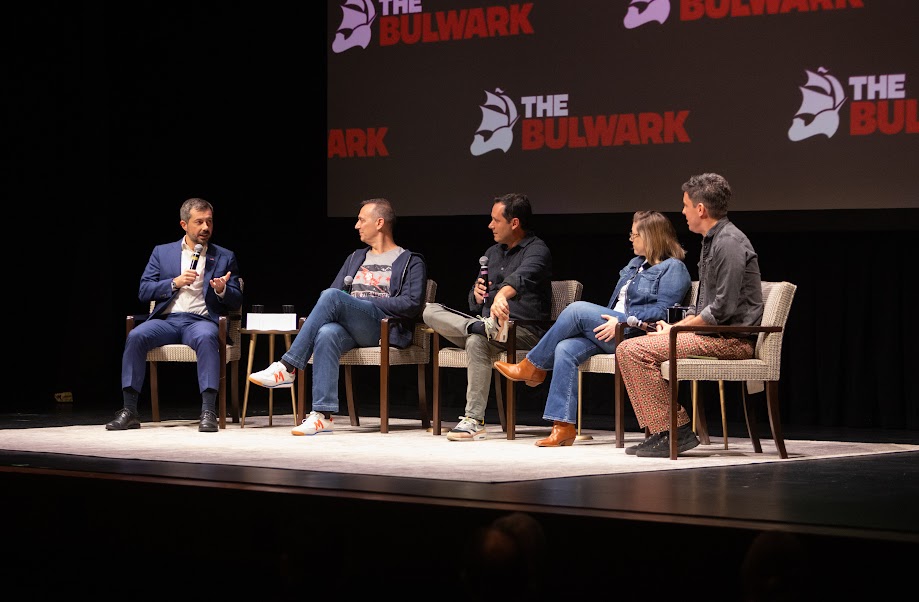
Plus: What You Missed This Week From The Bulwark Happy Saturday! This week, Cathy Young checks in on Trump’s pro-Ukraine defenders, Mona Charen examines what the right gets wrong about France, Pete Buttigieg joins us in Charlotte, and Jonathan Cohn interviews Abdul El-Sayed. Plus: Is Ohio the heart of it all in politics these days? I ponder that while coping with another October without a Cleveland championship. Welcome to Overtime. 📣 COMMUNITY ANNOUNCEMENTS 📣 Join Lauren Egan for an AMA: Got midterm questions? Lauren Egan is taking your questions during a Reddit AMA on Monday at 1 p.m. ET in r/politics. Ask her about the 2026 midterms, Democrats’ chances to retake Congress, and the battle over the party’s future heading into 2028. Join on Monday using this link. BOOK CLUB: THIS WEDNESDAY! Join us for the next edition of The Bulwark Book Club to discuss The Age of Acrimony: How Americans Fought to Fix Their Democracy, 1865–1915. Mona, JVL, and the author, Jon Grinspan, will discuss the book with Bulwark+ members on Wednesday, October 28 at 1:30 p.m. ET. Drop your thoughts and questions about the book for Mona, JVL, and Grinspan in the comments section of this post. Before the book club, Mona highly recommends Netflix’s Death by Lightning about the assassination of James Garfield for a vivid depiction of the time we’ll be discussing. 🚨OVERTIME🚨 THANK YOU, SOUTHEAST! What a whirlwind through Columbia, Charlotte, and Atlanta. To the 2,000-plus who joined us: Thank you for the kind words, gift bags, t-shirts, stickers, and treats. And to our Founders and Best Friends: It was great to spend some time together. You made the trip a blast. Some BTS photos here. Walking for their neighbors… Haitian community members, faith leaders, and supporters are walking more than forty miles from Springfield to Columbus, calling for permanent protections for Haitian immigrants and an end to the use of ankle monitors. Their four-day pilgrimage concludes Saturday. A historic World Series… For the first time in forty-six years, both teams are chasing their first championship. Naturally, I’m sad my Cleveland Guardians didn’t make it past the Rays. I’ve seen this movie before—I watched them get eliminated while we were on the road for our live tour, just as happened right after our Detroit live show in 2024—but it was a great season for Cleveland. Good luck to your team, and to Bryce B and Uncanny390, who both picked the Brewers in the Overtime World Series Bracket contest! Taking Ohio’s ugliness national… I joined Greg Sargent on The Daily Blast to discuss my Morning Shots item on Vivek Ramaswamy’s attack on Amy Acton, Trump’s defense of it, and the Republicans recoiling from the whole thing. (There’s a transcript here.) The grass isn’t always greener… Wired checks in with Americans who moved to Europe and discovered that leaving Trump’s America comes with its own frustrations. Sarah takes the focus group to Ezra… Sarah Longwell joined Ezra Klein to discuss why some of Trump’s 2024 voters feel betrayed, and what Democrats can do with that opening. Watch Sarah on the Ezra Klein Show here. Tech support questions? Visit our new HELP Center! Questions for me? Respond to this message. —30— Editorial photos provided by Getty Images. For full credits, please consult the article.
Jim Swift ·

His embrace of the vile smear fits an administration that shields predators and abandons survivors of sexual and domestic violence. THE CLOSING STAGES of midterm season have highlighted one of the ugly contradictions of the Trumpist movement: The same people who insist on policing public bathrooms to protect little girls from sexual predators are also smearing an actual child rape survivor. It is loathsome. And yet, in a way, it is also perfectly on message. It is a microcosm of the broader Trump agenda: professing support for the vulnerable while shielding their abusers. This week, Vivek Ramaswamy, the Republican candidate for governor of Ohio, released a disgusting campaign ad featuring the estranged mother of his opponent, Amy Acton. There is good reason for this estrangement: In 1978, at age 12, Acton accused her mother’s husband of sexual abuse, going back to when she was 10. After the stepfather was charged with rape of a minor, he posted bond and fled the state. Acton’s mother skipped town with him, and she remained married to her daughter’s accused rapist until his death in 2004. It is this mother, who lost custody of both Acton and her brother due to this abuse, and who hasn’t seen Acton since 1978, who declares in the ad of her daughter: “She lies about her past. She says she grew up living in a tent. None of that is true.” This childhood trauma happened half a century ago. But it has been exhumed by Ramaswamy for political purposes, and is now being exploited by none other than the president. Despite bipartisan unease about this grotesque ad campaign, Donald Trump has encouraged Ramaswamy to keep it on blast, and “let everyone listen to the mother of a defective, dishonest, and incapable Candidate, explain how the daughter is a DISASTER who, uncontrollably, lies, cheats, and steals.” This selfsame president has pledged to “protect” women (“whether the women like it or not”) and, in a proclamation about preventing child abuse, to “bring every abuser, predator, and evildoer who threatens the health and safety of our children to swift justice.” That Trump would now choose to discredit a child sex-crime victim, or take the side of someone complicit in her abuse, is unsurprising. Remember that he was a close friend of Jeffrey Epstein. Remember that, in his telling, the biggest abusers of children are not child rapists but rather “proponents of the gender ideology movement” who allegedly want “transgender for everyone.” Remember that he has no qualms about throwing sexual or physical abuse survivors under the bus if doing so helps him (or any of his allies) politically. But Trump’s response to the Ramaswamy ad is worth dwelling on not just because it underscores the depravity of our politics but because it reminds us how his administration, despite its rhetoric, has actually harmed victims of sexual abuse. Beyond Acton, there are thousands of other children and domestic violence victims whose lives have been made materially worse by Trump policies—and, in most cases, for no obvious electoral advantage. Just for funsies. For instance,
Paid postCatherine Rampell ·

Plus: An existential threat to physical media, a shakeup at Netflix, and…Norm Macdonald? LOOK, THE NEWS IS ALL BAD. Wars, plagues, vice presidents completely lacking a moral compass . . . and that’s just the bad news generated by Russia. The one bright spot, at least for your humble narrator, is that there’s a whole mess of good movies on the horizon as we head into awards season. I reviewed one of them this week: Fjord is a fascinating movie, the Palme d’Or winner at Cannes earlier this year and a surefire foreign feature nominee at the Oscars in March. It was on a handful of screens last weekend and is expanding wider this weekend; I hope you check it out if you get a chance. But if Fjord is not to your liking—and it’s a 2.5-hour Norwegian-and-English-language film, so I can understand why you might hesitate—you can check out the surprise hit of the fall: You Can See Everything is poised to be the highest-grossing documentary in some years following its $15 million opening weekend on just 855 screens. It too expands this weekend and is the talk of the town. I don’t know if it’ll get a best documentary nod (the documentary branch is notoriously stuffy and may well resent the games that co-directors Nathan Fielder and Lance Oppenheim play with the genre’s form), but I can’t imagine it won’t get a best picture nomination. This is a movie unlike any I’ve ever seen, and I think the Academy’s going to go nuts for it. All of which is to say: We’re off to the races. Here are a handful of movies I have circled on my calendar as we hit the meaty part of awards season. Fatherland, opening in limited release this weekend and expanding next weekend, is the latest film from Paweł Pawlikowski. The Polish entry for best international feature at the Oscars next year is the latest in what has been described as his historical trilogy, following Ida (2013) and Cold War (2018). I was a little soft on Ida but found Cold War to be tremendously moving, a fascinating meditation on the ways in which the Communist state deformed art and artists alike. Fatherland is one of three movies costar Sandra Hüller is, potentially, up for awards consideration in, alongside Project Hail Mary and Digger. I am, rather notoriously in some corners, not really a musical guy. So it is with some surprise that I find myself anticipating Jesse Eisenberg’s The Debut so keenly. The film stars Julianne Moore as a housewife who wants to be an actress and decides to join an amateur stage musical. One of the reasons I’m so curious about the film is that it may well get a best original song nomination for Eisenberg. It hits theaters on December 11. Wild Horse Nine (out on November 6) is a movie, written and directed by Martin McDonagh, about bickering hitmen (Sam Rockwell and John Malkovich) on an unusual job in an unusual locale. In other words: It sounds a lot like In Bruges. Given that In Bruges is one of the ten best movies of the first decade of this century, I’m pretty excited. Behemoth! (December 4), meanwhile, sounds very different from everything else Tony Gilroy has ever made: something to do with orchestras and relationships, with Pedro Pascal as a cellist? I don’t know! And yet, Tony Gilroy made another of the best movies of that same decade, one Michael Clayton, as well as the best piece of Star Wars content since Revenge of the Sith, his Disney+ show Andor. (I interviewed Gilroy about it last year, no big deal.) So yeah, I’m pretty excited for Behemoth! And one last big film seems likely to rack up some nominations: I speak, of course, of Dune: Part Three. Now, I’m one of the weird few who seem to have preferred the first Dune film to the second, but the buzz on this third entry is through the roof. Denis Villeneuve has never really gotten the love he deserves from the Academy, but this might be the one that finally breaks through with awards voters. We’ll see! Sony Exits the Physical Media Game It looks like Sony is readying a complete exit from the home video ma…
Sonny Bunch ·
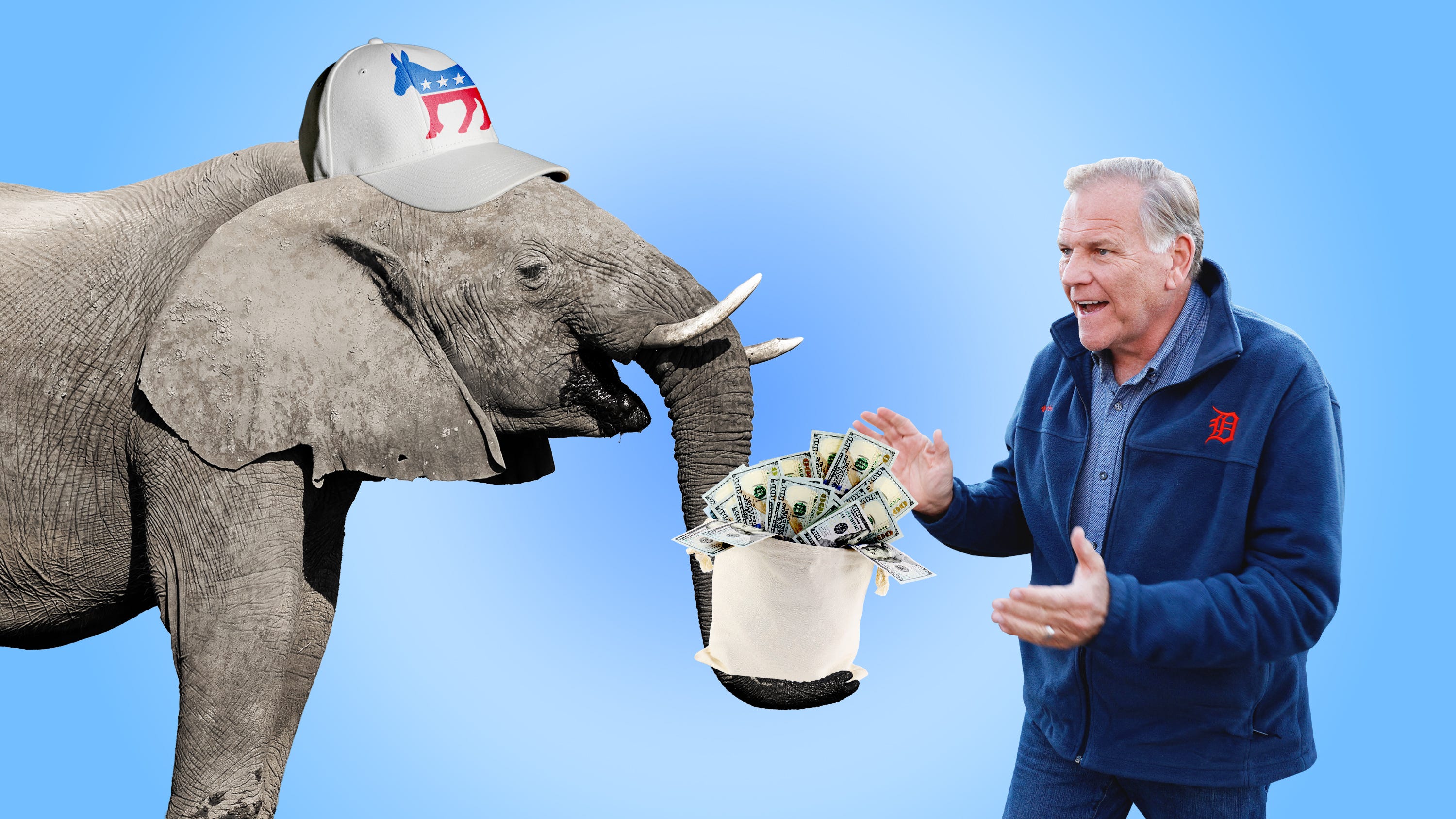
Now known as TFM, the PAC also revealed even more Republican donors in its latest financial disclosure. THE SUPER PAC FORMERLY KNOWN as “Democrats for Mike Rogers” might be aiming its efforts at recruiting Dems to defeat Abdul El-Sayed in the Michigan Senate race. But according to their latest FEC filings, the group’s funds are coming almost entirely from deep-pocketed Republican donors. In Tuesday’s edition of Press Pass, we wrote about the group’s predominantly Republican contributors as well as payments the group made to an ex-Democrat who did not disclose her relationship to the organization while appearing on Fox News to promote Rogers. Only a few of the group’s donors had been recorded in the FEC’s database at that point. But now, a lot more information has come in. The latest batch of Federal Election Commission filings show that many of the high-dollar donors to TFM—Democrats for Mike Rogers’s currently operating name—are simply longtime Republican megadonors. I suppose ‘Republicans Seeking Democrats for Mike Rogers’ just wouldn’t look as compelling on a lawn sign. Richard Bassuk, a real estate executive from New York City, has a typical TFM donor profile. In addition to the $15,000 he sent the group, he also donated $1,000 to Susan Collins’s re-election bid, $3,500 to Sen. John Cornyn (R-Texas), $3,300 to House Speaker Mike Johnson, and $3,500 to the American Israel Public Affairs Committee (AIPAC), which was specifically earmarked to support the campaign of Rep. David Valadao (R-Calif.), one of the House GOP’s most vulnerable incumbents. Bassuk also contributed $125,000 to the United Democracy Project, which is affiliated with AIPAC and has spent more than $20 million attacking Rogers’s Democratic opponent, El-Sayed. Bassuk has donated to many other Republicans, as well. Another TFM donor, Fanny Hanono, has also contributed to Collins’s campaign, and she opened up her pocketbook to support Florida Republican Reps. Randy Fine and Maria Salazar. (During the Senate primary in Michigan, she also sent some money to El-Sayed’s moderate Democratic opponent, Haley Stevens.) And in addition to the $100,000 he sent to TFM, Anthony Soave has given to the National Republican Senatorial Committee (NRSC), House Republican Conference Chairwoman Lisa McClain (R-Mich.), and JD Vance’s 2022 Senate campaign. Other donors, such as David Jacques Farahi and Steven Kimmelman, have contributed to a mix of Republicans and Democrats in the current election cycle and past cycles. One of the most high-profile donors to TFM is Maria Letica Saad, who over the past couple years has given $100,000 to the NRSC, in addition to making donations to Turning Point USA’s PAC and a host of other Republican candidates. The single corporate donation to TFM came from Penske, a transportation services company headquartered in Michigan, which contributed $250,000. Penske’s past donations include a half-million-dollar gift to the GOP-aligned Senate Leadership Fund. Just three of the individual donors reside in Michigan. All three have lengthy histories of financially supporting GOP candidates and causes. The first is Soave; the other two are Alan Zekelman and Eric Bronstein, who donated $1,000 to embattled Rep. Max Miller (R-Ohio) in May. With all these Republican donations coming in, you might wonder what TFM is doing with their newfound largesse. One such expenditure includes paying for legal consulting from Lex Politica, a Texas-based firm founded by Chris Gober. Gober is currently running for Congress in Texas’s 10th Congressional District on the strength of an endorsement from President Donald Trump, who called him a “MAGA warrior.” Gober has several other right-wing campaigns and causes on his firm’s client roster. They include Elon Musk, Sen. Ted Cruz (R-Texas), Texas Senate candidate Ken Paxton, and Republicans who were investigated for election subversion in 2020. Other partners at Lex Politica have resumes that span the Republican political ecosystem.…
Joe Perticone ·