Source
The Guardian

The Guardian
The Guardian is a British daily newspaper. It was founded in Manchester in 1821 as The Manchester Guardian and changed its name in 1959, followed by a move to London. Along with its sister paper, The Guardian Weekly, The Guardian is part of the Guardian Media Group, owned by the Scott Trust Limited. The trust was created in 1936 to "secure the financial and editorial independence of The Guardian in perpetuity and to safeguard the journalistic freedom and liberal values of The Guardian free from commercial or political interference". The trust was converted into a limited company in 2008, with a constitution written so as to maintain for The Guardian the same protections as were built into the structure of the Scott Trust by its creators. Profits are reinvested in its journalism rather than distributed to owners or shareholders. It is considered a newspaper of record in the UK.
From Wikipedia ↗, text under CC BY-SA 4.0; logo from Wikimedia Commons
- Type
- News outlet
- Lean
- Left-leaning
- Left-Center−3.6 of ±10
- High1.8 of 10 (lower is better)
- High
- Website
- theguardian.com ↗
- Feed
- RSS ↗
- Articles stored
- 1,025
- Tracked since
- Oct 18, 2026
Down: MBFC factual reporting score, 0 most factual to 10 least.
Bias and credibility ratings by Media Bias/Fact Check.
The Guardian on MBFC ↗Publishing rhythm
How many articles The Guardian published over the last 14 days, by publication time, and at which hours of the day.
Top keywords
All keyword charts for The Guardian →The people, places, organizations and topics The Guardian covered most that day, by the share of its stories that mention them. Article counts are shown for context.
No keywords that day yet.
Latest articles
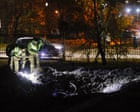
Volodymyr Zelenskyy says 16 ballistic missiles were also launched overnight despite localised truce in Russian-occupied town The head of Ukraine’s president Zelenskyy’s office, Kyrylo Budanov, has confirmed that the ceasefire in Oleshky is in operation. “Ukrainian Parliament Commissioner for Human Rights Dmytro Lubinets has headed to the site and will be responsible for coordinating the process. We are in constant contact with him. It is critically important that this mission to rescue our people be carried out successfully and safely. I am sincerely grateful to everyone involved in carrying out and supporting this operation. Every Ukrainian life is priceless.” Continue reading...
Jakub Krupa ·
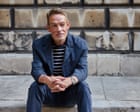
A fatal mistake sparks this juicy melodrama, in which a philosophy professor navigates the guilt of being a survivor What if, battered by cancer and cancer treatment, you decided to end your life? And what if it went wrong and you lived, but a friend died in your place? Would you tell the police the truth? Or reason that there’s no point punishing your grieving, bruised self any further, especially when – in the first bit of good news you’ve had for years – you learn that your treatment may finally be working? It’s the kind of moral question that London philosophy professor Esther Luck loves throwing at her students. But Jude Cook’s third novel makes the dilemma bracingly personal. As it opens, Esther, who has ovarian cancer, is waiting in a toilet cubicle on the fifth floor of her university building – the only one without CCTV – for the arrival of her dodgy French ex, Michel. He has agreed to shoot through the door and end her misery. But someone else arrives first. Laura is the department’s fragrant superstar, with her BBC presenting gig and handsome barrister husband. She finds an empty stall, Michel gets the wrong door, and Esther is left guilty, panicked and alone on the loo as Laura’s blood pools on the floor. Continue reading...
James Smart ·

The RuPaul’s Drag Race alum on queer visibility, politics and starring in Cole Escola’s smash comedy Alaska may be starring in the most subversive comedy in American theater today, but she carries herself with the poise of a 40s movie star. On a brisk September afternoon, the actor, comedian and RuPaul’s Drag Race alumnus is in a small rehearsal room in New York’s midtown, sipping hot tea from a flask while perched on a hard-shell travel case. She sits bolt upright, as if she has spent her life balancing books on her head. It has been a madcap time for the actor as she prepares to play Mary Todd Lincoln in a new touring production of Cole Escola’s Tony award-winning comedy Oh, Mary! . She is amid a few weeks of rehearsals in the city before the show’s four-month sprint across the US. When I ask how she is handling the upheaval from her Los Angeles home, she smiles indulgently. “I mean, I would go to the planet Remulak for this show,” she says, referencing the home planet of the Coneheads . “I didn’t even think about it. I was just like, ‘Let’s make this happen.’” Continue reading...
Owen Myers ·
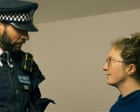
The levels of violence aimed at these protesters is depressing, but their aim is to save the planet: ‘If they want to destroy everything, they’ve got to go through us’ ‘Hated” is not putting it too strongly. The strength of feeling against Just Stop Oil, as caught by this documentary, is really disturbing. It’s filmed from inside the climate group’s protests, and as activists block roads, furious drivers hurl abuse. “Have a wash you fucking idiots!” “Middle class wankers!” It gets physical, too – punching, kicking and dragging. One man appears to drive his van at protesters. Another walks along a line of them, pouring water over their heads, one by one. Film-maker Rich Felgate could not be closer to the action; his girlfriend, Indigo Rumbelow, is an activist. “Don’t look at the camera. I’m a fly on the wall,” he tells her at their shared house, where books about the suffragettes and Gandhi are on the shelves. On the streets, activists glue themselves to roads and fasten their necks together with bike locks. In October 2022, campaigners notoriously lobbed tomato soup at Van Gogh’s Sunflowers . At one road shutdown an angry driver shouts: “You’re children.” But they’re not all young; a vicar in late middle age with Parkinson’s quickly takes his medicine before he’s cuffed. Continue reading...
Cath Clarke ·
 Matthew Perry
This intimate, warm, thoughtful three-parter about the Friends actor speaks to his friends, family and ex-girlfriends – and their adoration for him is overwhelming “God, you can do whatever you want to me, just please make me famous.” So prayed Matthew Perry when he was a young unknown actor auditioning in LA, enjoying the partying and the friendships but struggling to find work. Many have offered up such a fervent wish, of course; few have had both sides of it fulfilled in such a spectacular way as the man who became part of one of the most successful sitcoms in television history and who died after relapsing into drug addiction in 2023 at the age of just 54. The three-part, three-hour documentary – titled, perhaps inevitably, The One About Matthew Perry – charts the whole of the actor’s rise and fall. It is an exhaustive but never (quite) exhausting film. Three hours is a long time, for sure, to tell what is in essence a sad but very simple tale, and some tiny trims could undoubtedly have been made, but it avoids tedium because of the quality of the interviews and the interviewees. The latter include his half-sister Mia and his best friends since his first days in LA, Roger Castillo and David Pressman. They all talk about the brother and the man with such love and such despair at the addictions he could not beat that it becomes at points not just a moving tribute to Perry but also to the thousands upon thousands of addicts and the people who love and despair of them, but whose stories don’t make international headlines. Continue reading...
Lucy Mangan ·
 Life and style
All it took was one or two careless teenage girls giving the vermin a taste of their snacks and they became the most well-fed animals imaginable I’ve written a fair amount about my boarding school years in Nigeria in the 90s, but never about the rats that accompanied my school experience. Picture it: thousands of girls from across the country, each bearing a suitcase or two of a term’s worth of “provisions” – cornflakes, sugar cubes, powdered milk, hot chocolate powder, and so on. All it took was one or two careless girls giving the rats a taste of the exotic and they became among the most well-fed rats in the country, enjoying a steady stream of delicious teenage-girl snacks. I will never forget the sight of rats – six or seven deep – congregating at dusk on the scraggly lawn next to my dormitory, like an illegal gathering of political dissidents. They were large (what with their rich diet), thick tails twitching, noses pushed together, damn near whispering. At first, they would scatter when humans approached. Then we had to clap and stomp to get them to shift. Like the proletariat, the rats began to understand their power, and stand their ground. They were no longer pests but now a sort of predator. If this sounds like the beginning of a highbrow horror, that’s how it felt. Continue reading...
Bim Adewunmi ·
 Belfast holidays
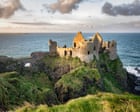
Ahead of Netflix’s Chronicles of Narnia dropping early next year, we discover the fantastical landscapes that fired the Belfast-born author’s imagination On the gable walls of the tough, working-class streets of east Belfast, the mystical beasts of Narnia vie for brick space with balaclava-wearing loyalists. The murals of the city have long projected the power of paramilitaries, but in recent years they have also begun to reflect the more positive contributions made by other local people, including the author CS Lewis. Lewis was born in Dundela in 1898 in an attractive terrace house that has sadly since been demolished to be replaced by rather unattractive flats. But elsewhere in this part of the city, the Lewis connection is being built on and celebrated. CS Lewis Square is in the Holywood Arches neighbourhood and has a short walking trail featuring metal sculptures of Mr and Mrs Beaver, Mr Tumnus and other beloved characters from The Chronicles of Narnia. The centrepiece is a gigantic Aslan, towering over all from atop a circular mound. Continue reading...
Graham Little ·
 Biography books
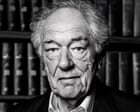
From the National Theatre to Harry Potter, Gambon’s shapeshifting life leaves many questions still unanswered Michael Gambon began his acting career with a preposterous bluff. Applying for a job at Dublin’s Gate theatre, the young toolmaker from the south-east London suburbs embellished his CV with entirely fabricated theatrical experience. It was a gamble, but it worked. In 1962 he made his professional debut as the Second Gentleman in Othello. The following year he was hired by Laurence Olivier for the brand new National Theatre. Gambon carried on telling tall tales long after there was any need. Some were self-aggrandising: he had been a dancer with the Royal Ballet, worked as a nuclear physicist and auditioned for James Bond. To be fair, this last one was half-true – producer Albert “Cubby” Broccoli had once called him in for a chat. Others were absurdities for the sake of it: he was thinking of buying a house in Hanoi, his mother had operated cranes in Dublin. Occasionally, the lies were intended to save his skin. Terrified of being sacked for turning up late yet again to rehearsal at the National, he claimed that his mother had died in the night. She went on to live for another 49 years. More often, he lied to make other people laugh, claiming that he had worked with the Russian director Dmitri Shagyerarsoff. Continue reading...
Kathryn Hughes ·
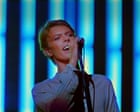
David Hemmings’ never-released concert film from Bowie’s 1978 world tour will be presented in a multimedia show that aims to ‘create the illusion’ that he is present on stage Almost 50 years after its original run, David Bowie’s 1978 Isolar II tour will return to arenas in 2027, billed as Stage, thanks to Moonage Daydream director Brett Morgen’s painstaking remaster of never-before-seen footage. Bowie originally commissioned David Hemmings, the Blow-Up star turned director, to film two shows centred on the “Heroes” and Low albums at London’s Earls Court arena that summer. Bowie had recently been directed by Hemmings in the critically maligned Just a Gigolo, alongside Marlene Dietrich. Continue reading...
Laura Snapes ·
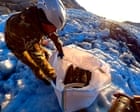
Italian army removes and defuses 250 explosives encased in ice for more than 100 years after hikers’ sightings A significant cache of unexploded bombs from the first world war emerged this summer from rapidly retreating glaciers in the Dolomites, the Italian army has said. The devices, which included Italian artillery shells and French mortar bombs, were removed and defused by the army’s Julia Alpine brigade, according to a statement. Continue reading...
Angela Giuffrida in Rome ·
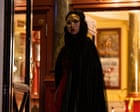
In a West End theatre, a young actor hears a disembodied voice coaching his singing. It’s the start of an icky ghost-on-human romance This ghost story set in a West End theatre is creakier than the old wooden floorboards on stage. It’s a gender reversal of Phantom of the Opera with a female phantom: wildly talented composer Eve (Amanda Jiang), who died tragically in a theatre fire. Or did she? That’s the question for earnest young actor Christian (Charlie Goddard) cast as the lead in a revival of Eve’s hit musical, City of Masks. It’s being staged in the very theatre where she died. Then Christian starts hearing a ghostly disembodied voice coaching his singing. Part of the problem with the film is a clash of acting styles. Jiang seems to have stepped out of a David Lynch film to play Eve; sensual and mysterious. Meanwhile, actor Deano Bugatti Mitchison channels Al Pacino in Scarface levels of intensity to play the revival’s director, coked-up theatre impresario Victor – surely the only director in the West End to keep a loaded gun in his desk drawer Continue reading...
Cath Clarke ·
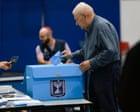
Most polling shows prime minister Benjamin Netanyahu’s coalition will lose its majority, with Gadi Eisenkot the leading opposition contender What you need to know about Israel’s election Families bereaved in the 7 October attacks began election day with a protest at 6.29 am, the same time Hamas launched its attack just over three years ago. They gathered in the Tel Aviv plaza that has become known as “ hostages square ”, because it was the centre of demonstrations demanding the return of over 200 captives from Gaza . Continue reading...
Jonathan Yerushalmy ·
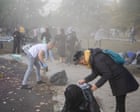
Binbag-wielding volunteers clear encampment used by thugs to intimidate opponents of deposed government Student List cleaned up at Serbia’s parliamentary elections. So it was only fitting that the morning after a night of raucous celebrations, the movement’s supporters were gathering, bin bags in hand, at Pioneers Park, opposite the national assembly building in Belgrade. For the previous 18 months, this small patch of greenery – with its established trees and playground – had been a no-go zone. A pro-government camp known as Ćaciland had taken over the space with convicted criminals living there in white tents, happy to attack journalists, or anyone else who came too close. Police stood by but did nothing to prevent the violence. Continue reading...
Guy de Launey in Belgrade ·

Quick, simple finger food that children will love for Halloween: pumpkin and carrot fritters with a chilli-coriander relish, and pumpkin baked into a dark chocolate slice It would be lazy to write, with a rueful shake of the head, that Halloween gets bigger every year. Halloween is huge . I have seen it grow, vicariously, through my children year on year and, despite previously approaching it with a Scrooge-like attitude, something in me has shifted. Perhaps it’s simply the pleasure I see light up in all toddlers through to teens; they can’t get enough of the fandango of dressing up, mixed with its unmistakable, irresistible sprinkle of wickedness. So now I am in. Last year, we had 60 14-year-olds dancing the night away, and I wish I’d made them the recipes here, both of which play on the deliciously sweet, wonderfully savoury nature of pumpkin, that most brilliant of Mexican fruit. Quick, utterly delicious and the perfect finger food. Happy Halloween! Continue reading...
Thomasina Miers ·
 Genetics
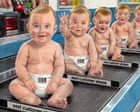
For decades the idea of eugenics has been taboo. Now it is returning in a new commercial guise For a very long time, I dreamed of being cured. I was born in 1981. I learned to walk early enough, but I stumbled and fell more easily than other children. My parents began to worry that something was wrong, that my muscles were weaker than they should be. Eventually, at the age of three, I was diagnosed with a form of spinal muscular atrophy (SMA). In the 1980s, the precise mechanics were not yet understood, but the condition was known to be hereditary, probably linked to a recessive gene. It was also known to be progressive. As I aged, my muscles would not keep pace. At eight, I began to use a wheelchair for longer distances. By the time I was 18, I rarely walked outdoors any more. It is hard to be young and to know that you are growing weaker rather than stronger. I had all the same aspirations that my nondisabled friends did, but I lived in fear of the future in a way they did not. I spent a lot of time thinking about what my life would have been like if I didn’t have SMA. The images in my head were of something like a double: myself, only rid of this one deficit, imprecisely defined, but encoded somewhere in my body. Continue reading...
Jan Grue ·
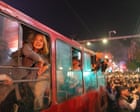
I saw a remarkable experiment take shape in Belgrade. Its lessons should be studied by other European countries struggling with unrest More than a decade ago, the WikiLeaks founder Julian Assange told an interviewer in Belgrade that Serbia was “a country where the future happens first”. The phrase circulated widely on Serbian social media in the weeks before Sunday’s election, but in a way that could not have seemed possible 10 years ago. Who would then have imagined that Serbia today could be at the forefront of global democratic change? The images from Belgrade on Sunday night – people dancing and crying in the streets, while in Novi Sad , the city that sparked the student movement , a flag bearing the image of the convicted war criminal Vojislav Šešelj, which had hung from a building since the 1990s, was torn down – reinforced the feeling that the future had truly arrived. Aleksandar Matković is a postdoctoral researcher at the Institute of Environmental Science and Technology in Barcelona and a fellow at the Transnational Institute in Amsterdam. He works on environmental history, political economy and the history of Yugoslavia Continue reading...
Aleksandar Matković ·
 Sexual harassment
In 2021, the young soldier took her life after being sexually assaulted by a sergeant major, then sent thousands of messages by her line manager. She was just 19. Five years on, Leighann McCready is still searching for answers When Leighann McCready phoned her 19-year-old daughter, Jaysley Beck, on 15 December 2021, she got no reply, but brushed away her worries. “Jays always, always answered her phone, but it was early, eight in the morning,” she says. Beck, an army soldier in the Royal Artillery, had been at a party the night before at her Wiltshire barracks. She was probably asleep. It was a busy time, the Christmas countdown. Soon, Beck was expected to be back home in Cumbria, where her parents – McCready and Anthony Beck – own a village pub. McCready had already bought matching Christmas pyjamas for Beck and her older sister Emilli to wear on the day. Continue reading...
Anna Moore ·
 Christmas shows
The festive season brings swashbuckling adventure, heartwarming Antarctic antics, a yuletide spin on Pride and Prejudice and Matthew Bourne’s Cinderella Royal Exchange theatre, Manchester, 5 December to 30 January Continue reading...
Arifa Akbar ·
 Climate crisis
Oxfam says investing by rich in disaster recovery widens inequality and gives incentive to delay climate action The world’s wealthiest people are not just profiting from the polluting causes of climate breakdown, they are also increasingly cashing in on the catastrophic consequences, according to a study by Oxfam. The global equality organisation has found that the richest 0.1% of the world’s population are heavily invested in disaster preparedness, recovery and reconstruction – a market that is projected to grow from $70bn to $92bn a year by 2029. Continue reading...
Jonathan Watts Global environment editor ·
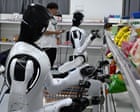
Lack of profits and the threat posed by western countries are raising concern about the sustainability of Beijing’s AI boom Trillions of dollars have been wiped from China’s stock markets in recent months amid increasing anxiety about the future of artificial intelligence, as Beijing races against the United States for dominance in the sector. The STAR 50 Index, which tracks technology and innovation companies on the Shanghai stock exchange, has plunged 40% since June. Other indexes of major companies dropped by about 20% over the same time period. Continue reading...
Amy Hawkins in Beijing ·